
Five AR-15 brands a hunter actually shops: Colt, M&P15, Ruger AR-556, Daniel Defense, Saint
Written by John Wren|
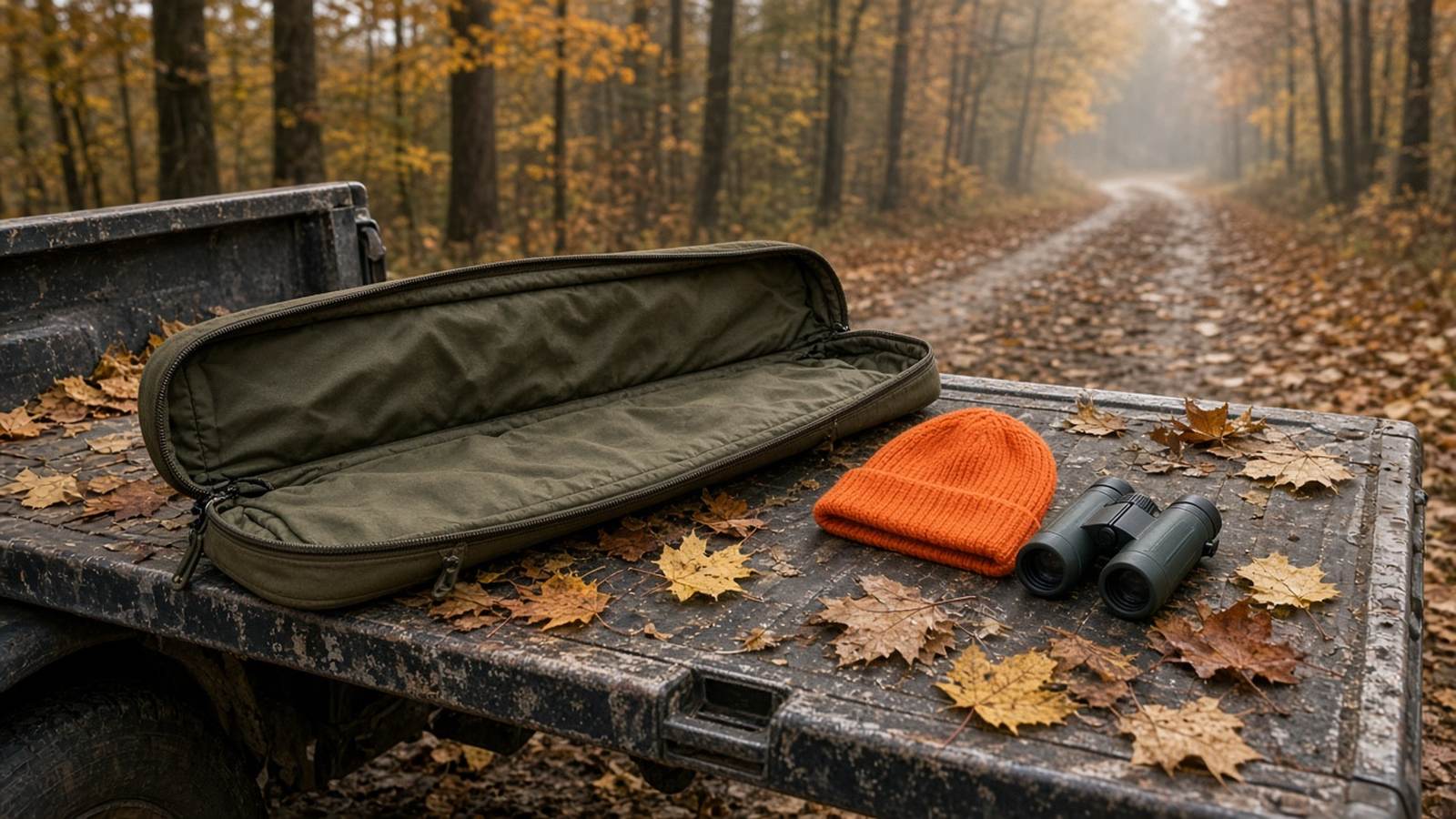
Buy an M&P15 Sport III or a Ruger AR-556 if this is a first hunting carbine at a big-box counter. Buy a Springfield Saint Victor if you want a free-float rail and a pinned mid-length in the same aisle. Buy a Daniel Defense DDM4 V7 if you want a cold-hammer-forged 16-inch barrel you will carry. Buy a Colt CR6920-class carbine if you want the chrome-lined M4 with an A2 front sight. The rifle and the ammunition stay at a licensed dealer.
Key takeaways
- These five brands are dealer rifles, not marketplace listings.
- A first 16-inch mid-length is usually an M&P15 Sport III or a Ruger AR-556.
- Saint Victor is the Springfield to shoulder if you want a hunting optic rail.
- Daniel Defense is the barrel and the weight. Colt is the chrome-lined M4.
Five AR-15 names sit in the same glass case at a licensed dealer, and they are not the same shopping trip. Colt still sells the chrome-lined M4 a hunter recognizes as a Colt. Smith & Wesson still sells the M&P15 a big-box counter actually has. Ruger still sells the AR-556 class — a 16-inch counter rifle and an 18-inch MPR. Daniel Defense still sells a cold-hammer-forged DDM4 a hunter pays for when the barrel and the weight are the job. Springfield Armory still sells a Saint, and a Saint Victor that is a different rifle in the same family. All five are 5.56 NATO hunting carbines a licensed dealer will transfer. The rifle and the ammunition stay at a licensed counter.
Short version. Buy an M&P15 Sport III or a 16-inch Ruger AR-556 if this is a first hunting carbine and the dealer already has one in the rack. Buy a Springfield Saint Victor if you want a free-float rail and a pinned mid-length in that same aisle. Buy a Daniel Defense DDM4 V7 if you want a 16-inch cold-hammer-forged barrel you will carry. Buy a Colt CR6920-class carbine if you want the chrome-lined M4 with an A2 front sight. Pair this with direct-impingement versus a piston, a red dot versus an LPVO, and a Monday confirmation. Check live prices on the sling, the case, the ears, the glasses, the sock, and the bags. The firearm stays at the counter.
Which of these five should a hunter actually buy?
Match the line to the sit, not the logo on a hat. A first 16-inch mid-length you will confirm and carry is usually an M&P15 Sport III or a Ruger AR-556. Those two are the rifles a licensed counter in a lot of towns can still hand you without a special order. A Saint Victor is the Springfield to shoulder if you already know you want a free-float rail for a hunting optic and a pinned mid-length gas block. A DDM4 V7 is the Daniel Defense to ask for if the barrel and the carry weight are worth the ticket at that dealer. A Colt CR6920-class carbine is the one if you want a chrome-lined 16.1-inch M4 with an A2 front sight and the roll mark that still says Colt.
Do not buy a leftover Sport II as if it were a Sport III. Do not buy a base Saint because the tag said Saint when a Victor is in the same rack and you wanted a rail. Do not buy a V7 SLW because the tag said Daniel Defense when you wanted a true 16-inch barrel — the SLW is a 14.5-inch lightweight with a pinned extended flash hider. Do not buy a Ruger AR-556 MPR because you wanted a 16-inch mid-length — the MPR is an 18-inch rifle-length-gas gun. Say the line out loud. If the counter cannot tell you the gas length and the barrel length, walk.
A 5.56 hunting carbine is legal in some units and not in others. Read the regulation for the dirt you will stand on. Some deer seasons want a larger cartridge. Some hog and coyote sits are exactly this aisle. This page is the brand case, not a season proclamation. If the country is a western ridge and the rifle should be a bolt gun, stop and read .308 against 6.5 Creedmoor. If the rifle in your head is a .308 AR, stop and read ArmaLite pattern versus DPMS pattern before you shop an upper.
What Colt still puts in the case for a hunter?
Colt’s hunting-shoppable carbine is still the CR6920-class M4: a 16.1-inch chrome-lined barrel, a 1:7 twist, carbine-length gas, an A2 front sight, a Magpul rear on the current civilian carbine, and forged 7075 receivers. That is the rifle people mean when they say they want a Colt. It is not a free-float hunting rail. It is not a mid-length. It is the original pattern with a chrome-lined bore that a lot of wet seasons have already seen.
Carbine-length gas on a 16-inch barrel is snappier and dirtier than mid-length. That is not a reason to skip Colt if the chrome lining and the parts aisle are why you are there. It is a reason to pull a bore and a carrier after a wet sit, the same way any direct-impingement gun wants. A piston does not make a Colt into a different brand. Leave the upper alone the week of the hunt.
Colt also lists a mid-length carbine in the current commercial rifle row. Ask for it by gas length if that is what you want. Do not assume every roll mark that says Colt is a CR6920, and do not assume a listing that says M4 is a Colt. A good counter will put the carbine on the felt and show you the front sight and the gas journal. A lazy counter will sell you whatever is in the safe with a pony on the bag. The rifle stays at that counter. The ammunition stays there too.
Carry a Colt the way you carry any 16-inch carbine: a two-point sling, a case that tapes past the A2 sight, and a confirmation in the coat you will hunt in. The A2 front sight is a cowitness conversation for a red dot and a height conversation for an LPVO. Dry-fit the mount at the dealer before you pay. AR-15 optics is the longer glass aisle. This heading is the Colt in the rack.
What is the Smith & Wesson M&P15 a hunter actually sees?
The M&P15 a hunter sees in 2026 is the Sport III: a 16-inch 5.56 barrel, mid-length gas, a 15-inch free-float M-LOK handguard, 1:8 5R rifling, and an Armornite barrel finish. That is the rifle a lot of Academy, Bass Pro, and independent counters still have in the case. It is the first AR a lot of hunters shoulder because it is already there, it already has a rail for a hunting optic, and the gas length is the one you want on a 16-inch sit gun.
The Sport II was a different rifle. Carbine-length gas, a different handguard, and an earlier parts list. Do not shop a leftover Sport II as if Smith & Wesson had already done the mid-length work. Ask for Sport III. Confirm mid-length and a free-float rail before money moves. Feature-compliant Sport III SKUs exist for states that want a fixed stock or a ten-round well. That is a regulation conversation with the dealer, not a forum screenshot from 2019.
An M&P15 Sport III is a direct-impingement hunting carbine. It is not a piston. It is not a Colt. It is not a Daniel Defense barrel. It is the big-box 16-inch mid-length a hunter can still confirm before October. Put a closed red dot or a 1-6x on it after the dealer measures the rail, then confirm the zero in the coat. The carbine stays at the counter. The optic waits until a dealer has mounted it. The rifle stays at the counter.
What is the Ruger AR-556 class — the 16-inch and the MPR?
Ruger’s hunting aisle is two rifles that share a name and do not share a barrel. The AR-556 a counter usually means is the 16-inch 5.56 carbine: a Ruger-built complete rifle, common parts, a warranty a lot of hunters already trust from a bolt gun in the same safe. That is the first Ruger AR a hunter should ask for if they want a 16-inch sit gun and they already like the way Ruger answers the phone.
The AR-556 MPR is the other Ruger. Officially it is an 18-inch cold-hammer-forged barrel, a rifle-length gas system, a 15-inch free-float M-LOK handguard, and a Ruger Elite 452 two-stage trigger. Rifle-length gas on an 18-inch barrel is softer than carbine-length on a 16. It is also a longer gun in thick October cover. Buy the MPR if you want more barrel and a better trigger in the Ruger family and you will hunt a cut or a field edge. Do not buy the MPR because a listing said AR-556 and you wanted the short one.
Say the model out loud. “Sixteen-inch AR-556” or “AR-556 MPR, eighteen-inch, rifle-length gas.” If the dealer hands you a 16-inch gun with an MPR tag, or an 18-inch gun they call a Sport, walk. Ruger furniture on the MPR is Magpul-class and the rail will take a hunting optic. The 16-inch AR-556 may still wear a more basic handguard depending on the SKU in the rack. Shoulder both if the shop has both. The one that points where you look in the hunting coat is the one. Fit the sling on that rifle, not on a catalog photo.

What does Daniel Defense change if you pay for the barrel?
Daniel Defense is the barrel and the rail a hunter pays a dealer for. The DDM4 V7 a hunting counter should show you is a 16-inch cold-hammer-forged, chrome-lined government-profile barrel, mid-length gas, a 1:7 twist, and a Daniel Defense MFR 15.0 free-float M-LOK rail. That is the V7. It is still direct impingement. It is still a 5.56 carbine. What you buy is a CHF barrel, a rail that was designed with the gas system, and a rifle that ships in a Daniel Defense case from a licensed shop — not from a marketplace card.
The V7 SLW is the light one. Officially it is a 14.5-inch lightweight CHF barrel with an extended flash hider pinned and welded to the 16-inch legal length, mid-length gas, and a shorter MFR 13.5 rail. Buy the SLW if you want the lightest DDM4 in this family and you accept a pinned muzzle. Do not buy the SLW if you wanted a 16-inch barrel you can still thread for a different device later. Ask which V7 is on the felt. Weight on a sling for a hardwood sit is a real reason to pick the SLW. A muzzle you cannot unscrew is a real reason to pick the 16-inch V7.
Ask the licensed dealer what they have on the felt. A V7 is a spend you confirm at the counter, not a leftover Sport III. If the shop does not have a V7 and wants to order one, that is still a licensed transfer. If the shop wants to sell you a different brand with a Daniel sticker on the bag, that is a walk. A locked camp kit is how any of these rifles rides when you are not holding it. The DD case is a case. It is not a safe.
What is a Springfield Saint, and what is a Saint Victor?
Saint is the Springfield AR-15 family a hunter actually sees. The current Saint a dealer will describe is a 16-inch chrome-moly vanadium barrel, mid-length direct impingement, a pinned gas block, an M-LOK handguard, a nickel-boron-coated GI trigger, and B5 furniture on the rifles Springfield is putting on the current page. Some Saints still wear an A2-style front sight. Some wear a railed gas block and a flip-up front. Both are Saints. Ask which one is in the rack before you talk yourself into a rail you do not have.
Saint Victor is the Springfield to shoulder if you want the upgraded line in the same family. The current Victor a hunter should ask for is a 16-inch continuous-taper CMV barrel, mid-length gas, a taper-pinned gas block, a free-float M-LOK rail with QD cups, a 9310 bolt, and B5 furniture. That is a different handguard and a different barrel profile from a base Saint. It is still a 5.56 mid-length. It is still a dealer rifle. It is the Saint that makes more sense if a hunting optic and a two-point sling are the whole point of the buy.
Older Saints with Bravo Company furniture still turn up used. A used Saint can be a fine hunting carbine if the dealer will still stand behind the transfer and you confirm the gas length. It is not the same SKU as a new Victor. Do not pay Victor money for a worn base Saint, and do not skip a Victor because a forum said every Saint is the same rifle. Shoulder them. Check lockup. Ask about the gas block pin. Springfield’s Accu-Tite tensioning is a real receiver-fit detail on these guns — the dealer can show you the screw. The rifle stays at that counter.
| Question | Colt CR6920 class | M&P15 Sport III | Ruger AR-556 / MPR | Daniel Defense DDM4 V7 | Springfield Saint / Victor |
|---|---|---|---|---|---|
| First hunting carbine at a big-box counter | Only if you want the Colt M4 | Yes — 16-inch mid-length, a rail | Yes — 16-inch AR-556 | A spend, not a first rack gun | Victor if they have one |
| Gas a hunter should ask for | Carbine on the CR6920; ask if they have mid-length | Mid-length | Mid or carbine on the 16-inch; rifle-length on the 18-inch MPR | Mid-length on the V7 | Mid-length, pinned |
| Barrel a hunter is actually buying | 16.1-inch chrome-lined, 1:7 | 16-inch Armornite, 1:8 5R | 16-inch AR-556, or 18-inch CHF MPR | 16-inch CHF chrome-lined, or 14.5-inch SLW pinned to legal | 16-inch CMV; Victor is a taper |
| Rail for a hunting optic | A2 front sight — dry-fit the mount | 15-inch free-float M-LOK | Basic on some 16-inch SKUs; MPR is a 15-inch free-float | MFR 15 on the V7 | Victor is the free-float; some Saints still have an A2 |
| Wet-sit rust job | Chrome-lined bore; still wipe the gun | Pull the bore, wipe | Pull the bore, wipe | CHF chrome-lined; still wipe | Melonite or nitride; still wipe |
Confirm the current SKU with the licensed dealer before you pay. Generation and furniture still wander inside each family. The rifle stays at the counter.
What optic belongs on a hunting carbine from this aisle?
The optic follows the country, not the roll mark. Timber inside a hundred yards wants a closed red dot and both eyes open. The same carbine that still has to judge a shoulder out toward 200 yards wants a 1-6x left on 1x until you look. A bolt gun that lives in the woods is a different glass fight — fixed 4x versus a 3-9 — and that page is not this aisle.
An A2 front sight on a Colt or on some Saints is a cowitness and a mount-height problem. A free-float rail on a Sport III, an MPR, a V7, or a Victor is the easier hunting-optic mount. Dry-fit at the dealer. Confirm zero on paper in the coat and hat you will wear. The AR-15 optics page is the longer row. Monday confirmation is the week you find out the rings walked. The carbine stays at the counter either way.
How do you carry any of these 16-inch carbines?
A two-point sling is how you still have a hand for a sapling and a bin of gear. Fit it at the house with the coat, the gloves, and the hood. A sling that was perfect over a t-shirt will choke you, or dump the muzzle, once the jacket is on. Quick-detach swivels let you take the sling off at the bench without a screwdriver in the rain. Confirm the sockets are on the side you want before you leave the counter — a Colt with an A2 and a V7 with a full rail do not wear the same swivel the same way.
The WarBull two-point sling with QD swivels is the live strap we name for that walk: a pad, a quick adjust, and swivels that go on a carbine that already has cups. Check live prices. It is a sling. It is not a rifle.
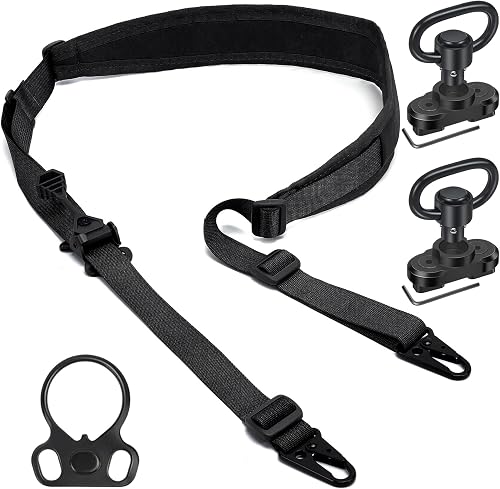
Wear it on the Monday confirmation so the hardware is not a surprise on Saturday. A single-point sling in thick brush turns a muzzle into a pendulum when you bend over a log. Two points, adjusted short enough that the carbine stays on your chest when you slip, is the hunting answer. The sling-fit note is the longer habit if the coat and the swivels are the whole problem and the brand on the receiver is not.
How do you case one of these home from the dealer?
Measure overall length with the optic you will actually run, then buy a case that tapes past that number. A 16-inch carbine with an LPVO is longer than a 16-inch carbine with a red dot. A Colt with an A2 front sight is a different height in foam than a free-float Victor. The dealer can put a tape on the rifle you just transferred. Write the inches. Then the case.
The Plano All Weather AW2 42-inch case is the live single-rifle hard case we name when one hunting carbine fits after you measure: a seal, a valve, lockable latches, foam you pluck. Check live prices. Confirm 42-inch AW2, not a 36. If the optic makes the rifle too long, do not buy the 42 and hope. Vault V800 versus this Plano is the longer case fight. This heading is the ride home from the counter.
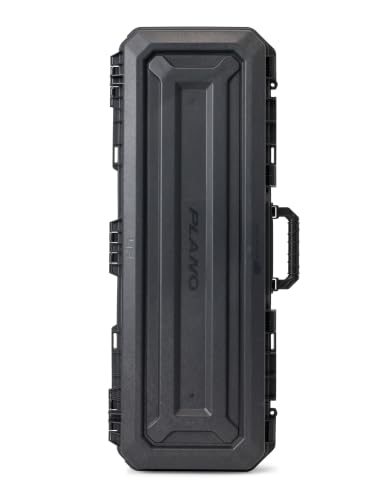
A case is not a safe. Latch it. Cover it in a truck. A locked camp kit is how it rides when you sleep away from the house. Ownership still starts with empty and a lock the state will recognize. Unload before the case. The brand on the receiver does not change that sentence.
What should be on your head before the first confirmation shot?
A 5.56 carbine under a metal roof or next to a truck door is loud enough to cost you the rest of the season’s hearing. Electronic muffs that still fit under a hood let you hear a range officer and then shut down for the shot. Slim cups matter once a hood and a hat are both on. Glasses matter because a muzzle, a brake, and wet brush throw debris, and because October light goes from fog to glare in an hour. A Colt, an M&P15, a Ruger, a V7, and a Saint are the same cartridge in that sentence.
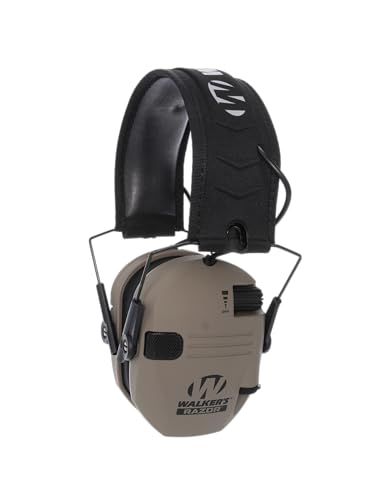
Walker’s Razor slim electronic muffs are the live ears we name for that hood: a slim cup, enough cut to hear a command, a muff that still fits under a cap. Check live prices. The longer fit conversation is ear protection for shooting.
Wiley X Saber Advanced shooting glasses are the live eyes: a frame that takes a clear lens for a dark timber morning and a tint when the clouds break. Check live prices. Eye protection is the longer page if your hat brim already fights certain frames.
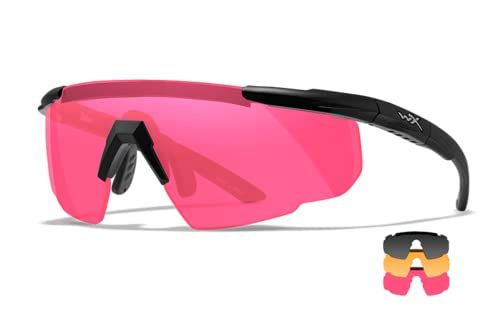
Put both on before the first confirmation round, not after you remember. A September range day is the week to learn that habit. A first deer checklist still starts with a rifle you have shot while wearing the gear you will hunt in.
How do you compare two dealer rifles on a rest?
You compare them on bags, with the same rest height, the same target distance, and the same coat behind the trigger. Front and rear bags let you see whether a rifle wants to jump left or settle. That is the honest test of a 16-inch carbine, not a phone video of a flash hider. If the dealer will let you use a rest, use a rest. If they will not, you are shopping feel and lockup, and the group waits for a range you already belong to.
The Caldwell Deadshot front and rear bags are the live rest we name for that confirmation: a front bag that takes the forend and a rear bag that takes the stock. Fill them. Do not rest a free-float rail on a hard wood edge and then blame the barrel. Check live prices.
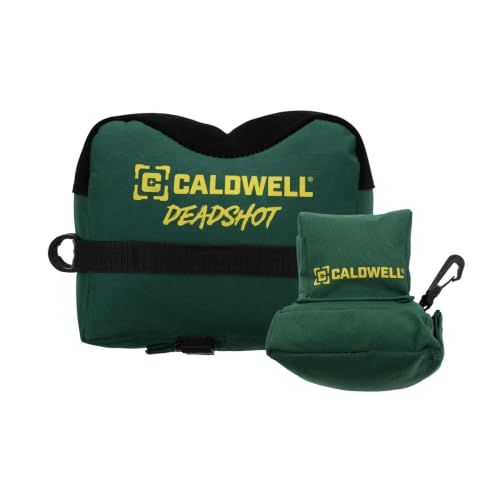
Zeroing without a bench still applies if the only dry place is a pack and a stump. Monday confirmation is the week you do it in the hunting coat. Pattern the carbine from the rest you will hunt with. The brand on the magazine well does not call the shot.
How do you keep a wet carbine from rusting after the sit?
Unload. Verify. Wipe standing water off the metal. Then a silicone-treated knit sock sized past the muzzle and the sight, inside a case, in a truck that locks. The sock is not the lock. The sock is how the sight stops grinding a seat and how a damp finish gets a layer that is not a wet towel. Two oily guns in one sock stain each other. A sock that is short of a scoped carbine fights the optic and leaves the muzzle bare. A chrome-lined Colt and a nitrided Ruger rust the same way if you sleeve them wet.
The GUGULUZA silicone-treated knit rifle socks are the live pack: long enough for a scoped carbine, thick enough to keep a finish off a case hinge. Check live prices. Size past the sight you actually mounted.
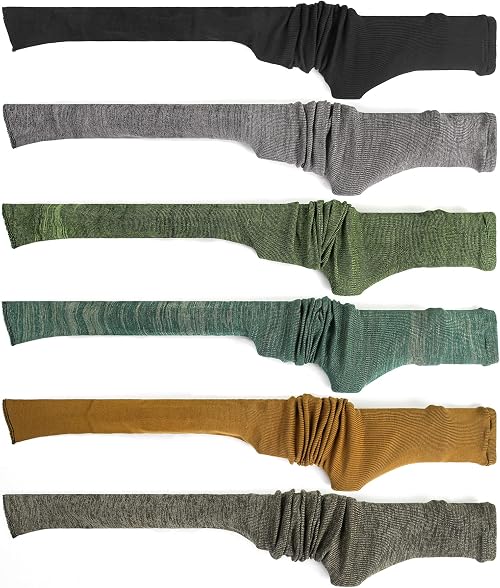
Do not sleeve a dripping gun and call it stored. Dry first. A gun sock is dust and a scratch. It is not a dryer. An AR-15 cleaning kit is the bench version of the same job when you get home. Solvent stays off the stock and off the optic lenses.
Does one of these five need a piston?
No. All five lines a hunter shops in this aisle are direct-impingement carbines. A piston is a different rifle, and a conversion kit the week of the sit is a malfunction on Saturday. The gas-system note is that fight. Rain is a bore and a rust problem on a Colt, an M&P15, a Ruger, a V7, and a Saint. Unload, pull the bore, wipe. A piston logo does not dry a gun.
Gas length still matters more than the brand on the dust cover. Carbine-length on a 16-inch Colt is the snappy one. Mid-length on a Sport III, a V7, and a Saint is the hunting default. Rifle-length on an 18-inch MPR is the long, soft one. None of those lengths require a piston. They require a barrel the maker ported on purpose. Ask the dealer which length is on the felt. “AR-15” on the tag is not a spec.
What if the hunt wants a .308 AR or a bolt gun instead?
Then you have left this aisle. A .308 AR is a different receiver family from an AR-15, and inside .308 ARs the ArmaLite pattern and the DPMS pattern do not mix. That pattern page is the shopping trip. A Colt lower will not close on a DPMS .308 upper. A Saint magazine well is not an SR-25 well. The AR-10 kit page is accessories after the receivers match.
If the country is a western ridge and the rifle should be a bolt gun in one stock class, .308 against 6.5 Creedmoor is the recoil and the drop. Best .308 rifles is the bolt-gun aisle if you decide the carbine was the wrong shape for the country. None of those pages sell you a firearm here. The counter does.
So which of the five should you take to the counter?
Take an M&P15 Sport III or a 16-inch Ruger AR-556 if this is a first hunting carbine and the dealer already has one you can shoulder. Take a Springfield Saint Victor if you want a free-float rail and a pinned mid-length in that same aisle. Take a Daniel Defense DDM4 V7 if you want a 16-inch cold-hammer-forged barrel, or the V7 SLW if you want the light one and you accept a pinned muzzle. Take a Colt CR6920-class carbine if you want the chrome-lined M4 with an A2 front sight. Do not take a leftover Sport II, a mislabeled MPR, or a conversion kit.
The rest of the kit is a two-point sling, a case that tapes past the optic, muffs, glasses, a knit sock, and bags for the confirmation. Check live prices. The carbine and the ammunition stay at a licensed dealer. Confirm the zero in the coat. Pull the bore when you come in wet. If the country wanted a bolt gun, you are on the wrong page — and that is allowed.
Also in the magazine
Keep going with direct-impingement versus a piston, red dot versus LPVO, Monday confirmation, and ArmaLite versus DPMS. Check live prices on the rest kit. The rifle stays at a licensed dealer.
Frequently asked questions
Which AR-15 brand should a hunter buy first?
An M&P15 Sport III or a 16-inch Ruger AR-556 if this is a first hunting carbine at a licensed dealer. A Saint Victor if you want a free-float rail in that aisle. A DDM4 V7 if you want a cold-hammer-forged 16-inch barrel. A Colt CR6920-class carbine if you want the chrome-lined M4.
Is a Ruger AR-556 the same rifle as an AR-556 MPR?
No. The AR-556 a counter usually means is a 16-inch carbine. The MPR is an 18-inch cold-hammer-forged barrel with rifle-length gas and a two-stage trigger. Ask for the barrel length out loud.
What is the difference between a Springfield Saint and a Saint Victor?
Both are 16-inch mid-length Springfield ARs. The Victor is the upgraded line: a continuous-taper barrel, a free-float rail, a taper-pinned gas block, and a 9310 bolt. Some base Saints still wear an A2 front sight. Shoulder the one in the rack.
Should I buy a Daniel Defense V7 or a V7 SLW for a hunt?
Buy the V7 if you want a 16-inch cold-hammer-forged barrel. Buy the SLW if you want the lighter rifle and you accept a 14.5-inch barrel with a pinned extended flash hider. Ask which one is on the felt.
Can I buy these rifles or ammunition from this article?
No. The five carbines and the ammunition stay at a licensed firearms dealer. The sling, case, muffs, glasses, knit sock, and bags are the rest of the kit.
Do any of these five need a piston for a wet October hunt?
No. All five lines in this aisle are direct-impingement carbines. Rain is a bore and a rust problem either way. Do not install a conversion kit the week of the sit.