
A first-frost fire kit that actually lights
Written by John Wren|
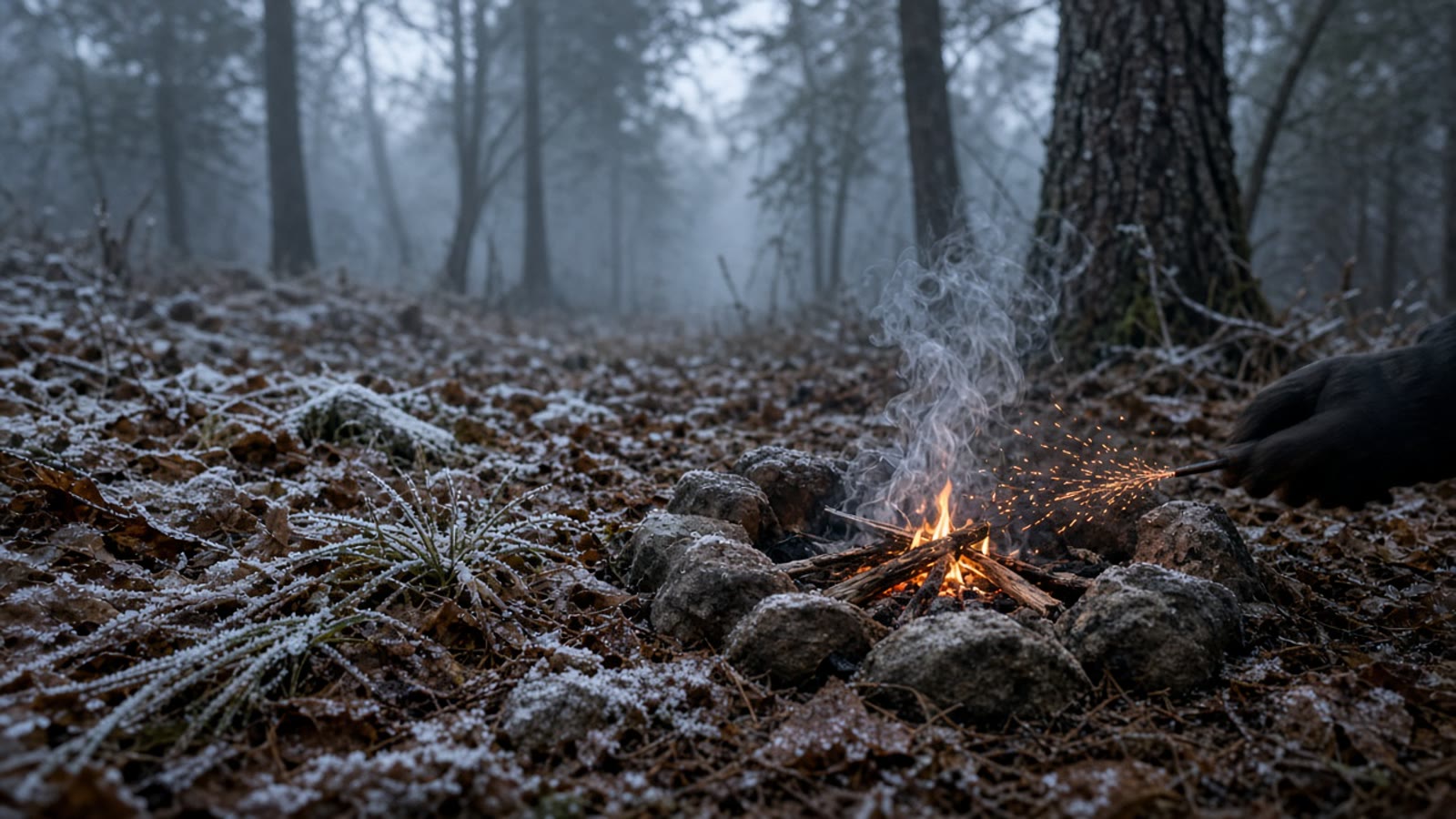
Practice a Light My Fire ferro rod at home, keep Tinder-Quik tabs in a closed bag, carry waterproof matches in a tin, and process dead wood with an ESEE 6. A restriction still wins.
Key takeaways
- Practice the rod before the frost.
- Dry tinder in a closed bag is the kit.
- Three ways to light beat one.
- A ban is the first tool.
A first-frost fire kit that actually lights is a ferro rod you have already thrown sparks with, tinder you packed dry, and waterproof matches in a tin — not a catalog fire piston you have never opened. The short answer: practice the rod at home, keep tinder in a closed bag, and obey the ban you will not talk past.
Short version. Fire starters is the longer kit page. A spark you are allowed to have is the manners. Pair with fire zones. Check live prices.
This is a field note, not a bushcraft video. First frost is wet wood, cold fingers, and a ban that may still be up from summer. A kit that lights on a dry July afternoon and fails on a 36-degree morning is not a kit. It is a story.
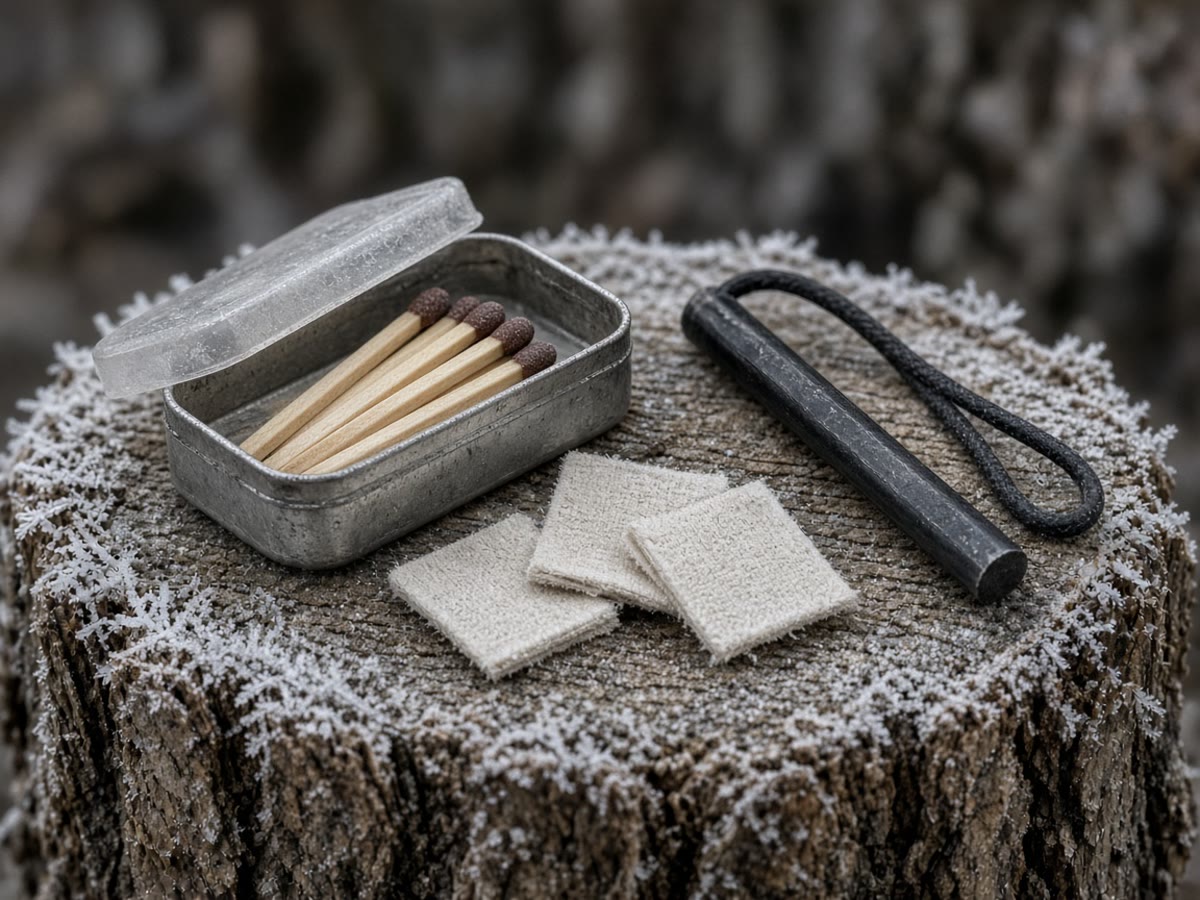
First frost is wet wood and cold fingers, not a movie spark
A 36-degree morning puts frost on the grass and dew in the twigs you meant to use as tinder. Fatwood you left in an open pouch is wet fatwood. Cotton balls you meant to pack are in the other bag. Practice fire you are allowed to have at home, in the driveway, with the same rod. A first-frost morning is a bad classroom.
A 40-degree sleep kit is the night. This page is the sit. A fire will not warm the ground under your hip. It will boil water and dry a sock if you are allowed to have it.
A ferro rod you have already thrown sparks with
The Light My Fire ferro rod is the live rod we named: a flint-and-striker you can still hold with gloves, enough rod that a weekend does not spend it, and a striker that is not your only knife. Check live prices.
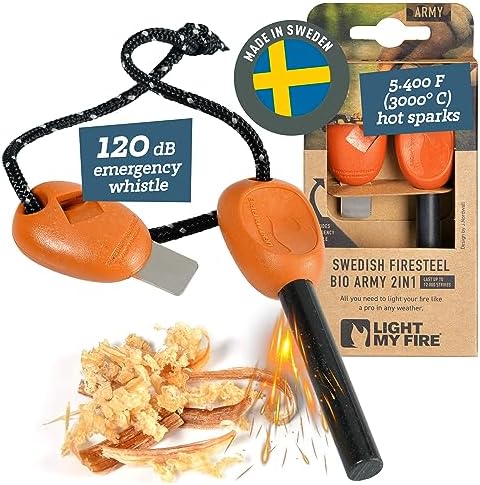
Do: scrape, do not stab. Don’t: a first spark on the only dry tinder you packed. Practice on a paper bag in a sink if you have to. The fire-starter page is the longer fit. A butane lighter is a backup if it still lights when cold. A ferro rod is the backup when the lighter does not.
Tinder you packed dry is the kit. Wet twigs are a hope.
Tinder-Quik tabs are the live tabs we named: a 50-pack of waxed tabs you can pull one at a time, light with a spark, and keep in a closed bag. They are not a lifetime supply if you leave the bag open in a wet tent. Check live prices.
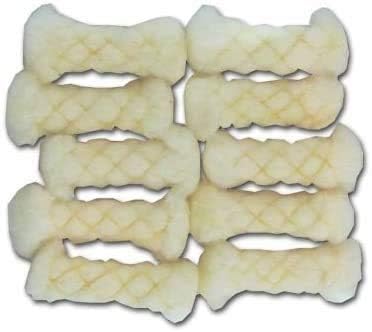
Keep them in a zip bag inside the tin. One tab lights a small nest. A handful of tabs is how you cook breakfast and have none for the next morning. Birch bark you gathered on a legal, dead-and-down walk is a bonus, not a plan. Do not peel live trees for a sit.
Waterproof matches in a tin are the third way, not the speech
The eGreen waterproof matches are the live 20-count we named: long sticks in a tin, a striker on the box, enough for a weekend if you are not lighting a new fire every hour. Check live prices.
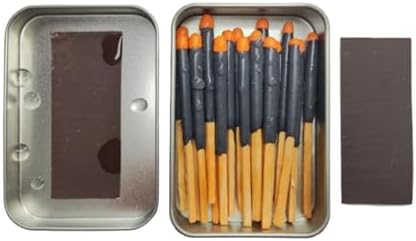
A match you cannot strike with gloves is a match you will drop. Practice the tin at home. Keep the striker dry. Three ways to light — rod, tab, match — is a kit. One way is a single point of failure on a 36-degree morning.
A full-tang knife is for the nest and the split, not a spark show
The ESEE 6 is the live 1095 camp knife we named: enough blade to make a nest and split a wrist-thick piece, a handle you can still hold with gloves. The ESEE 6 review is the longer fit. Check live prices.
Do: process dead, down wood you are allowed to use. Don’t: baton a live tree for a sit. The ESEE 3 is the smaller belt knife. This heading is the camp knife. A knife is not a ferro rod. Do not spend the edge throwing sparks.
The ban is the first tool. A kit does not talk past a closure.
Fire-zone rules still apply in September. A first frost does not cancel a restriction. Check the forest, the park, the county. A stove may be legal when a ground fire is not. Wildfire manners is the lecture. Drown, stir, drown. A black ring you walk away from is how a forest loses the next sit.
A 72-hour kit is the bigger bag. This page is the fire corner of that bag: rod, tabs, matches, a knife you will actually use. A mall-ninja piston is a drawer.
The kit is a rod you practiced, tabs you kept dry, matches in a tin, and a knife for the nest
A first-frost fire kit that actually lights is a Light My Fire rod, Tinder-Quik tabs in a closed bag, waterproof matches, and an ESEE 6 for the nest. The ban is the first tool. The driveway is the classroom.
If the spark is the hole, start with the rod at home. If the wood will not take, start with a tab. If the restriction is the hole, start with the zone page and a stove. Check live prices.
Dead, down, and smaller than your wrist. A log is a sit, not a start.
First-frost wood is wet on the outside and sometimes dry in the split. Gather more than you think. Wrist-thick and smaller for the start. A log you cannot split with the knife you brought is a log for later, not for the first flame. Manners includes leaving the standing dead that is still a home. Dead and down. Legal. Local.
Split the first pieces before your fingers go stupid. Cold hands drop a knife. The 6 is the camp knife. Work away from your leg. A nest of dry inner wood, a tab, and a spark is a fire. A pile of wet bark and hope is smoke in your eyes and a stove you should have lit instead.
A stove is legal more often than a ground fire. That is still a kit.
A first frost does not cancel a restriction. A canister stove or a liquid stove you already know may be legal when a ring is not. This page is the ground-fire kit. If the forest is a ban, the kit stays in the bag and the stove does the boil. Zone rules first. Pride is a ticket and a scar.
A two-burner is a car-camp sit. A backpacking stove is a different Saturday. Do not park a skillet under the ferro heading. The rod is the spark. The stove is the boil you are allowed to have.
A wet morning is a smaller fire and a longer sit
Wind takes heat. Wet takes heat. Build a small fire you can feed, not a bonfire you cannot put out. A ring that is already there is a ring. A new ring in a meadow is a scar. Low impact means the fire you needed, not the fire you filmed.
Drown. Stir. Drown. Hold your hand over the ash. If it is warm, you are not done. A first-frost morning can hide a coal under a wet leaf. Wildfire survival is the other end of this habit. The kit that lights is also the kit that goes out.
Pack the kit the same way every time
Rod, tabs, matches, knife. Same pouch. Same order. If you cannot find the striker in gloves, you do not have a striker. The 72-hour bag is the bigger home. This corner of it should be boring. Boring is how a 36-degree morning still gets coffee.
Replace the tabs you used. A 50-pack is not a lifetime if you leave the bag open. Replace the matches that got damp. A tin that rusted shut is a tin you should have checked in the driveway. Inspect the kit before the frost, not during it.
Gloves you can still strike in
First frost is also the first morning people cannot feel a striker. Thin gloves you can still scrape a rod with beat a puffy you have to take off and drop in the snow. Layering is the shirt. This heading is the hands. Practice the tin with the gloves you will actually wear.
A ferro rod you cannot hold is a paperweight. A match you drop is a match. Keep a spare striker in the tin. Heated gloves are a later sit if the other Saturday is already a stand. This kit is a scrape you can still do at 36 degrees.
Boil what you will drink. A fire is not a filter.
A first-frost sit often wants coffee and a meal. Water you dip from a creek still wants a boil or a filter. A filter is the squeeze page. This heading is the pot you already own, not a new skillet under the ferro rod. Do not park a saucepan under the tinder tabs.
Life-saving basics includes not drinking the pretty creek. A rolling boil is a time. A tab that lights the nest is how you get there. The kit is the start. The boil is the drink.
A shared ring is a shared responsibility
Public camps have a ring someone else left dirty. Clean it before you light. Leave it cleaner. Etiquette is the lecture. A ring full of foil is how a forest loses the next sit. Pack out the tab wrapper. Pack out the match stick.
If the ring is in a closure, walk away. The zone page wins. A kit that actually lights is also a kit you do not use. That is the adult version of the video.
The kit that actually lights is the kit you packed the same way last month and will pack the same way next month. Replace what you burned. The fire-starter page is the longer shelf. This frost morning is the tin, the rod, and the ban. Check live prices.
If the wood is a wall of wet, the tab is the start and the stove is the boil. Pride is smoke. Coffee is the win. Practice at home before the next frost.
A kit you can still find in gloves is a kit. A kit you dumped in a stuff sack is a search in the frost. Same pouch. Same order. That is the whole trick.
Also in the magazine
Keep going with fire starters, wildfire manners, fire zones, and a 72-hour kit. Check live prices.
Frequently asked questions
What belongs in a first-frost fire kit?
A ferro rod you have practiced, dry tinder tabs in a closed bag, waterproof matches in a tin, and a full-tang knife for the nest — plus a ban you will obey.
Which ferro rod are you naming?
Light My Fire Flint Fire Starter. Scrape, do not stab. Practice at home. Check live prices.
What tinder still lights when the twigs are wet?
Tinder-Quik tabs packed in a zip bag. Wet twigs are a hope. Birch bark is a bonus, not a plan.
Do I still need matches if I have a ferro rod?
Yes. Three ways to light is a kit. We named eGreen waterproof matches in a tin.
Which knife?
ESEE 6 for the nest and a split. The 3 is the smaller belt knife. Do not spend the edge throwing sparks.
Can I light a fire if there is a restriction?
No. A first frost does not cancel a ban. Check the forest or park. A stove may be legal when a ground fire is not.