
A 72-Hour Kit That Isn't Mall-Ninja
Written by John Wren|
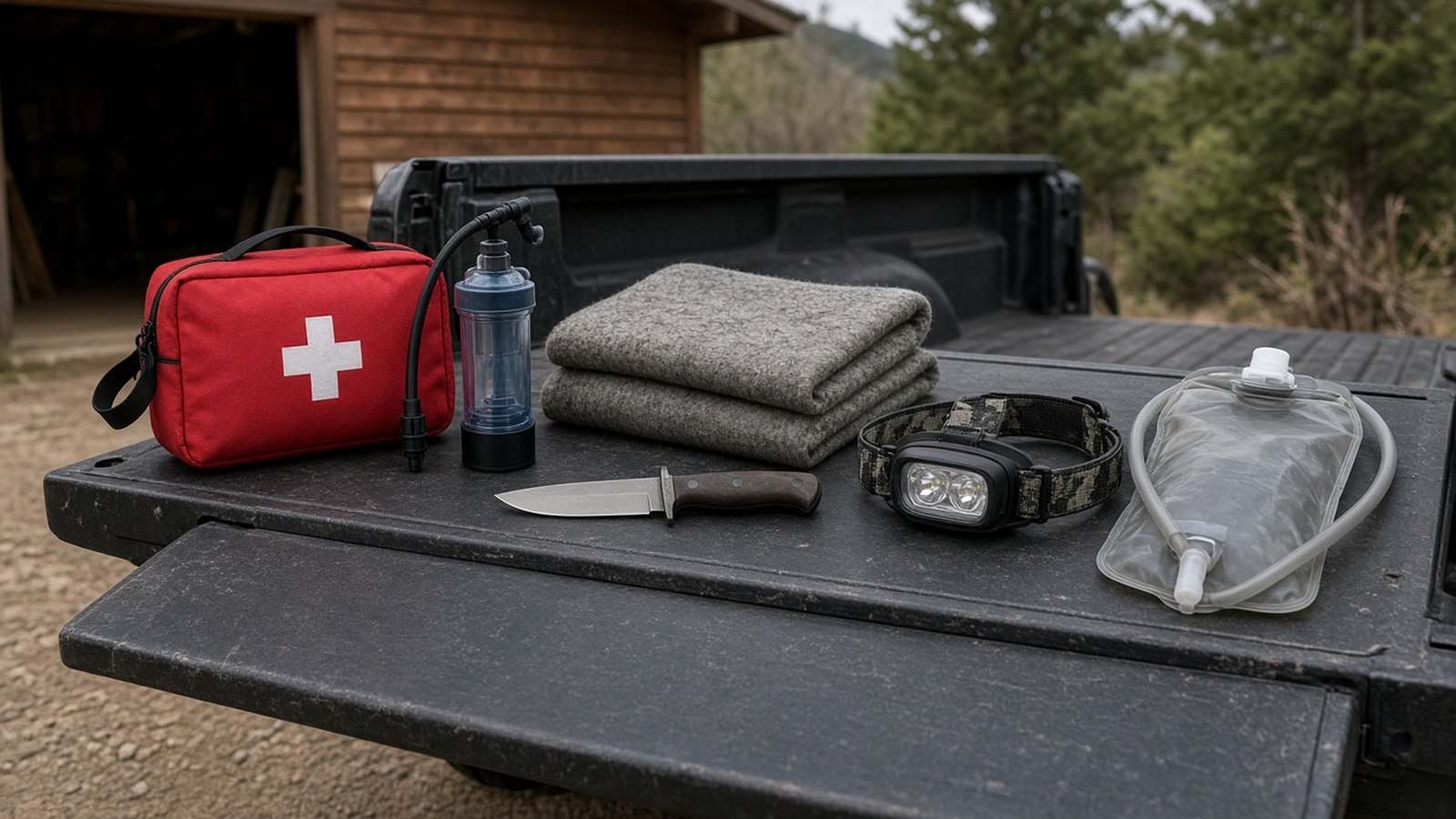
Build a 72-hour kit around four real jobs: treat an injury with a labeled first-aid kit and tourniquet, purify water with a filter you have practiced using, carry three days of calorie-dense food, and pack a warm layer, a light, and a way to get information without cell service.
Key takeaways
- Skip anything marketed with a piece count instead of a real function.
- Practice finding first-aid items before an emergency, not during one.
- A water filter you've actually backflushed beats one still in the box.
- One full-tang knife beats a multi-tool with unused gimmicks.
A real 72-hour kit answers three questions: can you treat a real injury, can you make water safe to drink, and can you stay warm and fed for three days without resupply. It is not a 300-piece novelty tin, a throwing knife, or a paracord bracelet you will never unravel. The short answer: a labeled first-aid kit you have actually opened, a water filter you have used, calorie-dense food, a real layer of warmth, and a way to signal for help — that is a 72-hour kit, and it fits in one bag.
Short version. Buy a real first-aid kit, not a novelty tin, and know where the tourniquet is without looking. Carry a water filter and know how to use it before you need it. Pack calorie-dense food for three days, a warm layer, and a light source. Skip anything marketed with "tactical," "zombie," or a ninja on the packaging — that is entertainment, not preparedness. Pair with our survival kit breakdown and a filter you have actually backflushed. Check live prices.
The 72-hour window comes from a simple, well-documented reality: most disaster response agencies plan for the first three days after an event being the period when you are most likely to be on your own before organized help or resupply reaches you. A kit built for that reality looks boring, not tactical, and boring is exactly what works when you actually need it.
What "mall-ninja" gear actually looks like, and why it fails
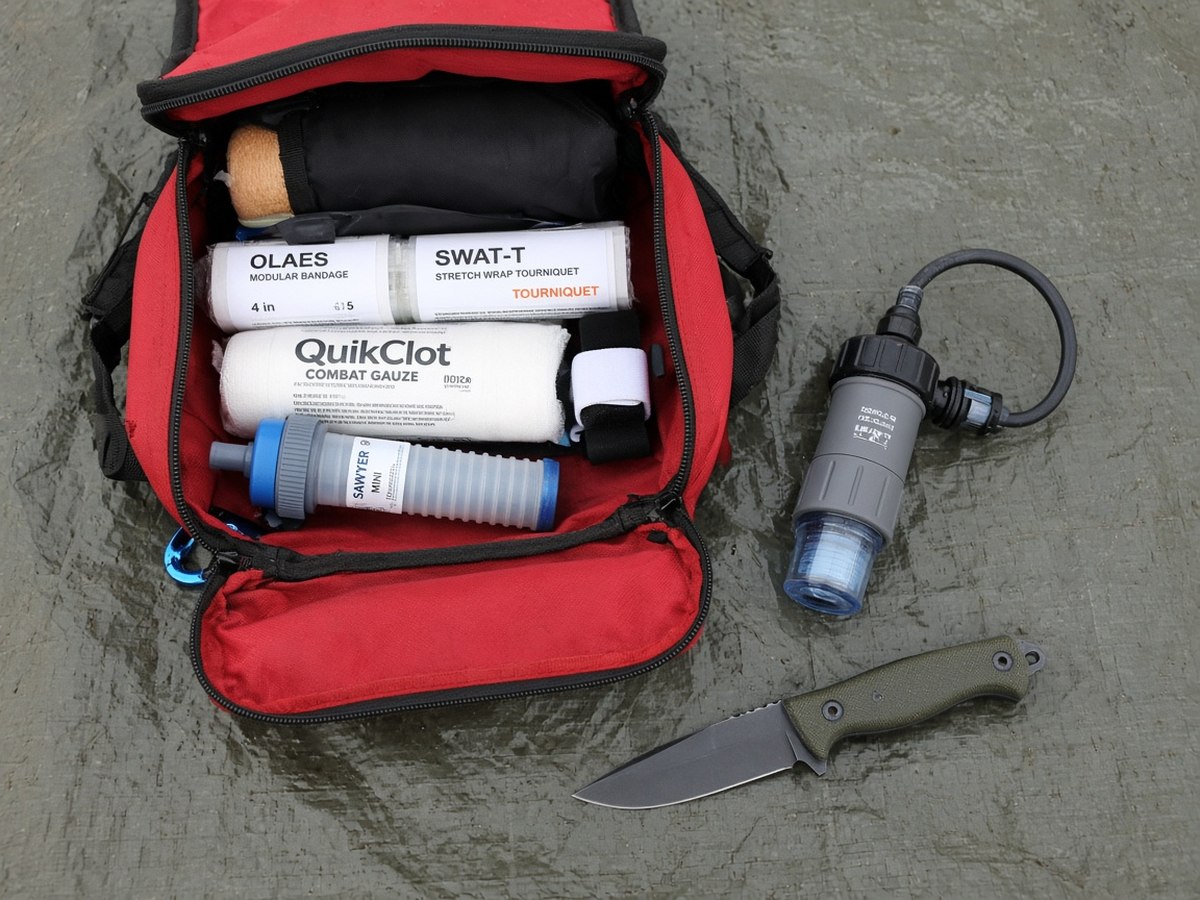
Mall-ninja gear is built to look impressive on a shelf, not to perform under stress. A 300-piece "survival kit" tin is usually 250 pieces of alcohol wipes and safety pins padding out a headline count, with a single low-quality bandage and no tourniquet at all. Throwing knives, paracord bracelets you will never actually unravel for cordage, and a fire-starter you have never once tried in the rain are all things that photograph well and do nothing when you are cold, injured, or scared at hour thirty of an actual event.
The tell is usually the marketing. Gear that leads with "tactical," a skull logo, or a piece count instead of a specific function is optimized for a sale, not a real scenario. A kit built around four real jobs — treat an injury, purify water, stay warm, signal for help — beats a 150-item grab bag every single time, because you can actually find and use every item in it under stress.
A first-aid kit you have actually opened before you need it
An Adventure Medical Kits Sportsman-series kit or an equivalent real trauma-and-first-aid kit is the honest baseline: labeled compartments, a real tourniquet, gauze you can actually pack a wound with, and blister and burn care that covers the injuries you are statistically most likely to face. The specific brand matters less than the discipline of opening it at your kitchen table before an emergency, finding the tourniquet with your eyes closed, and knowing what is and is not inside.
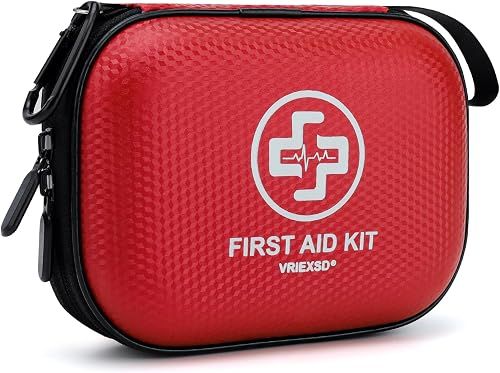
Practice using at least the tourniquet and a pressure bandage once, even just on a demonstration or with a friend, so the first time you touch that gear is not during an actual injury under stress. Restock anything used or expired at least once a year — a first-aid kit with expired ointment and a missing tourniquet from a trip eighteen months ago is not a first-aid kit, it is a bag that looks like one.
Water: the fastest way a 72-hour plan fails without a filter
You can survive roughly three days without water in mild conditions, which makes water purification the single highest-priority system in a 72-hour kit after immediate injury care. A compact filter like a Sawyer Mini processes a real volume of water from streams, ponds, or questionable tap water fast enough to matter, and it weighs almost nothing compared to carrying three days of bottled water for everyone in your household.
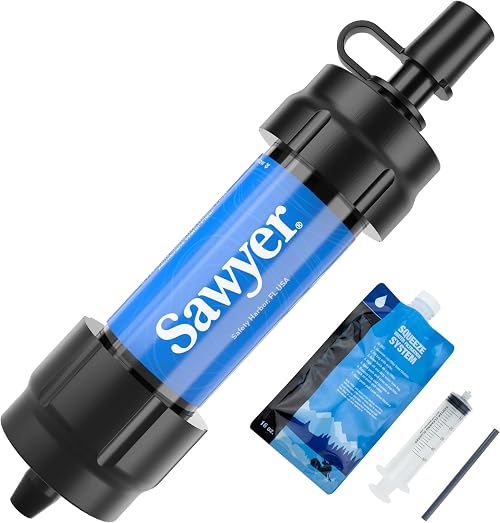
Backflush the filter periodically even when it is sitting unused in your kit, since a filter that clogs from disuse is a filter that fails you exactly when you need it. Our filter comparison covers flow rate and filtration standards in more depth if you are choosing between a straw-style personal filter and a squeeze system like the Sawyer Mini for a household kit.
Calorie-dense food for three days, not a snack drawer
Plan for roughly 1,500 to 2,000 calories per person per day at minimum for a 72-hour period, using foods that require little or no preparation and store well without refrigeration — freeze-dried meals, energy bars, nut butter, and dried fruit are all reasonable choices. Rotate this food stock periodically rather than letting it sit for years, since expired food you discover during an actual emergency is functionally the same as no food at all.
Do not overthink variety for a 72-hour window — this is not a camping trip you are trying to enjoy, it is a bridge to get you through a short disruption. A handful of reliable, calorie-dense, shelf-stable options that everyone in your household will actually eat under stress beats an elaborate meal plan you will never rotate and check.
Warmth, shelter, and a light source
A 72-hour kit needs a real way to stay warm regardless of season, since power outages and displacement events do not schedule themselves around comfortable weather. A compact emergency blanket, a change of dry clothes appropriate for your climate, and a lightweight sleeping bag or bivy rated for realistic overnight lows in your region cover the core of this need without adding significant bulk to the kit.
A reliable headlamp with fresh batteries, plus a backup light source, matters more than most people budget for — losing power at night during an actual emergency without a working light is disorienting and dangerous in ways that are easy to underestimate from the comfort of daylight planning. Check and replace batteries on a schedule, the same way you would a smoke detector, rather than assuming they are still good from whenever you packed the kit.
One working knife, not a collection of gimmicks
A single full-tang fixed-blade knife you have actually used and sharpened covers the realistic cutting needs of a 72-hour scenario — cutting cordage, preparing food, and basic camp tasks — far better than a multi-tool with a dozen gimmick attachments you have never once used. An ESEE 6 or similar full-tang design in a simple carbon or stainless steel is a proven, honest choice that will not fail you at the exact moment you need it.
Keep it sharp and oiled if it is carbon steel, and know how to use it safely before an emergency forces you to learn under pressure. A knife still in its retail packaging, forgotten at the bottom of a bag, is not meaningfully different from not having a knife at all.
Signaling and communication when the network is down
Cell networks can be overwhelmed or knocked out entirely during the exact kind of event that triggers a 72-hour kit, so plan a backup way to get information and, if needed, signal for help. A battery or hand-crank emergency radio that receives NOAA weather and emergency broadcasts keeps you informed even without cell service, and a simple whistle is a far more effective and less exhausting signaling tool than shouting if you need to attract attention over distance.
Write down a physical copy of key phone numbers and a family meeting point, since a dead phone means a lost contact list for most people who rely entirely on stored digital numbers. This is a low-cost, low-effort addition that a surprising number of otherwise well-prepared kits skip entirely.
Building a kit for a family, not just yourself
A family 72-hour kit needs the same four core jobs scaled to more people, plus a few additions that a solo kit does not: any regular medications family members take, copies of important documents like ID and insurance information in a waterproof bag, and comfort items for younger children who will handle a disruptive event better with something familiar. Do not simply multiply a single adult kit by the number of family members — children need different calorie needs, different clothing sizes, and often a simpler, calmer version of the plan explained to them in advance.
Involve older kids in understanding where the kit is and what is in it, without turning it into something frightening. A family that has walked through the kit together and knows the plan handles an actual disruption with far less panic than a family encountering an unfamiliar bag of gear for the first time during a genuine emergency.
Home kit versus vehicle kit: they are not the same bag
A kit that lives in your house is not automatically useful if an event happens while you are at work or on the road, and a kit sized for your house does not fit practically in a vehicle's limited space. Build a smaller, vehicle-specific version focused on the same four core jobs — first aid, water, food, warmth — sized to fit realistically in a trunk or under a seat without becoming clutter you remove "just for this trip" and then forget to replace.
Seasonal vehicle kits deserve a warmth check twice a year: a kit built for summer road trips with a light emergency blanket is inadequate for a winter breakdown on a rural highway, where a genuine risk of hypotherima exists while waiting for help. Swap in warmer layers and consider a basic set of chains or traction aids for winter months if you regularly drive rural or mountain roads in cold weather, and check that any food or water in the vehicle kit has not frozen or overheated in a parked car across a full season.
| Component | Real job | Watch-out |
|---|---|---|
| Real first-aid kit with tourniquet | Treat an actual injury under stress | Practice finding items with eyes closed |
| Water filter | Make questionable water safe to drink | Backflush periodically to prevent clogging |
| Calorie-dense food, 3 days | Sustain energy without resupply | Rotate stock — expired food is no food |
| One full-tang knife | Real cutting tasks, camp use | Skip gimmick multi-tools with unused attachments |
Our take: a real first-aid kit you have opened, a water filter you have used, three days of calorie-dense food, a warm layer, a light, one working knife, and a way to get information without cell service. That is a 72-hour kit. Everything with a skull logo and a piece count is a novelty. Check live prices.
Frequently asked questions
What should a real 72-hour kit include?
A labeled first-aid kit with a tourniquet, a water filter, three days of calorie-dense food, a warm layer, a headlamp, one working knife, and a battery or hand-crank radio for information when networks are down.
Why is 72 hours the standard planning window?
Most disaster response planning assumes the first three days after an event are when you are most likely on your own before organized help or resupply reaches you.
What is wrong with 300-piece survival kit tins?
Most of the piece count is padding like alcohol wipes and safety pins, often without a real tourniquet or usable trauma supplies. A kit built around fewer, real-purpose items performs better under stress.
How much food should be in a 72-hour kit?
Roughly 1,500 to 2,000 calories per person per day for three days, using shelf-stable foods that need little preparation. Rotate the stock periodically so it does not expire unnoticed.
Do I need a knife in a 72-hour kit?
One full-tang fixed-blade knife you have actually used covers realistic cutting needs. A multi-tool with unused gimmick attachments adds bulk without adding real capability.
How often should I check and restock a 72-hour kit?
At least once a year, and after any use. Check batteries, food expiration, and first-aid supply expiration on the same schedule you would a smoke detector.