
Camping Etiquette: The Basics Every Camper Should Know
Written by John Wren|
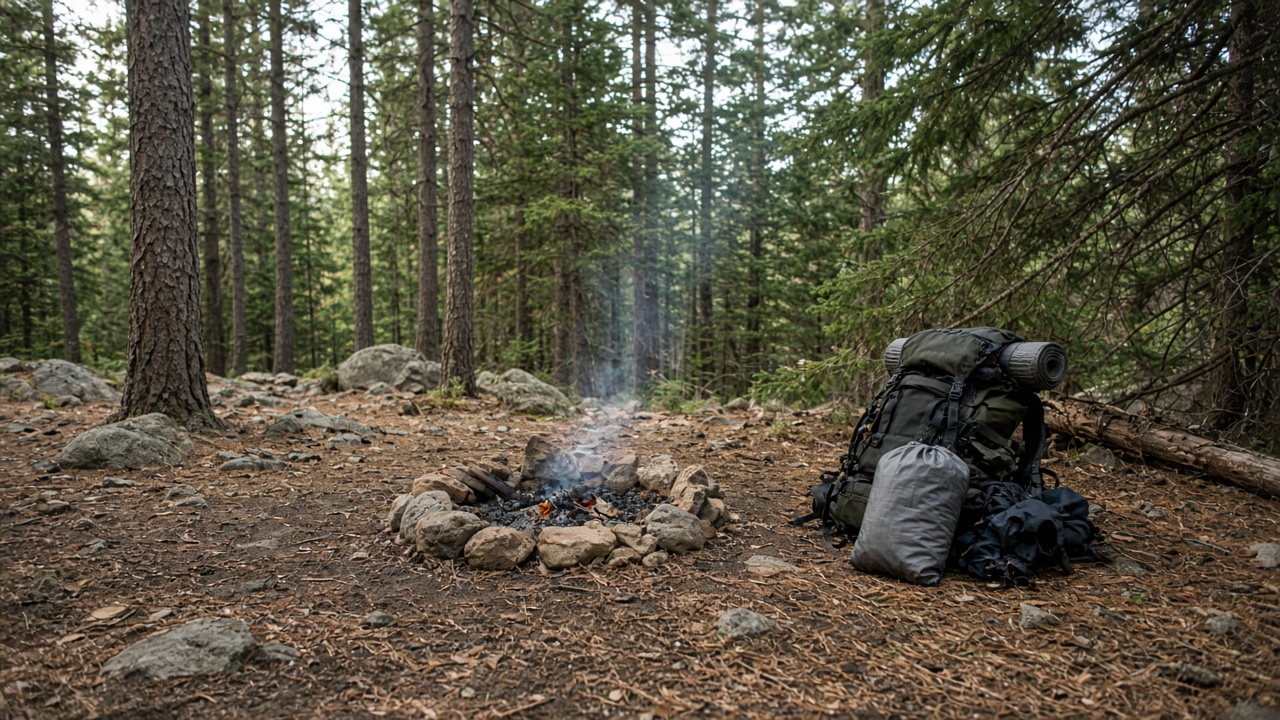
Arrive quiet. Keep sound and generators inside sleep hours. Use the existing fire ring and drown it. Pack trash. Leave a buffer.
Key takeaways
- Sound carries farther than you think.
- Distance is a kindness.
- Use the existing ring. Drown the fire.
- Leave the pad better than you found it.
Camping etiquette is not a personality test. It is how close you park, how late the speaker stays on, where the dish water goes, and whether the next person finds a fire ring or a bag of trash. In 2026 the rules have not changed. They just have more people ignoring them in the same pullouts.
Short version. Arrive before you are loud. Keep voices and generators inside a neighbor's sleep window. Pack the trash you brought and the trash you found. Do not cut live trees. Do not feed wildlife. what belongs in the pack if you are still stuffing a bag. the public-land version of this habit if you want the public-land version. Check live prices. We do not invent numbers.
This is not a scolding essay. It is the minimum that keeps a site usable after you leave.
Sound carries farther than you think
A canyon and a lake both bounce noise. Your "quiet conversation" is a radio two sites over. Headphones exist. Generators have hours. If the campground has a quiet time, that is the law of the place, not a suggestion you can negotiate with a smile.
Kids at dusk are part of camping. Kids at midnight with a tablet speaker are not. The difference is a parent who still has a clock.
Distance is a kindness
Do not camp on top of the only other tent in a fifty-site forest. Spread out. If the next pad is empty, leave it empty. Parking a truck so the headlights rake someone's tent at 11 p.m. is not an accident. It is a parking choice.
On public land the same rule is a buffer. If you can hear their dishes, you are too close unless the map forced you there.
Fire is not a right
Use the existing ring. Do not build a new one ten feet away because the old one "felt dirty." Do not leave a fire to "burn down" while you walk to the lake. Drown it until the ash is cold in your hand. If a restriction is posted, the restriction is the plan. a dark pad that does not need a fire if you also came for a dark sky and a fire you will not need.
Water and waste
Do not wash dishes in the creek. Strain food scraps into the trash. Scatter grey water well away from the bank if the site allows it, or pack it if the site is tight. Human waste goes in a vault, a wag bag, or a cathole that follows the local rule — not behind the nearest bush because it was dark.
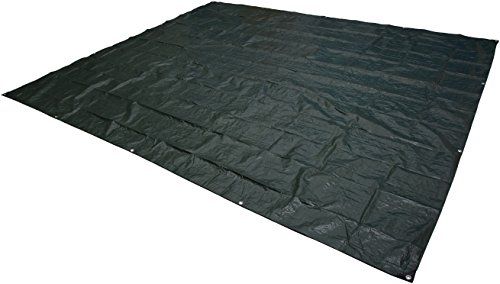
A cheap tarp keeps the kitchen off the dirt and makes the pack-out faster. That is the one kit item this essay will name.
Dogs, drones, and lights
A dog that runs into someone else's food is your problem. A drone over a nest or a tent is not content. Headlamps on flood at a picnic table are a wall of light. Point them down. a day that leaves people glad if the day should leave people glad you were there.
Leave the site better
Walk the pad before you leave. Pick up micro-trash. Put the picnic table back. Do not leave a "gift" pile of firewood that is actually painted pallet. The next person should not have to start by cleaning.
If you want the home version of this habit, the yard version of this habit. The same people who leave a yard usable leave a campsite usable.
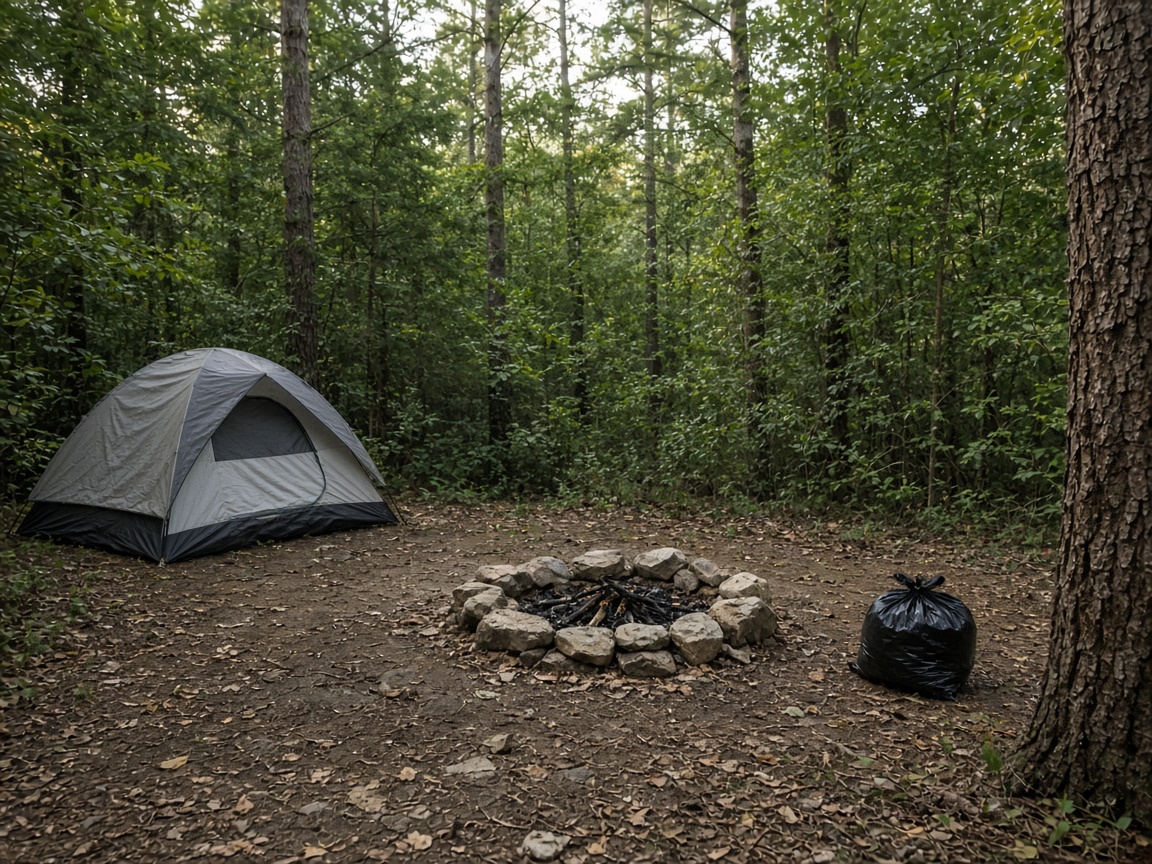
Etiquette is not a vibe. It is a checklist you can do tired. Do it tired. That is when the bad habits show.
Arrival is the first impression you cannot edit
Headlights on someone’s tent at 11 p.m. are a choice. Dim them. Keep voices down until you know whether the loop is already asleep. Set the kitchen in the morning if you rolled in late. A late arrival that is quiet is forgiven. A late arrival with a speaker and a slamming tailgate is how campgrounds write new rules.
Park in the pad, not in the two-track that is someone else’s walk to the vault. Slide-outs and awnings that eat the neighbor’s picnic table are not “using the site.” They are a land grab. If the site is small, the extra gear stays in the truck.
Kids, pets, and other people’s food
Children at dusk belong at camp. Children on scooters through a stranger’s guy lines do not. Walk them to the bathroom the first night so the path is known. A headlamp on flood in someone’s window is a wall. Point it down. Teach that once and you will not teach it every hour.
A dog that runs the loop is your liability. Leash rules are not a vibe. Food on a picnic table is an invitation to a dog you do not know. Put it away. If your dog barks at every zipper, that is a you problem at 6 a.m., not a “he’s friendly” speech. Dogs in the outdoors still need a plan at camp.
Creeks are not sinks
Soap in the current is still soap in the current. Strain. Carry. Scatter only where the site allows it and well away from the bank. A tarp under the kitchen catches the rice you will otherwise leave for mice. Mice then stay. The next person meets your mice.
Toothpaste spit on a fern next to the water is the same lecture. Walk. The AmazonBasics tarp we name is the cheap floor that makes this easier. Check live prices. We do not invent numbers.
The walk-around is the last chore
Circle the pad. Bottle caps, twist ties, a glow stick from a kid, the orange peel you thought was “organic.” Put the table on the pad. Do not leave a painted pallet as firewood. Do not leave food “for the next campers.” You are feeding raccoons and writing a bad review for the place.
If you used the ring, leave it clean and cold. If you did not, do not build a second one. A dark pad if you came for sky and can skip the fire. The best etiquette is often the fire you did not light.
Quiet hours are a clock, not a mood
If the board says 10 p.m., the generator and the speaker stop at 10 p.m. Headphones exist. A movie on a tablet at a picnic table is a wall of light and plot for the next site. Take it in the tent or take it home. Kids who are still loud at 10 are a parent job, not a campground personality.
Morning is the other quiet. A 5 a.m. slam of every door in a travel trailer is how loops invent new hatred. Soft close. Soft voice. The coffee can wait until you are sure the next pad is stirring, or take it to the truck.
Music that “isn’t that loud” across a lake is loud. Canyons bounce. If you can hear a zipper two sites over, they can hear your playlist. Assume they can. A day that leaves people glad includes the people you never met.
Firewood, rings, and the restriction
Do not bring bugs in a log from two states away if the sign says not to. Buy local or use what is already dead and down where that is legal. Painted pallet and dimensional scrap are not firewood. They are fumes and nails.
A fire you walk away from is not a fire you control. Drown. Stir. Drown again. Cold in the hand. If a restriction is posted, the restriction is the plan. A “small one” is still a one. The tarp we name is for the kitchen, not for a windbreak you drape toward a ring.
Sparks on a dry needle duff are how campgrounds close. Sit the ring in the existing dirt. Do not enlarge it. Do not build a keyhole that becomes a second pit. The next person should find one ring, not a village.
Sharing water, tables, and the only view
A lake shore that is public is not your living room. Leave space. A fishing rod already on a point does not owe you the hole. Wave and go around. Drones over a nest or a tent are not content. If you have to ask, leave it in the truck.
Vault toilets are a shared tool. Close the lid. Do not leave a pile of wipes the system cannot eat. If you packed it in and the vault is a horror, pack it out. That is the adult version of leave no trace, not a slogan.
If you want the home version of this habit, leave the yard usable. The same people who leave a campsite clean leave a porch someone else can sit on. Etiquette is one skill in two places.
The card you can read at the tailgate
Arrive quiet. Park in the pad. One existing fire ring, drowned cold, or no fire if the sign says no. Dishes out of the creek. Sound inside sleep hours. Dogs on the rule, not on the speech. Walk the pad before you leave. Pack your trash and the trash you found. That is the card. If a line on it is a hope, you are the problem the next person will meet.
Generators and speakers have a clock. Headphones exist. Headlights have a dim. Kids have a path to the vault that is not a scooter through guy lines. A drone has the truck if you have to ask. The AmazonBasics tarp we name keeps the kitchen off the dirt so the pack-out is faster. Check live prices. We do not invent numbers. The tarp is not permission to be loud.
Public land is the same card with more distance. If you can hear their dishes, you are too close unless the map forced you there. The public-land habit is this etiquette with a license in the pocket. Leave the site better. The next truck should not start by cleaning.
If you want a fire and the restriction says no, you wanted a stove. If you want dark sky, skip the flood and the ring. The best manners are often the thing you did not add. Do the checklist tired. That is when the bad habits show, and that is when this page earns the ink.
A painted pallet is not a gift of firewood. An orange peel is not “organic.” A pile of wipes the vault cannot eat is not someone else’s job. Close the lid. Leave space on a public shore. A rod already on the point does not owe you the hole. Wave and go around. Do the walk-around even if you are late for the checkout. The next person should find a pad, not a project.
Also in the magazine
Keep going with what belongs in the pack, the public-land version of this habit, a dark pad that does not need a fire, and the yard version of this habit. We only link pages that already live here. Check live prices. We do not invent numbers.
Frequently asked questions
What is the first camping etiquette rule?
Do not make the next person clean up after you. Sound, trash, fire, and distance are the rest.
When should generators stop?
When the campground says quiet time, or when a neighbor would reasonably be asleep. Headphones exist.
Can I build a new fire ring?
No. Use the existing one. Drown the fire until the ash is cold in your hand.
Where does dish water go?
Not in the creek. Strain scraps to trash. Scatter or pack grey water per the site rule.
Which tarp are you naming?
AmazonBasics Waterproof Camping Tarp. Kitchen off the dirt, pack-out faster. Check live prices.
Are drones okay at camp?
Not over tents or nests. If you have to ask, leave it in the truck.