
.308 bolt gun vs 6.5 Creedmoor for a western rifle
Written by John Wren|
In the same stock class, choose 6.5 Creedmoor for less recoil and less wind drift past 300 yards if you will confirm the zero. Choose .308 for closer shots, elk, and ammunition a licensed counter already stocks. The rifle and the ammunition stay at a dealer.
Key takeaways
- Compare rifles that weigh about the same.
- 6.5 Creedmoor recoils about a quarter less.
- Drop separates them past 300 yards, in wind.
- Confirm the come-up. The rifle stays a dealer.
A western rifle in one stock class is a hunting gun you can carry all day and still shoot from a bipod or a pack when the canyon opens up. Put a .308 Winchester and a 6.5 Creedmoor in two rifles that weigh about the same, wear about the same stock, and sit about the same in your shoulder, and the argument stops being “which brand” and becomes recoil, drop, and wind. The .308 hits a little harder up close, kicks more, and drops sooner once the shot stretches. The 6.5 kicks less, drifts less in a crosswind, and asks you to be honest about elk and about a zero you have actually confirmed. Both cartridges stay at a licensed dealer. This page is the difference you will feel, and the rest kit that lets you see it.
Short version. Choose 6.5 Creedmoor in that shared hunting-rifle weight if you will practice, if shots past 300 yards are normal for your country, and if you want to call your own hit. Choose .308 if your shots are inside that, if every counter on the way to the trailhead stocks the cartridge, and if you want the heavier bullet for elk without a debate. Do not buy a chassis gun and a mountain rifle and pretend you compared cartridges. Pair this with the .308 rifle page, elk bolt guns, and a wet-woods carbine if the hunt is brush and an AR-15, not a sage ridge. Check live prices on the sling, the bags, and the ears. The rifle stays at the counter.
Which cartridge do you want in the same hunting rifle?
Want the cartridge you will practice with enough times to know the come-up, in a rifle you will still carry at 9,000 feet. Same stock class means a synthetic or walnut hunting stock, a barrel you can live with on a hillside, and an all-up weight that is cousins — think a field rifle, not a 14-pound trainer next to a 6-pound mountain gun. If one rifle wears a brake and a chassis and the other wears a hunting stock and a sling, you learned about rifles, not about .308 and 6.5. Hold that constant. Then the 6.5 is the easier rifle to shoot well, and the .308 is the cartridge more western counters already have on the shelf in a hunting bullet.
Buy the 6.5 if recoil has ever made you blink, if antelope and mule deer in wind are the season, and if you will confirm a hunting zero before you leave the pavement. Buy the .308 if elk inside a few hundred yards is the animal, if you want a bullet weight the camp already understands, or if you may have to find a box of ammunition in a town that has one hardware store and a gun counter. A .300 Winchester Magnum is a different class of recoil and a different rifle. Do not let that page talk you into a magnum because two short cartridges felt too close.
What does “same stock class” actually rule out?
It rules out the fake comparison. A 6.5 in an 8-pound hunting rifle against a .308 in a 7-pound mountain rifle is not the same shoulder. A .308 with a muzzle brake against a 6.5 with a plain crown is not the same recoil story. A chassis with a rear bag built in against a classic stock you shoot off your pack is not the same drop story, because you will not shoot them the same. Ask the dealer for two field rifles in the same weight band, or shoot your own rifle with both only if you are comparing loads in one gun — which you cannot do across these cartridges. You need two barrels, or one honest decision.
Stock fit still beats cartridge trivia. Length of pull with the coat you will wear, a comb that puts your eye on the scope, and a sling stud that will take the sling you walk with are the fitting job. Fit the sling before you drive. A zero without a bench is how you find out the rifle wants a bag, a bipod, or your pack. The cartridge cannot fix a comb that punches you.
How much less does the 6.5 actually kick?
Less, in a way you notice on the second and third shot, not in a way that turns a .308 into a dangerous rifle for an adult who has practiced. In rifles of similar weight, published comparisons of ordinary hunting loads put 6.5 Creedmoor recoil roughly a quarter lower than .308, sometimes closer to a third, depending on bullet weight. A 140-grain class 6.5 load in an 8-pound rifle is the mild side of that pair. A 165- or 180-grain .308 load in the same weight of rifle is the stiffer side. You do not need a calculator to feel it. You need three shots each, with the same stock weld, and honest eyes on whether you flinched.
That gap is why people spot their own hits more often with the 6.5, and why a new hunter or a smaller-framed hunter often shoots the 6.5 better on a practice day. It is also why a .308 that you already shoot well, with a load you have confirmed, does not become a mistake because a chart said the other cartridge was softer. Recoil is practice. A rifle you fire twenty times before the season beats a softer cartridge you fire twice in a parking lot. A prone mat before rifle week is where you learn which one makes you blink. Muffs stay on. The ammunition stays a dealer purchase.
Do not chase the last bit of softness with a brake you have not shot from prone in the dust. Brakes cut recoil and throw blast at whoever is beside you on a rim. A suppressor is its own legal and dealer conversation, and it changes both cartridges. Compare bare hunting rifles first. Then decide if you hate the .308 enough to change cartridges, or if you only hated a light rifle and a heavy bullet you did not need.
Where do drop and wind actually separate them?
Inside 300 yards, with a hunting zero, a deer does not care which of these two you brought if the bullet is a hunting bullet and the hit is where you called it. The trajectories are cousins at woods and foothill ranges. The 6.5 starts to pull away as the shot goes toward 400 and 500 yards, and it pulls away sooner in a crosswind, because the longer 6.5 bullets that hunters actually use shed speed more slowly than a typical .30 hunting bullet. Published factory tables disagree on the exact inches because the zero, the bullet, and the velocity disagree. Treat any single chart as a rumor until you shoot your load. A box that says one come-up and a rifle that prints another is how western misses happen.
Use a 200-yard zero if your country is open and you want a point-blank window that covers a lot of deer without a dial. Use a 100-yard zero if you will dial or hold, and you want the close shot to be boring. Write the holds down. Do not trust a memory you built on a calm day when the ridge is blowing. Wind is the skill. Drop is the chart you confirm. The 6.5 makes both a little more forgiving. It does not make a 600-yard guess ethical.
| Question | .308 Winchester | 6.5 Creedmoor | Same-stock call |
|---|---|---|---|
| Felt recoil | Noticeably stiffer | About a quarter less, sometimes more | 6.5 if you flinch or practice a lot |
| Inside 300 yards | Enough, and common | Enough, and easier | Either, if you have confirmed it |
| Wind past 400 | More drift with typical hunting bullets | Less drift | 6.5, after you confirm the come-up |
| Elk | Heavier bullets, less argument | Fine for a hunter who places shots | .308 if the camp wants a .30 |
| Ammunition on the road | Every licensed counter | Common, not universal | .308 if the town is small |
Confirm drop and wind with the hunting load you buy at a licensed dealer. A borrowed chart is not your zero.
That hunt-focused walk-through is the right length of video before you pick a cartridge. Then confirm what it claims on your rifle, on paper, with a backstop.
Which animals are actually in range of this choice?
Pronghorn and mule deer in open country are where the 6.5 earns its reputation. You shoot more often in wind, the animals are not elk, and the softer recoil lets you watch the hit. A .308 does the same job inside the distance you have practiced. Whitetail in timber is a 200-yard problem pretending to be a cartridge debate. Either one, with a bullet built to open, is enough. The miss will be a rest, a strap, or a guess, not the caliber name on the barrel.
Elk is the honest fork. A .308 with a heavy hunting bullet is the traditional western answer, and a lot of guides still want a .30. A 6.5 Creedmoor with a tough hunting bullet, placed in the ribs by someone who has shot that far, kills elk. A 6.5 you have only zeroed at 100 yards does not become an elk rifle because the trajectory is flatter on a website. If elk is the reason you are buying, read elk rifles and decide whether you are in the 6.5’s practiced window or whether you want the .308 the camp already trusts. The magnum page is for people who have already decided the short cartridges are not enough rifle, and who will practice the extra recoil.
Barrel life is a hunter’s footnote, not a reason to choose. A .308 barrel, in the round counts most of us actually fire, will outlast a 6.5 barrel. You will not burn either one out in a decade of western seasons unless you also shoot matches. Buy the cartridge you will feed, not the one with the longer theoretical throat life.
How do you confirm recoil and drop before the ridge?
You confirm them on paper, from the rest you will use, at the distance you claim you will shoot. Front and rear bags on a bench or a tailgate tell you whether the rifle jumps and whether you are milking the trigger when the cartridge changes. A .308 that prints a honest group and a 6.5 that prints a honest group can then be compared for how hard they shove you and where they hit at 300 and, if you have the berm, at 400. A parking-lot impression is not a zero. A September range day is the weekday to do this while the line is quiet. Monday paper is the same idea closer to the season.
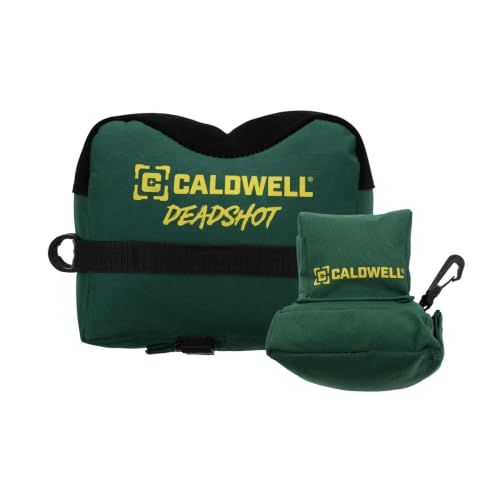
Caldwell Deadshot front and rear bags are the live rest we name: filled, water-resistant, and repeatable so the second rifle sees the same hold. Check live prices. Park them on a real bench. Do not rest a barrel on a rock and then blame the cartridge for the flier.
Accuracy work is calling the shot and reading the target before you click a scope. Glass that you trust is part of that. The carbine optic page is a different mount. A western bolt gun wants rings and a scope the dealer torqued, then a zero you write down. Bring the coat. A t-shirt zero and a puffy-coat shot are different rifles.
What sling belongs on a western bolt gun?
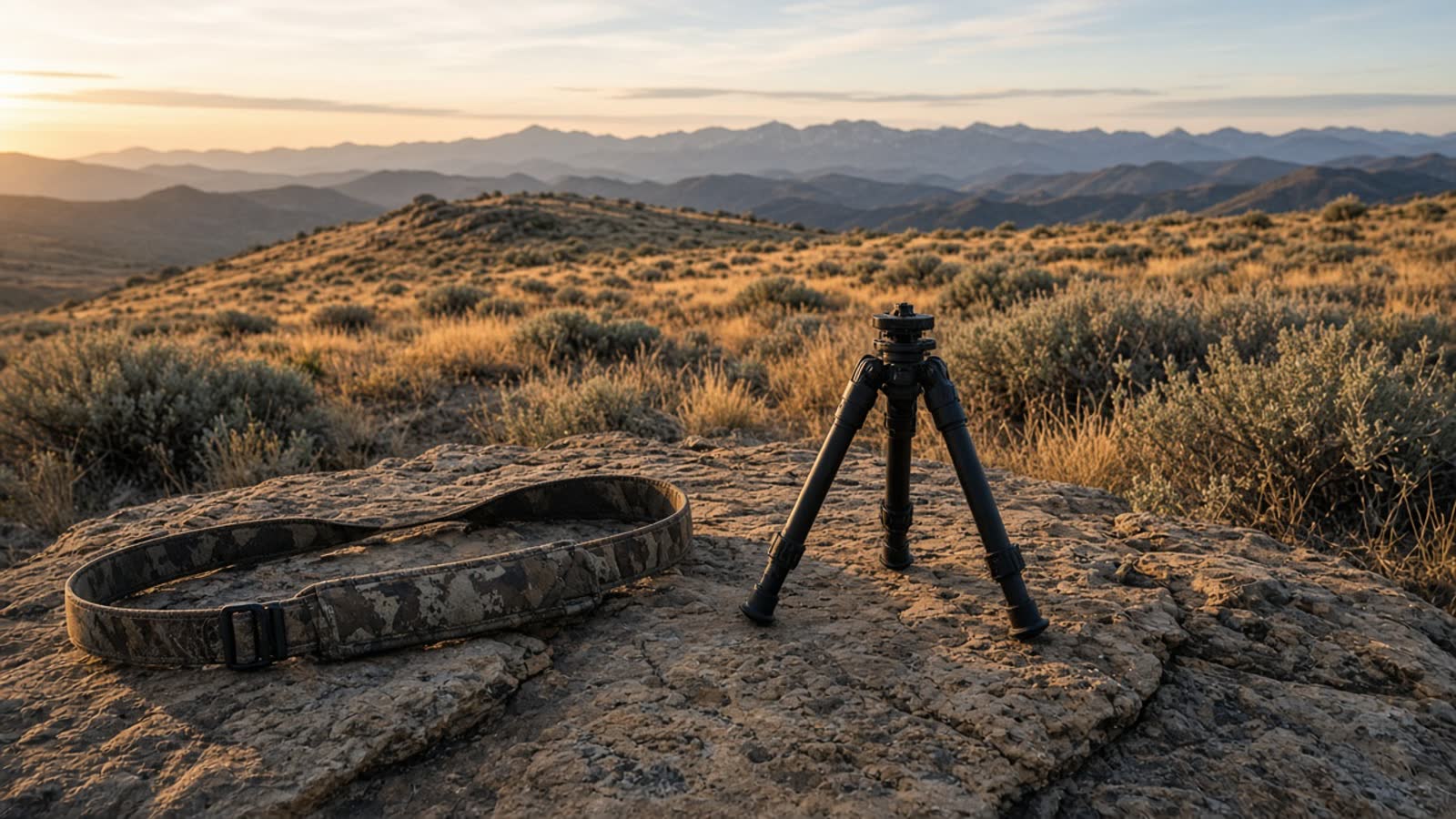
A wide, stretchy hunting sling on sling studs, not a carbine two-point you borrowed from an AR. The walk is hours. The shot is one still moment. Neoprene that stays on a shoulder and includes swivels you can clip to the studs is the ordinary western answer. Fit it with the pack straps on, because a sling that worked in the kitchen will slide under a pack belt.
The Butler Creek Comfort Stretch sling with swivels is the live strap we name for that carry: closed-cell neoprene, grippers that keep it on a shoulder, and swivels for a rifle that already has studs. Check live prices. Mossy Oak is the pattern on the listing we mean. Confirm the studs on your stock before you order a swivel the forend cannot take.

A bipod is a sit tool, not a walking stick. Many of these hunting rifles wear a sling stud, not an M-LOK rail. Buy a bipod that mounts the way your forend is actually built, from the same counter if you can, and leave it off until the spot is a prone. An M-LOK bipod from the carbine note does not belong on a stud-only stock. The October sling note covers the coat-and-swivel fitting if that is the only job left.
How do you pull a .30 or a 6.5 bore after a dusty zero?
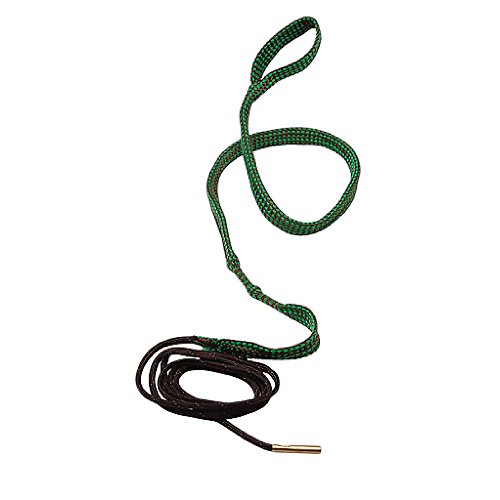
Dust, a damp morning, and a few confirmation shots are enough to justify a pull-through before the rifle goes in a case for the drive to the trailhead. A .308 bore wants a .30 snake. A 6.5 Creedmoor is not a .30. Do not pull a .308 snake through a 6.5 and call it close. Buy the diameter the barrel is. The .30 Viper below is for the .308 rifle in this comparison. If you choose the 6.5, ask the counter for a 6.5mm pull-through in that same family and do not guess.
Hoppe’s BoreSnake Viper for .30 and .308 is the live snake we name for the .308 side: a cone guide, more brush than the original snake, and a size stamped so you do not grab the .223 one from the carbine kit. Check live prices.
Home cleaning is still a rod, a patch, and a pad when you are back. The snake is the truck and the camp. Unload before you drop a weight down a bore. Case and lock the ride. A sock after the wipe, not before, is the sock page.
What do you wear on a windy ridge when you confirm the zero?
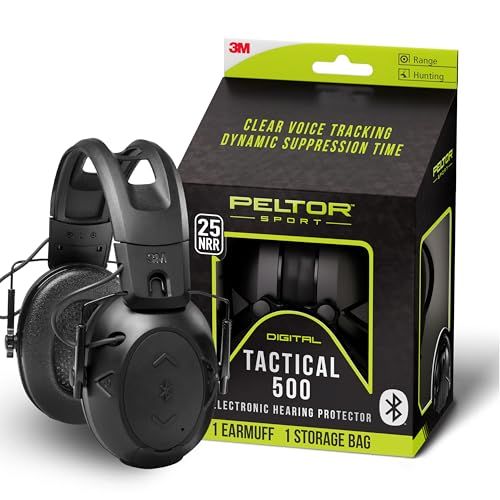
Western wind lies to cheap microphones and it lies to bare ears. Electronic muffs with a wind-aware voice setting let you hear a partner on the rim and still clamp down for a .308. Glasses stay on because dust, a brake if you brought one, and a scope bell at eyebrow height are all eye problems. A .308 and a 6.5 are both centerfire rifles. Neither is polite next to a rock face.
Peltor Sport Tactical 500 muffs are the live ears we name for a long zero in open country: electronic protection, a low-profile cup that clears a rifle stock, and Bluetooth if you want a wind call from a phone you already silenced. Check live prices. The ear-protection page compares more cups if these do not fit your head.
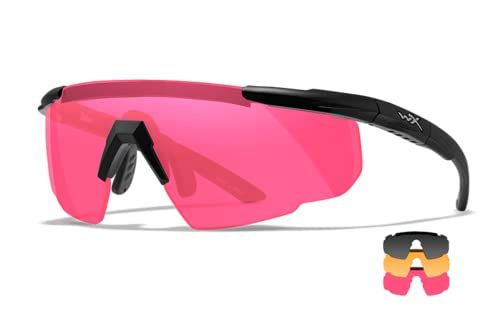
Wiley X Saber Advanced glasses are the live eyes: a matte frame and interchangeable lenses for glare on a rim and for flat light in a canyon. Check live prices. Eye protection is the longer fit note. Put them on before the first shot of the comparison, or you learned nothing about recoil except that you blinked.
A .308 will feel louder to the person without muffs even when the shooter says it was fine. That person is you, three seasons from now. The cartridge choice is allowed to be about your shoulder. It is not allowed to be about skipping ears.
What if the country is wet timber, not a western ridge?
Then a bolt gun in either cartridge may be the wrong shape, and a carbine argument is the right one. Direct impingement versus a piston AR-15 is the wet October hunt in the hardwoods: low round count, rain in the bore, a sling, and a rifle you already trust. A .308 AR is not an AR-15. If that is the rifle you think you want, ArmaLite pattern versus DPMS comes before any piston conversation, because the receivers do not mix. The AR-10 kit page is accessories after the pattern is real.
Do not solve a sage-ridge problem with a short carbine, and do not solve a wet-brush problem with a 24-inch barrel you will hate in deadfall. The stock class on this page is a western hunting rifle. The animal and the distance pick the cartridge inside that class. The country picks whether you are even on this page.
So which bolt gun do you take west?
Take the 6.5 Creedmoor if the rifles match, you will practice, the wind is part of your season, and you can see your hits. Take the .308 if the rifles match, your shots live inside a few hundred yards, elk is on the tag, or you want a cartridge a small-town counter can still sell you on a Sunday. Take neither if you have not shot them from the bags, in the coat, with muffs and glasses on. A flatter chart is not a zero.
The kit that makes the comparison honest is a hunting sling with swivels, filled front and rear bags, a .30 pull-through for the .308 — and a 6.5mm pull-through from the counter if that is the barrel you chose — plus muffs and glasses. Check live prices. The rifle and the ammunition stay at a licensed dealer. Write the come-up. Then go while the light is still the light you practiced in.
Frequently asked questions
Should I choose .308 or 6.5 Creedmoor for a western hunting rifle?
Choose 6.5 Creedmoor if the rifles weigh about the same, you will practice, and windy shots past 300 yards are normal. Choose .308 if your shots are closer, elk is the animal, or you need a cartridge every licensed counter stocks.
How much less does 6.5 Creedmoor recoil than .308?
In similar hunting-rifle weights, about a quarter less, sometimes closer to a third, depending on bullet weight. You will feel it by the third shot. Confirm it on your rifle instead of trusting a chart.
Which cartridge drops less at western ranges?
Inside 300 yards the difference is small with a hunting zero. The 6.5 drops less and drifts less as the shot stretches toward 400 and 500 yards, especially in wind. Confirm the come-up with your own load.
Is 6.5 Creedmoor enough for elk?
It is enough when the bullet is a hunting bullet and you have practiced the distance. Many western camps still prefer a .308 or larger. A flatter cartridge does not replace a confirmed zero.
Can I compare them if the rifles are different weights?
Not honestly. Same stock class means similar weight, a hunting stock, and no brake on one rifle only. Otherwise you learned about rifles, not about the two cartridges.
Where do I buy the rifle and the ammunition?
A licensed dealer. Bags, a stud sling, a .30 bore snake for the .308, muffs, and glasses are the kit for the comparison. Ask the counter for a 6.5mm pull-through if that is the barrel you chose.