
How to Zero a Hunting Rifle at 100 Yards Without a Bench
Written by John Wren|
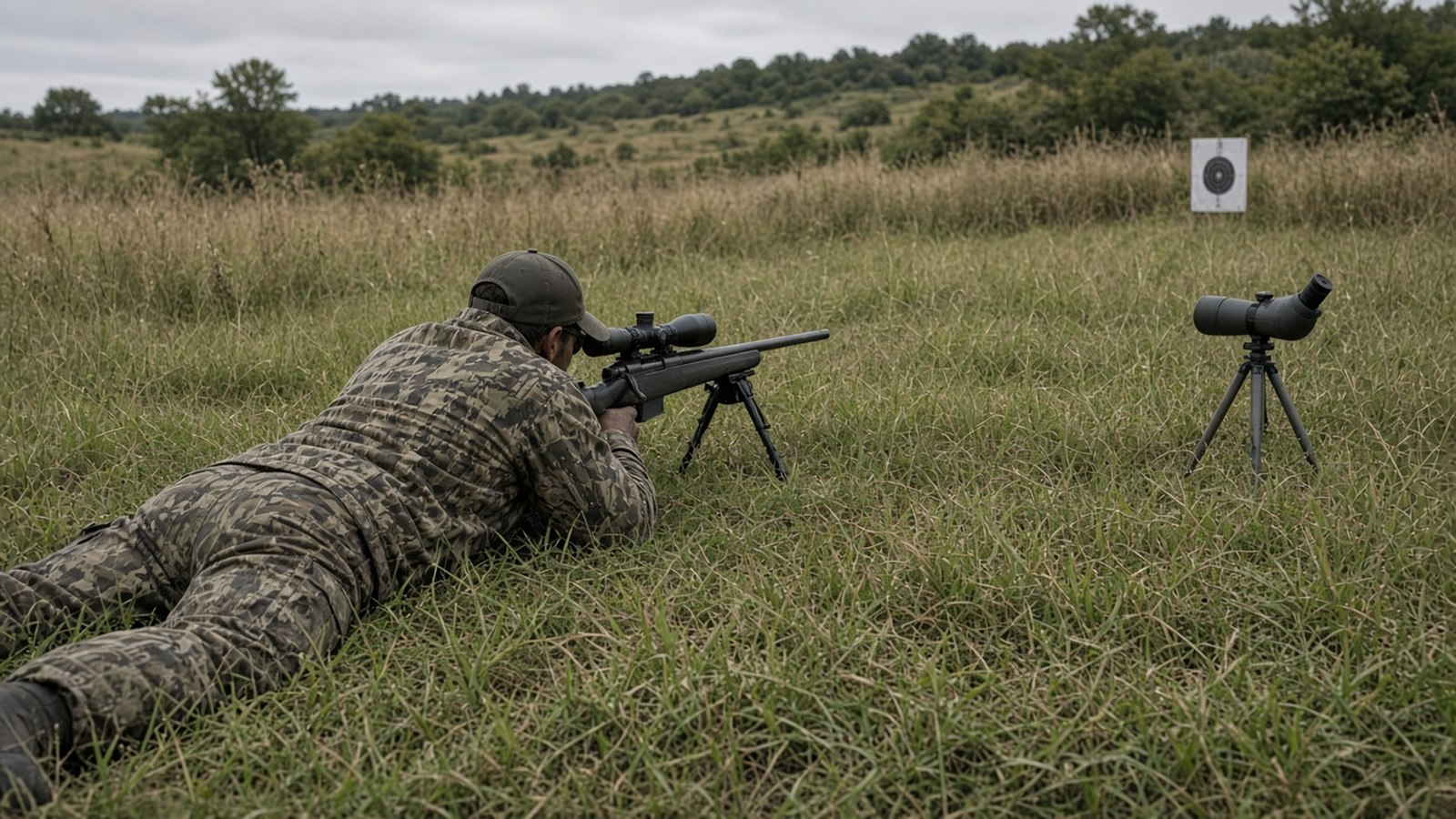
Bore sight before your first live round, build a two-point rest using a bipod and a rear support in the prone position, shoot three-shot groups and adjust once per group, and confirm your final zero from a realistic field shooting position.
Key takeaways
- Bore sight first to save ammunition and get on paper fast.
- Prone with a bipod and rear support rivals a bench for stability.
- Shoot three-shot groups, not single shots, before adjusting.
- Confirm zero from a field position, not just prone off a rest.
You do not need a shooting bench to zero a hunting rifle at 100 yards — you need a genuinely stable rest, a way to hold the rifle still enough to see your own group, and a method to make scope adjustments that does not walk the zero around while you fight for a steady hold. The short answer: bore sight first to get on paper fast, build a stable prone or sitting rest with a bipod and a rear support, and shoot in real three-shot groups rather than chasing single shots one adjustment at a time.
Short version. Bore sight before your first live round to save ammunition and frustration. Build the most stable position you can find without a bench — prone with a bipod and a rear bag or a rolled jacket is usually more stable than most field benches anyway. Shoot groups, not single shots, and make one adjustment at a time based on the group center, not the best or worst shot in it. Pair with a scope you trust to hold zero and confirm your final zero from field positions you will actually hunt from. Check live prices.
A bench is a convenience, not a requirement. Some of the most stable rifle positions in the field — prone with a bipod on firm ground — are actually steadier than a rickety folding table at a public range. What matters is eliminating your own body's movement from the equation as much as possible, regardless of what you are resting the rifle on.
Bore sighting first: get on paper fast
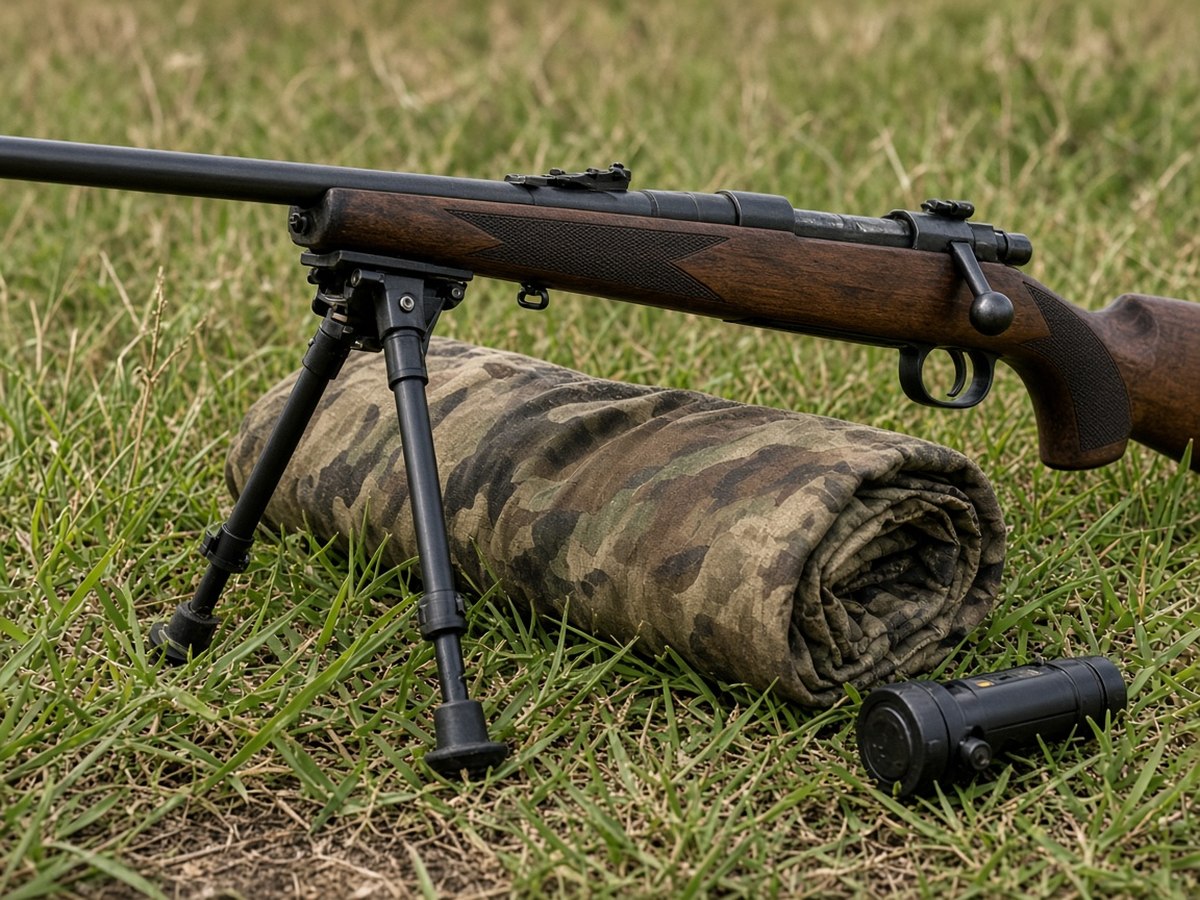
Bore sighting aligns your scope's crosshair roughly with the barrel's point of impact before you fire a single live round, which saves ammunition and prevents the frustrating experience of a first shot that misses the paper entirely at 100 yards. A magnetic laser bore sighter that attaches to the muzzle projects a dot you can use to roughly center your scope's reticle before shooting, and it works on virtually any rifle without needing a caliber-specific arbor.

Bore sighting gets you close, not exact — plan on making real adjustments based on actual fired groups afterward. Skipping this step entirely is not fatal, but it usually costs you three to five extra rounds walking the shot onto paper that bore sighting could have saved, which matters if you are trying to conserve premium hunting ammunition for the actual zeroing process.
Building a stable position without a bench
Prone is the most stable unsupported shooting position available, and it is genuinely easy to replicate the stability of a bench without one. Deploy a bipod under the rifle's forend, add a rear support — a small sandbag, a rolled-up jacket, or a purpose-built rear bag — under the stock's toe, and you have a two-point support system that rivals most portable shooting benches for actual stability.

If prone is not practical for your specific range setup — shooting over tall grass, from a raised platform, or at a range that only allows a bench or standing positions — a seated position using shooting sticks or a tripod, combined with your knees and elbows for additional bracing, is the next most stable option. Whatever position you choose, eliminate as much of your own muscular tension as possible; let the rest and the ground support the rifle's weight rather than fighting to hold it steady with your arms.
Shoot groups, not single shots
A single shot tells you almost nothing reliable about your rifle's actual zero, because normal shot-to-shot variation in ammunition, your own hold, and barrel harmonics all contribute noise to any individual shot. Fire a genuine three-shot group before making any scope adjustment, and use the center of that group — not the best shot and not the worst shot — as your reference point for where the rifle is actually printing.
Let the barrel cool between groups if you are shooting a hunting-weight barrel rather than a heavy target profile; a barrel that heats up across five or six rapid groups can shift point of impact meaningfully as it warms, which will make your zeroing process chase a moving target instead of a fixed one. Two or three minutes between groups is usually enough for a typical sporter-weight hunting barrel.
Making scope adjustments correctly
Most modern hunting scopes adjust in 1/4-minute-of-angle clicks at 100 yards, meaning each click moves the point of impact roughly a quarter inch. Measure the actual distance from your group's center to your point of aim, convert that to the number of clicks needed, and make the full adjustment in one pass rather than creeping toward zero with a series of small guesses — creeping wastes ammunition and introduces more opportunities for error from additional shot-to-shot variation.
Confirm the adjustment with a fresh three-shot group after every change, and do not declare a zero final until you can reproduce a tight, centered group on demand rather than getting lucky once. A quality scope with reliable, repeatable tracking makes this whole process faster and more trustworthy — a scope that does not track true to its stated adjustments will fight you throughout this entire process regardless of technique.
Wind, light, and range conditions that skew results
Wind at 100 yards has a smaller effect than at longer ranges, but a stiff crosswind can still push a lighter bullet enough to distort your group and lead you to a slightly incorrect zero. Choose a calm morning or evening if you have the flexibility, and note the wind conditions if you must zero in a breeze, so you can account for a possible small horizontal bias in your final confirmation.
Mirage — the shimmering distortion visible through a scope on a hot, sunny day looking across pavement or dry ground — can make your target appear to shift slightly and cause you to aim at a slightly wrong point without realizing it. Zero in the cooler parts of the day when possible, and be skeptical of a "bad" group shot through heavy mirage before assuming your rifle or ammunition is the problem.
Confirming zero from real field positions
A rifle zeroed exclusively from a rock-solid prone bipod position can shoot to a meaningfully different point of impact from field positions like kneeling, sitting with sticks, or offhand — largely due to how differently the rifle's forend and stock are supported and gripped in each position. Once your primary zero is confirmed and repeatable, fire at least one group from the field position you expect to use most often on an actual hunt, and note any consistent difference.
This is not about re-zeroing for every position — it is about knowing, before opening morning, whether your kneeling shot tends to print an inch high or your offhand shot drifts slightly left, so you can make a mental correction in the field rather than discovering it on a shot at a live animal. Serious hunters who take this extra step consistently make better first-shot decisions when a real opportunity presents itself under field conditions.
Consistent cheek weld and grip matter more than the rest
Even the most stable bipod-and-bag rest cannot compensate for an inconsistent cheek weld or grip pressure from shot to shot. If your head position on the stock changes slightly between shots, your eye sees a slightly different sight picture through the scope even if the rifle itself has not moved, which introduces error that looks like the rifle is not holding zero when the real issue is your own inconsistency. Find a comfortable, repeatable cheek position before your first shot and consciously return to that exact position for every subsequent shot.
Grip pressure should be light and consistent — a death grip on the stock or forend introduces muscle tremor and inconsistent pressure that a relaxed hold avoids entirely. Let the bipod and rear bag do the actual work of supporting the rifle's weight; your hands are there to guide and steady, not to clamp down and fight the position. This is a habit worth building during zeroing, because it is the exact same discipline that produces a good shot on game later.
Common mistakes that waste ammunition and patience
Adjusting after every single shot instead of after a full group is the single most common mistake — it treats normal shot variation as if it were consistent rifle error, leading to a zig-zagging series of adjustments that never actually converges on a true zero. Slow down and commit to the three-shot-group discipline even when it is tempting to "fix" an apparent problem after just one shot.
Shooting a cold, clean barrel for your very first group and then continuing with a barrel that is progressively fouling and heating up is another common source of frustration. Many rifles show a small point-of-impact shift between a clean cold barrel and a fouled warm one — if you plan to hunt with a clean, cold first shot, it is worth confirming that your zero holds true for that exact condition rather than only for a barrel that has already fired ten rounds and settled into a groove.
Scope mount torque and a returning zero
A scope that is not mounted with correctly torqued rings and base screws can shift zero after recoil, transport, or even temperature changes, which will make an otherwise perfect zeroing session meaningless within a few days. Use a torque wrench set to the ring and base manufacturer's specifications rather than guessing at "hand tight," and check that torque periodically through the season, especially after any hard bump or a long drive on rough roads to a hunting area.
If you ever remove and remount the same scope in the same rings at the same torque specification, many quality scope and mount combinations will return to a very close approximation of the original zero — a useful fact if you need to remove a scope for travel or storage, but always confirm with a fresh group rather than assuming a "return to zero" claim holds for your specific setup without verification.
| Step | Why it matters | Watch-out |
|---|---|---|
| Bore sight first | Gets you on paper fast, saves ammunition | Not a substitute for live-fire confirmation |
| Bipod + rear support, prone | Rivals a bench for actual stability | Let the rest support the rifle, don't fight it |
| Three-shot groups | Filters out normal shot-to-shot noise | Let the barrel cool between groups |
| Confirm from field positions | Reveals real position-to-position differences | Not a re-zero — a mental correction note |
Our take: bore sight, build a two-point rest on the ground, shoot real groups, adjust once per group rather than creeping, and confirm your final zero from a field position before you call it done. That process gets you a genuinely reliable zero without ever needing a bench. Check live prices.
Frequently asked questions
Do I need a shooting bench to zero a rifle?
No. A prone position with a bipod and a rear support is often more stable than a portable field bench. What matters is eliminating your own body movement, not what furniture you use.
Should I bore sight before shooting live rounds?
Yes. A magnetic laser bore sighter gets your scope roughly aligned before your first shot, which saves ammunition and gets you on paper faster at 100 yards.
Why should I shoot groups instead of single shots when zeroing?
A single shot includes normal shot-to-shot variation and tells you little. A three-shot group's center gives a far more reliable reference point for making scope adjustments.
How much does each scope click move the point of impact?
Most hunting scopes adjust in 1/4-minute-of-angle clicks at 100 yards, roughly a quarter inch per click. Measure your group's offset and make the full adjustment in one pass.
Does wind affect zeroing at 100 yards?
Less than at longer range, but a stiff crosswind can still skew a group with lighter bullets. Zero on a calm day when possible for the cleanest results.
Should I confirm my zero from field shooting positions?
Yes. A rifle zeroed only from a rock-solid prone rest can print slightly differently from kneeling or offhand positions. Fire a confirmation group from your likely hunting position before the season.