
Red dot vs LPVO for a deer carbine inside 200 yards
Written by John Wren|
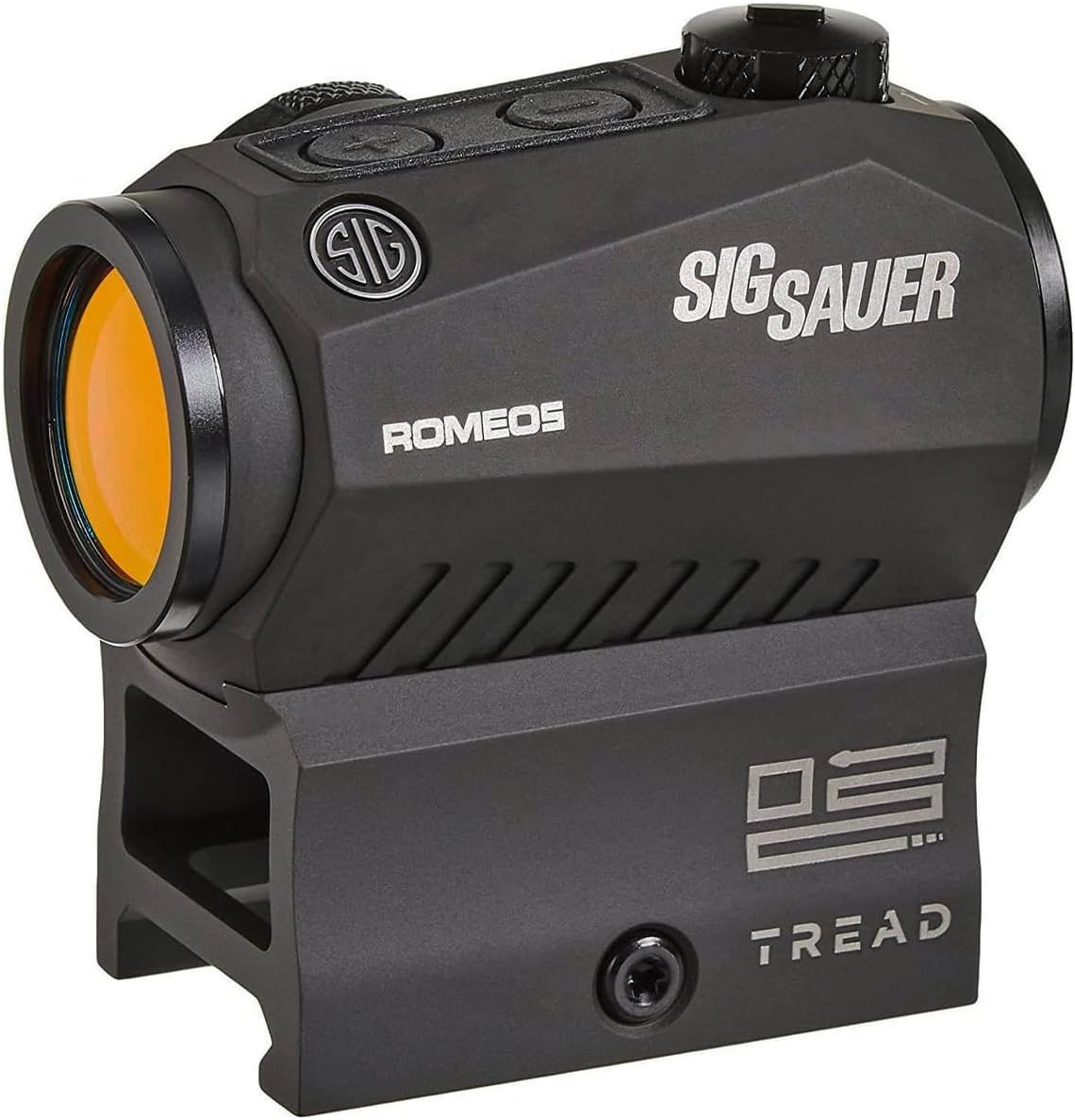
Buy a SIG Romeo5 if the deer are close and you hunt with both eyes open. Buy a Vortex Strike Eagle 1-6x24 if you also need to see a shoulder out toward 200, and leave it on 1x until you look. Zero on paper. The carbine stays at a licensed dealer.
Key takeaways
- A red dot wins when the deer is already close.
- A 1-6x wins when you still have to see the shoulder.
- Leave the variable on 1x while you walk.
- The carbine and the ammunition stay at a licensed dealer.
A deer carbine inside 200 yards is a short rifle you can still get on a shoulder in brush, with an optic that shows you a deer you are allowed to shoot. The choice is a red dot or a low-power variable. A red dot is the faster picture when the deer is close and the cover is thick. A 1-6x variable is the better picture when you still have to tell a buck from a doe, or a hole in the brush from a shoulder, somewhere between the creek and the far edge of the field. Past that job, a big hunting scope is a different rifle.
Short version. Buy a closed red dot if most of your deer are inside a hundred yards and you will hunt with both eyes open. Buy a 1-6x second-focal-plane scope if the same carbine also has to make a careful shot out toward 200. Leave the variable low until you need to look. Confirm either optic on paper before the season. The carbine and the ammunition stay at a licensed dealer. AR optics is the wider carbine page. Reflex sights is the dot page. This page is the deer-distance fork.
Who should put a red dot on a deer carbine?
Put a red dot on the carbine if the hunt is timber, a cutover, a sendero you can see across, or a field edge where the deer is already close when you see it. The dot does not ask you to center an eye box. You bring the rifle up, the dot is on the shoulder, and the other eye is still watching the deer move. That is the whole advantage, and it is a real one at 40 yards in second-growth where a scope tunnel makes you late.
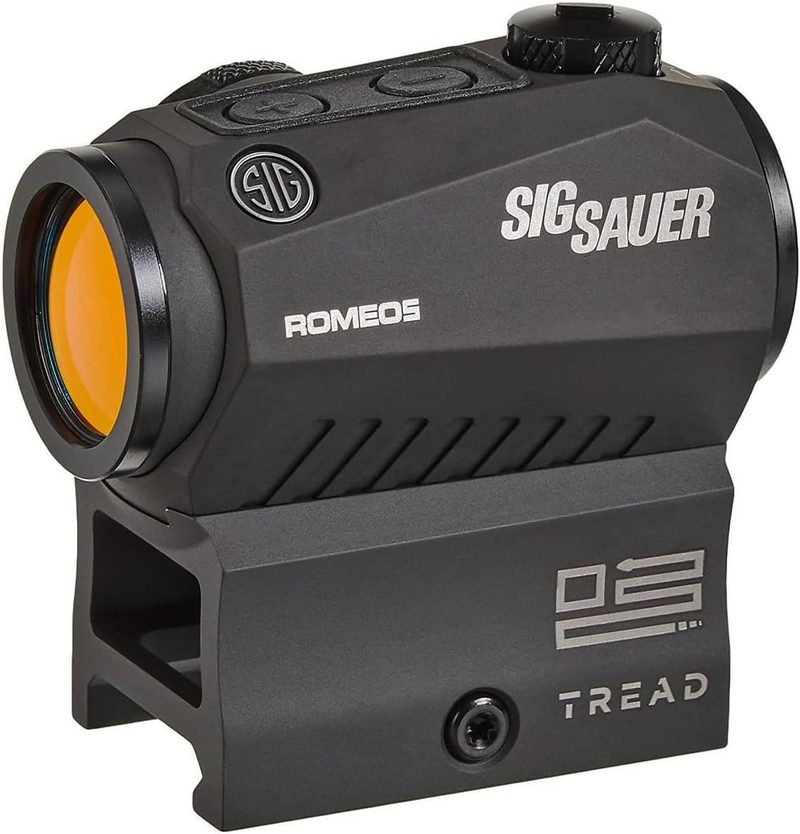
A closed tube is the deer version of that idea. An open reflex window collects rain, a thumb, and a branch. A tube with a lens on both ends is what you want when the carbine rides a sling through wet oak. The SIG SAUER Romeo5 1x20mm Tread is the closed dot to buy for that job: a 2 MOA dot, motion-activated illumination, a side-loading battery, and two mounts in the box, a low Picatinny piece and a taller co-witness riser. On a carbine that already has a cheek weld, start with the low mount. The tall riser is for a flat stock that needs the dot up in line with the sights. Try the height at the counter with the coat you will wear. A hood changes the weld. A bare face in the shop does not.
The dot is enough when the deer is a clear shape and the distance is a distance you have already shot. A 2 MOA dot covers roughly four inches at 200 yards. On a broadside deer that is a coarse point, still inside a chest, and it gets coarse fast if the deer is quartering or standing in a screen of twigs. If your season is mostly those screened shots, the dot is the wrong primary optic even if it is delightful at 60 yards. Read a first deer checklist before you decide the woods are always close. Some public ground opens into a cut the week after the leaves drop.
Who should put an LPVO on a deer carbine inside 200 yards?
Put a low-power variable on the carbine if one hunt includes both the thick stuff and a shot you have to judge. A 1x setting is there so the close deer is still a both-eyes problem. Six power is there so a deer at the far side of a cut is antlers, a shoulder, and a background you can separate. That is the LPVO job inside 200 yards. It is a poor job for a 4-16 hunting scope on a 16-inch gun, and it is a poor job for a red dot you cannot see through at dusk when the deer is a gray shape in gray brush.
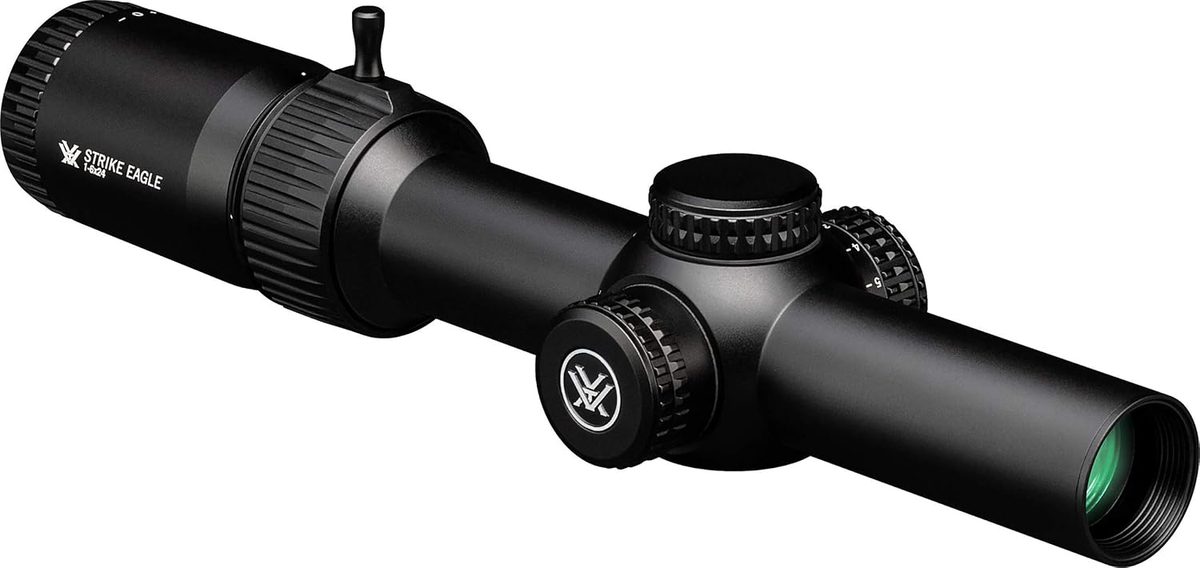
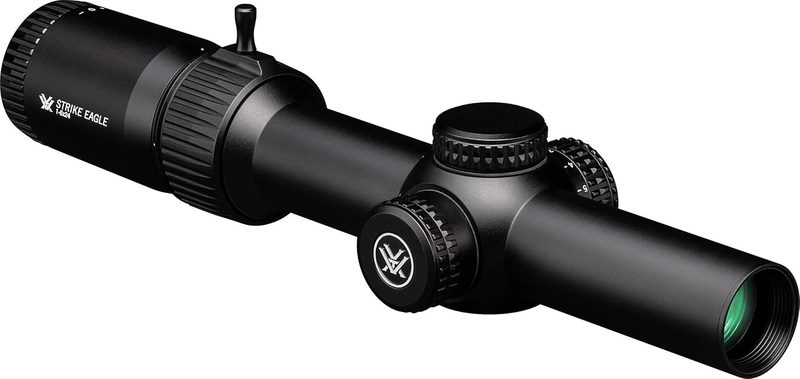
The Vortex Strike Eagle 1-6x24 is a second-focal-plane scope with an illuminated BDC3 reticle and a throw lever on the power ring. Second focal plane means the reticle stays the same apparent size while the deer gets bigger as you roll the power up. That is the hunting behavior you want. A first-focal-plane ladder that shrinks to a speck at 1x is a different sport. True 1x, or something close enough that the picture does not magnify when you are hunting, is the requirement. A scope that bottoms at 1.5x and feels like a tunnel is a small variable, and it will feel slow in the same timber where the dot felt instant.
The BDC marks are a bonus you earn on paper. They are a guess until you shoot them with the load you will hunt. A hash that was drawn for one cartridge at one velocity will lie about a different carbine. Inside 200 yards with a legal deer cartridge, the center of the reticle is the aiming point for almost every shot you will take if the zero is honest. Use the hashes only after you have seen where they hit. Long-range glass is where a reticle full of marks starts to earn its keep. A deer carbine inside 200 yards can live without that tree.
| Question | Red dot | 1-6x LPVO | Our call inside 200 |
|---|---|---|---|
| Timber under 100 yards | Both eyes, no eye box | Fast only if you left it on 1x | Red dot |
| A cut or edge out toward 200 | Coarse aiming point | You can see the shoulder | LPVO |
| Battery dies at dusk | The aiming point can vanish | Etched reticle remains | LPVO if you forget batteries |
| Weight on a sling all day | Ounces | Scope plus a 30mm mount | Red dot |
| Identifying antlers in brush | You are guessing | Roll the power up, then back down | LPVO |
Match the optic to the shot you actually get. A carbine that hunts both timber and a field edge spends its life on the LPVO, parked at 1x until you look.
What actually changes between a dot and a 1-6x at deer distance?
Inside 75 yards the dot wins on time. You are not solving a trajectory. You are getting the rifle up while the deer is still in the opening. The LPVO can do that shot if it is already on 1x, the throw lever is where your fingers expect it, and you have practiced the mount enough that the eye box is boring. If you have to fish for the picture, the dot was the right optic and the scope is costing you the deer.
From there out to 200 the problem changes. You need to see which deer it is, whether the shoulder is clear, and whether a twig sits on the line. Six power does that. It also shrinks the field and tightens the eye box, which is why you do the looking and then come back down if the deer is about to move. Hunting at 6x while you walk is how people miss a deer that was 30 yards off the trail and never in the tube.
Light is the other split. A red dot painted on a dark deer at the end of legal light can bloom, or it can disappear into a dark shoulder if you left the brightness too low at noon and never touched it. Set the brightness in the light you hunt, in the timber, with the sun where it will be. An etched reticle in the Strike Eagle is still there when the battery is dead. The illumination is help. It is the aiming point with the battery out. That single fact is why a lot of deer hunters who started on dots come back to a low-power variable once the shots stop being automatic.
Recoil and the cartridge are the rifle's problem, and they stay at the licensed counter. A carbine in a deer cartridge has to be legal where you hunt. Some states and some seasons are particular about bottleneck cartridges, magazine limits, and straight-wall rules. Read the regulation for the dirt you will stand on before you fall in love with a dot. A .308 hunting rifle is often the simpler deer gun if the carbine was only a habit. AR-10 pattern versus LR-308 pattern is a receiver argument, and it is a different shopping trip from the optic on a deer carbine you already own.
How do you mount each optic so the zero survives the woods?
A red dot on a carbine rail wants the mount the stock actually fits. Tighten the crossbolt until the mount does not walk, then confirm the dot still sits where your eye finds it with a hood up and with a hood down. Loctite belongs where the mount maker says it belongs. A mount that walks in a scabbard will walk your zero, and you will blame the deer. Take the carbine out of the gun case at the house, shoulder it in the coat, and only then decide the riser is the one you will hunt.
A 1-6x wants a 30mm cantilever, usually with a couple of inches of forward offset, so the eyepiece meets your eye when the stock is already in the shoulder. Rings that sit the scope too far back turn every shot into a neck crane. Rings that sit it too far forward make you climb the stock. Buy the cantilever that matches a 30mm tube from the same shop that mounts the scope, and have them set eye relief with you behind the gun.
Torque is a number on the mount, and the shop should use it. Over-tight rings crush a tube and shift a zero the first time the rifle gets hot. Under-tight rings let the scope slip under recoil from a deer cartridge, which is a harder shove than a .22. Witness-mark the ring screws with a paint pen if you want to see a slip later. Then leave the rings alone in camp. Accuracy work is a repeatable rest and a target you can call. Shoot the mount you will hunt before you trust it in a blind.
How do you confirm the carbine before deer season?
Confirm on paper at the distance you will trust, with the ammunition you will hunt, from the rest you will actually use. A 100-yard zero is the usual starting point for a deer carbine that might also shoot closer. Closer hits a little high with most deer cartridges. Farther, out toward 200, you need to have seen the drop with your own load. Do that on a weekday while the line is short. A Monday zero and a September range day are the same idea: bags, a target, and time. The rifle stays at a licensed dealer. The ammunition does too.
Shoot the red dot from the low mount and from the riser if you are still deciding. The point of impact can shift a little with height if your hold changes, so zero the height you will hunt. Shoot the LPVO at 1x and at 6x. Second focal plane should keep the center zeroed across the power range. Confirm that anyway. A scope that walks when you roll the ring is a broken scope, and you want to know in September.
Wear the eyes and the ears you will wear when it is loud. Rated glasses and muffs that still let you hear a cease-fire belong on the same trip as the zero. A carbine in a deer cartridge is a rifle. Treat the muzzle that way. Unload before the case. A chamber flag if the range wants one. Pattern the sling so the optic does not slam a tailgate.
What fails in the woods when the optic was fine at the bench?
Batteries fail because nobody changed them when the clocks changed. A Romeo5 that wakes on motion will still be dark if the cell is done. Put a fresh cell in before the season, carry a spare in the pack in a way that cannot crush it, and learn the brightness buttons with gloves. An LPVO with a dead illuminator is still a scope. A red dot with a dead battery is a piece of glass until you swap the cell. That is the trade you accepted for the speed.
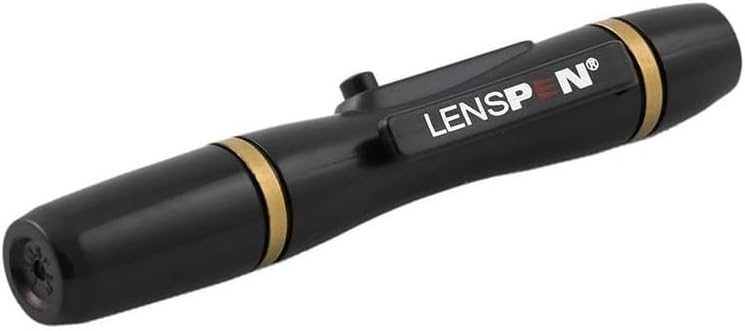
Rain and a fingerprint fail the other way. A smeared ocular lens turns 6x into a guess and turns a red dot into a halo. Brush the grit off before you touch the glass. Then a carbon pen is the pocket tool: a LensPen NLP-1, with a brush on one end and a carbon tip that does not drip solvent into a seal. Use it on the outside of the lenses. Keep it out of the turret caps. Check the live price. A soaked scope dries in the cabin with the caps off, objective down, so water leaves. A soaked scope baked on a dash fogs for a week.
Fog on the inside of a tube is a warranty trip. Do not take a red dot apart in a motel. Do not take a scope apart either. Nitrogen and the seals are the product. If the picture clouds from the inside on a dry morning, that optic is done for the hunt. Carry the other sight only if you have already zeroed it. A backup you have never shot is a story you tell after you miss.
The rest of the misses are holds. Shooting off a backpack, a knee, or sticks is a different zero from a bench if you muscle the stock. Practice the position you will use when a deer is in the cut and there is no bench. Hunting scopes on a heavier rifle are the conversation once the carbine is no longer the gun you carry all day. Keep this carbine's optic matched to 200 yards and in.
Which optic should you buy for this carbine?
Buy the Romeo5 if your deer are timber deer and you will actually hunt with both eyes open, a fresh battery, and the low mount that fits the stock. Buy the Strike Eagle 1-6x24 if the same carbine has to identify a deer and place a shot out toward 200, and if you will leave it on 1x until you need to look. Have a shop set the 30mm cantilever to your eye relief. Zero both powers. Ignore the BDC hashes until paper says they are true for your load.
Skip a high-power hunting scope on this carbine. Skip an open reflex if the rifle lives in rain. Skip a first-focal-plane ladder if 1x has to feel like a dot. The carbine stays at a licensed dealer. The dot, the 1-6x, and a lens pen are the optic kit you can order. Shoot them before the leaves are gone.
Frequently asked questions
Is a red dot enough for deer inside 200 yards?
A red dot is enough when the deer is a clear shape inside about 100 yards and you have already shot that distance. At 200 yards a 2 MOA dot covers roughly four inches, which is a coarse point if the deer is in brush. When you have to judge antlers or pick a hole, use a 1-6x.
Is an LPVO too slow for a timber shot?
An LPVO is slow if you left it above 1x or you still have to find the eye box. Parked at 1x, with a throw lever you have practiced, a 1-6x handles most timber deer. A red dot is still the faster picture when the deer is already close.
What power should a 1-6x sit on while you still-hunt?
Leave it on 1x while you move. Roll the power up to look at a deer that is standing, then return to 1x before you walk again.
Do the BDC marks replace a paper zero?
No. Zero the center of the reticle on paper with the load you will hunt. Use a hash mark only after you have seen where that mark hits with that same load.
Where do I buy the carbine?
At a licensed firearms dealer. The Romeo5, the Strike Eagle 1-6x24, and a LensPen are the optic kit. The carbine and the ammunition stay at the counter.
Will a red-dot zero carry over if I switch to an LPVO?
No. A new optic, a new mount height, and a new cheek weld are a new zero. Confirm the 1-6x at 1x and at 6x before you hunt with it.