
Best Eye Protection for Shooting (2026)
Written by John Wren|

Buy ballistic-rated shooting glasses (Wiley X Saber, ESS Crossbow, Smith Aegis) that meet Z87.1+ and, if you shoot steel, a military ballistic spec. Sunglasses are for the truck. Eyes and ears are one kit.
Key takeaways
- Z87.1+ is the floor. Ballistic military specs are for steel and carbine.
- Glasses stop fragments, not bullets. Wear them anyway.
- Temples have to live with ear pro or they launch.
- The best pair is the one on your face when you uncase the gun.
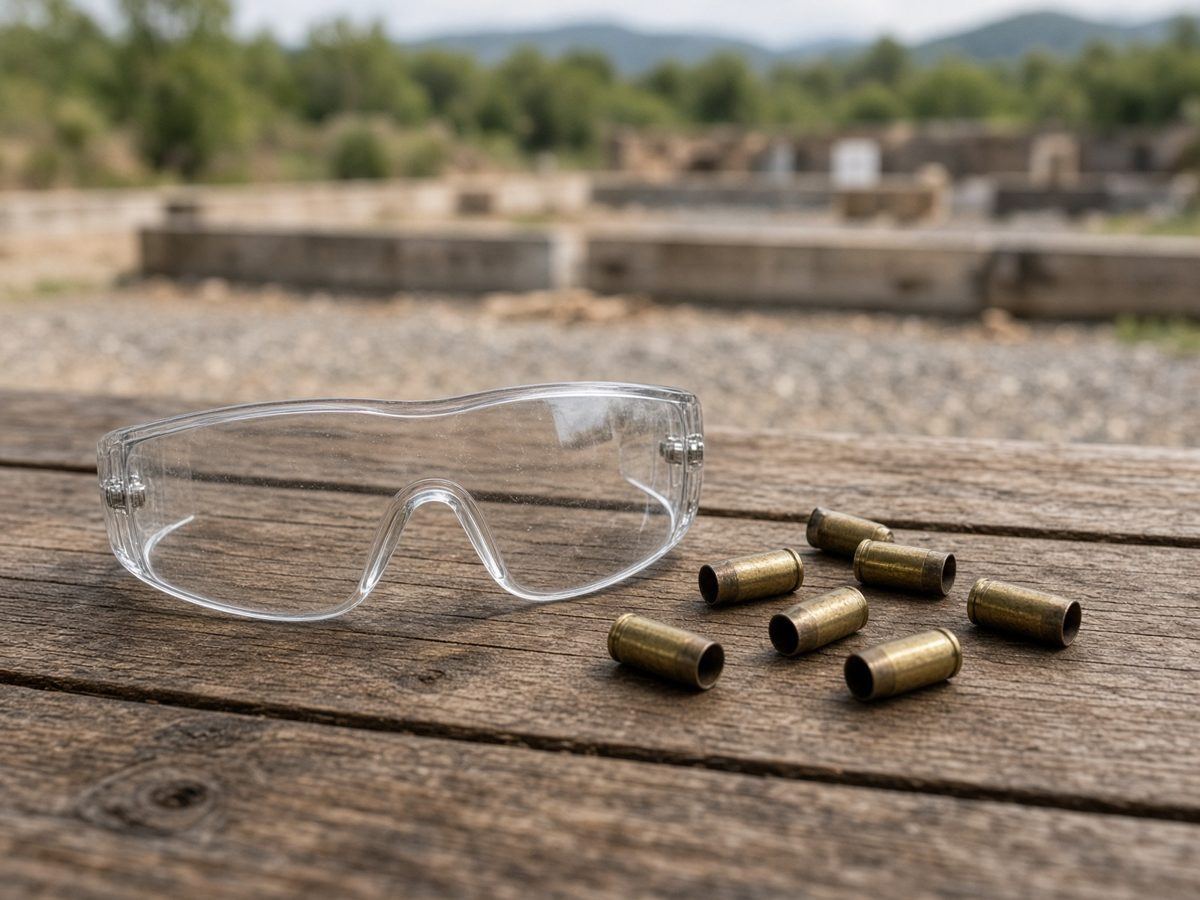
Shooting glasses are not sunglasses. They are a piece of ballistic plastic that sits between your eyes and everything that comes off a gun: brass, primer spall, jacket fragments, branches, and the unscheduled piece of clay that comes back faster than the one you broke. Regular eyewear can take a lucky hit. Rated shooting glasses are how you stop making luck the plan.
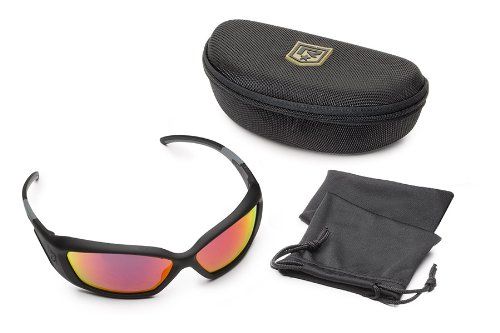
Short version. Buy glasses that meet ANSI Z87.1+ at a minimum, and MIL-PRF-32432 or equivalent if you shoot a lot of steel, carbine, or shotgun. Wiley X Saber, ESS Crossbow, and Smith Elite Aegis are the names that show up in serious kits. Revision Hellfly is the ballistic sunglass cut. Radians Shift is the honest range pair you can keep in a range bag and not cry if they get sat on. Pair them with ear protection — eyes and ears are one kit, not two hobbies.
Clear lenses for indoor and dusk. Smoke or bronze for sun. Yellow or vermillion for overcast clays. Interchangeable systems exist because one tint is a compromise. A foam gasket helps on a windy range and on a winter hog hunt. A glasses strap keeps them on your face in a recoil surprise. Cheap hardware-store “safety glasses” that are Z87 but not Z87+ are better than nothing and worse than a real ballistic lens if you are next to someone else’s 5.56.
What rating should shooting glasses actually meet?
ANSI Z87.1 is the industrial baseline: a drop-ball test, not a war. Z87.1+ is high-velocity. Military ballistic specs (MIL-PRF-31013 / 32432) are the next step up, the one you want if you shoot steel at short range or stand next to a ported pistol. Sunglasses that say “UV400” and nothing else are driving glasses. They are not range glasses. Polarized lenses can fight some red-dot optics. Try before you marry a pair to a red dot you already own.
Fit is protection. A gap at the temple is a brass lane. A pair that sits on your cheek like a mask will fog. A pair that perches on the end of your nose will launch when you look down at a magazine. Compact fits (Aegis Arc Compact) exist because a men’s extra-wide frame on a smaller face is a gap, not a look. Shooting 101 is wasted if you flinch from a piece of brass you could have blocked.
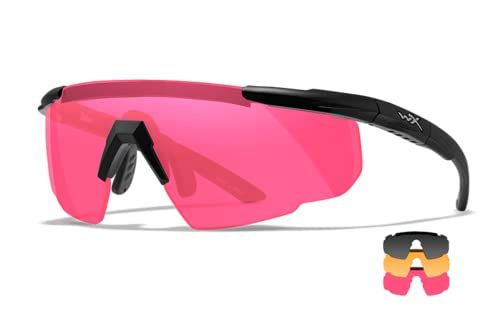
Wiley X Saber and ESS Crossbow — the serious pair
Wiley X Saber Advanced is the wrap that a lot of patrol and range kits already understand: interchangeable lenses, a gasket option, and a ballistic rating that is not a sticker. ESS Crossbow Suppressor 2X is the other duty-adjacent wrap, with a temple design that plays nicer with ear pro than a fat sunglass arm. Both beat a gas-station pair by being the thing you still have on when the first piece of jacket comes back off steel.
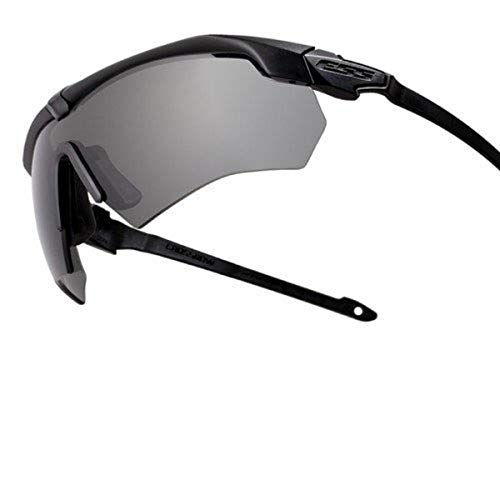
These glasses stop fragments. They do not stop bullets. Anyone who tells you otherwise is selling a myth. The video above is the uncomfortable version of that sentence. Wear them anyway. Most of what injures eyes on a range is not a direct hit from a bore. It is everything else.
Smith Elite Aegis Arc and Revision Hellfly
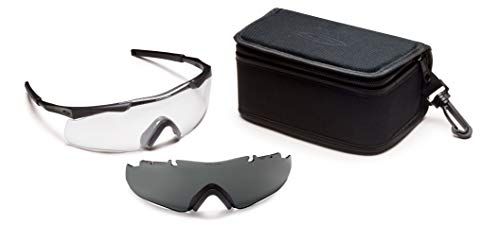
Smith’s Elite Aegis Arc Compact is the smaller-face ballistic shield: a field-kit style package with extra lenses, built for people who could never keep a full-size wrap on their head. Revision Hellfly is the ballistic sunglass — you will actually wear it to the range because it looks like eyewear instead of shop gear. That matters. The best glasses are the ones on your face when you uncase the gun, not the ones in the box in the truck.
If you wear prescription lenses, get inserts or ballistic prescription from a lab that knows Z87. Putting “safety glasses” over street glasses is a fog machine and a gap machine. Responsible firearm ownership includes eyes. It is not optional gear.
Radians Shift — the budget range pair
Radians Shift is how you put rated plastic on a new shooter without making the first range trip a $200 optics day. Keep a spare in the bag. Let guests use them. Replace them when they scratch into a haze. Scratched lenses are how people take glasses off “just for this string,” which is how the story starts.
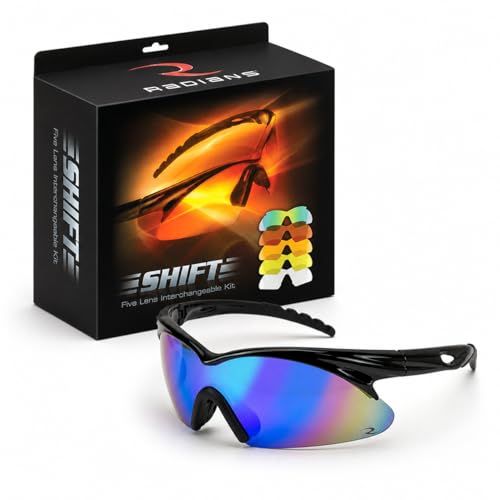
Budget glasses still need Z87+. Read the stamp on the lens, not the Amazon title. A title can say “tactical ballistic” and mean “dark plastic.” The stamp is the spec. If there is no stamp, they are sunglasses.
Fog, ear pro, and steel
Fog: vented frames, anti-fog that you reapply, and not tucking a gaiter over the nose like you are storming a door. Ear pro temples plus sunglass temples is how glasses launch. Low-profile ear muffs or plugs plus thin ballistic temples is the combination that stays on. Ear protection is the other half of this sentence. Buy them together.
Steel: more distance, more angle, more glasses, more luck you should not need. If you shoot steel at pistol distances, ballistic-rated wrap is not a fashion choice. It is the difference between a story and an ER. For lights on a night range, a real flashlight belongs in the same bag as the extra lenses.
| Glasses | Best for | Rating idea | Watch-out |
|---|---|---|---|
| Wiley X Saber Advanced | Duty / serious range wrap | Ballistic + Z87 | Check ear-pro fit |
| ESS Crossbow Suppressor | Wrap that plays with muffs | Ballistic + Z87 | Kit cost |
| Smith Aegis Arc Compact | Smaller faces, extra lenses | Ballistic kit | Buy the compact on purpose |
| Revision Hellfly | Ballistic sunglasses you will wear | Ballistic sunglass | Not a gasket goggle |
| Radians Shift | Budget / guest pair | Z87 class | Replace when scratched |
What does a competent range kit look like?
Glasses on before the case opens. Ear pro next. Then the gun. That order is how you stop the “I’ll just set up first” injury. Extra clear lenses in a pouch. A strap. A microfiber that is not the same rag you used on bore solvent. A range bag that has a dedicated eye-pro pocket is how guests get glasses instead of squinting.
Steel: more distance than the maker’s minimum, no angle that sends fragments back at the stand, no glass that is already starred from last month. A starred lens is done. It is not “still fine.” Replace it. Indoor lead and unburnt powder want wrap, not a tiny fashion sunglass with a gap you could slide a .22 case through.
Teaching new shooters: the Radians in the bag are the loaners. Do not hand a guest your only Wiley X and then shoot without. Two pairs is the adult version of “I remembered eye pro.” A gun safe and eye pro are not the same conversation, but they are the same adult: control the gun, control the fragments, go home with both eyes.
When should you spend more than a range pair?
Prescription. If you cannot see the front sight without glasses, buy ballistic inserts or a lab that will do Z87 Rx. Stacking street glasses under a cheap protector is fog and a gap. Duty and daily wear. If the glasses have to live on your face in a patrol car or a tractor and at the range, Wiley X and similar duty lines earn the money because you will actually keep them on. A pair that lives in a case is not eye pro.
Shotgun and clays: a high-contrast lens (yellow, orange, rose) is not a gimmick on an overcast sporting clays course. It is how you pick a black bird out of a dark tree line. Indoor pistol: clear, anti-fog, wrap. Do not wear last weekend’s smoked lens under fluorescent lights and then decide your trigger is the problem. Accuracy includes seeing the sights.
Hunting: yellow or light amber at dawn in the woods, and a strap so a branch does not take them. A brimmed boonie plus glasses is how you keep rain off the lens. Glasses that are covered in drops are as useful as no glasses, and people take them off, which is the injury report.
Our pick for most shooters: Wiley X Saber or ESS Crossbow, extra clear lens in the bag, a strap, and ear pro that does not fight the temples. Compact Aegis if the full-size wrap will not stay on. Radians in the bag as the loaner. Sunglasses in the truck stay in the truck.
Range-bag eye pro that actually gets worn
Two pairs minimum: your ballistic wrap, plus a loaner. A strap on yours. A pouch that is not shared with a bottle of solvent. Clear and smoked lenses if you shoot indoor and outdoor. A microfiber. If you wear a hat, brim forward, so brass and sun both have a harder time. Glasses on before the case latches open. That order is the whole safety brief for eyes.
Fog drill: anti-fog on the inside, do not seal a gaiter over the nose, vented frame if you can get it. If you still fog, the ear-pro temples are crushing the frame into your face. Change the ear pro. Ear protection that fights glasses is how both end up on a bench. Pick muffs that were designed to live with a wrap, or run plugs.
Replacement: starred, pitted, or haze you cannot clean — done. UV and range dust eat coatings. A pair that is five years old and lives in a hot truck is not the pair you qualified in. Date them mentally. Eyes are cheaper than the ER, and cheaper than a “I just took them off for this string” story you do not get to finish.
Guests and new shooters: put the Radians on them before the safety brief ends. Do not let someone “just watch” without glasses on a live range. Fragments do not care who is shooting. If you run steel, add distance and a harder wrap. If you run indoors, add clear lenses and a plan for fog. If you hunt, add a strap and a brim. The glasses do not change. The rest of the kit does.
Prescription is the spend that is not optional if you cannot see the front sight. Inserts or a Z87 Rx pair from a lab that knows the spec. Over-the-glass protectors are a last resort for a guest who showed up in street glasses, not a long-term system. Fog and gaps are how OTGs fail, and they fail on the string you cared about.
Frequently asked questions
Are sunglasses enough for shooting?
No. You want ANSI Z87.1+ at a minimum, and a military ballistic rating if you shoot steel, shotgun, or carbine. UV400 driving glasses are not range glasses.
Do shooting glasses stop bullets?
No. They stop fragments, brass, and spall. A direct bullet is not the job. Wear them anyway — most eye injuries on a range are not a direct hit from the bore.
Clear or tinted lenses?
Clear for indoor and dusk. Smoke or bronze for sun. Yellow for overcast clays. Interchangeable kits exist because one tint is a compromise.
Fixed lens or interchangeable?
Interchangeable if you shoot indoors and outdoors. Fixed if you want fewer parts to lose. A scratched clear lens in a kit is cheaper than a whole new pair.
How do I stop glasses from fogging?
Vented frames, anti-fog you actually reapply, and ear pro that does not mash the frame into your face. A gaiter over the nose is a fog machine.
Can I wear them over prescription glasses?
Oversized ‘over the glass’ protectors are a last resort. Inserts or ballistic prescription from a lab that knows Z87 is the real answer. Gaps and fog are how OTGs fail.