
ArmaLite AR-10 pattern vs DPMS LR-308 pattern
Written by John Wren|

Choose DPMS LR-308 pattern for a first .308 AR and common parts. Choose ArmaLite AR-10 pattern only to finish a rifle already cut to that print. Never mix uppers and lowers. Buy the gun at a licensed dealer.
Key takeaways
- DPMS pattern is the default first .308 AR.
- ArmaLite pattern is for rifles already in that print.
- Never mix uppers and lowers across families.
- The rifle and ammo stay at a licensed dealer.
If you are shopping a .308 AR in 2026, the ArmaLite AR-10 pattern vs DPMS LR-308 pattern question is the one that still wrecks a parts cart. Both rifles fire the same cartridge. Both look like a scaled-up AR-15. They are not the same receiver family. Mix an ArmaLite upper with a DPMS lower and you do not get a “close enough” gun. You get a paperweight and a return shipping label.
Here is the short version, then the long one. Buy a DPMS LR-308 pattern rifle if you want the parts aisle most builders actually live in — Aero M5-class lowers, common handguards, and magazines that show up at a licensed counter without a scavenger hunt. Buy an ArmaLite AR-10 pattern rifle if you already own ArmaLite receivers, a specific ArmaLite magazine well, or a precision upper that was cut to that print. For a first .308 AR that will hunt and train, we would rather send you to a DPMS-pattern gun at a licensed dealer than chase “AR-10” as if the name were a spec.
Who should buy ArmaLite pattern, and who should buy DPMS?
Match the pattern to the spare parts you can actually buy, not the logo on a forum thread. A dedicated AR-10 kit page is the accessory conversation. This page is the receiver family. DPMS is the better default for most people who will own one .308 AR and want barrels, handguards, and magazines that still exist next year. ArmaLite pattern is the better default if you are finishing a rifle that already started as ArmaLite, or you are matching an existing upper that will not pin to a DPMS lower.
Think in compatibility, not brand loyalty. “AR-10” on a listing often means “.308 AR” and nothing more. Ask the dealer which print the receivers follow before you put money down. If they cannot tell you, walk. A .308 hunting rifle that is a bolt gun is a different shopping trip — and often the right one if you do not want to learn two AR ecosystems.
What is the actual difference between the two patterns?
ArmaLite designed the original AR-10. The current consumer fight is not “ArmaLite the company versus DPMS the company.” It is two families of receiver geometry that grew after the original patents. DPMS Panther Arms popularized a slightly different upper profile, a different rear take-down pin location relative to the buffer tower, and a magazine catch and well that do not play with ArmaLite magazines. Those small mill differences are why a DPMS upper will not drop onto an ArmaLite lower and close like an AR-15.
DPMS “high” versus “low” upper profiles matter inside that family too. A rail that was cut for a DPMS high upper will sit wrong on a low upper. Handguard companies now label SKUs for DPMS high, DPMS low, and ArmaLite. Ignore that label and the gap at the upper looks like a manufacturing defect. It is a parts-bin error.
Bolt carrier groups, barrel extensions, and wrench flats also wander. Some carriers run in both. Some do not. A barrel nut that times on one pattern can leave the gas tube looking like a kink on the other. This is why we tell people to pick a pattern and stay inside it the way you stay inside AR-15 versus a random piston rifle. Pattern the gun you will hunt after the receivers match — not before.
| Question | ArmaLite AR-10 pattern | DPMS LR-308 pattern | Our call |
|---|---|---|---|
| First .308 AR | Only if you already own the receivers | Most modern parts and magazines | DPMS pattern |
| Upper/lower mix | Stay ArmaLite on both | Stay DPMS on both | Never mix |
| Magazine hunt | Narrower, ArmaLite-spec | Common DPMS/SR-25-style wells | DPMS for most dealers |
| Aftermarket rails | Fewer labeled SKUs | High/low still a trap, but stocked | DPMS, read the rail label |
| Precision clone | Some match uppers still live here | Most chassis and Aero-class builds | Buy the print the barrel was cut for |
Confirm the current receiver print with the licensed dealer before you order a barrel or a rail. Generation and maker still wander inside each family.
How do you shop this at a licensed dealer without getting a mix?
Say the pattern out loud. “I need a DPMS LR-308 pattern complete rifle,” or “I need an ArmaLite AR-10 pattern upper that matches this lower.” Do not say “I need an AR-10” and hope. A good counter will ask which magazines you already own. A lazy counter will sell you whatever is in the safe with a .308 stamp on the bag.
The rifle itself stays at that counter. The firearm and the ammunition stay at a licensed dealer. ArmaLite-pattern guns come from ArmaLite and a handful of shops that still cut that print. DPMS-pattern guns come from a much longer list — including rifles that never wore a DPMS roll mark. Aero, Palmetto, and a lot of “.308 AR” complete guns are DPMS-pattern even when the box says AR-10. Read the spec sheet. If it names DPMS or LR-308 compatibility, that is the family. If it names ArmaLite receivers, stay there.
A September range day is where you find out whether the rifle actually feeds, ejects, and groups with the load you will hunt. Do that work before opening weekend. Accuracy work is bags, a rest, and a target you can call. It is not a new logo.
How do you actually compare two rifles on a bench?
You do not compare them by holding both in a parking lot. You compare them on bags, with the same rest height, the same target distance, and the same person behind the trigger. Front and rear bags let you see whether a rifle wants to jump left or settle. That is the honest test of a heavy .308 AR, not a phone video of a muzzle brake.
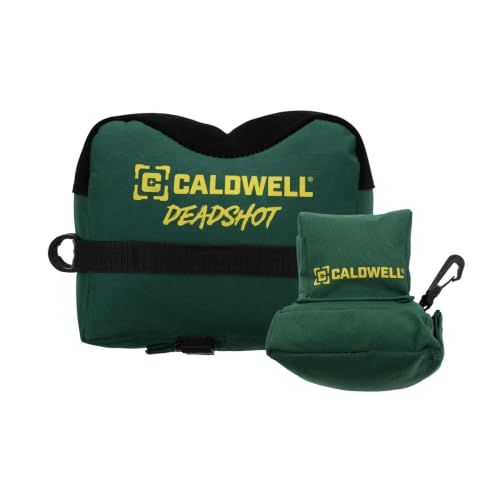
The Caldwell Deadshot front and rear bags are the live rest we already use on other range pages: a front bag that takes the forend and a rear bag that takes the stock. Fill them. Park them on a bench. Do not rest a free-float rail on a hard wood edge and then blame the barrel. Check live prices.
If you are deciding between two dealer rifles, ask to use a rest, not a truck hood. Look at ejection, lockback on the last round, and whether the charging handle wants a second hand. A pattern that fights you on the bench will fight you in a blind. A first deer checklist still starts with a rifle you have already shot, not a new pattern you bought on Thursday.
Does one pattern kick less?
No. Recoil is the cartridge, the rifle weight, the brake or flash hider, and the stock. An ArmaLite-pattern 18-inch gun and a DPMS-pattern 18-inch gun with the same muzzle device will feel like cousins. A 16-inch pistol-length gas gun will feel like a different animal in either family. Buy the gas system and the weight you will carry, then protect your ears.
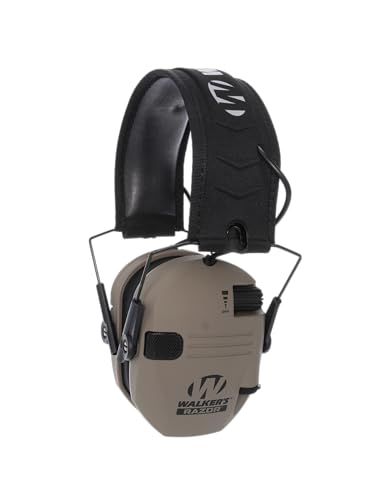
Walker’s Razor slim electronic muffs are the live ear pro we name on range days: a muff that still fits under a cap, with enough cut so you can hear a range officer. Check live prices. Pair them with the ear-protection page if you want the longer fit conversation.
A .308 AR on a steel plate is not an indoor .22. Wear muffs even if you already have plugs. Unload for the truck when the string is over. Pattern fights do not excuse a hot chamber in a case.
What about eyes, brakes, and optics height?
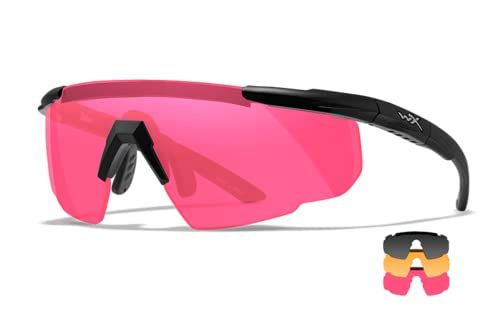
Muzzle brakes throw gas and carbon. Glasses are not optional on a brake gun, and they are still a good idea on a flash hider. Wiley X Saber Advanced shooting glasses are the live pair we name: a frame that takes a clear lens for a barn and a tinted lens for a sunny berm. Check live prices.
Optics height is a pattern issue only because rail height differs. A DPMS high upper changes where a scope sits relative to the bore. Confirm ring height on the rail you will actually mount, not a photo of a different upper. A cantilever mount that works on an AR-15 may still work. A super-low ring set that looked fine on a flat-top .223 can kiss a .308 handguard. Dry-fit at the dealer.
How do you carry a .308 AR that actually weighs something?
These rifles are heavier than the AR-15 you already own. A two-point sling that quick-disconnects is how you still have a hand for a pack or a bin. QD sockets on the receiver and the rail are the usual answer. Confirm the socket is on the side you want before you leave the counter — some rails put QD at the 3 o’clock and some at 6.
The QD swivel two-point sling we named is the live strap for walking a rifle between benches and a truck: padded, adjustable, and not a single-point that turns a muzzle into a pendulum. Check live prices.
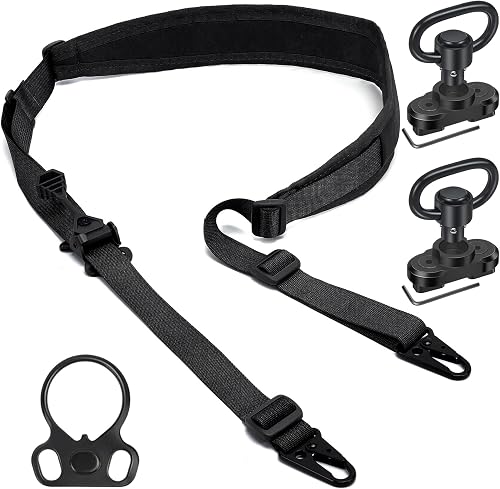
Carry rules do not change with pattern. Muzzle a safe direction. Chamber flag if the range wants it. A range day before rifle season is the week to learn the sling, not opening morning in a blind.
When does a bipod actually help the comparison?
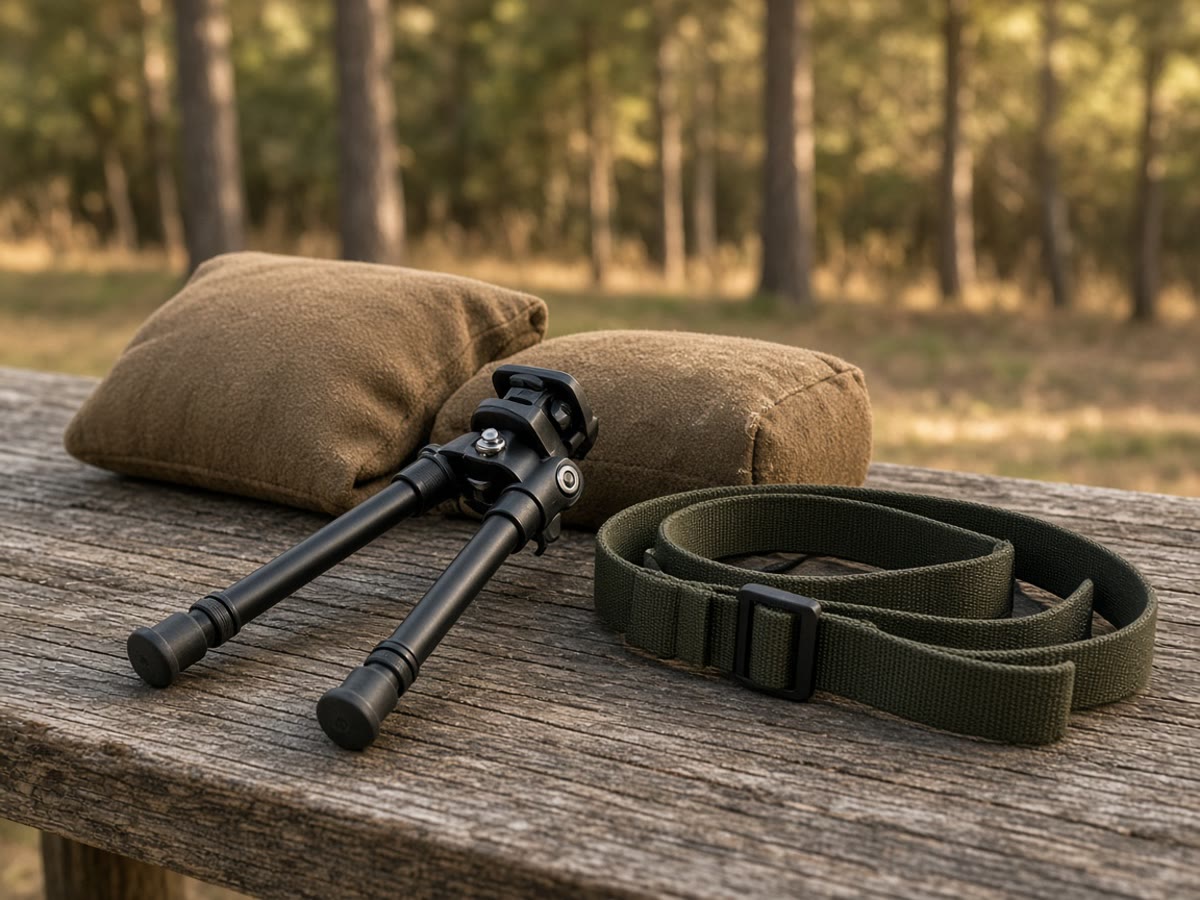
A bipod helps when you will hunt from a sit or a prone, and when you want both rifles to see the same rest height. It does not help if you only shoot off bags. A Picatinny swivel bipod is the live rest we name for a rail that already has a section up front: legs that drop, a pan that lets you stay behind a target without walking the rifle. Check live prices.
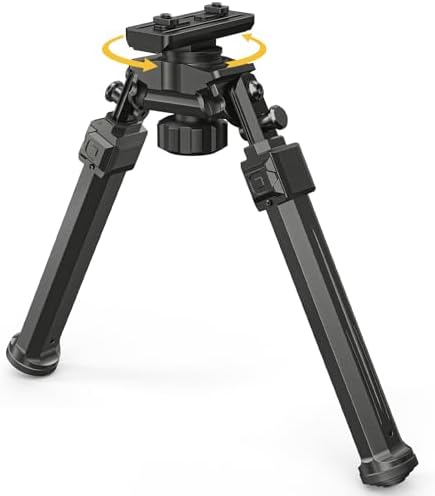
Do not clamp a bipod to a thin sheet-metal handguard that was never meant to take that load. If the rail is a bargain tube, stay on bags. If the rail is a real Picatinny or M-LOK section rated for a bipod, use it. Pattern still does not matter here. Mount quality does.
What fails first when the pattern is right but the rifle is dirty?
A .308 AR that will not lock back is often carbon, a weak spring, or a magazine lip — not “the wrong pattern.” Clean the carrier, the star chamber, and the mag well before you blame ArmaLite geometry. The Otis Tactical Cleaning System is the live pouch we name for a range bag: a cable, a few brushes, and CLP that actually fits in a side pocket. Check live prices.
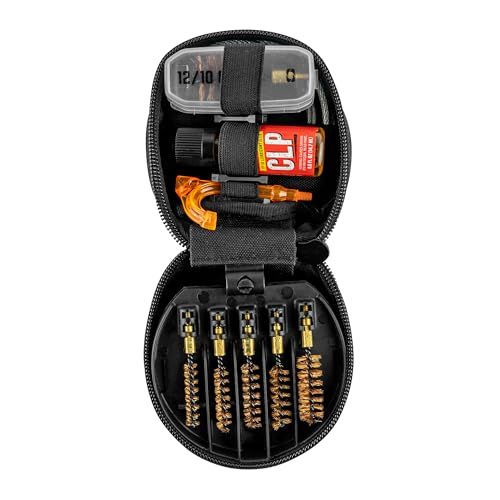
Gas is the other silent argument. An adjustable block can tame a short barrel in either family. An overgassed 16-inch gun will beat brass into the deflector and feel snappy. That is not an ArmaLite problem. That is a gas-port and buffer problem. Have the dealer explain the gas system length before you buy. Mid-length and rifle-length on an 18- or 20-inch barrel are the usual hunting answers. Pistol-length on a short barrel is a different rifle.
What about magazines, states, and hunting rules?
DPMS-pattern wells commonly take SR-25-style magazines. ArmaLite-pattern wells often want ArmaLite magazines. Do not assume a PMAGs that ran in a friend’s Aero will lock into an ArmaLite lower. Buy magazines from the same licensed counter that sold the rifle, and buy two more than you think you need so one can be a dummy for dry practice.
Capacity and feature rules are state and season problems, not Amazon problems. A hunting magazine that is legal in your county may still be illegal in the next one. A featureless stock in one state is a normal stock in another. Read the regulation for the dirt you will stand on. Florida hunt access is one state’s version of that homework. Yours may be stricter.
So which pattern should you actually buy?
Buy DPMS LR-308 pattern if this is your first .308 AR and you want parts, magazines, and a dealer who has seen the rifle before. Buy ArmaLite AR-10 pattern if you are completing a rifle that already lives in that print. Never mix the receivers. Never trust a listing that only says AR-10. Put the gun on bags, wear muffs and glasses, and leave the muzzle device argument for after the rifle feeds.
If a bolt gun would hunt better for you, read the .308 rifle page and skip the pattern fight. If you already own the AR-10-shaped rifle and just need the week to shoot it, pattern it and take the range day. The receivers stay at a licensed dealer. The bags, muffs, glasses, sling, bipod, and cleaning pouch are the rest kit.
Also in the magazine
Keep going with the AR-10 kit page, best .308 rifles, ear protection, and accuracy work. Check live prices on the rest kit. The rifle stays at a licensed dealer.
Frequently asked questions
Can I put an ArmaLite AR-10 upper on a DPMS lower?
No. Rear pin location, upper profile, and magazine geometry differ. Mix them and the rifle will not close or feed. Stay inside one pattern.
Which pattern should a first .308 AR buyer choose?
DPMS LR-308 pattern, unless you already own ArmaLite receivers. Parts, magazines, and dealer familiarity are wider on the DPMS side.
Is every rifle labeled AR-10 an ArmaLite-pattern gun?
No. Many listings use AR-10 to mean any .308 AR. Ask the licensed dealer which print the receivers follow before you pay.
Do the two patterns recoil differently?
Not in a way that should pick the family. Weight, barrel length, gas system, and muzzle device matter more than the receiver print.
Where do I buy the rifle?
A licensed firearms dealer. Bags, muffs, glasses, a sling, a bipod, and a cleaning kit are the rest of the range bag. The firearm and ammunition stay at the counter.
Will DPMS magazines work in an ArmaLite lower?
Usually no. Buy magazines that match the well the dealer sold you, and confirm lockup before you leave the counter.