
How Scuba Divers Can Actually Help Restore the Oceans
Written by John Wren|
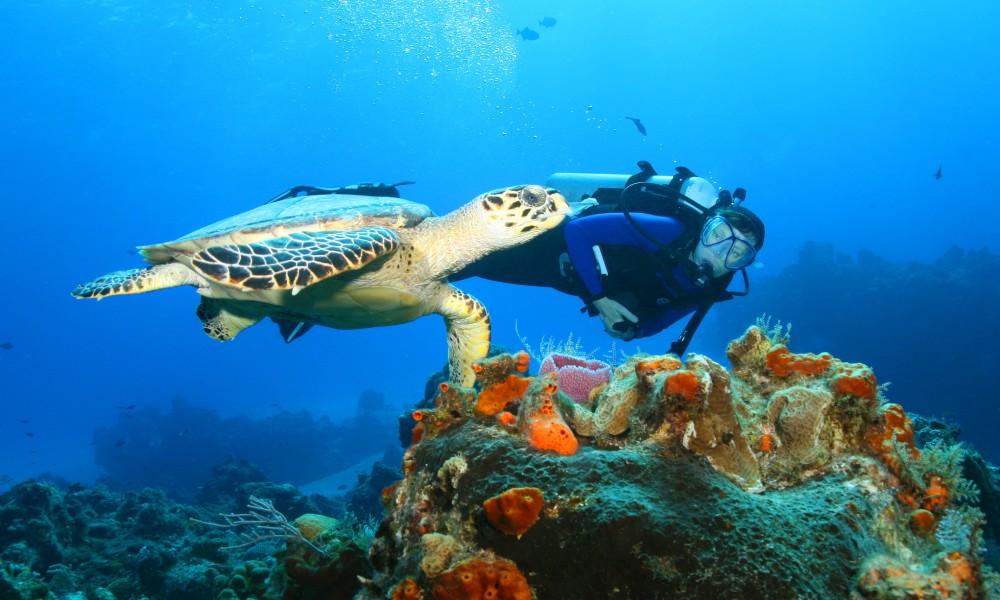
Join an established citizen-science or restoration program, carry a mesh bag for debris removal on every dive, and master neutral buoyancy before diving near reef structure. Choose dive operators who visibly prioritize reef health.
Key takeaways
- Structured programs make volunteer diving genuinely useful, not just well-intentioned.
- Carry a mesh bag for debris removal on every dive.
- Buoyancy control prevents more damage than any single restoration activity fixes.
- Reporting observations to citizen-science platforms supports real research.
Recreational scuba divers spend more time looking closely at reef and coastal ecosystems than almost anyone else in the water, which puts them in a genuinely useful position to support ocean restoration — not by attempting technical restoration work themselves, but by participating in structured citizen-science programs, removing marine debris safely, and diving in ways that do not add new damage to already-stressed reefs. The short answer: join an established program, remove debris you can safely handle, and practice buoyancy and contact discipline that protects the reef you are diving on.
Short version. Look for citizen-science and debris-removal programs run by established conservation organizations or dive shops rather than freelancing restoration work yourself. Carry a mesh bag on every dive for small debris you encounter. Master neutral buoyancy before diving near reef structure, since accidental fin and body contact is one of the most common sources of diver-caused reef damage.
Join structured citizen-science and restoration programs
Organizations that train and coordinate volunteer divers for coral restoration, invasive species removal, and reef health surveys exist in most major dive destinations, and they provide the training, permits, and scientific protocols that make volunteer participation genuinely useful rather than well-intentioned but potentially harmful. Programs coordinating coral fragment outplanting, lionfish culling in regions where it is an invasive species, and long-term reef health monitoring all rely heavily on trained recreational divers to cover far more area than professional researchers alone could manage.
Look for programs affiliated with recognized conservation organizations or accredited research institutions rather than informal groups without training standards, since improperly executed coral outplanting or invasive species removal can do more harm than good. A short specialty course, often just one or two additional dives beyond standard certification, is typically all that is required to participate meaningfully in most established programs.
Marine debris removal: useful, but with real limits
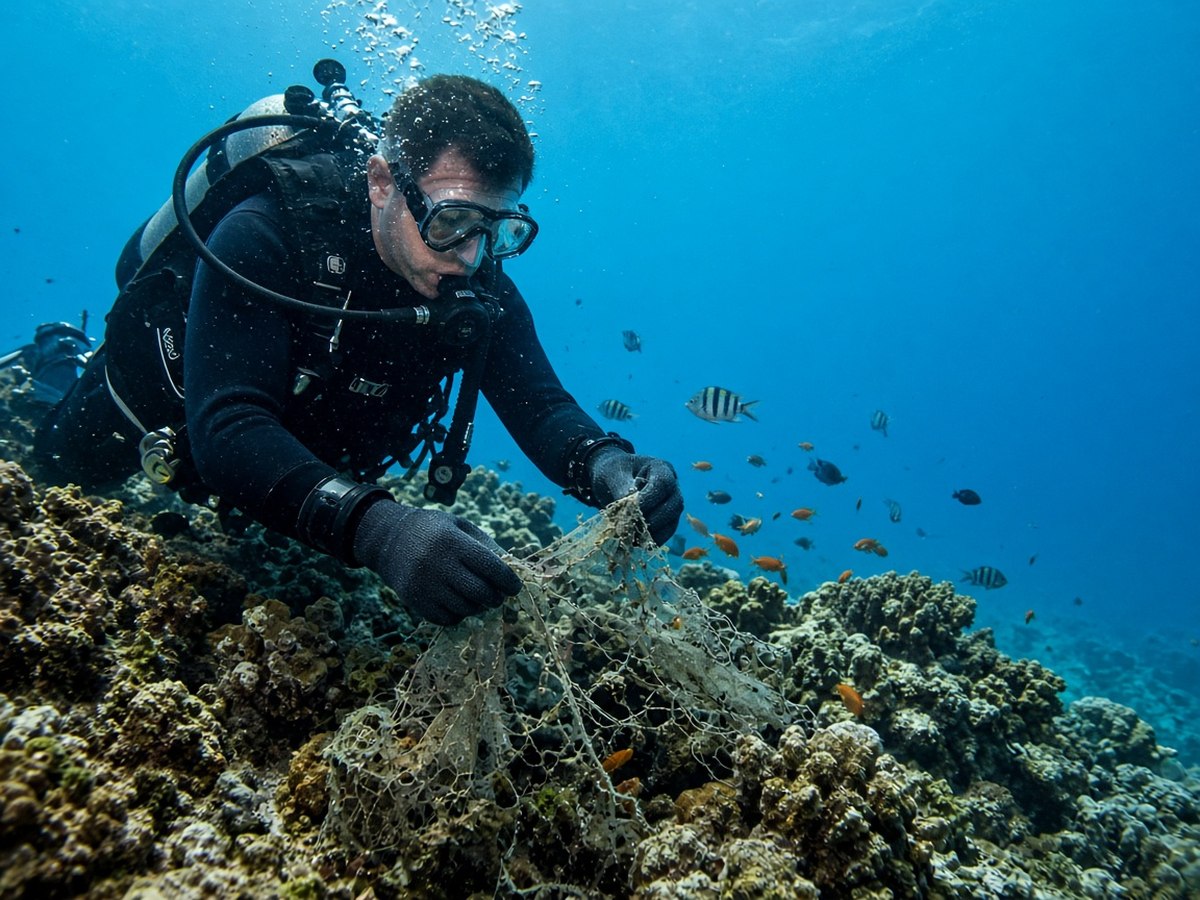
Removing fishing line, netting, plastic debris, and other trash encountered during a normal dive is one of the most straightforward ways any diver can help, and carrying a mesh collection bag on every dive costs little and adds minimal task loading. Ghost fishing gear — abandoned nets and lines that continue trapping marine life indefinitely — is a particularly worthwhile target, since removing even a single derelict net can prevent ongoing harm to fish, turtles, and marine mammals for years.
Know your limits. Heavily entangled debris, debris embedded in live coral structure, or anything requiring cutting tools and technical skill beyond a casual removal effort is better reported to local dive operators or conservation authorities than attempted solo, since a poorly executed removal attempt can damage more coral than the debris itself was harming.
Buoyancy control: the single biggest factor in diver-caused damage
Accidental fin kicks, hand contact, and equipment dragging across reef structure are among the most common sources of diver-caused coral damage, and nearly all of it is preventable with solid buoyancy control. Divers who have not dived recently or who are diving in unfamiliar conditions — new equipment, a thicker wetsuit, different weighting — should do a buoyancy check in open water away from reef structure before diving near sensitive areas.
Streamline your gear so gauges, octopus regulators, and other equipment do not dangle and drag across the bottom, and practice a horizontal, controlled swimming position rather than an upright, fin-first descent style that is far more likely to contact the reef below. These habits, more than any single restoration activity, determine whether a diver's overall presence on a reef is net positive or net harmful.
Reporting observations supports real science
Many reef monitoring programs rely on divers reporting observations — bleaching events, invasive species sightings, unusual mortality, or the presence of specific indicator species — through structured citizen-science apps and platforms. This kind of reporting, even without any hands-on removal or restoration work, provides real data that researchers use to track ecosystem health trends over time and respond to emerging threats faster than periodic professional surveys alone could catch.
Choosing dive operators who prioritize reef health
Dive operators vary significantly in how seriously they take reef protection — some enforce strict no-touch policies, brief divers on buoyancy expectations, and limit group sizes on sensitive sites, while others prioritize volume over reef health. Choosing operators who visibly prioritize conservation, ask about their specific practices before booking, and support marine protected areas with your dive tourism dollars is a meaningful, if indirect, way to support ocean restoration through where you choose to spend your diving budget.
Bringing junior divers into conservation-minded diving early
Younger certified divers who learn buoyancy discipline and reef etiquette as core skills from their very first open-water dives, rather than as an afterthought added later, tend to carry those habits forward far more naturally than divers who pick up conservation awareness only after years of casual, less careful diving. Junior open water programs that build in a real buoyancy and reef-contact standard from day one are worth seeking out specifically for this reason, since early habits are dramatically easier to instill than habits that need correcting later. Parents and instructors alike benefit from treating reef etiquette as a certification requirement, not an optional nice-to-have.
Invasive species removal in specific regions
In regions like the Caribbean and parts of the Atlantic coast, lionfish are a well-documented invasive species with no natural predators and a significant negative impact on native reef fish populations. Structured lionfish culling programs, which train divers in safe capture techniques and often connect harvested fish to local seafood markets, are a genuinely effective diver-driven conservation activity in these specific regions — but this approach does not translate to every invasive species or every location, so confirm the target species and method are appropriate for where you are diving before participating.
Getting the training that makes participation meaningful
Most meaningful ocean-restoration diving activities require some additional training beyond an open water certification — specialty courses in coral restoration techniques, invasive species identification and handling, or scientific survey protocols are widely available through dive shops partnered with conservation organizations. This training is typically affordable and adds real skill to your diving beyond the restoration application, making it a worthwhile investment even for divers who only participate occasionally.
Gear choices that reduce your dive footprint
Reef-safe sunscreen, free of oxybenzone and octinoxate, matters more than most divers realize, since these chemicals have been documented to contribute to coral bleaching even at low concentrations, and they wash off every diver and snorkeler in significant quantities across a busy dive season. Choosing mineral-based, reef-safe formulations is a small, low-effort change that compounds across thousands of dives at popular reef destinations, and many marine protected areas and popular reef destinations now require reef-safe sunscreen by regulation rather than mere recommendation.
Equipment maintenance also plays a role — a leaking BCD, a poorly maintained regulator that free-flows unpredictably, or worn fin straps that fail mid-dive all increase the odds of an emergency response that involves grabbing the nearest solid object, which is often live coral. Well-maintained gear that performs predictably reduces the number of "grab something" moments that cause real, if unintentional, reef damage over the course of a diving career.
Building a conservation-minded dive community
Individual diver behavior matters, but a dive community that normalizes conservation-minded practices — briefing new divers on no-touch expectations, calling out poor buoyancy gently rather than ignoring it, and celebrating debris removal and citizen-science participation as a normal part of diving rather than a niche activity — compounds the impact of any single diver's good habits across an entire local dive scene. Dive shops and clubs that build this culture deliberately tend to see measurably better reef conditions at their regularly visited sites over years, compared to sites frequented mostly by uncoordinated, one-off visitors with no shared conservation norms.
| Activity | Value | Requirement |
|---|---|---|
| Structured citizen-science programs | High — trained, coordinated, scientifically useful | Short specialty training, often affiliated with a research organization |
| Casual debris removal | Meaningful for loose, accessible debris | A mesh bag and basic judgment about what is safe to remove |
| Buoyancy discipline | The single biggest factor in overall diver impact | Practice and a buoyancy check before diving sensitive reefs |
| Freelance restoration attempts | Risk of doing more harm than good | Not recommended without proper training and permits |
Our take: the most useful thing an ordinary recreational diver can do for ocean restoration is master buoyancy control, join a structured program rather than improvising, and carry a mesh bag for debris on every dive. Small, consistent, well-trained participation adds up across thousands of divers far more than a handful of ambitious but unsupervised restoration attempts.
How often you dive matters less than how you dive
A diver who logs a handful of dives a year but consistently practices excellent buoyancy, carries a mesh bag, and dives with a conservation-minded operator contributes more positively to reef health than a frequent diver who has never addressed poor trim or buoyancy habits. This is genuinely encouraging news for casual and vacation-only divers who might otherwise assume that meaningful conservation participation requires being a dedicated, full-time diver — it does not. What it requires is a deliberate, ongoing commitment to skill and awareness on every single dive, regardless of how many dives that adds up to across a year or a lifetime.
Refresher courses after a long break from diving are worth the modest time and cost investment specifically for this reason. Rusty buoyancy skills after months or years away from diving are common and understandable, but diving straight into a sensitive reef environment without reestablishing that control first is a real, avoidable risk to the ecosystem you are there to enjoy and, ideally, help protect.
Long-term reef health depends on more than diver behavior alone
It is worth being honest that diver behavior, while genuinely meaningful, is one factor among many affecting reef health — ocean warming, acidification, coastal development, and industrial pollution operate at a scale no amount of careful diving or volunteer restoration work alone can offset. Recreational divers who want to support ocean restoration at a larger scale can pair their in-water practices with support for broader marine policy advocacy, marine protected area funding, and organizations working on the climate and water-quality drivers of reef decline, rather than viewing careful diving as a complete solution on its own.
That said, the in-water habits covered here remain genuinely worth practicing regardless of these larger forces, both because they measurably reduce direct diver impact on the reefs you visit and because a diving community that takes conservation seriously tends to become a more effective advocate for the broader policy changes reefs actually need to recover at scale. That combination of personal discipline and collective advocacy is what real, lasting ocean restoration actually looks like.
Frequently asked questions
Can recreational scuba divers really help restore coral reefs?
Yes, through structured citizen-science and restoration programs run by conservation organizations, which train volunteer divers in coral outplanting, survey protocols, and safe debris removal.
Should I try to remove marine debris myself while diving?
Loose, accessible debris like fishing line and netting is generally safe to remove with a mesh bag. Heavily entangled debris or anything requiring cutting tools is better reported to local operators or authorities.
What is the biggest way divers accidentally damage reefs?
Accidental fin kicks and equipment contact from poor buoyancy control. Mastering neutral buoyancy prevents far more damage than any single restoration activity offsets.
Is lionfish culling a good conservation activity?
In regions like the Caribbean where lionfish are invasive with no natural predators, structured culling programs are genuinely effective. Confirm the target species and method are appropriate for your specific location.
Do I need special training to participate in reef restoration diving?
Most programs require a short specialty course beyond open water certification, often just one or two additional dives, to ensure participants use proper technique and protocols.
How can I choose a dive operator that supports reef health?
Ask about their buoyancy briefing practices, group size limits, and support for marine protected areas before booking. Operators who visibly prioritize conservation are worth supporting with your dive tourism dollars.