
Best Kayak Trailers (2026): When You Actually Need One
Written by John Wren|
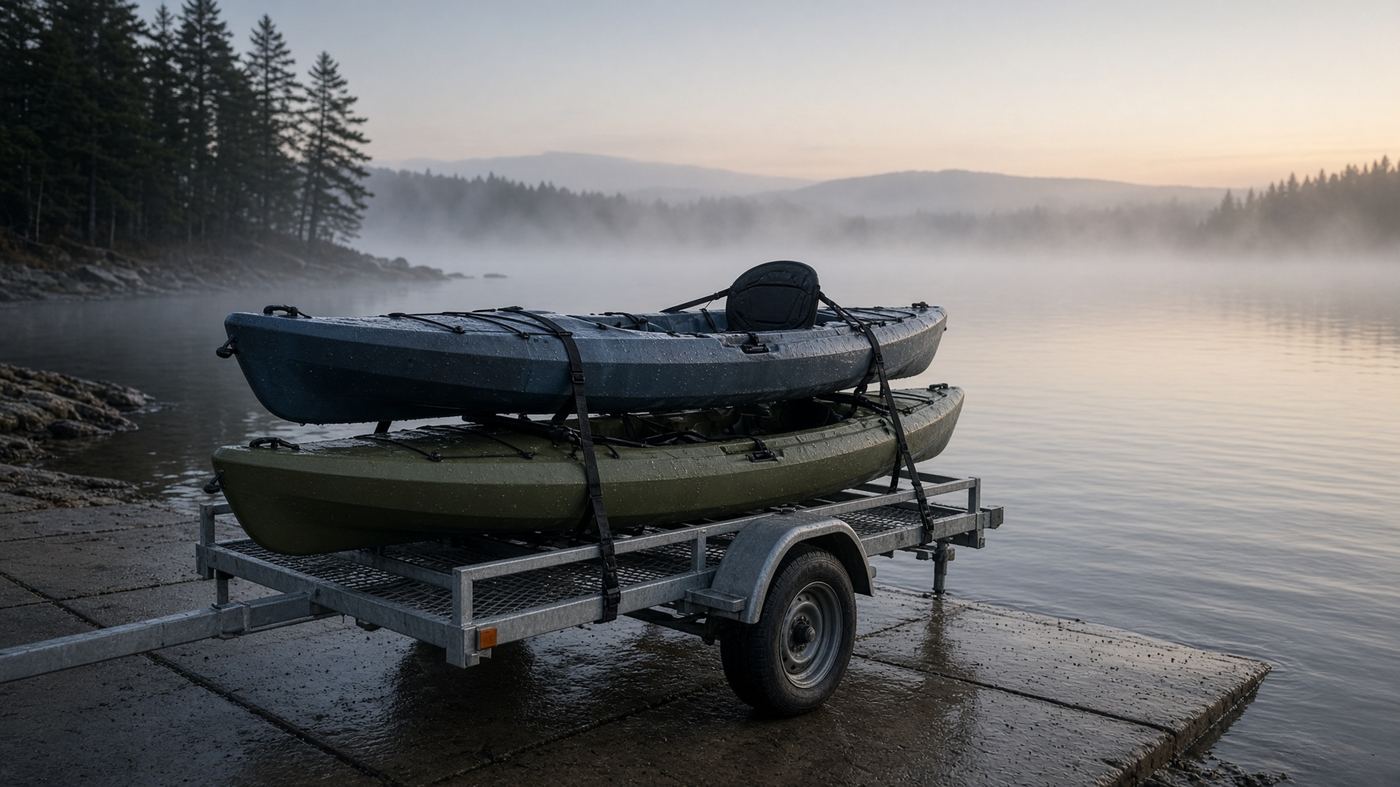
Buy J-bars (OxGord, Mrhardware, ECOTRIC) if you have one kayak and a car with crossbars. Buy foam blocks for short pond trips. Buy a real kayak trailer when you haul two hulls or cannot load a roof — inspect lights, bunks, and tongue weight.
Key takeaways
- Most people need J-bars, not a trailer.
- Lights, chains, tongue weight.
- A stock photo is not bunks.
- Strap the hulls anyway.
A kayak trailer is how two hulls, a dog crate, and a person who will not climb a tall SUV still get to the ramp. It is not a roof rack. It is not a hitch flag. In 2026 most Amazon “kayak trailers” are utility trailers with bunks someone bolted on, or they are a photo of a Malone MicroSport that the listing does not actually ship. The adult fork is still: J-bars on crossbars for one hull, a small trailer when the roof is done.
Short version. If you have one rec kayak and a car with bars, buy J-bars (OxGord, Mrhardware, ECOTRIC) and cam straps, plus bow and stern lines. If you have no bars, foam blocks and a speed limit. If you have two hulls or a short driver, shop a real kayak trailer (Malone-class) at a dealer you can see, not a mystery cargo trailer with a stock photo. Check live prices. We do not invent numbers.
Lights. Safety chains. Tongue weight. A trailer that is illegal on your road is not a fishing accessory. Wind on a hull as a sail still applies on the highway. Strap as if the boat will fly, because it will try.
When a trailer is the right tool — and when it is theater
Trailer: two or more hulls, a tall SUV you cannot load alone, a fishing kayak that weighs as much as a person, a season of ramps. Roof: one hull, a second person to lift, bars that are actually rated. Foam: occasional pond, short trip, you accept the speed conversation. A trailer you will not register, light, or hitch correctly is a lawsuit with bunks.
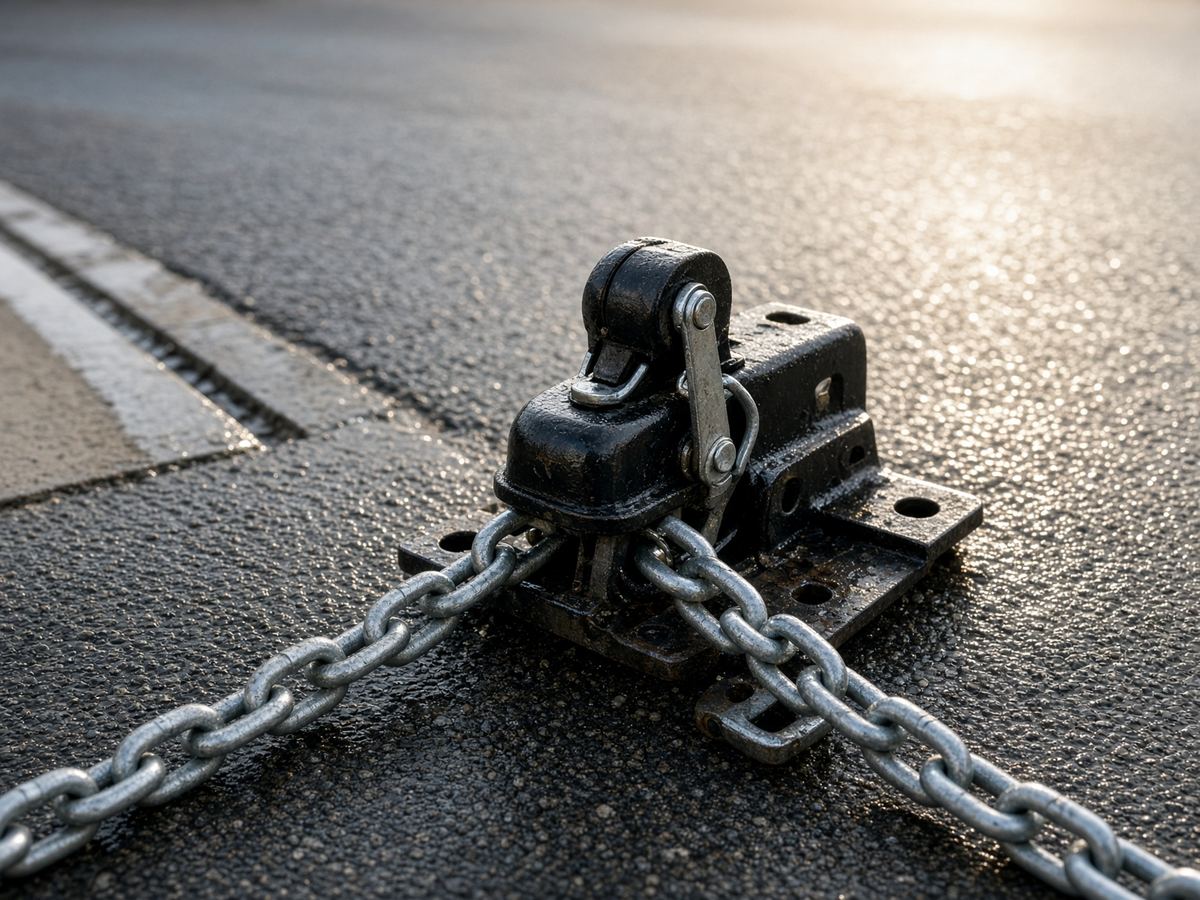
Hitch class has to match. Tongue weight on a bicycle rack hitch is how people fold a bumper. Measure. A 2-inch receiver is not a personality. Safety chains crossed. Lights that work at night, not just in the driveway. A spare that is not a rumor. Kayak bunks that will not oil-can a hull. Carpet that is not a sponge full of sand that sands gelcoat all winter.
J-bars and foam — what most people should buy instead
OxGord, Mrhardware, ECOTRIC: J-bars that bolt to bars you already have. Cam straps. Bow and stern. That system beats a $1,500 trailer you will store in a lane you do not have. Foam blocks (TMS, generic pads) are the no-bar path with a real speed limit. Do not ratchet a hull until it folds. Do not do 80 with foam and a prayer. The roof-rack page is the long version of this paragraph.
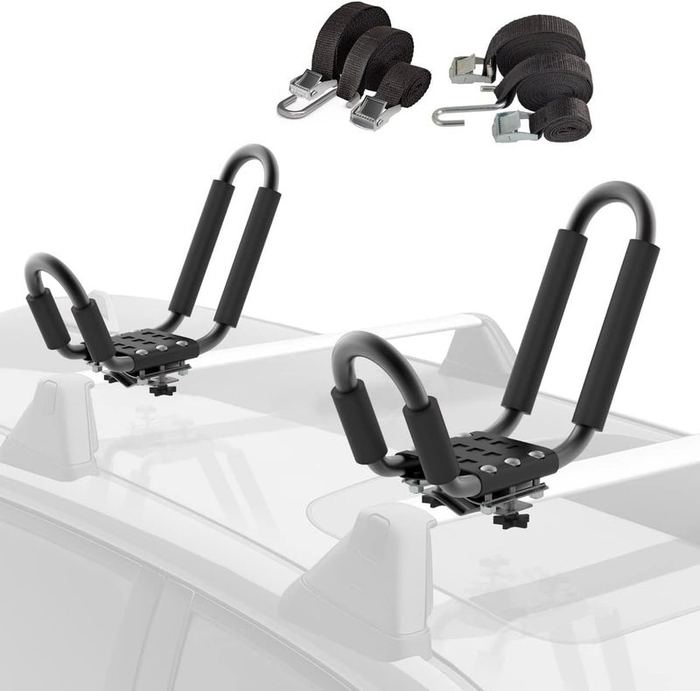
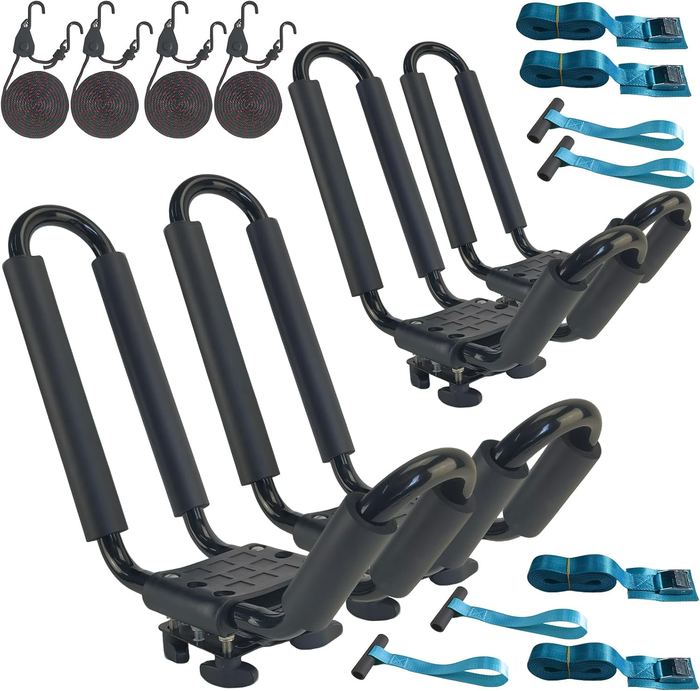
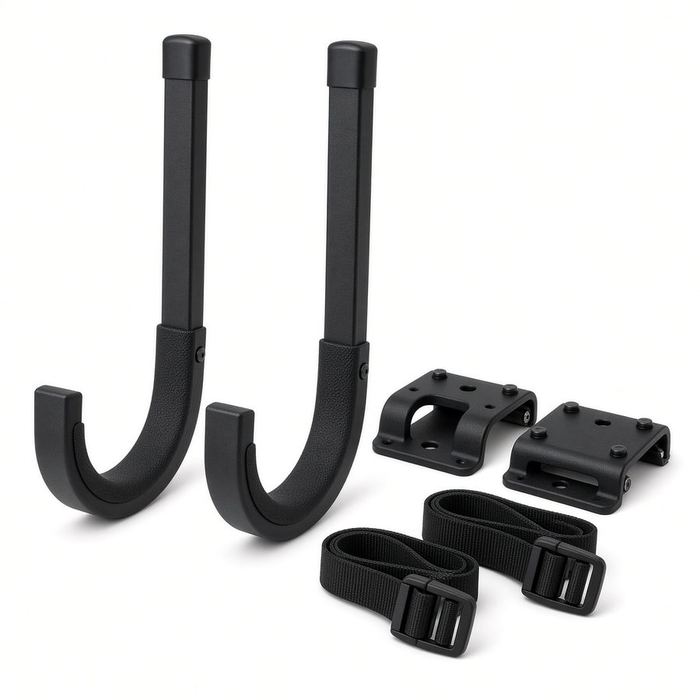
Load in the driveway once before the dark ramp. Know the height. A garage door vs a J-bar is a classic. The hull still needs a PFD and a leash at the water. The trailer does not fish.
Foam, and the trailer you should see in person
TMS foam and a pad kit are how a single rec boat goes 15 minutes to a pond. They are not a tandem fishing kayak at highway speed. If you are shopping Malone, Palomino, or a welded two-boat trailer, go look at it. Ask about lights, bearings, bunks, and whether the listing photo is the SKU. Amazon cargo trailers with “kayak” in the title are often cargo trailers. Measure the bunks against your hull.
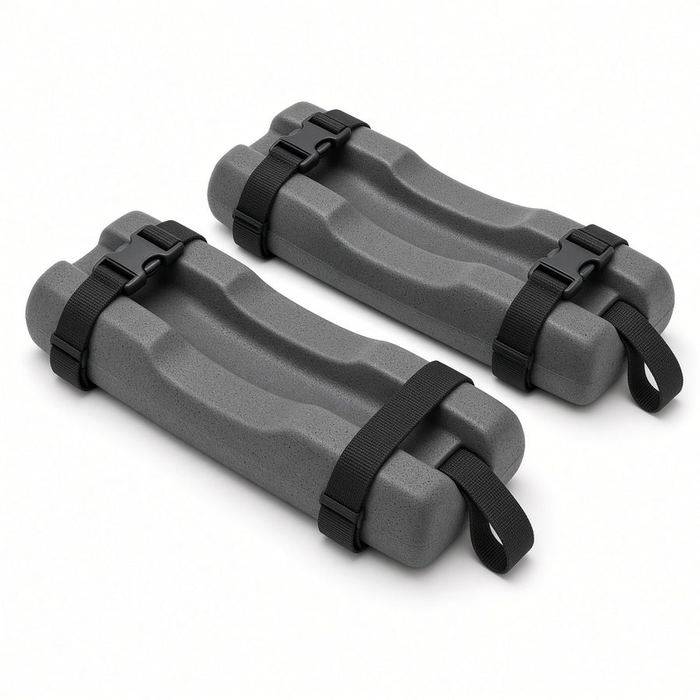
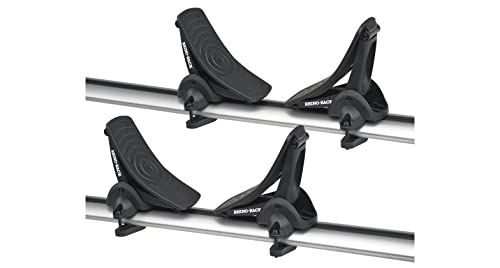
| Carry | Best job | Watch-out |
|---|---|---|
| J-bars (OxGord / Mrhardware / ECOTRIC) | One hull, car with bars | Bow and stern lines. Know the height. |
| Foam blocks | Short pond trip, no bars | Speed. Not a highway tandem. |
| Real kayak trailer (Malone-class) | Two hulls, solo load | See it. Lights. Chains. Tongue weight. |
| Mystery cargo trailer | Cargo | A stock photo is not bunks that fit. |
Our pick: J-bars for most people. A dealer trailer when the roof is honestly done. Foam for the pond. Check live prices. We do not invent numbers.
What trailer mistakes look like a hull in the median?
No bow line. No stern line. Two straps that were “tight enough.” Highway wind will fly a sit-on-top. Strap as if it will try, because it will. J-bars have the same rule. A trailer is not exempt because the boat is lower.
Lights that work in the driveway and die at dusk. A cheap harness that is a green crust. Test them every trip. Crossed chains. A pin that is actually in. A coupler that is on the ball, not balanced on it. Tongue weight that is not a bike rack’s idea of a boat.
A cargo listing with four kayaks in the photo and bunks that are 2×4s. Measure your hull. A 10-foot SOT has a rocker. Bunks that only fit a jon boat will oil-can a yak. See it, or buy J-bars.
A ramp morning that is still a hitch class
Hitch in the driveway the night before. Lights. Chains. Straps. Know the height. A garage vs a stacked trailer is a classic. At the ramp: park where you are not blocking a truck with a 25-foot boat. Unstrap. PFD on. Then the hull hits water. Safety did not move to the trailer.
Bearings: grease, or a trailer that sounds like a grinder at 60. A spare that fits. A lock if you will leave it. Most kayak trailers are stolen because they are small and people leave them pretty. Trailer maintenance still applies when the cargo is plastic.
When J-bars win: one hull, a car with bars, a second person, a season of ponds. When a trailer wins: two hulls, solo load, a fishing kayak that weighs as much as a relative. Foam wins: a pond 10 minutes away and a speed you will actually keep. Check live prices. We do not invent numbers. Most people need J-bars. A dealer Malone-class trailer when the roof is honestly done. Mystery cargo is cargo.
Lights, plates, and the trailer that is a vehicle
A trailer is a vehicle. Lights. A plate if your state wants one. Chains. A hitch that is rated. Maintenance is grease and bulbs, not a hope. A kayak trailer you never register is still a trailer when a cop cares. Do the boring part.
Highway: hulls as sails. Slow down in a crosswind. If the forecast is a gale, the pond can wait. Wind on the water is the same wind on the road. A strap that hummed at 40 will scream at 70. Stop. Tighten. A hull in the median is a hull you did not strap.
Theft: lock the coupler. A small trailer is a two-person lift into a truck. Park it ugly. A pretty Malone in a driveway with no lock is a listing by Friday. Serial numbers. Photos. Boring. Useful.
A load that is bunks, not a pile
Hulls on bunks or carpeted bars that match the rocker. Not on a steel crossmember that will crease. Straps padded where they cross a ridge. Bow and stern to the trailer, not just to each other. A tandem stack is a sail and a height you will hit a garage with. Know the stack. The hull still needs a PFD at the water. The trailer does not vote on that.
Dogs and kids: a trailer is not a playground. Coupler pin, bunks, a ramp. A child sitting on a hull on a trailer in a parking lot is a story. Load. Strap. Then people in the car.
What we skipped: $3,000 aluminum custom trailers as a first carry, and “you have to have a trailer if you kayak.” You do not. J-bars exist. Foam exists. Check live prices. We do not invent numbers. J-bars for most people. A dealer trailer when the roof is done. Foam for the pond. Lights. Chains. Straps. That is a kayak trailer in 2026, including the cargo listing you walked away from because the bunks were 2×4s.
Two-system kits: J-bars on the daily driver, a trailer at the house for two-hull weekends. That is honest. A single mystery cargo trailer you are afraid to take on the highway is a lawn ornament. Match the day.
A dealer trailer vs a listing photo
Malone MicroSport-class, welded two-boat, lights that are a harness a human installed. Ask about bearings, bunks, and whether the photo is the SKU. Amazon cargo with “kayak” in the title is often cargo. Walk around it. Put your hull on the bunks in your head. If you cannot, you wanted J-bars.
Tongue: too much weight and the car squats. Too little and the trailer talks at 50. Load forward. Recheck straps after a mile. A first trip is a stop at the end of the street. Always. Load a trailer still applies when the cargo is plastic and pretty.
Insurance: a trailer you did not mention to anyone is a trailer you may not have. Boring. Useful. Check live prices. We do not invent numbers. J-bars for most. A dealer trailer when the roof is done. Foam for the pond. Lights. Chains. Straps. A hull in the median is a hull you did not treat as a sail.
Winter: bunks off the hull if you store stacked, or carpet that is not a wet sponge against gelcoat for four months. A trailer that lives outside is UV and rust. Grease. A cover if you have one. The hull still wants shade. The trailer wants grease. Both, or buy J-bars and a garage.
Kids, a pond, and a hull you can still carry
A first kid hull is foam on a car and a pond you can see across, not a two-boat trailer on a highway they cannot help you back. The kayak still has to remount after a swim. The trailer is later. A child on a tongue jack is a pinch you will not forget. Keep them off the hitch while you crank.
A pond day: foam or J-bars, two straps, a PFD in the car, not a trailer you greased for a photo. A highway day with two hulls: a dealer trailer you walked around, lights you tested in the driveway, chains that are chains. Bearings and grease are the trailer. The bunks are furniture.
Wind on a roof is a sail. Wind on a trailer is a sail with a hitch. Turn around if the forecast is the forecast. A hull in the median is a hull you treated as cargo theater. Recheck straps after a mile. Always. That stop at the end of the street is the class.
A last word on straps that are still the product
J-bars for most people. Foam for the pond. A dealer trailer when the roof is done and two hulls are the Saturday. Lights. Chains. Straps you retie. Insurance you actually mentioned. Check live prices. We do not invent numbers. J-bars are not an apology. They are how most kayaks live.
A last packing list: straps that are not UV twine, a spare, lights you tested, a pin that is a pin, bunks that match the hull in your head, a first stop at the end of the street. Amazon cargo titled “kayak” is often cargo. Walk around a real trailer or stay on the roof. Winter: grease, shade, bunks that are not a wet sponge on gelcoat for four months. That is a kayak trailer in 2026, including the 2×4 bunk listing you walked away from.
Frequently asked questions
Do I need a kayak trailer?
Only if you have two hulls, a hull you cannot lift onto a roof, or no legal roof system. One rec kayak usually wants J-bars.
J-bars or a trailer?
J-bars if the car has crossbars and you can lift the boat. Trailer if you cannot, or if you haul two. Foam if the trip is short and slow.
Can I use a utility trailer?
Yes if bunks or carpeted bars actually fit the hull, lights work, and the hitch is rated. A cargo trailer with a kayak photo is still a cargo trailer until you check.
What hitch do I need?
Whatever matches the trailer tongue and your receiver, with actual tongue weight, crossed chains, and lights. A bike-rack hitch is not a boat hitch.
Are Amazon kayak trailers any good?
Some are utility trailers. Some are listings that do not match the photo. See it, or buy J-bars you can inspect on the driveway.
Do I still need straps on a trailer?
Yes. Bunks are not straps. Bow, stern, and two across. Highway wind will try to fly a hull.