
Sit-on-top vs sit-inside kayak
Written by John Wren|
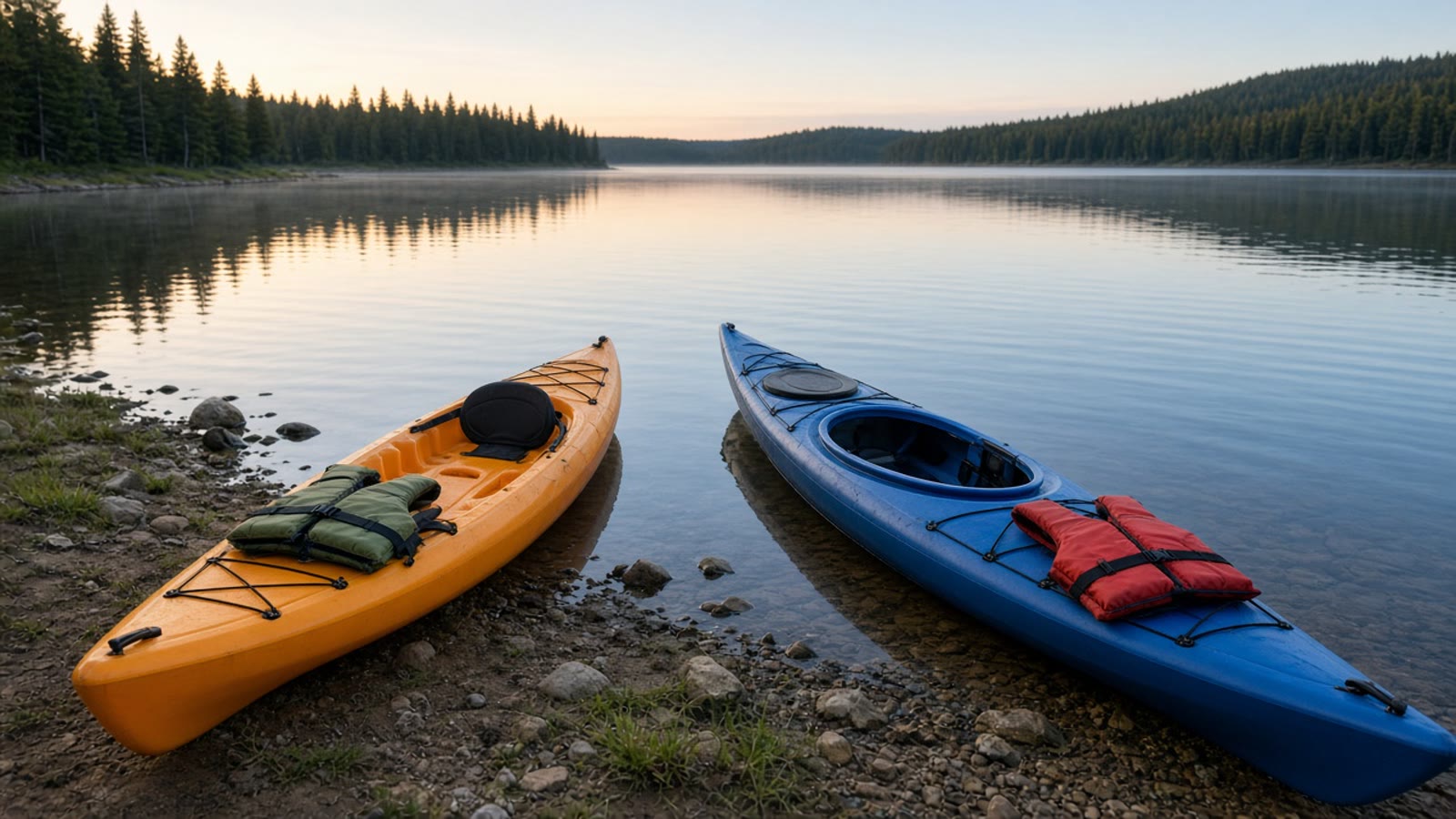
A sit-on-top is the default first kayak because you can climb back on. A sit-inside tracks and stays drier if you already know the wet-exit. Match the hull to rescue skill, not the colorway.
Key takeaways
- First boat and fishing: sit-on-top.
- Distance and cold-water touring: sit-inside if you can exit it.
- A vest is not optional on either hull.
- Buy a sit-inside where you can sit in the cockpit.
A sit-on-top vs a sit-inside kayak is a wet-exit argument, not a color argument. If you want a boat you can fall off and climb back onto, buy the sit-on-top. If you want a boat that tracks, stays warmer in a chop, and you already know a wet-exit and a re-entry, buy the sit-inside. Most first boats in 2026 should be sit-on-tops. The cockpit is the second hull, after you have already practiced swimming with a vest on.
Short version. Sit-on-top is the fishing, dog, surf-launch, and beginner hull. Sit-inside is the touring, cold-water, and efficiency hull. The sit-on-top roundup is the longer SOT list. Kayak safety is the vest and the leash. A sit-inside from Old Town, Perception, or Wilderness Systems still comes from a paddling shop that will talk cockpit size — sit in the boat before you pay.
Who should buy sit-on-top, and who should buy sit-inside?
Buy a sit-on-top if this is hull number one, you fish, you paddle with a dog, you launch in small surf, you live in warm water, or you want to swim off the boat and get back on without a lesson. Buy a sit-inside if you already roll or wet-exit, you tour distance, you paddle shoulder-season water that is a hypothermia clock, or you want a boat that tracks with less effort. Buy neither if the honest answer is a canoe, a jon, or staying on shore that day. Wind still cancels both.
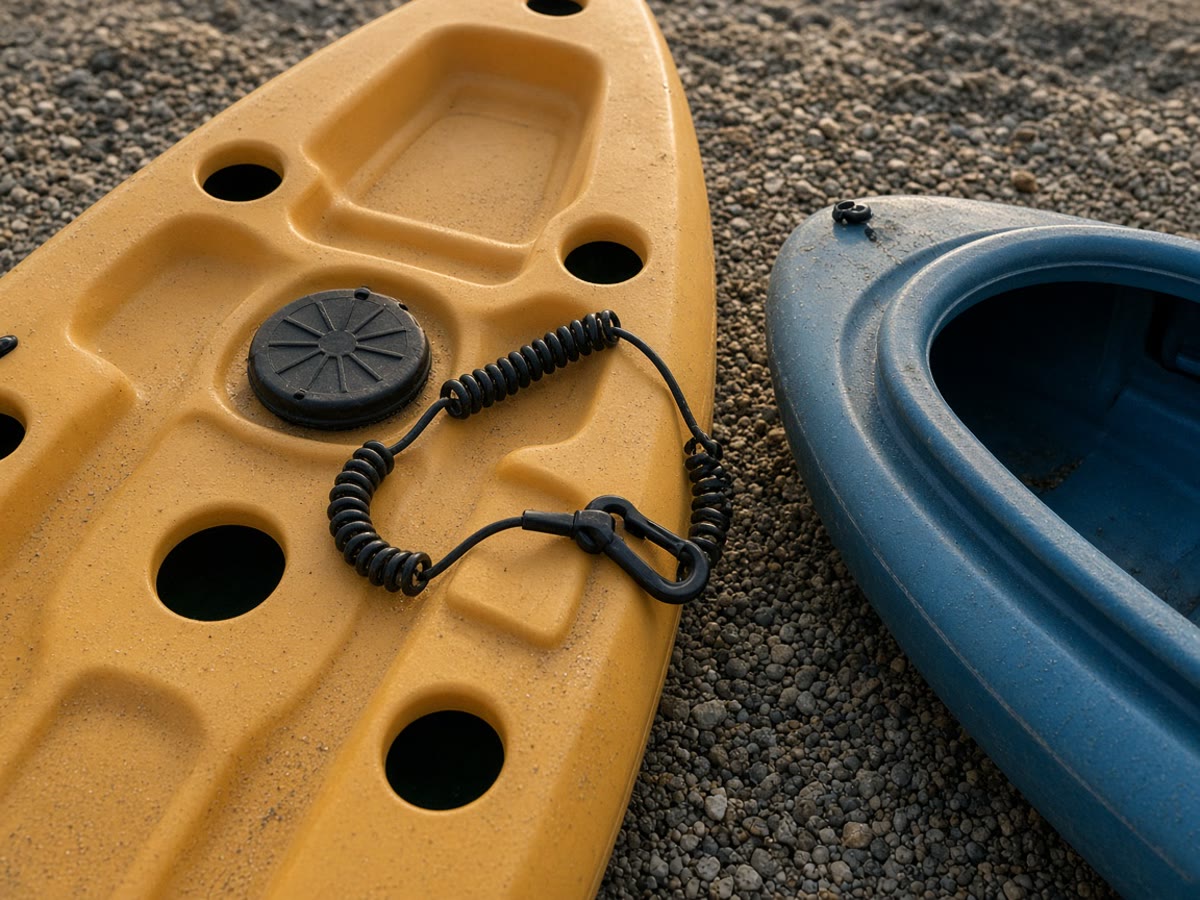
A fishing kayak is usually a sit-on-top because of scuppers, rod holders, and a deck you can kneel on. Scupper plugs are a SOT-only conversation. A sit-inside does not want those holes. A fall lake is when a sit-inside starts to feel like the smarter boat — colder water, fewer swimmers, more reason to stay in a cockpit.
| Job | Sit-on-top | Sit-inside | Our call |
|---|---|---|---|
| First kayak | Self-rescue is the feature | Wet-exit is homework | Sit-on-top |
| Fishing and a dog | Deck, scuppers, tankwell | A circus in a cockpit | Sit-on-top |
| Distance, tracking | Fine, more work | Usually faster per stroke | Sit-inside if you already swim it |
| Cold water | You sit in the splash | Skirt keeps the lap dry | Sit-inside plus a skirt, or stay home |
| Surf launch / swim | Climb back on | Practice or swim the boat in | Sit-on-top |
A vest is not optional on either hull. Self-rescue is a skill, not a catalog feature.
Why a sit-on-top is the default first boat
You sit on a deck. Water that comes aboard leaves through scuppers. If you flip, you are already in the water, and you climb back on over the stern or the side. That is the whole beginner argument. It is also the fishing argument: stand a rod in a holder, clip a leash, put a crate in the tankwell, let a dog shake in the bow. A cockpit would turn that dog into a swamp.
The Perception Tribe 9.5 is the live sit-on-top we name when the job is a stable recreational fishing hull you can still paddle as a boat: a molded seat, scuppers, bungee decks, enough width that a first-timer stops thinking about the edge. Check live prices. The SOT page lists cousins.
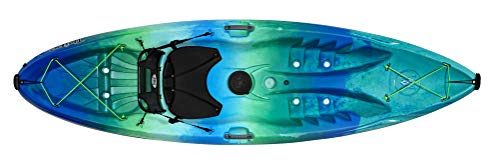
Secondary stability matters more than the first tippy feel. A narrow sit-on-top that feels “fast” in a store will feel lively with a cooler on the back. A wide Tribe-class hull will feel dull and then refuse to dump you when a fish pulls sideways. Dull is a feature on day one. Grip and a long sit matter once the hull is already stable. A seat that drops after two hours is a hull you will hate even if it never flips. Bring a small pad or a better seat before you bring a fish finder.
Storage on a sit-on-top is a tankwell and bungee. Storage on a sit-inside is a bulkhead hatch if the boat has one, plus what fits between your knees. Fishing crates live on SOTs. Day-touring dry bags live in sit-insides. If you need both a crate and a dry hull, you are shopping a fishing SOT with hatches, not converting a rec cockpit with hope.
When the sit-inside is the right hull
A sit-inside puts your legs in a cockpit, a skirt over the rim if you use one, and your center of gravity lower. The boat tracks. The lap stays drier in a chop. You go farther on the same lunch. You also have to come out of that cockpit on purpose if you flip. A wet-exit is a skill: pull the skirt, fall out, keep contact with the boat, then re-enter or swim it to shore. If you have not practiced that in warm water with a teacher, do not buy a sit-inside as a first boat and then paddle cold water in April.
Old Town Vapor-class, Perception Tribute-class, and Wilderness Systems Pungo-class sit-insides still come from a paddling dealer that will let you sit in the cockpit. Hip width, knee height, and foot-brace length are fit, not a catalog photo. Buy the cockpit where you can sit in it. A kayak plan still starts with weather, not a checkout cart.
A skirt is not a suggestion on 50-degree water. A sit-inside without a skirt is a bathtub. A sit-on-top on that same day is a wet bench. Either way you dress for immersion. Boating safety is the same rule as a bigger hull: tell someone, wear the vest, know the wind.
The paddle is the other half of either boat
A cheap paddle with a bent aluminum throat will blister you out of a good hull. Length is roughly 220 to 240 cm for most adults on a rec boat, longer if you sit high on a wide SOT. A two-piece that lives in the trunk is how you actually take the boat. Feather if you already know; leave it unfeathered if you do not. Sit-on-tops sit you higher, so a slightly longer paddle often feels better than the 220 that came with a sit-inside demo. If your shoulders burn at mile two, the paddle is short or the stroke is all arms.
The Carlisle Magic Plus is the live rec paddle we name: a blade that still pulls water, a shaft that is not a pipe from a garage. Check live prices. Fishing paddles if you want the drip-ring and the hook-retrieval version of this conversation.
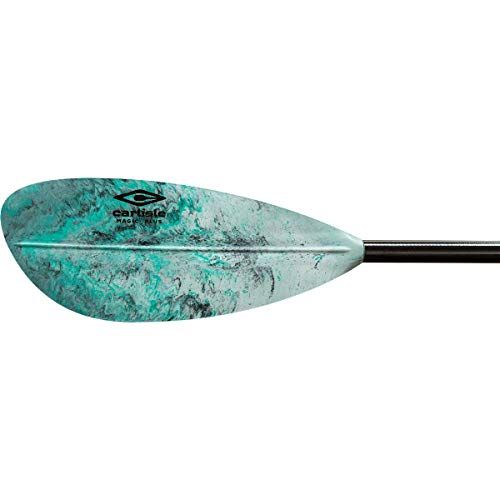
Hold the paddle with a loose grip. A death grip is a forearm that dies at mile two. Sit-insides often feel like they need less blade because the boat already tracks. Sit-on-tops need an honest stroke and a little more torso because the hull is a barge on purpose. Neither hull wants a double-bend whitewater paddle you saw in a video.
The vest is not a seat cushion
Wear it. Clip it. A sit-on-top that is “unsinkable” still leaves you in the water away from the boat if a gust takes the hull. A sit-inside that is “safer because you are inside” is the opposite of true until you have exited it. The O’Neill Superlite USCG vest is the live foam PFD we name for a warm-water rec day: buckles you will actually close, a cut that lets you paddle. Check live prices. A life-jacket page if you need a different cut. Inflatable belts are a different conversation and a different risk if you are unconscious.
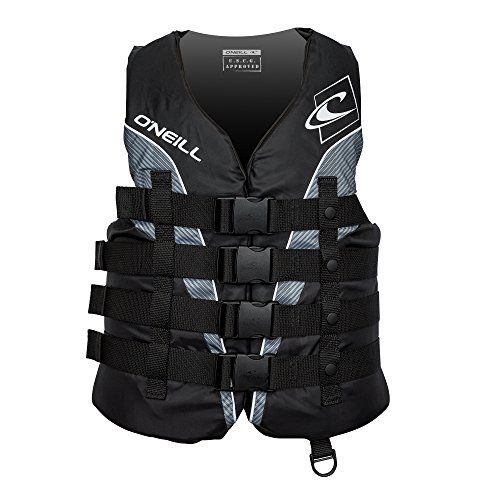
Leash the paddle on a SOT if you fish. Leash the boat to you only with a quick-release you understand — a surf or a snag can make a leash a problem. Kayak fishing safety is the longer habit list. This page is the hull choice. The vest still wins the argument.
Which hull in wind, current, and cold?
Wind on a sit-on-top is a sail you sit on. You will weathercock. You will work. A rudder or a skeg helps some fishing SOTs; most rec SOTs do not have one. A sit-inside with a little more waterline will track and complain less. Current is the same physics. Cold water is the decision that should scare you more than the hull brand. Dress for the swim. A skirt on a sit-inside in 60-degree air and 50-degree water is still a swim if you come out. A SOT is an obvious swim. If the wind is already a small-craft talk, both hulls stay on the truck.
Straps and a rack are how either hull gets to the water. A SOT is often heavier. A sit-inside can be longer. Measure the roof, the garage, and the two people who will lift it. A hull you cannot load is a lawn ornament. Foam blocks plus cam straps can move a rec boat a few times. A weekly driver wants bars and decent bow and stern lines. Kayak gifts are often the straps and the vest, not another hull.
Where you paddle still picks the hull. A warm southern lake in July is sit-on-top country. A Maine shoulder-season crossing is sit-inside-plus-skirt country, or it is a day you stay on the porch. Estuaries with oyster bars punish a sit-inside hull you drag. Rocky landings punish both. Look at the launch, not the catalog cove.
So which kayak should you actually buy?
Buy a sit-on-top if this is the first boat, the fishing boat, or the dog boat. Buy a sit-inside from a paddling shop if you already own the wet-exit and you want miles. Our default for most readers remains the sit-on-top — Perception Tribe 9.5-class, a real paddle, a vest you buckle. Check live prices. The cockpit can wait until the swim is boring.
If the lake is already a fishing plan, keep going on fishing kayaks and kayak-fishing water. If the day is just a paddle, plan the day and leave while you still have a reserve. A sit-on-top with a crate and a sit-inside with a skirt can live in the same garage. The mistake is buying the cockpit first and then learning the swim on 55-degree water in April. Warm water, vest on, practice the exit, then shop the touring hull.
Inflatable kayaks sit beside this fight, not inside it. A drop-stitch or a quality bladder boat can be a sit-inside or a sit-on-top shape in a bag. That is an apartment and a hatchback conversation. A plastic SOT or a plastic cockpit is the boat you leave on sawhorses. Do not buy an inflatable because this comparison felt hard. Buy an inflatable because the car will not take a hull.
Also in the magazine
Keep going with sit-on-top kayaks, scupper plugs, kayak paddles, and kayak safety. Check live prices.
Frequently asked questions
Sit-on-top or sit-inside for a first kayak?
Sit-on-top. You can fall off and climb back on. A sit-inside needs a wet-exit you have already practiced in warm water.
Which is better for fishing?
Sit-on-top for most people — scuppers, rod holders, a tankwell, and a dog. A sit-inside can fish if you already live in a cockpit.
Which is faster?
A touring sit-inside usually tracks farther per stroke. A rec sit-on-top is a stable barge on purpose. Buy the job, not the GPS speed.
What sit-on-top kayak should a first buyer look at?
Perception Tribe 9.5, plus a Carlisle Magic Plus paddle and an O’Neill Superlite vest. Check live prices.
Where do I buy a sit-inside?
A paddling shop where you can sit in the cockpit — Old Town, Perception, Wilderness Systems. Hip width and foot braces are fit, not a mail-order guess.
Do I still need a life vest on a sit-on-top?
Yes. A hull that does not sink can still drift away from you. Wear a USCG vest and buckle it.