
Best Kayak Roof Rack (2026): J-Bars, Foam, and Straps That Hold
Written by John Wren|
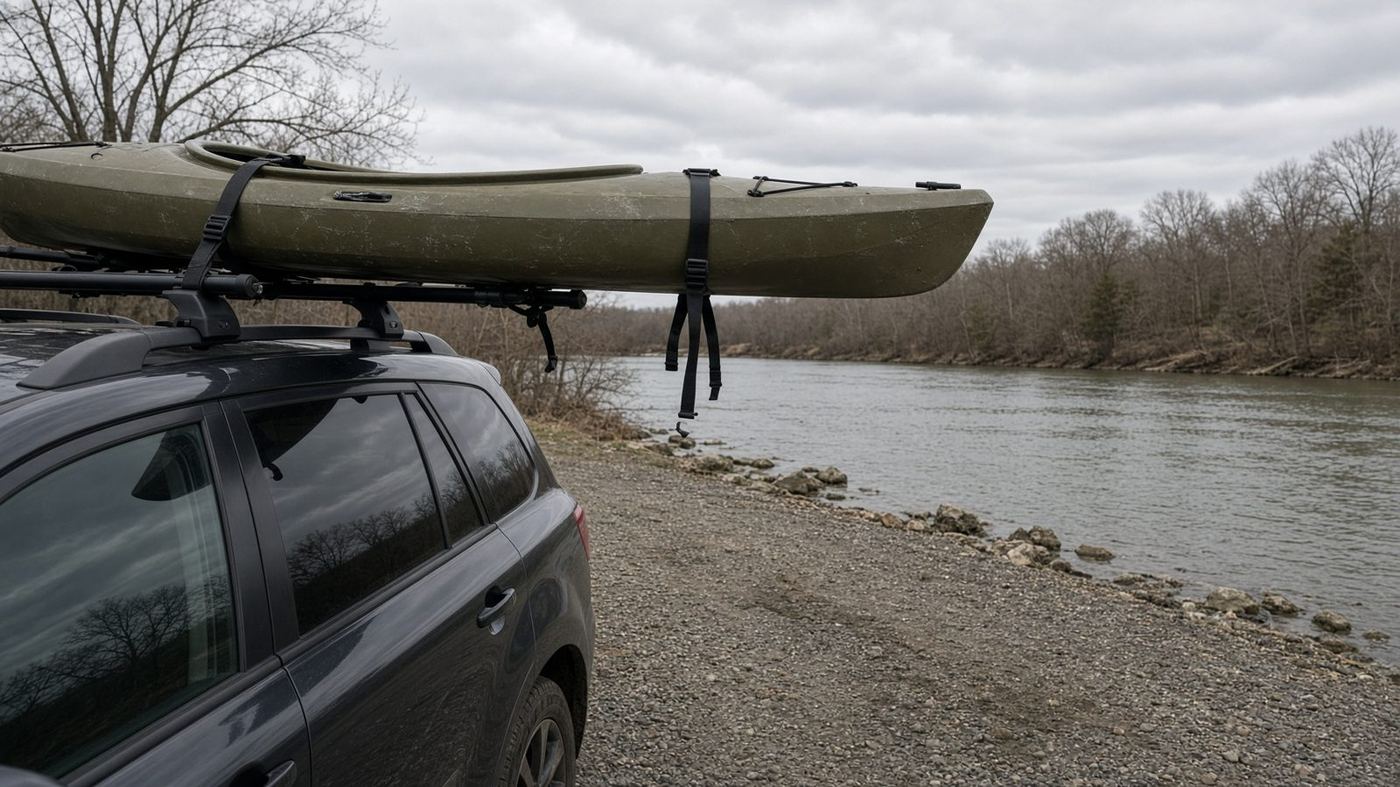
If the car has crossbars, buy J-bars (OxGord, Mrhardware, ECOTRIC), cam straps, and bow/stern lines. If it does not, use a foam-block carrier and drive like the boat can walk. Do not ratchet-crush the hull.
Key takeaways
- The rack is bars + carrier + cam straps + bow/stern lines.
- J-bars need real crossbars. Foam is for short trips.
- Cam buckles beat ratchets on a plastic hull.
- Recheck after five minutes. Boats settle.
A kayak roof rack is how a boat that does not fit in a bed still gets to the water. The rack is not the straps. The rack is not the wish. It is a pair of J-bars, saddles, or foam blocks that take the hull, plus cam straps and bow/stern lines that take the highway. Skip any one of those and you own a story about a kayak in the median.
Short version. If the car already has crossbars, buy J-bars (OxGord, Mrhardware, ECOTRIC) and cam straps, then add bow and stern lines. If the car has no bars, buy a foam-block carrier (TMS or a pad kit) and understand the speed limit of that system. Do not ratchet-strap a hull until it oil-cans. Do not drive 80 with foam blocks and a prayer. For the rest of getting a boat to water, kayak trailers exist when the roof is the wrong tool, and kayak fishing safety is the page to read before you launch.
Crossbars first. Measure the spread. A 24- to 36-inch spread is happier than bars that sit 14 inches apart on a small hatchback. The hull wants support near bulkheads, not mid-span on a cheap plastic boat that will hog. Factory bars, aftermarket bars, or a padded foam system — pick one. Strapping a kayak to rain gutters with moving blankets is how people meet state troopers.
J-bars or foam blocks?
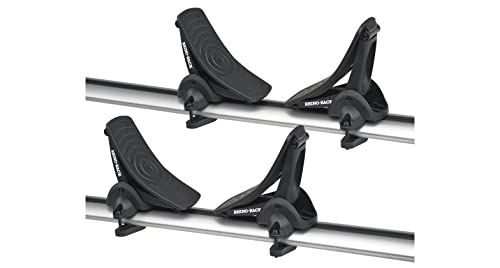
J-bars carry the boat on its side, which is kinder to the hull and often lets you stack two on a normal bar spread. They need real crossbars and a roof that can take the weight and the leverage. Foam blocks and pads carry the boat hull-down or hull-up on the roof skin or on bars, cheaper, slower, more fidgety in wind. A saddle (the nicer Thule/Yakima version) cradles the hull right-side-up. This page is the Amazon J-bar and foam world people actually click. The premium saddle is the upgrade when the boat is expensive and the highway is long.
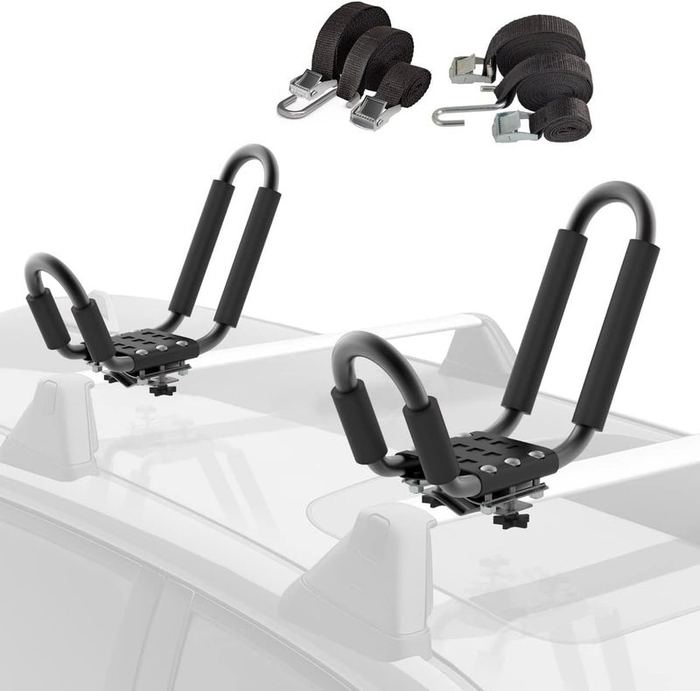
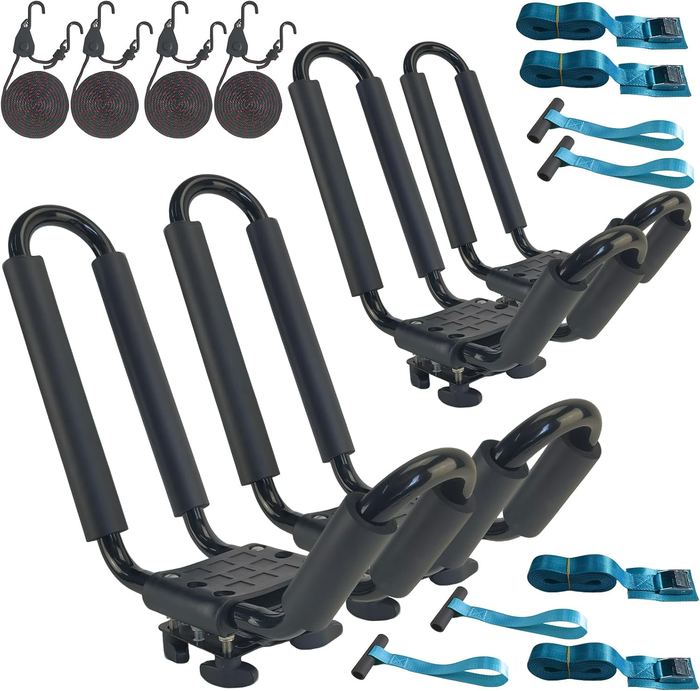
OxGord, Mrhardware, and ECOTRIC — the J-bar pile
OxGord is the budget J-bar kit that shows up in a thousand driveway photos: powder-coated steel, pads on the J, hardware for square and some round bars. Mrhardware is the heavier cousin. ECOTRIC is the other Amazon J that people buy when OxGord is out of stock. All three are the same job. Folding J-bars that lay down when empty are nicer in a garage. Fixed J-bars are simpler and catch more wind empty. Check the bar type before you click. Round factory bars and square aftermarket bars do not share hardware.
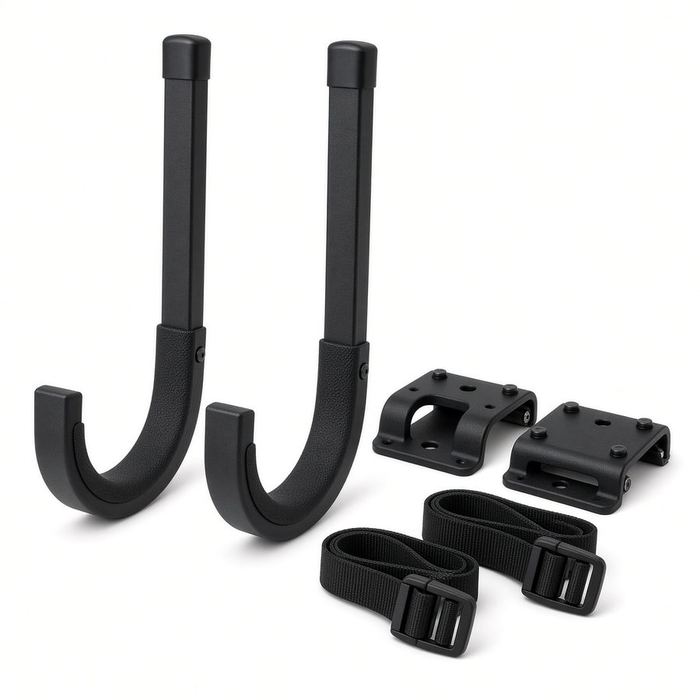
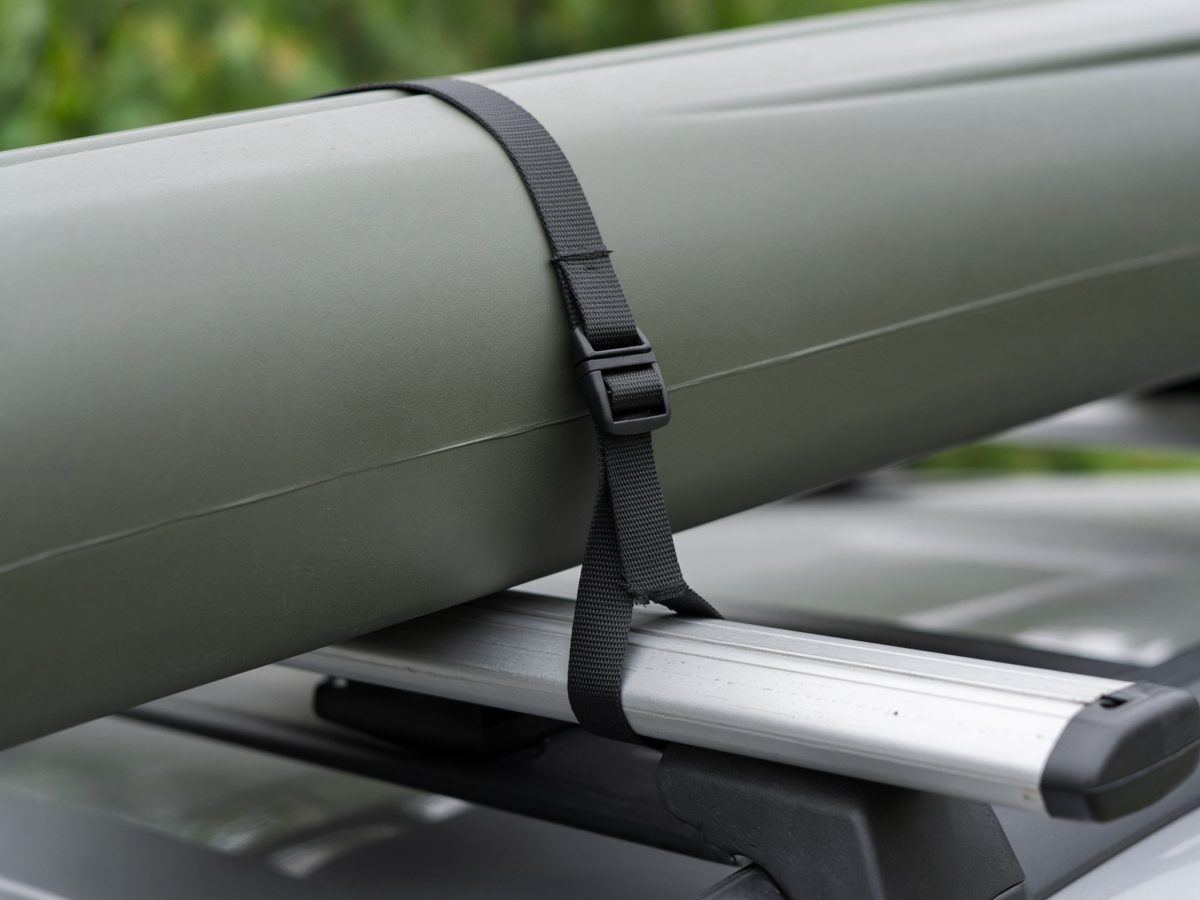
Pad the J. A bare steel J is a hull dent. Snug the boat into the bend, hull against the pad, then cam-strap over the boat and around the bar — around the bar, not just through a cheap plastic loop that was never load-rated. Two straps minimum. Twist the long tails so they do not hum. Beach driving with a kayak on top is a sandblast. Rinse the hardware. Salt eats cheap bolts.
TMS foam and a foam-block carrier — no bars, short trips
Foam blocks are how a car without a rack still carries a recreational kayak across town. They sit in the roofline or on existing bars, straps go through the doors or around the bars, and you drive like a person who knows the boat can walk. This is not a 70-mph, 200-mile system unless the foam is on real bars and the bow/stern lines are honest. TMS-style kits include the blocks and straps. A simple foam-block pair is the same idea with fewer pieces in the box.
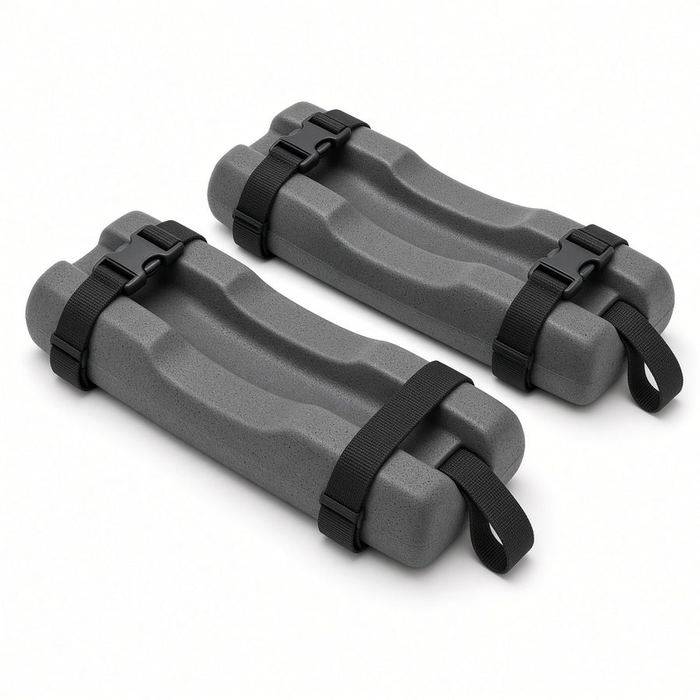
Hull up or hull down: polyethylene recreational boats often travel better hull-up (deck on the foam) so the hull cannot flatten. Composite and thermoform boats have their own rules; ask the maker. Either way, the strap should land near a bulkhead. Mid-span on a cheap boat is how you own a banana. For packing the rest of the car, car-camp packing still applies — paddles inside, not on the roof next to a loose J.
Bow and stern lines are not optional
Two cam straps over the boat stop it from lifting. Bow and stern lines stop it from becoming a missile when you brake. Hood loops, tow hooks, or a dedicated deadman under the hood — not the rack, not the wiper, not a plastic grille. If you cannot find a legit attach point, you are not done installing. Load security is the same brain even when the “trailer” is a roof.
Walk around the car. Yank the bow. Yank the stern. Yank the straps. Drive five minutes, stop, check. A boat that settled is a boat that can walk. For the boat itself, fishing kayaks and sit-on-tops are the purchase pages. This page is how they get there. Kayak gifts include straps, which is the unglamorous version of a new paddle.
Weight, wind, and when you need a trailer
Read the roof rating. Two fishing kayaks plus bars plus J-bars plus wet gear is how people exceed a 165-pound roof and then blame the rack. A trailer is not an admission of defeat. It is how a tandem, a second boat, or a long highway stays sane. Kayak trailers is that conversation. A roof is for one boat, maybe two light rec boats, and a driver who checks straps.
How do you load a kayak without wrecking your back or the car?
Paddle and PFD in the car first so you do not pin them under the hull. Stand at the back bumper, lift the bow onto the rear bar or foam, then walk the stern up. A second person at the bow is how a 12-foot fishing kayak stays a friendship. A wet hull on a tall SUV is a two-person job even if you are stubborn. Grip and shoulders are the other half of a long day; blowing a disc in the driveway is not a launch.
Straps over the boat, then bow, then stern, then walk-around. Photograph the setup the first time it is right so you can recreate it in a dark ramp parking lot. A cheap J-bar that shifts on round bars is a hardware problem you fix at home, not at 70 mph. For ramps and wind, how windy is too windy still applies — a boat on the roof in a crosswind is a sail you did not want.
Noise on the highway is a loose strap or a long tail that was not twisted. Stop. Fix it. A hum that “just is the rack” is a strap slapping a bar, and it will saw itself in a few hours. Soft padding between hull and bar is cheaper than a gelcoat repair. If you borrowed a friend’s composite boat, do not use a rusty J without a pad and then apologize with a six-pack. That apology does not fix carbon.
Parking garages, drive-throughs, and the tree at the end of your driveway are how roof kayaks die in town. Know your new height. A piece of brightly colored flagging on the bow helps you see the overhang in a rear-view camera that was never designed for it. Empty J-bars still add height. Fold them.
Empty J-bars whistle and catch. Fold them or take them off if you live in a parking garage. Foam lives in the trunk so it does not become a sponge on the roof all week. Our pick with crossbars: OxGord or Mrhardware J-bars, two cam straps, bow and stern lines, a five-minute recheck. Our pick without bars: TMS foam, slow road, bow and stern anyway. Our pick for a second boat or a long interstate: stop pretending and get a trailer.
| Carrier | Needs bars? | Best job | Watch-out |
|---|---|---|---|
| OxGord J-bar | Yes | Budget J on square bars | Confirm bar shape |
| Mrhardware heavy J | Yes | Heavier kit, same job | Wind when empty |
| ECOTRIC J-bar | Yes | Alternate Amazon J | Hardware fit |
| TMS foam carrier | No / optional | Short trips, no bars | Not a highway tank |
| Foam-block pair | No / optional | Simple pad kit | Speed and settle |
A pre-drive checklist you can do in sixty seconds
Bars tight. J-bar hardware tight. Boat in the J or on the foam. Two cam straps around the bars, snug, tails twisted and tucked. Bow line to a real hook. Stern line to a real hook. Walk around. Yank. Photograph if it is a new car. Drive five minutes. Stop. Yank again. That is the whole ritual. People who skip the five-minute stop own the median story. A strap that hummed at 40 will saw itself at 70. Stop and fix the hum.
Know the height. Write it on a tape on the dash if you are new to the boat on the roof. Garage, tree, drive-through, the sports-bar entrance with the hanging heater — all of them eat kayaks. A loose bar is a noise, then a gouge, then a boat in the lane. After salt or dirt: rinse the J-bar pads and the hardware. Foam dries in the sun so it does not become a sponge that stains the roof.
Straps dry out of a knot. Wet straps left in a trunk mildew and then rot on the one day you needed them. Replace straps that are fuzzy. They are cheaper than a hull. Empty J-bars still add height. Fold them before a parking garage. Foam lives in the trunk so it does not become a sponge on the roof all week.
Two boats: check the roof rating in the manual, not the internet. Two fishing kayaks plus bars plus wet gear is how a 165-pound rating becomes a dent. Offset the J-bars so the boats do not fight. Strap each hull as if the other were not there. A trailer is still the adult answer for two boats and a long interstate. The roof is the commute tool.
If you only kayak four times a year, foam plus honest speed limits will get you to the local lake. If you kayak every weekend, J-bars on real crossbars will save you time and hull dents. Match the system to the calendar, not to the most expensive rack in a catalog you will not mount. Recheck the straps. Know the height. Bring a second person for a wet fishing kayak on a tall SUV. That is how the boat and the driver both arrive. Check live prices. We do not invent numbers.
Frequently asked questions
Do I need a roof rack to carry a kayak?
You need a system: bars plus J-bars or saddles, or foam blocks plus serious straps and bow/stern lines. A moving blanket and a ratchet strap is not a system.
J-bar or foam blocks?
J-bars if you have crossbars and you drive highway speeds. Foam if you do not have bars and the trip is short. A trailer if the boat is heavy or the trip is long.
Should I use ratchet straps?
Prefer cam-buckle straps. Ratchets make it too easy to crush a hull. Snug, not crushed. Twist the tails so they do not hum.
Do I need bow and stern lines?
Yes at highway speed, in wind, and with a long boat. Attach to tow hooks or hood loops, not wipers. Two straps over the boat are not a substitute.
Hull up or hull down?
Many polyethylene rec boats travel better hull-up so the hull cannot flatten. Follow the kayak maker. Either way, strap near a bulkhead, not mid-span.
When should I buy a kayak trailer instead?
When the roof rating is close, you carry two fishing kayaks, or the drive is a long interstate. A trailer is cheaper than a dented roof and a boat in the median.