
Building a Pole Barn for Boat and Vehicle Storage
Written by John Wren|
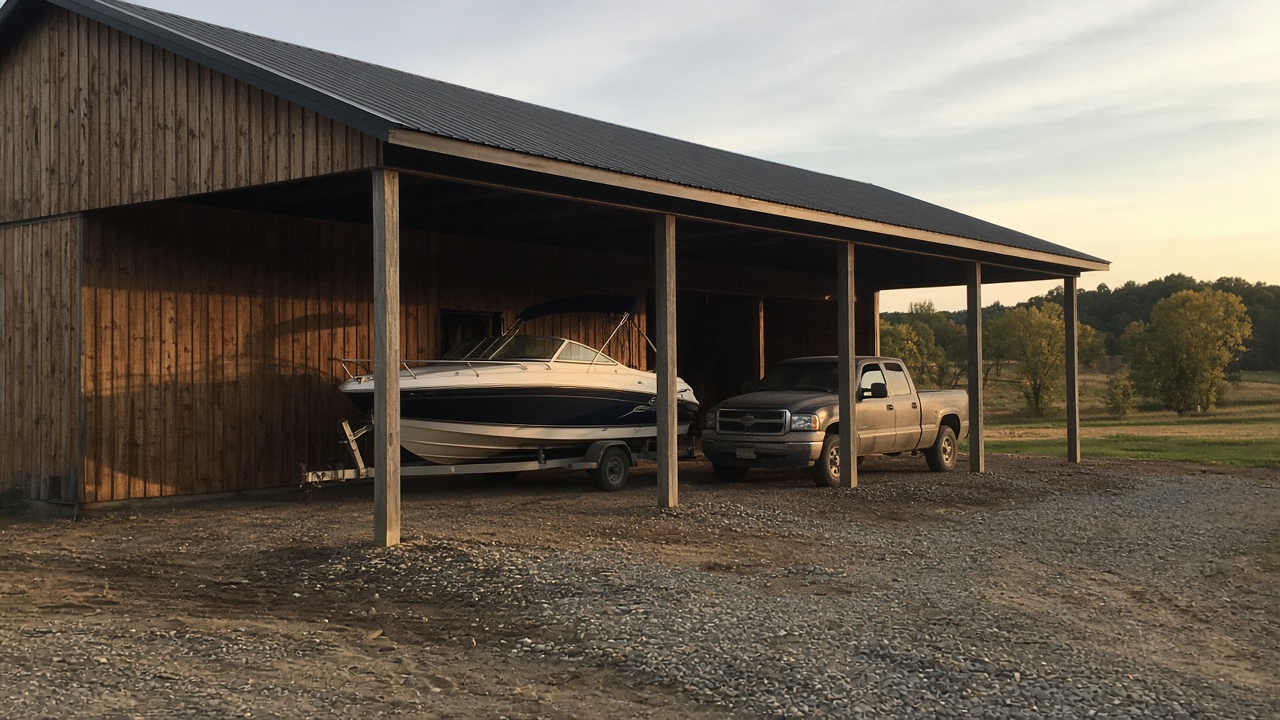
Size for trailer tongue, motor tilt, and door height. Put it on ground that sheds water. Vent. Light the work lane. Keep mice and wet covers from becoming the season.
Key takeaways
- Height and tongue length are the usual misses.
- Do not build in the pretty puddle.
- Ventilation is maintenance.
- No fake hardware ASINs on a contractor job.
A pole barn for a boat and the muddy truck is a weather roof with a floor plan, not a catalog cathedral. Ultraviolet eats gelcoat. Moisture eats wiring. Mice eat everything that smells like a snack. In 2026 the useful build is still: size for the hull you have plus the hull you might have, keep water moving, and do not trap a wet boat in a sealed box.
Short version. Measure the tallest thing on a trailer, then add door and walk-around. Put it on ground that drains. Vent the roof. Light the work lane. Skip the fake Amazon hardware list — this is a contractor and a permit conversation. the dock that holds the other end if the boat also needs a slip. keeping a ski alive if a ski is part of the fleet.
You can store a boat outside under a cheap cover. You will buy that cover twice and still have a faded hull. The barn is how the fleet stays ready.
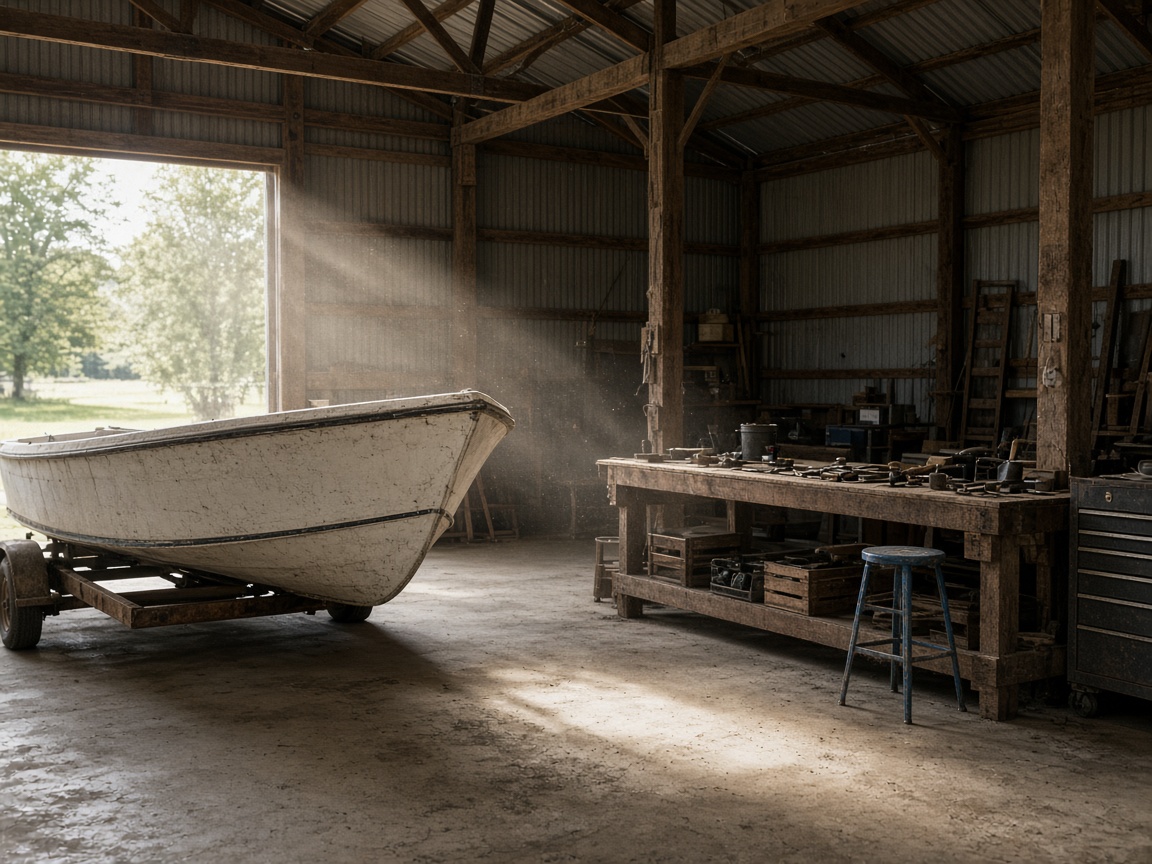
Size for the awkward version of the boat
People measure the hull and forget the trailer tongue, the motor tilted, the radar arch, and the walkway they will want with a wet hand. Measure the longest, widest, tallest configuration you actually use. Then add room to open a door and to walk past a fender. A barn that fits only on a perfect day will not get used on a dark Tuesday.
Height is the usual miss. A roll-up or sliding door that clears the hardtop with a margin is the whole building. A pretty eave that clips an antenna is a renovation. Think about a future boat that is a foot taller. Pole barns are easier to plan long than to raise later.
Two bays beat one heroic bay if you also store a truck, an ATV, and a pile of life jackets. The boat wants a clean, slightly longer stall. The truck can live with a dirtier floor. Do not make the only path to the chest freezer be under the bow.
Water has to leave
Do not set the barn in the pretty low spot by the pond. That is a puddle with walls. Pick a slight crown or build a pad that sheds. Gutters that dump onto the entry apron will ice in winter and rut in spring. Send water away from the doors.
Check setbacks, floodplain, and the HOA if you have one before you fall in love with a rendering. A pole barn is still a building. Permits exist because wind and snow loads are not vibes. Hire the person who will stamp the thing if your county wants it stamped.
Power and a hose matter more than a lounge corner. A GFCI receptacle, a dedicated compressor outlet, and a place to rinse a hull without flooding the neighbor are the working barn. boat electrical gremlins if you already fight boat electrics. The barn should not add a mystery circuit.
Floor, rats, and the wet hull
Gravel that drains is honest. Concrete is nicer for jacks and spilled oil and is a different budget. A dirt floor that holds a puddle under the bunks is how you grow mildew in January. If you pour, pitch it to a drain you can actually clean.
A boat that goes in wet should not sit sealed. Open a hatch. Run a dehumidifier if the climate is a swamp. Crack a vent. A closed-up fiberglass cave is a biology project. Mice will nest in a cover. Traps and a clean floor beat poison scattered around a kid’s play bay.
Fuel and batteries have rules. Do not turn the barn into a gas can library. Vent. Keep the charger on a tender that is meant for the battery chemistry you have. A cheap charger on a lithium pack is a fire story.
Air and light are maintenance
Ridge vents, soffit vents, or a simple cupola — pick a system that actually moves air. A metal roof in July without airflow is an oven that cooks seats. A winter barn without airflow is a drip. Condensation on a cold hull is the hidden rain.
Light the walking lane and the workbench. A dark barn is how people bark shins on a trailer jack. Motion floods that blind you at 5 a.m. are the wrong tool. keeping barn light off the sky if you also want a dark pad on the property — shield the barn lights so they do not ruin the sky or the neighbor.
Doors should roll or slide on a day you are wearing gloves. A pretty swinging pair that you cannot open in a crosswind is a magazine feature. Hardware is a wear item. Buy it like you will replace rollers in ten years, because you will.
How the barn earns the pour
A labeled wall for lines, a shelf for oil that is not on the floor, a place for the life jackets to dry — that is the barn working. jackets that get worn if the jackets are the ones you actually wear. A pile of damp vests in a tote is how the barn smells like a locker.
Winterize in the bay if that is the plan, then leave a checklist on the door. Spring commissioning is easier when the tools live where the boat lives. The barn is not storage for every broken gate on the farm. If you fill it with junk, the boat goes back outside. That is how these buildings fail socially.
No Amazon kit belongs here. Lumber, doors, and a slab are local. Check live prices on a vest or a lamp if those are the small holes. We do not invent contractor bids.
A roof that keeps the fleet honest
A pole barn for boat and vehicle storage is measure twice, drain the pad, vent the roof, and leave a walking lane. Size for the awkward boat. Keep mice and wet covers from becoming the season. Skip the fake hardware list. Hire the build like wind is real. Then the Saturday start is a key, not a cover fight and a faded seat.
Wind, snow, and the engineer you actually want
A pole barn is a sail. Ask about wind speed, exposure, and the door that becomes a wing when it is open. A wide bay facing the prevailing storm is a drama. Turn the opening if you can. Snow load is not a meme. A cheap kit in a heavy-snow county is how people meet their boat under a folded roof. Pay for the stamp. It is cheaper than the boat.
Trusses and poles have spacing for a reason. Do not cut a pole because a boat lift fantasy appeared after the pour. Plan the lift, the beam, and the electric before the crew leaves. Retrofit is possible. It is also a second bill.
Neighbors and views matter if you want the building to stay welcome. A metal wall that sun-glares into a kitchen will become a feud. Earth colors, a tree line, and lights that do not flood the road are manners. Keep barn light off the sky if the property also wants a dark pad. The barn can exist without becoming a beacon.
A workbench that does not lose to the boat
If you will change oil in this building, give the bench a wall that is not the walking lane. Vises and a boat tongue cannot share the same three feet. A fold-down bench is fine if you will fold it. A pile of tools on the gravel is how sockets go to the mice.
Spill kit, absorber, and a trash plan for oil are adult. The county will care if you do not. So will the future you who has to park a truck in a rainbow puddle. A pole barn is not a free pass to dump.
Compressed air is worth a circuit. So is a hose that can reach the far bunk. Run them once, correctly. Extension cords across a dark bay are how people fall and then blame the building.
Doors, keys, and the attractive nuisance
A barn full of a boat and a truck is a target. Solid doors, a lock you will actually use, and a habit of not leaving the key in the winch are the system. Cameras are optional. A sightline from the house is better than a gadget you never check. Do not advertise the inventory on a feed.
Kids will treat a barn like a fort. That is predictable. Keep the prop, the chemicals, and the battery charger out of the climbable zone. A lockable cabinet is a building detail, not an afterthought. The pole barn is still a workplace.
Insurance will want to know the building exists. Tell them. A claim on a boat that “was in an unlisted shed” is a conversation you will not enjoy. Paper is part of the build.
Leave room for the next hull
The boat you have is not the last boat. A bay that can take a foot more beam or a foot more stick is a gift in five years. So is a door you can replace without moving a pole. Draw the maybe. Then stop. A barn that is planned for a yacht you will never buy is how budgets die and the truck still sits outside.
If the property might become something else, place the barn so a future driveway still works. Do not pin the only well or the only septic into a corner you will hate. A storage building should be easy to live with when the hobby changes. Hobbies change. Roofs last longer if you let them.
The first winter, watch where ice grows on the slab and where the door sticks. Fix those two things before you buy a lift. A building that opens on a cold Saturday is the upgrade. Everything else is a catalog.
Put a broom and a shop vac on a hook the first week, or the bay will become a dirt floor with a roof. Dust on a wet hull is how gelcoat gets dull in a building you paid to keep it pretty. Ten minutes after a trip is the maintenance the barn was supposed to make easy.
Label the breaker that feeds the tender and the compressor. The night the boat will not take a charge is a bad night to guess which switch is which. A paper directory on the door is not rustic. It is how a simple building stays simple.
Also in the magazine
Keep going with first dock setup, jet ski maintenance, boat electrical problems, and a dark pad on rural land. We only link pages that already live here. Check live prices. We do not invent numbers.
Frequently asked questions
How big should a boat pole barn be?
Measure the tallest, longest configuration on the trailer, then add walk-around and door margin. Plan a foot taller than today’s hull if you can.
Gravel or concrete?
Gravel that drains is honest. Concrete is nicer for service and oil and costs more. Avoid a dirt puddle under the bunks.
Do I need a permit?
Often yes. Wind, snow, and setbacks are why. Ask the county before you fall in love with a drawing.
Should I seal the barn tight?
No. Vent it. A wet boat in a sealed box is mildew and corrosion.
Can I store fuel and batteries in there?
Minimally, vented, and with the right charger. Do not make a gas-can library.
Why no Amazon products?
Lumber, doors, and slabs are local contractor buys. We will not invent hardware ASINs.