
Best Camping Tarps (2026): Fly, Footprint, and Kitchen Roof
Written by John Wren|
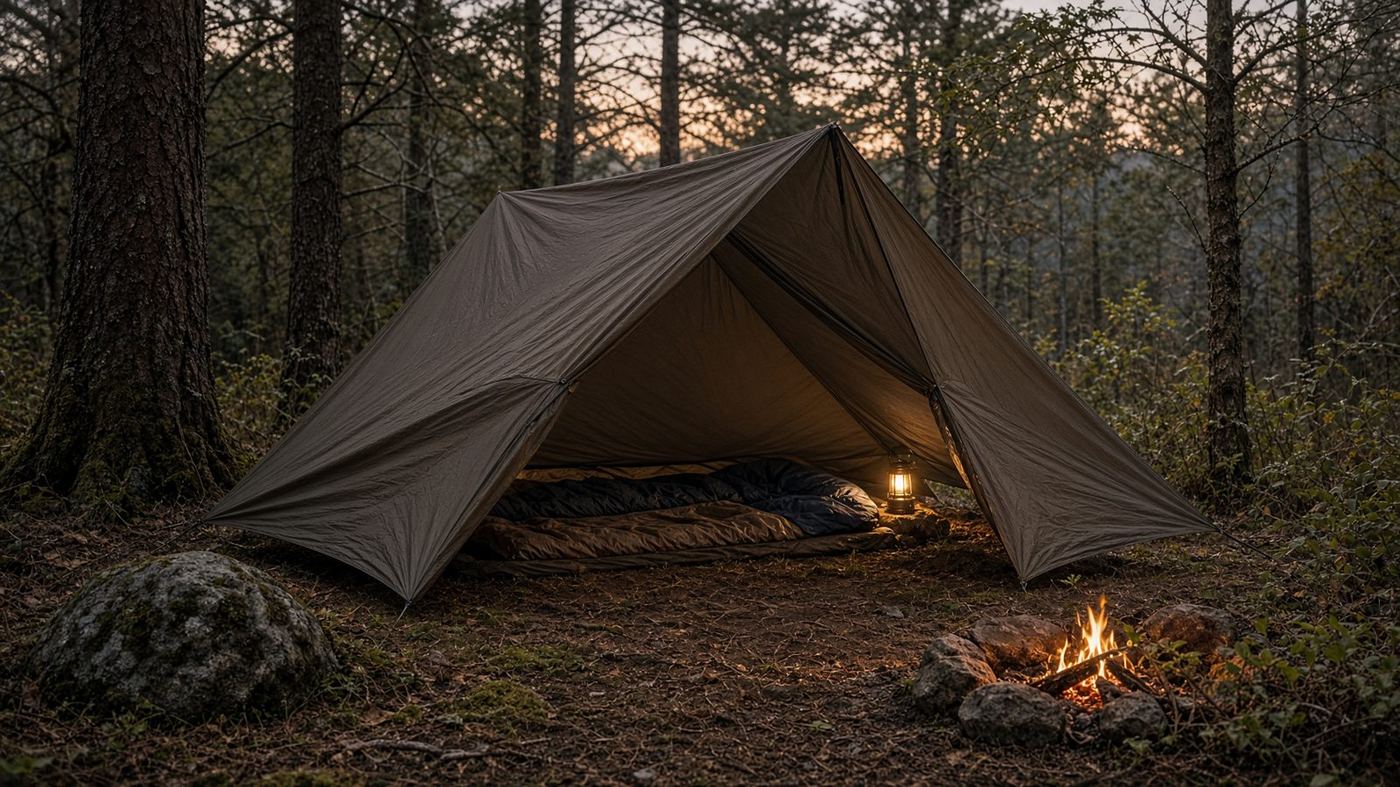
Buy a coated ripstop camping tarp (AmazonBasics or REDCAMP) to hang as a fly. Buy a heavy PE tarp as a car-camp footprint. Pitch a taut ridgeline and tuck footprints under the bathtub so rain does not pool.
Key takeaways
- An 8x10 flies two people and a stove. Footprints should be slightly smaller than the tent floor.
- Grommets and reinforced corners matter more than color.
- PE hardware tarps are for mud and woodpiles, not backpacking.
- Practice the pitch in the yard. A squall is a bad classroom.
A camping tarp is not a tent. It is a rectangle of fabric you can hang, stake, and hate less than being wet. Used well it is a kitchen roof, a gear porch, a groundsheet, and the reason you still have a dry sleeping bag after a squall. Used poorly it is a sail that teaches you about stakes at 2 a.m.
Short version. Buy a coated ripstop camping tarp with real corner reinforcements if you will hang it as a shelter. Buy a cheap polyethylene hardware-store tarp if you will put it under a tent as a footprint and you accept that it will be noisy, heavy, and ugly. Do not buy a “survival kit tarp” because it came with a whistle bracelet. Buy the tarp. Add your own guyline.
Size is the decision people skip. An 8x10 covers two people and a stove if you pitch it as an A-frame or a lean-to. A 10x10 or 10x12 is a family kitchen fly. A 6x8 is a solo backpacking fly or a tight tent footprint. Measure the tent floor and buy a footprint slightly smaller than the floor so rain does not pool under the bathtub. For the rest of a real overnight kit, overnight camping essentials and trail gear you cannot skip are the packing pages.
How should you pick a camping tarp?
Fabric first. Silnylon and coated polyester pack small and take a ridgeline. PE “blue tarp” material is waterproof and cheap and loud and heavy. Ripstop is not a brand. It is a grid that slows a tear. Thickness in mils matters for PE tarps you will drag. Weight in ounces matters for backpacking tarps you will carry. Do not mix those specs.
Hardware second. Grommets every 18 to 36 inches, reinforced corners, and tie-out webbing that is sewn, not glued. A tarp that only has corner grommets cannot be pitched in wind. You will pull the corner out and then decide tarps “don’t work.” They work. Your four attachment points did not.
Pitch third. An A-frame over a ridgeline sheds rain. A lean-to with the closed end into the wind is a kitchen. A flying diamond is shade. A groundsheet is a groundsheet — do not expect it to also be a sail. Rope and line is half of a tarp. Paracord is enough. Guyline with reflective fleck is better at 2 a.m. when you walk into it.
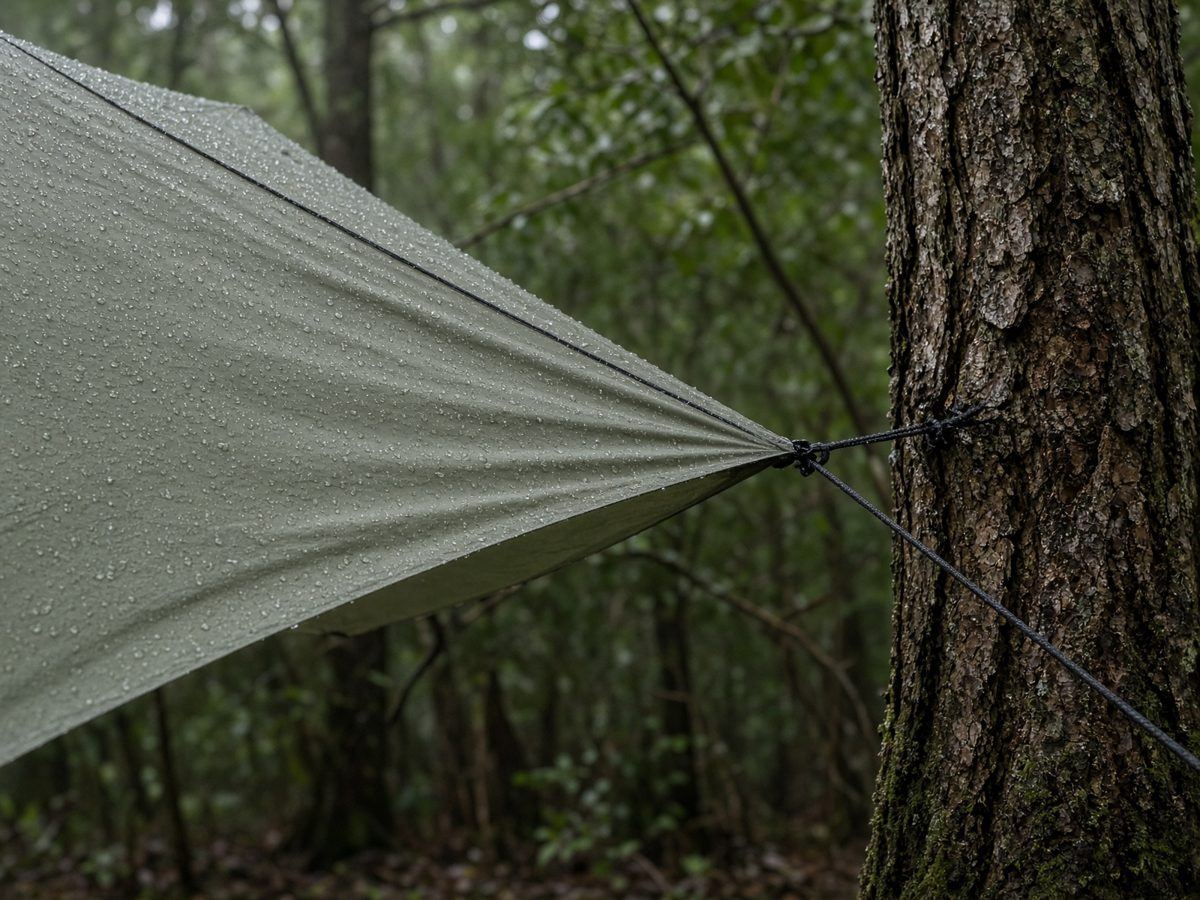
AmazonBasics and REDCAMP — camping tarps you will actually hang
The AmazonBasics camping tarp is the default rectangle: coated ripstop, rust-resistant grommets, sizes you can pick to the tent. It is not cuben fiber. It is the tarp you keep in the car and the tarp you put under a three-person tent so the floor is not sitting in a puddle. REDCAMP’s camping tarp is the same job with a stuff sack and corner straps that make a ridgeline pitch less of a circus. Both beat a hardware-store blue tarp for camping because they fold smaller and do not scream in the wind quite as loud.
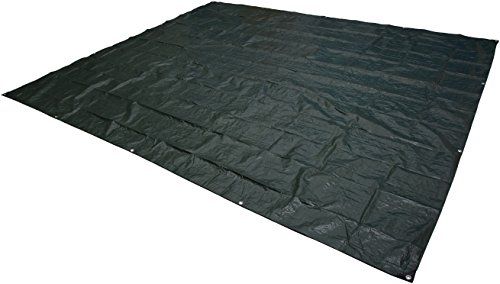
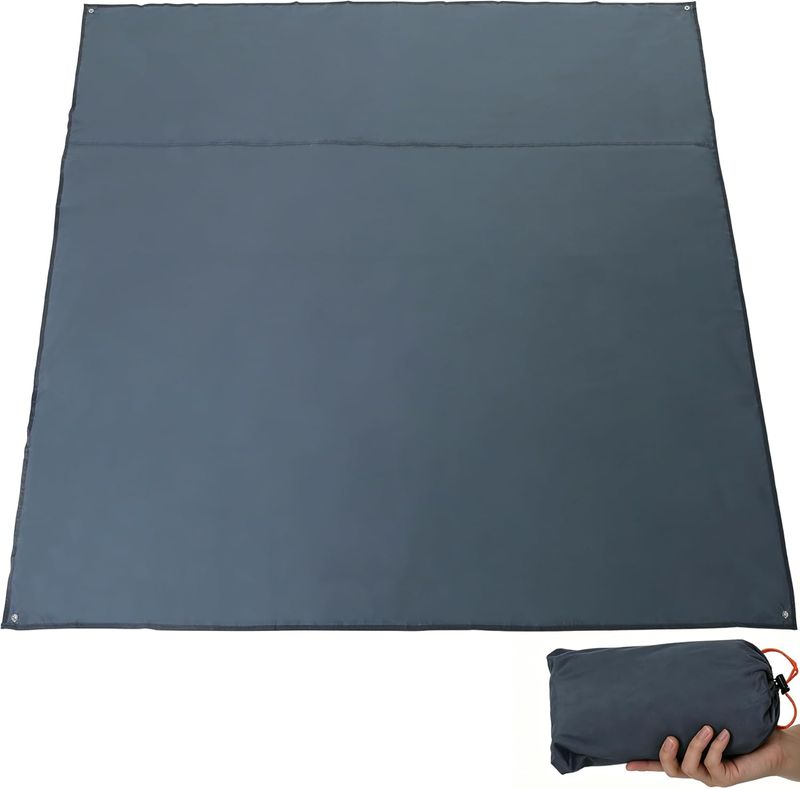
Use them as a fly, not as a boat cover in a hurricane. Tension opposite corners. Leave a drip edge so water does not run onto your sleep kit. If you camp in national forests, camping etiquette still applies: do not wrap live trees with unpadded line, and take the flagging with you.
B-Air Grizzly 8x10 — the heavy PE work tarp
This is the tarp you put under a car-camping tent, over a woodpile, or on a muddy road as a gear dump. Woven PE, heat-sealed hems, grommets on a schedule. It is heavier. It is louder. It is the tarp that survives being dragged. Do not backpack it unless you like carrying a folded billboard. Do not use it as a hammock rainfly unless you enjoy condensation and noise.
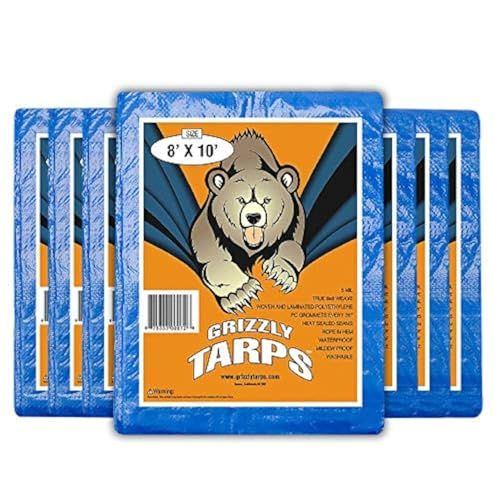
Buy it larger than the tent floor, then tuck the extra under so you do not create a water ramp into the bathtub. A PE tarp that sticks out past the tent is a rain collector. That is the number-one “my tent leaked” report that is actually a footprint report. For car-camp packing, how you pack the car matters more than the brand on the hem.
Rainfly Evolution kit — tarp plus stakes and line
Kits exist because people buy a tarp and then stand in a parking lot without stakes. The Rainfly Evolution bundle is a lightweight camping tarp plus guyline, stakes, and hardware so you can pitch something the first night. Ignore the survival-bracelet marketing. Keep the stakes and the line. Learn an A-frame. Two minutes of setup is the claim; five minutes of tensioning is the truth.
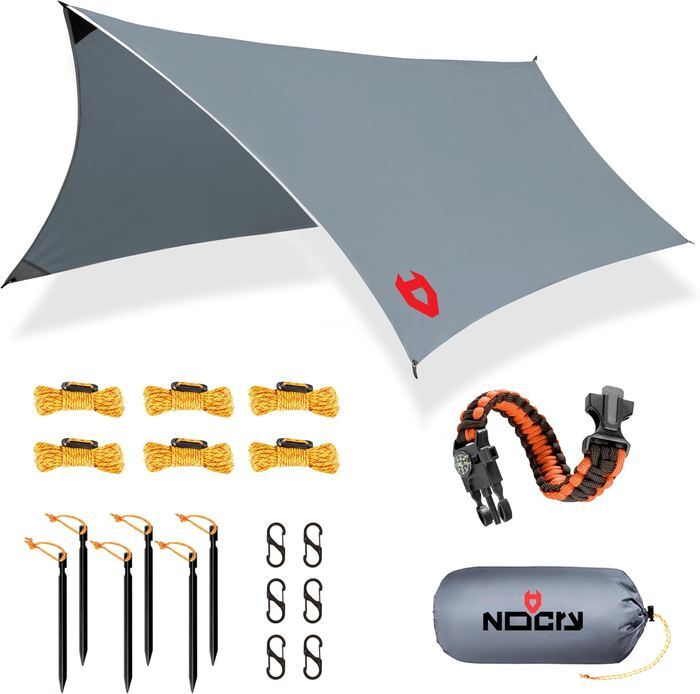
A kit does not make you a tarp camper. Practice in the yard. Pitch in a breeze. Learn a trucker’s hitch. If the first time you tension a ridgeline is in a squall, you will invent new words. Camping mistakes is full of people who skipped that practice. Low-impact camping is the other half: no new fire rings under your fly, and no cutting live saplings for poles.
How do you pitch a tarp so it does not become a sail?
Ridgeline first, taut, about head height for a kitchen, lower for a sleeping fly. Drape the tarp. Stake the corners out at 45 degrees, not straight down. Add mid-panel guys if the wind is real. Leave a gap on the downwind side so you do not own a condensation chamber. In serious weather, drop the pitch. A low A-frame is ugly and dry. A high cathedral is pretty and gone.
Trees are convenient and they kill line. Pad the bark. Do not girdle a pine for one night of shade. If there are no trees, trekking poles and extra stakes are the kit. If you do not have poles, you do not have that pitch. Carry them or pick a different shape.
| Tarp | Best job | Packability | Watch-out |
|---|---|---|---|
| AmazonBasics camping tarp | Footprint + simple fly | Good | Not ultralight silnylon |
| REDCAMP camping tarp | Hang-it kitchen fly | Good, stuff sack | Thin for dragging |
| B-Air Grizzly 8x10 | Car camp, woodpile, mud | Poor (heavy PE) | Noise, bulk |
| Rainfly Evolution kit | First tarp, includes stakes | Good | Ignore the bracelet |
Do you still need a tent?
Most people do. A tarp is weather control, not bug control, and not a floor that keeps ticks off you. A tent plus a tarp is how you cook in the rain without steaming the vestibule. A tarp alone is how experienced backpackers cut weight in dry ranges with few bugs. If you are asking this question, buy the tent and the tarp. Read inspecting camp gear before a trip so the grommet you needed is not the one that already tore.
What are the tarp mistakes that look like product failures?
Pooling. A sag in the roof is a bathtub. Water is heavy. A cheap grommet that “ripped” often ripped because a gallon of rain sat in a belly you refused to re-tension after the fabric stretched. Re-tension 20 minutes after you pitch. Nylon stretches. PE less so. Either way, a drip line onto your pad is a pitch problem.
Wrong stakes. Toy aluminum stakes in sand are spoons. Bring stakes that match the soil: long for sand and snow, stout for packed dirt, deadman if you have to. The Rainfly kit stakes are a start, not a geology toolkit. A tarp that “won’t stay up in wind” is often a stake that pulled, not a fabric that failed.
Cooking under a low fly with no vent is how you own a steam room and a carbon-monoxide story. Leave a high side. Keep the stove at the edge, not in a closed cathedral. A camp stove under a tarp is a kitchen. A stove in a sealed nylon cave is a bad idea. For overnight judgment, fire-zone awareness still applies when you cook under nylon in a dry camp.
When should you spend more than a camping tarp?
When you are actually tarp-camping as the shelter, not using a fly over a tent. A cuben or silnylon shaped tarp with proper mid-panel tie-outs, a cat-cut, and a stuff size measured in ounces is a different product. This page is the Amazon rectangle. If you are walking 15 miles in the rain with a tarp as the roof, graduate. If you are car-camping with a three-person tent, stay here and buy stakes that hold.
Hammock campers need a hammock-specific rainfly with ridgeline attachment that is not four corner grommets on a PE sheet. Using a Grizzly 8x10 over a hammock is how you own condensation and a wet quilt. Ground campers who cook every meal outside in a wet range should size up to a 10x12 kitchen fly and keep the 8x10 as a footprint. Two tarps is not excess. It is a kitchen and a floor.
Wind is the spec the product page lies about. A tarp is a sail with grommets. If the forecast is 30 knots, you are in a tent with the fly on, or you are in a building. A camping tarp in that wind is a kite-making class. Wind judgment is transferable. If you would not take a jon boat out, do not pitch a high cathedral on a ridge.
Our pick for most car campers: AmazonBasics or REDCAMP in a size bigger than the tent floor, plus real stakes and reflective guyline. Our pick for a work tarp: the Grizzly PE. Our pick for a first hang-it shelter: the Rainfly kit, then replace the toy stakes with ones that hold in your soil.
A tarp kit that actually leaves the house
Tarp, six to eight stakes that match your soil, reflective guyline, two tree-saver straps, and a trucker’s hitch you can tie in the rain. That kit lives in one sack. A tarp without the rest is a rectangle in a trunk. Practice the A-frame once in the yard with a timer. If it takes twenty minutes in sunshine, it will take forty in a squall, and you will sleep in the car.
Car campers: put the PE tarp under the tent first, tucked, then the fly over the table. Backpackers: the ripstop tarp is the kitchen and the emergency roof, not a substitute for a bug tent in the South. Fall is when a tarp earns its keep as a windbreak and a rain porch. Summer is when it is mostly shade. Both jobs want tension. Neither job wants a survival bracelet.
Replace grommets that have elongated. A hole that has become a slot will rip on the next wind. Repair tape and a spare guyline in the sack is cheaper than a new tarp at the trailhead. If you camp a lot, you will wear out stakes first. That is normal. Buy better stakes, not a third tarp, until the fabric itself is the failure.
Frequently asked questions
What size camping tarp should I buy?
An 8x10 covers two people and a stove as a fly. Match a footprint to slightly smaller than the tent floor so rain does not pool under the bathtub. Solo backpackers often run 6x8 or 8x8.
Is a cheap blue tarp good enough?
As a car-camp footprint or a woodpile cover, yes. As a backpacking fly, no — it is heavy, loud, and the grommets rip. A coated ripstop camping tarp packs smaller and hangs better.
Do I need a tarp if I have a tent?
You need a footprint or a tarp under the tent if the ground is wet, and a fly over the kitchen if you cook in the rain. The tent is the bedroom. The tarp is the porch.
How do I stop a tarp from flapping?
Taut ridgeline, corners at 45 degrees, mid-panel guys in wind, and a lower pitch in weather. Flapping is a tension problem, not a brand problem.
Can I use a tarp as a tent footprint?
Yes. Tuck the extra under the bathtub. A tarp that sticks out past the floor is a rain ramp into the tent. That leak is the footprint, not the rainfly.
What line should I use?
Paracord works. Reflective guyline is better at night. Pad trees. Learn a trucker’s hitch. The line is half the tarp.