
Fish the fall reservoir after the drawdown
Written by John Wren|
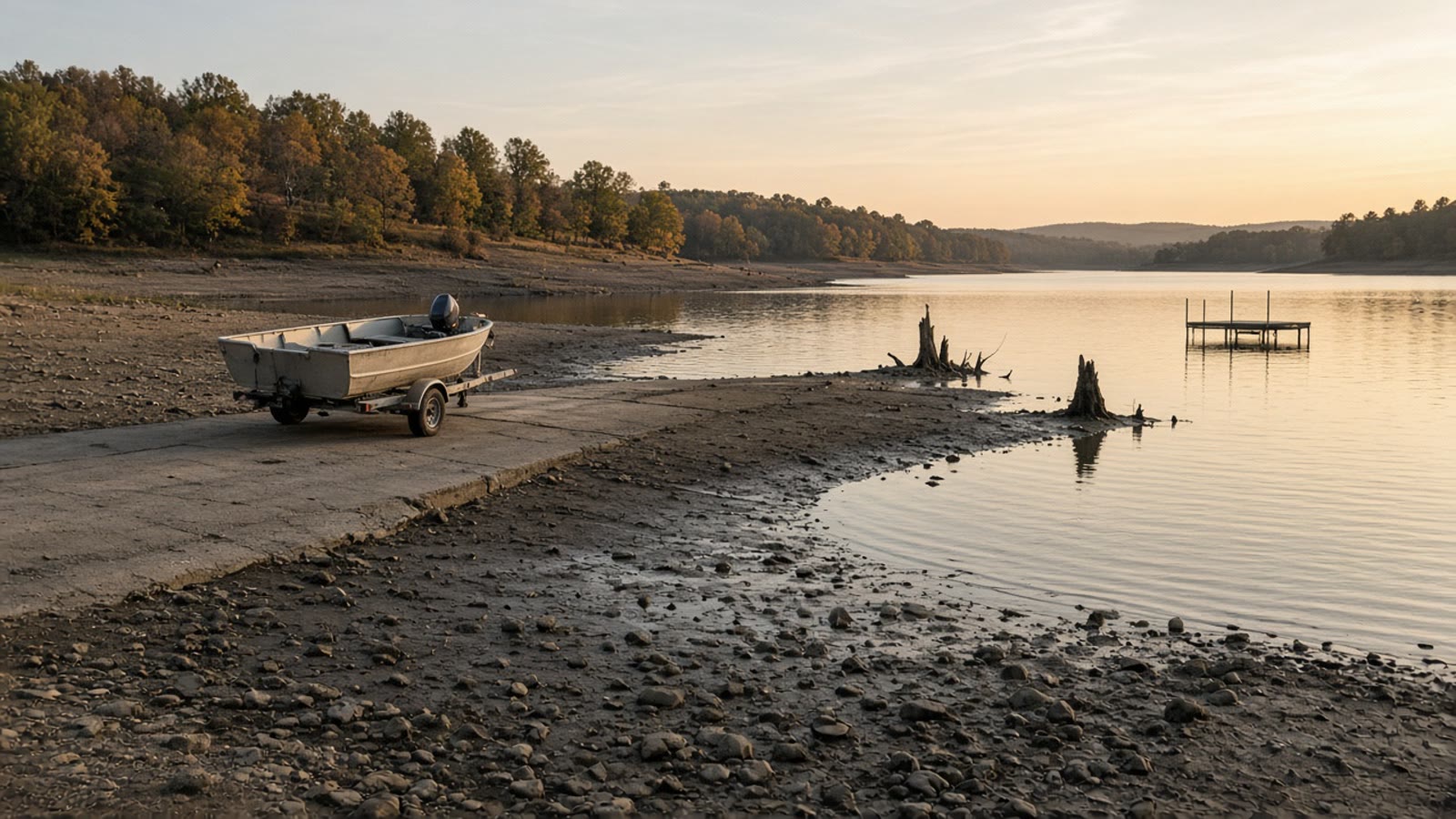
After fall drawdown, fish the remaining creek channel and timber with a vest on, a graph at idle, and a spinning outfit for the new skinny bank. July waypoints are often dirt. Be in before dusk.
Key takeaways
- The summer flat is often a mud bench.
- Idle twice. New wood eats lower units.
- The jacket is on, not in a hatch.
- Dark plus a moved ramp is a lamp and an earlier out-time.
Fishing the fall reservoir after the drawdown is a channel you can finally see, a stump that was twenty feet down in June, and a vest you are wearing — not a summer flat that no longer exists. The short answer: idle the new shoreline, mark the creek channel and the remaining timber, and treat every brown stick as a hull story until you have idled it twice.
Short version. Pair this with baitcaster vs spinning for fall bass, the quiet September paddle, and a finder that still works in skinny water. Check live prices. The ski crowd left. The lake also left. What remains is a smaller, meaner, better map if you do not hit it.
This is a field note, not a secret-humps list. Friday, September 18, 2026, is the week a lot of Corps and utility lakes drop toward winter pool. Southern highlands and prairie reservoirs can both lie the same way: a ramp that is suddenly a cliff, a flat you loved that is now a mud bench, and bass, stripers, or crappie stacked on the first break that still has water. The skill is idle, mark, wear the vest, and be off before gloaming owns a stump field you did not have in July.
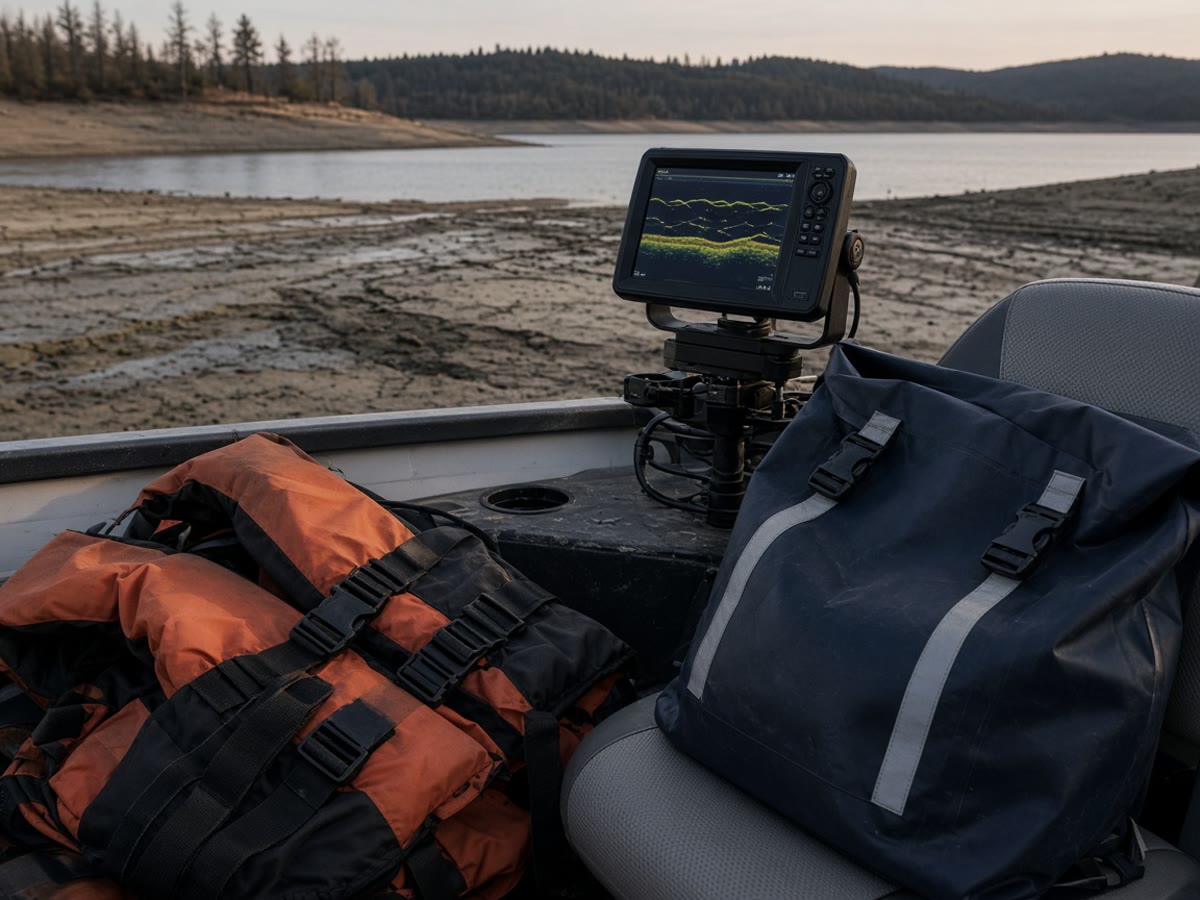
Winter pool is a different lake. The app still shows July.
Drawdown is a published curve on a lot of Corps lakes and a surprise on a lot of private reservoirs. Read the lake page, not a social post from a guy who launched in May. A ramp that still has water in the morning can be a trailer-high dry pad by afternoon if they are pulling hard. The hard-frost pull is the sibling if the other Saturday is already a winterize. This page is a fishing day on the water that remains.
Do not launch a hull you cannot retrieve on a receding pad. Look at the trailer tongue before you back in. A helper on the pad is a helper. A hero reverse into a new drop-off is a swimming lesson. First-timer ramp mistakes still apply when the lake is “empty.” Empty is not easier. Empty is new geometry.
The jacket is on. Skinny water still flips a hull that kisses a stump.
A PFD in a compartment is a story you tell after the stump. Drawdown water is cold for the month, full of new wood, and quieter — fewer witnesses. The Stohlquist Fisherman Life Jacket is the live vest we named: pockets you will use, a cut you can fish in, enough flotation that you will leave it zipped because you can still cast. Check live prices. Kayak-fishing safety if the hull is already a sit-on. Water confidence is the same class with fewer gadgets.
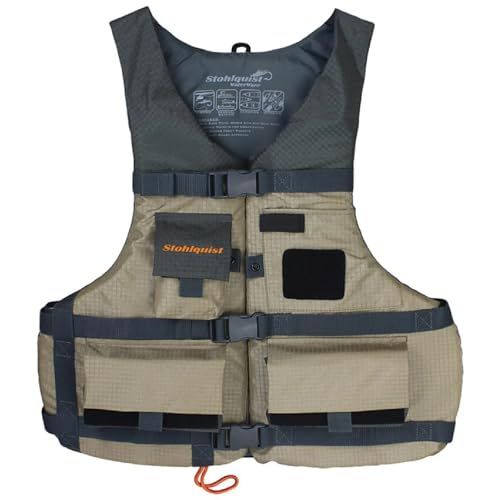
Wear it. Zip it. A kayak on a drawn-down lake is a sit-on vs sit-inside decision with more wood. A johnboat is still a hull that can take a log through a rib. Practice a re-enter on a calm day if the hull is a kayak. If you cannot get back in, you do not have a fall paddle. You have a swim you have not admitted.
A finder is how you idle the channel you can no longer guess
The old waypoint is often dry dirt. The creek channel, the remaining roadbed, the first contour that still has water — that is the fall map. A graph you can read at idle is the tool. The finder-water page is the longer lecture. This heading is a unit you can still see in skinny water without inventing a console.
The Garmin Striker 4 with transducer is the live starter graph we named: a screen you can still read at idle, a transducer you actually mounted, enough to mark a channel and a brush pile that still has water. It is not a mega-imaging console. Check live prices. Mount it where you will look. A graph in a crate you do not turn on is a crate.
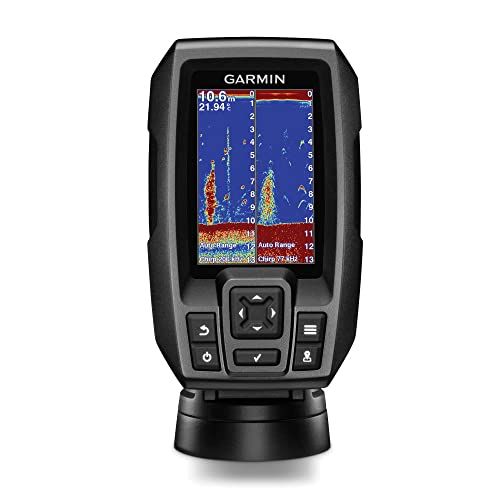
Idle twice. The first pass is “what is that.” The second pass is “that is a stump.” Mark the ones that will eat a lower unit. Then fish. Pride is a skeg on a log you saw and ignored because a bird was diving. Wind from the lot is still the go / no-go. Drawdown fetch on a long remaining pool can pile a chop against a new mud bank faster than July’s wide lake did.
A spinning rod that still casts a light bait on a new shoreline
Fall drawdown bass often want a smaller profile on a clean new bank, and a moving bait on a windy remaining point. The reel fight is the longer split. This heading is a truck spinning rod you will not cry about on a stump. The Ugly Stik GX2 7-foot spinning rod is the live stick we named: a moderate action that still casts a light bait and does not explode when a fish buries in remaining timber. Check live prices.
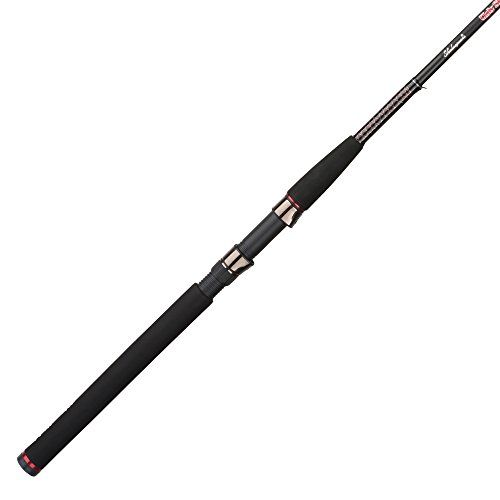
Pair it with a reel that has a bail you will actually close. The Shimano Sienna spinning reel is the live under-a-hundred reel on the spinning-reel page: enough retrieve for a jerkbait, a drag that does not seize on the first run if you set it. Check live prices.
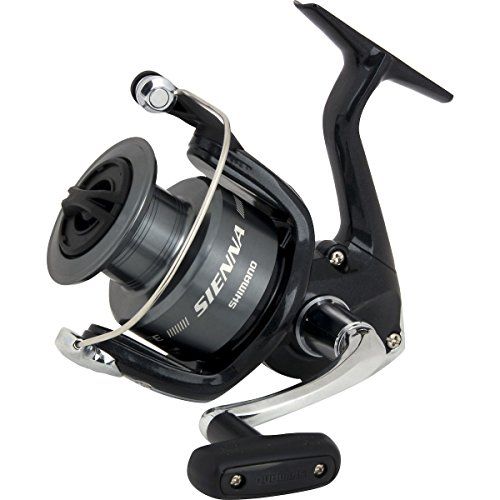
Line: 8- to 12-pound fluoro or a light braid with a fluoro leader on spinning. Do not spool 20-pound garage mono and decide spinning “doesn’t cast.” A baitcaster still wins a heavy jig in remaining wood if you already have a thumb. If you only bring one rod to a drawn-down weekday, spinning covers more of the new skinny bank. A dedicated flip stick is a different afternoon.
A dry bag is the phone, the keys, and the spare layer — not a crate of soda
Drawdown spray is small and then it is a well full of mud water. A phone in a crate is a donation. The Såk Gear DrySåk is the live roll-top we named: a bag you will actually roll down three times, clip to a fitting you can reach, and open with wet hands. Check live prices.
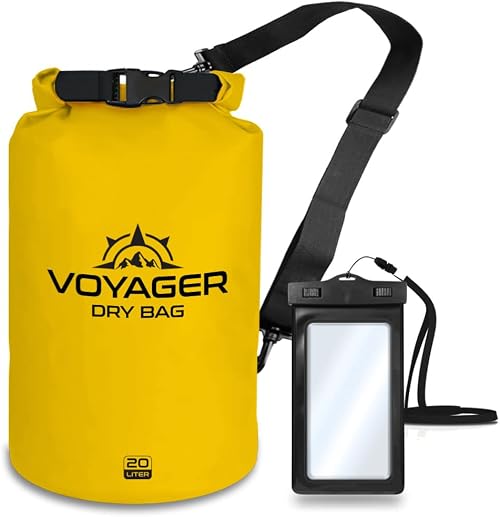
Put the thing that matters after a stump kiss in the dry bag on the body or on a deck line you can reach upside down. Keys. Phone. A dry layer. Do not fill it with a kitchen. A fishing kayak still wants the same rule: hatch for ballast, body for the survival kit. Snacks live in the dry bag too if you do not want a mash.
Dark is earlier, and the new shoreline has no summer lights
A mid-September “quick sunset pass” on a drawn-down lake is how people finish in a stump field they cannot see. A headlamp that already lives in a zip pocket on the vest or in the dry bag is the tool. The Petzl Tikka is the live three-AAA lamp we named: a flood you can dim so you do not blind a partner, a lock so it does not light the bag, enough to find the ramp that moved. Check live prices.
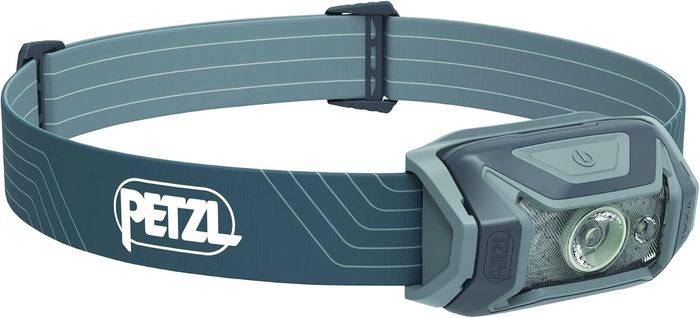
A light on a hull is manners and a law in a lot of states after sunset. Know yours. If you planned to be in at dusk, plan to be in before dusk. Fall wind often grows at the same hour the light dies. The remaining pool is smaller. The mistakes happen faster. The quiet-lake paddle is the same clock without a graph.
Fish the remaining break, not the memory of a flat
The summer flat is a mud bench with raccoon tracks. The fish are on the first drop that still has water: a creek channel swing, a roadbed that still dives, a timber edge that used to be a hump. Idle. Graph. Then a bait. A squarebill that dug in June now hits mud in two feet. Downsize. A jerkbait on spinning along the new bank. A jig in the remaining wood if you already throw one.
Stripers and hybrids on a highland lake still follow bait in the remaining pool. Birds are information. A boil is information. A waypoint from July is often a picnic table. A famous bass lake does not change the physics. The water that remains is the water you have.
Every new stick is a hull until you idle it twice
Drawdown reveals timber, roadbeds, old fences, a picnic table, a boat someone left in 2009. Idle. Tilt if you can. A lower unit is a dealer conversation. Time on the water includes not spending it at a prop shop. Mark the bad ones. Tell the next truck at the ramp. A quieter lake is not a safer lake.
Scuppers if the hull is a sit-on whose well became a pond. Navigation habits still include a chart you believe. The GPS shoreline from summer is a lie. Look at the water in front of the bow.
The week is a vest, a graph, a spinning outfit, a DrySåk, a lamp
Fishing the fall reservoir after the drawdown is a Stohlquist you are wearing, a Striker 4 you actually turned on, an Ugly Stik and a Sienna for the new bank, a DrySåk with the phone, and a Tikka because the ramp moved and the light died. Idle twice. The July waypoint is often dirt. The stump was deep in June.
If the vest is in a hatch, you already failed the first line. If the lot shows a dry pad, stay on the sand. If the graph is the hole, start with the channel you can still see. Check live prices. The lake will keep dropping. The fish will keep sliding with it.
The last ramp of the afternoon is still a ramp
Algae in September is a slick you forgot since June, and drawdown makes the pad steeper. Carry the hull like you mean it. Do not block the one remaining truck with a gear explosion. Trailer habits if the other Saturday is already a bunk. A helper who can see the waterline is a helper.
Look back at the water before you drive away. A paddle on the sand, a bag under a wheel, a vest you took off and set on a bumper. Fall lots are empty enough that nobody will shout. That is not a kindness. That is a missing graph tomorrow. Routine includes this look-back.
Also in the magazine
Keep going with fall bass reels, the quiet September paddle, fish finders and water types, and the hard-frost pull. Check live prices.
Frequently asked questions
What changes on a reservoir after fall drawdown?
Summer flats become mud benches. Fish slide to the remaining creek channel, roadbed, and timber that still has water. July waypoints are often dry dirt.
Is a drawn-down lake safer because it is quieter?
No. There are fewer witnesses, new stumps, and a ramp that may have become a cliff. Wear the vest. Idle twice.
Do I need a fish finder after the lake drops?
A graph you actually turn on at idle is how you mark the channel and the timber that will eat a lower unit. The Garmin Striker 4 is a starter graph that still reads at idle.
Spinning or baitcaster on the new shoreline?
Spinning covers more of the skinny new bank and light baits. A baitcaster still wins a heavy jig in remaining wood if you already have a thumb.
When should I be off the water?
Before dusk owns a stump field you did not have in July. Mid-September dark is earlier, and the remaining pool has no summer lights.
Can I launch if the ramp pad is receding?
Only if you can still retrieve the hull. Look at the tongue before you back in. A dry pad by afternoon is a trailer you leave.