
AR-15 vs AK-47
Written by John Wren|
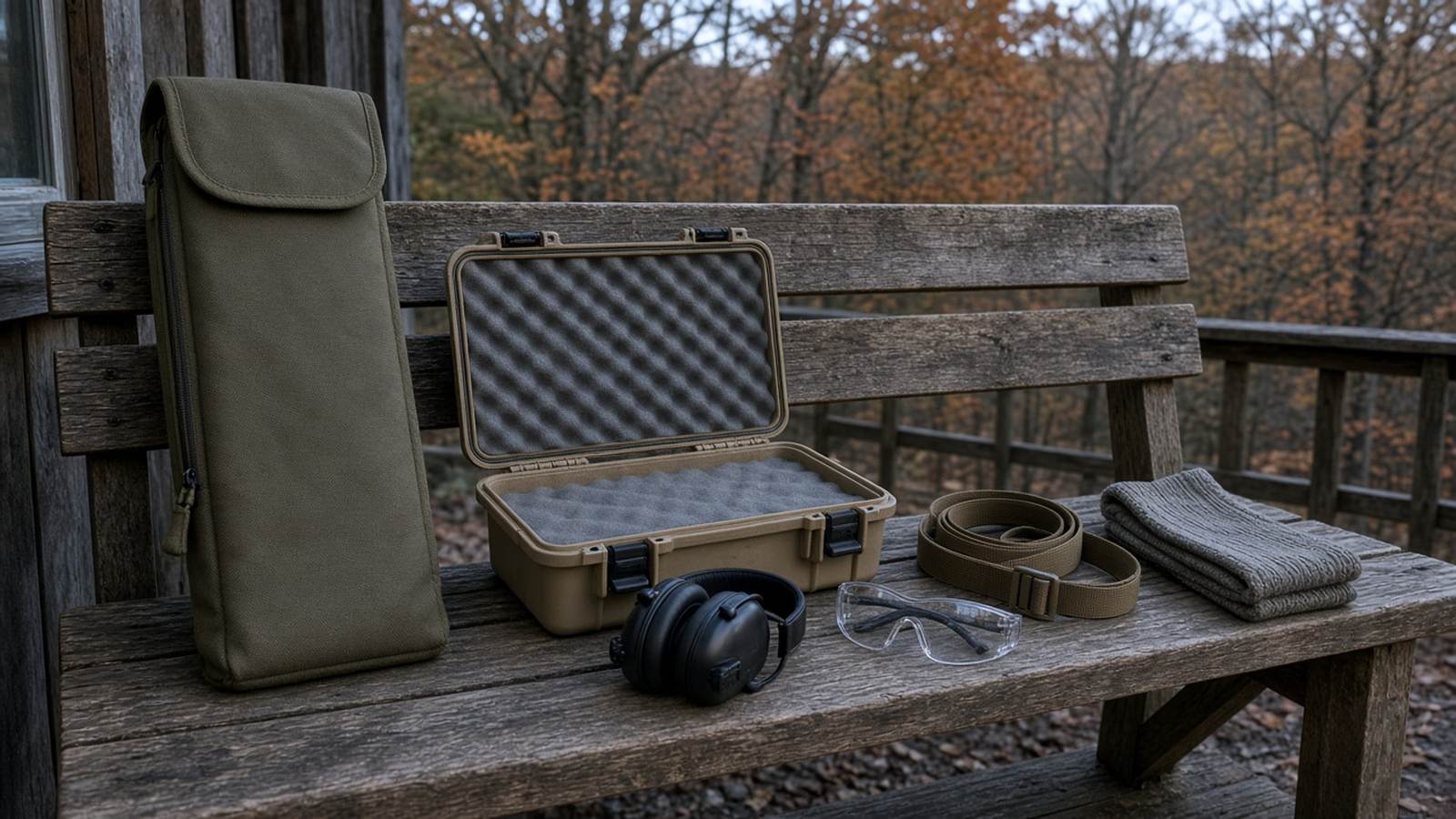
An AR-15 and an AK-47 are different rifles. The common pair is a 5.56 or .223 AR against a 7.62x39 AK. Gas, magazines, safeties, and parts do not cross. Other calibers exist on both and are different guns. The rifle and the ammunition stay at a licensed dealer.
Key takeaways
- The common pair is 5.56 or .223 against 7.62x39.
- An AR sends gas into the carrier. An AK uses a long-stroke piston.
- Magazines do not interchange. An AK magazine rocks in.
- Both stay at a licensed dealer. Other calibers are different guns.
An AR-15 and an AK-47 are different rifles. The pair a licensed dealer usually means is a semi-automatic AR chambered in 5.56 NATO or .223 Remington, and a semi-automatic AK-pattern rifle chambered in 7.62x39. They do not share a gas system, a magazine, a safety, a sight, or a parts bin. Other calibers exist on both platforms, and each of those is a different gun with its own barrel and its own magazine. The rifle and the ammunition stay at that counter.
If you want a light carbine, a flatter shot inside a few hundred yards, a bolt that locks open, and a rail for a hunting optic, you are describing an AR-15. If you want a heavier bullet, a long-stroke piston, a magazine that rocks in, and fouling that stays mostly forward of the receiver, you are describing an AK in 7.62x39. Sizes and calibers inside the AR family is a different page. Five AR-15 brands a counter stocks is the brand trip after you have already chosen the AR. This page is how you tell the two platforms apart before you ask for either one.
What is the common pair, and what are people mixing up?
Start with the gun in the rack, not the nickname on a forum. “AR-15” in a shop means the semi-automatic rifle descended from Eugene Stoner’s ArmaLite design, almost always a small-frame gun. “AK-47” in that same shop usually means a semi-automatic Kalashnikov-pattern rifle in 7.62x39, often an AKM-pattern gun with a stamped receiver. It does not mean you are being handed a select-fire military rifle. Civilian guns a dealer transfers are semi-automatic. The military M16 is the select-fire relative of the AR. The military AK-47 is the select-fire relative of the rifle people still call an AK. Those are different transfers from the guns on the felt.
The other mix-up is caliber. 7.62x39 is not 7.62x51 NATO and it is not .308 Winchester. The cases are different lengths, the pressures are different, and the guns are different. A .223 or 5.56 cartridge does not belong in a 7.62x39 chamber. A 7.62x39 cartridge does not belong in a 5.56 barrel. Some ARs are built in 7.62x39, and some AKs are built in 5.56. Those are their own barrels, bolts, and magazines. Read the stamp before you leave the counter.
A large-frame AR in .308 or 6.5 Creedmoor is not an AK and it is not the small-frame AR in this comparison. If that is the gun you thought you were shopping, stop and read the size page before you compare it to a 7.62x39 rifle. The two platforms in front of you are the small-frame AR and the AK-pattern rifle.
Where did each rifle come from?
The AR-15 is an American design from the 1950s. Eugene Stoner developed it at ArmaLite. The letters AR stand for ArmaLite Rifle. They do not stand for assault rifle. ArmaLite sold the manufacturing rights to Colt. The select-fire rifle the U.S. military adopted from that work is the M16. The AR-15 a hunter can transfer is the semi-automatic cousin: same general layout, one shot per pull of the trigger. Colt made it, and then a long list of other makers made small-frame rifles on the same pattern. That is why two ARs can look alike and still differ in barrel, gas length, and furniture. The pattern is shared. The rifle in your hands is one maker’s version of it.
The AK is a Soviet design. Mikhail Kalashnikov’s rifle carries the 1947 in its name and was accepted for service at the end of that decade. Early production used a milled receiver, a heavy machined forging. The AKM, accepted in 1959, switched to a stamped sheet-steel receiver and became the pattern most armies actually carried. In an American shop the tag often still says AK-47 when the rifle is an AKM-pattern semi-automatic, built in Romania, Serbia, Bulgaria, China, or the United States, or assembled here from parts. Ask whether the receiver is milled or stamped, and where the rifle was made. Those answers change the weight, the furniture, and which magazines the dealer has watched lock up.
The two origin stories explain the priorities. The AR was built light, with a small fast cartridge and a straight stock in line with the bore. The AK was built to be produced in huge numbers, maintained with simple tools, and fed a tapered intermediate cartridge. Neither origin makes the other rifle a toy. It tells you what the designer was willing to spend weight and machine time on.
How do the operating systems differ?
Both rifles are gas-operated and both lock with a rotating bolt. The path the gas takes is the difference you can see once the gun is open on a bench, unloaded, muzzle pointed in a safe direction.
On a common AR, gas is tapped at the front sight or the gas block and sent down a tube into the bolt-carrier key. The carrier is pushed rearward and the bolt unlocks and extracts. People call that direct impingement. A more precise description is that the carrier itself is the piston. Some ARs use an external piston instead, with an operating rod that taps the carrier and leaves the gas forward. That is still an AR. It is not an AK. Direct impingement against a piston AR is the note for that choice. Do not assume every AR in the rack uses the gas tube.
On an AK, a long-stroke piston is fixed to the bolt carrier. Gas hits the piston head above the barrel and the piston and the carrier travel back together for the full stroke. The recoil spring sits in the receiver, under the dust cover. There is no buffer tube in the stock. That one fact is a reliable way to tell the platforms apart from across the counter: an adjustable AR stock rides a tube that houses a buffer and a spring. An AK stock does not.
You cannot turn one system into the other by swapping a magazine or a handguard. The receivers, the bolts, and the gas parts are different shapes. A piston kit marketed for an AR is an AR piston, and it belongs in the AR conversation, not in an attempt to “make an AK.”
Which calibers are the common pair, and what else exists?
The common pair is 5.56 NATO or .223 Remington on the AR, and 7.62x39 on the AK. Treat that as the default until the barrel says otherwise.
On the AR, read the stamp. A barrel marked 5.56 NATO will fire .223 Remington. A barrel marked only .223 Remington should not fire 5.56 NATO. The 5.56 load is higher pressure and uses a longer throat than a strict .223 chamber was cut for. A .223 Wylde chamber is cut so both are appropriate. A common 5.56 load uses a 55-grain or 62-grain bullet. It is fast. It stays flatter, inside the distances most hunters actually shoot, than the heavier AK bullet. It also recoils less. It is a varmint, predator, practice, and competition cartridge. It is a poor deer cartridge, and in many seasons it is not a legal one.
On the AK, 7.62x39 is a different case. A common ball load uses a 122-grain or 123-grain bullet, larger and slower than those 5.56 bullets. Hunting loads in the same case can be heavier. The bullet hits harder up close and drops sooner once the shot stretches past a couple of hundred yards. The case is tapered, which is why the magazine is curved. Do not feed it .308, 7.62x51, or .30-30. The bullet diameter is not the cartridge. If the tag says 7.62 and nobody reads the rest of the stamp, walk.
Other calibers exist, and they are not a footnote you can ignore at the register. Small-frame ARs are also built in .300 AAC Blackout, 6.5 Grendel, 6.8 Remington SPC, .350 Legend, .450 Bushmaster, and as 9mm blowback guns. Each wants its own barrel. Most want their own bolt or their own magazine. .300 Blackout is the dangerous mix-up inside the AR family because it can chamber in a 5.56 barrel. The size-and-caliber page is where those swaps are spelled out. Do not repeat that shopping trip on top of an AK comparison.
Other AK-pattern calibers exist too. The AK-74 pattern is 5.45x39, a smaller, faster cartridge with its own magazines. Some AK-pattern rifles are built in 5.56 and take their own magazines, sometimes a modified AK body and sometimes a rifle built around a different well. Larger guns in .308-class cartridges use a different receiver. A 5.45 rifle, a 5.56 AK, and a 7.62x39 AK are three guns. The hanger that says “AK” is not a caliber.
How do the magazines differ?
They do not interchange. An AR magazine will not lock into an AK. An AK magazine will not lock into an AR. Put them in different pouches so a cold morning does not become a guessing game.
A standard 5.56 AR magazine is a relatively straight box. You insert it straight up into the well until the catch clicks. The release is a button, usually on the right side of the receiver, where a right-handed trigger finger can drop the magazine without leaving the grip. On the last round, a standard AR locks the bolt to the rear. You can see the chamber. A fresh magazine and the bolt release, or a tug on the charging handle, send the bolt home. That hold-open is one of the reasons ranges teach the AR manual of arms first.
A standard 7.62x39 AK magazine is curved, because the tapered case stacks in an arc. You hook the front lug into the receiver and rock the magazine back until the latch catches. The release on a classic rifle is a paddle or lever behind the magazine, not a button in the AR’s place. A classic AK does not lock the bolt open when the magazine runs dry. The first sign of an empty gun is a click, or a follower you only see after you pull the charging handle. Practice that difference with an empty rifle before you assume the drill you learned on an AR still applies.
Magazine quality matters as much as the rifle. A bent feed lip or a weak spring will stop either gun. Buy the magazine the dealer has watched feed the rifle you are taking home, and stay with that pattern. Ten bargain magazines of unknown origin are how a reliable action becomes a jam. Capacity limits are a state rule. Ask before you pay for a magazine the state will not let you possess or hunt with.
How do the controls and the stock feel different?
The safety is the control you will use on every stage, so learn it on an empty gun. An AR safety is a thumb lever on the left side of the lower receiver. On a civilian rifle it moves between safe and fire. Many shooters can run it without taking the hand off the grip. Some levers are a short 45-degree throw and some are 90. Confirm which one is on the rifle.
An AK safety is a large lever on the right side of the receiver. Up is safe. On a classic rifle that lever also covers the slot the charging handle travels in, so you cannot charge the gun while it is on safe. Down is fire. A right-handed shooter usually breaks the firing grip to move it. A left-handed shooter meets the lever on the other side of the gun from the trigger finger. Aftermarket safeties exist. The rifle in the rack may not have one. Run the lever that is actually installed.
The charging handles are not in the same place. An AR uses a T-shaped handle at the rear of the upper receiver. It does not reciprocate with the bolt. You can charge the rifle with either hand, and the handle stays put while you fire. An AK charging handle is part of the bolt carrier, on the right side, and it reciprocates. Keep the support hand off that path. The motion is a pull rearward, not a tug at the back of the receiver.
The sights teach a different picture. A classic AR rear sight is an aperture, with a post in a front tower, and a flat-top receiver lets you bolt on a red dot or a low-power scope. A red dot versus a low-power scope is the optic choice once you already own the AR. AR optics is the longer list. A classic AK uses a notch rear sight on a tangent leaf and a hooded post up front. The sight radius is long, and the picture is open. Many AKs have no flat top. Some have a side rail. A rail screwed to a dust cover has to return to the same place every time you open the rifle for cleaning. Do not assume an AR mount will sit on an AK, or that every AK accepts the same rail.
Stocks change how the rifle fits a coat. An AR carbine usually wears an adjustable stock on the buffer tube. Set the length of pull in the jacket you hunt in, then leave it, because a stock that creeps shorter changes your eye relief behind a scope. An AK stock is often wood, a side-folder, or a fixed polymer shape, and a lot of wood stocks are long for a smaller shooter. Shoulder both rifles in the coat. The one that puts your eye behind the sight without a crane of the neck is the one that fits. Weight sits in the same neighborhood for a basic carbine and a stamped AK with furniture, and a milled-receiver AK is the heavier of the two. Feel them. Do not trust a catalog photo.
Recoil follows the cartridge and the stock line. A 5.56 AR sends recoil more nearly straight back, because the stock is close to the line of the bore, and the bullet is light. A 7.62x39 AK shoves harder, and a low stock lets the muzzle climb. New shooters often call the AR softer before they have words for why. Both are loud enough to need muffs. A muzzle brake makes either one worse for the person beside you.
Which platform shoots tighter, and at what distance?
A free-floated AR in 5.56 is usually the easier rifle to shoot into a tight group from 100 yards on out, once a decent barrel and a stable optic are on it. The cartridge was built to stay fast. The barrel can be isolated from a sling and a bipod. The trigger on many current carbines is a clean single stage. That combination is why an AR is the rifle people bring to a known-distance practice day.
A rack-grade AK in 7.62x39 was built to hit a man-sized target at a few hundred meters with iron sights. Clearances are looser. The piston and the barrel move in a way a free-floated AR barrel does not. The open sights are fast up close and coarser at distance. A careful AK with a good barrel can still be a hunting rifle inside the distance the cartridge likes. It is generally not the rifle you choose when the goal is the smallest group on paper at 300 yards.
There is no single score that fits every rifle on the rack. The barrel, the ammunition, and the sight decide the group. A worn AK can outshoot a neglected AR with a loose mount. Ask the dealer what they have seen that rifle do, and confirm zero yourself on paper with the load you will actually shoot before you trust it at a season. Inside timber, both cartridges are inside the distance that matters. Past a couple of hundred yards, the 5.56 holds elevation with less drama, and the 7.62x39 asks you to know the drop.
What does “reliable in dirt” actually mean?
The slogan that an AK never stops and an AR quits in dust is too clean to be true. Both are gas-operated semi-automatics. Both stop if the chamber is packed with sand, the magazine is wrong, or the rifle is dry and neglected. The useful difference is where the fouling goes.
An AK’s long-stroke piston takes the blast in the gas tube, above the barrel. Most of the carbon stays on the piston and in that tube, forward of the receiver. The action inside the receiver stays comparatively cleaner, which is why a dirty AK often keeps cycling. It still rusts. It still needs a chamber that is clear. A magazine full of grit will stop it. “Never clean it” is a story, not a maintenance plan.
A common AR sends gas back into the bolt carrier. Carbon builds on the carrier, the bolt, and the inside of the upper. That is normal. It is also why the rifle wants a film of oil on the carrier rails and a wipe after a dusty day. A modern AR with a decent magazine and a wet carrier is a reliable rifle. A dry carrier and a bargain magazine are how the slogan gets written. A piston AR moves some of that fouling forward. It does not turn the rifle into an AK, and it is not a kit to install the week of a hunt.
Field stripping shows the same split. On an AR you push out the rear takedown pin and the front pivot pin, separate the upper from the lower, and slide the charging handle and the bolt carrier out the back of the upper. On an AK you press the button at the rear of the dust cover, lift the cover off, and take out the recoil spring and the bolt carrier from the top. Do either job only after you have proved the rifle empty: magazine out, chamber checked, muzzle in a safe direction. The clips below are the motions. They are not a reason to skip the safety check.
After a wet sit, both rifles end the same way. Unload. Verify. Wipe standing water off the metal before a sock or a case seals it in. A 5.56 bore snake does not clean a 7.62x39 bore, and a .30 patch that is the wrong size does not belong in a 5.56 barrel. An AR cleaning kit is organized by that platform. An AK wants its own rod, its own patches, and a brush that matches the stamp.
What crosses over in parts and furniture, and what does not?
Almost nothing crosses from one platform to the other. Grips, stocks, handguards, magazines, bolts, and barrels are separate ecosystems. A mil-spec AR grip screw is not an AK grip screw. An AR stock needs a buffer tube. An AK stock needs the tang and the trunnion that rifle was built with.
Inside the AR world the parts market is large, and it is still easy to buy the wrong piece. Mil-spec buffer tubes and commercial tubes differ in diameter, and the stock has to match the tube. Small-frame parts do not fit a large-frame .308 gun. A 5.56 bolt is not a .300 Blackout plan and it is not a 6.5 Grendel bolt. Five small-frame brands are still five different carbines. Buy a complete rifle in one cartridge before you buy a box of spare uppers.
Inside the AK world the trap is country pattern. Romanian, Serbian, Bulgarian, Russian, Chinese, and American-made rifles do not all share furniture, muzzle threads, or side-rail dimensions. A stock that fits one stamped rifle can be wrong on the next. Handguard retainers differ. A muzzle device that threads onto one barrel can be the wrong pitch on another. Rivets and barrel work are a gunsmith’s job, not a kitchen-table project the week before a season. If the dealer cannot tell you which pattern the furniture has to match, do not buy the furniture.
Optics mounts are the same warning. An AR flat-top takes a rail the optic world already understands. An AK needs the mount that rifle was cut or riveted for. A side rail, a dust-cover rail, and a gas-tube rail are three different promises about whether the zero survives a cleaning. Ask the dealer to take the optic off and put it back on, then say whether they expect the zero to return. If they will not, believe them.
What job is each rifle actually for?
Use the AR in 5.56 when the shot is practice, a match, a varmint, or a predator, and the cartridge is legal on that ground. The rifle is easy to optic, easy to fit to a coat, and easy to confirm on paper. It is the wrong first answer for a deer season that wants a heavier bullet or a straight-wall cartridge. The AR size page covers those other chambers, including the large-frame guns. Do not stretch 5.56 into an ethical deer shot because the rifle was handy.
Use the AK in 7.62x39 when the country is brush and short-to-medium range, the heavier bullet is what you want, and the season allows that cartridge in a magazine-fed semi-automatic. Hogs are the job people name most often. Some deer units allow 7.62x39 and some do not. The regulation for the unit decides, not a video. The AK is a poor choice when the shot is long and the group has to be small. Iron sights and a dropping bullet will tell you that before a forum does.
If the country is a western ridge and the rifle should be a bolt gun in one cartridge, you have left both of these platforms. A .308 or a 6.5 Creedmoor in a hunting stock is a different conversation from a 5.56 carbine and a 7.62x39 AK. Forcing either semi-automatic into that job because the names are famous is how a hunter carries the wrong rifle all season.
Around the truck and the house, both are rifles with rifle rules. Unload before the case. Lock the case. A safe is where they live between trips. Ownership habits still start with a chamber you have checked. A sock and a sling do not change the transfer.
| AR-15 | AK-47 pattern | |
|---|---|---|
| What the dealer usually means | Semi-automatic small-frame rifle | Semi-automatic AKM-pattern rifle, often stamped |
| Common cartridge | 5.56 NATO or .223 Remington | 7.62x39 |
| Gas | Tube into the carrier, or an external piston on some rifles | Long-stroke piston fixed to the carrier |
| Magazine | Straight insertion, button release, bolt locks open | Rocks in, lever release, classic guns do not lock open |
| Safety | Thumb lever on the left | Large lever on the right |
| Sights | Aperture or a rail for an optic | Notch and hooded post; rail only if that rifle has one |
| Dirt | Fouling in the carrier; wants oil | Fouling mostly on the piston; still needs a clear chamber |
| Parts | Large market, still easy to buy the wrong tube or bolt | Country pattern decides furniture, threads, and rails |
Confirm the barrel stamp, the gas system, and the transfer with the dealer before you pay. Other calibers exist on both platforms and do not follow this row.
What should you ask before the rifle leaves the counter?
Ask six things while the gun is still on their side of the glass.
Is this a semi-automatic rifle, and is that how it transfers in this state? Feature rules, stock rules, and magazine rules change the gun you are allowed to take home and the gun you are allowed to hunt with. The dealer in that state has had the argument. Use them, then read the regulation for the unit.
What does the barrel say, read out loud? 5.56 NATO, .223 Remington, .223 Wylde, or 7.62x39. If the answer is a shrug, do not buy the rifle.
On an AR, what is the barrel length and the gas length, and is the gas a tube or a piston? A 16-inch mid-length is the carbine most hunters mean. An 18- or 20-inch rifle is a different length. A pistol-length gun is a different transfer. The size page is that decision. This page assumes you are comparing rifles, not turning one into the other at home.
On an AK, is the receiver milled or stamped, and which magazine locks in this rifle? Rock a magazine in and out at the counter. If it does not seat, it is the wrong pattern or a bad rifle. Ask which muzzle thread the barrel has before anyone sells you a device.
Will you be allowed to confirm it on paper with the ammunition you intend to shoot? A zero from a different cartridge, or from a different optic mount, is not a zero. The ammunition for that confirmation stays at the licensed counter until you are on a range with a backstop.
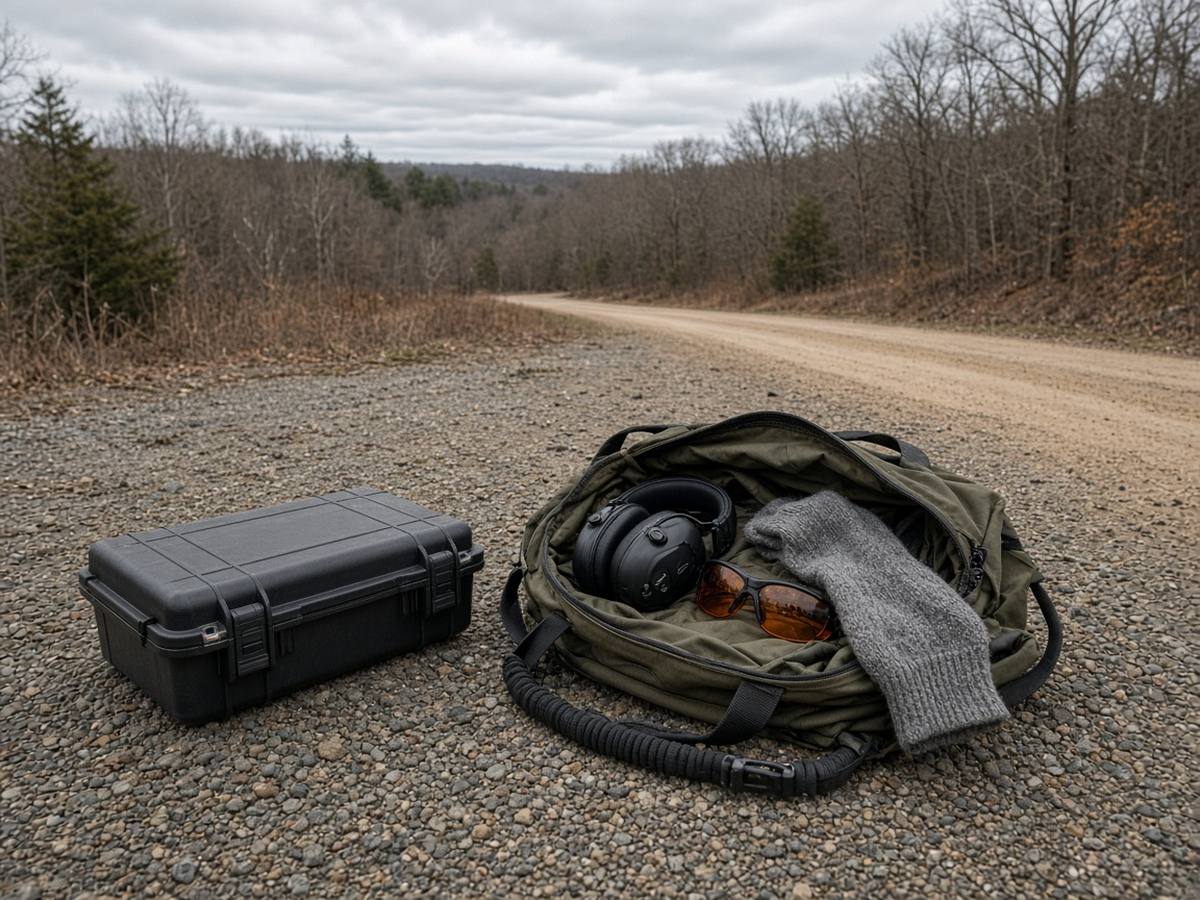
Ears and eyes go on before that first shot. Muffs and shooting glasses are the same kit for both platforms. A 7.62x39 under a roof is not quieter than a 5.56, and a short barrel is worse than a long one. A case that latches, sized for the rifle and the optic you will actually carry, is how either gun rides home. Measure before you assume one sleeve fits both.
How do you tell them apart in one look?
Look at the stock and the magazine. An AR carbine has a buffer tube and a straighter magazine that pushes straight in. An AK has no buffer tube, a curved 7.62x39 magazine that rocks in, and a safety lever on the right side of the receiver. Open the empty rifle and the gas system finishes the identification. A tube into the carrier, or a piston rod on some ARs, is the AR. A piston fixed to the carrier, under a dust cover you lift off, is the AK.
Then read the barrel. The common pair is 5.56 or .223 against 7.62x39. Anything else is a different rifle that happens to wear a familiar shape. Keep its magazines in a separate pouch. Keep its cleaning gear separate. Confirm it on paper as its own gun.
Choose the AR when you want the flatter cartridge, the optic rail, the bolt hold-open, and the manual of arms a typical range already teaches. Choose the AK when you want the heavier bullet, the long-stroke piston, and you have checked that 7.62x39 is legal for the job. Choose neither if the season wants a different cartridge or a bolt gun. The rifle and the ammunition stay at a licensed dealer.
Frequently asked questions
Is an AR-15 the same kind of rifle as an AK-47?
No. An AR-15 is the semi-automatic ArmaLite pattern, usually in 5.56 NATO or .223 Remington, with gas sent into the bolt carrier on most guns. An AK-47 pattern rifle is the Kalashnikov, usually a semi-automatic AKM-pattern gun in 7.62x39, with a long-stroke piston. They do not share magazines or parts.
What calibers are the common pair, and do other calibers exist?
The common pair is 5.56 NATO or .223 Remington in the AR and 7.62x39 in the AK. A 5.56 chamber can fire .223 Remington. A barrel marked only .223 Remington should not fire 5.56. Other chambers exist on both platforms, including .300 Blackout on some ARs and 5.45x39 on an AK-74, and each one needs its own barrel, bolt, and magazine. 7.62x39 is not .308 Winchester.
Which one is more reliable in dirt?
An AK keeps most fouling on the piston, forward of the receiver, so it often runs longer between cleanings. An AR sends gas back into the carrier, so it wants oil and a wipe after dust. A maintained AR with a good magazine is reliable. A neglected gun of either type can jam. The magazine matters as much as the piston.
Which one is more accurate?
A free-floated AR in 5.56 is usually the easier rifle to shoot into a tight group past a hundred yards, and the cartridge stays flatter. A rack-grade AK in 7.62x39 was built to a coarser standard and the bullet drops sooner. The barrel, the ammunition, and the optic still decide the group. There is no single score that fits every rifle on the rack.
Do AR-15 and AK-47 magazines and furniture interchange?
No. An AR magazine inserts straight up and will not lock into an AK. An AK magazine rocks in and will not lock into an AR. Stocks, grips, and handguards do not swap between the two. Inside the AK family, furniture can still be the wrong pattern from one country of origin to another.
Where do I buy the rifle and the ammunition?
At a licensed firearms dealer. Ask them to read the barrel stamp and say whether the gun transfers as a semi-automatic rifle in your state. The case, the muffs, and the glasses are the rest of the kit. The rifle and the ammunition stay at the counter.