
Best Marine Cooler (2026): Ice That Survives Salt and Sun
Written by John Wren|
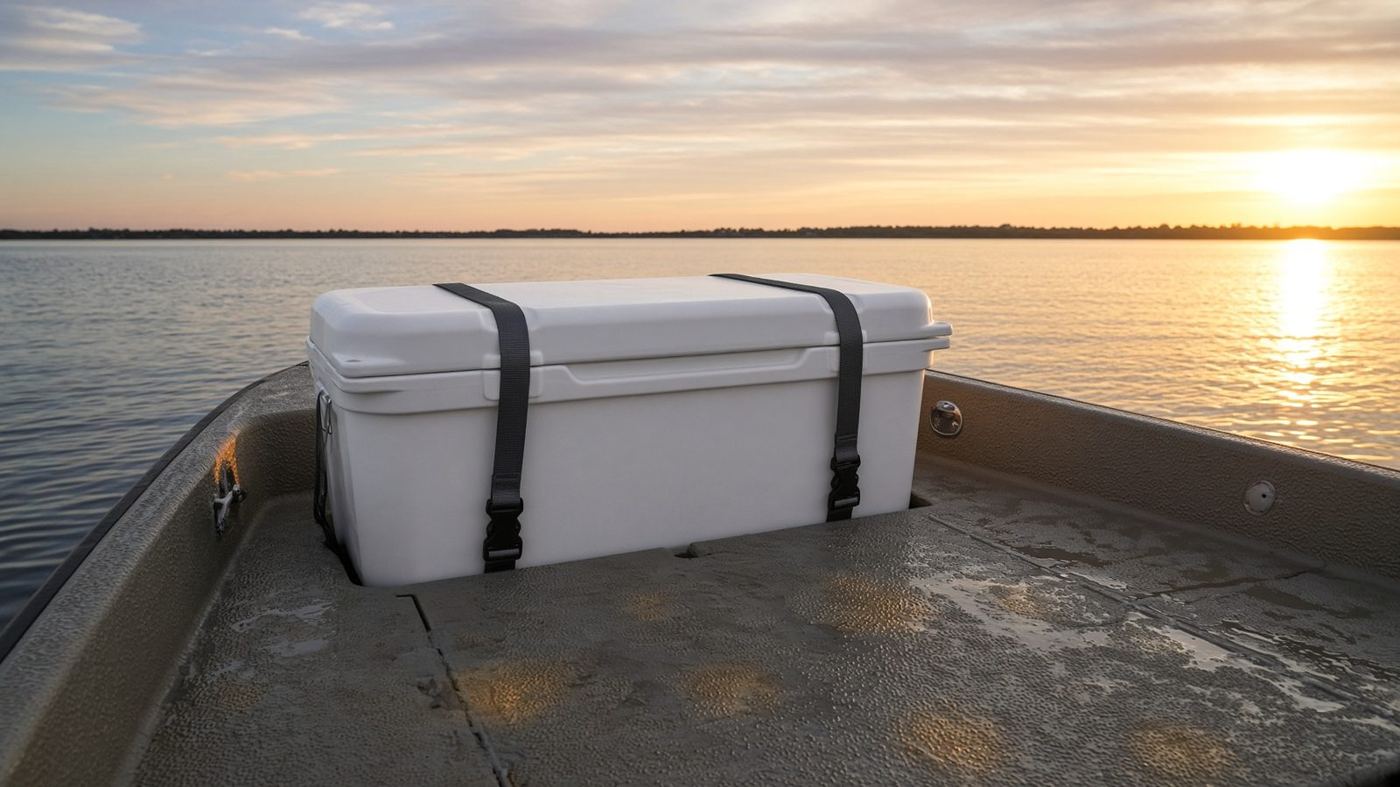
Buy a rotomolded cooler with tie-downs and a drain you can work wet — a Tundra 45, RTIC 45, Grizzly 40, or Pelican Elite 30. White lid, cam straps, block ice. A grocery cooler on a boat is warm water by noon.
Key takeaways
- Marine means UV, drain, straps, and hardware that survive salt — not a fish sticker.
- 45 quarts feeds two inshore; measure the hatch before you buy an 80.
- White or tan lids beat charcoal in August sun.
- Strap it. A sliding cooler cracks gelcoat and ankles.
A marine cooler has a different job than a camp cooler. It lives in salt, UV, and a boat that does not sit still. Non-skid feet, a drain you can work with wet hands, hardware that does not mind spray, and a lid you can sit on in a chop without the latch opening itself. Ice retention still matters. It is not the only spec.
Short version. If the box lives in a skiff or a center console, buy a rotomolded cooler with a working drain and strap it down. A Grizzly or Yeti Tundra both belong in that class. If you want the volume-for-money version of the same tank, read RTIC vs Yeti next. Pelican’s Elite 30 is the smaller, almost-indestructible deck box. An Igloo Marine Ultra is the honest drink-and-sandwich cooler for a jon boat that already has a livewell. A cheap injection-molded grocery cooler on a boat is a hatch full of warm water by noon and a sliding projectile when you hit a wake.
White or tan lids are not a fashion choice on a Florida deck. Dark rotomolded plastic in August is an oven. Strap the box. A cooler that walks into a transom is how you crack a gelcoat and a tibia. For the rest of the boat-keeping list, keeping the boat in shape all year and boat-trip safety are the grown-up pages.
What actually makes a cooler “marine”?
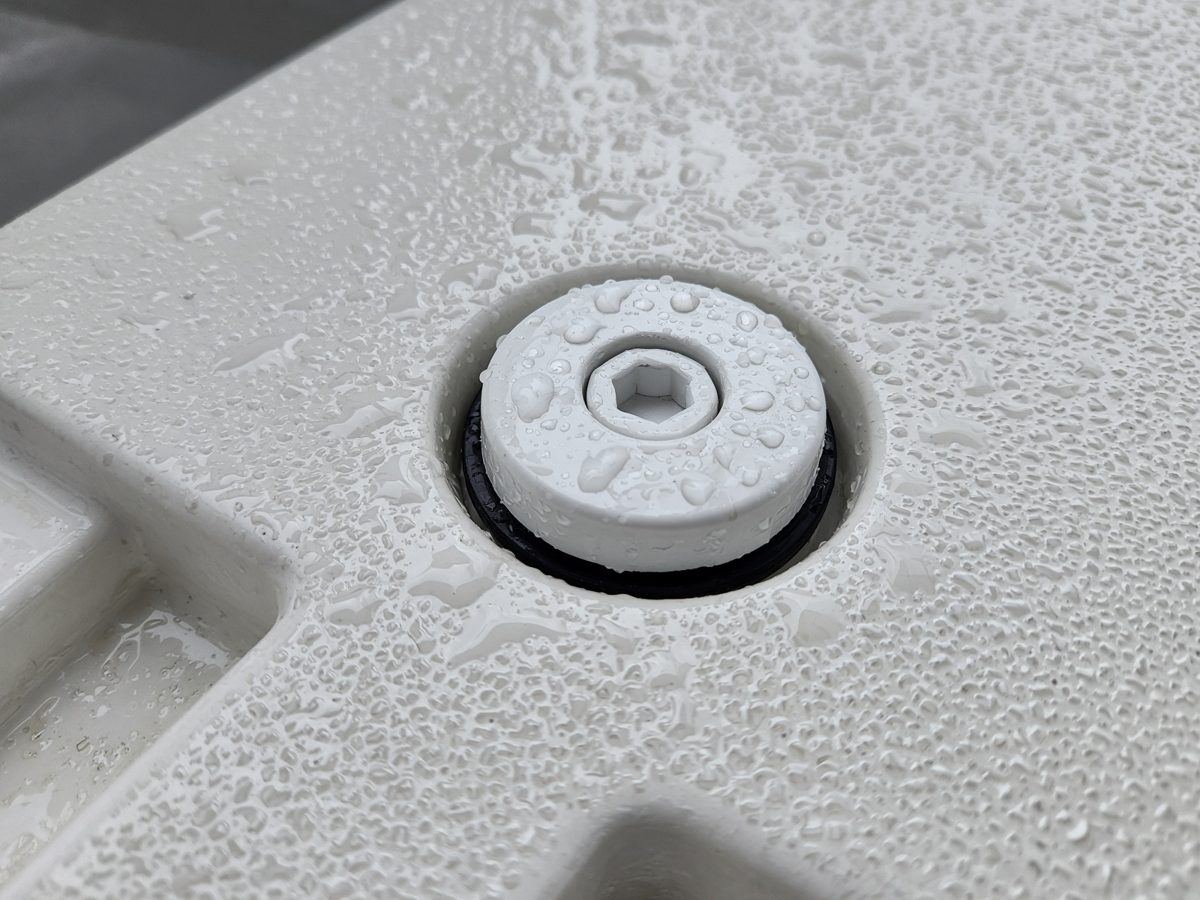
Not a fish on the lid. A marine cooler should have UV-stable plastic, stainless or coated hardware, a drain that empties overboard or into a bait bucket without removing the box, and a gasket that still seals after a season of sand. Rope handles that stay grippy with fish slime help. Tie-down slots are not optional on a boat. If there are no slots, cam-strap through the handles and do not pretend that is as good.
Capacity: a 45-quart class box feeds a two-person inshore day. A 65 to 80 is a full crew or a meat cooler after a long run. Measure the hatch before you fall in love with an 80. An 80 that does not fit the skiff is a dock ornament. Yeti cooler sizes will still mislead you if you shop the number on the lid instead of interior quarts — Tundra 45 is not 45 true quarts. RTIC’s 45 is closer to honest. Pelican’s 30 is a small-boat or extra-box size, not a crew cooler.
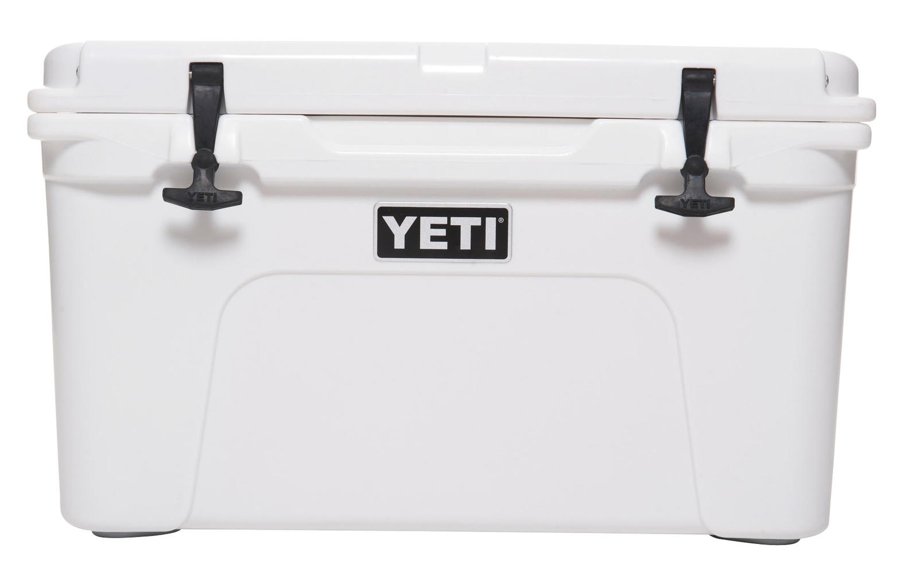
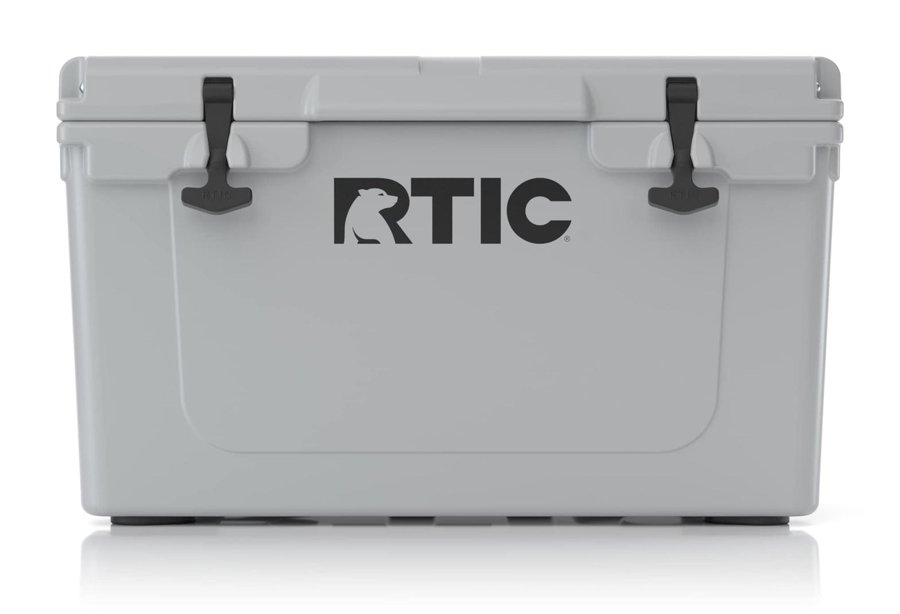
Yeti Tundra 45 vs RTIC 45 on a boat
The Tundra 45 is the certified, dealer-backed, slightly smaller box. The RTIC 45 is the honest-quart, lower-ticket tank. On a boat we care about strap points, lid behavior in a chop, and whether the latch drops into the closing path when the lid is up. Yeti’s T-Rex latches stay out of the way. RTIC’s latch is the known compromise. Ice is close enough that packing beats branding.
IGBC bear certification is a land spec. On a boat you want the latch, the drain, and the straps. If you also car-camp on public land between launches, the Yeti badge starts to matter again — that is the Grizzly vs Yeti conversation, not this one. For a soft bag on the walk from the truck to the ramp, backpack coolers under $200 is the other tool. Do not use a soft bag as a meat cooler after a long run in August. That is how you write a one-star review that is really a packing review.
Pelican Elite 30 and Grizzly 40 — the other rotomolds
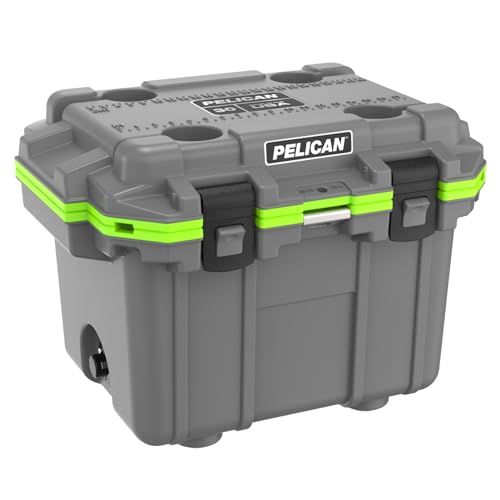
Pelican built a following by making boxes you can almost use as a step and a seat. The Elite 30 is smaller than a Tundra 45. That is the point on a tight skiff, a jon boat with a small bow, or as the drink box while a bigger cooler holds the fish. The gasket is serious. The latches are serious. It will not feed a six-person sandbar day. Stop asking it to.
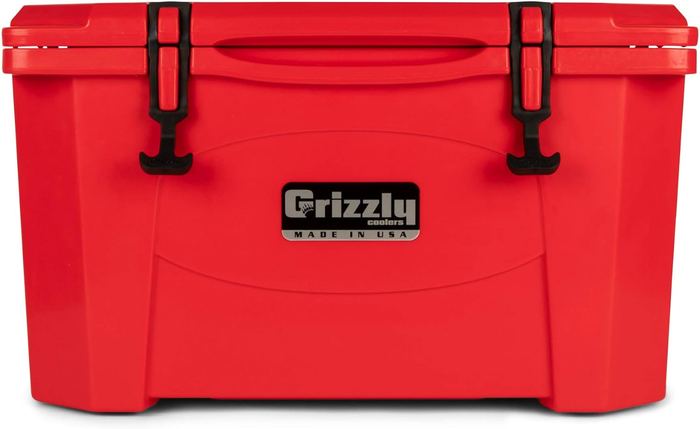
Grizzly’s 40 sits in the same rotomolded neighborhood as Yeti and RTIC with a slightly different interior and a price that often undercuts the bear logo. If you already like the Grizzly story from the camp-cooler page, it belongs on a boat the same way — white if you can get it, strapped, drain aimed at a scupper. Compare it next to the Tundra on Grizzly vs Yeti if the brand fight is what you actually came for. This page is about salt, UV, and whether the box stays put.
Igloo Marine Ultra — the honest short-day box
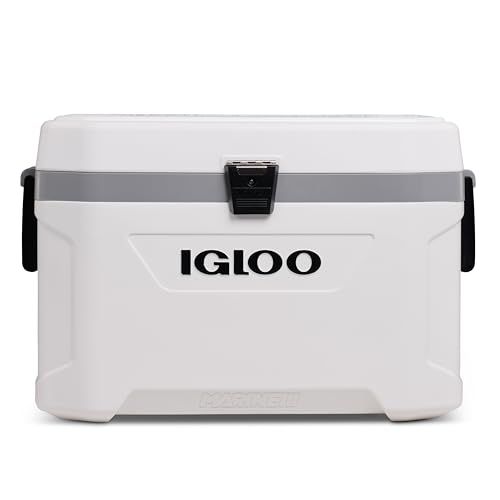
Not every boat needs a rotomolded 45. A weekend jon boat that already has a livewell can run an Igloo Marine Ultra as a drink-and-sandwich box. The marine version is UV-stabler and has hardware that does not rust into orange crumbs in a season. It will not hold ice like Pelican or Yeti. It also does not cost like Pelican or Yeti. If you treat it like a Tundra you will be mad by 2 p.m. If you treat it like a marine picnic cooler, it is the right tool.
Rinse it. Leave the lid open at home. Do not store last weekend’s melt in a closed box in a hot garage. That is how marine coolers grow a smell you cannot sell the boat with. For dock days, first-time dock setup is the other half of not losing the box overboard.
How do you pack a cooler that lives in salt?
Pre-chill overnight. Block ice on the bottom, protein in a sealed bin, drinks you will grab first on top. Do not drain until you need the weight or the melt is drowning the sandwiches. Cold melt is still insulation. Drain it and you gift the sun a head start. Rinse the box with fresh water after a salt day, including the gasket and the drain threads. Leave the lid open in the shade at the house, not closed in a hot hatch.
Strap it. Two cam straps, fore and aft, to cleats or dedicated loops. A cooler used as a step should have a lid that locks. If you sit on it in a chop, you will learn whether the latches were a toy. Put non-skid under it if the deck is slick. A folded towel is not a marine mat; it becomes a wet sponge that helps the box walk.
| Cooler | Best boat job | Ice class | Watch-out |
|---|---|---|---|
| YETI Tundra 45 | Skiff, certified, parts | Premium, smaller interior | Price vs true quarts |
| RTIC 45 | Truck-to-skiff value | Premium cluster | Latch drop |
| Grizzly 40 | Rotomold without the bear tax | Premium cluster | Hatch fit |
| Pelican Elite 30 | Small deck, extra box | Premium, smaller | Not a crew cooler |
| Igloo Marine Ultra | Drinks, short days | Good, not tank | Not a three-day box |
Why are marine coolers so often white?
Because physics. A dark lid in Gulf sun cooks the headspace. A white or tan lid buys you hours. If the only color in stock is charcoal, throw a damp white towel over it and park it under the leaning post, not on the bow as a hood ornament. UV also kills gaskets and fades cheap plastic into chalk. A marine-rated box is supposed to take that abuse. A camp cooler that “also goes fishing” is how you own a brittle lid in year three.
Salt is the other killer. Rinse latches. Rinse drain threads. Rinse the rope handles. A cooler that smells like last month’s bait is not “seasoned.” It is a bacteria farm. For more boat systems that fail the same way, boat batteries and time on the water are the unglamorous siblings of ice.
What we skipped
Soft-sided “marine” bags belong on the walk to the sandbar, not as a meat chest. Huge 110-quart tanks belong on a center console with a dedicated well, not in a 16-foot skiff. We also skipped grocery-store injection-molded boxes with a blue fish sticker. That sticker is not a marine rating.
What does a marine cooler day actually look like?
Leave the dock with the box already cold. If you loaded it at 6 a.m. from a warm garage, you spent the first two hours paying a tax. Ice in a cooler that started at 80°F is just making the plastic comfortable. Overnight in an air-conditioned shop, or a bag of ice in it the night before with the drain closed, is the cheap version of a $500 box.
On the water, the lid stays shut unless you are grabbing something. A crew that “just looks” every ten minutes owns warm drinks by lunch. Put the drinks you will actually want in a smaller Pelican or Igloo so the meat box stays closed. That is the two-cooler trick that works on a 21-foot bay boat and looks like overkill until you fillet fish at 4 p.m. that still sit on ice.
Coming home: empty the protein first, then the drinks, then the melt. A cooler full of melt and one forgotten sandwich is a science project. Hose the gasket. Hose the drain. Prop the lid. If you trail the boat, do this at the house, not in a wet slip while you also fight a battery. Ice is a system, same as boat electrical — neglect is the failure mode, not the brand.
When is a marine cooler the wrong size?
A 20-quart personal box is a drink cooler, not a meat cooler. An 110-quart is a dock box that does not fit a skiff hatch. The 45-class is the default because it fits two people and a bag of ice and still comes off the boat without a hernia. If you routinely run four people and a full cooler of filets, you want 65-plus and a plan for the hatch. Measure. A tape measure is cheaper than a return.
Live wells are not coolers. Do not store sandwiches in the well and bait in the Yeti unless you enjoy the sandwich tasting like the well. Keep food in the food box. Keep bait in the well or a dedicated bait bucket. For longer runs, offshore kit includes ice as a weight-and-balance item, not as an afterthought you pick up at the marina when the bag is already crushed.
Our pick for most inshore boats: RTIC 45 or a Tundra 45 if you already live in that parts world, white if you can get it, cam-strapped, block ice, drain aimed at the scupper. Grab the Pelican 30 when the hatch is small. Grab the Igloo when the job is sandwiches, not a two-day ice chest. Buy Grizzly when you want the rotomold without paying the bear to advertise on your deck.
Frequently asked questions
What size marine cooler do I need?
A 45-quart class box covers two people on an inshore day. Step to 65–80 for a crew or a meat run. A 30-quart Pelican is an extra box or a small skiff. Measure the hatch before you buy an 80.
Do I need a rotomolded cooler on a boat?
If the box sees all-day sun, wakes, and salt, yes. Rotomolded walls and a real gasket beat a grocery cooler by days of ice and by not cracking when someone sits on the lid. A marine Igloo is fine for drinks on a short run.
How do I keep ice longer on a boat?
Pre-chill the empty box, use block ice, keep the lid shut, park it in shade, and pick a light-colored lid. Strap it so it cannot walk. Do not drain the melt until you must. Every extra open is a tax.
Should a marine cooler be strapped down?
Yes. A free cooler is a projectile in a wake and a gelcoat hammer in a hard stop. Use tie-down slots and cam straps to cleats or loops. Sitting on an unlatched lid in a chop is how people go overboard with the box.
How do I rinse a cooler after saltwater?
Fresh water on the gasket, drain threads, latches, and interior. Leave the lid open in the shade at home. Do not store it sealed with last weekend’s melt in a hot garage.
Why are marine coolers white?
A dark lid in summer sun cooks the headspace and melts ice faster. White or tan plastic reflects heat. If you only have charcoal, shade it and throw a light towel over the lid.