
How To Troubleshoot Common Boat Battery Issues
Written by John Wren|
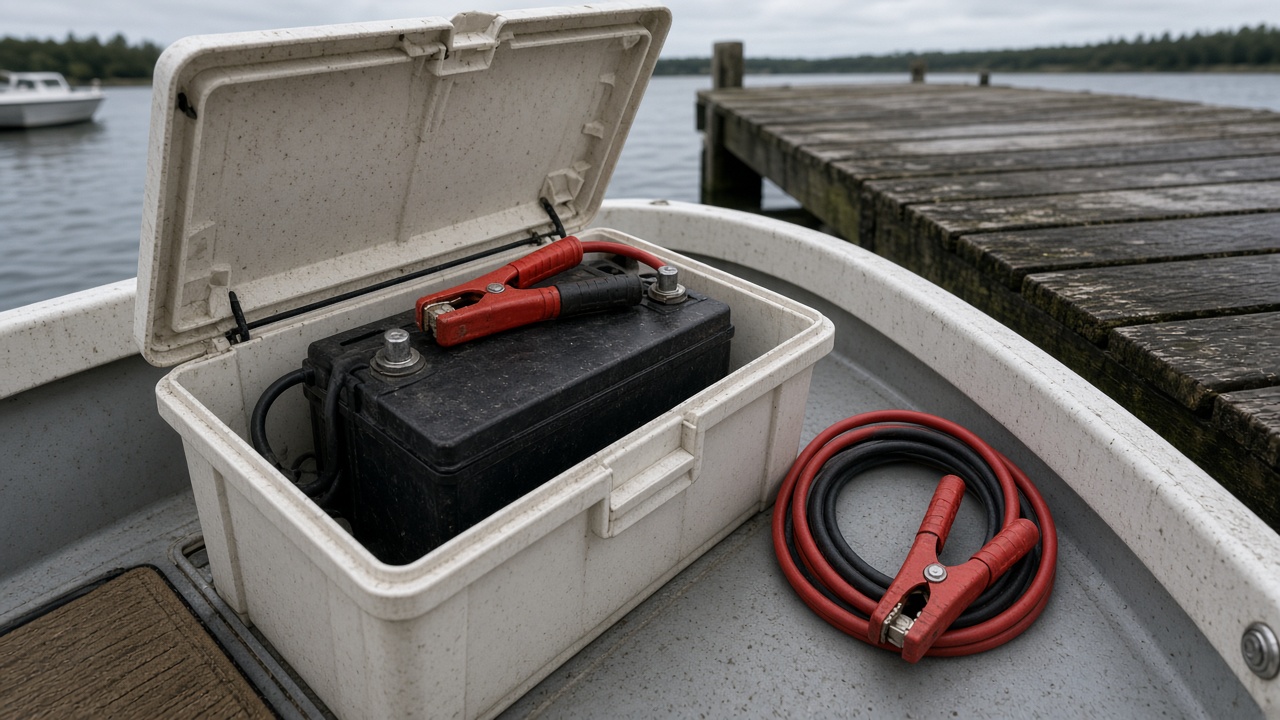
Measure at the posts with a meter you trust. Clean green clamps. Find what stayed on. Do not invent a charger ASIN. House and starter are different jobs.
Key takeaways
- Voltage first.
- Green is a resistor.
- A draw is a light you forgot.
- Know which bank you are cranking.
A boat battery that “just died” usually told the truth last month: a low rest voltage, a green terminal, a light you left on, or a house bank you treated like a starter. In 2026 the useful order is still: measure first, clean second, hunt a parasitic draw third, and know which bank you are standing on. A parts cannon is how people buy a fourth battery and keep the same green clamp.
Short version. Start at voltage. Clean the posts. the longer electrical order if the rest of the boat is already a maybe. the tank can fail you the same morning if the engine side of this week is varnish. We will not invent a charger ASIN. A wrong charger is a bill. Check live prices on the meter we name. We do not invent numbers.
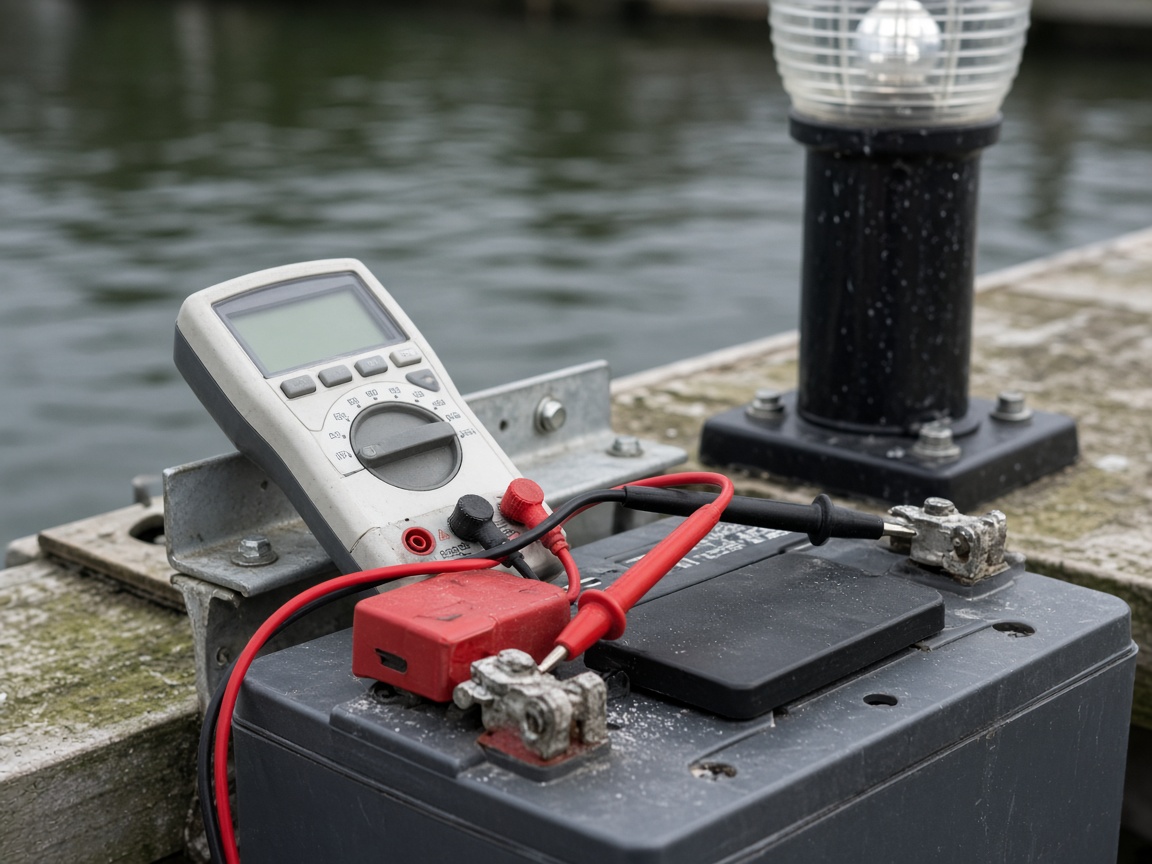
Start at voltage
A resting 12-volt lead-acid bank under 12.4 is already a story. Cranking that sags into the nines is a story with a tow. The AstroAI digital multimeter we verified — TRMS, 4000 counts, auto-ranging, a battery-test range the listing actually states — is the tool that replaces a test light and a shrug. Measure at the posts, not at a pretty switch. Check the live title. We do not invent prices.
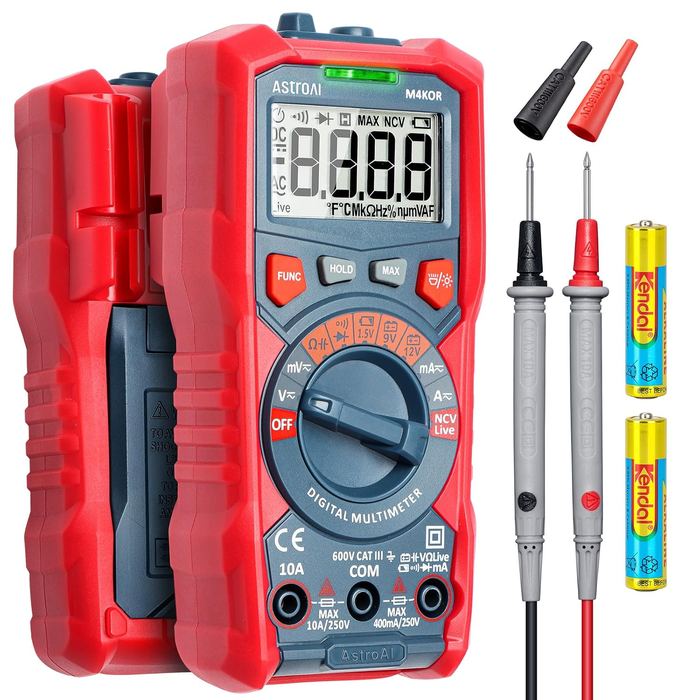
If the number is fine at rest and ugly under load, you have cables, a ground, or a battery that will not work for a living. If the number is ugly at rest, charge and test again before you blame a pump. grounds and fuses is the longer electrical order. This page is the battery chapter of that order.
Clean terminals are not cosmetics
Green is not a patina. It is a resistor. Kill the switch if you have one. Disconnect negative first. Bright metal. The right terminal, the right snug, no seven rings on one stud. A cable that looks expensive and feels crunchy is a cable. Replace it from a counter that will take it back. We will not invent that ASIN.
The engine-block ground is the one people skip. A dim bow light and a slow blower often share a dirty return. Clean it like you meant it.
Parasitic draw is a light you forgot
A stereo memory, a depth finder that never slept, a courtesy lamp in a locker, a float switch that sits in the on. After you think the boat is off, a meter in series on the negative (if you know that test) or a patient hunt with the meter’s DC current range — only if you already understand the meter. If you do not, pull fuses one at a time and watch the rest voltage stop sliding overnight. The skill is the hunt. The brand of the lamp that stayed on is not the essay.
A battery that sits all week on a trailer in August dies of heat and a draw. A battery that sits all winter dies of a draw and a freeze. Charge it. Do not invent a trickle-charger ASIN on this page. The dock locker has opinions. Use a charger the battery book will live with.
Two-bank basics
Starter and house are not the same pile if the boat was wired like a boat. A house bank you ran to 50 percent all Saturday is not a starter you get to blame at dawn. A combiner or an A/B switch you do not understand is how both banks die together. Label the switch. Know which battery you are cranking. A jumper from house to start is a once, not a lifestyle.
shore power is a habit if shore power is the other half of keeping a bank honest. a weak bank does not fix a warning if the day you wanted to leave is already a no — a weak bank does not make a warning kinder.
Charging without a mystery box
We will not invent a charger ASIN. The honest version is a charger the battery book will live with, a vented space, and a habit of not leaving a cheap box on a sealed battery in a closed locker because a video said “set it and forget it.” Lead-acid wants a profile. Lithium, if you actually have it, wants a different profile and a BMS you do not bypass. If you cannot say which chemistry is in the box, you do not have a charge plan. You have a hope. A counter that will take the charger back is the store. A random cable in a crate is a fire story.
Shore power is a habit if you have a slip. The dock page is the other half. A pedestal that is warm is a different problem than a tired bank. A dogbone that is the wrong amp is a heater. The battery will look like the villain. It is not always the villain. Start at the battery, then the path. Voltage at the posts, then at the load. Drop tells you which side is thin.
A battery that lives on a trailer in August cooks. Shade the box if you can. A battery that lives through a freeze and a 50 percent state of charge dies in March. Charge it before storage. The meter we named is how you know, not a thumb on a post. Check live prices. We do not invent numbers. The AstroAI TRMS 4000 is a number tool. It is not a charger. Do not ask it to be one.
The morning the engine and the bank both lie
A no-start is often two stories that arrived on the same Saturday: a bank that slid overnight and a tank that smells like varnish. Smell the tank before you buy a fifth battery. A crank that sounds like a starter with no fuel is not a battery essay. A click with a 12.6 at rest and a sag to nothing under load is cables or a battery that will not work. Measure. Then argue. A parts cannon at dawn is how the ramp becomes a store.
Jump packs have a rating and a lie. A pack that started a truck in June may not start a four-stroke in a bilge in January. If you jump, watch polarity like you mean it. A reversed jump on a boat is an electronics bill. We will not invent a jump-pack ASIN. The meter still goes on first so you know whether you are jumping a dead bank or a dead cable.
A warning day plus a weak bank is two nos. Do not stack them because you already towed to the lot. The lot is allowed to be the destination. Leave tank includes leaving the hull on the trailer when the number is ugly and the sky is uglier.
The battery card
Voltage at the posts. Clean to bright metal. Hunt the draw. Label the banks. No invented charger ASIN. Meter we named: AstroAI digital, TRMS 4000, auto-ranging, battery test. Check live prices. We do not invent numbers. Disclosure lives on /affiliate-disclosure/, not as a banner here. Write the rest voltage on a tape on the box after every trip. Tired you will lie about last weekend. Tape will not. A house bank you ran to empty is not a starter you get to blame at 6 a.m. Combiners and A/B switches you do not understand are how both banks die together. Know the switch in daylight. Then you may use it in the dark. If the insulation is cooked or the bus is melted, stop. That is a yard. A field note can teach order. It cannot teach you to hide a burned harness under a new panel and a fourth battery with a pretty clamp.
The successful battery morning is often the one that ended with a charge at home on Friday and a number you already knew. Boring is the goal. The tow you prevent is the story you do not have to tell.
Two-bank boats fail in language. People say “the battery” as if there is one. There is a start pile and a house pile if the boat was wired like a boat. A graph, a livewell, a stereo, and a phone charger will eat the house while you fish and then you will wake up and crank the house by accident. Label the switch in daylight with tape a tired hand can read. A/B/BOTH is a sentence you should be able to say out loud before dawn. BOTH is how both banks die together if you leave it there as a lifestyle. Start on start. House on house. Combine to charge or to limp, then split again. A combiner that failed closed is a story you find with a meter, not a shrug. Measure each bank. The AstroAI we named is how you stop arguing with a pretty gauge that lives in a panel you have never trusted. Check live prices. We do not invent numbers. If one bank is 12.6 and the other is 11.9, you have a use problem or a charge problem, not a mystery. Charge the low one with a profile the chemistry will live with. Do not invent a charger listing on this page. The book on the battery is the book. A counter that will take the box back is the store.
Corrosion returns. A clean post in March is a green post in August if the boat lives in salt and you will not rinse. The terminal is a calendar. Bright metal is not a one-time personality. Dielectric on the right parts, a cover that actually covers, and a look every departure. A crunchy clamp is a clamp. Replace it from a counter. We will not invent that ASIN. The engine-block ground is still the one people skip after they shine the posts for a photo. Clean it. A dim bow light and a slow blower will thank you, or they will keep lying and you will keep buying batteries. Write the rest voltage on tape after every trip. Write the cranking sag once a month if you have the helper. Tape on the box is cheaper than a fourth battery with a pretty clamp and the same green. If you smell heat or see a melted bus, stop. That is a yard. Order is a field note. A burned harness is a professional. Do not hide it under a new panel and a hope. The water will still be there when the wiring is honest.
Also in the magazine
Keep going with boat electrical, old fuel, the dock after the yes, and a launch that still has a tank. We only link pages that already live here. Check live prices. We do not invent numbers. Disclosure lives on affiliate disclosure, not as a banner on this article.
Frequently asked questions
What is the first boat-battery check?
Resting voltage at the posts. Under 12.4 on a 12-volt lead-acid bank is already a story.
Which meter are you naming?
AstroAI digital multimeter, TRMS 4000 counts, auto-ranging, with a battery-test range. Check live prices.
Do you name a charger?
No. We will not invent a charger ASIN. Use what the battery book will live with.
Why clean terminals?
Green is a resistor. Pretty cables with crunchy clamps are not connections.
What is a parasitic draw?
Something that stayed on: a finder, a locker lamp, a stereo memory. Hunt it. Do not just buy another battery.
Starter versus house?
They are different jobs if the boat was wired like a boat. Know which switch you are on before dawn.