
How to Keep Your Boat in Top Shape All Year
Written by John Wren|

Follow a seasonal maintenance calendar for engine service, hull care, electrical checks, and winterization. Address small issues immediately, take off-season storage seriously even in mild climates, and track maintenance with a written log rather than memory alone.
Key takeaways
- Spring commissioning needs a full systems check, not just launching.
- Regular hull washing and waxing prevents compounding gelcoat damage.
- Winterization matters even in mild climates.
- A written maintenance log prevents missed service intervals.
Keeping a boat in top shape year-round means treating maintenance as a continuous seasonal cycle rather than a single spring commissioning task — engine service, hull and gelcoat care, electrical system checks, and proper off-season storage each have their own timing and requirements that, done consistently, prevent the expensive surprise repairs that plague boats maintained only reactively. The short answer: follow a seasonal maintenance calendar tied to your specific boat type and usage pattern, address small issues immediately rather than letting them compound, and take winterization and storage as seriously as active-season maintenance.
Short version. Spring commissioning should include a full systems check, not just dropping the boat in the water and hoping everything works. Regular in-season maintenance — hull cleaning, fluid checks, battery maintenance — prevents small issues from becoming expensive ones. Proper winterization, even in regions with mild winters, protects engines and systems from damage that shows up as an expensive surprise the following spring.
Spring commissioning: more than just launching
Spring commissioning should include a genuine systems check after months of storage: inspecting belts and hoses for cracking or deterioration, checking all fluid levels and conditions, testing the battery and charging system, and confirming the bilge pump and all safety equipment function correctly before the first trip of the season. Skipping this thorough check in favor of simply launching and hoping for the best is one of the most common ways small, storage-related issues turn into on-the-water breakdowns during the season's first outings.
Check zinc anodes for corrosion protection and replace any that show significant wear, since these sacrificial components protect more expensive metal parts from galvanic corrosion, and a neglected, fully consumed zinc anode leaves your boat's actual hardware vulnerable to damage that is far more costly to repair than the anode itself.
Hull and gelcoat maintenance through the season
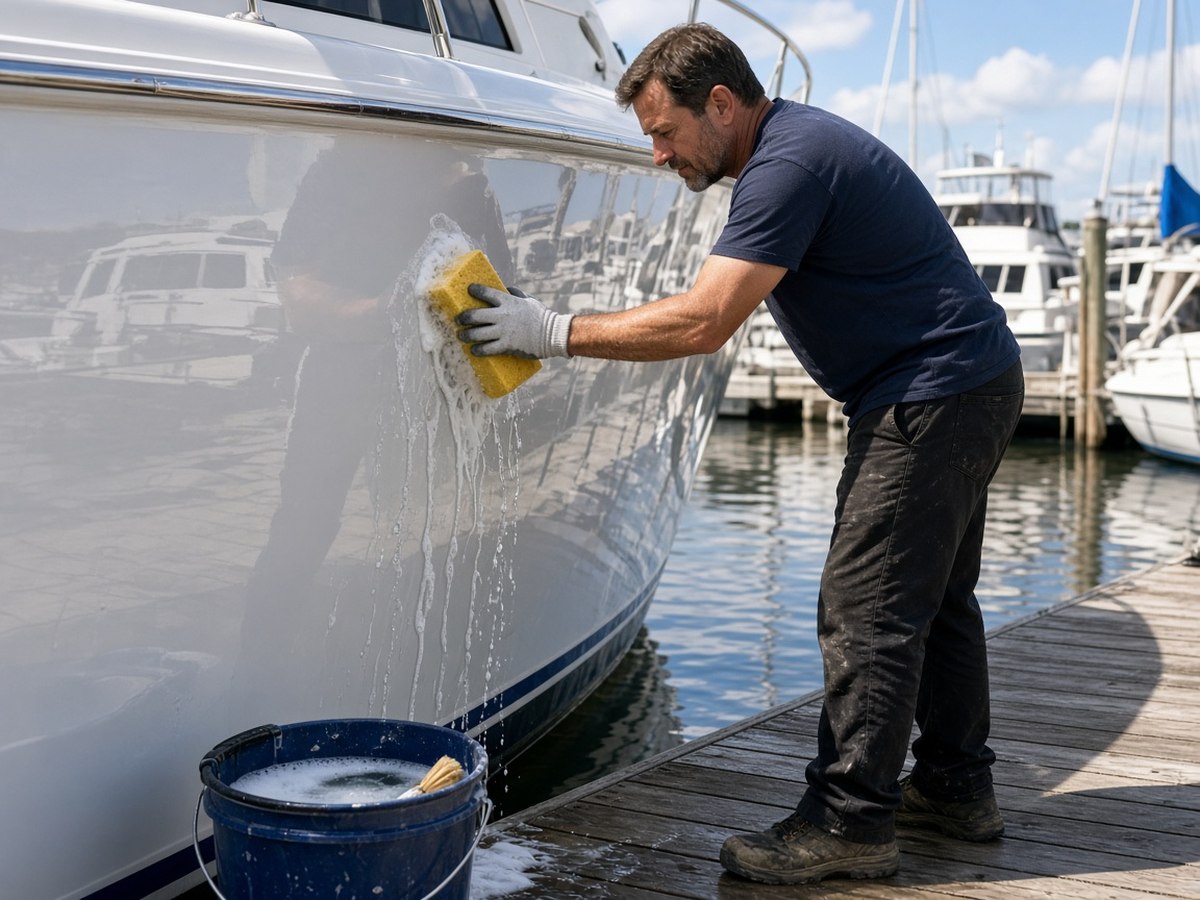
Regular washing removes salt, algae, and general grime that, left to accumulate, can dull gelcoat and create conditions for more persistent growth and staining that becomes progressively harder to remove. A quality marine wax applied a few times per season protects gelcoat from UV degradation and makes routine washing significantly easier, since dirt and grime have a harder time adhering to a properly waxed surface compared to bare, unprotected gelcoat.
Inspect the hull periodically for any blistering, cracking, or soft spots, particularly below the waterline, since these can indicate osmotic blistering or structural issues that are far easier and cheaper to address when caught early rather than after they have progressed significantly over multiple seasons of neglect.
Engine maintenance on a consistent schedule
Follow your specific engine manufacturer's recommended service intervals for oil changes, filter replacement, and impeller inspection rather than an informal "when it seems like it needs it" schedule, since modern marine engines are engineered around specific maintenance intervals that genuinely matter for long-term reliability and performance. Impellers in particular deserve regular inspection and replacement on schedule even if they appear functional, since a failing impeller can cause overheating and serious engine damage with very little warning before it fails completely.
Fuel system maintenance, including using a fuel stabilizer for any fuel that will sit for an extended period and periodically checking fuel filters and water separators, prevents the ethanol-related fuel degradation issues that are a common source of marine engine problems, particularly for boats that see irregular or seasonal use rather than continuous, frequent operation.
Electrical system checks that prevent frustrating failures
Marine electrical systems face a genuinely harsh operating environment — moisture, vibration, and temperature swings all accelerate corrosion and connection failures compared to a similar system in a dry, stable indoor environment. Regularly inspect battery terminals and connections for corrosion, test battery charge and holding capacity, particularly before extended storage periods, and address any flickering lights or intermittent electrical issues immediately rather than assuming they will resolve on their own, since electrical gremlins in a boat tend to worsen rather than improve without direct attention.
Off-season storage and winterization done right
Proper winterization — draining or treating water systems to prevent freeze damage, fogging the engine cylinders if applicable, disconnecting or maintaining batteries, and protecting the boat from UV and moisture with a quality cover — matters even in regions with relatively mild winters, since freeze damage to water systems and engine blocks can occur with surprisingly brief cold snaps that catch under-prepared boat owners off guard. Skipping proper winterization to save time or money is one of the most expensive maintenance mistakes a boat owner can make, since the resulting spring repairs typically cost far more than the winterization service would have.
Trailer maintenance often gets overlooked
A boat trailer used regularly for launching and retrieval needs its own maintenance attention — wheel bearing service on a schedule appropriate for how often the trailer is submerged during launches, tire condition and age checks, and brake system inspection if your trailer is equipped with brakes. Trailer maintenance is easy to overlook since attention naturally focuses on the boat itself, but a trailer failure on the highway or at the ramp can strand you and damage the boat it was carrying, making this an important part of genuinely comprehensive year-round boat care.
Building a maintenance schedule you will actually follow
A written, calendar-based maintenance schedule tied to specific months or usage milestones — every 50 hours of engine use, every spring before the first launch, every fall before storage — is far more effective than an informal mental list that gets pushed aside during a busy boating season. Many boat owners find a simple maintenance log, whether a notebook kept on the boat or a phone app, helps track what has been done and what is coming due, preventing the kind of "I think I did that last year" uncertainty that leads to missed maintenance intervals.
Canvas, upholstery, and interior care
Bimini tops, boat covers, and seat upholstery face constant UV exposure and moisture that degrade materials over time regardless of how well the underlying hull and mechanical systems are maintained. Clean canvas and upholstery regularly with marine-specific cleaners rather than harsh household products that can strip protective coatings, and apply a UV protectant periodically to extend the working life of these materials, which are genuinely expensive to replace compared to the modest cost of regular, gentle maintenance.
Store cushions and removable upholstery indoors during extended periods when the boat is not in use, since even covered outdoor storage exposes fabric to humidity and temperature swings that accelerate mildew growth and material breakdown compared to a dry, climate-controlled indoor storage space.
Safety equipment checks belong in the routine too
Life jackets, fire extinguishers, flares, and other required safety equipment need the same scheduled attention as mechanical systems — check expiration dates on flares and fire extinguisher charge levels at the start of each season, and inspect life jackets for damaged straps, buckles, or degraded flotation material that would compromise their function in an actual emergency. This is an easy category to overlook since safety equipment sits unused most of the time, but it is exactly the equipment you most need to function correctly on the rare occasion it is actually needed.
Keeping maintenance records that pay off at resale
A detailed, consistent maintenance record does more than help you personally stay on schedule — it becomes a genuine selling point and value driver if you ever sell the boat, since buyers and marine surveyors both view documented, consistent maintenance history as a strong positive indicator of a well-cared-for vessel. A boat with gaps in its maintenance history, or no records at all, often sells for less and takes longer to sell than a comparable boat with thorough documentation, even if the actual mechanical condition is similar.
When to bring in a professional versus DIY
Many routine maintenance tasks — washing, waxing, basic fluid checks, and battery maintenance — are well within reach of a reasonably capable DIY boat owner, while more complex engine work, electrical troubleshooting, and hull repairs often benefit from professional expertise, particularly if your own experience with marine-specific systems is limited. Knowing your own honest skill boundaries and bringing in a qualified marine technician for tasks beyond them prevents the kind of well-intentioned DIY mistakes that can turn a minor issue into a much more expensive repair.
| Season | Key maintenance | Why it matters |
|---|---|---|
| Spring | Full systems check, zinc anodes, fluids | Catches storage-related issues before the season starts |
| In-season | Hull washing/waxing, engine service intervals | Prevents small issues from compounding |
| Fall/winter | Winterization, battery maintenance, cover protection | Prevents freeze and moisture damage during storage |
| Ongoing | Trailer bearings, tires, electrical connections | Easy to overlook, expensive to neglect |
Our take: keeping a boat in top shape year-round is about consistent, scheduled attention across every season, not a single annual overhaul. A written maintenance calendar, addressed on time rather than reactively, prevents the expensive surprise repairs that reactive maintenance almost always eventually produces.
Weather-related maintenance considerations
Boats left uncovered or improperly secured during severe weather events face real risk of damage from wind, hail, and storm surge in coastal areas, so having a specific severe weather plan — additional dock lines, fender placement, or moving the boat to more sheltered storage ahead of a forecast storm — is worth establishing before you actually need it during an active weather emergency. Reviewing and adjusting this plan seasonally, particularly ahead of hurricane season in coastal regions, ensures you are not improvising a response while a storm is already approaching.
Freshwater versus saltwater maintenance differences
Saltwater boating accelerates corrosion and requires more frequent attention to zinc anodes, fittings, and engine flushing after every outing compared to freshwater use, where corrosion pressure is genuinely lower even though it is not entirely absent. Boats used in saltwater benefit from a dedicated freshwater flush system for the engine, used consistently after every trip, since residual salt left in an engine's cooling passages accelerates internal corrosion in a way that a single missed flush can start but that consistent flushing largely prevents.
Regardless of water type, hardware and fasteners exposed to the marine environment deserve periodic inspection for corrosion, since even freshwater boating involves enough moisture exposure to eventually affect unprotected metal components over multiple seasons of use.
A simple pre-trip checklist that catches problems early
Beyond the seasonal maintenance calendar, a quick pre-trip checklist — checking fluid levels, testing the bilge pump, confirming navigation lights work, and a visual scan for anything obviously loose or damaged — catches developing problems before they become on-the-water emergencies. This five-minute habit before every outing, not just at the start of the season, is a low-effort way to extend the benefit of your broader seasonal maintenance routine across every single trip rather than just the first one of the year. It is the single cheapest insurance policy available against an avoidable breakdown far from the dock. Build it into your routine until it becomes automatic, the same way you would check a car's fuel gauge before a long drive.
Frequently asked questions
How often should I service my boat's engine?
Follow your specific engine manufacturer's recommended intervals for oil changes, filter replacement, and impeller inspection rather than an informal schedule based on how it seems to be running.
Is winterizing my boat necessary in a mild climate?
Yes. Freeze damage to water systems and engine blocks can occur with surprisingly brief cold snaps, and skipping winterization is one of the most expensive maintenance mistakes a boat owner can make.
How often should I wax my boat's hull?
A few times per season. Regular waxing protects gelcoat from UV degradation and makes routine washing easier since dirt has a harder time adhering to a waxed surface.
What electrical issues should I watch for on a boat?
Corroded battery terminals, reduced battery holding capacity, and any flickering or intermittent electrical issues, which tend to worsen rather than resolve on their own without direct attention.
Do boat trailers need regular maintenance too?
Yes. Wheel bearings, tire age and condition, and brake systems if equipped all need regular attention, since trailer failure can strand you and damage the boat it is carrying.
What is the best way to stay on top of boat maintenance?
A written, calendar-based maintenance schedule tied to specific months or usage milestones, tracked in a simple log, prevents missed intervals better than an informal mental list.