
RTIC vs Yeti Coolers: Which Is Worth the Money?
Written by John Wren|
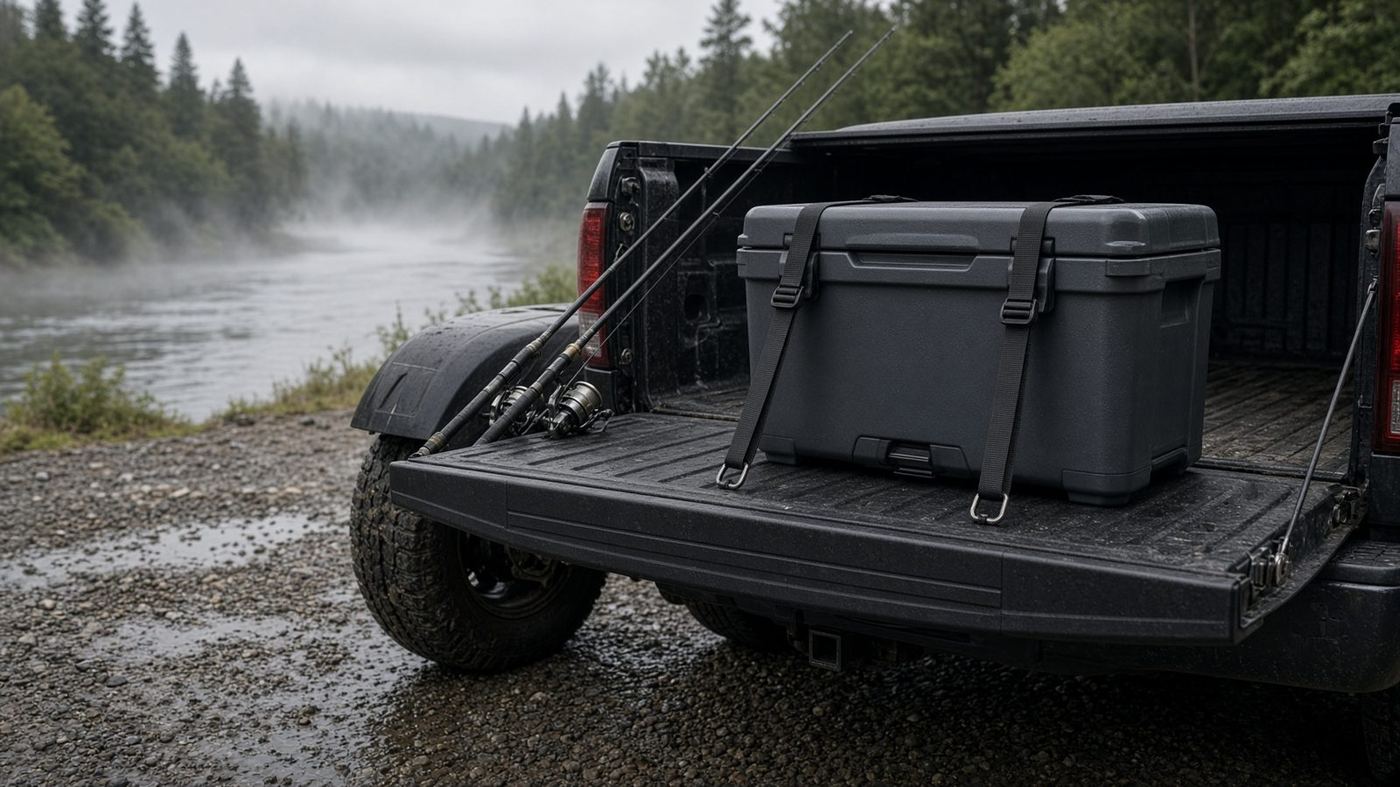
Buy RTIC for true quarts and a lower price on truck and boat duty. Buy a Yeti Tundra if you need IGBC certification, a five-year warranty, or latches that stay out of the way. Ice is close; the lid number is not.
Key takeaways
- A Yeti Tundra 45 is not 45 quarts. RTIC’s 45 is much closer.
- RTIC wins the money-and-volume fight; Yeti wins certification and latch feel.
- Drooping RTIC latches are annoying, not fatal.
- Packing and shade still beat brand when you want ice on day four.
RTIC vs Yeti is the value argument that Yeti accidentally created. RTIC showed up in 2014 with a slogan that was basically “like a Yeti, for less,” got sued, redesigned, and is now a full outdoor brand that still undercuts Austin on the rotomolded boxes most people actually buy. The question is no longer whether RTIC is a knockoff. It is whether the extra money for a Tundra buys ice, latches, certification, or just the name.
Our current call: buy RTIC if you want true quarts and a lower ticket for truck, boat, and beach use. Buy Yeti if you need IGBC bear-resistant certification, a five-year warranty you will actually use, or a latch that does not drop into the closing path when the lid is up. Ice retention is close. Price and volume are not.
Who should buy RTIC instead of Yeti?
Buy RTIC if the cooler is a tool. You throw it in a skiff, a UTV, or a pickup and you want 45 honest quarts, not a 45-named box that is closer to 38. You are fine replacing a latch yourself. You do not hunt a forest that lists certified bear-resistant coolers in the order. You would rather put the Yeti premium into ice, fuel, or a second smaller soft cooler for the walk.
Buy Yeti if the cooler has to pass a rule, a spouse’s patience, or a resale listing. The Tundra still has the best parts network, the cleanest latch behavior, and the badge that land managers recognize. It is also the slightly more pleasant object to use every day — which matters if this box is also the camp bench and the fish-cleaning seat.
Soft coolers are a different fight. Hopper-style bags and RTIC’s soft line leak, sweat, and live harder lives than rotomolded tanks. This review is about the hard boxes. If you need a hike bag, do not pretend a Tundra 45 is coming with you.
Why does the number on the lid lie?
Yeti names Tundras in a way that does not match interior quarts. RTIC’s numbered hard coolers are much closer to true volume. That single fact explains most of the “RTIC holds more beer” photos on the internet. It is not magic insulation. It is a bigger hole in the plastic.
| Pairing | RTIC (true-ish) | Yeti (named size) | What you notice |
|---|---|---|---|
| Day / tailgate | RTIC 20-class | Roadie / small Tundra | RTIC usually holds more cans |
| Weekend for two | RTIC 45 | Tundra 45 (~38 qt) | RTIC wins space and price |
| Hunt camp / family | RTIC 65 | Tundra 65 (~57 qt) | RTIC is heavier and roomier |
Weight follows volume. An RTIC 65 is a two-person lift when it is full. A Tundra 65 is also a two-person lift when it is full. Do not shop empty-weight charts as if you will carry them empty. Shop whether the box fits the well, the bed, or the porch step.
The RTIC 45 is the money size
This is the cooler we would put in most trucks. It is big enough for a Friday-to-Sunday food load and small enough that one strong person can still budge it onto a tailgate. RTIC’s current ultra-tough 45-quart class is rotomolded, gasketed, and drainable. The rubber latches work. They also like to droop when the lid is open, which is the daily annoyance everyone mentions and then lives with because the price is right.
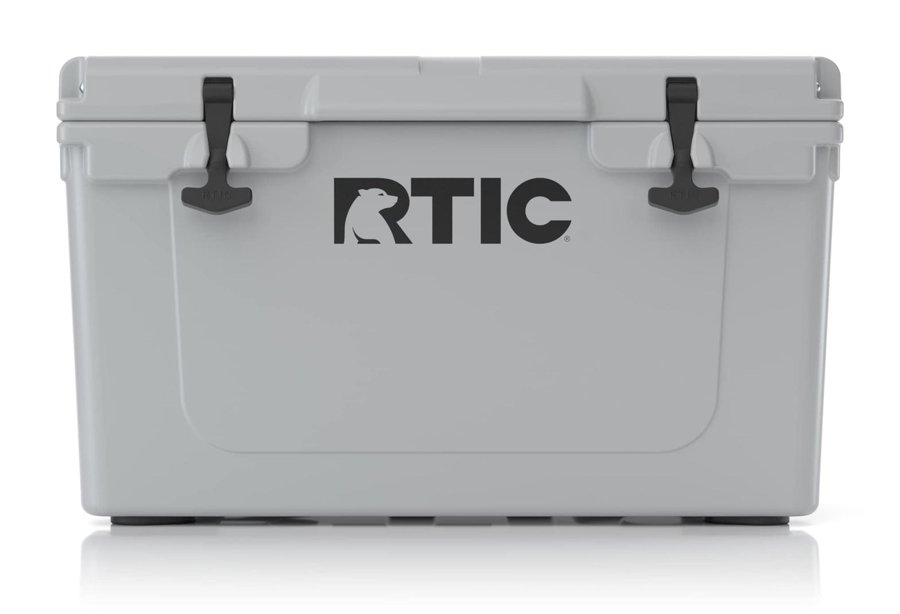
Treat the drooping latch as a known bug, not a surprise. If that bug would ruin your morning, Yeti’s T-Rex latches are the upgrade. If it would not, keep the money. Foam-wrapped rope handles on older RTICs feel better than Yeti’s hard plastic until they do not — salt and UV will tell you. Inspect them once a season.
The Tundra 45 still earns its keep
The Tundra 45 is the cooler you buy when you want the certified, dealer-backed, slightly smaller box that is nicer to operate. Ice tests from labs and magazines in the last two years have often given Yeti the edge on remaining ice at the 72- to 96-hour mark, especially on wheeled Tundra Haul-class boxes. That is real. It is also a smaller advantage than the internet war suggests once you open the lid for lunch.
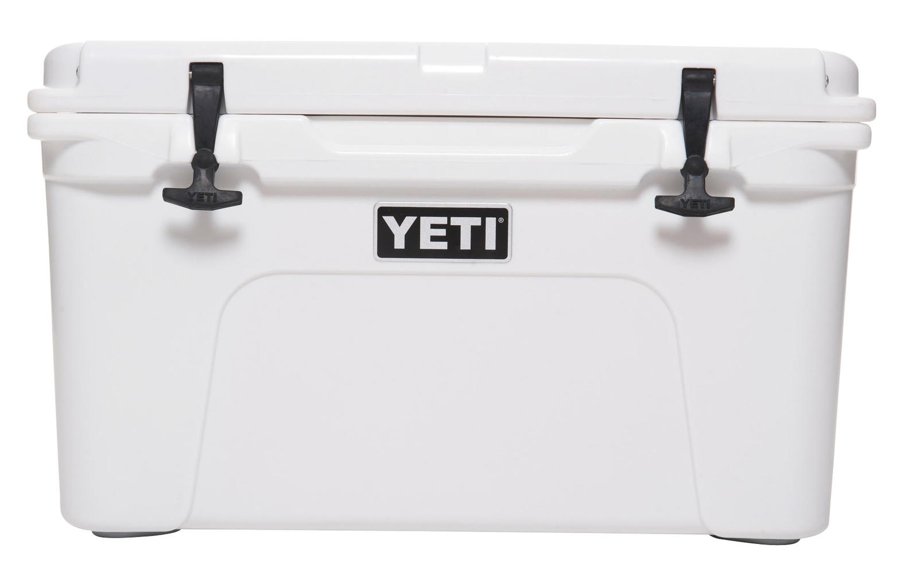
If you need the extra cubes, also look at how you pack. A Tundra 45 packed badly will lose to an RTIC 45 packed well. Shade, pre-chill, and block ice still beat a hundred extra dollars.
When do you step up to the 65?
When four people eat out of the box, when you are putting up a deer, or when the boat does not come back for three nights. The RTIC 65 vs Tundra 65 is the same story as the 45s, scaled up: more true volume and more empty weight on the RTIC, more name and nicer hardware on the Yeti.
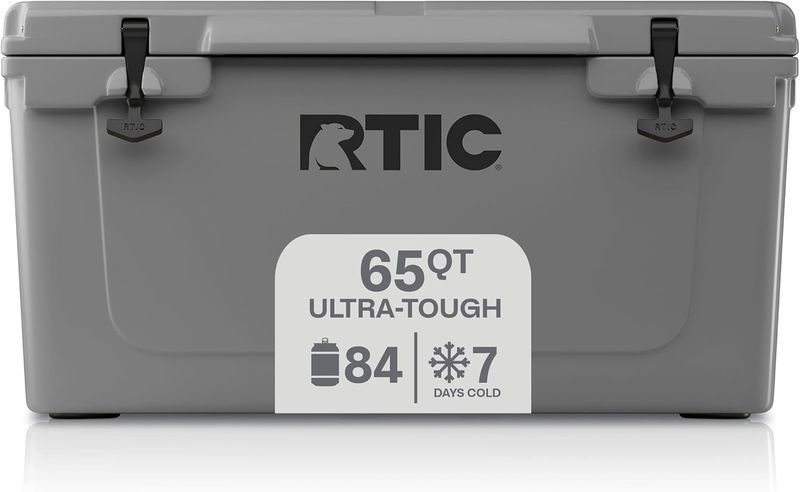
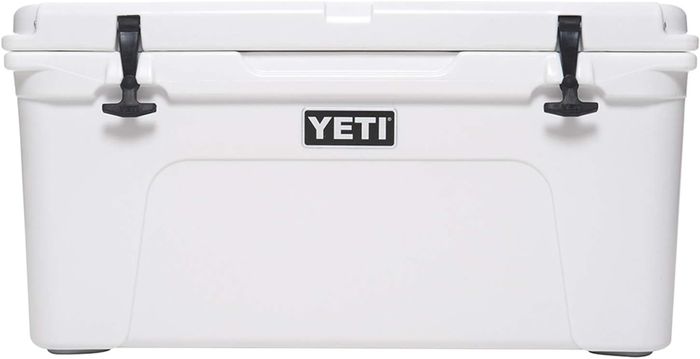
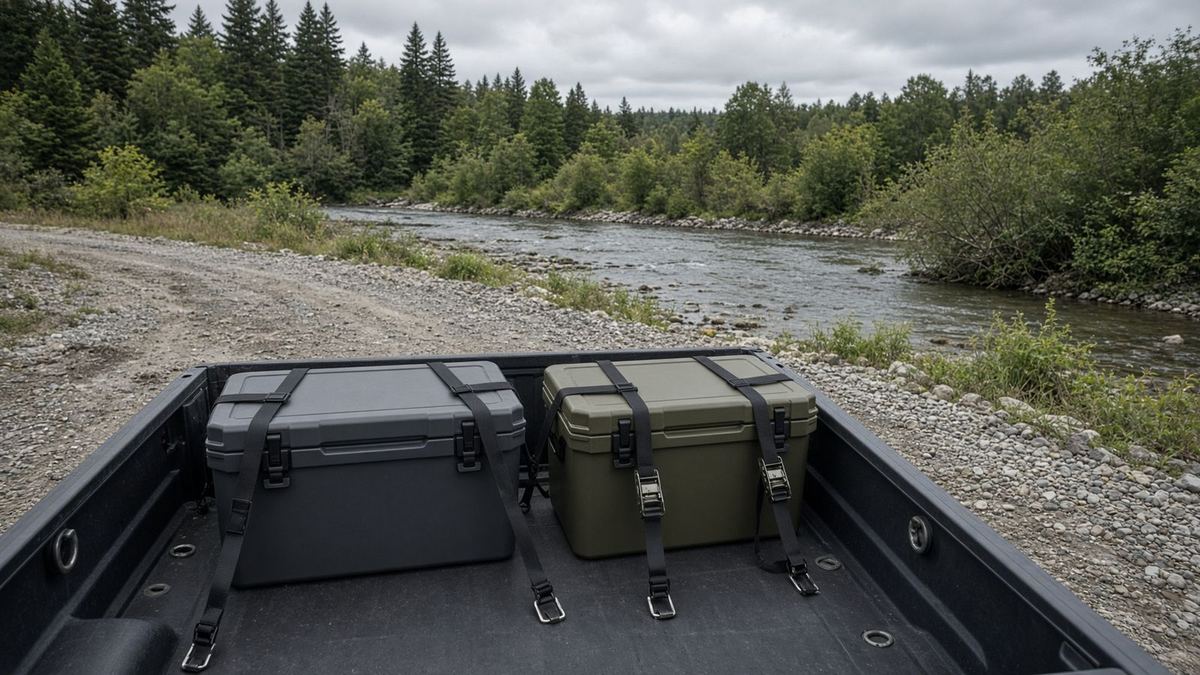
Measure the hatch. A 65 that does not fit the skiff is a dock ornament. Tie-down slots on both brands work with cam straps. Use them. A cooler sliding into a transom is how you crack a latch on day one.
What do ice tests actually say?
Outside’s lab work on wheeled models has shown Yeti holding ice after an RTIC ultra-light had gone to water. Outdoor Empire’s broader tests put both in the premium cluster, not in different sports. Injection-molded “ultra-light” lines are a third category — lighter, cheaper, shorter ice. Do not cross-shop a rotomolded Tundra against an injection ultra-light and call it a brand verdict.
If you want the longer rotomolded field, watch the 54-cooler ice challenge as well. It is the best public tape we have of what “premium” actually means when the sun is out and nobody is cheating the protocol.
Build, bears, and warranty
Rotomolded walls on both brands will outlast your interest in camping. Gaskets, latches, and handles are the wear items. Yeti’s five-year warranty and dealer web are the grown-up version of customer service. RTIC’s coverage is shorter. Budget a latch kit. It is still cheaper than the Yeti delta.
Bear certification sits with Yeti for most shoppers who need it. RTIC has not made that badge a selling point the way Austin has. If a ranger can send you home for the wrong cooler, do not get cute. Buy the certified Tundra and lock the hasps as the label says. If you are fighting raccoons at a reservoir campground, a latch that stays shut is enough.
Final verdict
RTIC wins the money fight. You get more interior, a lower price, and ice that is good enough for a long weekend if you pack like an adult. Yeti wins the official fight: certification, warranty, latch manners, resale. We would spend our own cash on the RTIC 45 for truck and boat duty, and we would spend it on a Tundra if the hunt unit or the spouse required the badge. For the other rotomolded option with a lifetime warranty, see Grizzly vs Yeti. For marine-specific hardware, see the best marine cooler guide.
One more thing people skip: the first week of ownership is when you learn the drain plug. Open it at home with a hose, not at a boat ramp with a line behind you. Tie a small piece of cord to the cap if the brand’s cap is the kind that wants to disappear into a scupper.
Should you buy ultra-light or ultra-tough?
RTIC now sells more than one personality of hard cooler. Ultra-tough is the rotomolded tank that belongs in this Yeti Tundra fight. Ultra-light is injection-molded, lighter on the scale, shorter on ice, and easier to lift onto a tailgate when your back has opinions. Cross-shopping a Tundra 45 against an ultra-light 45 is how people write confused reviews. If ice through a long weekend in a truck bed is the job, stay in rotomolded. If you want a beach cooler you can carry from the parking lot without a hernia, ultra-light is a different product and a different page.
Wheeled versions change the math again. A Tundra Haul and an RTIC wheeled ultra-light are for people who roll across a ramp, not for people who lift into a high-bed truck. Wheels add weight and failure points. They also save your spine. If your put-in is a paved ramp, wheels win. If your put-in is a two-track, wheels are ballast.
How should you pack an RTIC for a weekend?
Same physics as Grizzly and Yeti. Pre-chill. Blocks on the bottom. Drinks you will grab first on top in a mesh bag so you are not mining. Keep raw meat in a sealed bin. Do not drain the melt until you need the weight gone. A full ice-water bath still cools; an empty box with a proud puddle on the boat floor does not.
In Florida heat, a white or tan lid is not a fashion choice. Dark rotomolded plastic in a closed truck is an oven. Crack the windows, throw a damp towel over the lid, or do not leave it in there. If you fish the Gulf, rinse the latches and the drain threads. Salt finds the cheap fastener first. If you hunt, blood in the gasket is how you find out you hate yourself next Saturday. Rinse the gasket. Dry the lid open at home.
What actually wears out?
Walls do not. Latches, gaskets, plugs, and handles do. RTIC’s shorter warranty means you should budget a latch kit the way you budget oil. Yeti’s longer warranty means you should still inspect, but you have a phone number that works. UV chalks rubber. A dab of silicone on a gasket once a year is cheaper than a replacement lid. Do not store the box sealed in a hot shed with last season’s melt still in it unless you enjoy science experiments.
Resale is the quiet Yeti argument. A used Tundra still looks like money. A used RTIC looks like a cooler. If you rotate gear and sell it, that gap is real. If you keep gear until it dies in a barn, it is not.
Who we would send where, in one paragraph each
Weekend couple in a truck with a boat: RTIC 45, white if you can get it, cam straps in the bed, block ice from a gas station, done. Public-land elk camp with a cooler-order on the unit: Tundra 65, certified, locked, heavy, no arguments with a ranger. Deer camp in Iowa where the box is also a bench for ten years: look at Grizzly instead of either of these two. Beach day with a long walk from the lot: do not buy a 65 of anything; buy smaller or buy wheels. If you are still staring at both listings and the prices are within a six-pack of each other, buy the RTIC and spend the leftover on ice and a spare drain plug.
Frequently asked questions
Is RTIC as good as Yeti?
Close on ice and toughness. RTIC usually gives you more true volume and a lower price. Yeti gives you better latches, a longer warranty, and easier bear-resistant certification.
Why is the RTIC 45 bigger than the Yeti 45?
Yeti’s Tundra 45 is not a true 45-quart interior. RTIC’s 45-quart class is much closer to the number on the lid, so it holds more cans and more ice.
Does Yeti keep ice longer than RTIC?
Some lab tests, especially on wheeled models, give Yeti a remaining-ice edge after three or four days. In normal weekend use with a lid that opens, both stay cold if you pre-chill and use block ice.
Which cooler is bear proof?
Buy a certified Yeti Tundra and lock it as specified if a forest order requires IGBC. RTIC is a racoon-and-truck cooler unless you confirm a certified SKU.
RTIC, Yeti, or Grizzly?
RTIC for value and volume, Grizzly for lifetime warranty and true quarts, Yeti for certification and dealer support. All three beat a cheap grocery cooler by days.