
Best Fish Finders Under $200 (2026)
Written by Ben Jackson|
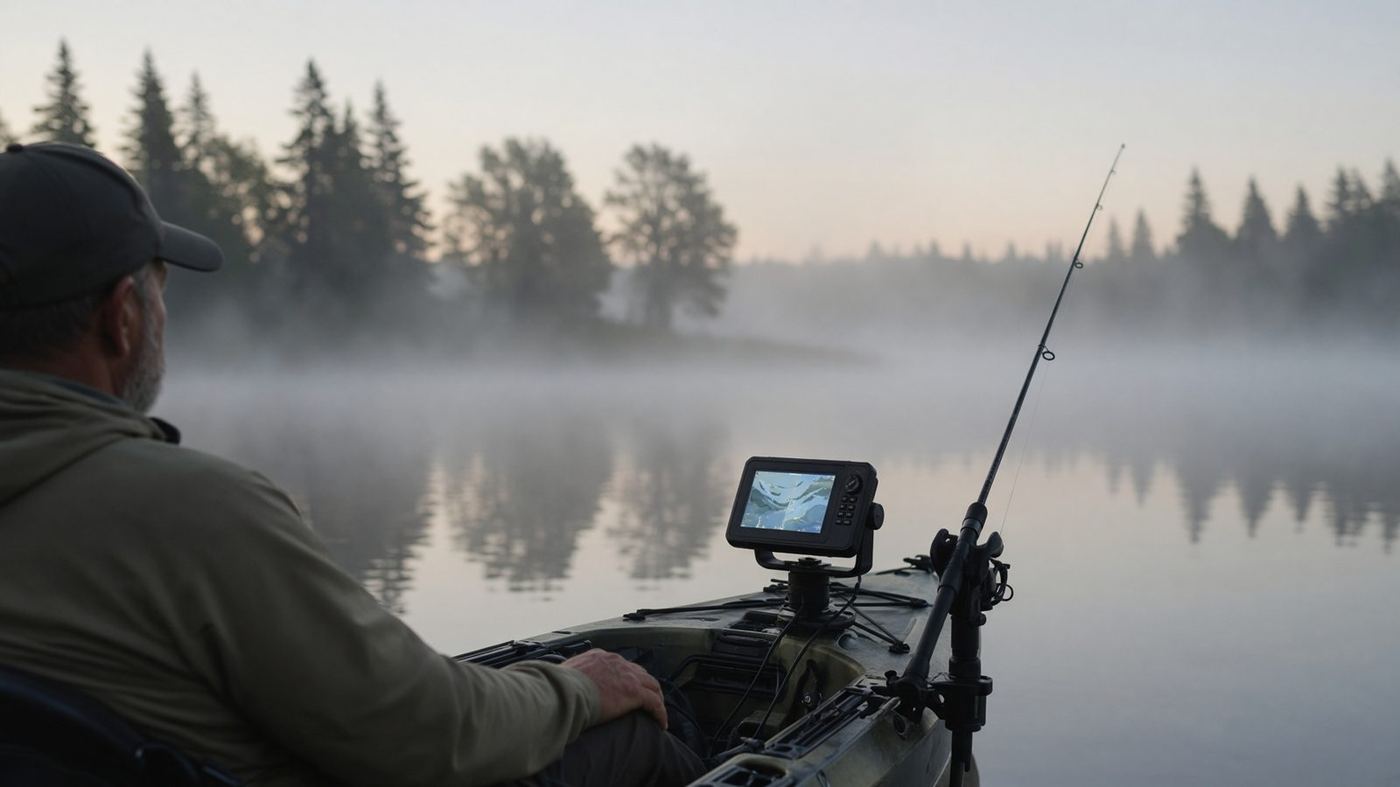
Buy a Garmin Striker 4 if you can mount a transducer and want CHIRP plus GPS waypoints. Buy a portable Lucky or HawkEye for a kayak or rental. Turn fish icons off once you can read the column.
Key takeaways
- CHIRP and a clean transducer beat a giant washed-out screen.
- GPS waypoints are how you find last month’s brush pile.
- Portables are for hulls you cannot drill.
- Spend the next $100 on the mount and battery, not on inches of display.
A fish finder under $200 is not a $2,000 split-screen GPSMAP. It is a sonar you can mount on a kayak, a jon boat, or an ice bucket and actually understand. In 2026 the Garmin Striker 4 is still the unit we tell beginners to buy, because CHIRP, GPS waypoints, and a screen you can read in glare beat a 7-inch no-name display that paints fireworks and calls it fish. The Striker Plus 4 is the same idea with a slightly nicer map-and-waypoint story. Humminbird’s Helix 5 is the stretch unit that drifts under $200 on sale and gives you a bigger picture.
Short version. Buy the Striker 4 if you have a 12-volt source or a small lithium pack and you want waypoints plus a real sonar graph. Buy the Striker Plus 4 if the extra mapping features are on sale. Buy a portable Lucky or HawkEye Fishtrax if you fish from a kayak, a rental, or ice and you need the transducer on a suction cup, a float, or a shoot-through kit. Do not buy fish icons as a personality. Turn them off once you can read arches.
This page is the budget gate. If you want side-imaging, mapping, and a networked head unit, you are on the wrong URL — start with fish finders under $300 or kayak fish finders and be honest about the mount. Ice anglers should also read ice-fishing flashers because a flasher and a graph are different tools even when they share a brand.
What do you actually need under $200?
CHIRP beats a single-frequency ping for separating bait from a bass hugging the same depth. GPS is how you mark the brush pile you will not find again by “that tree.” A 3.5-inch screen is enough if the resolution is honest and the backlight works at dawn. Buttons you can hit with gloves beat a touchscreen you cannot. IPX7 is the water spec you want when the unit lives in a splash zone.
Transducer placement is the review nobody wants to do. A transducer that is in turbulence, cavitating, or aimed at the hull is a $200 paperweight. On a kayak, a scupper or an arm mount that sits the puck in clean water is the whole install. On a boat, the transom bracket should sit flush, below the hull line, and not behind a strake. 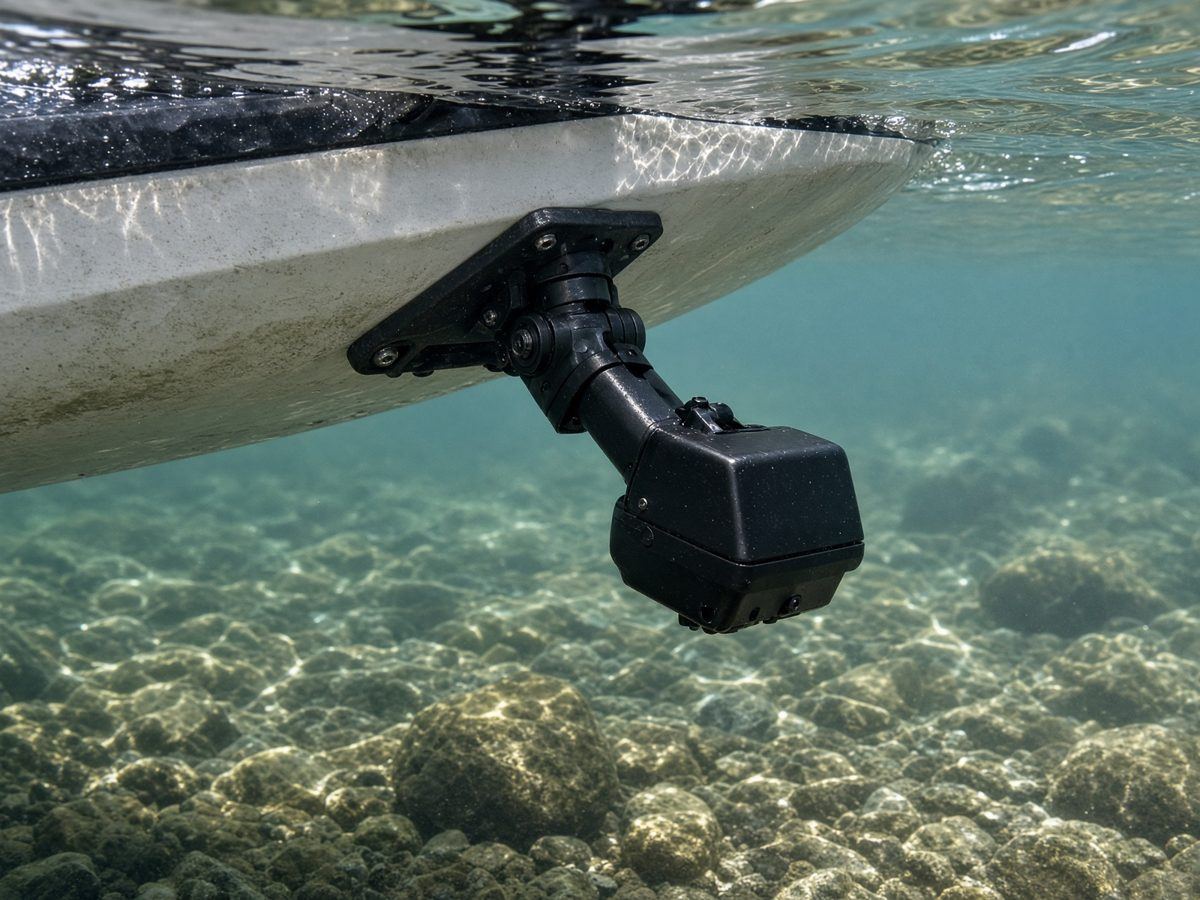
Garmin Striker 4 and Striker Plus 4 — the default under $200
The Striker 4 is the unit that made “budget fish finder” mean something. CHIRP, GPS, 3.5-inch color, a keyed interface, and enough waypoints that you can mark a season of brush. It draws little current. It has a flasher mode that ice anglers actually use. It does not come with lake maps. That is the trade, and it is the correct trade at this price. The Plus 4 adds a Quickdraw-style mapping story and a slightly more “I paid for GPS and I want to see it” display without jumping into the $300 class.
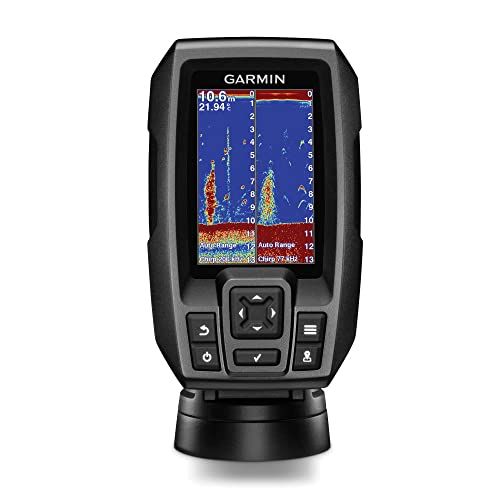
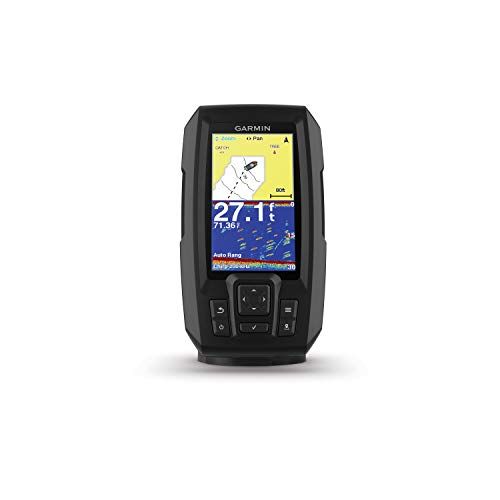
Turn fish symbols off after week one. Learn to read the column. A-scope is the live look at what is under the puck right now; the graph is history. Gain until you see bait without painting the whole screen green. If you ice-fish, a portable kit and a lithium 7- to 12-amp-hour battery is the grown-up version of “I’ll use lantern batteries.” See planning an ice trip before you freeze a cheap SLA in a bucket.
Humminbird Helix 5 G2 — the sale-price stretch
The Helix 5 is not always under $200. When it is, it is the unit people mean when they say they want a bigger picture without buying a full console. Dual-beam or CHIRP depending on the SKU, a screen you can actually share with a partner, and a menu that a lot of used-boat owners already know. If the listing is a Helix 5 with side-imaging at this price, read the fine print. That feature is how the under-$300 page starts.
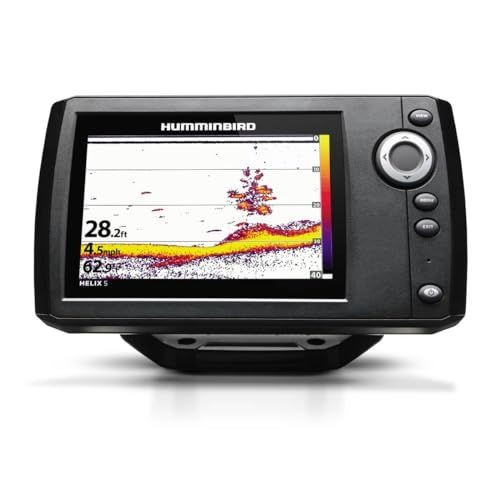
If the used boat already has a working Helix, learn it before you rip it out for a Striker. If you are buying new and the Helix is back over $250, the Striker 4 is still the cleaner 2026 default because of GPS waypoints at this price. For more water judgment that is not on the screen, where a fish finder actually works is the next read.
Lucky FF718 and HawkEye Fishtrax — kayak, rental, and ice portables
A wired transom unit is the wrong tool on a rental jon boat and on a lot of kayaks. Castable and portable units with a transducer you can throw, suction-cup, or dangle exist so you can see bottom without drilling a hull. The screens are smaller. The sonar is simpler. They still beat guessing. The Lucky FF718 is the wired-and-wireless portable people actually pack. The HawkEye Fishtrax 1C is the compact ice-and-kayak look at depth and fish without a Garmin-sized commitment.
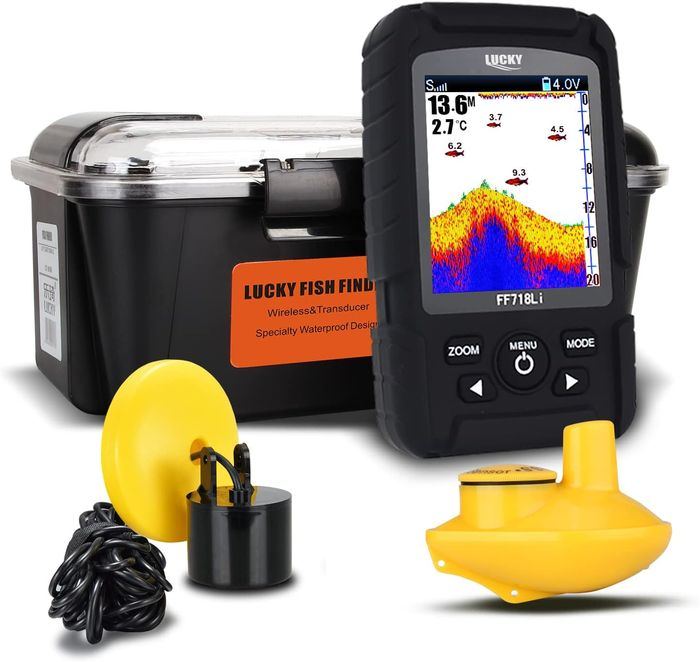
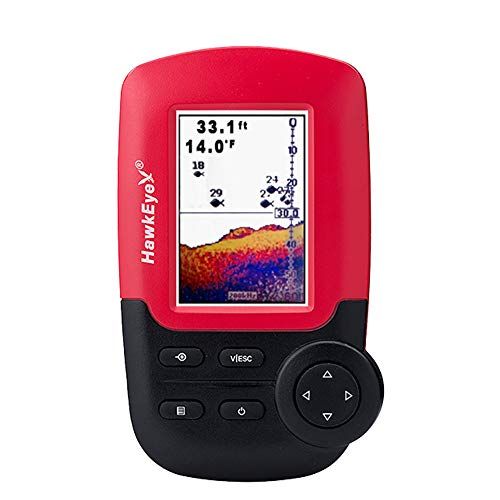
These will not replace a Striker on a boat you own. They will save a kayak day when you do not want to mount a ram arm yet. Pair them with kayak fishing safety and a life jacket you actually wear — a finder in the drink is cheaper than you in the drink. On ice, a flasher is still faster for jigging a hole. A graph in flasher mode plus a portable battery is how a lot of people start without buying a dedicated $600 Marcum.
How do you read the screen without lying to yourself?
Bottom is the hard line. Soft bottom looks fuzzy; hard bottom looks sharp. Bait is speckle. Fish off the bottom are arches or dashes depending on speed and cone. At idle over a brush pile you should see a chimney of returns, not a cartoon fish. Speed on the GPS, if you have it, tells you whether the graph is smearing. If you run 20 mph and expect arches, you will see dashes and then decide the unit is broken.
Glare: a visor, a hood, or a screen that can punch brightness. Cheap units wash out at 10 a.m. on a Florida lake. That is not “the fish left.” That is physics. For more water judgment, water skills and how windy is too windy belong in the same dry-bag as the unit’s manual. Ice-fishing fish finders is the winter-specific version of this page when the hole is the whole fishery.
| Unit | Best for | GPS | Install |
|---|---|---|---|
| Garmin Striker 4 | Most boats and kayaks with 12V | Yes | Transom / ice kit |
| Garmin Striker Plus 4 | Same, with extra mapping tools | Yes | Transom / ice kit |
| Humminbird Helix 5 G2 | Bigger screen on sale | Varies by SKU | Transom / console |
| Lucky FF718LiC | Kayak, rental, portable | No | Throw / suction / wired |
| HawkEye Fishtrax 1C | Ice and compact looks | No | Portable |
Install and power without cooking the unit
Use fused power. A direct jump to a cranking battery with no fuse is how you own a melted lead. A small lithium pack in a dry bag is how kayaks run a Striker all day. Keep the transducer cable out of the propeller arc. Do not zip-tie it so tight the insulation cuts. On a transom, the puck should be in clean water at idle and at speed — if it blows out at 15 mph, lower it a hair or it is behind a strake.
Kayak, jon boat, and ice — three installs
A kayak wants a RAM-style arm or a scupper mount and a battery in a dry bag, not a transom bracket hanging in the prop wash of a hull that has no transom. The Striker 4 is still the unit. The mount is the review. If you do not want to drill, a Lucky or HawkEye on a suction cup or a dangle transducer is how you see bottom on a rental. See kayak fish finders when you are ready to commit a track mount.
A jon boat wants the transom puck below the hull line, a fuse, and a place to see the screen without standing up in a chop. Glue-on mounts fail in heat. Bolts and backing plates do not. Ice wants a portable kit, a lithium pack that is not a dying SLA, and a transducer that can look down a hole without painting the ice as bottom. Flashers still win for jigging. A Striker in flasher mode is how you start. Starting ice fishing is the rest of that kit.
Do not buy a 7-inch no-name “touchscreen fish finder” from a marketplace listing with stolen photos. You will spend the day fighting glare and a menu that was translated twice. The Striker 4 is small on purpose. Learn it. The upgrade path is a unit under $300 or a side-imaging unit when you can say what the 3.5-inch screen failed to show you, not before.
When should you leave the under-$200 aisle?
When you want side imaging, LakeMaster or Navionics mapping you can navigate on, or a screen two people can see without huddling. That is under $300 or the side-imaging page, not a bigger no-name 7-inch. When you run a real console and you want the unit to talk to a motor and a second screen. When ice is your whole winter and a dedicated flasher will save you time over a Striker you keep converting.
Networking, transducers that cost as much as this whole page, and Carbon or Solix-class units are a different sport. You will know you are ready when you can say what the Striker 4 did not show you on a specific pile, not when a YouTube ad told you that 3.5 inches is for children. The Striker 4 is how a lot of good anglers still mark fish. The limit is usually the person, then the transducer placement, then the screen.
Our pick: Garmin Striker 4, fish icons off, A-scope on when you are over the spot, a transducer in clean water, and a dry bag for the power lead. Buy the Plus 4 when the mapping extra is cheap. Buy the Helix 5 when it is actually under $200 and you want more screen. Spend the next $100 on a better mount and battery, not on a 7-inch screen with worse sonar.
A first-month checklist so the unit is not a paperweight
Week one: mount the transducer in clean water, fuse the power, and run at idle over a known brush pile or a creek channel you can see with your eyes. Confirm the depth matches. If the number is a fantasy, the puck is in turbulence or aimed at the hull. Move it before you blame CHIRP.
Week two: turn fish icons off. Mark three waypoints you can find without the unit. Come back and see if the graph agrees with your memory. That is how you learn whether you trust the screen. Riverside spots plus a waypoint is a fishery. A screen full of icons and no waypoint is a toy.
Week three: ice or kayak day with a portable battery if that is your boat. If the unit dies in an hour, the pack was too small or the lead was wrong. Fix power. Do not buy a bigger screen to solve a battery. Rinse the pins after salt. Store the puck dry. That is the whole maintenance list at this price.
Frequently asked questions
What is the best fish finder under $200?
The Garmin Striker 4 is still the default: CHIRP, GPS waypoints, a screen you can learn, and a flasher mode. The Striker Plus 4 is the same idea with extra mapping tools. Portables are for kayaks and rentals that cannot take a transom mount.
Do cheap fish finders work in saltwater?
Yes, if the transducer is rated for it and you rinse the unit and plug after the trip. Salt does not care about your budget. Rinse the pins. Do not store the puck in a wet well.
Should I use fish icons?
Use them for a week if you are new, then turn them off. Icons hide the raw column. Learning arches and bait speckle is how you stop fishing cartoons.
Will a $150 unit work on a kayak?
Yes, with a clean transducer mount and a small lithium pack. A scupper or arm mount beats a transom bracket hanging in turbulence. If you do not want to mount anything yet, a portable Lucky or HawkEye is the on-ramp.
Fish finder or flasher for ice?
A flasher is faster for jigging a hole. A Striker in flasher mode plus a portable battery is how a lot of people ice-fish without buying a dedicated $600 unit. See our flasher guide if ice is the whole season.
Is the Humminbird Helix 5 really under $200?
Sometimes, on sale. Treat it as a stretch unit with a bigger screen. If the live price is back in the mid $200s, the Striker 4 is the cleaner buy on this page.