
Best Kayak Fish Finders (2026)
Written by John Wren|
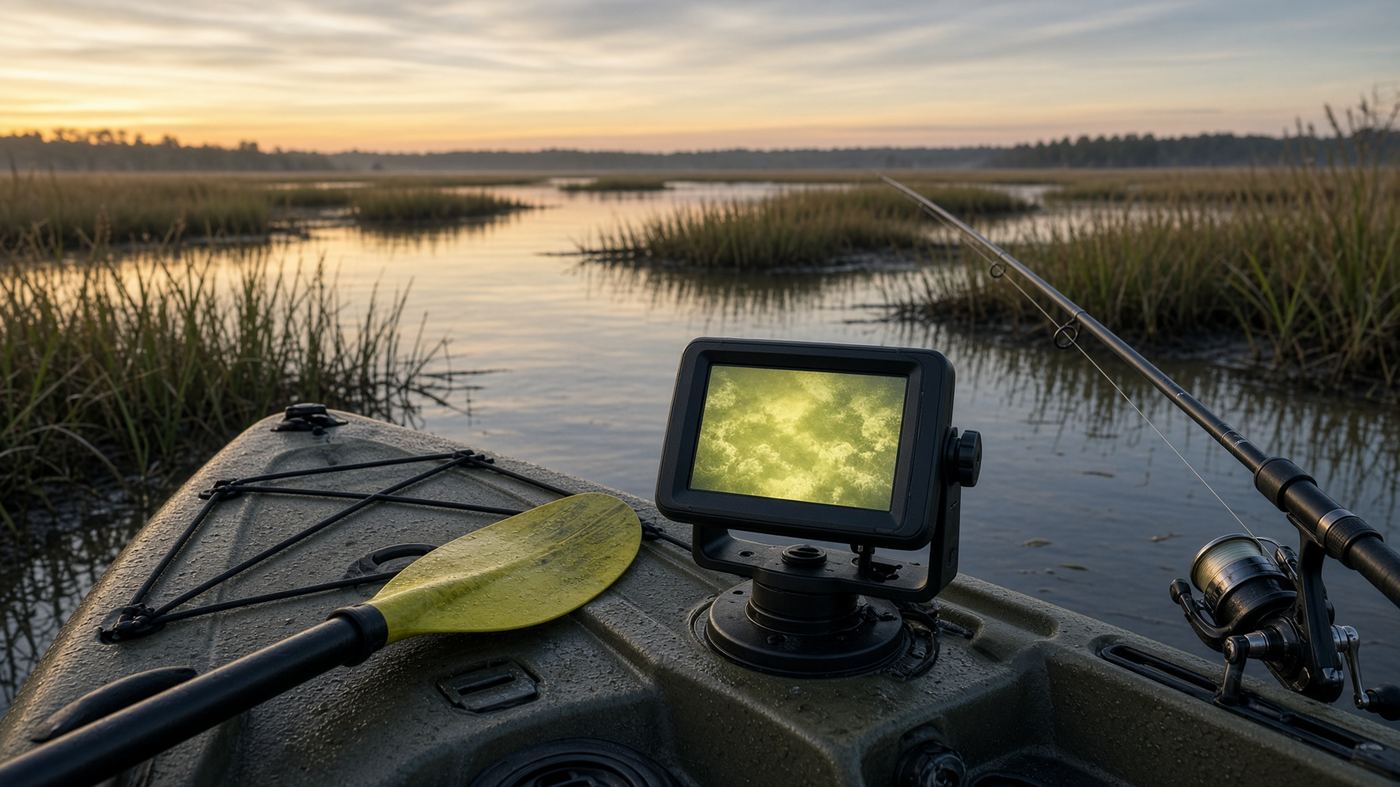
Buy a Garmin Striker 4 or Striker Plus 4 for a first kayak graph. Buy a Humminbird Helix 5 if you want a larger screen and you will ram-mount it. Fuse the battery. Keep the transducer wet. Wear a PFD.
Key takeaways
- Small screen, real mount.
- Fuse the lead.
- CHIRP and waypoints beat fish-ID toys.
- The hull still matters more.
A kayak fish finder is a small screen, a transducer that stays wet, and a battery you fused so a short is not a swim. “Best” on a listing is often a 9-inch graph that belongs on a bass boat. In 2026 the honest Amazon on-ramp is still a Garmin Striker 4 or Striker Plus 4: CHIRP, GPS waypoints, a 3.5-inch screen you can actually mount on a rec SOT. Humminbird Helix 5 is the step-up when you already know a screen and you have the deck.
Short version. Buy Striker 4 if you want simple CHIRP and waypoints under $150-class money. Buy Striker Plus 4 if you want the dual-beam kit people already trust. Buy Helix 5 if you want a bigger picture and you will ram-mount it like a grown-up. The hull still matters more. The under-$200 finder page is the cousin. Check live prices. We do not invent numbers.
This page is kayaks. A console graph on a 20-foot boat is a different fuse. Kayak safety did not become optional because CHIRP exists. PFD on. A screen is not a life jacket.
What actually matters on a kayak graph?
Size you can glance at without burying the bow. A transducer mount that survives a beach and a skip. Power: a 7–12Ah lithium with a fuse, not a mystery USB brick. GPS waypoints if you will return to a brush pile. CHIRP if you want arches instead of blobs. Side imaging is a luxury that wants a hull and a transducer placement you will actually get right. Year one: down and 2D.
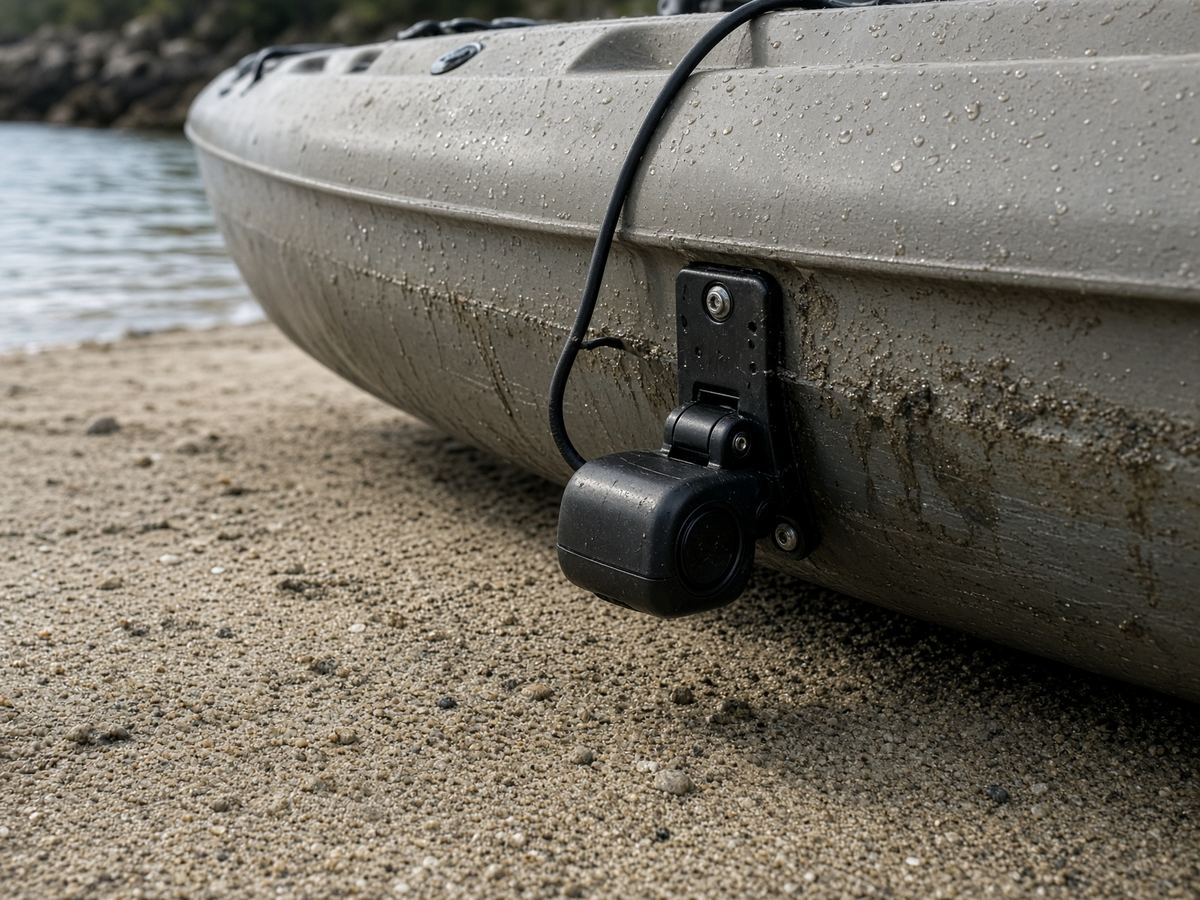
Mount: a RAM or equivalent that is rated, not a suction cup from a car. Through-hull and scupper mounts exist. A hanging transducer on a stick is how people lose $200 on a skip. Fuse the positive. A short in a puddle is a melt. Straps still get you to the ramp. The graph does not.
Striker 4 and Striker Plus 4 — the kayak default
Striker 4 is the 3.5-inch keyed Garmin with CHIRP, a waypoint map, a flasher mode, and a current draw a small battery can live with. Plus 4 adds the dual-beam kit and the Quickdraw-style mapping story a lot of yak anglers actually use. Neither is a Helix 9. Both will mark a brush pile and show you a fish if you learn to read. Fish-ID symbols are training wheels. Learn the arch.
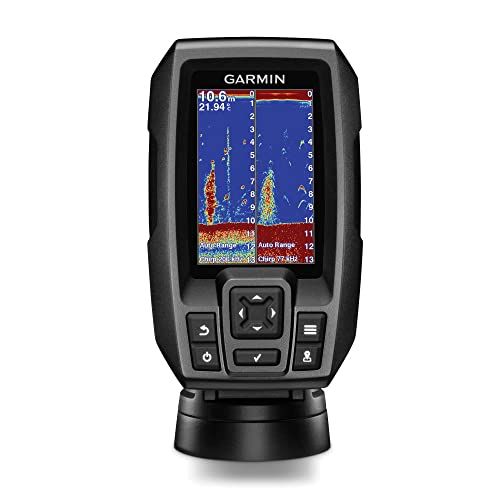
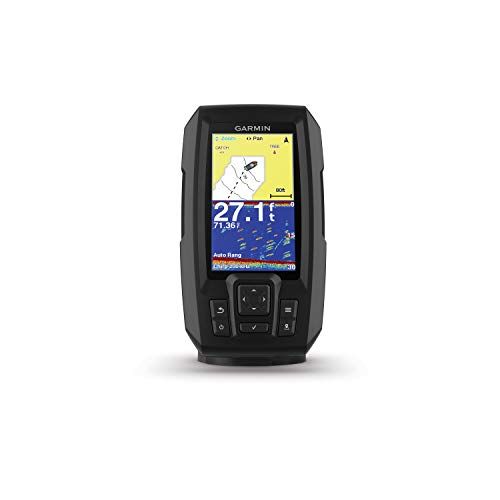
Ice and a bucket: the same 4-inch Garmin is a flasher. A kayak in July is the other job. One screen, two seasons, if you will actually take it off the yak. A dedicated ice unit is the ice page.
Helix 5 — when the deck and the brain are ready
Humminbird Helix 5 G2 / CHIRP is the 5-inch step-up: a picture people already know, MEGA or CHIRP depending on SKU, a menu you can learn. Confirm the transducer in the box. A Helix 5 DI/SI wants a mount that is not a joke. If your hull is a 10-foot Pelican, a 5-inch is plenty. If you wanted SI, you also wanted a transducer placement you will test in July, not on a tournament Saturday.
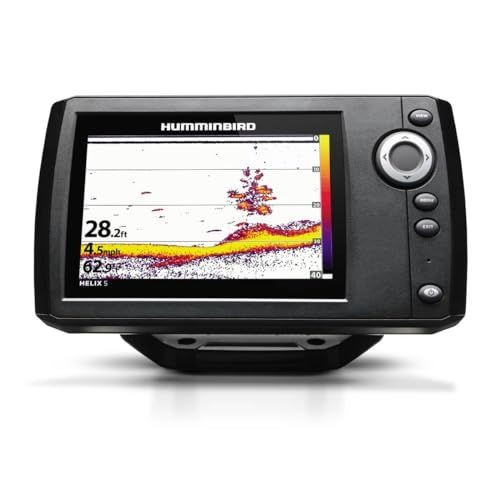
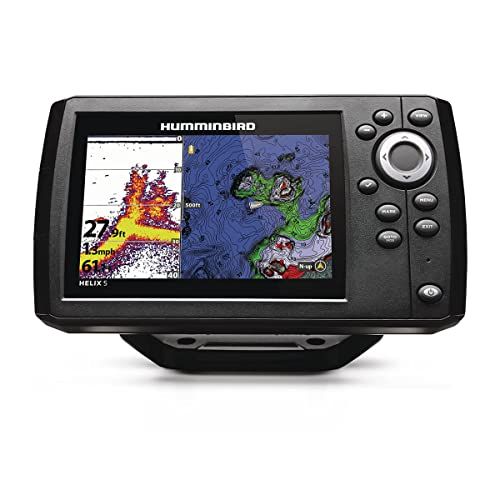
| Finder | Best job | Watch-out |
|---|---|---|
| Garmin Striker 4 | First kayak graph, waypoints | Small screen. Learn arches. |
| Garmin Striker Plus 4 | Dual-beam kit, mapping story | Still a 4-inch. Fuse it. |
| Humminbird Helix 5 | Bigger picture, you know menus | Confirm the transducer SKU. Mount it. |
Our pick: Striker 4 or Plus 4 for year one. Helix 5 if the deck is ready. Fuse. PFD. Check live prices. We do not invent numbers.
What kayak-sonar mistakes look like a swim with a 9-inch TV?
A console graph on a rec SOT. Weight, wind, a screen you will protect with your body in a skip. Start at 4 inches. The hull still turns the trip. A finder will not save a paddle you cannot use in wind — stay in.
No fuse. A short in a puddle is a melt and a hole in a hull. Waterproof connections. Off at the truck. A USB power bank as a “12-volt” is a brown-out and a reset in a fish.
Transducer on a stick you never lashed. A skip and $200 is in the grass. Scupper and through-hull mounts exist. Test in July. Opening Saturday is a bad classroom. PFD on before the graph turns on.
A first graph morning that is still a paddle
Mark a brush pile. Return. That is GPS. Read an arch. That is sonar. Fish-ID is a cartoon. Learn to ignore it. Sensitivity until the clutter is clutter and the fish is a fish. A flasher mode if you will jig vertically. Ice is a bonus, not the reason to buy a yak unit.
Ram mount that is rated. Screen where a paddle stroke does not punch it. Brightness at noon. A cover if it lives on the deck in rain. Rinse salt. Under $200 still applies. Kayak is the mount. Same cheap lessons.
When to buy Helix 5: you already read a Striker and you have deck. When to stay Striker 4: year one, waypoints, a battery you fused. Check live prices. We do not invent numbers. Paddle first. Screen second.
Rinse, a fuse, and the graph that is done
Salt and mud. Rinse the transducer. A crust is a crusty picture. Off at the truck. A battery you leave on is a dead battery at 5:30 a.m. The hull still gets you home. A graph does not paddle.
Software: update at the house, not at the ramp on one bar. A micro-SD you lose is a map you thought you owned. Quickdraw-style mapping is a bonus if you will actually idle a shoreline. It is not a reason to skip learning a flat with your eyes.
What we skipped: 12-inch MEGA as a first yak graph, $2,000 LiveScope as year-one, and a suction-cup mount. Check live prices. We do not invent numbers. Striker 4 or Plus 4 to learn. Helix 5 if the deck is ready. Fuse. PFD. That is 2026, including the 3.5-inch Garmin that actually marks a brush pile you return to.
Two-screen kits are how people stall: a 4-inch they never learned and a 7-inch they bought in February. One screen, a season of arches, then a bigger picture if the fishing is the thing you hate about the display — not the thing you hate about your credit card. The fish did not read the listing.
A last word on kayak sonar: a 4-inch Garmin you can actually mount, a transducer that stays wet, a battery you fused. Striker 4 or Striker Plus 4 for year one. Helix 5 if you already know a screen and you have the deck. The hull still matters more. Check live prices. We do not invent numbers. A 9-inch graph on a rec SOT is a television you will swim with. Start small. Learn arches. Then spend.
Learn a flat without a screen first. A finder will not save a paddle you cannot turn. Safety did not become optional because CHIRP exists. PFD on. Fuse the lead. Mount it so a flip is not a lawsuit of wire.
Arches, clutter, and the cartoon fish-ID
Turn fish-ID off once you can. An arch is a fish if it looks like an arch. A blob is a blob. Sensitivity until the bottom is a bottom and the grass is grass. The under-$200 page is the same lesson on a bigger boat. Kayak is the mount and the battery. Same eyes.
GPS: mark, return, do not trust a waypoint you took while drifting 40 yards. Idle. Mark. A brush pile you cannot find again is a story. Quickdraw-style maps are a bonus if you will idle a shoreline. They are not a substitute for looking at the bank.
Night: a screen is a lamp. Dim it. A light for other boats is a different lamp. A graph on high at 9 p.m. is a beacon. Fish if it is legal. Be seen. Come home.
A cart check before you click
Transducer in the box, a mount you have a plan for, a fused battery, a size that fits the deck. CHIRP. GPS if you want waypoints. Side imaging only if you will place the transducer. A 9-inch listing on a 10-foot yak is a television. Check live prices. We do not invent numbers.
Our last cart: Striker 4 or Plus 4, a RAM-class mount, a fused lithium, a cover. Helix 5 if you already read a screen and you have the deck. PFD on before the graph. That is 2026 kayak sonar, including the 3.5-inch Garmin that actually marks a pile you return to — which is the whole point of a waypoint, and not a reason to skip paddling a flat with your eyes first.
A fuse, a mount, and a paddle
Fuse the positive. A puddle short is a melt. RAM-class mount, not a suction cup. Transducer lashed. Test in July. PFD on before the graph. A 9-inch TV on a rec SOT is a swim you will take with a screen.
Learn arches. Fish-ID is a cartoon. Mark a pile, return. The hull still turns you into the wind. A finder will not paddle. Stay in when the forecast is a sail.
Striker 4 or Plus 4 for year one. Helix 5 if the deck is ready. Check live prices. We do not invent numbers. Paddle first. Screen second. That is kayak sonar in 2026, including the 3.5-inch Garmin that actually earns a waypoint you can find again — which is the whole job of a cheap graph, and not a reason to skip looking at the bank with your eyes.
A last check at the ramp: fuse in, transducer wet, PFD on, a screen dim enough not to billboard a night, a paddle leashed. If you cannot turn the hull without a thought, the graph is a television. If the battery is a mystery USB brick, the graph will die in a fish. If the mount is a suction cup, the graph will swim. Rated mount. Fused lead. Then fish. Then rinse. Then off at the truck so 5:30 a.m. still has a volt. A last word: if you have never marked a stick in July, do not buy a 9-inch graph in March. Learn a 4-inch. Then spend. The fish did not read the listing, and the hull still has to get you home.
Frequently asked questions
What is the best fish finder for a kayak?
A compact CHIRP unit you can mount and power: Garmin Striker 4 or Striker Plus 4 for most people. Helix 5 if you want a larger screen and you have the deck.
Do I need side imaging on a kayak?
Not year one. Down and 2D teach you to read. Side imaging wants placement and a hull that can carry it.
How do I power it?
A dedicated fused lithium, not a mystery USB brick. Waterproof connections. Off at the truck.
Striker 4 or Helix 5?
Striker 4 if you want simple and small. Helix 5 if you want a bigger picture and you will learn the menu.
Can I use it for ice fishing too?
Many 4-inch Garmins have a flasher mode. A dedicated ice unit is nicer. See the ice-flasher page.
Will a fish finder make me catch fish?
It will show you depth and structure. You still have to paddle, present, and not swim. A screen is not a limit.