
Public-land grouse the second week of September
Written by John Wren|
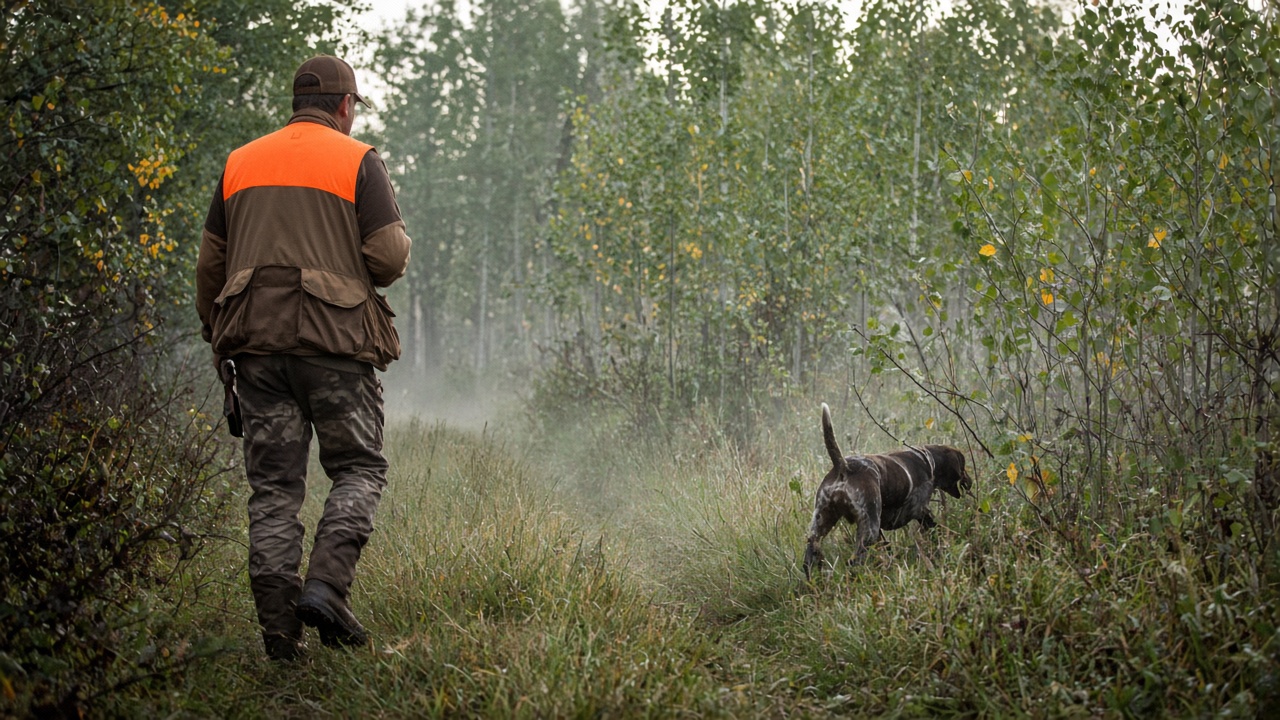
Hunt thick young aspen and alder on public land the week many northern seasons open. Wear a vest that carries birds and water, gaiters for briar, a merino crew you will not cook in, and a paper map of the unit. Buy the shotgun from a licensed dealer.
Key takeaways
- Second-week birds still sit in leafy cover you would rather walk around.
- A vest carries water and birds so both hands stay on the gun.
- Gaiters beat shredded calves; merino beats a wet cotton shirt.
- Mark the truck on paper. The shotgun stays at a licensed dealer.
The second week of September is when a lot of northern public land actually opens for ruffed grouse, and the birds have not yet heard a week of truck doors. Leaves are still a roof. Young-of-the-year grouse are still in loose family groups. The walk is warm, the cover is thick, and the hunter who treats it like a November pheasant field will walk past birds that never flushed. The short answer: hunt the nasty aspen and alder you can still get through, carry water and a way to mark the truck, and slow down until a flush is a surprise at your feet — not a rumor two ridges over.
Short version. Walk public aspen, alder, and the edge of a cut that still has leaves. Wear a vest that carries birds and a bottle. Put gaiters on before the raspberry cane eats your calves. Layer for a sweaty walk and a cold lot. Carry a paper map of the unit you actually parked in. Pair this with public-land hunting habits and upland boots you will walk miles in. Check live prices. A 20-gauge or a field pump comes from a licensed dealer, not this page.
This is a field note, not a secret-unit list. Minnesota, Wisconsin, and Michigan still hang a lot of their grouse openers on the middle of September. Western units may already be a week in. New York and Pennsylvania wait later. Read the regulation PDF for the dirt under your tires. The week is the same skill everywhere the leaves are still on: you hunt cover you can barely see through, and you share the two-track.
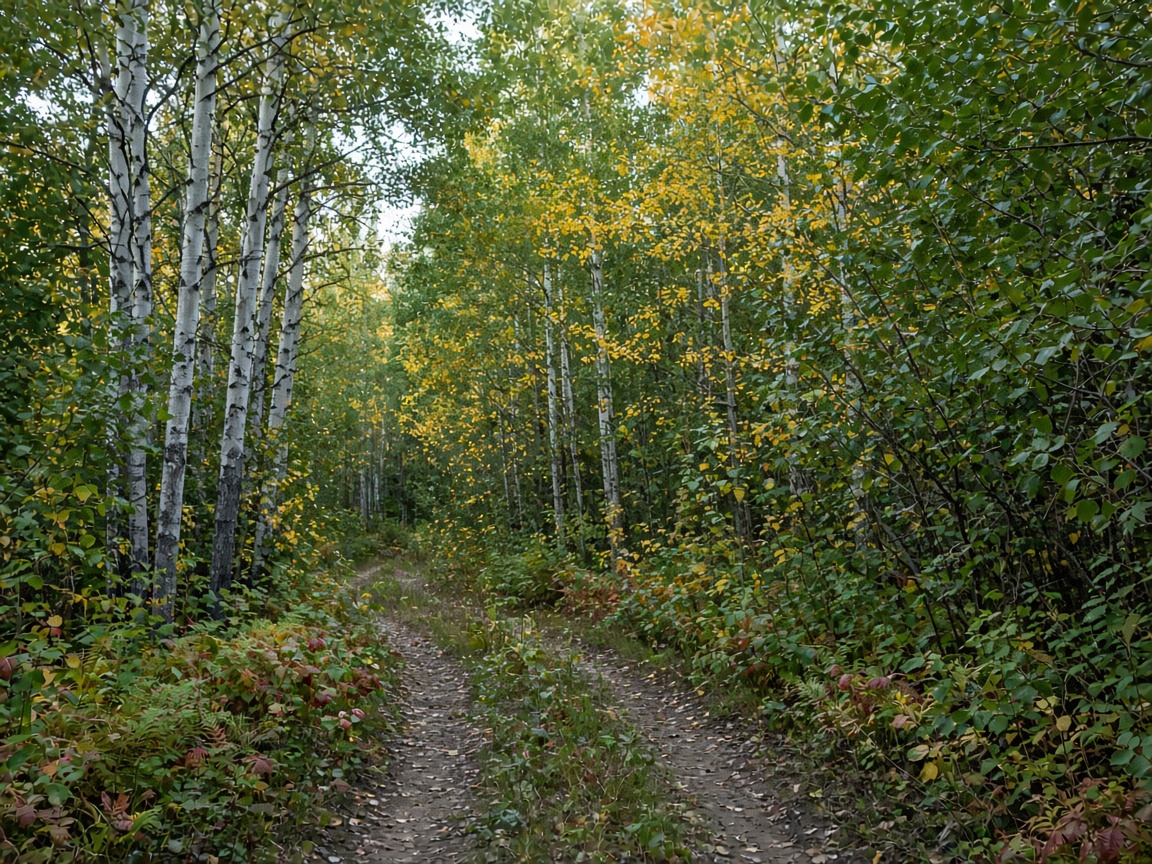
The second week is when the birds are still honest
By the third Saturday in October, a popular public lot has educated every grouse within a half-mile of the gravel. The second week of September is the opposite. A lot of units have been quiet since spring. Young birds have not watched a pointing dog work a trail. Adult birds have not yet been bumped three mornings in a row. That does not make them stupid. It makes them still in the cover they used all summer — thick, leafy, and closer to the road than they will be after opening weekend becomes a habit.
Family groups are the early-season tell. You hear a soft cluck, then a burst, then another. One flush is information. Two or three in a twenty-yard bowl is a brood. Do not chase the first bird into the next section like it is the only grouse in the county. Slow down. Mark the spot. Work the edges of that bowl again. Early birds hold tighter than late birds that have been shot at. The hunter who walks a ridge line at three miles an hour will hear flushes behind them all morning.
Heat is part of the week. Fifty-five at the lot can be seventy-five in a cut by 11 a.m. Grouse loaf in shade and thickets in that weather. Midday is not dead if you are willing to crawl into the nasty stuff. Early and last light still matter. The middle of the day matters more than it will in October, because the birds have not yet been pushed onto north slopes by pressure and frost.
Hunt the leafy cover you want to skip
Ruffed grouse in early September live where you cannot see twenty yards. Young aspen, alder runs, the edge of a five-to-fifteen-year cut, a creek bottom that still has leaves, a forgotten logging spur that grew in. Open mature hardwoods look like hunting. They are a walk. The bird is in the stuff that grabs your vest.
Public land adds a second problem: the easy edge by the lot is a parade by 8 a.m. on a Saturday. Shared ground rewards the extra mile. Park once, well, and without blocking a gate. If the lot is a circus, drive to the next two-track. Flexibility is the opener skill. A private alder run can reward stubbornness. A public cut rewards people who will change the plan.
Western grouse — ruffed in the creek bottoms, dusky or spruce higher — still want the same honesty in the second week. The leaves are on. The birds have not been hunted every weekend since Labor Day in every unit, but the popular trailheads have. Walk off the obvious path. Know which forest the map actually names. Upstate New York public woods is the later-opener cousin of this week; the cover logic is the same once those leaves start to turn.
A vest carries birds, water, and shells so your hands stay free
Early-season grouse is a walking hunt with both hands on a gun. A backpack that you have to shrug off to drink is how people skip water until they are a heat story. A game vest with a rear bag, shell loops you can find without looking, and a bottle pocket is the piece that matches the job. Blaze on the shoulders is manners on public land when the next hunter is eighty yards away in the same aspen.
The Allen Springer Upland Vest is the live canvas vest we named: blaze shoulders and pocket flaps, a front-loadable game bag with a blood-resistant lining, elastic shell loops, and two zippered front pockets for a license, a glove, and the snack you will actually eat. It is not a turkey chest pack. It is not a hiking daypack. It is the vest you zip over a merino layer and forget until a bird is in the bag. Check live prices.
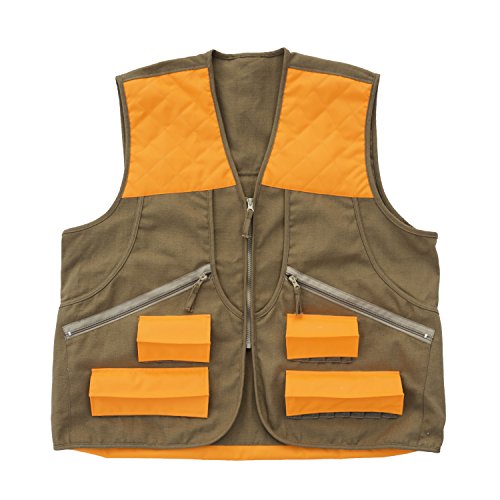
Size it over the layer you will actually wear at 7 a.m., not a t-shirt in a store. A vest that binds when you mount is a vest you will fight all morning. Unload the game bag when you hit the truck — early-season birds warm fast. A hunting pack is the longer-carry sibling if the walk is a mountain and the vest is not enough water. For this week in aspen, the vest is the product.
Gaiters keep briar and dew off the boot you still have to walk in
Second-week cover is raspberry, dewberry, and alder that will cut a calf through jeans. Full thigh-high briar chaps are the right tool if your unit is a wall of thorn. A lot of public-land grouse hunters in this week wear a snake gaiter that covers the boot and lower leg — wet cane is the daily problem, and snakes are a maybe, not a Texas story.
Crackshot Snake Guardz are the live gaiters we named: a hard shin guard with straps, blaze so you can find them in a dark truck, built to stop a fang and, in practice, to stop the cane that shreds a pant. They are hotter than bare nylon. They are not a 17-inch snake boot. Put them on for the first two hours in the nasty stuff; take them off at the truck if the afternoon is a gravel two-track. Check live prices.
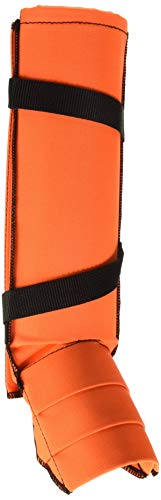
Snake boots if the country is actually copperheads or timber rattlers and you want the shaft built in. Gaiters over a broken-in Wingshooter-class leather is the cooler early-September fork. Tape the first hot spot before the cane rubs a blister through a wet sock. Blister logic is the same as a trail day. Cotton socks are still a blister.
Layer for a sweaty walk and a cold lot, not a catalog stack
The second week lies. The lot is a fleece. The cut is a sauna. The sit you take at 10 a.m. to drink water is a chill if a breeze hits a wet cotton shirt. Base, mid, shell is the rule. Cotton stays in the truck. A merino crew next to skin moves the sweat you will make walking alder. A light fleece in the vest pocket goes on at the truck, not at 7 a.m. in the cover.
The Smartwool Classic All-Season Merino Base Layer Crew is the live shirt we named: a lightweight merino crew you can hunt in at fifty degrees and not cook in at seventy. It is not a 250-gram winter thermal. It is the September weight. Wear it under the vest. Vent the vest zipper on the climb out of a creek. Check live prices.
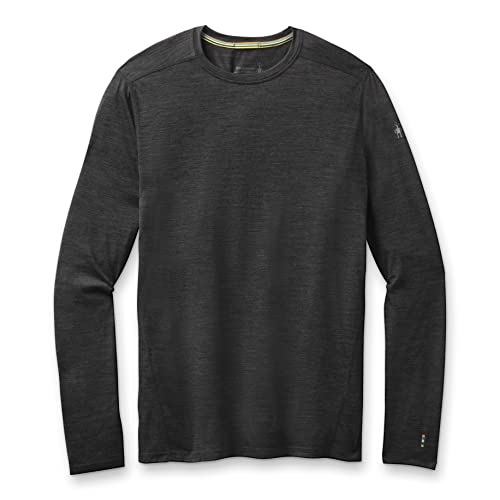
A shell belongs in the truck or the vest if the forecast is a real rain, not if the app said “partly.” September squalls soak a mid and then the walk out is a shiver. Put the shell on a little too warm. Pants you will actually hike in beat fashion camo that binds at the knee. The merino is the layer card. The zipper is the skill.
A paper map still works when the phone dies in the alder
Public grouse country is a maze of two-tracks that look the same after two hours. A pin on a phone is not a plan if the battery is a rumor and the alder ate your signal. Mark the truck. Mark the last sure road. Mark the unit boundary. Trespass by sloppy GPS is still trespass. Know which layer in the app is the current wildlife area, and carry a paper backup of the state you actually parked in.
The DeLorme Minnesota Atlas & Gazetteer is the live paper we named for the classic mid-September opener: topographic pages, state forest and WMA tint, a lat/long grid you can still use with a cheap GPS if you have to. Buy the gazetteer for the state under your tires — Wisconsin, Michigan, Idaho, Montana — not a Minnesota book because this sentence named Minnesota. Check live prices.
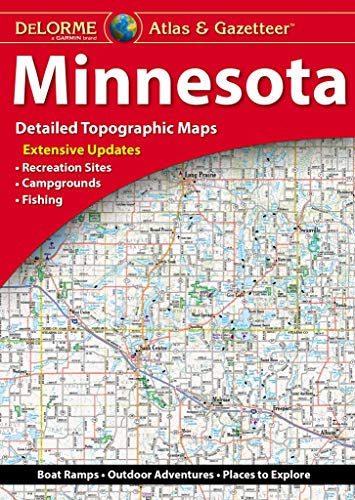
Write the lot name on the map before you leave the hood. Write the time you will turn around. A lamp is for the walk that went long, not a spotlight on a bird. If you cannot reverse the route in the dark, you do not have a route. That is navigation, not toughness.
The gun is a 20-gauge or a field pump from a licensed dealer
Early grouse shots are close, fast, and often through a hole the size of a dinner plate. A 20-gauge over-under or a field-stock 12-gauge pump that you have already patterned is the usual answer. Buy it from a licensed dealer — a Browning, a Beretta, a used 870 or 500 that already fits you. This page will not put a shotgun or a box of shells on Amazon. If the gun is a working pump, the pump page is the field-stock conversation.
Choke is tighter than people think they want until they miss a bird at fifteen yards in a leaf tunnel, and more open than they want when a bird towers in a cut. Improved cylinder is the boring early-season start. Pattern the gun at the range you will actually see a bird, not a twenty-yard brag. Identify the bird, the background, and the space beyond. Public aspen can hide another hunter. If you cannot take the shot safely, you do not have a shot. Unload for the deadfall and the truck.
Dogs, other trucks, and the lot at first light
A dog that hunts with you is the early-season advantage: a nose in cover you cannot see, a point that lets you step in instead of walking past. A dog that ranges out of the unit is how opening week becomes a lost-dog afternoon. Keep the first two hours closer than your pride wants. Water the dog more than you water yourself. Early heat drops dogs faster than it drops people.
Without a dog, hunt slower and hunt smaller pieces. Work a fifty-yard alder finger like it is the whole morning. Pause. Take two steps. Pause. Grouse that have not been educated will sit. You will feel foolish. You will also get a flush at your feet instead of a roar behind you. A short loop with a kid is the same pace, plus blaze and a rule about the muzzle.
Other hunters are part of the habitat. You will hear a slam at 6:10. You will see blaze in the cut you wanted. Give space. Do not walk a line of people at first light. Do not glass a person like they are a rack. A nod and a new two-track are how crowded units stay usable. The hunter you crowd today is the one who finds you on a bird later and remembers.
Find birds by sound, then by the nasty fifty yards
Leaves hide birds and they hide you. Listen more than you scan. A grouse moving in dry aspen is a tick, then a burst. A drumming log is a spring story; in September you are listening for the flush you almost missed. When a bird goes, mark the tree, not the sky. Grouse do not fly to the next county. They drop into the next thicket. Walk there. If the bird is hit, the job is the retrieve, not a speech in the lot.
Cuts have edges. The edge of a young aspen stand against a tag alder run is better than the middle of either. Old logging decks grow raspberries and clover. Grouse use them at first and last light. Midday they slide back into the shade. Do not invent a food-plot theory for a bird that eats buds and bugs and whatever the cut grew. Hunt the cover.
A clean tag is a normal second-week day. The skill is a better map in your head, a note about which spur was a parade, a boot that needs tape, a vest pocket that should have held a second bottle. People who only count birds stay beginners. People who count what they learned come back the next Saturday dangerous in the good way. A first deer checklist is a different season; the manners are the same. Paper first. A plan to get out. No trophy trash.
The week is a walk you can still feel in your legs
Public-land grouse the second week of September is leafy cover, an honest vest, gaiters for the cane, a merino you will not cook in, and a map that still works when the alder eats the signal. The gun stays at a dealer. The birds are still in family groups if you slow down. The lot is shared. The empty day is still a skills day.
If the miles are the hole, start with upland boots and tape. If the heat is the hole, start with the merino and water in the vest. If the unit is the hole, start with the gazetteer for the state you parked in. Check live prices. We also do not invent a honey hole. The cover is the access.
Also in the magazine
Keep going with public-land hunting habits, upland hunting boots, layering that is not cotton, and field-stock pumps. Check live prices.
Frequently asked questions
When is the second week of September a grouse opener?
In much of Minnesota, Wisconsin, and Michigan the ruffed grouse season opens around mid-September. Western units may already be open. New York and Pennsylvania wait later. Read the regulation for the state you parked in.
Where do grouse sit when the leaves are still on?
In thick young aspen, alder, and the edges of recent cuts — cover you cannot see twenty yards through. Open mature woods look like hunting and are usually a walk.
What vest are you naming?
The Allen Springer Upland Vest — blaze shoulders, a front-loadable game bag, shell loops, and pockets for water and a license. Check live prices.
Do I need snake chaps for September grouse?
You need something between briar and your calves. We named Crackshot Snake Guardz gaiters for the boot and lower leg. Full thigh-high chaps if the cover is a wall of thorn. Snake boots if the country is actually fangs.
What should I wear in early-season heat?
A merino crew next to skin, a vest you can vent, and a fleece that stays in a pocket until the lot. We named the Smartwool Classic All-Season crew. Leave cotton in the truck.
Can I buy the shotgun on this page?
No. A 20-gauge over-under or a field pump comes from a licensed dealer. This page will not list a shotgun or shells on Amazon.