
Backpacking tent vs hammock and tarp
Written by John Wren|
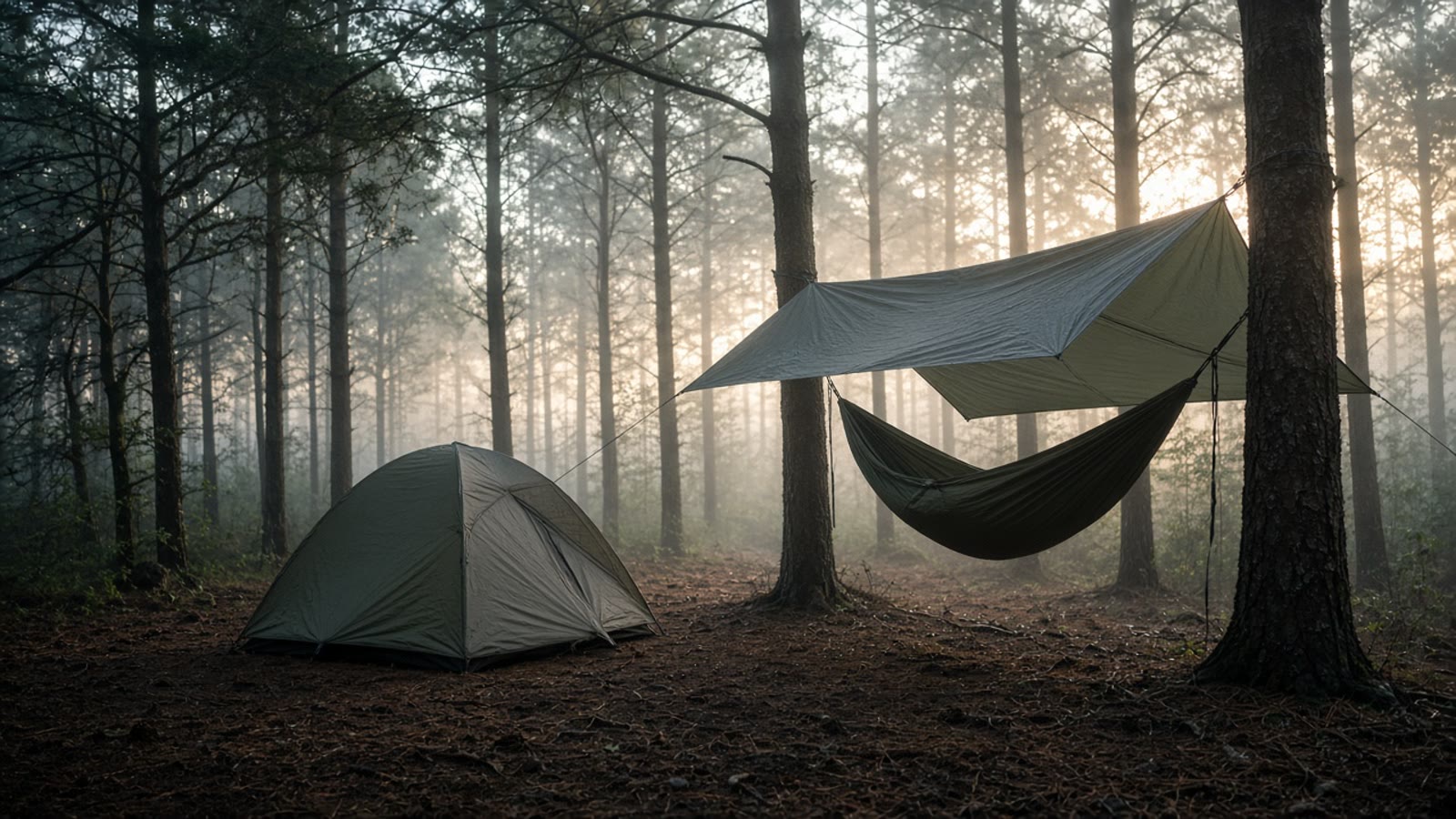
A backpacking tent is the default because it pitches on dirt, rock, and a designated pad. A hammock and tarp wins in eastern woods if you add a real tarp and an underquilt. Do not skip insulation either way.
Key takeaways
- Tent first for mixed trips and open ground.
- Hammock only with a tarp and under insulation.
- Weigh the whole hang, not the stuff sack.
- Live trees only — walk a hazard.
A backpacking tent vs a hammock and tarp is not a lifestyle argument. It is a tree argument. If your miles are alpine, desert, or a site with a fire ring and no trunks, buy the tent. If your miles are eastern hardwood, a national forest with two stout trees, and you already sleep cold on the ground, buy the hammock and a real tarp. Most people should own the tent first. The hammock is the second shelter, not a replacement for a floor when the trees disappear.
Short version. A backpacking tent is a floor, a bug net, and a site you can pitch on dirt, gravel, or a pad. A hammock and tarp is a hang, a quilt or underquilt, and two trees that will not kill you. A camping tarp is half the hammock system. A dangerous tree is the other half. Check live prices on the hang kit. A dedicated backpacking tent still comes from a shop that stocks MSR, Big Agnes, Nemo, or the equivalent — packed size and a fly-first pitch, not a car-camp dome.
Who should buy a tent, and who should buy a hammock-tarp?
Buy a backpacking tent if you camp above treeline, on beaches, in desert basins, on snow, with a dog that will not hammock, or with a partner who wants a door. Buy a hammock-tarp if you already hike the East, the South, and the wet woods, you hate rocks in the hip, and you will actually hang a tarp every night — not just the hammock on a clear evening. Buy both if you travel: tent for the West week, hammock for the Appalachian weekend.
Nights in the 40s change the math. A hammock without an underquilt is a refrigerator. A three-season tent without a pad is a different refrigerator. The shelter does not replace insulation. A bag or quilt that matches the season still has to exist. Site manners still apply: you do not girdle trees, and you do not take the last flat pad if a tent is the honest pitch.
| Trip | Backpacking tent | Hammock and tarp | Our call |
|---|---|---|---|
| Alpine, desert, beach, snow | A floor on whatever is there | No trees, or bad trees | Tent |
| Eastern hardwood, wet woods | Works, fights roots | The hang it was invented for | Hammock if you insulate under |
| Two people, one shelter | A two-person tent is still simpler | Two hangs, two tarps, or a wide hammock fight | Tent unless both already hang |
| Bugs | Net is the door | Need a bug net hammock or insert | Whichever has a net you will use |
| Leave-no-trace on a pad | Stay on the pad | Hang off the pad if trees allow | Follow the site rules |
Weight on the scale is not the whole story. Add underquilt, straps, and tarp before you claim the hammock is lighter.
When is the backpacking tent the obvious shelter?
Whenever the ground is the site. A designated pad in a national park. A gravel pull-off. A beach. A ridge with krummholz that will not take a strap. A winter trip where you need a vestibule for a stove. A dog. A kid. A partner who does not want to learn a structural ridge line at dusk. The tent is also the shelter you can pitch in a headlamp without hunting for a second tree that is the right distance.
A car-camp dome is a different tent. Buy a real backpacking tent from a shop that will talk about packed size, fly-first pitches, and a footprint: MSR Hubba-class, Big Agnes Copper Spur-class, Nemo Hornet-class, or the used version of the same idea. Freestanding helps on rock. Non-freestanding saves weight if you will stake. A one-person is a coffin that packs small. A two-person is how most people still sleep on a week-long trail. A pillow and the hike kit still have to fit around it.
The floor is the feature people forget until the first rain. A hammock has no floor. Gear lives in a pack under a tarp or in the hammock with you. A tent keeps a wet dog, a wet shell, and a stove in a vestibule. If your trip is a wet week in the Olympics or a Virginia winter rain, that floor is the reason you still have dry socks. Overnight essentials still include the stove and the water, not just the fly.
When is the hammock-tarp the better night?
When two healthy trees stand 12 to 15 feet apart, the ground is a root ball or a slope, and you already know you sleep cold on a pad. A hammock gets you off rocks, off ants, and off the puddle that forms in a tent bathtub at 2 a.m. It also gets you into a different wind. You will need a tarp every night you cannot trust the sky. A hammock without a tarp is a hammock you will remember as a story, not a system.
The Wise Owl Outfitters double camping hammock is the live packable nylon hang we name: a gathered-end hammock that stuffs into a small bag with tree straps, not a patio stand and not a cotton circus stripe. Check live prices. Hang it with straps, not a thin rope that bites cambium. Look at the tree before you load it — a dead top, a lean, fungi at the flare, and you walk.
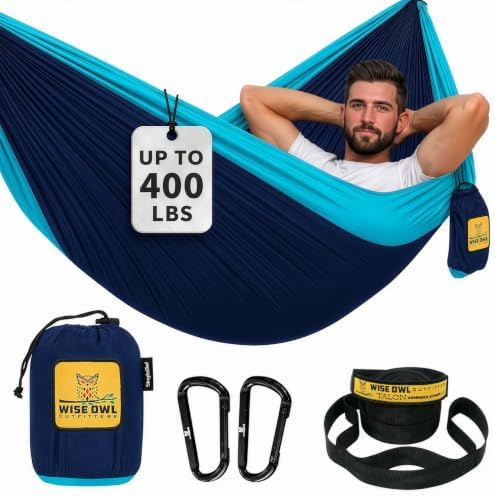
A double hammock is not automatically a two-person sleep. Two adults in a gathered-end hammock is a shoulder fight. Treat it as a wide solo unless you already know you like a shared hang. Bug net: buy a hammock that includes one or add an insert. Eastern nights in June without a net are a donation to the mosquitoes.
The tarp is the roof. The hammock is only the bed.
A hammock system that “saves weight” and then skips the tarp is how people get hypothermia in a 50-degree rain. Pitch a rectangle as a ridgeline A-frame or an asymmetric diamond that covers head and pack. Stake it. Guy it. Leave a draft if you need it, close it if the wind is a hose. The tarp page is the longer fabric conversation: coated ripstop for a hang, polyethylene only as a cheap groundsheet you do not sleep under.
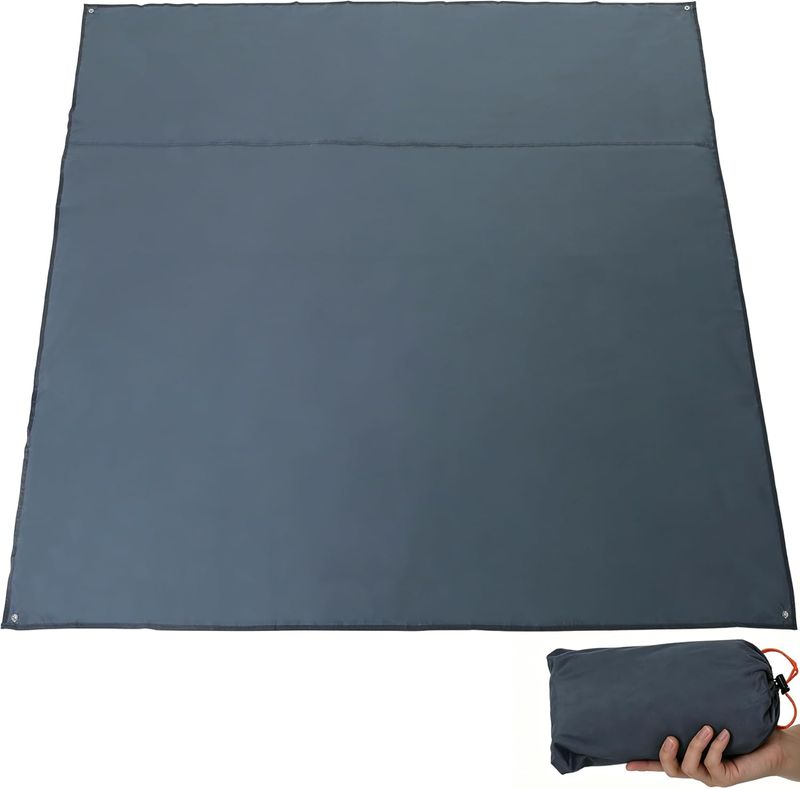
The REDCAMP waterproof camping tarp is the live packable nylon rectangle we name for a hammock roof or a tent vestibule porch: light enough to stuff, with corner grommets you can actually guy. Check live prices. Add your own line. Learn a trucker’s hitch before the trip, not in a squall.
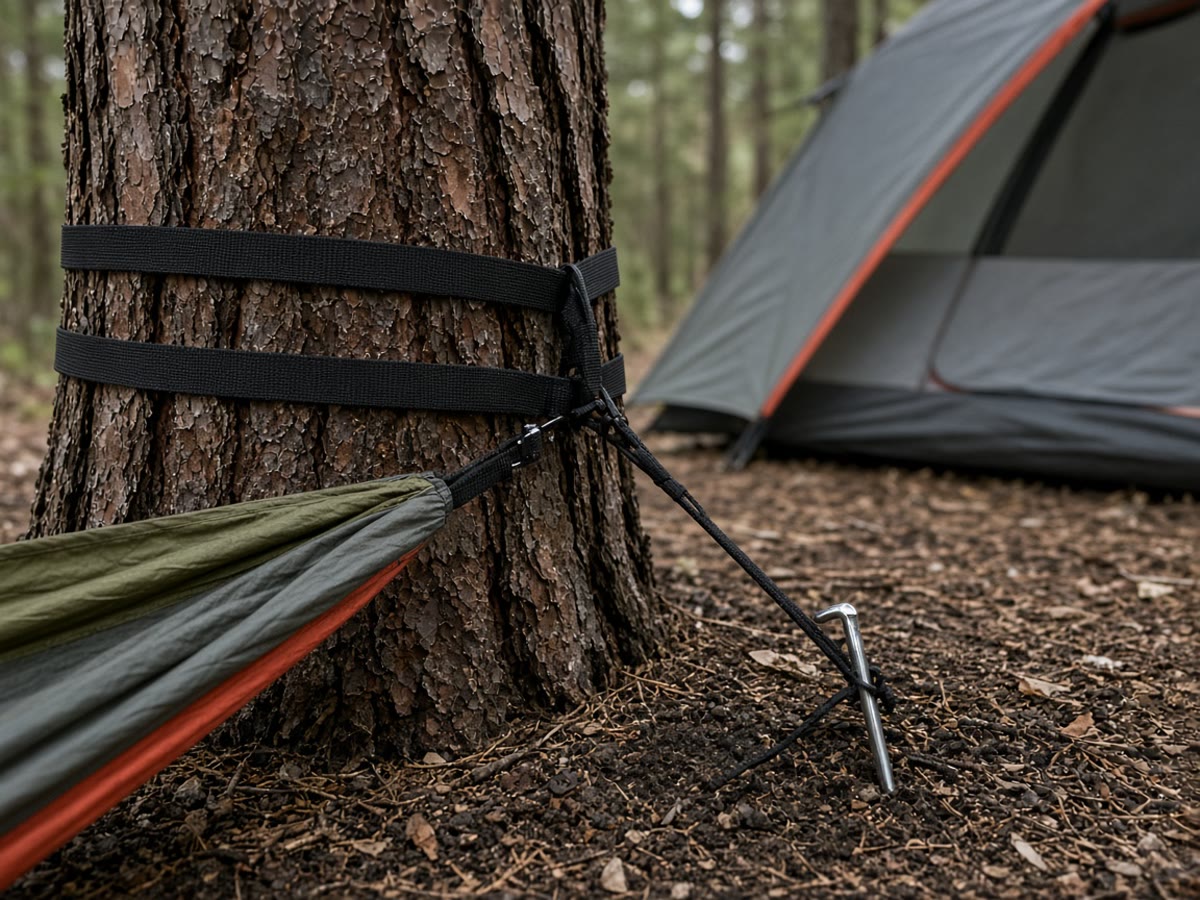
Do not tie a ridgeline to a tree with bare cord. Use a strap or a padded loop. A shiny scar on a beech is how a ranger learns your name. Camping etiquette is still: pack out, stay off a closed site, and do not cut limbs to make a hang that was never there.
Ground pads and underquilts are not optional
Sleeping off the ground does not make you warm. Air under a hammock is a wind tunnel. A sleeping pad laid in a hammock slides, bunches, and leaves your shoulders in a gap. An underquilt hangs under the hammock and actually works. A top quilt or a bag with the zipper managed can handle the rest. In the 40s you want both. In the 20s you want a winter underquilt and a plan B tent.
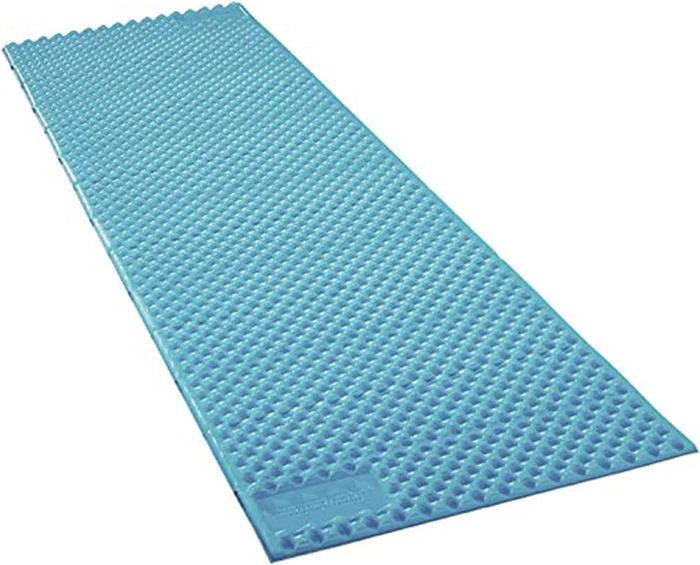
Tent sleepers still need a pad. The Therm-a-Rest Z Lite Sol is the live closed-cell pad we name: a folding foam you can sit on at lunch, put under a bag in a tent, or use as a crazy-woman sit pad when the hammock is the bed. Check live prices. It is not an underquilt. Do not pretend a Z Lite in a hammock replaces one. It is the tent-floor and sit-kit piece of this comparison.
Woods-camping mistakes include skipping insulation because the app said 55. The app is a parking-lot temperature. Your hammock is a wind tunnel at 3 a.m. Pack the quilt you would pack for a tent, then add the under insulation the tent floor was faking.
Is a hammock actually lighter?
A hammock, straps, bug net, tarp, stakes, and underquilt often weigh as much as a one-person tent and a short pad. The hammock wins on packed shape and on sleep quality over roots. The tent wins on site flexibility and on two-person math. Weigh the system you will actually carry, not the hammock stuff sack on a product page that forgot the tarp.
A two-person tent is almost always lighter than two hammock systems. Couples who both hang are making a comfort choice, not a gram choice. That is allowed. Just do not sell it as ultralight. Pack essentials still include water, food, and a layer. The shelter is one line on that list.
How do you pick a hang that will not fail?
Live wood, thick enough that you cannot span it with two hands, 12 to 15 feet apart, with a hang angle around 30 degrees from horizontal. Not a widowmaker. Not a tree on a slope that will dump you into a creek. Not a pair of saplings you hope will grow. If the only trees are marked hazard or wrapped in “no hanging” tape, you have a tent night. Parks and some wilderness areas ban hammocks or require straps. Read the order. A forum report is not the order.
Hardwood miles are the classic hang. A western burn scar is not. A beach is not. A designated pad in Yosemite is a tent, full stop. The best hammock campers still carry a tiny tarp-and-bivy backup or they turn around when the trees disappear. Ego is heavier than a one-pound fly.
So which shelter should you buy first?
Buy the backpacking tent first if you take mixed trips. Buy the hammock-tarp first only if your next twelve nights are in trees you already trust and you will buy the underquilt in the same cart. Our default remains the tent. The hammock is how you stop hating roots once the tent already lives in the closet.
If the trees are the whole trip, start with the Wise Owl hang, the REDCAMP tarp, and an underquilt from a hammock shop. If the ground is the whole trip, start with a backpacking tent from a dealer and the Z Lite for the floor. Check live prices. Inspect the kit before the first night, not in a lot at dusk.
Also in the magazine
Keep going with camping tarps, dangerous trees, overnight essentials, and cold September nights. Check live prices.
Frequently asked questions
Should I buy a backpacking tent or a hammock first?
A tent, unless your next dozen nights are in trees you already trust. A tent still pitches on dirt, gravel, snow, and a designated pad. A hammock needs two live trees and a tarp every wet night.
Is a hammock lighter than a tent?
Not once you add tarp, straps, bug net, and underquilt. Weigh the whole system. A hammock often wins on packed shape and sleep over roots, not on grams.
Do I need an underquilt?
If the night will drop into the 50s or below, yes. A pad in a hammock leaves gaps. The Z Lite we name is for tent floors and sitting, not as a hammock underquilt replacement.
What hammock and tarp should I buy for a first hang?
Wise Owl Outfitters packable nylon hammock with straps, and a REDCAMP packable tarp as the roof. Check live prices. Hang with straps, not a thin rope.
Where do I buy a backpacking tent?
A shop that stocks packed size and fly-first pitches — MSR, Big Agnes, Nemo, and the like. A car-camp dome is a different tent.
Can two people share one hammock?
A double hammock is usually a wide solo. Two adults is a shoulder fight unless you already like a shared hang. A two-person tent is the simpler couple shelter.