
Best Backpacking Pillows (2026)
Written by Kara Parker|
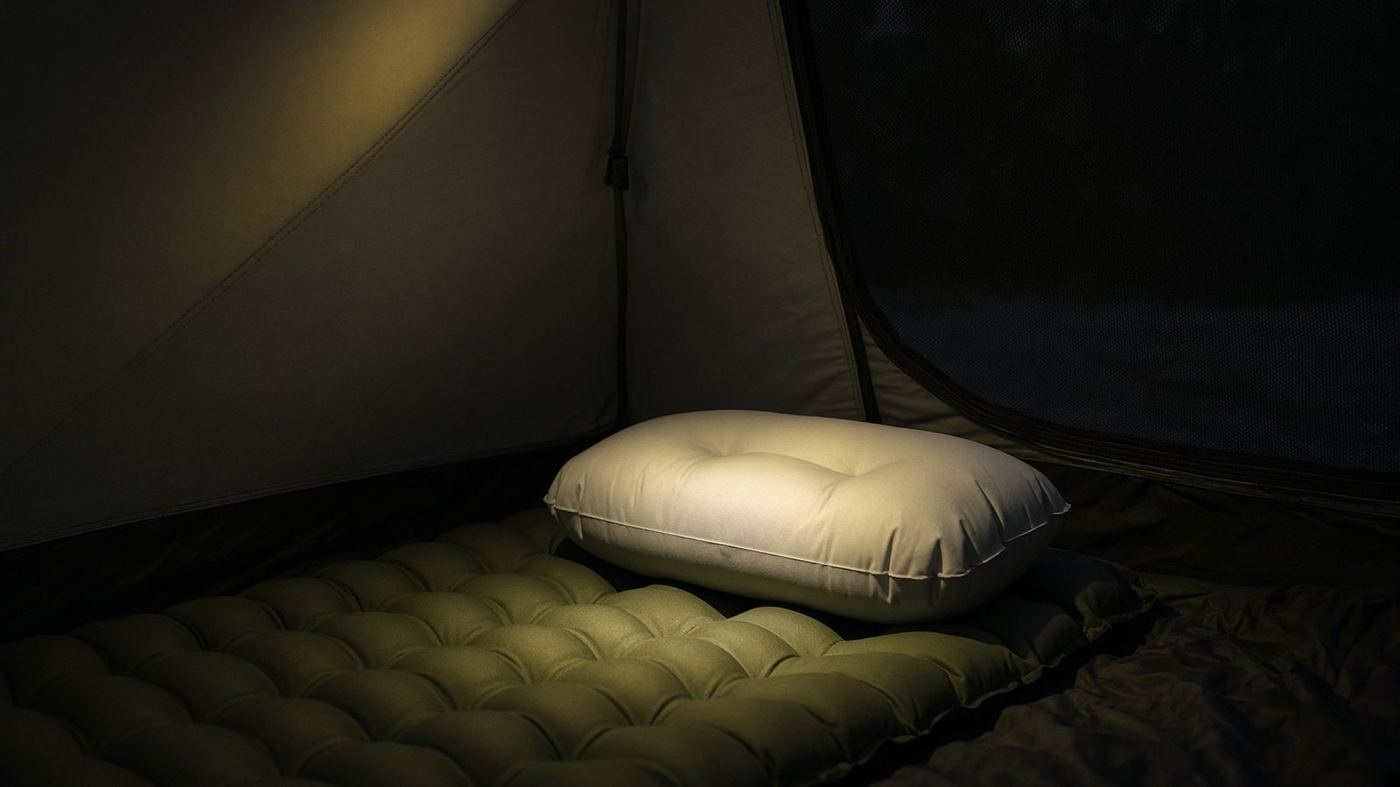
Buy a compressible foam pillow (Therm-a-Rest) if you want quiet, pillow-like sleep. Buy an inflatable (TREKOLOGY, Klymit) if ounces win. Strap it to the pad so it does not migrate at 2 a.m.
Key takeaways
- Four to eight ounces is a backpacking pillow. Heavier is car camp.
- Inflatable packs smaller and crinkles. Foam sleeps more like home.
- Slick nylon on a slick pad will slide. Use a strap or a cover.
- Do not store an inflatable crushed in a hot garage.
A backpacking pillow is how you stop using a stuff sack full of dirty clothes as a neck stand. The good ones weigh a few ounces, stuff to an apple, and stay put on a sleeping pad. The bad ones leak by 2 a.m., slide onto the tent floor, and teach you that “ultralight” can mean “you should have brought the clothes bag.”
Short version. Buy a compressible foam pillow like the Therm-a-Rest if you want quiet, no valves, and a shape that feels like a real pillow. Buy an inflatable like TREKOLOGY or Klymit if ounces and pack size win. Buy TETON or REDCAMP if you car-camp and you want a bigger cushion that does not belong in a 40-liter pack. Pair the pillow with a pad from sleeping pads and a bag that actually matches the night, not a fleece and hope. Sleeping outside is the rest of the system.
Weight targets: 4 to 8 ounces is a backpacking pillow. Over 12 ounces is a car-camp pillow wearing a backpacking label. Inflatable pillows pack smaller and sleep colder and noisier. Foam-fill compressible pillows pack larger and sleep more like home. Side sleepers need height. Back sleepers need less. Stomach sleepers should steal a jacket and stop shopping for a three-inch pillow that will crank the neck.
What makes a backpacking pillow worth the ounces?
It stays on the pad. A slick nylon shell on a slick pad is a night of chasing. Look for a slightly tacky face, a strap, or a cover you can put a shirt over. It holds air or loft until morning. A valve you can operate with mittens matters in the shoulder season. A sewn baffle that does not go banana-shaped when you fill it matters more than the color.
Height is personal. Two to four inches is the backpacking window. If you need a giant hotel pillow, you are car camping, and that is allowed — just do not carry it 12 miles. Inflatable hiking pillows is the sibling page if you already know you want air. This page is the mix: foam, air, and camp.
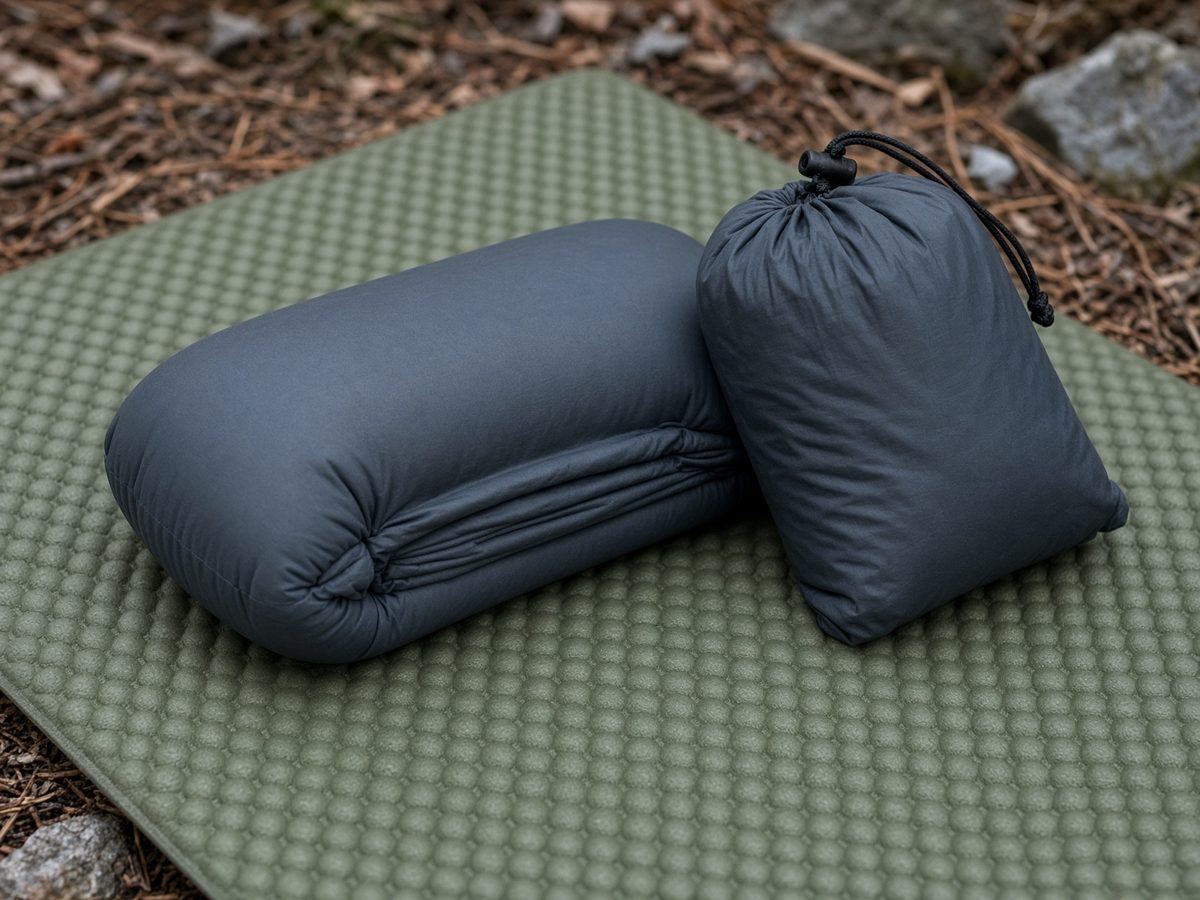
Therm-a-Rest compressible vs TREKOLOGY inflatable
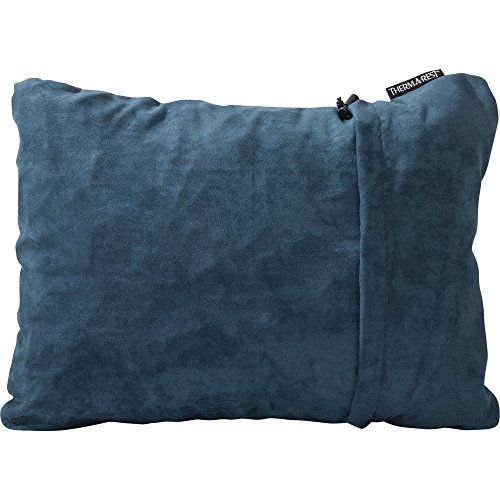
Therm-a-Rest’s compressible pillow is the one we send people to when they hate the crinkle of air bladders. Foam fill, a cover that feels like a pillowcase, and a stuff-it-down pack size that is larger than an inflatable and quieter than one. TREKOLOGY’s ultralight inflatable is the ounce play: blow it up, sleep, dump it in the morning. It will slide if you let the nylon sit on a nylon pad. Put a beanie under it or a strap around the pad.
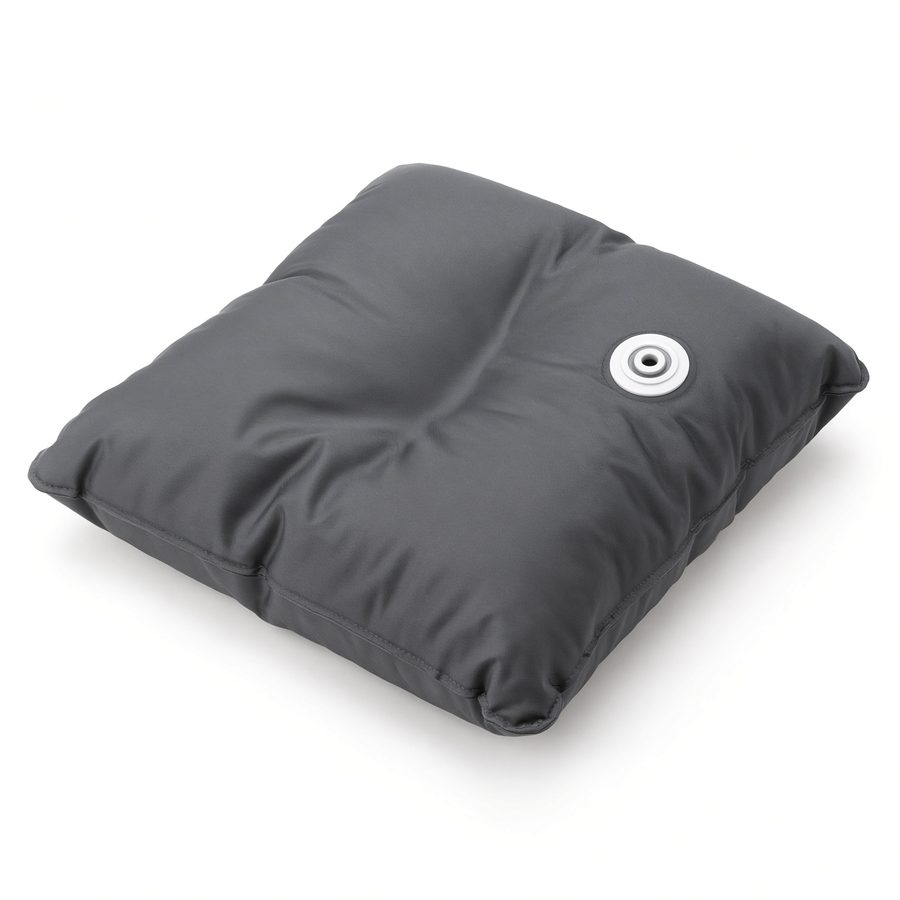
Inflate until it just holds your head, not until it is a basketball. Overfilling is how inflatable pillows become loud and mean. A little give is the point. If you sit up to drink water and the pillow launches, you overfilled it. For cold nights, a bag that matches the temperature does more for sleep than a thicker pillow.
Klymit inflatable — the shaped travel pillow
Klymit’s inflatable travel pillow is the middle of the air world: a bit more shape, a bit more of a “this is a pillow” face, still a packable bladder. It is a good gift and a good second pillow in a two-person tent. It is not a foam pillow. If you grind your teeth on crinkle, go Therm-a-Rest.
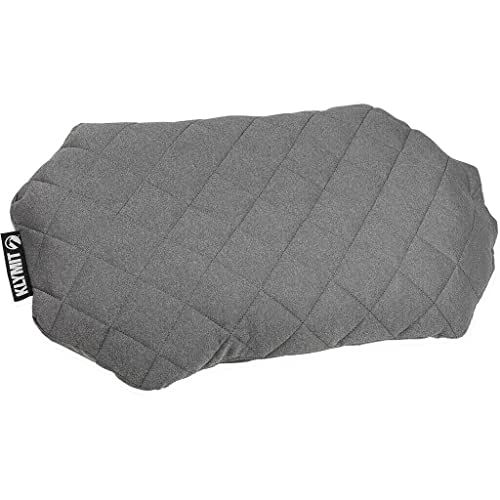
Repair kits matter. A pinhole at 2 a.m. is a clothes-bag night. Tape and a spare in the kit is cheaper than a mood. Do not store inflatables crammed in a tiny sack for six months in a hot garage. The bladder and the glue have opinions about that.
TETON and REDCAMP — camp pillows that do not pretend to be ultralight
Car camping is allowed. TETON’s camp pillow and REDCAMP’s outdoor pillow are bigger, heavier, and closer to a home pillow you can stuff in a tote. Bring them for the family tent, the truck bed, and the night you are not counting ounces. Do not put them in a backpacking report and then complain about weight. That is a packing report.
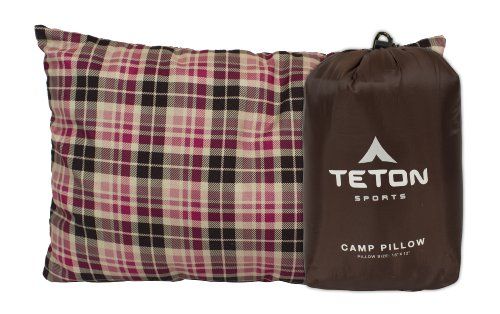
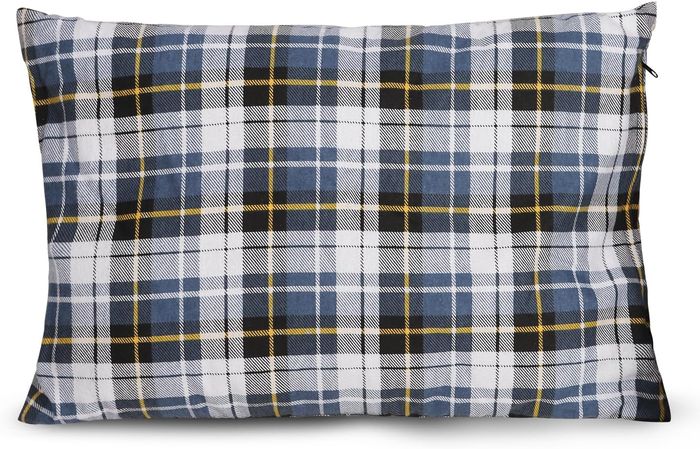
If you mix car camp and backpacking, keep the foam compressible in the backpack and the big pillow in the tote. Seasonal blankets and a real pad will do more for a kid’s first night out than a $12 gas-station neck roll.
How do you keep the pillow on the pad?
A pillow strap, a slightly tacky cover, or a shirt stuffed in a case. Put the pillow in the hood of the sleeping bag if the bag has one. Sleep slightly uphill so you are not fighting gravity all night. A slick inflatable on a slick pad in a two-person tent is a wrestling match. If you share a tent, agree on the strap before the first night, not at 1 a.m.
Hygiene: a removable cover you can wash. A pillow that lives in a stuff sack with last trip’s snacks will smell like last trip’s snacks. For more of the overnight kit, overnight essentials still includes a pad, a bag, and a dry change of socks. The pillow is the luxury that pays back in miles the next day.
| Pillow | Best for | Pack size | Watch-out |
|---|---|---|---|
| Therm-a-Rest compressible | Quiet, pillow-like | Medium | Bulkier than air |
| TREKOLOGY inflatable | Ounces, backpacking | Tiny | Slides, crinkle |
| Klymit inflatable | Shaped air pillow | Tiny | Valve, punctures |
| TETON camp pillow | Car camp, family tent | Large | Not a backpacking weight |
| REDCAMP outdoor pillow | Camp tote, extra cushion | Large | Not for a 40L pack |
What pillow mistakes cost a night of sleep?
Overfill. An inflatable pumped until it is a drum will shove your neck into flexion and then launch when you sit up. Fill it until your head sits in a shallow pocket, then stop. Underfill is a pancake by 2 a.m. if the valve weeps. Check the valve at home. A pillow that loses half its height on the living-room floor will do it in the tent too.
No cover. A bare nylon bladder on your face is sweaty and loud. A removable cover you can wash is hygiene and friction. A dirty cover in a stuff sack with last month’s snacks is a smell you will wake up to. For family tents, give kids the TETON and keep the inflatable for the adult who actually cares about ounces. Family outdoor days fail more often on sleep than on the hike.
Wrong trip. A 14-ounce camp pillow in a 40-liter pack is a packing error. An ultralight inflatable as the only pillow on a car-camp with room in the tote is a comfort error. Own both if you do both sports. The Therm-a-Rest compressible is the one pillow that almost spans the two, which is why it stays our backpacking default.
When is a backpacking pillow not enough?
Injury, side-sleeping with a broad shoulder, or a partner who will not share a two-person tent with a crinkly bladder at 2 a.m. Then you bring the TETON in the car, or you buy a larger foam compressible and accept the volume. Ultralight is a choice, not a morality. A person who sleeps four hours on a $20 inflatable and then botches a ridge is not “efficient.” They are tired.
Kids: give them the camp pillow. A child who does not sleep is a child who does not hike tomorrow. The TREKOLOGY can live in the adult’s pack. The TETON can live in the tote. Getting kids outdoors fails on the first miserable night more often than on the trail difficulty.
Winter: inflatable pillows sleep cold because you are lying on a bag of air. Put a small piece of clothing over the bladder or use the compressible foam. A zero-degree bag with a naked inflatable pillow is a cold ear and a cold neck. The bag hood helps. The pillow still needs loft. Zero-degree bags do not replace a pillow. They hold one.
Our pick for most backpackers: Therm-a-Rest compressible if you want sleep quality, TREKOLOGY if you want the smallest stuff size. Our pick for car camp: TETON. Bring a spare stuff-sack clothes pillow anyway. Redundancy is how you still sleep when a valve fails.
A sleep system that includes the pillow on purpose
Pad, bag, pillow, earplugs if you share a tent with a snorer. The pillow goes in the same sack as the bag so it cannot be left on a closet shelf. Inflate it at home once so you know the valve. Stuff the compressible at home once so you know it actually fits the sack. A pillow that only theoretically packs small is a pillow that rides in your hand on the trail.
Campground noise is not a pillow problem, but a pillow that stays put is how you do not sit up every time a zipper fires. Strap it. Hood it. Sleep slightly uphill. If you still chase it, you overfilled an inflatable or you chose slick-on-slick. Put a shirt over the bladder. Fix the easy thing before you blame the whole trip on sleep.
End of trip: dry the bladder, wash the cover, store the compressible loosely. A foam pillow left crushed in a tiny sack in a hot attic will take a set and never loft the same. That “it went flat” review is often storage, not a night on the trail. Treat it like a sleeping pad. You already know how to ruin one of those.
Side sleepers should start with a little more height and a compressible foam that does not go banana-shaped. Back sleepers can live with less. Stomach sleepers should steal a folded fleece and stop shopping for a three-inch brick. If you wake with a numb arm, the pillow is too high or the pad is too thin. Fix the pad first. A pillow cannot replace a pad that lets your shoulder hit dirt. Two people in a tent should agree on crinkle before the first night. A Klymit that sounds like a snack bag next to a light sleeper is a relationship test, not a gear test.
Car-camp bonus: keep the TETON in the tote even if you backpack with the Therm-a-Rest. Mixed trips are how people either overpack the inflatable into a family tent and sleep poorly, or drag a camp pillow 12 miles and hate the sport. Own both if you do both. The compressible is the one that almost spans the gap, which is why it stays the default recommendation on this page.
Frequently asked questions
What is a good weight for a backpacking pillow?
Four to eight ounces. Over 12 ounces is a car-camp pillow. Inflatable models pack smaller; compressible foam models sleep quieter and more like a real pillow.
How do I keep a pillow from sliding on my sleeping pad?
Use a strap, a tacky cover, a shirt over the shell, or the hood of your sleeping bag. Overinflated slick nylon on slick nylon will migrate all night.
Inflatable or foam backpacking pillow?
Foam-fill compressible pillows are quieter and fail less. Inflatables pack smaller and sleep colder. Side sleepers often like a little more height from air. People who hate crinkle should buy foam.
Can I just use a stuff sack of clothes?
Yes, and many people should for a first trip. A dedicated pillow is lighter than the extra clothes you were going to bring only to make a pillow, and it stays put better.
How do I clean a camping pillow?
Removable cover in the wash. Wipe the bladder. Dry it fully before storage. Do not store an inflatable compressed in a hot garage.
Do I need a pillow if my sleeping bag has a hood?
The hood holds a pillow. It is not a pillow. A small compressible or inflatable inside the hood is the actual sleep system.