
Shoulder-Season Southwest Overlanding: Planning for the Best Window of the Year
Written by John Wren|
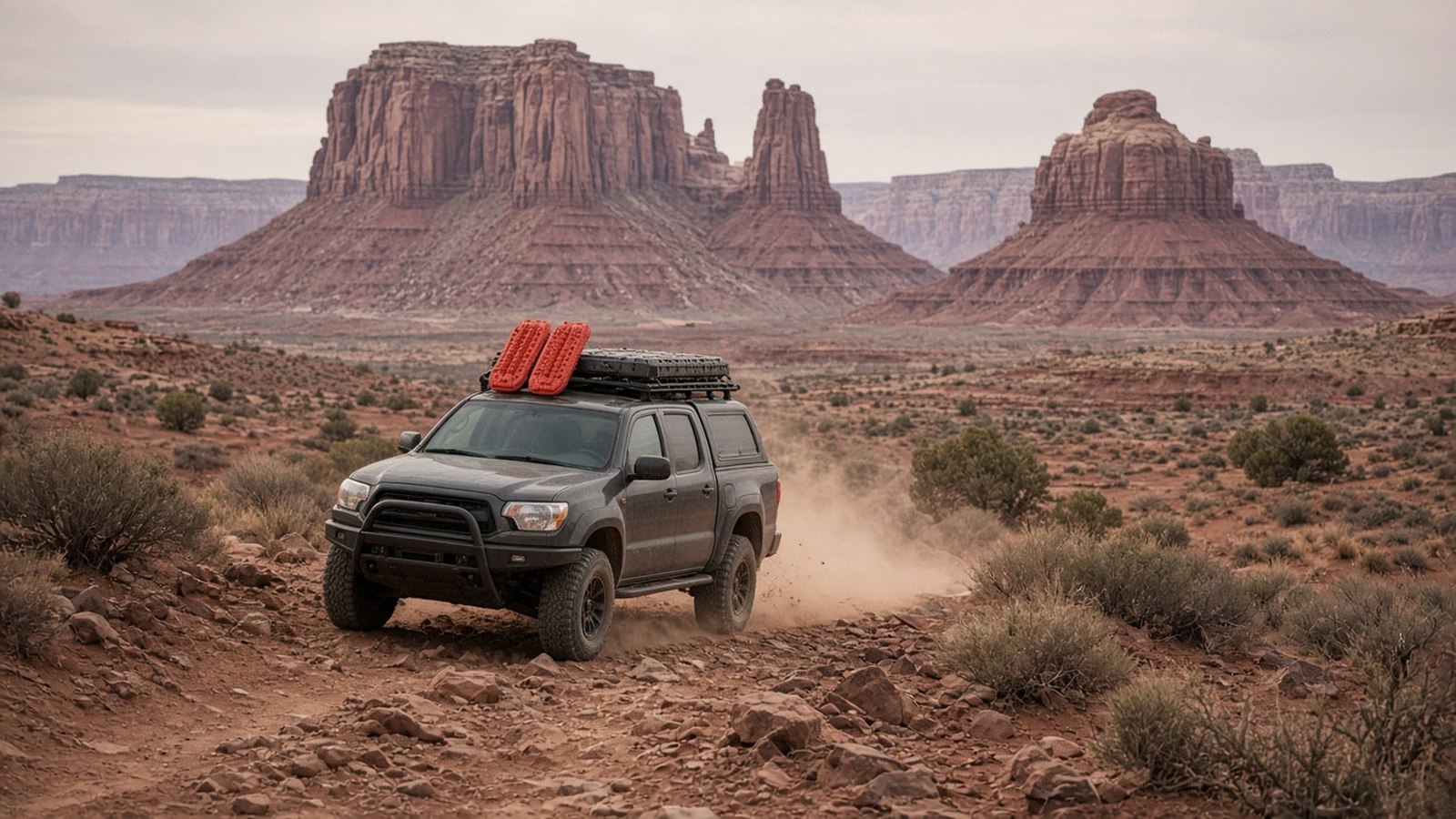
Layer for a 40-degree day-to-night temperature swing, air down tires for terrain and carry a compressor to air back up, bring practiced recovery gear, never camp or park in a dry wash, and plan fuel and navigation conservatively for remote routes.
Key takeaways
- Shoulder season brings 40+ degree day-to-night swings — layer accordingly.
- Air down for terrain, and carry a way to air back up.
- Never camp or park in a dry wash, regardless of the visible sky.
- Carry recovery gear and practice using it before you need it.
Shoulder-season Southwest overlanding — roughly March through May and again September through November across the desert Southwest — gets you the region's best temperatures and quietest trails, but it also means bigger day-to-night temperature swings, occasional late-season monsoon or early-winter storm risk, and washes that can flood fast from weather you never saw. The short answer: air down for the terrain, carry real recovery gear and water reserves, and check specific area weather and wash conditions daily rather than trusting a single trip-start forecast.
Short version. Shoulder season means 80-degree afternoons and 40-degree nights are both possible on the same day — layer accordingly. Air down your tires for sand and rock, and carry a way to air back up. Carry recovery boards and more water than you think you need. Never camp or park in a dry wash regardless of how clear the sky looks. Pair with regional trip planning habits and tire pressure fundamentals. Check live prices.
The desert Southwest's shoulder seasons are genuinely the best time to overland the region — summer heat makes midday travel dangerous and many trails brutally uncomfortable, while winter brings snow and ice to higher-elevation routes. Shoulder season splits the difference, but it demands real planning around the specific risks that come with transitional weather.
Temperature swings: dress and plan for both extremes in one day
A shoulder-season day in the desert Southwest can swing 40 degrees or more between afternoon high and overnight low, especially at the elevations many popular overlanding routes traverse. Pack a genuine layering system rather than assuming the warm afternoon temperature you left camp in will hold — a comfortable 75-degree midday hike can be followed by a 35-degree night at the same camp, and being caught without adequate insulation is a real risk, not just a discomfort.
Water needs also shift with shoulder-season temperatures in ways people underestimate, since dry desert air pulls moisture from your body even at moderate temperatures that do not feel as brutally hot as summer. Budget at least a gallon per person per day for drinking alone, more if you are hiking or working physically during the trip, and carry a dedicated reserve beyond your planned daily use in case of a delay or breakdown.

Airing down for sand, rock, and washboard
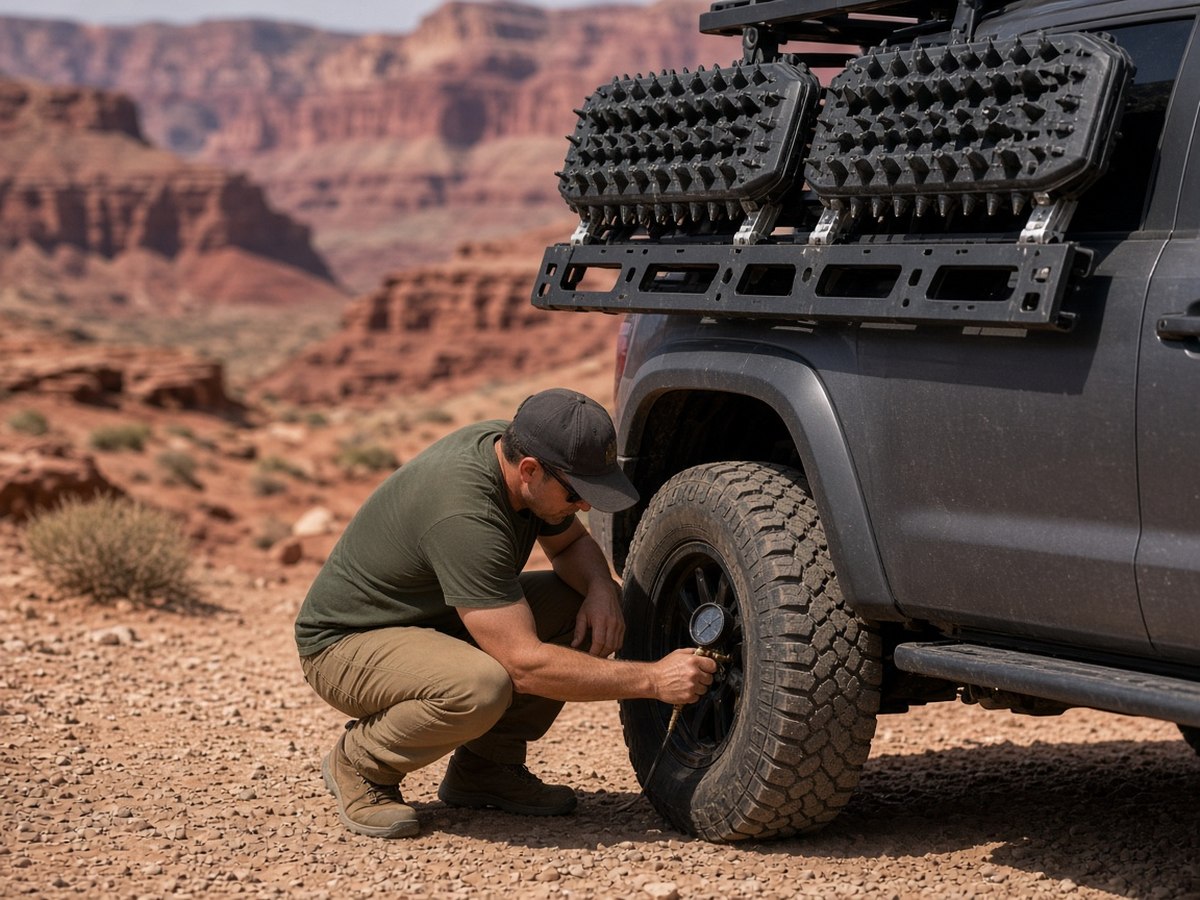
Lowering tire pressure for soft sand, loose rock, and washboard dirt roads increases your tire's contact patch and dramatically improves traction and ride comfort compared to street pressure, which is built for pavement, not desert terrain. Specific pressure targets vary by tire size, vehicle weight, and terrain type, but many Southwest overlanders run somewhere in the high teens to low twenties PSI for sand and moderate rock, adjusting further down for deep sand sections and back up for extended rocky or paved stretches.
Airing down without a plan to air back up is a common mistake — driving any real distance on pavement at aired-down pressures overheats tires and causes uneven, accelerated wear. A portable 12-volt compressor lets you air back up at the trailhead or before highway travel without waiting for a gas station, which matters in the remote areas where much of the best shoulder-season Southwest overlanding happens far from services.

Recovery gear: sand and mud are not rare events
Soft sand washes, silty mud after a rain event, and loose decomposed granite are all common enough across Southwest overlanding routes that recovery gear is not optional specialty equipment — it is baseline preparation. A pair of traction boards, used under a stuck tire to provide immediate grip on sand or mud, gets a vehicle unstuck in minutes in situations that would otherwise require waiting hours for another vehicle to find you.

Practice deploying and using your recovery gear before you actually need it under stress — the first time you use traction boards should not be while stuck alone on a remote wash at dusk. A basic recovery kit rounds out with a rated recovery strap or kinetic rope and gloves, even if you are traveling solo and hoping another vehicle happens by to help pull you out.
Washes, flash floods, and weather you did not see coming
Never camp, park, or linger in a dry wash regardless of how clear the sky looks directly overhead — flash floods in the desert Southwest are frequently caused by storms falling many miles upstream, meaning a wash can go from bone dry to a genuine torrent with little or no local warning. This is one of the most consistently underestimated risks in Southwest overlanding, precisely because the danger often is not visible from where you are standing.
Check regional weather for the entire watershed above your route, not just the immediate area, before entering a route that crosses or follows a wash system. Shoulder-season transitional weather patterns, including late-season monsoon remnants in early fall and early-season storm systems in spring, make this check more important during shoulder season than during the drier, more stable summer months in many parts of the region.
Fuel and range planning for genuinely remote routes
Many of the best shoulder-season Southwest overlanding routes cross long stretches without fuel, sometimes 150 miles or more between reliable stations, especially on routes through federal land far from towns. Plan fuel range conservatively, accounting for the reduced fuel economy that comes with aired-down tires, low-range four-wheel-drive sections, and a loaded vehicle, rather than calculating range based on your vehicle's highway-rated efficiency.
Carry a genuine fuel reserve — an approved auxiliary tank or properly rated fuel containers secured for off-road travel — if your route's fuel stops are sparse enough that a single wrong turn or an unexpectedly long detour could leave you short. Running out of fuel in a remote area with limited cell service is a serious problem, not just an inconvenience, and it is entirely preventable with honest range planning before the trip.
Navigation without relying on cell service
Cell coverage across much of the best Southwest overlanding terrain is unreliable or entirely absent, which makes offline navigation planning essential rather than optional. Download offline maps and GPX tracks for your specific route before you leave any area with reliable service, and carry a paper map or atlas as a genuine backup, not just a symbolic one you never actually reference.
Tell someone your specific route, planned camps, and expected return date before you go, and check in via satellite communicator if your route takes you beyond cell coverage for multiple days — the remote, low-traffic nature of many of the best shoulder-season routes is exactly why a communication plan matters more here than on a busier, more heavily traveled trail system.
Camping and trail etiquette on shared public land
Much of the best Southwest overlanding crosses BLM and Forest Service land shared with hikers, wildlife, and other dispersed campers, and shoulder season sees real traffic from other overlanders taking advantage of the same good weather window. Stick to established routes and previously used campsites rather than creating new tracks across fragile desert soil, which can take decades to recover from a single set of tire tracks in cryptobiotic soil crust common across much of the region.
Give other campers real space, pack out everything you bring in, and check specific area regulations for campfire restrictions, which are common during dry shoulder-season stretches even outside the peak summer fire season. A little extra care keeps these routes open and enjoyable for the overlanders who come after you, and it is a small price for access to some of the best public land in the country.
Vehicle prep before a shoulder-season trip
A pre-trip mechanical check matters more for remote Southwest overlanding than for a weekend closer to home, since a mechanical failure on a remote route can mean a very long wait for help. Check tire condition and tread depth specifically for the rocky, abrasive terrain common across the region, inspect belts and hoses for a vehicle that will spend real time in low-range four-wheel-drive under load, and top off all fluids before you leave rather than assuming you will find a service station along a remote route.
Cooling system performance deserves particular attention for shoulder-season trips that still see warm afternoon temperatures combined with slow, low-range technical driving that generates significant engine heat without the airflow highway speeds provide. A vehicle with a marginal cooling system that performs fine on pavement can overheat on a slow, technical climb in warm shoulder-season conditions, so address any known cooling issues before the trip rather than discovering them on a remote pass.
Desert wildlife and vegetation hazards
Shoulder season overlaps with increased activity for reptiles and other desert wildlife as temperatures warm from winter dormancy in spring, and again as animals remain active before winter dormancy in fall. Check under and around your vehicle before departure at a campsite, and use a flashlight when moving around camp after dark, since rattlesnakes and other wildlife are more active during the moderate temperatures shoulder season provides than during the extremes of summer or winter.
Cacti and other desert vegetation present a more mundane but very real hazard, particularly cholla cactus segments that detach easily and attach painfully to skin, clothing, and vehicle tires. Carry a comb or pliers specifically for removing cholla segments, since pulling them by hand embeds spines in your fingers as effectively as in whatever you were originally trying to free. Watch tire sidewalls for embedded cactus spines after driving through dense desert vegetation, since a slow leak from an embedded spine can go unnoticed until it becomes a flat far from help, often at the worst possible point on a remote climb far from the nearest tire shop.
| Risk | Shoulder-season factor | Mitigation |
|---|---|---|
| Temperature swing | 40+ degree day-to-night swings common | Layer system, more water than you think you need |
| Flash flood | Storms miles away can flood a wash fast | Never camp or park in a dry wash |
| Getting stuck | Sand and mud are common, not rare | Recovery boards, practiced before you need them |
| Fuel range | Long remote stretches, reduced off-road efficiency | Plan conservatively, carry a genuine reserve |
Our take: layer for a 40-degree swing, air down and carry a way to air back up, bring recovery gear you have practiced with, never trust a dry-looking wash, and plan fuel and navigation conservatively for genuinely remote routes. That preparation is what makes shoulder-season Southwest overlanding the best window of the year instead of the trip that ends with a tow truck and a long wait for a flatbed. Check live prices.
Frequently asked questions
When is the best time for Southwest overlanding?
Shoulder season, roughly March through May and September through November, offers the best temperatures and avoids both summer heat and winter snow at higher elevations.
How much should I air down my tires for desert overlanding?
Many overlanders run high teens to low twenties PSI for sand and moderate rock, adjusting lower for deep sand and higher for extended rocky or paved stretches. Always plan to air back up before highway travel.
Is it safe to camp in a dry wash?
No. Flash floods can occur from storms falling miles upstream with little local warning. Never camp, park, or linger in a wash regardless of how clear the sky looks overhead.
Do I need recovery boards for Southwest overlanding?
Yes. Soft sand and mud are common enough on desert routes that recovery gear is baseline preparation, not specialty equipment. Practice using them before you actually get stuck.
How much water should I carry overlanding in the desert?
At least a gallon per person per day for drinking alone, more for physical activity, plus a dedicated reserve beyond planned use in case of delay or breakdown.
How far apart are fuel stops on Southwest overlanding routes?
Some remote routes go 150 miles or more between reliable stations. Plan fuel range conservatively for aired-down tires and low-range driving, not highway-rated efficiency.