
Rule 25DA vs Rule-Mate 500
Written by John Wren|
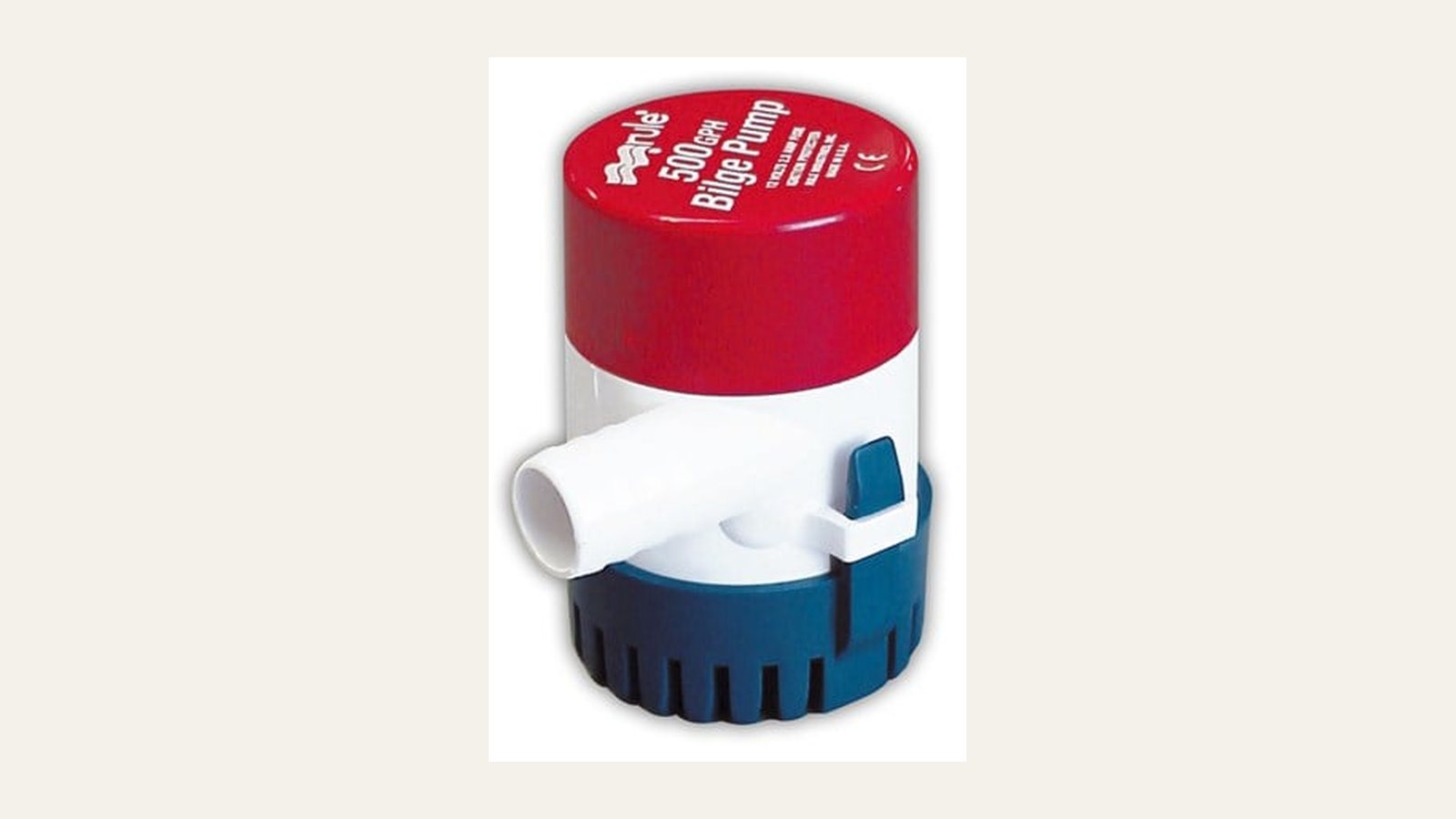
Choose the Rule 25DA if you want a non-automatic 12-volt cartridge that runs only from a switch or a separate float. Choose the Rule-Mate 500 if the pump should start itself when water reaches the sensor in the body.
Key takeaways
- 25DA runs when a switch or a float tells it to.
- Rule-Mate 500 starts itself from a sensor in the body.
- Confirm 12-volt, not the 24-volt 25DA.
- Fuse it, use 3/4-inch hose, and test it in a bucket.
Rule 25DA vs Rule-Mate 500 is a 500-gallon-per-hour bilge-pump fight: a non-automatic cartridge pump that runs only when you switch it or a float tells it to, against an automatic pump with the sensor built into the body. If you want a simple 12-volt pump you can wire to a switch you already trust, buy the 25DA. If you want the pump to start itself when water reaches the sensor and to ignore a sheen of straight motor oil, buy the Rule-Mate 500. Both are 12-volt, both want 3/4-inch hose, and neither replaces a hull you should have fixed. The boat stays a shop if the boat is the thing you are buying. This comparison is the pump in the bilge you already own.
Short version. The battery is why a good pump looks dead. The wiring is why it looks haunted. A life vest is still the thing you buckle before you open the hatch to look. A trolling motor is a different amp draw on the same bank. Check live prices.
Open-flow gallons per hour are a brochure. A pump pushing uphill through a hose, a vented loop, and a through-hull loses a lot of that number. Rule rates these at 500 GPH in the conditions on the sheet, not as a promise your bilge will empty in a minute while the boat is sinking. If the boat is taking water faster than a 500 can move it, you have a hull problem and a radio problem, not a pump-shopping problem. A spare pump in a locker is still a good idea. A pump with no fuse is not.
| Job | Rule 25DA | Rule-Mate 500 | Our call |
|---|---|---|---|
| A switch on the panel you already use | Non-automatic. It runs when you tell it. | It also runs itself | 25DA if you want only the switch |
| A boat that sits and collects rain | Needs a float or you have to be there | Sensor turns it on | Rule-Mate |
| Hose and voltage | 12-volt, 3/4-inch discharge, about 1.6 amps | 12-volt, 3/4-inch hose, sensor around a few inches of water | Match the hose you already have |
| Oil in the bilge | It will pump whatever reaches it | Rule says straight motor oil does not trip the sensor | Rule-Mate, then still fix the leak |
| The hull, the trailer, the boat itself | Not a pump | Not a pump | A shop |
Confirm 25DA, 12-volt, not the 25DA-24 that is a 24-volt pump. Confirm Rule-Mate RM500A, 500 GPH, not a Rule-Mate 1100 or 2000 that needs a larger hose and a larger fuse.
Who should buy the 25DA, and who should buy the Rule-Mate?
Buy the 25DA if the bilge is small, you already have a float switch you trust, and you want a cartridge pump you can pull and clean. Buy the Rule-Mate 500 if the boat lives on a lift or a trailer in the rain and you want one body that senses water without a separate float hanging in the sludge. Buy a fuse either way. Buy a hose that is actually 3/4-inch inside diameter, not a garden hose you hoped would stretch.
Maintenance is the afternoon you test the pump in a bucket, not the morning the bilge is already full. A boat day still starts with a vest and a glance at the bilge before you leave the dock. Haul the boat before a hard freeze if the pump and the hose will be the thing that cracks.
What the 25DA is actually for
The 25DA is Rule’s non-automatic 500 GPH pump on 12 volts. Rule’s current sheet for this generation cites about 1.6 amps at 12 volts, a 3/4-inch threaded discharge, a thermal cut-off if the motor gets too hot, a check valve to cut the water that runs back down the hose, and small vents so the housing is less likely to airlock. It does not turn itself on. You wire it to a panel switch, a float switch, or both, which is the setup a lot of boats already have: float for the surprise, switch for the “I want it on right now.”
Non-automatic is a feature when you do not trust a sensor in a bilge full of leaves. You can hear it run. You can switch it off. You can pull the cartridge and clear the impeller without a seminar. The Rule 25DA, 12-volt, is the non-automatic pump. Confirm 12-volt. A 24-volt twin exists and it will not run properly on a 12-volt battery even though the body looks the same. Check live prices. Height is only a few inches. It belongs at the lowest point of the bilge, strainer down, not halfway up a stringer because that was an easy screw.

Do: fuse it. Rule’s own cross-notes for this size talk about a small fuse, on the order of a few amps, close to the battery. Don’t: share a fuse with the stereo and wonder why the pump dies when the radio shorts. Do: use tinned marine wire if you are running a new lead. Don’t: twist household lamp cord and wrap it in tape. The bilge is wet. The connection will tell on you.
What the Rule-Mate 500 is actually for
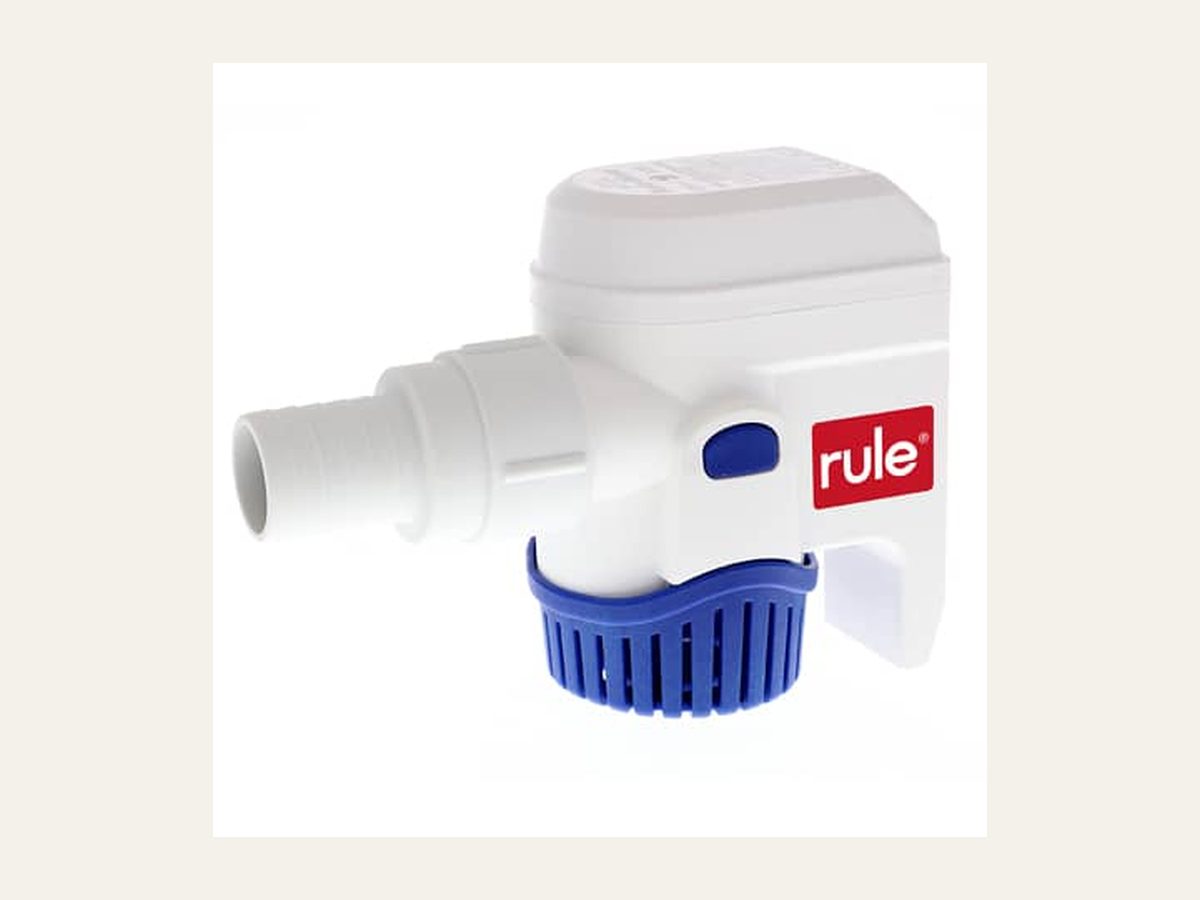
The Rule-Mate 500, model RM500A, is the automatic 500. Rule’s description is a solid-state sensor, not a separate float. Water rising to roughly two and three-quarter inches turns it on. When the water drops, it turns off. Rule says the sensor is built to notice water and not to treat straight motor oil as water, which matters if a leak puts oil in the bilge and you do not want the pump to spray that oil overboard. It is not a license to ignore an oil leak. It is a reason the pump might sit quiet in an oil slick while a float switch of the old style would have run. Hose is 3/4 inch. The box includes a straight barb and a 90-degree barb. Voltage is 12-volt DC.
The Rule-Mate RM500A is the automatic 500. Confirm 500, not the 750, 1100, or 2000 in the same family. Those move more water, draw more amps, and may want a bigger hose. Check live prices. Mount it where the sensor can actually see rising water. A pump screwed to a stringer above the puddle will pass every dock test and fail the night it rains, because the water never reached the sensor. Low and flat is the install. A pump perched on a wedge of scrap wood is a pump that airlocks or never starts.

Do: test it in a bucket before it goes in the boat. Fill the bucket until it starts, then let it pump down and shut off. Don’t: test it dry on the driveway for ten minutes and cook the impeller. Bilge pumps are cooled by the water they move. A dry run is a short run. Do: keep the sensor face clear of leaves and wiped grease. Don’t: paint the housing, silicone over the sensor, or bury it in a nest of zip ties.
Hose, lift, and the number you will not get
Both pumps are 3/4-inch discharges. A hose that is almost 3/4 will leak at the barb, suck air, and make a 500 look like a 200. Two clamps on a discharge that sits below the waterline are cheaper than a surprise. Run the hose up to a vented loop or a high point above the outside waterline before it falls to the through-hull, or the ocean will come back down the hose and your automatic pump will run all night trying to empty the sea. That is plumbing, not a defective sensor.
Every foot of lift costs flow. A through-hull at the stern that makes the pump push uphill is normal and it means the open-flow number was advertising. If you need the brochure number, you needed a larger pump and a larger hose, and you needed them before the inlet was the size of a fist. Time on the water includes the hour you replace a soft hose that has gone oval inside a locker.
The battery is part of the pump.
A 500 that draws under two amps will still kill a battery if an automatic pump runs for days because a leaky fitting keeps the sensor wet. Battery trouble often shows up first as a pump that hums and does not move water, or a pump that does not start at all. Check voltage at the pump with the pump running, not at the battery with everything off. A corroded butt connector can hide a volt or two, and a pump is picky about that.
Wire the automatic pump so it can run when you are gone, on a fuse, and wire a manual pump or a manual override if you want to force water out without waiting for a sensor. Many boats keep both: a Rule-Mate for the rain, a switched 25DA or the same family’s manual side for the “I am standing here and I want it empty.” If you only have room for one, decide whether you are the person who checks the bilge or the person who does not. Buy the pump that matches that honesty.
Electrical gremlins and a trolling motor on the same battery will brown out a pump at the worst time. A trolling motor deserves its own look at the bank. Do not put the pump, the finder, the motor, and a fridge on one tired starting battery and call it a system.
Where it sits decides whether it works
Lowest point. Strainer on. Screws into something solid, not into rotten plywood that will let the pump fall over the first time it vibrates. The discharge points at the hose run you planned, not at a kink you will discover later. Leave enough hose to pull the pump up for cleaning without cutting the wire. A pump you cannot reach will become a pump you do not clean, and a dirty impeller is a pump that hums.
If the bilge has a deep keel sump and a flat section, put the pump in the sump only if the hose can still rise to a safe loop afterward. A pump in a sump that cannot prime because the hose traps air needs those hidden vents the 25DA talks about, and it needs a hose route that is not a roller coaster. Draw it on a napkin before you drill.
Leaves, sand, and oil are three different failures
Leaves clog the strainer. Pull the cartridge or the strainer and rinse it. Sand chews the impeller. If you beach the boat and the bilge fills with sand, clean it before you expect 500 GPH. Oil is the Rule-Mate’s special case: the sensor is trying not to pump pure oil overboard, which is also what you want for the water you are about to put back in the lake. Find the leak. A bilge full of fuel is not a pump test. Fuel vapor and a spark are how boats burn. If you smell gasoline, stop, ventilate, and do not cycle the pump to “see what happens.”
A check valve keeps water from running back and cycling an automatic pump forever. A check valve also sticks. If the Rule-Mate or the 25DA runs and the water does not leave, pull the hose and see whether the valve is the clog. A stuck check valve looks like a dead pump.
What this fight is not
It is not a livewell pump, a washdown pump, or a ballast pump. Those move water on purpose and they are sized for that job. It is not a life jacket. You still buckle one before you hang over the transom. It is not a boat. If you are shopping a hull, a shop and a sea trial beat a pump listing. It is not the 24-volt 25DA. Read the voltage before you click. A 24-volt pump on a 12-volt jon boat is a paperweight that looks correct in the photo.
It is not a substitute for a through-hull you close, a scupper you keep clear, or a cover that actually sheds rain. Winter will split a hose full of water. Drain it or haul the boat. The pump cannot save a frozen discharge.
Test it on a Saturday, not in a squall
Bucket test on the dock. Then an in-boat test with a few gallons poured in the bilge while you watch the through-hull. You are looking for water leaving the boat, the pump shutting off, and no water returning down the hose to start the cycle again. If it cycles every minute, the check valve or the loop is wrong. Fix that before you leave the boat for a week.
Listen. A changing pitch means the impeller is biting air or the voltage is sagging. A silent pump with a wet sensor means a fuse, a connection, or a sensor packed with grease. A loud pump that moves nothing means a clogged hose or a closed seacock you forgot. None of those are solved by buying a third pump.
So which 500 GPH bilge pump should you buy?
Buy the Rule 25DA if you want a non-automatic 12-volt cartridge pump on a switch or a float you already trust. Buy the Rule-Mate 500 if you want the sensor in the body and a pump that starts itself when rainwater reaches it. Our default for a trailered boat that sits in the weather is the Rule-Mate. Our default for a simple skiff with a panel switch and a person who looks in the bilge is the 25DA. Fuse it. Use 3/4-inch hose. Test it in a bucket. Check live prices. If the boat itself is the purchase, that conversation happens at a shop, not in a pump listing.
The rest of a boat day is still the vest, the forecast, and a bilge you glanced at before the lines came off. A pump is the backup. It is not the hull.
Frequently asked questions
Rule 25DA or Rule-Mate 500?
25DA if you want a 12-volt pump that runs only when you flip a switch or a float you already trust. Rule-Mate 500 if you want the pump to start itself when water reaches the sensor in the body.
Is the Rule 25DA automatic?
No. The 25DA is the non-automatic cartridge. It runs when a switch or a separate float tells it to. The Rule-Mate has the sensor in the pump.
Is the 12-volt 25DA the same as the 24-volt pump?
No. Confirm the 12-volt 25DA and the Rule-Mate 500. A 24-volt 25DA is a different pump and it will not run properly on a 12-volt battery.
What hose do the 25DA and the Rule-Mate 500 take?
Both want 3/4-inch hose. A vented loop and a through-hull cost you flow. The 500 GPH figure is the sheet rating, not a promise a flooding boat will empty.
Why does a bilge pump look dead?
Often the battery, the fuse, or the wiring, not the impeller. Check the bank and the connections before you replace a pump that was never getting power.
Does a bilge pump replace a life vest?
No. Buckle the vest before you open the hatch. A pump moves water. It does not float you.