
How to Field Dress a Deer: A Step-by-Step Guide
Written by Outdoors Magazine|
Outdoors Magazine is a participant in the Amazon Services LLC Associates Program. We may earn a commission if you buy through links on this page, at no extra cost to you. Affiliate disclosure.
To field dress a deer, confirm it is dead from behind, tag it if your state requires, and wear gloves. Lay it on its back and use a sharp 3- to 5-inch knife to make shallow cuts that open the belly without puncturing the stomach, intestines or bladder. Remove the organs, prop the cavity open and cool the carcass to 35 to 40°F quickly.
Key takeaways
- Confirm the deer is dead from above and behind the head, then tag it if required.
- Wear gloves and keep cuts shallow so the stomach, intestines and bladder stay intact.
- Start cooling within a couple of hours; aim for 35 to 40°F as fast as you can.
- In CWD areas, bone out meat, skip high-risk tissues and have the deer tested.
Here's how to field dress a deer: confirm it is dead from a safe angle, tag it if your state requires, then put on gloves and use a sharp 3- to 5-inch knife to open the belly with shallow cuts that spare the stomach, intestines and bladder. Remove the organs, prop the cavity open and cool the carcass below 40°F.
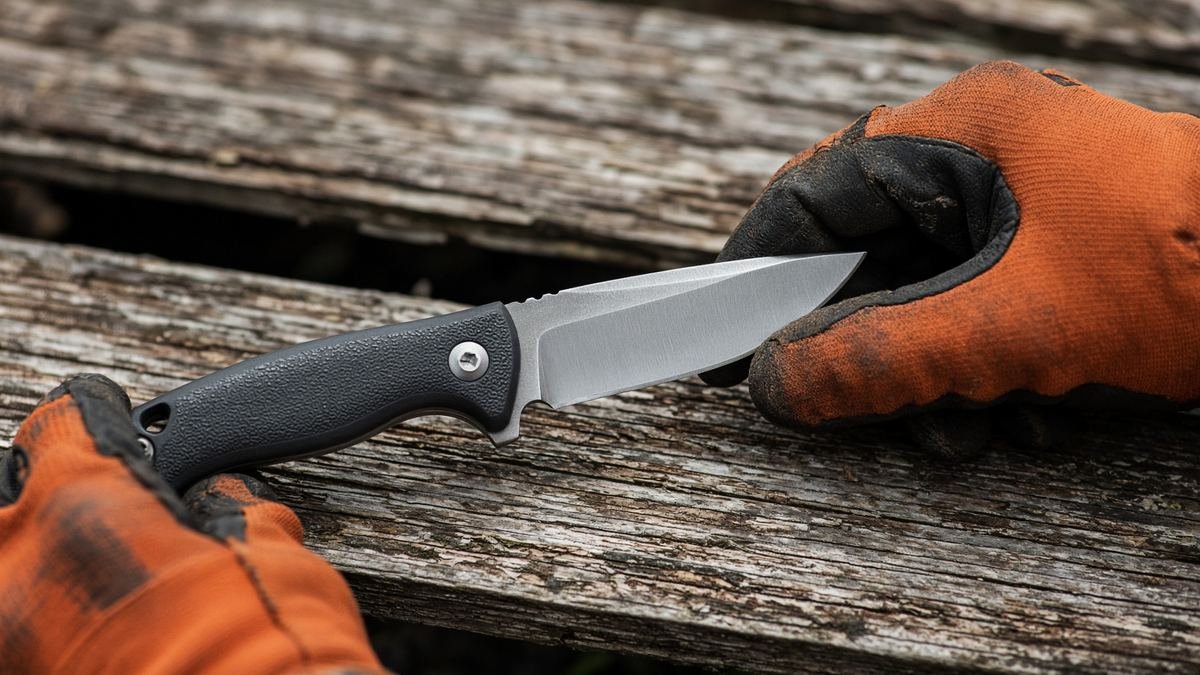
Clean hands and a sharp blade make the job safer and the venison better. AI-generated editorial image of two hands in orange-and-black work gloves holding a black-handled fixed-blade hunting knife over a weathered wooden plank.
Field dressing means removing a deer's internal organs soon after the harvest. It is where good venison is made or lost, because body heat and bacteria are the enemies of meat quality. The Missouri Department of Conservation sums up the goal in three words: keep the meat cool, clean and dry. Doing that quickly and respectfully honors the animal.
This guide follows the process in order, drawing on Penn State Extension, the Missouri Department of Conservation, university extension services, the CDC and state wildlife agencies. It describes the steps plainly but without graphic detail. If you have never done this, consider doing it the first time alongside an experienced hunter. Tagging, chronic wasting disease (CWD) and carcass transport rules differ by state, so read your state wildlife agency's current regulations before opening day.
How do you make sure a downed deer is dead?
Wait a few minutes at a short distance and watch the chest for any rise and fall, then approach carefully from above and behind the head, away from the legs and antlers. A dead deer's eyes are usually open; hunter education materials say that if the eye does not blink when touched with a long stick, the animal is dead.
This step is about your safety as much as the animal's. A wounded deer can still kick or thrash, and antlers and hooves can cause real injury. Hunter education courses teach a simple routine: pause a short distance away for a few minutes and watch the chest, then come in from above and behind the head, clear of the legs.
Look at the eyes; in a dead deer they are usually open. Using a long stick, touch the eye from behind. If there is no blink, the animal is dead. If there is any sign of life, hunter education guidance is to be ready to end it quickly and humanely with a follow-up shot, following your state's rules and safe firearm or bow handling.
If the deer ran after the shot, the recovery comes before any of this. Our guide on tracking down and recovering wounded game covers reading sign and following a blood trail, which often stretches into the last light of the day.
Should you tag the deer before field dressing it?
In many states, yes. Pennsylvania requires hunters to tag a deer immediately after harvest and before moving it, and Missouri advises completing tagging requirements as soon as the animal is confirmed dead. Requirements vary, so follow your own state's rules before you start cutting.
Tagging laws vary widely. Penn State Extension's pocket guide notes that in Pennsylvania the deer must be tagged immediately after harvest and before the carcass is moved, with the tag kept on the ear until the animal is processed or prepared for mounting. Missouri tells hunters to fulfill tagging requirements immediately after the animal is confirmed dead. Hunter education materials agree: tag first where required, then begin field dressing.
Some states also require check-in within a set time or mandatory CWD sampling in certain zones. Minnesota, for example, required CWD sampling of deer one year old or older harvested in its southwest region during the November 2026 firearms opener. Carry your state's current regulations booklet or app. For a broader packing list, see your checklist for a successful first deer hunt.
What do you need to field dress a deer?
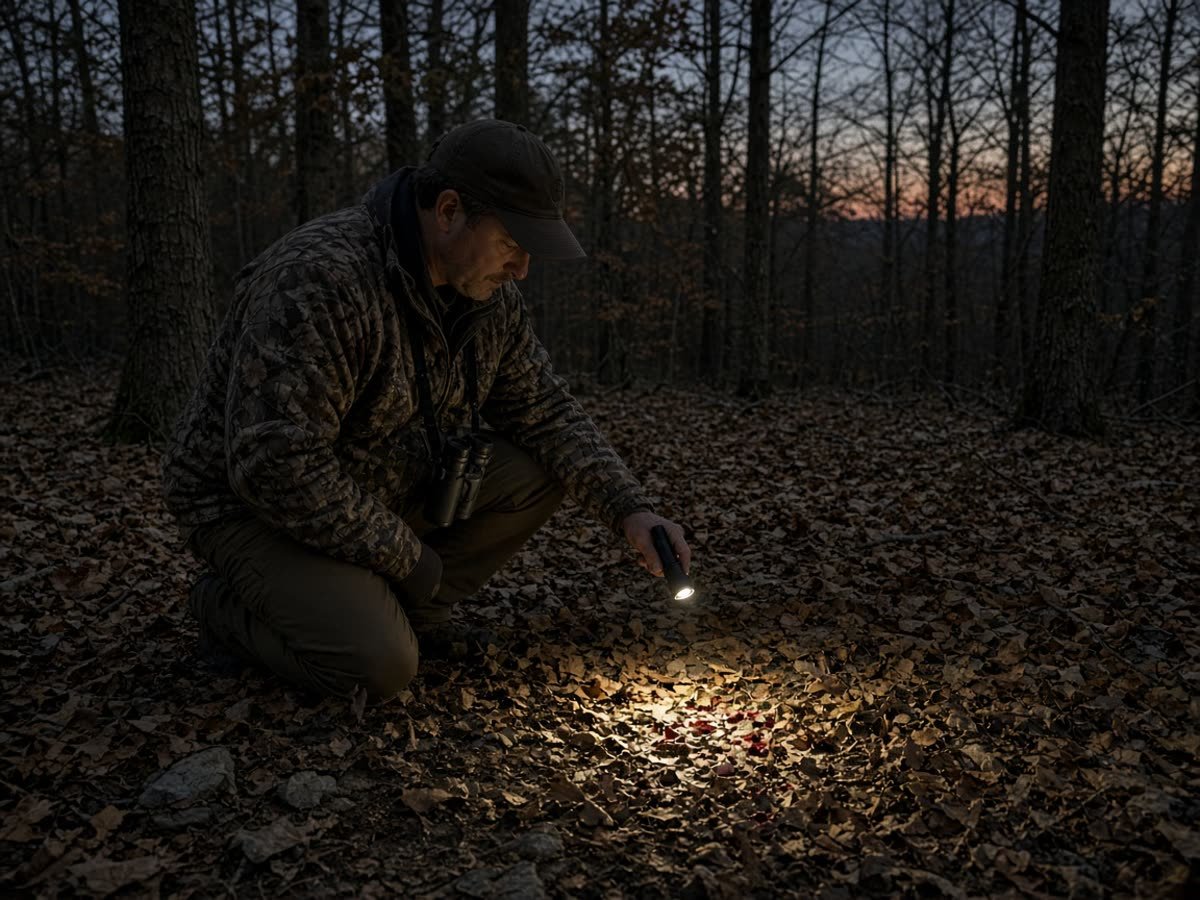
Bring gloves, a sturdy sharp knife with a 3- to 5-inch blade, rope, paper towels or clean cloths, and bags for the heart and liver. A small saw or hatchet helps with the breastbone and pelvis on bigger deer, and a flashlight or headlamp is essential if you recover the deer near dark.
Gloves. The CDC advises wearing latex or rubber gloves when field dressing a deer or handling the meat, and Penn State Extension recommends disposable gloves along with washing hands and arms with soap and water before and after. Missouri's guide calls rubber gloves not required but strongly recommended. Many hunters pair wrist-length gloves for fine knife work with shoulder-length gloves that keep sleeves clean while reaching into the chest cavity.
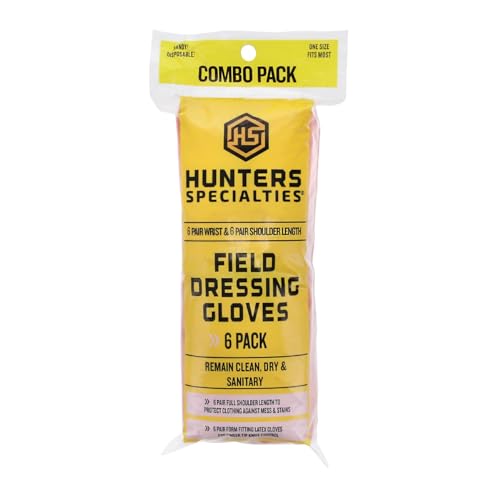
One widely sold option is the Hunters Specialties Field Dressing Gloves Combo Pack (model HS-01059). Retailer listings describe it as disposable, one size, with six pairs of short latex gloves and six pairs of shoulder-length poly gloves, and they say the gloves are meant to help you stay clean and dry while field dressing a deer or other game.
A knife. Missouri recommends a sturdy, sharp knife with a 3- to 5-inch blade, noting that a sharp edge makes the work quicker and easier on your hands. A gut hook makes it easier to open the membrane over the organs. Penn State advises cleaning the knife often, even between cuts, and the CDC says not to use knives or tools from your kitchen. Our roundup of the best skinning knives for deer covers blades built for this job; see also how often you should sharpen a pocketknife.
Rope and tools. Penn State suggests 6 to 8 feet of rope to tie a leg to a tree; Missouri recommends quarter-inch rope. For the pelvis, Missouri prefers a hatchet and hammer, noting a small saw can leave bone dust on the meat. Penn State says a small saw may be needed for the breastbone on older or larger deer.
Cleanup supplies. Pack paper towels or a clean cloth, resealable bags for the heart and liver, string or rubber bands, and water or wipes for hands and knife.
How do you field dress a deer step by step?
Lay the deer on its back and steady it, remove the reproductive organs with shallow cuts, then open the belly from the pelvis toward the breastbone while guarding the organs with your fingers. Free the rear end, cut the diaphragm, free the windpipe, and roll the organs out. Then clean, dry and prop open the cavity.
The sequence below follows the traditional method from Missouri and Penn State. Every source repeats the same rule: keep cuts shallow and do not puncture the stomach, intestines or bladder, which hold bacteria that contaminate meat.
1. Position the deer. Lay the deer on its back, with the head uphill if possible, and spread the hind legs. Tie one leg to a tree, or prop the carcass with rocks, logs or a branch so it stays put while you work.
2. Remove the reproductive organs. Missouri describes removing the udder on a doe, or the external reproductive organs on a buck, with shallow cuts, almost like skinning. Penn State recommends keeping this incision small to limit contamination if you must drag the deer.
3. Open the belly. Make a shallow cut through the skin and thin muscle. Penn State's method is to hold the blade facing up and slide two fingers into the opening, one on each side of the blade, pushing the organs down and away as you cut along the midline. Clemson Extension describes using the knife handle and your hand the same way. The key is that the blade cuts outward through the hide and muscle, never down into the organs below.
4. Free the pelvic area. Missouri splits the pelvic bone with a hatchet and hammer, keeping the blade shallow and driving toward the rear rather than down, because the bladder sits just beneath. Cut around the rear opening from the outside to loosen it. Penn State recommends tying it off with string or a rubber band before pulling it into the body cavity, which keeps waste from touching the meat, and cautions against cutting the urethra.
5. Open the chest. Find the end of the breastbone by feel. If you plan a shoulder mount, Missouri advises stopping short of the chest so the cape is not ruined. Otherwise, cut through the rib cartilage just off center of the breastbone with a knife, hatchet or small saw.
6. Cut the diaphragm. The diaphragm is the thin sheet of muscle that separates the chest from the belly. Hold the rib cage open and cut it free along the ribs down to the backbone, lifting it with two fingers as you go. Missouri advises moving slowly here, since it is easy to nick an organ. Sever the windpipe and esophagus as far forward as you can reach.
7. Remove the organs. Grip the windpipe and pull toward the tail, freeing connective tissue along the spine as needed, and roll the deer onto its side so everything comes out together. Bag and chill the heart and liver if you want them. Penn State and Clemson say not to eat the meat if organs smell bad, show greenish discharge or look abnormal. In CWD areas, see the tissue guidance below.
8. Clean and drain. Prop the cavity open with a clean stick. Remove visible dirt, hair and bloodshot areas, drain excess blood by raising the head end, and wipe the cavity dry with paper towels or a clean cloth. If you rinse, dry it well; Clemson warns that damp meat spoils faster and advises against wiping the carcass with grass or snow.
If something does get nicked, don't panic. Penn State and UW–Madison Extension advise trimming away contaminated tissue with a clean knife, wiping up spilled contents with a clean cloth, cleaning the knife often, and then drying the cavity and propping it open. A gut-shot deer should be field dressed as soon as possible.
Missouri also describes a gutless method, in which the hide is peeled back and the backstraps, quarters, neck and rib meat, and inner tenderloins are removed while the organs stay inside the carcass. The department says this approach suits CWD zones because the unused parts stay where the deer was harvested. If you need to submit a deer for CWD testing, Missouri notes that you must still keep the head and about 6 inches of neck.
How fast does venison need to be cooled?
As fast as you can. Penn State recommends cooling the carcass to 35 to 40°F quickly to prevent bacterial growth, and UW–Madison Extension says cooling should begin within a couple of hours of the harvest. Clemson advises refrigerating within three to four hours when the air is above 50°F.
Removing the organs is the first and biggest cooling step, because it lets body heat escape. Penn State recommends refrigerating the carcass below 40°F as soon as possible once you reach home or camp. Clemson Cooperative Extension adds that if the air is over 40°F, the carcass should go to a cooler the day of the kill.
To speed cooling in the field, prop the chest cavity open with a clean stick, keep the carcass in the shade and off the ground, and hang it if you can to improve airflow. In warm weather, Penn State suggests filling the cavity with ice packs, milk jugs of ice or sealed bags of snow and tying it shut. Clemson warns against airtight game bags or tarps, which trap heat.
Cooling can go too far, too. UW–Madison Extension advises not letting the carcass freeze during the first six hours after harvest, which can make meat tough, and Clemson also cautions against freezing a carcass. In cool weather of 28 to 35°F, Clemson says a carcass can hang in a ventilated shed.
Hide on or off? Sources differ. Penn State recommends leaving the hide on during transport to protect the meat, then skinning at home or camp and always before taking the deer to a processor. Clemson says that in warm weather you can skin the deer to speed cooling if you keep it clean and protected from flies with cheesecloth.
Aging. Penn State says to hold a carcass at 40°F or below for no more than 2 to 3 days if you process it yourself. UW–Madison Extension describes aging at 35 to 45°F for 7 to 10 days under controlled conditions but warns against aging in warm weather. When in doubt, use the conservative figure; Penn State notes aging isn't necessary for sausage.
What precautions should hunters take for chronic wasting disease?
Wear latex or rubber gloves, avoid handling the brain and spinal cord, bone out the meat, and do not eat the brain, spinal cord, eyes, spleen, tonsils or lymph nodes. In areas where CWD has been found, have the deer tested before eating it, and follow your state's carcass transport and disposal rules.
CWD is a prion disease of deer, elk, moose and related animals. The CDC says infections in people have never been reported, but it is not known whether people could be infected. It reports CWD in wild deer in 36 U.S. states, as well as in Canada, Norway, Finland, Sweden and South Korea.
The CDC's guidance for hunters in areas with CWD includes:
- Don't shoot, handle or eat animals that look sick or act strangely, and don't touch or eat meat from animals found dead.
- Wear latex or rubber gloves when field dressing a deer or handling the meat.
- Avoid handling the internal organs, especially the brain or spine.
- Don't use knives or other tools from your kitchen.
- Strongly consider having the deer tested before you eat the meat, and don't eat meat from an animal that tests positive.
- Consider asking a processor for individual processing so you get back only meat from your own animal.
Penn State Extension and the CWD Alliance add that hunters should bone out the meat, avoid sawing through bone or cutting through the brain or spinal cord, and avoid eating the brain, spinal cord, eyes, spleen, tonsils and lymph nodes. Normal field dressing and boning remove most of these tissues, and trimming away fat removes the remaining lymph nodes. Both say to wash hands and instruments thoroughly afterward.
UW–Madison Extension goes further on tools: use separate knives for field dressing and for removing meat, cut the spinal column only to remove the head with a knife or saw reserved for that purpose, and clean knives and surfaces with hot soapy water followed by a 50/50 bleach-and-water solution. It advises soaking that dedicated blade in a 50/50 bleach solution for one hour, or discarding it.
Testing and transport rules. These are set by each state and change often. Wisconsin's DNR recommends not moving whole carcasses beyond the county, or an adjacent county, of harvest, and bars whole carcasses from listed CWD-affected states and provinces unless they reach a licensed meat processor or permitted taxidermist within 72 hours. Minnesota prohibits importing whole deer carcasses from anywhere; quarters without the head or spine attached, boned meat, hides, clean skull plates with antlers and finished mounts are allowed. If you hunt out of state, check both states' rules before driving home.
How should you haul a field-dressed deer home?
Keep the carcass cool, clean, shaded and ventilated. Penn State and Clemson say not to tie a deer to a vehicle hood or put a warm carcass in a closed trunk. Get it to a cooler or refrigerated processor as soon as possible, and keep your tag attached as your state requires.
Plan for help getting a deer out of the woods. A small belly incision, as Penn State recommends, helps keep debris out of the cavity while dragging.
On the road, Penn State and Clemson both say not to tie a deer across the hood or put a still-warm deer in a closed trunk. Keep it out of direct sun with air circulating, add sealed bags of ice on a warm day, and get it to a processor with fully refrigerated facilities as soon as possible.
At home, hang the deer somewhere cold and clean or refrigerate the meat below 40°F. Wash knives, hands and surfaces with warm soapy water, and dispose of carcass waste as your state allows. Wisconsin and Minnesota both prohibit dumping carcasses on public land or roadsides.
Field dressing gets easier with practice, and every step comes back to the same goals: stay safe, keep the meat clean and get it cold. Rules, though, are local. Your state wildlife agency is the final word on tagging, check-in, CWD testing and carcass transport where you hunt.
Sources: Hunter-Ed.com (Alaska hunter education): Approaching Downed Game, Penn State Extension: Field Dressing Deer Pocket Guide, Penn State Extension: Proper Care and Handling of Venison From Field to Table, Penn State Extension: Precautions for Deer Hunters in Areas With Chronic Wasting Disease, Missouri Department of Conservation: Field Dressing Your Harvest, University of Wisconsin–Madison Extension: Handling Venison Safely, Clemson Cooperative Extension: Safe Handling of Wild Game Meats, CDC: About Chronic Wasting Disease, CWD Alliance: Recommendations for Hunters, Wisconsin DNR: Carcass Movement, Processing and Disposal, Minnesota DNR: Deer Carcass Import and Disposal Rules, Minnesota DNR: CWD sampling news release (Oct. 2026), OpticsPlanet: Hunters Specialties Field Dressing Gloves Combo Pack listing, Paul B. Hardware: Hunter Specialties Field Dressing Gloves Combo Pack listing; Amazon B00162KLIW.
Frequently asked questions
How do you make sure a downed deer is dead?
Wait a few minutes at a short distance and watch the chest for any rise and fall, then approach carefully from above and behind the head, away from the legs and antlers. A dead deer's eyes are usually open; hunter education materials say that if the eye does not blink when touched with a long stick, the animal is dead.
Should you tag the deer before field dressing it?
In many states, yes. Pennsylvania requires hunters to tag a deer immediately after harvest and before moving it, and Missouri advises completing tagging requirements as soon as the animal is confirmed dead. Requirements vary, so follow your own state's rules before you start cutting.
What do you need to field dress a deer?
Bring gloves, a sturdy sharp knife with a 3- to 5-inch blade, rope, paper towels or clean cloths, and bags for the heart and liver. A small saw or hatchet helps with the breastbone and pelvis on bigger deer, and a flashlight or headlamp is essential if you recover the deer near dark.
How do you field dress a deer step by step?
Lay the deer on its back and steady it, remove the reproductive organs with shallow cuts, then open the belly from the pelvis toward the breastbone while guarding the organs with your fingers. Free the rear end, cut the diaphragm, free the windpipe, and roll the organs out. Then clean, dry and prop open the cavity.
How fast does venison need to be cooled?
As fast as you can. Penn State recommends cooling the carcass to 35 to 40°F quickly to prevent bacterial growth, and UW–Madison Extension says cooling should begin within a couple of hours of the harvest. Clemson advises refrigerating within three to four hours when the air is above 50°F.
What precautions should hunters take for chronic wasting disease?
Wear latex or rubber gloves, avoid handling the brain and spinal cord, bone out the meat, and do not eat the brain, spinal cord, eyes, spleen, tonsils or lymph nodes. In areas where CWD has been found, have the deer tested before eating it, and follow your state's carcass transport and disposal rules.