
A cold-rain kit for fifty-degree September
Written by John Wren|
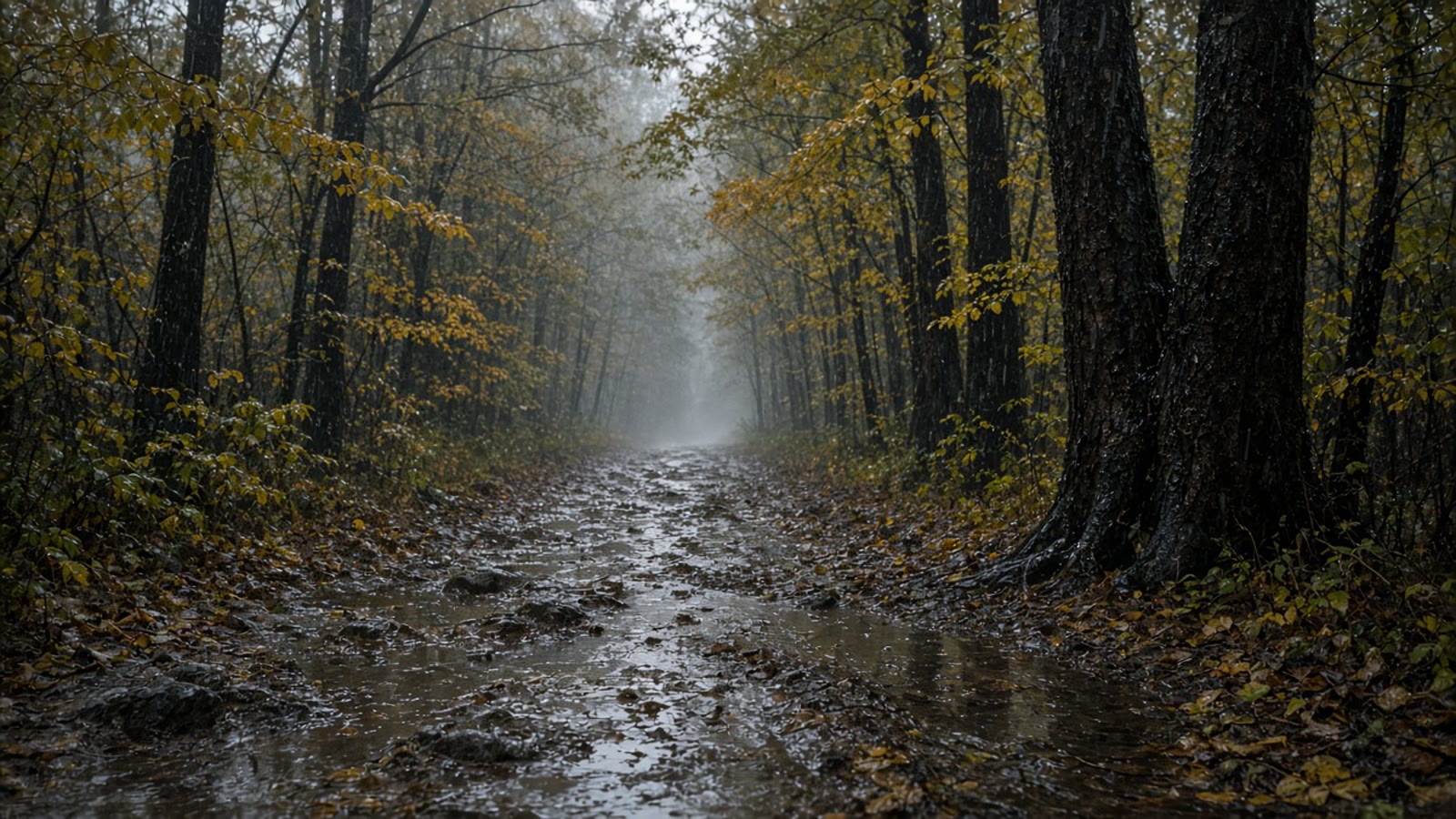
Treat a 50-degree September rain like hypothermia weather: Marmot PreCip over dry Smartwool, a Petzl Tikka you can find in a squall, an opened first-aid kit, a Sawyer Mini, and one working ESEE 6. Stop in the trees. The truck is shelter if the walk is already a fail.
Key takeaways
- Fifty-degree rain is a heat-loss problem.
- Wet cotton is the problem. Merino is the shirt.
- A lamp you can find beats a phone in a squall.
- Stop in the trees. Wind is the thief.
A cold rain kit for fifty-degree September is rain pants over dry merino, a lamp you can find in a squall, and a way out of the wind — not a fire piston you packed because a listing said survival. The short answer: get out of wet cotton, get out of the wind, and treat a 50-degree rain like a heat-loss problem, not a July shower.
Short version. Pair this with the sibling fire kit if you are allowed a sit, layering that is not cotton, and rain pants you will actually hike in. Check live prices.
This is a field note, not a winter expedition list. Wednesday, September 16, 2026 is the week a lot of hardwood states still hit seventy at 2 p.m. and fifty-one with rain at 4. Fifty degrees is not frost. It is the temperature people walk through in a cotton hoodie because it does not look like winter. Water on cotton plus wind is how day hikers become a search. Stay dry, stay out of the wind, keep eating, and turn around before dark does the rest.
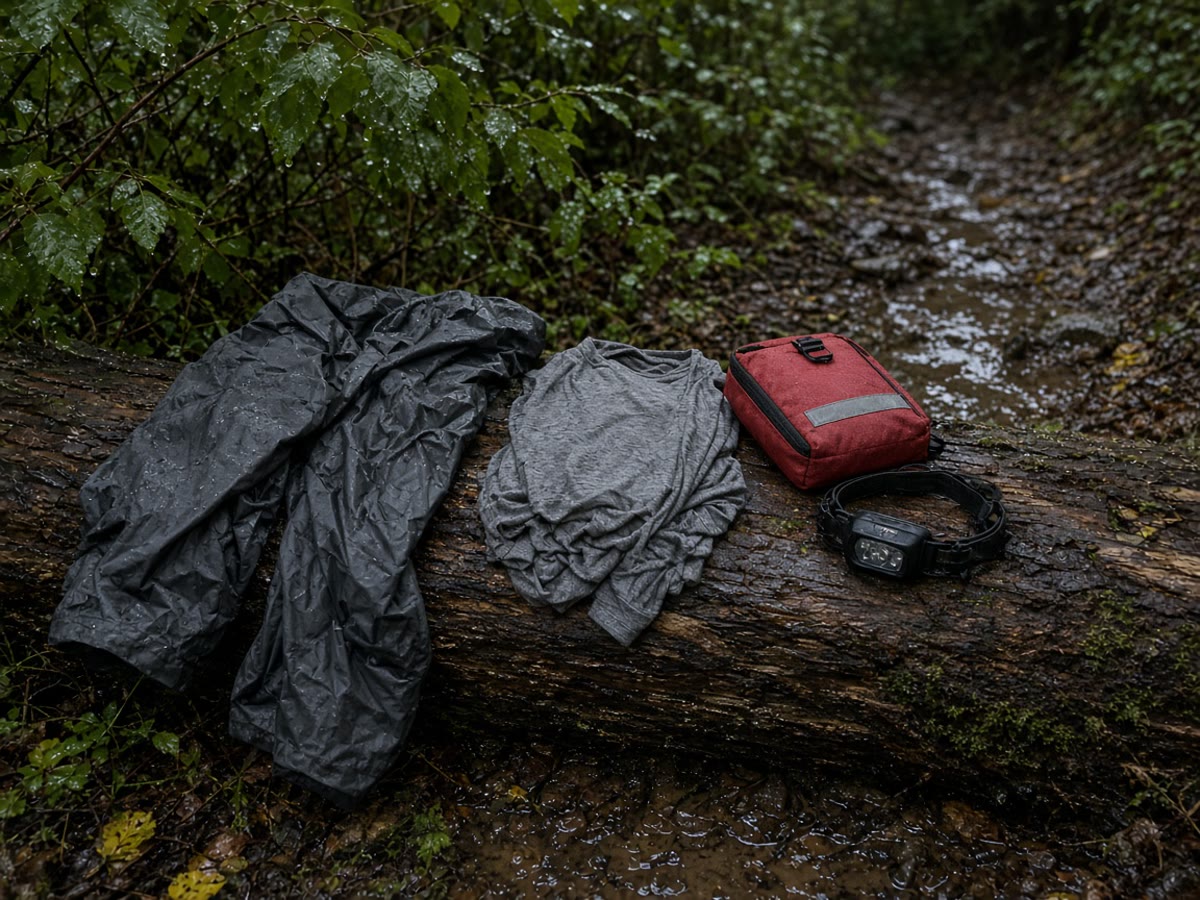
Fifty-degree rain is a heat-loss problem, not a fire speech
People treat a cold September rain like a campfire story. It is a clothing story. Water pulls heat off you faster than dry air. Wind keeps replacing the little warm pocket you made. A cotton hoodie that was fine at the trailhead is a refrigerator you are wearing by the second mile. Shivering is already late. Clumsy zippers and a “just get back to the lot” speech are how a fifty-degree afternoon becomes a night.
A first-frost fire kit is the sibling sit if a ring is legal and you already have dry tinder. A fire will not dry you if you keep standing on a ridge in wet cotton. This page is the walk: pants, shirt, lamp, kit, water, one knife. A 40-degree sleep stack is the night you planned. A squall at 4 p.m. is the unplanned version of the same heat-loss math.
Seventy at noon is not a permission slip. Mid-September 2026 still throws a warm afternoon, a line of rain, and a drop that looks mild on a phone. Pack for the wet low. If the sky is already a wall, put the pants on in the trees before you are soaked.
Rain pants you can hike in beat soaked hiking pants
A jacket without pants just funnels the weather into your boots. The trail becomes a creek. Your thighs become the radiator. Rain pants are the wall. Full-length zips if you can get them, so you are not doing a parking-lot striptease on wet rock. Cuffs that hook a lace, so they do not drink. A stuff sack you can feel without looking, at the top of the pack, not under the food.
The Marmot PreCip Lightweight Waterproof Pants are the live rain pants we named: a packable 2.5-layer pant people actually carry, light enough for a day pack, not a work bib you will hole on granite and then blame. It is not bombproof. It is the September squall pant. Check live prices.
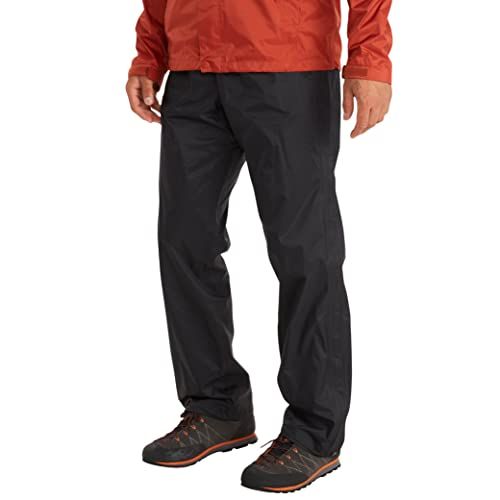
Do: pants on when the rain is real, over dry layers. Don’t: wait until you are already dripping and then trap the wet. The rain-pants page is the longer fit. This heading is the cold-rain wall. A knife does not belong here. The pant is the shell. The knife is a later cut. Hiking pants stay underneath if they are still dry. If they are already a sponge, change the shirt first, then the shell. Vent the zips on a climb so you do not cook and then freeze. Damp and warm is a walk. Soaked and windblown is the hypothermic version of a day hike.
Wet cotton is the problem. Merino is the shirt.
The day started as a t-shirt. The rain made it a compress. Cotton holds the water you walked through and the sweat you made on the last hill. Evaporation keeps stealing heat after the shower looks “done.” Change in the trees, not on the ridge. Wind is the thief. A garbage-bag vest is a last-ditch vapor barrier, not a plan. The plan is a dry merino next to skin that you packed in a bag that is not the one with the wet lunch.
The Smartwool Classic All-Season Merino Base Layer Crew is the live shirt we named: a September-weight merino you can hike in at sixty and still have as the dry change when fifty-degree rain soaks the cotton you should not have worn. It is not a 250-gram winter thermal. Wear the dry one. Bag the wet one. Check live prices.
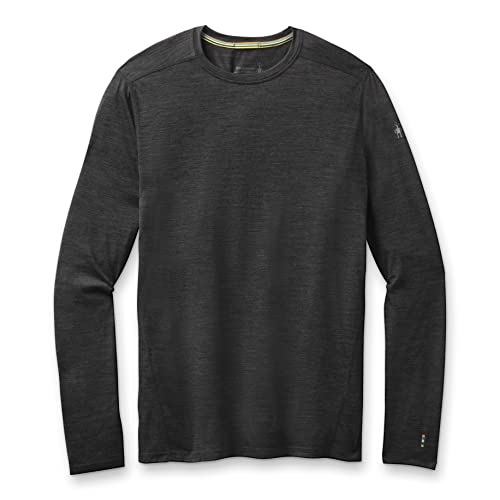
Base, mid, shell is the rule. Cotton stays in the truck. A fleece in a dry bag goes on after the merino, not over a soaked hoodie. A shell on a little too warm beats a shell you put on after you are already shivering. If you only packed one dry shirt, that shirt is the kit. Do not “save it” for camp while you keep walking in the sponge.
A lamp you can find in a storm is how you stop using the phone
A 7 p.m. July exit is a 6:10 September exit, and a squall makes it darker than the clock. Hands are for zippers and a map, not for a phone at 12 percent with a wet screen. A headlamp that already lives in the same pocket is the tool. Lock it so it does not light the stuff sack. Dim it so you do not blind the person you are walking out with.
The Petzl Tikka is the live three-AAA lamp we named: a flood you can dim, a lock, enough runtime for a walk back to the lot. It is not a 2000-lumen flood you will use as a speech. Check live prices.
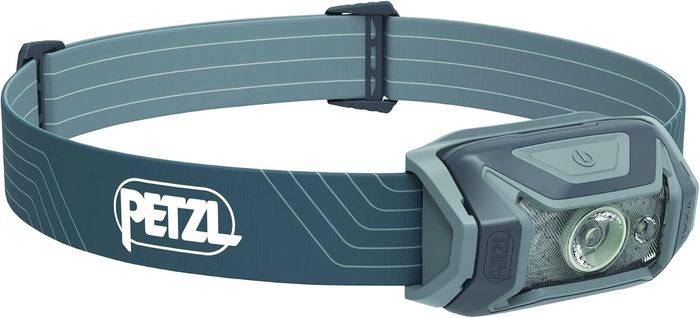
Keep it in the same pocket every walk. If you cannot find it with gloves and rain in your eyes, you do not have a lamp. That is a habit. Solo hiking habits include a turnaround time you wrote, not a hope that the rain will stop. Write the time on the permit or the tape on the bottle. Early dark plus a storm is how a “short loop” becomes a search.
First aid you opened at home, not a tin you cannot find
Cold rain is also how people slip. Roots get grease. Granite gets polish. A wrap you have never seen is a wrap you will not find with cold hands. Open the kit at the table. Know where the pressure bandage lives. Hypothermia care is also dry, windless, and calories — the kit does not replace the shirt. The kit treats the cut you got because you were already clumsy.
The Adventure Medical Kits Sportsman Series First Aid Kit is the live kit we named: labeled compartments, a real wrap, blister and wound care you can actually use. Open it. Restock what you used last month. Check live prices.
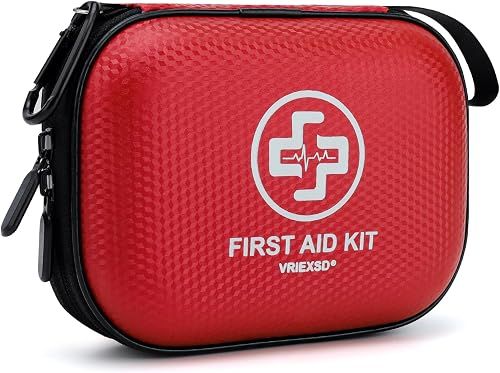
Field first aid is bleed, blister, sprain, and the decision to walk or stop. Life-saving basics include not waiting until speech slurs to admit you are cold. If a person cannot zip their own jacket, they do not keep hiking. They get dry, get out of the wind, and you call for help if that is the day.
Water you can still drink when the creek is brown
People skip water in the rain because they feel wet enough. Then they get empty and colder. Cool rain lies. You still sweat a climb inside a shell. A fountain at the lot may be off for the season. A creek after a dump is silt. A filter you practiced at a tap is the drink. A hope and a gulp is a later stomach story on top of the shiver.
The Sawyer Mini is the live filter we named: a squeeze you already practiced, light enough for a day pack, enough for a walk if you did not let it freeze solid in a 28-degree car the night before. Backflush. Check live prices.
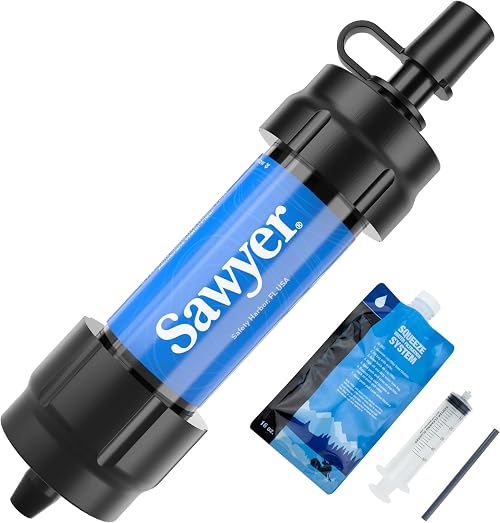
The filter page is the longer fit. Do: a bottle you will actually drink from. Don’t: a first use on the only water you have. A bottle that counts still matters in a storm. Empty and cold is worse than cold alone.
One working knife is for the cord and the wrap, not a spark show
A cold-rain walk is not a ferro-rod video. The sibling fire kit owns the spark. This heading is one full-tang knife you can still hold with wet hands: cut cord for a tarp you already carry, open the kit, make a splint wrap, process the snack you should have eaten an hour ago. One knife you have cut with is a knife.
The ESEE 6 is the live 1095 camp knife we named: enough blade for cord and a nest if a legal sit appears later, a handle you can still hold when the rain has made everything stupid. The ESEE 6 review is the longer fit. Check live prices.
Do not park this card under rain pants. The pants are the shell. The knife is the cut. Do not spend the edge throwing sparks. A 72-hour kit is the bigger bag this rain corner lives in. A survival kit that is not a piece count is the same boring jobs: dry, water, wound, signal. A mall-ninja piston is still a drawer on a fifty-degree Tuesday.
Stop in the trees. Wind is the thief.
The ridge is a view and a heat dump. The hollow can be a cold sink, but a hardwood edge still blocks the shove that is stripping you. Get out of the wind before you change. Drop the pack. Dry merino on. Rain pants on. Shell on. Eat. Then decide if the lot is a walk or a wait. Pride is the extra mile in a sponge. The lot is the win.
A tarp you already carry is a roof if the rain will not quit. Pitch low. Sit on the pack, not in the puddle. Camp safety still applies if the sit is twenty minutes. A fifty-degree rain does not cancel a restriction. The fire sibling still starts with the ban.
The truck is the shelter if the walk is already a fail
If the shiver is the day, the truck is the kit. Dry clothes in the cab. Heater on. Wet layers off. Eat the bar you packed while you still have a brain. The loop is over. Practice the change at home so the storm is not the first merino over a wet head. Trail kit includes a bar in an outside pocket, not a skillet under the rain pants.
Tell someone the drainage and the time. A phone pin is not a plan if the hollow has no signal. A PLB if the walk is already a solo and the weather is already a wall. Walking one more mile because you are embarrassed is how a Tuesday becomes a Wednesday search. The beacon is the last tool. The rain pants were the first.
The kit is rain pants, merino, a lamp, a kit, a filter, and one knife
A cold rain kit for fifty-degree September is a PreCip over dry merino, a Tikka in the same pocket, an AMK you opened at the table, a Sawyer you practiced, and an ESEE 6 for the cord — not a fire speech. Fifty degrees is the rain people underestimate. Get dry. Get out of the wind. Eat. Turn around.
If the wet is the hole, start with the pants and the shirt. If the dark is the hole, start with the Tikka and an earlier turnaround. If the shiver is already the day, start with the trees, the dry merino, and the truck. Check live prices. The rain is the access. Pride is optional.
Also in the magazine
Keep going with a first-frost fire kit, a 72-hour kit that is not mall-ninja, a real survival kit, and layering. Check live prices.
Frequently asked questions
Why is fifty-degree September rain a hypothermia problem?
Wet cotton plus wind pulls heat faster than dry cold air. Fifty degrees does not look like winter, which is why people keep walking in a sponge. Get dry and out of the wind.
Is this the same as the first-frost fire kit?
No. That sibling is the spark you are allowed to have. This page is rain pants, merino, a lamp, first aid, a filter, and one knife. A fire will not dry you on a ridge in wet cotton.
Which rain pants are you naming?
Marmot PreCip Lightweight Waterproof Pants. Put them on before you are soaked. A jacket without pants funnels weather into the boots. Check live prices.
Why merino instead of a hoodie?
Cotton holds rain and sweat. The Smartwool Classic All-Season crew is the live September-weight merino we named. Change in the trees, not on the ridge.
What else belongs in the cold-rain kit?
A Petzl Tikka you can find in the dark, an Adventure Medical Kits Sportsman kit you opened at home, a Sawyer Mini you practiced, and an ESEE 6 for cord — not under the rain-pants heading.
When do I stop walking?
When shivering is the day, zippers are clumsy, or you cannot find the lamp. Trees, dry shirt, truck. A PLB if the walk is already a solo and the weather is a wall.