
Shotguns: Pump-Action, Semi-Automatic, and Break-Action
Written by John Wren|
A shotgun is a shoulder-fired firearm with a smooth bore that fires a shell of shot or a single slug. A pump-action cycles when you slide the forearm. A semi-automatic uses gas or recoil to reload the next shell, one shot per trigger pull. A break-action hinges open and is a single barrel, a side-by-side, or an over/under. The shotgun and the shells stay at a licensed dealer.
Key takeaways
- A pump cycles only when the forearm goes all the way back and forward.
- A semi-automatic reloads the next shell by gas or recoil, one shot per pull.
- A break-action hinges open: single barrel, side-by-side, or over/under.
- Match the gauge and the chamber length on the barrel to the shell. The shotgun stays at a licensed dealer.
A shotgun is a shoulder-fired firearm with a smooth bore that fires a shell of shot or a single slug. The bore is a cylinder, not a rifled tube, so a payload of pellets can leave together and spread into a pattern. A slug is one projectile in a shell, used when the law or the quarry wants a single hit instead of a cloud of shot. Three actions cover the shotguns on a hunting rack and a clay field. A pump-action cycles when you slide the forearm. A semi-automatic uses gas or recoil to reload the next shell after each shot. A break-action hinges open at the receiver and is built as a single barrel, a side-by-side, or an over/under. The shotgun stays at a licensed dealer. The shells stay there too.
Short version. Learn the forearm if you want a gun your arm can run in the wet. Learn a gas or recoil semi-automatic if you want the gun to cycle and you will feed it shells heavy enough to run it. Learn a break-action if you want two shots or one, a gun you can open and see is empty, and a pair of barrels instead of a magazine tube. A rifle spins a bullet. A handgun is not a shoulder gun. A shotgun is the bird gun, the clay gun, and, with a slug, a short-range deer gun where the season says so.
What does a shotgun fire, and why is the bore smooth?
A shotshell is a hull, a powder charge, a wad, and a payload. The payload is either a cup of pellets, called shot, or one slug. Birdshot is small pellets for birds at close range. Buckshot is larger pellets. A slug is a single piece of lead or copper, sometimes in a sabot, and it is the shotgun's answer when you need one hole instead of a pattern. The wad keeps the payload together until it clears the muzzle, then falls away. You do not pick a wad as a separate shopping choice on a day at the counter. You pick a shell whose box names the gauge, the length, the shot size or the slug, and the dram or the velocity, and you match that box to the stamp on the barrel.
The bore is smooth so the pellets are not torn by grooves. They leave as a column and spread. That spread is the pattern, and it is why a shotgun can hit a flushing bird that a rifle would miss, and why a shotgun is the wrong tool for a deer at rifle distance. Choke is a constriction at the muzzle, or a tube you screw into the muzzle, that changes how fast the pattern opens. Cylinder is nearly open. Improved cylinder and modified are the middle. Full is tight. The name on the tube is a hint. The pattern board is the answer. Shoot the shell you will hunt, at the distance you will shoot, and look at the cardboard. A tight choke with the wrong shot, at the wrong distance, is a hole in the pattern or a bird struck with everything at once.
Gauge is the bore diameter, not a caliber in the rifle sense. Twelve is the common hunting and clay gauge. Twenty is lighter and still a real bird gun. Twenty-eight and .410 are smaller, and .410 is a caliber-style name for a small bore that people underestimate. They are not "less lethal" versions of a twelve. They are different bores that need their own shells. A twenty-gauge shell must never be dropped into a twelve-gauge gun. It can slide forward, lodge, and leave room for a twelve-gauge shell behind it. That is a burst barrel, not a quirky trick. Look at the shell. Look at the chamber. If a shell goes in too easily and disappears, stop.
Chamber length is stamped on the barrel: 2 3/4 inch, 3 inch, or 3 1/2 inch are the lengths you will see. The number is the fired length, not a suggestion. A longer shell in a shorter chamber is a dangerous mismatch. A shorter shell in a longer chamber is often allowed, and the barrel stamp or the manual is the place that sentence lives, not a guess at the counter. Read it. A 3 1/2 inch chamber does not mean you should hunt with the longest, hardest shell the rack sells. It means the chamber can accept it. Your shoulder and the pattern board still get a vote.
Some slug barrels are rifled, a special case that does not make the gun a rifle. A rifled slug barrel spins a sabot slug for a shorter, more accurate shot than a smooth bore throws a foster slug. It is still a shotgun action, still a shotshell, still a dealer purchase, and it is a poor barrel for birdshot. Birdshot through a rifled slug barrel patterns badly. A smooth bore with a rifled choke tube is another compromise. Pattern the slug gun before the season if deer is the job. Do not assume a bird barrel and a slug barrel are the same tube with a different day attached.
How does a pump-action shotgun cycle?
The forearm is the handle under the barrel, and it is the whole motor. After a shot, or to chamber the first shell from the magazine, you slide the forearm fully rearward. That stroke unlocks the bolt, extracts the fired hull, ejects it, and cocks the hammer. You slide the forearm fully forward. That stroke picks up the next shell from the tubular magazine under the barrel and locks it in the chamber. Then you can pull the trigger. One shell leaves per pull. The gun does not load the next shell until your hand runs the forearm again.
Short-stroking is the pump's characteristic miss. The forearm stops halfway. The hull does not clear, or the next shell does not rise onto the carrier, and the bolt does not lock. The trigger click means nothing. New shooters short-stroke because they are trying to be gentle, or because the recoil made them loosen the back hand, or because gloves and a long stock put the forearm an inch farther away than practice said it was. The cure is to run the forearm until it stops, back and forward, every time, on an empty gun first. Slam is the right word. A pump that is babied will not feed. A pump that is run will feed when it is wet, cold, and a little dirty, which is the reason people still choose it over a semi-automatic for a first bird gun and for a gun that lives in bad weather.
Loading is a tube and a port. Shells go into the magazine tube through a port in the bottom of the receiver, brass head first, until the tube is full to the plug. Many hunting guns wear a plug that limits the tube to two shells in the magazine so the gun holds three total, the field limit for a lot of migratory bird seasons. The plug is not optional if the regulation says two in the magazine. Take it out for a clay course that allows more, and put it back before the duck day. The dealer can show you the plug on the gun you are holding. A clay gun and a duck gun can be the same pump with a different plug and a different choke.
The first shell can also go straight into the chamber. Lock the bolt back or open the action, drop a shell into the port, and close the forearm. Hunters do this so the magazine stays full and the chamber starts empty until they are set, then they chamber one round when the hunt starts. The safe version of that habit is a chamber you have looked at, not a chamber you remember. Open the action at the truck. Look. Then decide.
A pump has no gas system to choke and no recoil spring that cares whether the shell was a light target load or a heavy hunting load. Your arm is the energy. That is why a pump will run the cheap, light shells a semi-automatic spits out unfired, and why it will also run a heavy slug if the barrel is the slug barrel. The cost is the manual stroke and the recoil you feel because nothing in the action is spreading the shove over a gas system. A heavy shell in a light pump is a lesson in mounting the gun, not a lesson in toughness. Fit the stock. Use the shell the pattern board liked. Ears on.
How does a semi-automatic shotgun cycle?
A semi-automatic shotgun fires one shell each time you pull the trigger and reloads the next shell from the magazine without your hand on a forearm. The motor is either gas or recoil. On a gas gun, ports in the barrel bleed a little gas after the shot passes them. That gas drives a piston or a sleeve, which pushes the bolt rearward, ejects the hull, and compresses a spring that drives the bolt forward to chamber the next shell. On a recoil-operated gun, the whole barrel and bolt travel back together, then unlock. On an inertia gun, which is a form of recoil operation, the bolt's mass stays while the gun moves forward in your shoulder, and that relative motion unlocks the bolt and cycles it. You do not need to pick a philosophy at the counter. You need to know which one you are holding, because they fail differently, and you need to know that all three still fire one shell per pull of the trigger. Holding the trigger does not dump the magazine.
The shell has to supply enough energy to run the action. A light target load in a gas gun that was set up for heavy duck loads may not cycle. The bolt short-strokes, a hull sticks, and the next trigger pull is a click. An inertia gun can be pickier about being held firmly: if the gun cannot move in your shoulder because you are limp or the stock is mounted on a rest that clamps it, the inertia system may not see the motion it needs. A pump does not have this problem. A semi-automatic earns the softer recoil and the faster second shot, which is why waterfowl hunters and clay shooters like it, and it asks for a clean action and a shell that matches the gun. Find that shell on a pattern board or a clay range before opening day, not in a marsh when the first pair cups in.
Loading matches the pump: a tubular magazine under the barrel, a port in the bottom, a plug for bird seasons that require one. The first round is chambered by a bolt release or by pulling the bolt back and letting it go. Do not ride the bolt forward. After the last shell, some guns lock open and some do not. Look in the chamber anyway. A hull in the chamber and an empty tube is a loaded gun. The click you expected is not a safety check.
Gas guns need the ports and the piston wiped. Carbon builds up, and a gas gun that ran in September can choke in January if it has eaten a case of shells and never been opened. Inertia guns have fewer gas parts and still need a clean bolt and a spring that has not been soaked and forgotten. The semi-automatic is not maintenance-free because it is modern. It is maintenance on a schedule, in exchange for a second and third shot that do not ask your back hand to move. If you will not clean it, the honest gun is the pump.
How does a break-action shotgun cycle?
A break-action has no magazine. The barrels hinge on a pin at the front of the receiver. A latch, on the top tang behind the lever or as a lever itself, unlocks the barrels. They pivot down. The chambers are looking at you. You pull the fired hulls out, or the ejectors throw them, and you place one fresh shell in each barrel you intend to fire. You close the gun until the latch locks. If it does not lock, it is not closed. Then you can fire. After those shots, one or two depending on the barrels, you open it again. There is no third shell waiting in a tube unless you are holding a different action.
Extractors and ejectors are the two ways the hulls leave. An extractor lifts the hulls a little so your fingers can pull them. An ejector throws them clear when you open the gun, which is faster on a pair of doves and louder in a duck boat. Either is correct. Know which one you have so a hull does not leave the gun and land where you did not expect, and so you are not standing on a clay range wondering why the empties are still in the chambers.
A single-barrel break-action is one shot, then you open the gun. It is the simplest shotgun that exists. Youth guns, some slug guns, and a lot of first bird guns are single-barrel break-actions because the state of the gun is obvious: it is open and empty, or it is closed and you put the shell in yourself. There is no tube to forget. There is no plug to install. The cost is one shot. A missed bird is a missed bird. For a new shooter that limit is a feature. For a duck blind it is the reason people step up to two barrels or a pump.
A side-by-side has two barrels next to each other on the same horizontal plane. It is the traditional upland gun. You get two shots, often two different chokes, a right barrel more open for the close bird and a left barrel tighter for the second. The gun is usually lighter and quicker to mount than a repeater, and it carries in one hand on a walk through cover. The sight picture is two barrels side by side, which some people mount naturally and some people fight. The reload is the same hinge: open, two shells, close. There is no forearm to short-stroke because there is no forearm stroke.
An over/under stacks the two barrels, one on top of the other. It is the clay-field gun and the upland gun most people meet now. The sight picture is a single barrel from the shooter's eye, which is why many people point it more easily than a side-by-side. You still have two chokes and two shots. A barrel selector, when the gun has one, chooses which barrel fires first. Then the second pull fires the other. Open the gun, reload, close it. Sporting clays, skeet, and a pheasant walk are the jobs. A waterfowl day with a three-shell limit and a need to reload in a rocking boat is where a pump or a semi-automatic starts to make more sense, if the regulation allows the repeater and the plug is in.
The safety on a break-action is often a sliding tang on top of the wrist, and on many guns it goes back to safe when you open the action. That is a helpful habit and a dangerous thing to trust without checking. Open the gun at every fence, every boat transfer, and every time you hand it to someone. An open break-action cannot fire. A closed one might. The hinge is the safety you can see.
How do you tell the three actions apart before anyone loads?
Grab the forend, gently, on an open and empty gun. If it slides, it is a pump. If the forend is fixed and there is a bolt handle or a charging piece and a loading port into a tube, and the dealer shows you a bolt that runs by itself after a shot, it is a semi-automatic. If the barrels hinge down when you push the latch, it is a break-action, and then you count barrels and see how they are arranged. One barrel is a single. Two barrels beside each other are a side-by-side. Two barrels stacked are an over/under. Those three break-actions are the same hinge and three different guns.
The empty check matches the action. A pump or a semi-automatic is empty when the magazine tube is empty and the chamber is empty, which you confirm by opening the bolt and looking, and by feeling the tube if you are unsure a shell is still in it. A break-action is empty when it is open and both chambers, or the one chamber, are bare. A case does not do this for you. Open the gun. Look. Then put it in the case.
Where is each shotgun typically used?
Upland hunting, pheasant and grouse and quail, is the break-action's classic job and a perfectly honest job for a pump. You walk. You mount. You get one bird or a pair, then you have time to reload. An over/under or a side-by-side carries well and opens at every fence. A pump carries well too if the stock fits and you have practiced the slide in gloves. A semi-automatic upland gun works if it cycles the lighter field loads you are actually shooting. If it only runs magnum shells, it is a duck gun you brought to the wrong field.
Waterfowl is where the repeater earns the magazine, inside the plug limit. A pump runs in spray and mud. A semi-automatic spreads recoil across a longer cycle, which matters on a day of heavy loads, if you clean it and if the shells cycle. A break-action of two shots is legal and traditional and slower to reload in a layout boat. People still hunt ducks with over/unders. They do it on purpose, not because they forgot pumps exist. The choke and the shot size matter more than the action once the gun fits and the plug is in. Pattern steel shot, if steel is required, through the choke you will use. A full choke and steel is a combination you confirm with the choke maker's note, not with optimism. Steel patterns tighter and can damage a choke that was cut for lead.
Deer, where the season is shotgun-only or where you choose a slug, is a slug barrel, a bead or a scope, and a pattern session at the distance you will shoot. A pump with a rifled slug barrel, a single-shot break-action built for slugs, or a semi-automatic that actually cycles that slug are all real guns. A bird barrel with a foster slug "to see" is a guess. The distance is short compared with a rifle. Fifty to a hundred yards is a slug conversation. Two hundred yards is a rifle conversation, if the season is a rifle season.
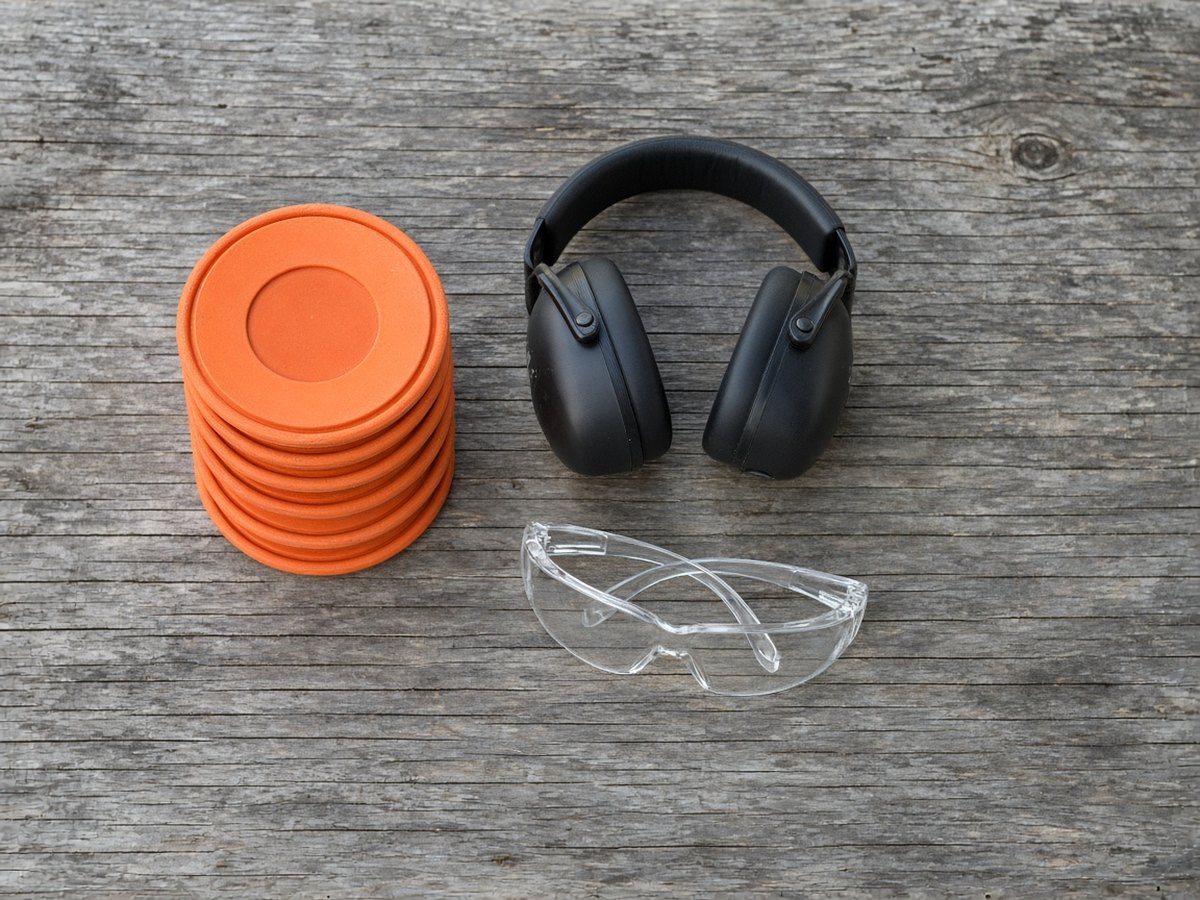
A clay range is where all three actions get honest practice without a bird. Trap and skeet and sporting clays reward a gun that mounts to the same place every time. Over/unders dominate some of those fields because two chokes and an open action between posts are the whole manual of arms. Pumps and semi-automatics are welcome on most public ranges if the shell is a target load and you can run the gun without sweeping the squad. Glasses on a clay field are not a suggestion. A broken clay and a pellet from the next stand both fly. Muffs too. A shotgun is a loud neighbor.
In the field, away from a posted range, the action is the part you can still run when you are cold. A pump fails if you short-stroke. A semi-automatic fails if the shell is too light or the gas system is fouled. A break-action fails if you forgot it only holds what you put in the chambers, which is a failure of planning, not of the hinge. Pick the failure you will practice against. Then put the gun in a safe at home, unloaded, action open if that is how you store it. Ownership is the same for a single-barrel and for a gas gun. The shells do not live in a jacket pocket between seasons.
What do you confirm before the shotgun leaves the counter?
Name the action. Pump, semi-automatic, or break-action, and if it breaks, say single, side-by-side, or over/under. Read the gauge and the chamber length on the barrel. Buy one box of shells that matches both, and have the dealer watch you read them. Ask whether a twenty-gauge shell can even physically reach this chamber, and remember the lodged-shell warning if you own more than one gauge. Ask where the plug is if you named a duck or goose season. Ask which choke is in the gun, and whether the shell you just bought is lead, steel, or something else the choke can accept.
Open the action. Look down the bore from the breech. Run a pump forearm all the way, twice, empty. Close a break-action and feel the latch lock, then open it again. On a semi-automatic, ask what load the gun is known to cycle and plan to test that before a hunt, not during one. Then case the gun, keep the shells separate until you are on a range or a legal field, and take both from that dealer. A shotgun is a simple machine once you know which part your hand moves. It stays simple if the shell matches the stamp and the action is open when you think it is empty.
Frequently asked questions
What is a shotgun?
A shotgun is a shoulder-fired firearm with a smooth bore. It fires a shotshell of pellets or a single slug. The smooth bore lets shot leave as a column and spread into a pattern. A rifled slug barrel is a special case still chambered for shotshells, not a rifle.
How does a pump-action shotgun cycle?
Slide the forearm fully rearward to unlock, extract, eject, and cock. Slide it fully forward to pick up the next shell from the magazine tube and lock it in the chamber. Your arm is the motor. A short stroke leaves the action unlocked and the next trigger pull does nothing.
How does a semi-automatic shotgun reload the next shell?
Gas bled from the barrel, or recoil including inertia, drives the bolt back to eject the fired hull and forward to chamber the next shell from the tube. One pull fires one shell. The shell has to be stout enough to run that action, and the gun has to be held and cleaned so the system can move.
What is the difference between a single-barrel, a side-by-side, and an over/under?
All three are break-actions. The barrels hinge open, you load each chamber by hand, and you close the gun until it locks. A single has one barrel and one shot. A side-by-side has two barrels next to each other. An over/under stacks two barrels. None of them has a magazine tube.
Where are pump, semi-automatic, and break-action shotguns typically used?
Pumps hunt birds, throw slugs, and shoot clays in weather, because your arm cycles them. Semi-automatics suit waterfowl and high-volume clays when the shell cycles the gun. Break-actions, especially over/unders and side-by-sides, suit upland hunting and clay sports where one or two aimed shots and an open action are the point. Slug guns for deer need a pattern session at hunting distance.
What must match between a shotgun and a shell?
The gauge and the chamber length stamped on the barrel must match the shell. A longer shell does not belong in a shorter chamber. A twenty-gauge shell must not be dropped into a twelve-gauge gun, because it can lodge ahead of a twelve-gauge shell. Read both stamps at the dealer before a box leaves the counter.