
Handguns: Revolvers and Semi-Automatic Pistols
Written by John Wren|
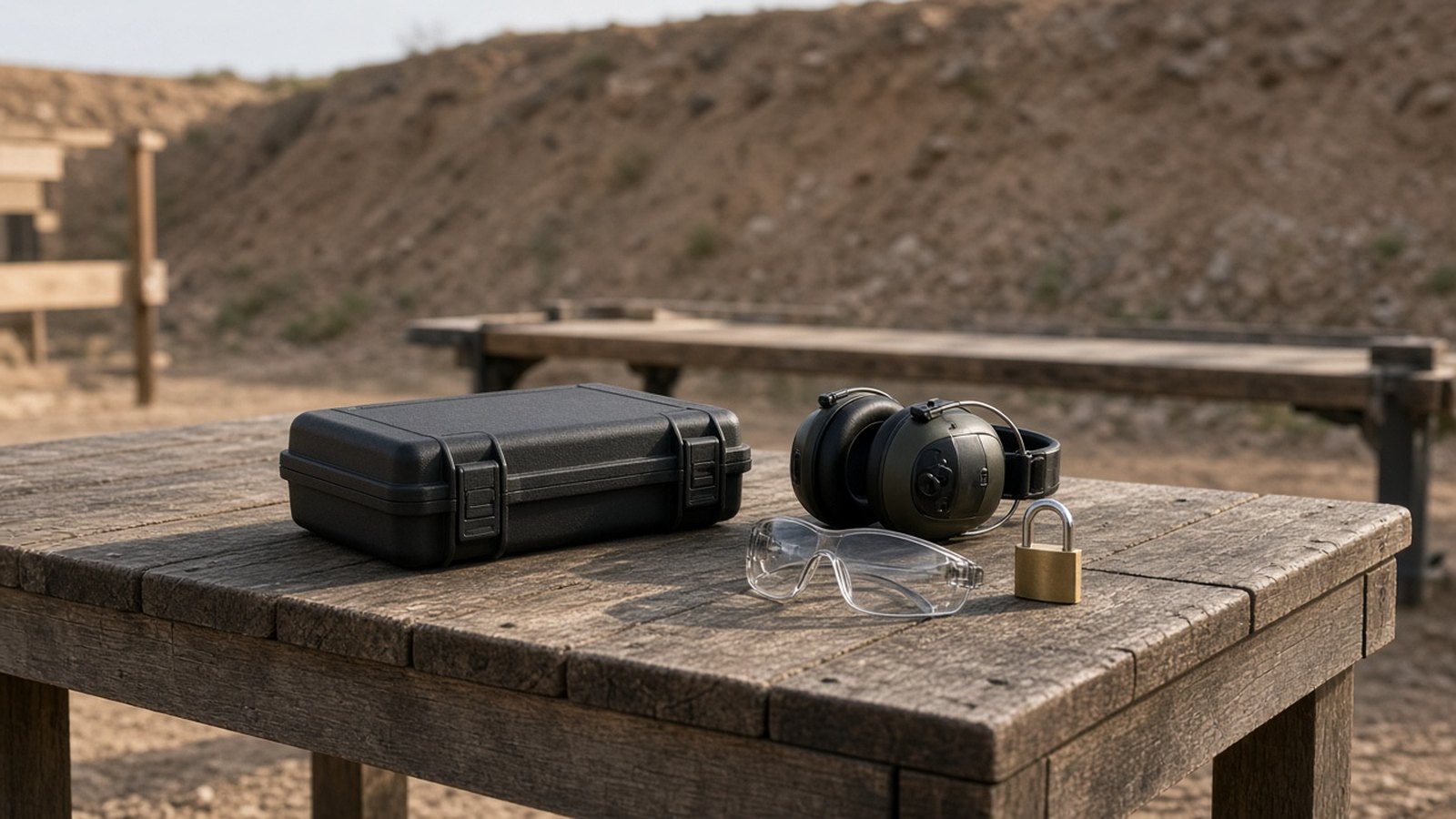
A handgun is a compact firearm fired with one or both hands. A revolver holds five to eight rounds in a rotating cylinder and cycles by the hammer or the trigger. A semi-automatic pistol holds rounds in a detachable magazine in the grip, and the fired round's energy cycles the slide to load the next one. The handgun and the ammunition stay at a licensed dealer.
Key takeaways
- A revolver cycles a rotating cylinder, usually five to eight rounds.
- A semi-automatic pistol feeds from a magazine in the grip and cycles the slide.
- One pull fires one shot. Holding the trigger does not fire the next round.
- The handgun and the ammunition stay at a licensed dealer.
A handgun is a compact firearm fired with one hand or both, not from the shoulder. Two actions cover nearly every handgun a counter stocks. A revolver holds its rounds in a rotating cylinder, usually five to eight, and the mechanism is mechanical: you cock a hammer or you pull a trigger, and the next chamber rolls into line. A semi-automatic pistol holds its rounds in a detachable magazine inside the grip, and the energy of a fired round cycles the slide so the next round is chambered. The handgun stays at a licensed dealer. The ammunition stays there too.
Short version. Learn the cylinder before you learn the slide if you want the simpler machine. Learn the slide and the magazine if you want a faster reload and a gun that locks open when it is empty. Neither one is a rifle, and neither one is a shotgun. A rifle is a shoulder gun with a rifled bore for a longer shot. A shotgun is a shoulder gun with a smooth bore for shot or a slug. An AR pistol is a different family, with a barrel under 16 inches and no shoulder stock, and it is a different transfer from the revolvers and pistols described here.
What is a handgun, and what is it not?
The defining fact is how you hold it. The grip is sized for a hand. There is no buttstock meant to sit in the shoulder. You can shoot a handgun one-handed, and most people shoot it better with two: one hand on the grip, the other supporting. That two-hand hold does not turn it into a rifle. The stock, or the lack of one, is the line.
Ordinary speech mixes the words. People say pistol for any handgun. On a counter, pistol usually means the semi-automatic, the gun with a slide and a magazine, and revolver means the gun with a cylinder. Use those two words that way and the rest of the conversation gets shorter. A single-shot handgun exists, a break-open or a bolt, and it is still a handgun, but it is not one of the two repeating actions most hunters and range shooters are choosing between.
Size is a second cut, not the first. A snub is short. A full-size duty gun is longer and heavier. A hunting revolver can wear a long barrel and a scope. Those are jobs. The action is still either a cylinder that rotates or a slide that runs. If you cannot name which of those two you are holding, you are not ready to talk about caliber yet.
Caliber is stamped on the barrel or the frame. The ammunition has to match that stamp, including the case length. A shorter cartridge sometimes chambers in a longer chamber of the same family, and a longer one does not, and the safe habit is to read both stamps with the dealer before a box leaves the counter. Do not guess from the shape of the bullet.
How does a revolver cycle?
A revolver stores one round in each chamber of a cylinder that sits behind the barrel. When the gun fires, the bullet crosses a small gap between the front of the cylinder and the rear of the barrel, then travels down a rifled bore. Between shots, the cylinder rotates so the next chamber lines up with the bore. Nothing in the grip is a magazine. The cylinder is the supply of ammunition, and it is part of the gun until you swing it out or open a gate and unload it.
The usual count is five to eight rounds. Five is common on a small frame built to be carried. Six is the classic count, the one people picture. Seven and eight show up when the cartridge is long and thin enough that more chambers fit the same diameter of steel. A dealer can open the cylinder and count the holes with you. A number higher than that is a specialty, not the gun you should assume is on the rack.
Single-action is the older manual of arms, and it is still the hunting revolver a lot of people mean. You thumb the hammer all the way back. That cocking stroke rotates the cylinder and locks the next chamber in line with the barrel. The trigger then has one job: it releases the hammer. The pull is short. If you decide not to fire, you lower the hammer under control, with your thumb on the spur and the muzzle pointed somewhere safe. Ask the dealer to show that step on the unloaded gun. It is part of the action, not an extra trick.
Double-action combines the steps. A long pull of the trigger rotates the cylinder, cocks the hammer, and releases it. You can fire without thumbing the hammer first. Many double-action revolvers can also be cocked by hand, which gives you the short pull for a careful shot and the long pull for a shot you did not have time to stage. Those are called double-action/single-action. A double-action-only revolver hides or bobs the hammer. Every shot is the long pull. You cannot thumb-cock it, which is the point: nothing is left cocked in a holster or a case.
Loading depends on the frame, and the frame is visible. A swing-out cylinder has a release, usually on the left side of the frame. You push it, the cylinder swings out, and you load chambers from the rear. An ejector rod in the middle of the cylinder, pressed while the muzzle points up, shoves empty cases out in one motion. A loading-gate revolver, the pattern on many single-actions, loads one chamber at a time through a gate on the right side of the frame and empties one at a time with a rod under the barrel. You index the cylinder by hand, one click per round. A break-top, uncommon on a new rack, hinges open like a shotgun and dumps the cases when it opens. The idea does not change. You move the cylinder, you fill chambers, you close it until it locks. A cylinder that is not locked is not a gun you fire.
That mechanical simplicity is the reliability argument, and it is a real one. There is no slide to short-stroke, no magazine spring, and no empty case that has to be yanked out by gas or recoil before the next shot can happen. Dirt, a light hold, and a cartridge that is a little soft do not stop the next chamber from rolling into line if the trigger is pulled through. The cost is the reload. You are handling loose rounds, or a speedloader that drops a full set into the chambers at once, or a strip that peels them in two at a time. You are not seating a magazine and releasing a slide. On a hunt, or on a practice string measured in a cylinder or two, that pace is often what you wanted. On a long range day it is the reason people switch to a pistol.
The cylinder gap is part of the same machine. Gas and particles escape sideways at the gap when the gun fires. That is normal. It is also why you do not wrap a forward hand around the front of the cylinder the way you might wrap a rifle forend. The support hand stays behind the gap. A dealer or a range officer will say this once. It is worth hearing on an unloaded gun before you hear it as a burn.
How does a semi-automatic pistol cycle?
A semi-automatic pistol stores cartridges in a detachable box magazine that sits inside the grip. A spring in the magazine pushes the stack up. The top round waits under the slide. When you seat the magazine and rack the slide, or when the slide runs forward after a shot, the breech face strips that top round and pushes it into the chamber. The magazine is not part of the gun the way a cylinder is. It comes out. You can own more than one. You still buy them, and the ammunition, at the dealer with the pistol, and you confirm they are the magazine that pistol was built to feed.
The common centerfire cycle is short recoil, a locked breech. For the first instant after the shot, the barrel and the slide are locked together and they move rearward as a unit. After a short distance the barrel unlocks and stops. The slide keeps going. An extractor hooked on the case rim pulls the empty case out of the chamber. An ejector kicks the case out through the port. A recoil spring, compressed as the slide traveled back, then drives the slide forward. On the way, the slide picks up the next round from the magazine and chambers it. The trigger has to be released and pulled again. One bullet leaves per pull. Holding the trigger back does not fire the next round. That single fact is the difference between a semi-automatic and an automatic, and it is the fact a dealer means when the card says semi-automatic.
Many rimfire pistols, and some small centerfire pistols, are straight blowback instead of locked-breech. There is no lug tying the barrel to the slide. The mass of the slide and the strength of the spring hold the breech closed until pressure drops, and then the slide blows rearward, ejects, and chambers the next round. From the outside the manual of arms matches the locked-breech gun: a magazine in the grip, a slide you rack, a slide that locks back when the magazine is empty. The inside is simpler, and it is why a blowback slide in a centerfire caliber is often heavier than people expect. You do not need to machine the difference. You do need to know that a .22 pistol and a centerfire duty pistol are not the same spring, the same magazine, or the same ammunition, even when both say semi-automatic on the tag.
The trigger style is a separate choice from the cycle. A single-action pistol is designed to be carried cocked, with a manual safety you sweep, and the trigger only releases a hammer or a striker. A double-action/single-action pistol fires the first shot with a long pull that cocks the hammer, then fires later shots with a short pull, and a decocker can drop the hammer without firing. A striker-fired pistol, the pattern most new shooters are handed, gives a similar pull every time, often with a blade safety in the trigger face and no hammer spur. None of those changes the cycle. The slide still loads the next round. Your hand still has to release the trigger and pull it again.
When the last round fires, the magazine follower pushes the slide stop up and the slide locks to the rear. The chamber is empty and you can see that it is empty. You press the magazine release, seat a full magazine until it clicks, and either thumb the slide stop or pull the slide slightly rearward and let it go. The gun is loaded again. That sequence is why a pistol is the handgun people bring to a practice session measured in boxes. It is also why the failure modes are different from a revolver. A magazine that is not seated, a round of the wrong length, a dirty chamber, or a wrist that collapses and steals energy from the slide can leave the case in the chamber or the slide out of battery. The clearance is a tap on the magazine, a rack of the slide, and a look at the chamber, muzzle pointed at the berm. The range officer shows it. You do not invent a field fix by pulling the trigger again on a gun that did not go into battery.
A magazine is a feeding device, not a measure of what you are allowed to carry. State rules on capacity are a dealer question and a statute question, and they change. The mechanical point is smaller. The pistol only cycles the next round if a round is in the magazine and the slide is free to run its full stroke. An empty magazine that has locked the slide open is a feature. A magazine left in the gun when you thought the gun was clear is the mistake the chamber check exists to catch. Lock the slide back. Look. Then look again.
How do you tell a revolver from a pistol before anyone fires?
Look at the middle of the gun. A revolver has a cylinder, a fluted or solid drum of chambers, sitting between the grip and the barrel. A pistol has a slide, a rectangular mass on top of the frame, and the baseplate of a magazine peeking out of the bottom of the grip. If you can see a cylinder, it is a revolver. If you can drop a magazine out of the grip, it is a pistol. Those two checks take five seconds on an unloaded gun at the counter.
Then ask what your hands do between shots. On a revolver, after the shot, your hands stay on the grip unless you are reloading. The cylinder did the indexing. On a single-action you will also thumb the hammer if you are shooting it that way. On a pistol, your hands stay on the grip too, but the slide moves, the case leaves the gun, and eventually the slide locks open and your support hand or your thumb has a magazine to change. If someone tells you a revolver "reloads like a pistol," they are selling a speedloader, not describing the action. The speedloader is faster than loose rounds. It is not a magazine in the grip.
The empty gun tells you the state. A revolver is empty when the cylinder is open and every chamber is clear, or when the gate is open and you have indexed every chamber past it and seen light through each one. A pistol is empty when the magazine is out and the chamber is clear, which you confirm by locking the slide back and looking, not by trusting the weight of the gun. A case does not make either gun empty. A soft case is a way to carry. It is not a safety.
Where is each handgun typically used?
On a range, both actions are ordinary. A revolver is a clean way to learn a trigger press, a sight picture, and a reload you can do slowly and see. A pistol is a clean way to learn a presentation, a magazine change, and a slide that tells you the gun is empty by locking open. Ears and glasses go on before either gun comes out of the case. A range bag holds those, plus a chamber flag if the line uses one. The bag does not hold a borrowed box of ammunition that does not match the stamp.
Accuracy work on a square range is the same idea on both guns. A slow press, a sight that does not move when the shot breaks, and a target close enough that you can see what the sight did. A hunting revolver with a scope is aimed like a short rifle and still recoils like a handgun. A compact pistol is easier to carry and harder to shoot well past the distance where you can call your shots. The action does not fix a flinch. Practice does, and practice is a range, not a creek bottom on opening morning.
Hunting with a handgun is legal in some seasons and not in others, and the rule is specific: a cartridge floor, a barrel length, a straight-walled case, an open sight, or a ban on handguns entirely for that animal. The regulation book and the dealer are the sources. A general sentence cannot clear you for a unit. What the actions are good at, when the season allows a handgun at all, is the close shot. Thick cover. A finished animal at a distance where a rifle would be the wrong tool if the law even allows the second shot. A long single-shot hunting handgun is its own object, closer to a short rifle in the way you aim it, and it still is not a shoulder rifle.
In the field, away from a bench, a handgun is usually the second gun. The rifle or the shotgun is the gun the day was built around. The handgun stays in a holster you practiced, or in the case until camp, and it comes out for a job that is actually a handgun job. It is a poor substitute for a rifle at a distance where the rifle was zeroed, and it is a poor substitute for a shotgun on a flushing bird. People get hurt, and people miss, when a handgun is asked to be the other two.
A revolver earns the field job when you want five to eight shots, a reload you can do with cold hands if you practiced it, and a gun that still fires the next chamber if it is wet and a little dirty. A pistol earns the field job when you want a flatter, faster reload and you have confirmed the magazines and the ammunition on a range before the trip. Neither earns the job if it lives in a drawer and meets you on the morning you need it. A safe at home is where it lives between those days. Ownership is the safe, the stamp, and the dealer, not a story about what the gun might do.
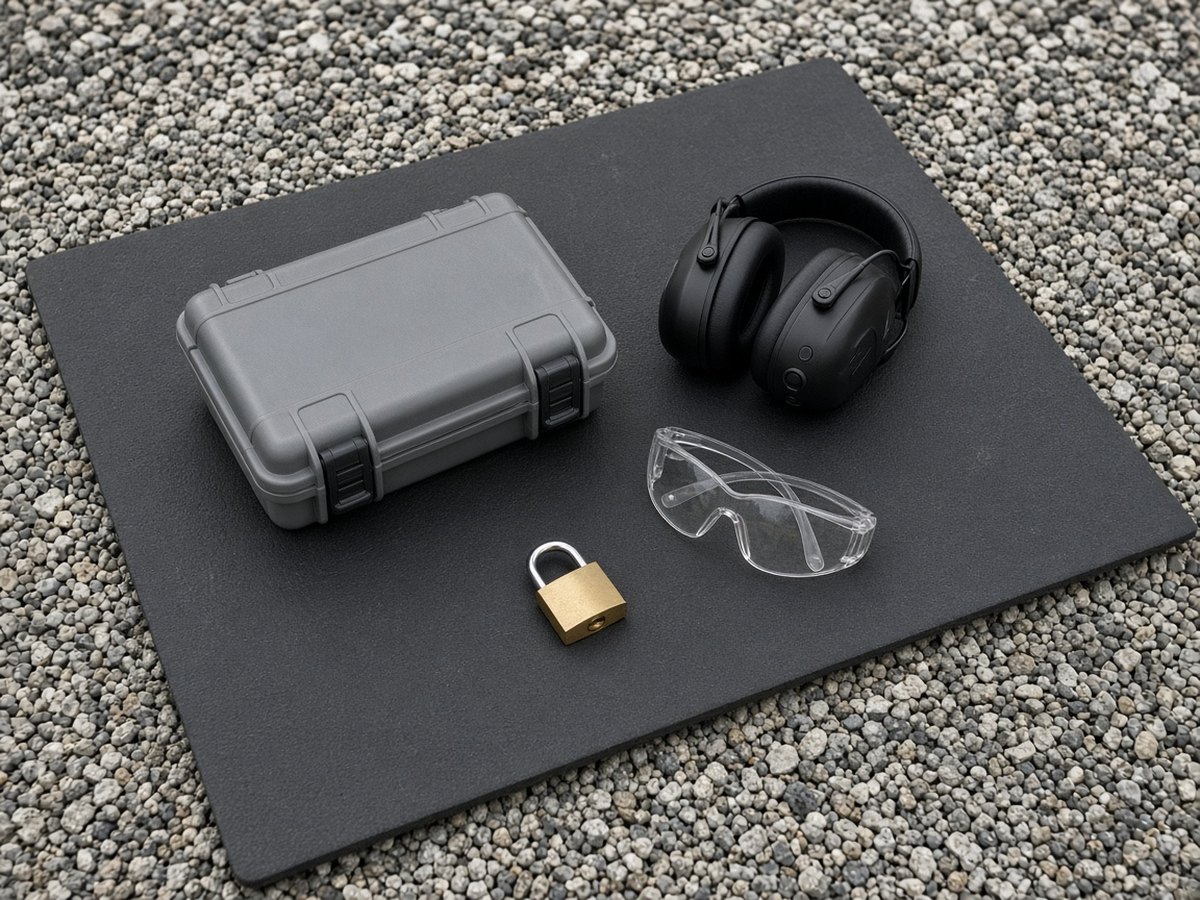
What do you confirm before the handgun leaves the counter?
Name the action out loud. Revolver or semi-automatic pistol. Count the chambers, or seat and drop the magazine once while the slide is locked open and the chamber is empty. Read the caliber stamp and read the end of the ammunition box the dealer is handing you. Ask whether that pistol takes the magazine in your other hand, because a magazine that looks right and does not lock is a magazine for a different gun. Ask how the revolver unloads, swing-out or gate, and do it once with the gun empty.
Ask what the transfer is. A handgun from a licensed dealer is a dealer transfer, with the paperwork that dealer runs. A private plan you invented in a parking lot is not a plan. The ammunition is part of the same stop. A box that does not match the stamp does not go in the case "to try." If the season you care about has a handgun rule, ask the dealer to look at the regulation with you before you pay, not after you are on the unit with the wrong barrel length.
Then put the gun in a case, not on a seat, and put the case where the law where you live says a handgun rides in a vehicle. The muffs and the glasses ride with you. The safe at home is the next stop, not the truck for a week. A revolver and a pistol are both simple once the action has been named. They stay simple if the ammunition matches, the chamber gets looked at, and the gun is not asked to be a rifle.
Frequently asked questions
What is a handgun?
A handgun is a compact firearm fired with one hand or both, with a grip instead of a shoulder stock. The two repeating actions on a dealer rack are the revolver, which uses a rotating cylinder, and the semi-automatic pistol, which uses a detachable magazine in the grip.
How does a revolver cycle the next round?
Each round sits in its own chamber in the cylinder. Cocking the hammer on a single-action, or pulling the trigger through on a double-action, rotates the cylinder so the next chamber lines up with the barrel. You reload by swinging the cylinder out, using a loading gate, or opening a break-top, then filling the chambers.
How does a semi-automatic pistol cycle the next round?
The magazine in the grip feeds one round at a time. When you fire, recoil drives the slide back, the empty case ejects, and a spring drives the slide forward to strip the next round into the chamber. You must release the trigger and pull it again. One pull fires one shot.
How many rounds does a revolver usually hold?
Usually five to eight. Five is common on a small carry frame, six is the classic count, and seven or eight show up when the cartridge is slim enough that more chambers fit the cylinder. Count the chambers with the dealer on the unloaded gun.
Where are revolvers and semi-automatic pistols typically used?
Both belong on a range, with muffs and glasses. A revolver suits a simple manual of arms and a short string of shots. A pistol suits magazine changes and a slide that locks open when empty. Hunting use depends on the season's cartridge and barrel rules. In the field a handgun is a second gun, not a substitute for a rifle or a shotgun.
Where do the handgun and the ammunition stay?
At a licensed firearms dealer. Match the caliber stamp on the gun to the stamp on the box before you leave the counter. A case, muffs, and glasses are the things you can see on the bench. The revolver, the pistol, and the ammunition are the dealer's transfer.