
Shimano SLX 150 vs Lew's Speed Spool LFS
Written by John Wren|
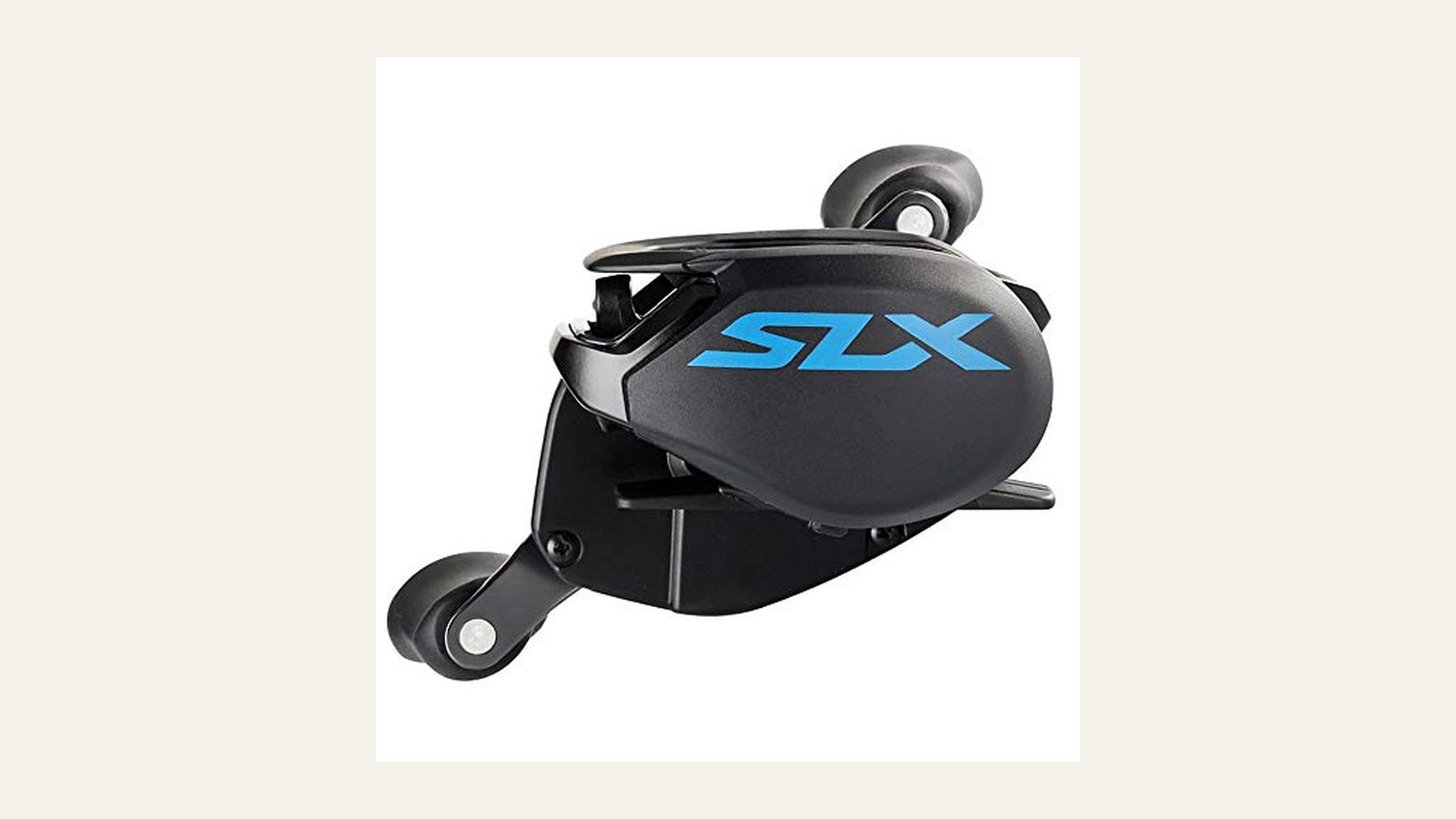
Choose the Shimano SLX150HG for a right-hand 7.2:1 baitcaster with a HAGANE body. Choose this Lew's Speed Spool LFS for a left-hand 6.8:1 reel with an external magnetic brake.
Key takeaways
- SLX150HG is right-hand, 7.2:1, HAGANE body.
- This Speed Spool listing is left-hand, 6.8:1.
- Pin brakes are a shop setup. A magnetic dial is a boat setup.
- A spinning rod is the wrong blank.
Shimano SLX 150 vs Lew's Speed Spool LFS is a low-profile baitcaster fight in the reel most people actually buy: a right-hand 7.2:1 SLX150HG with a HAGANE body and Shimano's variable brake on one side, a left-hand 6.8:1 Speed Spool LFS with a one-piece aluminum frame and an external magnetic brake on the other. If you crank with your right hand and you want the compact Shimano that has been the workhorse under a hundred-fifty dollars for years, buy the SLX150HG. If you crank with your left hand and you want Lew's aluminum frame, brass gears, and a brake you can touch without taking the side plate off, buy this Speed Spool LFS. The hand is not a footnote. A right-hand reel on a left-hand angler is the wrong reel even when the brand is right.
Short version. A 2500 spinning reel is a bail and a different rod. A baitcaster versus a spinning combo is the decision before this one. A cheaper baitcaster is a different Saturday. The lure still has to match the rod. Check live prices.
This comparison is two casting reels you can still buy. It is not a spinning reel and it is not a 300-size musky winch. The SLX box here is model SLX150HG: right-hand retrieve, 7.2:1, the HG in the name. The Lew's box here is the left-hand 6.8:1 Speed Spool LFS, the listing whose gearbox ratio is 6.8 and whose hand is left. Confirm both before you spool line. An 8.2:1 SLX XG is a faster Shimano. An 8.3:1 Lew's is a faster Lew's. A right-hand Lew's is a different handle.
| Job | Shimano SLX150HG | Lew's Speed Spool LFS | Our call |
|---|---|---|---|
| Right-hand retrieve, a jig and a worm | 7.2:1, VBS brake, HAGANE body | This listing is left-hand | SLX150HG |
| Left-hand retrieve, a spinnerbait and a crank | Buy the 151 if you need left | 6.8:1, external magnetic brake | Speed Spool LFS |
| A brake you set once and forget | Side-plate VBS pins | Dial on the outside | Lew's if you change lures all day |
| A compact reel that palms small | About 6.9 ounces in this size | One-piece aluminum, 34 mm spool | SLX if the hand matches |
| A spinning rod on the deck | Wrong reel | Wrong reel | A 2500 spinning reel |
Confirm SLX150HG, right-hand, 7.2:1. Confirm the Lew's is the left-hand 6.8:1, not an 8.3:1 and not a right-hand handle. A combo that hides the reel model in the rod name is a different box.
Who should buy the SLX 150, and who should buy the Speed Spool?
Buy the SLX150HG if your right hand turns the handle and your left hand stays on the rod. That is how a lot of right-handed people fish a baitcaster, and it is also how some left-handed people fish one. Buy the Speed Spool on this listing if your left hand turns the handle. Buy the other hand of either brand if that sentence does not match you. The gear ratio is the second question. 7.2:1 on the SLX HG and 6.8:1 on this Lew's are close enough that a parking-lot crank will not decide your season. They are far enough that a fish running at the boat feels different, and a slow roll on a swimbait feels different.
A baitcaster belongs on a casting rod with the guides on top. If the blank you own is a spinning rod, neither of these reels seats the way you think it will, and the thumb will not save a backlash that started because the guides are on the wrong side of the blank. The combo decision comes first. The brand comes second.
What the SLX150HG is actually for
SLX150HG is Shimano's right-hand 7.2:1 in the SLX series: a HAGANE body, Super Free Spool, and a variable braking system under the side plate. Shimano's description of this size lists the reel at about 6.9 ounces, which is why it palms smaller than the older Caenan-class baitcasters people remember. The HG in the model is the middle gear. A 6.3:1 SLX150 is the slower one. An 8.2:1 XG is the fast one. Do not let a photo of all three ratios talk you into the wrong box. The model number on the side plate is the reel.
The brake is the part that keeps a beginner from nesting the spool, and it is also the part a veteran turns down when the lure is heavy and the wind is behind them. VBS is a set of pins. You take the side plate off, click pins out to free the spool, and click pins in to tame it. It is not a dial you flick between a squarebill and a worm without looking. Set it for the lure you throw most, then use the spool-tension knob and your thumb for the rest. A reel that backlashes on every cast is usually a tension knob left too loose, not a bad gear.
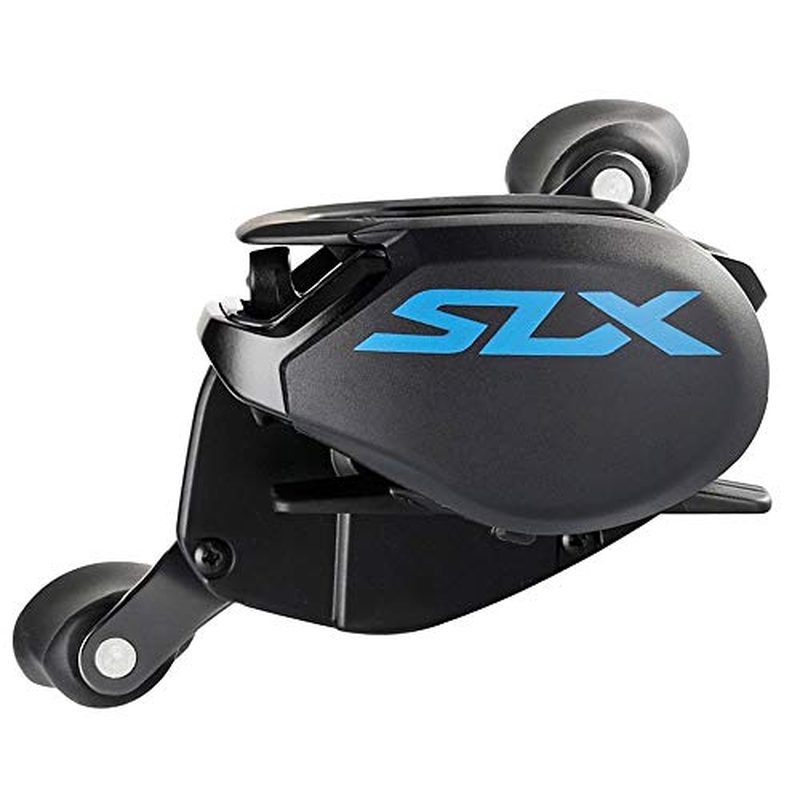
Do: set the spool tension so the lure falls slowly when you thumb the bar and the lure stops itself just before it hits the ground. Don't: open the side plate in the boat and lose a brake pin in the carpet. Do: confirm right-hand if that is how you retrieve. Don't: buy an SLX XT because the photo looks similar. The XT is a different brake, SVS Infinity, and a different reel.
What the Speed Spool LFS is actually for
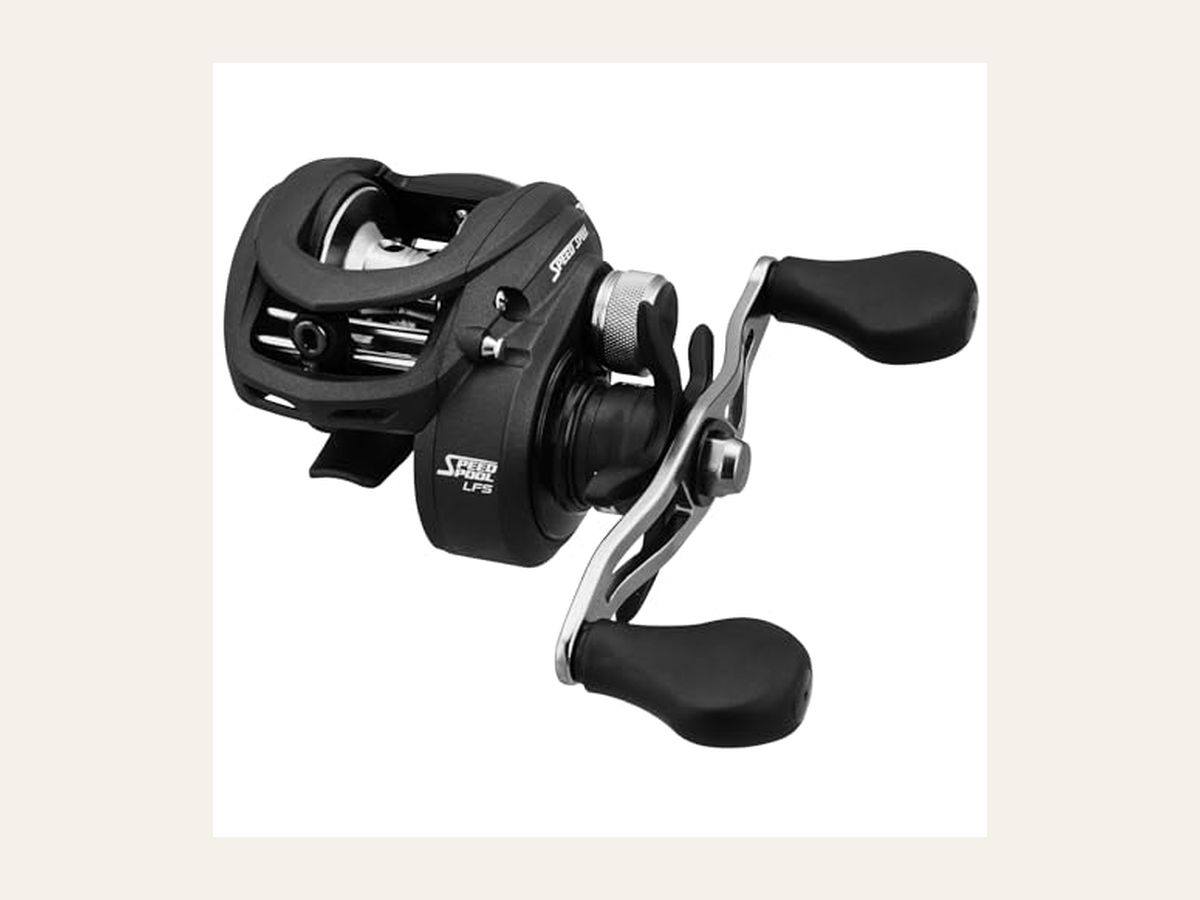
This Lew's listing is the left-hand Speed Spool LFS at 6.8:1. The frame is one-piece aluminum. The side plate you palm is graphite and comes off. The spool is a machined, anodized aluminum spool listed at 34 mm. The gears are brass, cut as Speed Gears, with a P2 Super Pinion supporting the pinion so it stays in line. The handle on the listing's description is a 95 mm anodized aluminum handle with paddle knobs. The brake is an external magnetic control, which means you change cast control without a screwdriver and without a handful of pins. Ten bearings is the count Lew's prints for this system: stainless, double-shielded, plus the one-way clutch they call Zero Reverse.
6.8:1 is the gear for a crankbait, a spinnerbait, and a jig you are not trying to burn back to the boat. If the box says 8.3:1, you bought the extra-high gear. If the handle is on the right, you bought a different retrieve. The UPC and the model on the side plate are the check. A Speed Spool from a generation earlier, or a Gen 3 that showed up later, is a different reel even when the hang tag still says LFS.
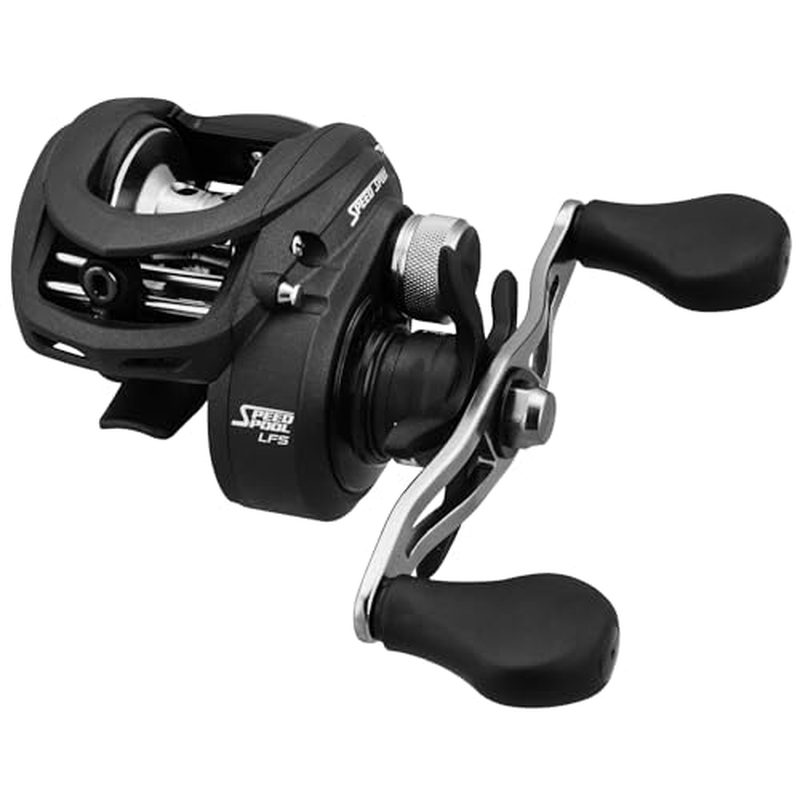
Do: learn the magnetic dial in the yard with a cheap practice plug, not with a five-dollar swimbait on a windy point. Don't: crank the dial to the stop and then blame the reel when a light lure will not leave the rod. Magnetic brakes eat distance when they are maxed. They save a spool when they are honest. A zirconia line guide is on the listing so the line does not saw a groove into a cheap plastic eye. Rinse sand out of it anyway.
A pin brake is a shop setup. A magnetic dial is a boat setup.
This is the real difference once the hand is right. The SLX asks you to commit. You set the pins for the baits you throw, you set the tension knob, and you fish. That is a calmer reel if you throw the same jig all morning. The Lew's asks you to fiddle. A squarebill in the wind wants more magnet. A half-ounce tungsten worm on a short cast wants less. If you change lures every twenty minutes, the external dial is the feature you will actually use. If you do not, the dial is a knob you will leave alone, and the Shimano's simpler day is the better one.
Neither brake replaces a thumb. A baitcaster with the brake off and the tension off is a bird's nest waiting for the first side wind. Start tighter than your pride wants. Loosen the tension until the lure falls under control. Then take magnet or pins out one click at a time until the cast goes where you aimed and the spool stops when the lure stops. A reel that sounds like a zipper on the cast is a spool outrunning the lure. Tighten something before you pick the nest apart with a hook.
How do you actually spool a baitcaster this size?
Both reels will take braid or mono. Braid on a baitcaster needs a piece of mono or electrical tape on the arbor or the whole spool spins under the braid on the first run. Fill to the lip, not past it. An overfilled casting spool throws loops that you will call a reel problem. It is a spool problem. A leader of fluorocarbon belongs on the end if you are fishing clear water and a finesse bait. A straight shot of 12- or 15-pound fluorocarbon belongs on the spool if you are throwing crankbaits and you do not want to manage a knot through the level wind all day.
The level wind is the part people ignore until the line piles on one side and the cast dies. If the line stacks, do not keep casting and hoping. Strip it back off, check that the line is coming off the filler spool in the same direction it goes onto the reel, and respool with tension. A shop spool job is worth it the first time. A kitchen-table spool job with the line under a book is the version that nests on Saturday.
Line size follows the rod, not the reel's maximum. A casting rod marked for 12- to 20-pound line and lures from about a quarter ounce to an ounce is the honest home for either of these reels. A swimbait rod that wants three ounces is too much rod. A spinning rod is the wrong blank entirely. Pliers, a net, and a knot you can tie cold still matter more than a bearing you will never see.
The drag and the handle are what your hand actually uses.
Set the drag with the rod loaded, the way a fish loads it, so the line slips before the knot or the rod does. A star drag left at the stop is how people break 15-pound line on a fish that would have come in if the drag had given an inch. Both reels have a star you can feel. The Lew's listing calls it an audible click star. The click is a reminder, not a setting. Count clicks from loose if you want to return to a setting you liked. Do not count clicks from tight and call that a system.
The handle knob on a cold, wet hand is the part that decides whether the reel feels expensive. Paddle knobs on the Lew's are the larger grip. The SLX handle is the compact one that matches the compact body. If your fingers slip, dry the hand. An aftermarket knob from a surf reel will not necessarily thread on. Check the screw on a new reel before the first trip. A handle that walks off in a skiff is a loose screw, not a mystery.
Salt is a rinse. Sand is worse.
Neither of these is a surf reel. A bass boat and a river are their week. If you do fish them in the salt, rinse with low pressure, spin the handle, and let them dry out of the case. A reel shut in a wet case grows a film you will feel as a grind. A drop of oil meant for reels, on the handle knobs and the level wind, is the service most of a season needs. Do not soak the drag in solvent because a forum said the stack was dry. If the drag chatters after a season of honest use, that is a service counter.
Sand in the level wind and sand in the spool bearings will end a cheap afternoon. Rinse before the rod goes in the truck. A reel that grinds on Monday was sandy on Sunday.
What actually fails on a baitcaster this size?
The level-wind pawl wears and the line starts stacking. The brake pins on a VBS reel get lost because someone opened the plate over the water. The magnetic dial on a Lew's gets packed with grit and stops clicking cleanly. The handle nut loosens. The drag washers glaze if you locked the star and horsed fish until the stack got hot. The one-way clutch fails as a click when a fish runs, which is the moment you notice anti-reverse is gone. None of those are mysterious. They are a setting, a rinse, and a screw.
A reel that arrives grinding is a return, not a break-in. Thumb the spool and turn the handle on the kitchen table before you spool a hundred yards of braid onto a problem. A smooth handle with a rough cast is a brake or a tension problem. A rough handle in gear is a gear or a bearing problem. Do not spool line onto either one and hope the first fish fixes it.
What this fight is not
It is not a 2500 spinning reel. Those reels have a bail and a finger. This pair has a thumb. It is not the cheapest baitcaster in the aisle. Those reels have a job. This pair is the step where the body is metal and the brake is a system you can actually set. It is not a lure. A reel does not pick the bait. The water and the rod do. It is not a musky reel. Line per turn on a 300-size winch is a different physics problem.
A rod and reel combo that says SLX on the hang tag can be a different gear ratio than the one you meant, bundled with a blank you have not held. Read the model. SLX150HG is the right-hand 7.2:1. The Lew's model on the side plate is the reel, not the word Speed Spool printed large on the box.
So which baitcaster should you buy?
Buy the Shimano SLX150HG if you retrieve with your right hand and you want the compact 7.2:1 with a HAGANE body and a pin brake you set for the lure you throw most. Buy the Lew's Speed Spool LFS on this listing if you retrieve with your left hand and you want a 6.8:1 aluminum reel with a magnetic dial you can change in the boat. If the hand is wrong, buy the other hand of the reel you wanted. Set the tension before you set the brake. Fill the spool to the lip. Rinse the sand. Check live prices. Confirm the model before you leave the listing, because a nearby gear ratio is a different reel.
The rest of a summer kit still starts with a reel you will actually cast. A baitcaster will not turn a spinning rod into a casting rod. Spool the line you will actually throw. Then go.
Frequently asked questions
Shimano SLX 150 or Lew's Speed Spool LFS?
SLX150HG if you retrieve with your right hand and want the 7.2:1 HAGANE reel. This Speed Spool listing if you retrieve with your left hand and want the 6.8:1 with an external magnetic brake.
Is the SLX150HG a left-hand reel?
No. SLX150HG is right-hand, 7.2:1. A left-hand SLX is the 151. Confirm the model on the side plate.
What gear ratio is this Lew's Speed Spool?
This listing is the left-hand 6.8:1. An 8.3:1 or a right-hand handle is a different reel.
How do I set the brake on these baitcasters?
On the SLX, set the VBS pins for the lure you throw most, then use the spool tension. On the Lew's, use the external magnetic dial and the tension knob. Start tighter than you think, then loosen.
Can I put a baitcaster on a spinning rod?
No. A baitcaster needs a casting rod with the guides on top. A spinning rod is a different blank.
Do I rinse a baitcaster after sand or salt?
Yes. A freshwater rinse, then dry it out of the case. Sand in the level wind ends the reel faster than a fish does.