
Icom IC-M94D AIS Handheld Radio Guide
Written by John Wren, Co-Founder|
Outdoors Magazine is a participant in the Amazon Services LLC Associates Program. We may earn a commission if you buy through links on this page, at no extra cost to you. Affiliate disclosure.
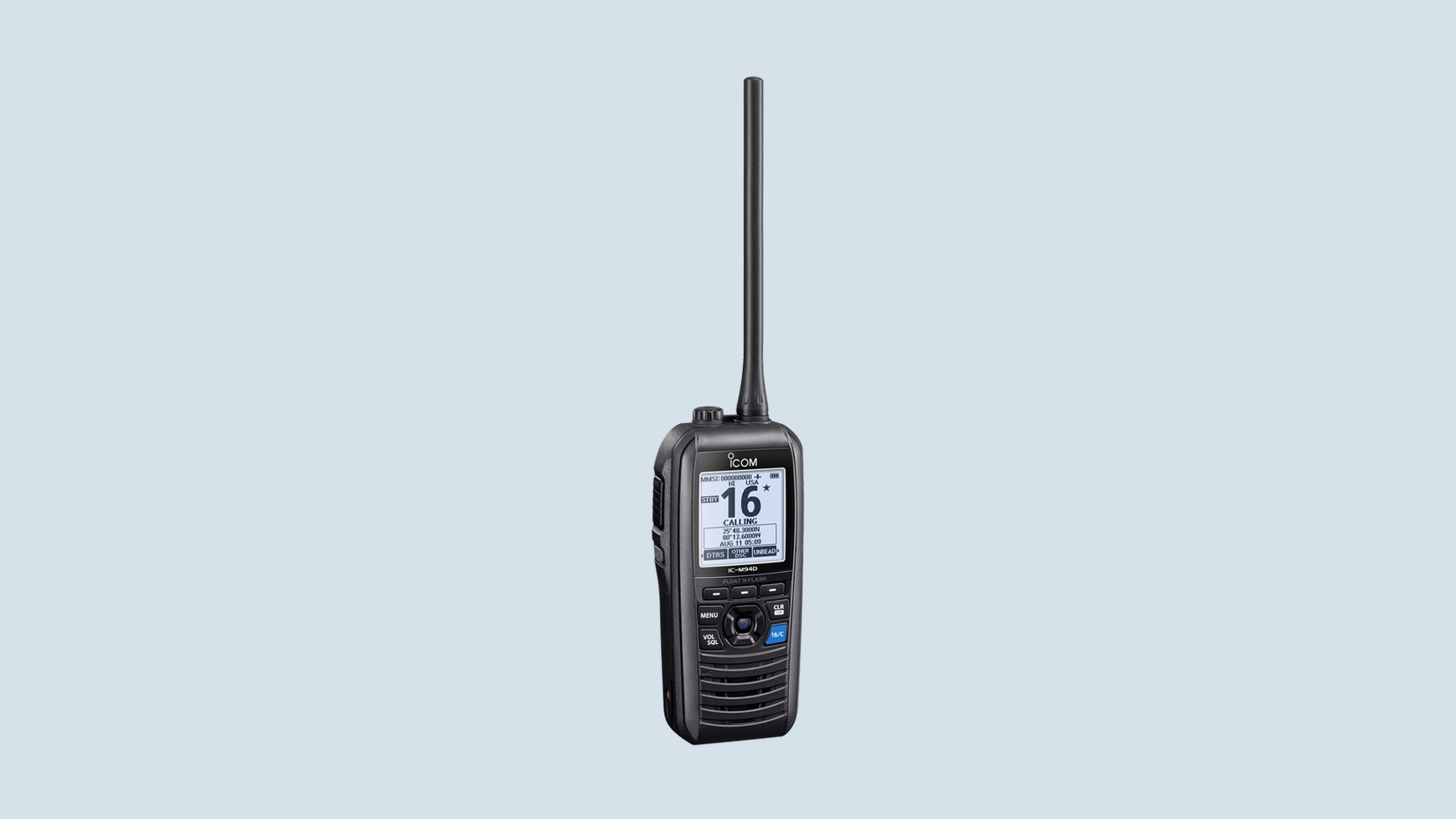
Buy Icom IC-M94D (ASIN B095L6VKJM) when you want a floating Class-H DSC handheld that also receives AIS, transmits 6 W / 1 W, and uses a BP-306 2400 mAh pack Icom prints at about 10 hours. Icom prints 357 g with battery, antenna, and clip, IPX7, and 50 waypoints. It is not a GPSMAP.
Key takeaways
- B095L6VKJM is IC-M94D: 6 W / 1 W, AIS receive at 162.025 MHz, Class-H DSC, 1500 mW audio, IPX7.
- Icom prints 357 g / 12.6 oz with BP-306, antenna, and MB-133, and about 10 hours at 5:5:90 on 2400 mAh.
- 50 waypoints are Icom’s navigation function, not BlueChart g3. GPSMAP 79sc is the chart handheld.
- HX890 versus IC-M37 is the DSC fight without this AIS job. PLB3 is a 406 MHz beacon, not a VHF.
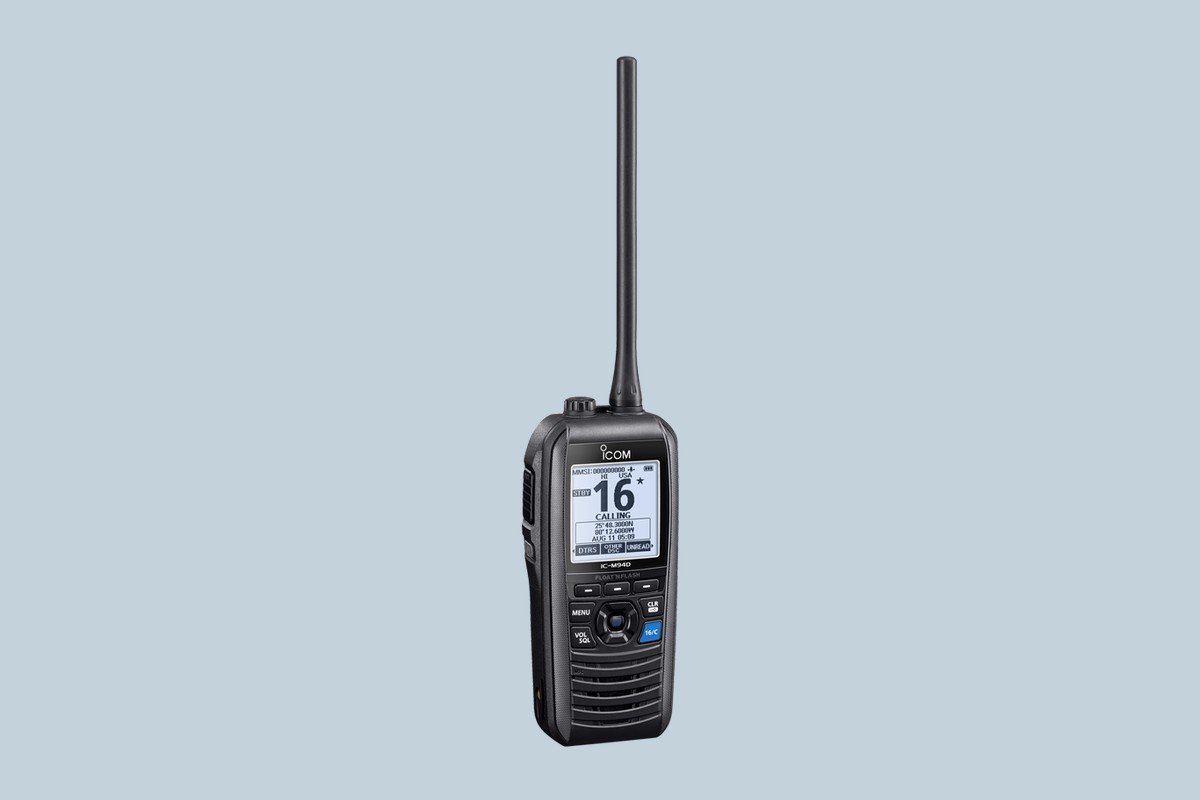
Buy Icom IC-M94D when the job is a floating Class-H DSC handheld that also receives AIS, transmits 6 W or 1 W, and uses a BP-306 2400 mAh pack Icom prints at about 10 hours on a 5:5:90 duty. Icom prints 357 g / 12.6 oz with BP-306, antenna, and MB-133, 60.9 by 145.8 by 43.8 mm, IPX7, 1500 mW audio, and 50 waypoints. ASIN B095L6VKJM is the live card. It is not GPSMAP 79sc and it is not the HX890 versus IC-M37 fight.
HX890 versus Icom M37 is the DSC handheld pair without AIS in that fight. GPSMAP 79sc is the floating chart handheld that does not transmit VHF. UM385 versus GX1400 is the fixed-mount radio. Mustang versus Onyx PFD is the vest the handheld clips to. Ocean Signal PLB3 is the 406 MHz beacon, not a VHF. SPOT Gen4 is the satellite check-in you still do not talk on. Dock setup is the slip, not the radio.
| Spec | Icom IC-M94D |
|---|---|
| ASIN | B095L6VKJM |
| Transmit | 156.025–157.425 MHz; 6 W / 1 W |
| Receive | 156.050–163.275 MHz; CH70 156.525 MHz; AIS 162.025 MHz |
| Emission | 16K0G3E (FM), 16K0G2B (DSC), 16K0GXW (GMSK) |
| Audio | 1500 mW typical |
| Battery | BP-306, 2400 mAh typical; about 10 hours at 5:5:90 |
| Size | 60.9 × 145.8 × 43.8 mm; 2.4 × 5.7 × 1.7 in (projections not included) |
| Weight | 357 g / 12.6 oz with BP-306, antenna, MB-133 |
| Water | IPX7 (1 m for 30 minutes) |
| Channels | INT, USA, CAN, WX (USA version) |
| Navigation | Up to 50 waypoints; integrated GPS; Float’n Flash; AquaQuake |
| DSC / AIS | Class-H DSC; AIS receiver with AIS target call |
Cells come from Icom America’s IC-M94D product page, including the specification block for frequency, size, weight, power, and IPX7. Ten hours is Icom’s approximate typical operation with a 5:5:90 duty ratio on BP-306. 50 waypoints sit in Icom’s Navigation function copy on that same page. This desk does not paste GPSMAP 79sc’s 19-hour AA cell onto a Li-ion handheld.
Sources, as of November 13, 2026: Icom America IC-M94D; Amazon B095L6VKJM.
Who is IC-M94D actually for?
Buy IC-M94D when you run a small boat and want AIS traffic on the same floating Class-H handheld that makes a DSC distress call. Icom prints 6 W / 1 W, 1500 mW audio, IPX7, and about 10 hours on BP-306. It is a VHF you clip, not a chartplotter on a console.
Skip it if you wanted a floating Garmin with BlueChart g3 and no transmit. GPSMAP 79sc already owns that job. Skip it if you wanted a cheaper DSC handheld without AIS. HX890 versus IC-M37 already owns that fight. Skip it if the hull already has a UM385 or GX1400 at the helm and you only needed a loud deck backup without AIS.
A PFD is still a PFD. Mustang versus Onyx is the vest. Clip M94D where you can reach the rear distress button with a glove. Dock setup is still the slip: charge BP-306 at the dock, not in a flooded locker. Ten hours is Icom’s printed duty, not a weekend without a charger.
Gift buyers should send B095L6VKJM plus IC-M94D, not a screenshot of “Icom AIS.” An M37 photo in an M94D listing is the other URL. Confirm AIS receive and Class-H DSC on the live card before anyone peels the film off the display.
What does Icom actually print for M94D?
Icom America prints Tx 156.025–157.425 MHz, Rx 156.050–163.275 MHz, CH70 at 156.525 MHz, AIS receive at 162.025 MHz, 6 W / 1 W, 1500 mW audio, BP-306 2400 mAh typical, about 10 hours at 5:5:90, 60.9 by 145.8 by 43.8 mm, 357 g / 12.6 oz with BP-306, antenna, and MB-133, and IPX7 at 1 m for 30 minutes.
The same page names Class-H DSC, an AIS receiver that shows vessel traffic, an AIS target call that sets up a DSC individual call, a rear distress button, Float’n Flash, AquaQuake, active noise cancelling, dualwatch and tri-watch, weather receive on the USA version, favorite channels, 4-digit channel support, an integrated GPS, and up to 50 waypoints for the navigation function.
MOB Auto Set is Icom’s sentence: pressing distress while Float’n Flash is working transmits an MOB distress rather than the regular distress. That is Icom’s feature copy, not a drill this magazine will script. Read Icom’s MMSI guide before you program anything. This desk will not invent an MMSI.
In the box, believe Icom’s accessory list on that page: BP-306, antenna, MB-133, and the rest Icom names there. Caption art that shows a speaker mic is only a speaker mic if the live bullet list names HM-165 or HM-228. Those are options on Icom’s option table, not surprises in every carton.
When is AIS on a handheld the actual job?
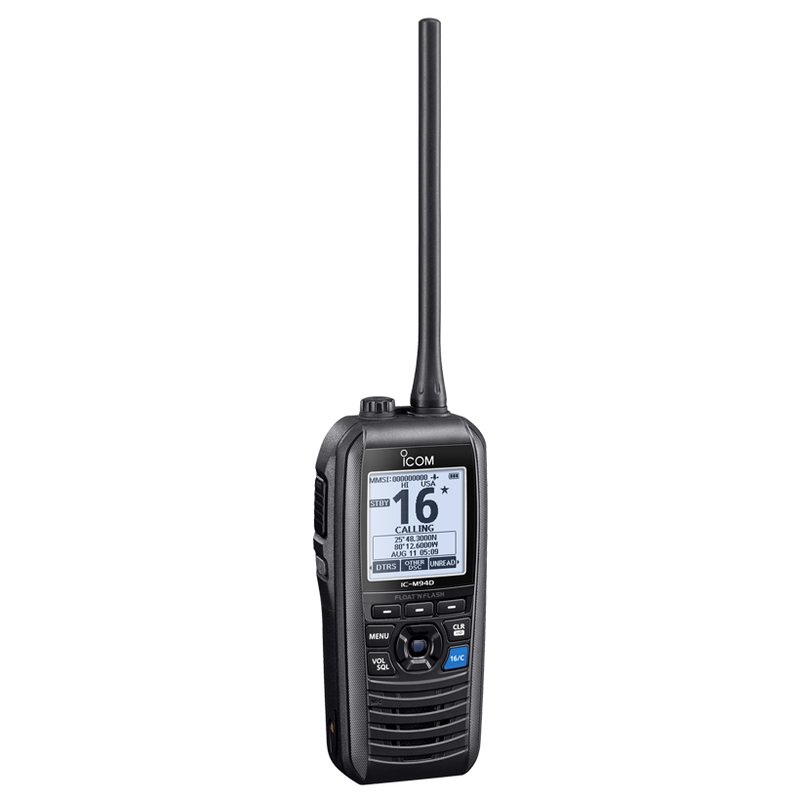
AIS on a handheld is the job when you run a small boat in traffic and you want names on the radio you already picked up, not only on a plotter at the helm. Icom prints AIS receive at 162.025 MHz and an AIS target call into DSC. That is traffic on a clip, not a Class A transponder.
A dinghy ride back to a bigger boat in a crowded harbor is the other AIS job. 6 W is Icom’s high power. 1 W is the low cell. Harbor walls still eat handheld range. This desk will not invent a mile count. Clip the radio high, keep the antenna vertical, and keep the PFD on. Helpful boat-safety notes on this magazine still apply.
GPSMAP 79sc remains the backup chart. M94D remains the talker. Do not skip the plotter because AIS icons appeared on a 2.4 in radio. Do not skip the radio because the plotter already overlays AIS. Different jobs. UM385 versus GX1400 is the fixed-mount talker if the helm already has a 12-volt run and you wanted a bigger speaker.
Fog, a raft of rental boats, and a Saturday channel are why 1500 mW sits on the spec block. Icom calls it class-leading audio on that page. Loud is the point. A headset is not in the carton unless the live list names one. AquaQuake is for a speaker that ate a wave, not a reason to dunk the radio for fun. IPX7 is 1 m for 30 minutes.
When is M94D the wrong handheld?
M94D is the wrong handheld when you wanted BlueChart g3, 10,000 waypoints, and a 3-inch chart you can still read after the VHF dies. That is GPSMAP 79sc. M94D’s 50 waypoints are Icom’s fishing-spot and destination assignment, not a cartography chip. Do not buy M94D as a plotter.
M94D is the wrong handheld when you wanted Standard Horizon HX890 or Icom M37 and you did not care about AIS on the radio. That fight already has a URL. M94D is the wrong handheld when the job is a 406 MHz PLB with NOAA registration and no VHF at all. PLB3 is that beacon. SPOT Gen4 is a one-way satellite check-in, not a marine channel.
A kayak without a radio plan still wants a PFD first. Mustang versus Onyx stays the vest. M94D can clip there if you actually filed an MMSI and you actually know channel 16. This magazine will not pretend a handheld replaces a float plan. Dock setup still includes charging BP-306 before you leave the slip.
An M93D leftover in an M94D photo is a different model. Confirm IC-M94D on the live card. Europe’s M94DE is Icom’s other suffix. This US page cites Icom America’s M94D. If the listing cannot show AIS receive, it is not this radio.
Where does the radio actually live on the boat?
It lives on a PFD clip or a dash bracket you already trust, with the antenna clear of a steel console, not in a wet cup holder under a seat lid. Icom prints MB-133 in the weight cell. That clip is how 357 g is measured. A homemade lanyard is your knot, not an Icom accessory.
Charge BP-306 on Icom’s charger family, not on a random USB brick this page will not name. Ten hours is the 5:5:90 cell. Dualwatch and a weather channel will eat that number if you leave the radio hot all day. Carry the spare only if the live kit list includes one. Icom’s option table names extra batteries. A marketplace bundle is only a spare if the bullet list says so.
Float’n Flash is retrieval, not a swim plan. If it goes overboard, Icom says the LCD, keys, and rear distress flash. IPX7 is not a sinking-boat rating. Get the radio back. Dry the contacts. PLB3 still exists for a 406 MHz path that does not use VHF. Different layers. Do not pick one and throw the other over the side because a listing said “safety radio.”
Waypoint 50 is a list of fishing spots and destinations Icom lets you assign, with GPS on the radio guiding you back. It is not BlueChart. It is not 10,000 GPSMAP waypoints. If you wanted that map, you wanted 79sc in the other pocket. If you wanted this talker, you wanted AIS plus DSC on a float. That split is the whole job-fit.
Which other radio pages should you open instead?
Open HX890 versus IC-M37 if AIS is not the job. Open GPSMAP 79sc if the job is a floating chart. Open UM385 versus GX1400 if the job is a fixed-mount at the helm. Open PLB3 if the job is a 406 MHz beacon. Open SPOT Gen4 if the job is a satellite check-in with no VHF.
Open Mustang versus Onyx if the hole is the vest. Open dock setup if the hole is the slip. Open boat-safety notes if the hole is the habit. This URL is one Icom handheld. Owning M94D does not retire a helm radio. Owning a helm radio does not make M94D required unless you wanted AIS in your hand.
Warranty, seller identity, and whether the radio is new or renewed live on Amazon, not in this table. Open the live button for the current ask. This desk will not freeze a hangtag number here. End of the practical loop: IC-M94D, AIS plus Class-H, 6 W, 357 g, cited Icom numbers, live price button.
Program the MMSI from Icom’s own guide, not from a forum paste. Weather receive is the USA version cell. INT / USA / CAN / WX is the group list. Favorite channels are Icom’s memory, not a substitute for knowing 16. 4-digit channels are supported because Icom says so. None of that is a license this magazine issues. Your country’s radio rules still apply. Follow them.
Active noise cancelling is Icom’s microphone sentence for wind and engine racket. It is not a headset. This table keeps the numbered RF, size, weight, audio, and battery cells from Icom America’s spec block and leaves the rest in Icom’s own feature copy. If a listing adds a compass or a chart, it is describing a different device; GPSMAP 79sc is the chart handheld.
Gift the ASIN plus the model name. Confirm AIS. Confirm BP-306. Confirm IPX7. Then stop shopping handhelds for the night. That is the whole purchase.
Frequently asked questions
Is IC-M94D a GPSMAP?
No. It is a Class-H DSC VHF with AIS receive. GPSMAP 79sc is the floating chart handheld that does not transmit VHF.
Does M94D include AIS transmit?
Icom prints an AIS receiver and AIS target call into DSC. This desk does not call M94D a Class A transponder.
How long does BP-306 last?
Icom prints about 10 hours at a 5:5:90 duty on the 2400 mAh typical pack. Charge at the dock.
Is this HX890 versus IC-M37?
No. That URL is the DSC handheld fight. This URL is one Icom AIS handheld.
Does it float?
Icom prints Float’n Flash and IPX7 at 1 m for 30 minutes. Clip it. A cup holder is not a clip.
How many waypoints?
Icom prints up to 50 favorite fishing spots or destinations. That is not GPSMAP’s 10,000-waypoint cell.