
How to Store a Kayak for Winter Without Warping It
Written by Outdoors Magazine|
Outdoors Magazine is a participant in the Amazon Services LLC Associates Program. We may earn a commission if you buy through links on this page, at no extra cost to you. Affiliate disclosure.
To store a kayak for winter, wash it with mild soap and fresh water, dry it completely, and leave the drain plug and hatches open. Keep it indoors or in shade, off the ground, upside down or on its side, on wide padded supports near the bulkheads or about a third from each end, with straps loose and the cockpit covered.
Key takeaways
- Rinse, dry inside and out, and leave the drain plug out and hatches open.
- Store it hull-up, on its side or on end, never flat on its hull for months.
- Support near the bulkheads or about a third from each end; keep straps loose.
- Use a cockpit cover, keep it shaded, and record your hull identification number.
Here's how to store a kayak for winter: rinse it with fresh water, dry it inside and out, and leave the drain plug and hatches open. Then keep it indoors or in shade, off the ground, upside down or on its side, supported near the bulkheads or a third from each end, with straps loose and the cockpit covered.
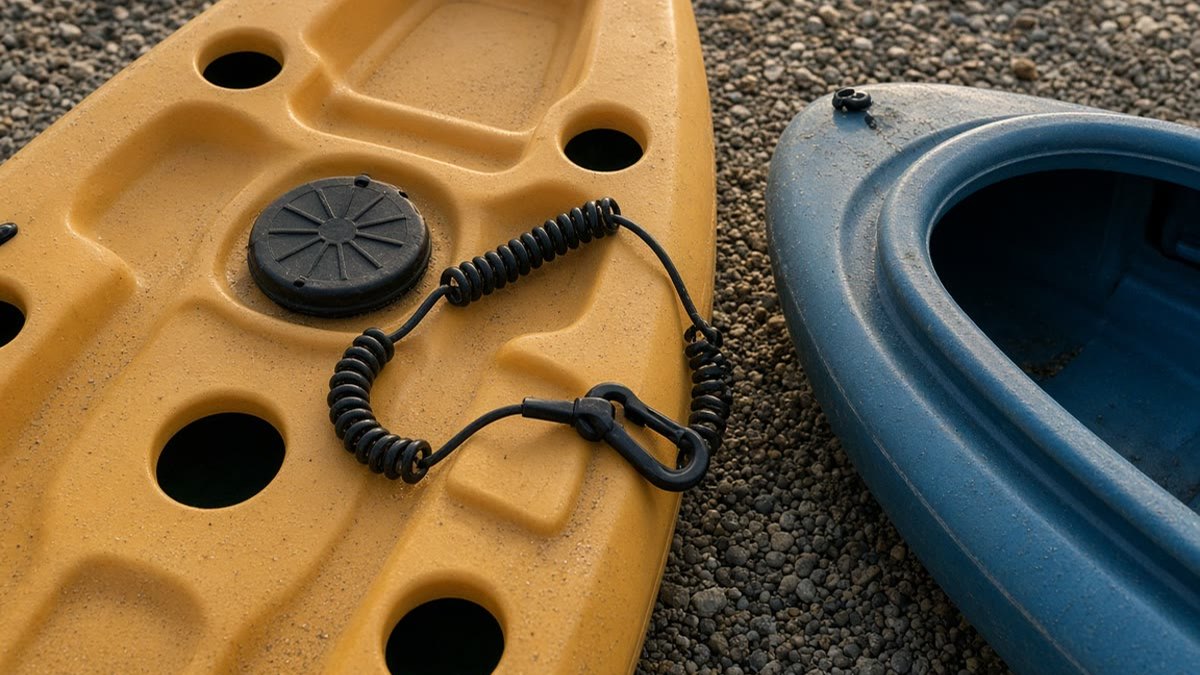
Scupper holes, hatches and drain plugs are where water hides when a kayak goes into storage. AI-generated editorial image of two kayak hulls on gravel, a yellow sit-on-top with scupper holes, a round hatch and a coiled black leash, beside a blue sit-inside kayak.
Most kayaks don't die on the water. They get bent, faded or chewed while sitting through a winter. A plastic hull pressed against a flat floor or a cinched strap for months can take a dent that stays, and a boat put away damp can grow mold.
The fixes are cheap and mostly a matter of where the weight goes. This guide draws on care instructions from Old Town, Pelican, Confluence Outdoor (parent of Wilderness Systems and Perception), Mirage Sea Kayaks, Advanced Elements and NRS. Your own owner's manual wins when it disagrees with general advice.
Why does winter storage damage kayaks?
Winter storage hurts kayaks through long, steady pressure in the wrong spots, sunlight, trapped moisture and pests. The cold itself is rarely the main problem for a hard-shell boat. Months of sitting badly supported, wet or exposed are.
Pressure. Confluence Outdoor explains that the dents paddlers call oil canning, which pop in and out under pressure, usually come from poor storage or transport, such as resting the boat flat on its hull or letting a rack or another boat press against it. Pelican tells owners to remove tight straps or ropes from the hull because they can deform a kayak over time, and Confluence says prolonged storage with tight straps creates pressure points that tend to warp the boat.
Sun and heat. Pelican's manual says a kayak can be damaged by long exposure to direct sunlight and asks owners to store it in a shaded, well-ventilated area. It also warns against keeping a kayak near a heat source such as a stove or radiator, and notes that an enclosed bag or tarp can collect heat and overheat the boat.
Moisture and critters. Pelican warns that a wet kayak stored for a long time in a wet bag or tarp can develop mold and osmotic blisters, and Mirage puts it simply: dry storage is always preferable to damp storage. Discover Boating notes that during winter mice look for warm, dry places to nest, and a stored boat can be a tempting one.
How do you clean and dry a kayak before storing it?
Wash the kayak with mild soap and water, rinse it well with fresh water, open the drain plug to empty it, and let it dry completely, inside the hull and hatches as well as outside. Then leave the drain plug out and the hatches open for storage so air can move.
Confluence Outdoor lays out the routine as four steps: scrub with a mild detergent and water, rinse thoroughly, open the drain plug and drain all the water, and set the boat in a sunny spot until it is completely dry. Pelican recommends mild soap and warm water and says not to use chemical products or abrasives. It also warns that some chemicals in cleaning products and sunscreen lotions can damage the kayak's finish.
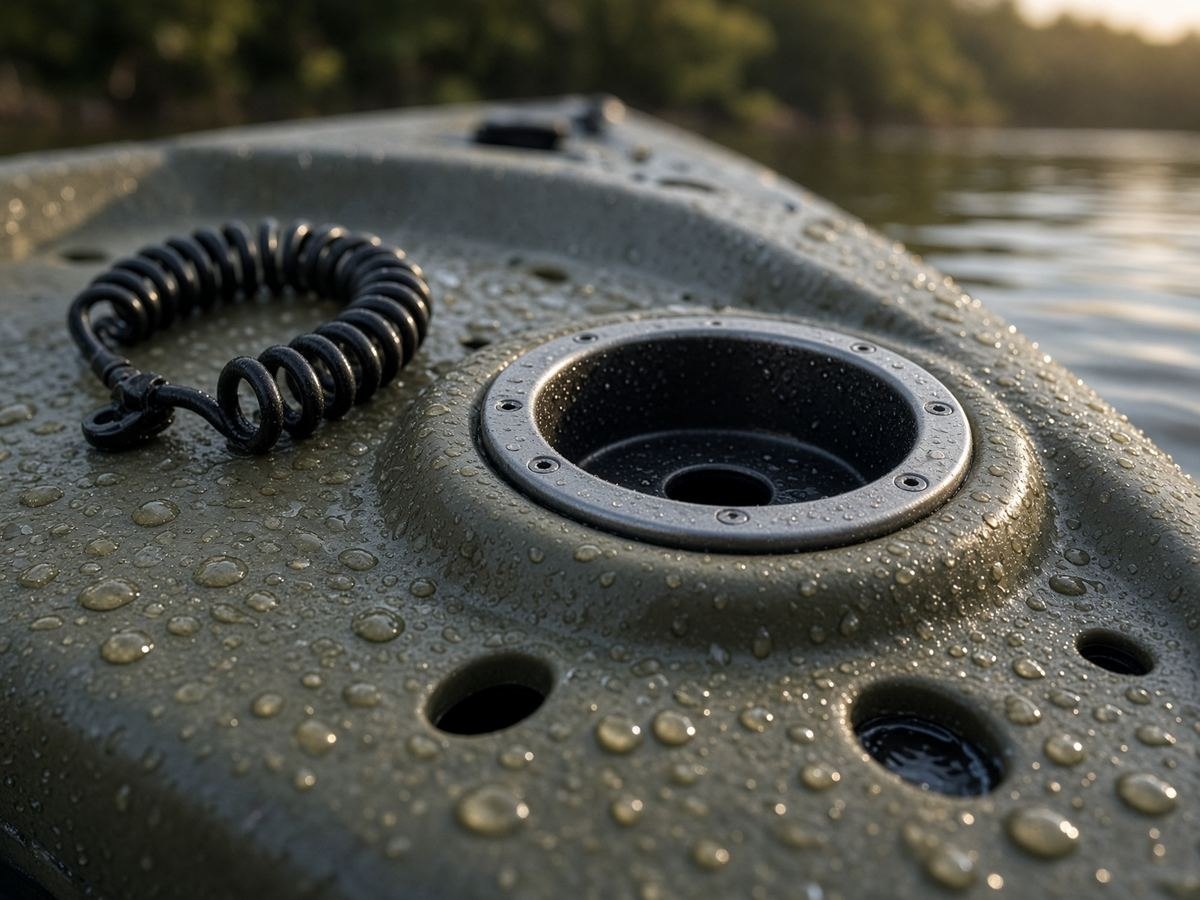
Pay attention to the places water hides. Pelican suggests standing the kayak upright on its stern to empty water that has collected inside. For long-term storage, Pelican says to remove the drain plug and leave it out, which regulates the air pressure inside the hull. Mirage, which builds composite sea kayaks, tells owners to remove hatch covers during extended storage.
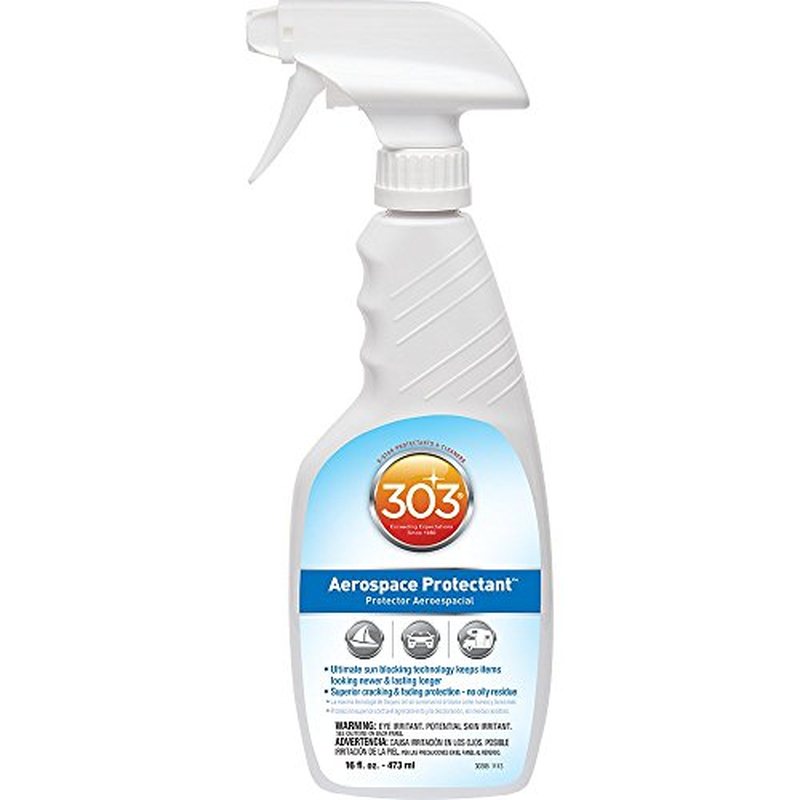
Once the boat is clean and dry, a UV protectant is optional extra insurance for the deck and hull. NRS suggests 303 Aerospace Protectant for kayaks along with covering the boat or keeping it in shade. NRS describes 303 as a product that repels ultraviolet radiation and helps prevent color loss, fading, brittleness and cracking. NRS lists vinyl, plastics, synthetic and natural rubber, PVC and colored gelcoat fiberglass among suitable surfaces, and says it should not be used on fabrics or unfinished leather. You spray it on and wipe it dry.
Should you store a kayak indoors or outdoors?
Indoors is better whenever you have the room, because a garage, shed or basement keeps sun, snow and big temperature swings off the hull. If the kayak has to stay outside, put it in shade, raise it off the ground, keep it hull-up, and cover it so air can still move underneath.
Confluence Outdoor calls indoor storage the ideal option because it protects the boat from bad weather and extreme temperature changes. It also suggests keeping the kayak away from windows. NRS describes a cool, dry place like a garage as ideal.
Outdoors, the details matter more:
- Find shade. Confluence recommends a shaded spot, or space under a deck, roof or covered porch.
- Get it off the ground. Confluence says to keep the kayak elevated, and Mirage says that if a boat must live outside it should be stored upside down.
- Cover without smothering. Confluence warns that a tarp in direct contact with the kayak can promote mold and fungal growth, so suspend it above the hull. Mirage likewise says a cover should be held above the kayak to allow continuous airflow.
- Close the cockpit. Pelican and NRS both recommend a cockpit cover for a kayak stored outdoors.
- Tie it down. Old Town says that if you must store a boat outside, tie it down so wind can't flip it.
Covers made for the purpose also work. Confluence points to the Wilderness Systems Heavy Duty Cover for sit-on-tops, used for both storage and transport. If you aren't sure which style you own, our sit-on-top vs sit-inside kayak guide explains the differences that affect how each one drains and covers.
What is the best position to store a kayak?
Store a kayak upside down (hull up), on its side, or on end, with its weight spread across wide, padded supports under the strongest parts of the hull: near the bulkheads, or roughly a third of the way in from each end. Never leave it right side up on a flat floor or a pair of narrow bars for the winter.
Old Town's manual says to store a kayak cockpit-side down, on its side, or on end, and it says plainly not to store a boat on its hull. NRS says storing a kayak on its edge is best and that this helps prevent oil canning. Confluence says to store a boat vertically or on its side, never flat on the hull.
Where the supports go. Old Town tells owners to run webbing straps under the bulkhead points, or the widest points, when hanging a kayak, and to set it on cradle-type sawhorses to avoid distorting the deck. Mirage says composite kayaks should always be supported so the load is distributed evenly. It recommends supports as close as practical to the front and rear bulkheads, at or near the hatch rims on a wall rack, and medium-density closed-cell foam padding.
For boats without bulkheads, the storage rack maker Suspenz gives a simple spacing rule: place the two supports so the distance between them is about 40 percent of the kayak's length, within a range of 35 to 50 percent. Its example is a 16-foot (192-inch) kayak with supports about 77 inches apart. Centered on the boat, 40 percent spacing puts each support about 30 percent of the length in from its end, close to the familiar one-third rule. You need the boat's exact length for that math, and our guide to measuring a kayak for a roof rack shows how to take it.
What to avoid. Confluence warns that a kayak resting right side up on a storage rack can dent and warp along the bottom. One resting on its side against bars can dent where it touches. Hanging a kayak by its carry handles risks deforming and twisting the ends. Old Town adds that you shouldn't use the strap eyes, carry handles or scupper holes to hang a boat. Mirage says never to suspend a kayak from toggles or deck fittings, and to avoid narrow straps that concentrate pressure into small areas.
If a dent has already formed. Old Town notes that brief exposure to the sun's heat often restores a polyethylene hull to its original shape, and it cautions that overheating can damage the hull. Confluence suggests leaving the boat in hot, direct sun for at least two hours with the dent exposed.
Are wall racks or suspension slings better for kayaks?
Both work when they support the hull properly. Padded wall cradles hold the boat on its side or hull-up close to the wall. Wide suspension slings cradle it from the ceiling or wall and free up floor space. Choose by your space, and set either one at the right spacing with straps snug but not tight.
Confluence Outdoor recommends getting the kayak off the ground with either a hoist or a rack, and shows both styles: a padded steel Pelican wall mount that swivels flat against the wall and has arms for paddles, and a Pelican strap kit that hangs kayaks or paddleboards off the ground.
Wall racks suit a garage wall or a shed. Their arms should be padded and wide, and the boat should sit on its side or hull-up across them, with each arm landing near a bulkhead or at the spacing above.
Suspension slings suit high ceilings and narrow garages. The webbing should be wide and wrap under the hull at the bulkhead points or widest points, which is exactly how Old Town tells owners to hang a kayak. The boat should hang level, never by its handles or toggles. Before installing anything overhead, check that the hardware is going into solid framing and that the product's weight rating covers your boat and anything you hang with it.
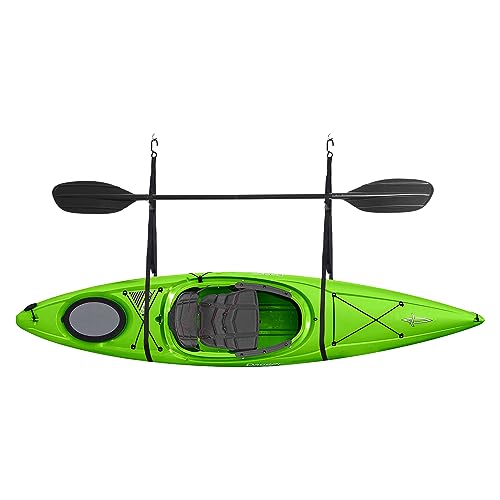
Whichever you use, keep the straps loose enough to hold the boat without pulling it out of shape. Mirage's test for tie-downs is a useful one here: if you can comfortably pluck a strap like a guitar string, it is probably too tight.
How do you keep critters and thieves away from a stored kayak?
Close the cockpit with a cover, remove all food and soft nesting material, and raise the boat off the floor to keep pests out. To protect against theft, store the kayak out of sight, lock it to something fixed, and write down its hull identification number.
Critters. Old Town recommends a cockpit cover to keep dust and critters out. Clear out any food, crumbs or trash, and remember that soft materials are a favorite nesting spot. Raising a boat on stands makes it harder for ground-dwelling rodents to climb in. Discover Boating also lists dryer sheets and peppermint-oil cotton balls as traditional deterrents. If a cover has vents, Discover Boating says to make sure they aren't large enough for mice to squeeze through.
Theft. KayakHelp notes that casual kayak theft is more common at lakefront properties and that the best defense is keeping the boat out of sight, under a deck or in a garage. For boats that must stay outside, it suggests a shed or rack you can lock, or a cable lock to an immovable object such as a post or tree. It warns that a cable threaded only through toggle handles is rarely enough, and suggests molded-in handles, scupper holes or a lasso-style lock made for closed-deck boats.
Then write down the boat's identity. Boat-Ed explains that canoes and kayaks made after 1972 must carry a 12-character hull identification number (HIN), usually on the starboard side of the hull at the stern. It advises recording the number and keeping it somewhere safe, separate from the boat. KayakHelp adds that some manufacturers let you register your HIN, and that etching it in a second, hidden spot gives police something to go on if the visible number is removed.
How should you store inflatables, composites and gear?
Clean and fully dry an inflatable, deflate it, and store it rolled or folded loosely somewhere out of the sun and away from extreme heat or cold. A composite boat needs even support on foam cradles near the bulkheads, dry storage and shade. Paddling gear goes away clean, dry and out of the sun.
Inflatables. Advanced Elements' manual for its AE1007 kayak tells owners to store the boat clean and dry, deflated and out of direct sunlight, and never to store it wet for an extended time. It says to avoid exposure to extreme heat or cold. If the kayak has been exposed to freezing temperatures in storage, let it warm up before you unfold it. The retailer Splashy McFun, an Advanced Elements dealer, recommends deflating inflatables for long storage, which gives drop-stitch seams a rest. It also says frequent freezing and thawing will wear out materials over time.
Composite (fiberglass, Kevlar, carbon). Mirage's manual is the most detailed source here. Support the boat so the load is spread evenly, use closed-cell foam cradles, place the supports near the bulkheads, avoid long outdoor storage, and keep sunlight to a minimum. Mirage also says to avoid tarps touching the kayak and to remove hatch covers during extended storage so air can circulate.
Paddles, PFDs and spray skirts. The Pelican wall mount and strap kit Confluence describes both include a place for paddles, either a rack's arms or hook-and-loop paddle loops, which keeps the blade off the floor and the set together for spring. For life jackets, the Virginia Department of Wildlife Resources says to store a fully dried PFD in a warm, dry, well-ventilated place out of direct sunlight and not to apply direct heat to dry it. NRS notes that 303 Aerospace Protectant is recommended for latex gaskets on paddling apparel. Old Town asks owners to check neoprene hatch covers, buckles and straps for wear, and a spray skirt's neoprene and shock cord are worth the same look.
What should you check when the kayak comes out in spring?
Before the first paddle, inspect the hull for dents or cracks, look over hatch covers, deck lines, buckles and straps for wear, check every compartment for nests, and put the drain plug back in. Mirage recommends a thorough inspection at least once a year, and the end of storage is a natural time to do it.
- Hull shape. Look along the hull for flat spots or dents. Polyethylene dents often respond to warm sun, per Old Town and Confluence.
- Fittings. Old Town says to check neoprene hatch covers, cables, buckles, straps and other moving parts for wear. Mirage says to replace badly worn deck lines immediately.
- Compartments. Open every hatch and look for nests, droppings or chewed foam before you load gear.
- Drain plug. Reinstall the plug you pulled for storage before the boat touches water.
- Inflatables. Let a boat that sat in the cold warm up before unrolling it, as Advanced Elements instructs, then inflate it and check for slow leaks before you head out.
Spring is also a good time to re-dial the cockpit, and our guide to adjusting kayak seats and foot braces walks through it. If winter storage convinced you that the boat needs a better way to travel, compare options in our best kayak roof rack roundup.
Sources: Confluence Outdoor: The ABCs of How to Store a Kayak, Confluence Outdoor: How to Store Your Kayak, Confluence Outdoor: How to Fix a Dent in Your Kayak, Pelican kayak owner's manual (care section), Old Town owner's manual (storage and care), Mirage Sea Kayaks owner's manual, NRS: Basic Kayak Maintenance, NRS: 303 Aerospace Protectant, Advanced Elements AE1007 manual (care and storage), Splashy McFun: Winter Care Tips for Inflatables, Suspenz: tower and wall-mount spacing guide, Discover Boating: Keeping Rodents Off Your Boat, KayakHelp: Kayak Theft Prevention Tips, Boat-Ed: Hull Identification Number, Virginia DWR: Cleaning and Storing Life Jackets; Amazon B012U82368, B004MAOEKG.
Frequently asked questions
Why does winter storage damage kayaks?
Most winter damage comes from long, steady pressure in the wrong places, sunlight, trapped moisture and pests, not from cold itself. A hull resting flat on a floor or squeezed by tight straps can dent or oil-can, and a boat put away wet can grow mold.
How do you clean and dry a kayak before storing it?
Wash it with mild soap and water, rinse with fresh water, open the drain plug to empty it, and let it dry completely inside and out. Pelican suggests leaving the drain plug out during long storage, and leaving hatches open lets the compartments air out.
Should you store a kayak indoors or outdoors?
Indoors is best, because a garage, shed or basement protects the hull from sun, snow and temperature swings. Outdoors, choose shade, raise the boat off the ground hull-up, use a cockpit cover, and suspend any tarp above the hull so air can circulate.
What is the best position to store a kayak?
Store it upside down, on its side or on end, never right side up on a flat surface for months. Support it on wide, padded cradles or straps near the bulkheads, or roughly a third of the way in from each end, and keep straps loose.
Are wall racks or suspension slings better for kayaks?
Both work if they support the hull correctly. Padded wall cradles hold the boat on its side or hull-up against a wall, and wide slings cradle it from the ceiling at the bulkhead or widest points. Never hang a kayak by its carry handles or toggles.
How do you keep critters and thieves away from a stored kayak?
Use a cockpit cover, remove food and soft nesting materials, and keep the boat raised off the floor to discourage mice. For theft, store it out of sight, lock it to something fixed, and record its 12-character hull identification number somewhere separate from the boat.