
How to Start a Fire in Snow: Base, Fuel and Ignition
Written by Outdoors Magazine|
Outdoors Magazine is a participant in the Amazon Services LLC Associates Program. We may earn a commission if you buy through links on this page, at no extra cost to you. Affiliate disclosure.
Here is how to start a fire in snow: build a dry base of green logs or flat stones so meltwater can't drown the fire, gather plenty of dry fuel graded from fine tinder to wrist-thick wood, pick a spot sheltered from wind and clear of snow-loaded branches, then light the upwind side with a ferro rod, match or lighter.
Key takeaways
- Build on green logs, stones or bare ground, never straight on snow.
- Gather dead wood from above the snowline and grade it fine to thick.
- Carry dry tinder plus two igniters, with the lighter kept warm.
- Avoid snow-loaded branches, drown the fire cold and check local rules.
Here is how to start a fire in snow: build a dry base of green logs or flat stones so meltwater can't drown the fire, gather plenty of dry fuel graded from fine tinder to wrist-thick wood, pick a spot sheltered from wind and clear of snow-loaded branches, then light the upwind side with a ferro rod, match or lighter.
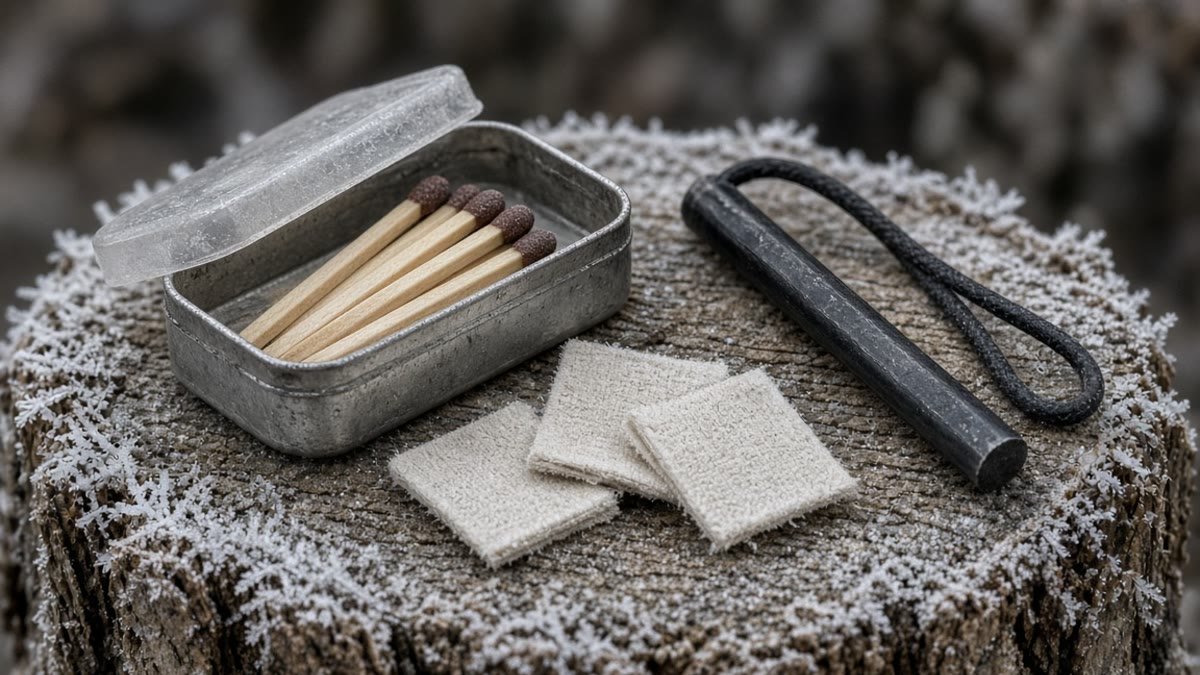
Pack fire-starting gear where cold hands can find it. AI-generated editorial image of an open tin of matches, a ferro rod on a cord and squares of tinder on a frost-covered tree stump.
Winter changes everything about fire. The ground is wet or frozen, every stick on the forest floor is buried or soaked, wind strips heat away as fast as you make it, and your fingers lose dexterity a few minutes after the gloves come off. The fire-starting methods that work on a dry August evening still work, but they need more preparation and less improvising.
Fire matters more in the cold, too. The US Army's FM 21-76 survival manual calls fire especially important in cold weather, because it warms you, cooks food and melts snow or ice into drinking water, and it gives a real psychological lift. The CDC lists shivering, exhaustion, confusion, fumbling hands, memory loss, slurred speech and drowsiness as warning signs of hypothermia in adults, and notes that it can set in even above 40°F when someone is wet from rain, sweat or cold water. If a person's temperature drops below 95°F, the CDC says to get medical help immediately. A fire is a tool for warming and drying, not a substitute for that care.
This guide walks through the order that works in snow: base, fuel, tinder, ignition, location, then putting it out. It draws on the Army manual, campfire guidance from Smokey Bear and the National Park Service, Leave No Trace advice from the Appalachian Mountain Club, and well-established winter fire-making practice. Fire rules differ by park, forest and state, and they change with conditions, so check before every trip.
Can you build a fire directly on snow?
Not for long. A fire set straight on snow melts its way down and drowns in its own meltwater. The US Army survival manual says to lay green logs side by side on the snow, add one or two more layers with the top layer crossing the one below, and build on that dry base, or to clear down to bare ground.
Heat goes everywhere, including down. A small fire on bare snow melts a pit under itself, the coals sink into slush, and the tinder you worked so hard to light sits in water. The fix is to keep the burning part of the fire off the snow entirely.
The Army manual's method is a platform of green logs. It notes that trees with wrist-sized trunks break easily in extreme cold. Cut or break several green logs, lay them side by side on top of the snow, then add one or two more layers, turning the top layer across the logs beneath it. Cutting live wood is an emergency measure; on public land in normal recreation, stick to whatever the local rules allow.
Other options work when green wood isn't available or isn't permitted. If the snow is shallow, dig or kick down to bare ground and build there. A metal fire pan raised on stones keeps a fire and its ash off the ground, an approach the Appalachian Mountain Club recommends for low-impact fires. If you use rocks, avoid wet or porous stones from stream beds: the Army manual warns that they may explode when heated.
Whichever base you use, pack the snow around it flat so you have a firm place to kneel and stack fuel. Give yourself room to work on the upwind side, since that is where you will light the fire.
What wood burns best when everything is covered in snow?
Look up, not down. Dead twigs still attached to trees, the dead lower branches of spruce and fir, and wood from standing dead trees are usually drier than anything lying under the snow. Snap-test twigs, split larger pieces to reach the dry inside, and grade everything from pencil-thin up to wrist-thick before you light anything.
Wood on the ground in winter has been sitting in snow, and even if you dig it out it is rarely dry. The better supply is above the snowline. Bushcraft instructor Paul Kirtley points out that vertical dead wood takes in relatively little water, while the more horizontal a piece of wood lies, the more water soaks into it. He recommends kindling from dead twigs still attached to trees, or dead twigs caught up in other branches, rather than anything from the ground.
Conifers are a dependable source in snow country. The Bangor Daily News, writing about winter fire-making in Maine, suggests breaking off the dead lower branches of live spruce and fir and looking for standing dead trees such as spruce. Those thin, brittle, needle-free branches near the trunk are often the driest fuel in the woods. The Army manual adds that birch burns hot and fast, and that spruce, while smoky in spring and summer, burns almost smoke-free in late fall and winter.
Test before you collect. A dry, dead twig gives a clean snap or click when you bend it; one you have to twist or cut free is still holding moisture. When the outside of larger wood is wet, split it. Kirtley advises splitting bigger pieces to reach the dry wood inside, and notes that smaller pieces light more easily and burn faster.
Grade your fuel before you strike anything. The Army manual describes three classes: tinder that catches from a spark, kindling that raises the temperature, and fuel that burns slowly and steadily once lit. Kirtley grades the kindling stages roughly as pencil thickness, then little-finger thickness, then index-finger to thumb thickness and up. Make neat piles of each so you can feed the fire without leaving it. Scout Life magazine advises gathering three or four times as much tinder, kindling and fuel as you normally would in a survival situation. Running short of fuel means leaving the fire to search for more just as it needs feeding.
One caution on standing dead trees: in parks and many campgrounds, cutting standing trees, dead or alive, is not allowed, and Leave No Trace practice is to gather only dead twigs from the ground and leave standing trees alone. Treat standing dead wood as a resource for genuine emergencies or for places where the land manager permits it.
What is the best tinder for starting a fire in snow?
The best tinder is whatever you carried in dry. Birch bark, cedar bark, pine pitch wood and hardened resin all work when you can find them, and birch bark contains oils that help it burn even when damp. A commercial tinder such as a wax or fuel cube is a reliable backup for wet, windy days.
The Army manual lists cattail fluff, cedar bark, lighter knot wood from pine trees and hardened sap from resinous trees as natural tinders. It also stresses that tinder must be absolutely dry if a spark alone is going to light it, and that if your only igniter throws sparks, charred cloth is almost essential, because it holds a spark long enough to blow it into flame. Charred cloth has to be made ahead of time and kept in an airtight container.
Birch bark is the classic winter tinder in northern forests. Kirtley notes that its natural oils make it water-resistant and highly flammable, and that it wipes dry easily even when the surface is wet. Shred it finely so a spark or small flame has plenty of edges to catch. Where birch isn't growing, a feather stick, a dry stick shaved into thin curls left attached at one end, gives you fine fuel from the dry inside of a branch. Kirtley's key point is that the curls need thin necks so they light.
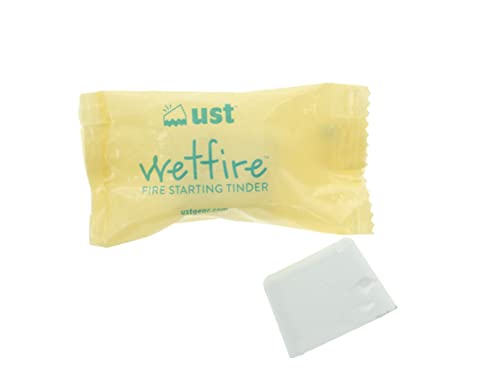
Natural tinder takes time and warm hands, both of which run short in a storm, so many people carry a commercial backup in a sealed bag. UST's WetFire is one example: individually wrapped cubes that retailers say are made to light in windy or wet conditions, burn up to five minutes, and can be shaved into smaller pieces or used whole depending on the wind and moisture. Our look at building a cold-weather fire kit that actually lights covers how to pack tinder so it stays dry.
Whatever you use, the bundle should be bigger than you think and sit right under your first pencil-thin sticks. If the tinder burns out before the kindling catches, you are back to the start with colder hands.
Is a ferro rod better than matches or a lighter in winter?
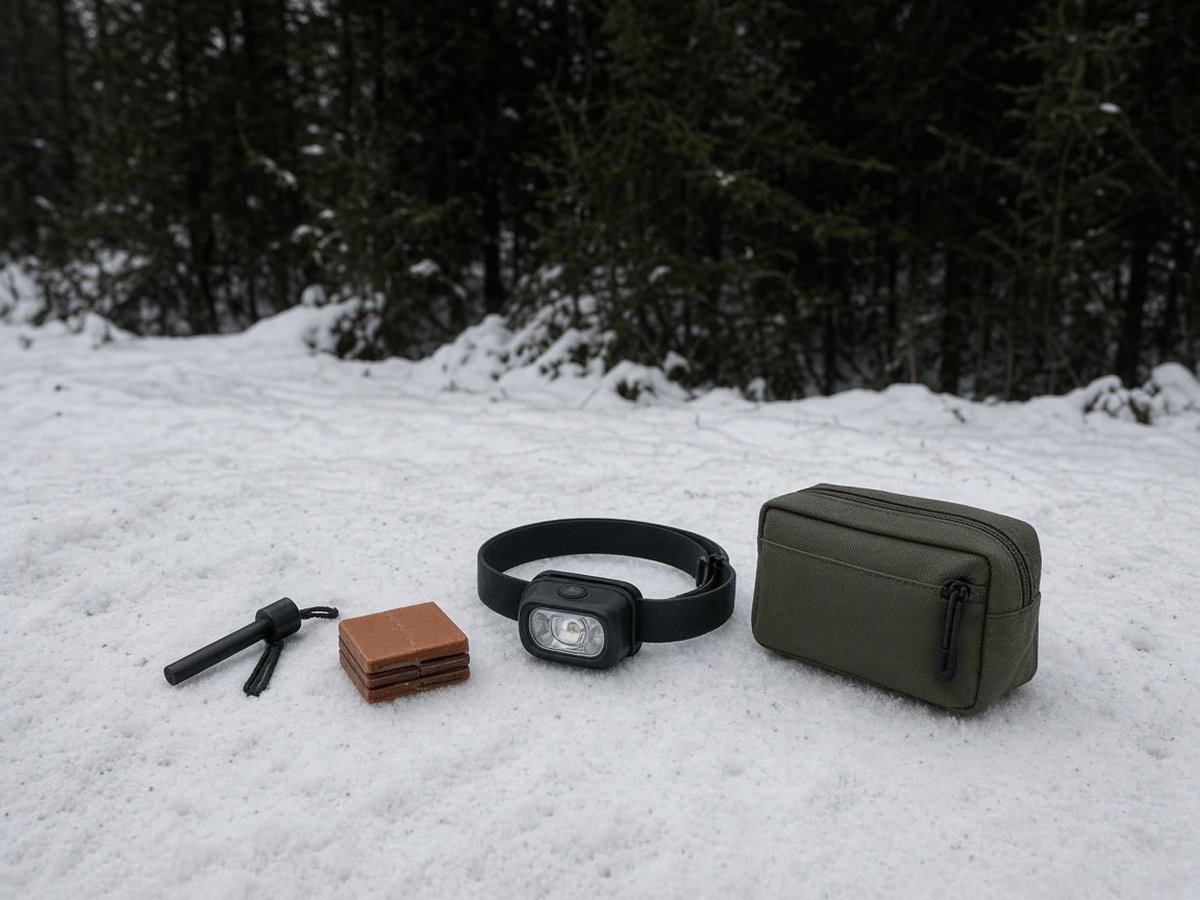
Carry more than one. A ferro rod still sparks when it is wet and lasts thousands of strikes, but it needs good tinder. Matches must be waterproof and stored in a waterproof container with a striker. A butane lighter is fast, but cold weakens it, so keep it in a pocket close to your body.
Ferro rod. A ferrocerium rod, which the Army manual calls a metal match, throws a shower of hot sparks when scraped. The manual's technique is to place a flat, dry leaf under the tinder with a portion exposed, rest the tip of the rod on it, and scrape a knife along the rod so the sparks land in the tinder. A rod has no fuel to run out and nothing to freeze, which makes it a strong backup in winter, but it only works with tinder fine and dry enough to catch a spark.
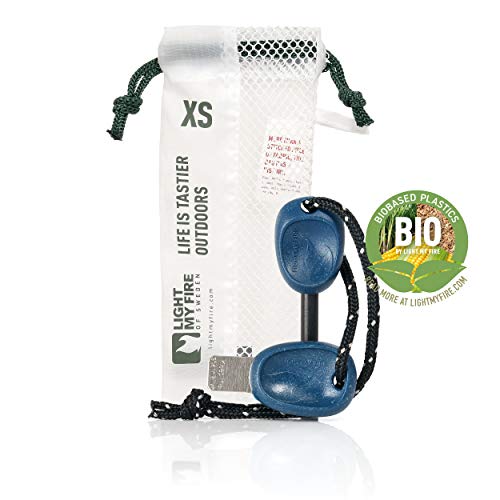
The Light My Fire FireSteel BIO Scout is a compact example. Retailer listings describe it as lasting about 3,000 strikes, working when wet and windy, and having a built-in emergency whistle in the striker and handles made from bio-based plastics. It hangs on a cord so the rod and striker stay together.
If you are choosing between compact rods, our Light My Fire Scout vs. Exotac nanoSTRIKER comparison and our broader look at fire starters go through the trade-offs.
Matches. Matches give you a flame immediately, which is a real advantage with damp tinder. The Army manual says to make sure they are waterproof and to store them in a waterproof container along with a dependable striker pad. Scout Life suggests a waterproof case, an empty plastic medicine bottle with a tight lid, or a resealable bag.
Lighter. A butane lighter is the fastest option when it works, but cold weakens it. Scout Life's advice is to carry it in a pocket close to your body so it doesn't freeze. If it sputters, warm it in your hand or an inside pocket before trying again.
The simplest rule is redundancy. The Bangor Daily News piece recommends carrying two fire starters, and the Army manual's cold-weather kit list includes waterproof matches in a waterproof container, preferably one with a flint attached. A lighter in an inside pocket, a ferro rod on a cord and a sealed bag of tinder cover most failures.
Where should you build a fire in the snow?
Choose a dry spot protected from the wind, away from your shelter, with fuel close by and nothing loaded with snow overhead. The Army manual warns that melting overhead snow can soak you, bury your gear and put out your fire. A log or rock wall on the windward side blocks gusts and reflects heat back toward you.
The Army manual's checklist for a site is short: a dry spot that is protected from the wind, suitably placed in relation to your shelter, able to concentrate heat where you want it, and close to a supply of fuel. In a wooded or brushy area it says to clear a circle at least 1 meter across so the fire has little chance of spreading.
Look up before you build. Conifers hold a lot of snow, and a fire underneath warms that load until it slides. The Army manual lists melting overhead snow among the hazards of cold-weather fires because it can get you wet, bury you and your equipment, and put out the fire. Build in the open or under clear sky, not beneath a heavy bough.
Wind is the other enemy. A wall of logs or rocks on the windward side, which the Army manual calls a fire wall, reflects heat toward you, cuts down flying sparks and reduces the wind blowing into the fire. The manual also notes you still need some air for the fire to burn, so don't wall it in completely. It advises always lighting the fire from the upwind side so the breeze pushes flame into the fuel rather than back at you.
Keep the fire a sensible distance from any shelter. The Army manual warns that fires can burn underground and resurface nearby, that heat inside a snow shelter melts its insulating layer, and that a fire in a poorly ventilated shelter can cause carbon monoxide poisoning. It also cautions that people trying to warm up or dry clothes can become careless and scorch their gear. Small and controlled beats big and smoky.
Fire is one part of a winter emergency kit, not the whole thing. Our list of items to have on hand when you survive in the snow covers the shelter, clothing and signaling gear that keep you going while the fire does its job.
How do you put out a fire in the snow, and is it even allowed?
Drown it with water, stir the ashes, drown it again and check with the back of your hand until it is cold; snow alone is not proof it is out. Before any recreational fire, check current rules with the land manager, because some parks and forests restrict fires all year or ban them near huts and above treeline.
Smokey Bear's method is drown, stir, drown, feel. Pour plenty of water on the fire until the hissing stops. Stir the embers, scraping sticks and logs so nothing is left smoldering, not just the red pieces. Add more water and keep going until everything is cool, then hover the back of your hand over the ashes to check. Smokey Bear warns against putting a fire out with dirt or sand alone, and sums it up plainly: if it's too hot to touch, it's too hot to leave. In winter, melted snow can serve as the water, but stir and check the same way: AMC notes that buried embers can stay hot.
The National Park Service gives the same standard: never leave a burning or smoldering campfire unattended, and make sure it is fully out and cold to the touch before you leave. Burn wood down to ash where you can. The Appalachian Mountain Club recommends burning wood completely to white ash, dousing with water rather than dirt, and scattering cool ash widely or packing it out.
Snow on the ground does not mean fires are allowed. The NPS says to check with the land management agency for fire restrictions or closures before you go, and Smokey Bear suggests searching "fire restrictions" plus your location or calling the local agency. Some places restrict fires all year: Rocky Mountain National Park, for example, keeps Stage 1 restrictions in place year-round, allowing campfires only in designated rings in picnic areas and frontcountry campgrounds. AMC notes that in the White Mountain National Forest, fires are banned within a quarter-mile of any hut or backcountry campsite and above treeline.
For ordinary winter trips, AMC's Leave No Trace advice is to skip the campfire, because twigs are scarce and fire and ash on snow can stay visible for months; a stove handles cooking and layers handle warmth. The skills in this guide are for the times a fire is allowed and wanted, and for the times it is genuinely needed to stay safe. Rules vary by location, so the land manager has the final word.
Practice before you need it
The worst time to learn winter fire-making is when you are already cold. Run through the whole sequence on a mild winter afternoon, in a place where fires are allowed: build a platform, collect and grade fuel, prepare tinder, light it with a ferro rod while wearing gloves, then put it out properly. Notice how much fuel a small fire eats in an hour and how fast your fingers stiffen.
Keep the essentials where cold hands can reach them: a lighter in an inside pocket, a ferro rod on a cord, waterproof matches and a sealed bag of tinder. With those, a dry base and a big pile of graded dead wood, a fire in snow becomes a routine rather than a gamble.
Sources: US Army FM 21-76 Survival Manual (Chapter 7, Firecraft, and Chapter 15, Cold Weather Survival), CDC: Preventing Hypothermia, Smokey Bear: How to maintain and extinguish your campfire, National Park Service: Wildland fire safety for park visitors, Rocky Mountain National Park: Fire information and regulations, Appalachian Mountain Club: Leave No Trace, minimize campfire impacts, Paul Kirtley: Tactics for fire-lighting in the damp, cold months, Bangor Daily News: fire-starting tips for hikers, Scout Life: A fire can save your life in winter, Light My Fire FireSteel BIO Scout listing at Canadian Outdoor Equipment, Light My Fire FireSteel BIO Scout listing at Varuste.net, and the UST WetFire Tinder listing at OpticsPlanet; Amazon B008UB4BV0; Amazon B07NQHP4KX.
Frequently asked questions
Can you build a fire directly on snow?
Not for long. A fire set straight on snow melts its way down and drowns in its own meltwater. The US Army survival manual says to lay green logs side by side on the snow, add one or two more layers with the top layer crossing the one below, and build on that dry base, or to clear down to bare ground.
What wood burns best when everything is covered in snow?
Look up, not down. Dead twigs still attached to trees, the dead lower branches of spruce and fir, and wood from standing dead trees are usually drier than anything lying under the snow. Snap-test twigs, split larger pieces to reach the dry inside, and grade everything from pencil-thin up to wrist-thick before you light anything.
What is the best tinder for starting a fire in snow?
The best tinder is whatever you carried in dry. Birch bark, cedar bark, pine pitch wood and hardened resin all work when you can find them, and birch bark contains oils that help it burn even when damp. A commercial tinder such as a wax or fuel cube is a reliable backup for wet, windy days.
Is a ferro rod better than matches or a lighter in winter?
Carry more than one. A ferro rod still sparks when it is wet and lasts thousands of strikes, but it needs good tinder. Matches must be waterproof and stored in a waterproof container with a striker. A butane lighter is fast, but cold weakens it, so keep it in a pocket close to your body.
Where should you build a fire in the snow?
Choose a dry spot protected from the wind, away from your shelter, with fuel close by and nothing loaded with snow overhead. The Army manual warns that melting overhead snow can soak you, bury your gear and put out your fire. A log or rock wall on the windward side blocks gusts and reflects heat back toward you.
How do you put out a fire in the snow, and is it even allowed?
Drown it with water, stir the ashes, drown it again and check with the back of your hand until it is cold; snow alone is not proof it is out. Before any recreational fire, check current rules with the land manager, because some parks and forests restrict fires all year or ban them near huts and above treeline.