
Wood Stove in a Tent: Hot Tent Safety Guide
Written by Outdoors Magazine|
Outdoors Magazine is a participant in the Amazon Services LLC Associates Program. We may earn a commission if you buy through links on this page, at no extra cost to you. Affiliate disclosure.
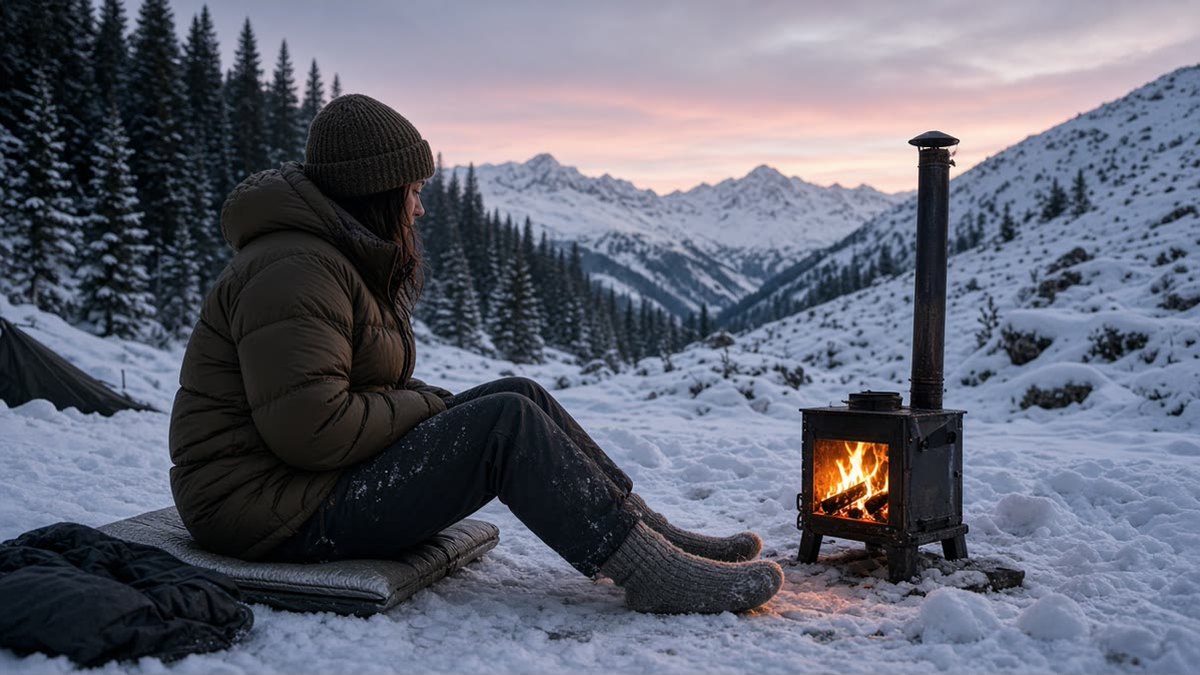
A wood stove in a tent is safe only in a shelter built and rated for one, with a fire-resistant stove jack. Follow the stove maker's clearances, put a fireproof mat underneath, guy the pipe and keep a spark arrestor on it, ventilate, burn only dry wood, carry a battery CO alarm, and let the fire die before you sleep.
Key takeaways
- Never use any stove, heater or charcoal inside an ordinary tent.
- Use a stove only in a tent rated for one, through a fire-resistant stove jack.
- Carry a battery CO alarm, ventilate, and let the fire die before you sleep.
- Follow the maker's clearances, use a stove mat, and check local fire bans.
A wood stove in a tent is safe only in a shelter built for one, with a fire-resistant stove jack, and only when you follow the stove maker's rules on clearance, ventilation and supervision. Never run any stove, heater or charcoal in an ordinary tent, carry a battery carbon monoxide alarm, and let the fire die before sleep.
A hot tent can turn a frozen camp into a livable one, but only when the stove, the shelter and the habits around it are all built for fire. AI-generated editorial image of a person in a puffy jacket and beanie sitting on a pad in the snow beside a small wood stove with a tall chimney pipe and a visible fire, with snowy mountains and pine trees at dusk.
Hot-tent camping, running a small wood stove inside a canvas wall tent, tipi or purpose-built shelter, dries wet gloves, melts snow and makes long winter nights bearable. Done wrong, it can kill twice over: by fire, if the pipe or stove touches fabric, and by carbon monoxide, which you cannot see or smell.
This guide draws on CDC, CPSC, Poison Control and U.S. Fire Administration guidance, two national forests' fire-restriction pages, and published instructions from Winnerwell, Seek Outside, Cylinder Stoves and Springbar. Where makers differ, we say so. Your own stove and tent manuals are the final word; if they are stricter, follow them.
Can you put a wood stove in a regular tent?
No. A regular camping tent, the nylon or polyester dome most people own, is not a place for any flame. The CPSC's carbon monoxide fact sheet says never to use portable fuel-burning camping equipment inside a tent, and never to burn charcoal inside one (CPSC). Poison Control gives the same warning in nearly the same words (Poison Control). The CPSC makes one exception: equipment that is specifically designed for use in enclosed spaces and labeled with instructions for doing so safely. A wood stove sold for hot tents is used under that kind of maker instruction, and it is meant to go into a shelter designed to receive it, not into a tent that was never meant to see heat.
What makes a tent "stove-ready"? At minimum, a stove jack: a reinforced, fire-resistant port where the hot pipe passes through the roof or wall. Winnerwell's manuals are blunt about it: do not insert the stove pipe directly through the tent fabric. Its titanium stove manual requires its heat protector, and its Woodlander and Nomad manual requires a flashing kit and a triple-wall heat protector chimney, warning that skipping these precautions could set your tent on fire (Winnerwell Fastfold manual, Winnerwell Woodlander/Nomad manual).
Even canvas is not automatically safe. Springbar says only three of its canvas tents are stove compatible, that its canvas will burn if exposed to an open flame, that it applies no fire-retardant treatment except near the stove jack on one model, and that adding a stove jack to other tents voids the warranty (Springbar). The rule is simple: use a stove only in a shelter its maker builds and rates for one, and never cut your own pipe hole in a tent.
Why is carbon monoxide so dangerous in a tent?
Carbon monoxide (CO) is the gas produced when fuel burns, and the CDC describes it as odorless and colorless, a gas that kills without warning. The CDC lists the most common symptoms as headache, dizziness, weakness, upset stomach, vomiting, chest pain and confusion, often described as flu-like. The line that matters most for campers is this one: people who are sleeping, drunk or under the influence of other substances can die from CO poisoning before they ever feel symptoms (CDC). Everyone is at risk, and the CDC says infants, older adults and people with chronic heart disease, anemia or breathing problems are more likely to become ill.
A CDC report on two 1999 camping incidents in Georgia shows how fast this goes wrong. In one, a man and three children died in a zipped-up tent with a propane stove still running. In the other, a man and his young son died in a zipped tent where a charcoal grill had been brought inside for warmth. The report concluded that camping stoves, camping heaters, lanterns and charcoal grills should never be used inside a tent, camper or other enclosed shelter, and it added that opening tent flaps, doors or windows is not enough to prevent dangerous CO build-up from these devices (CDC MMWR).
Altitude makes it worse. The CPSC says not to use portable heaters or lanterns while sleeping in enclosed areas such as tents, campers and vehicles, and notes that the risk of CO poisoning is higher at high altitudes (CPSC). The same logic applies to cooking: our guide to using a canister stove in cold weather covers why you should never cook inside a tent with one either.
A proper hot tent sends smoke out through the pipe, but that system can fail: a joint can separate, a damper can be closed too far, a spark arrestor can clog, or damp wood can burn badly. Winnerwell warns that damp wood or other fuels may cause incomplete combustion and produce carbon monoxide (Winnerwell).
Do you need a carbon monoxide alarm in a hot tent?
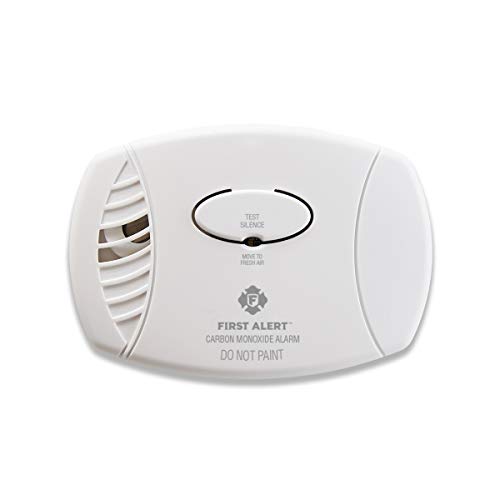
Yes. Winnerwell's titanium stove manual says you must use a carbon monoxide detector if you use the stove in a tent or shelter, and its Woodlander and Nomad manual recommends one (Winnerwell). The CDC recommends battery-operated or battery back-up CO detectors near every sleeping area at home, testing the batteries each spring and fall, and replacing the detector per the maker's instructions or every five years (CDC). The CPSC advises an alarm that meets the current UL 2034 standard (CPSC).
Know what to do before it sounds. The CPSC says never ignore a CO alarm: do not hunt for the source, get to fresh air, call 911 and account for everyone (CPSC). If you think someone has been exposed, Poison Control says to call 911 immediately if the person is unconscious, not breathing or having seizures, and otherwise to call Poison Control at 1-800-222-1222 (Poison Control). This article cannot assess symptoms; treat a suspected exposure as an emergency.
One honest caveat. Most battery CO alarms are designed for homes. The First Alert CO400 manual, for example, says not to install it outdoors or where it is colder than 40°F (4.4°C) or hotter than 100°F (37.8°C), to test it weekly, and to replace it five years after installation (First Alert CO400 manual). A winter tent will not stay that warm once the stove dies, so check your alarm's rated range, keep it warm with you rather than in a frozen pack, and never treat it as a substitute for ventilation and good fire habits.
If you want a simple battery alarm, the First Alert CO400 is one widely sold example. Its retail listing describes a single 9-volt battery, an electrochemical CO sensor, an 85-decibel alarm, one test/silence button and an end-of-life chirp (Target listing).
How far should a tent stove be from the tent walls?
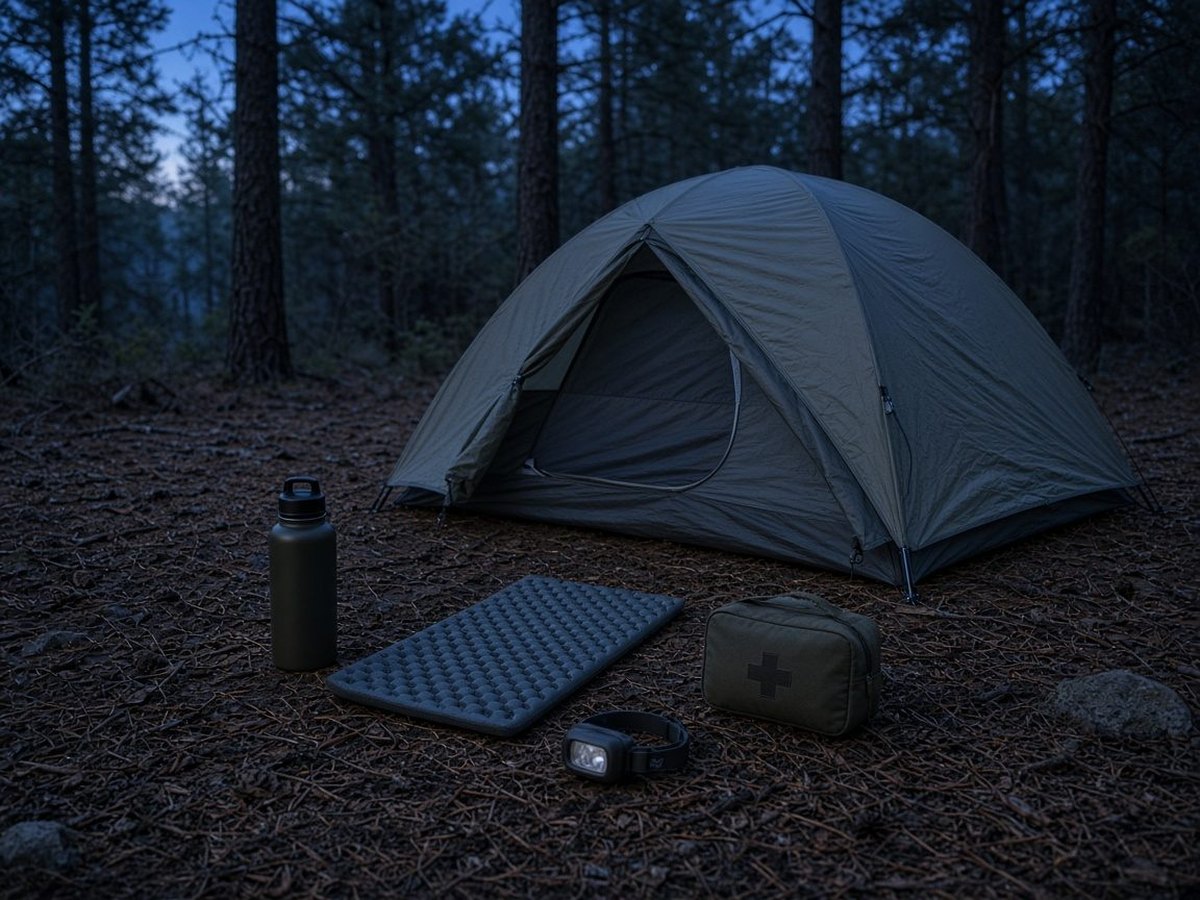
Follow your stove's published clearances, because they vary by model and are bigger than most people guess. Winnerwell's titanium stove manual gives a minimum of 1,500 mm (60 inches) from the top of the stove to combustible materials, and 1,200 mm (48 inches) from the sides, rear, corners and loading side (Winnerwell). The U.S. Fire Administration's general rule is to keep anything that can burn at least 3 feet from heat sources, wood stoves included (USFA). In a tent, that means walls, sleeping bags, pads and drying clothes.
Protect the floor, too. Winnerwell says to always have fireproof material underneath the stove, recommends a fireproof mat, and says to keep the bottom of the firebox at least 180 mm (about 7.1 inches) above the ground (Winnerwell). A mat gives any escaping ember somewhere safe to land.
A few habits follow:
- Set the stove level and stable on the mat so it cannot tip when you load it.
- Plan the sleeping layout around the stove so no one rolls toward it.
- Watch kids and pets. Winnerwell urges special caution around them and says its stoves are not for children under 16 (Winnerwell).
- Never move a burning stove. Winnerwell says to let the stove and pipe cool fully first.
Drying wet gear by the stove also adds moisture to a closed shelter; our guide on how to reduce condensation inside a tent covers the airflow habits that help.
How do you set up the stovepipe, spark arrestor and ventilation?
Stovepipe. The pipe carries smoke and gases out, so its joints must stay together. Cylinder Stoves notes that wind flapping the tent can pull the pipe off the stove and suggests supporting the pipe near its end (Cylinder Stoves). Winnerwell says to attach guy lines at the base of its spark arrestor to keep the flue stable in high winds (Winnerwell). Run the pipe only through the stove jack, never against bare fabric.
Spark arrestor. Cylinder Stoves says its spark arrestor has holes small enough to catch the sparks and can be taken down and cleaned when the stove is not in use (Cylinder Stoves). Winnerwell says to check the spark arrestor and pipe daily for creosote and clean them to prevent clogging and reduce the risk of a chimney fire (Winnerwell). Seek Outside says that if you use the baffle in its damper you can remove the spark screen, unless you are under Stage 1 fire restrictions, when the screen must stay in (Seek Outside).
Ventilation and the damper. Winnerwell's manuals say to always leave a window cracked or a door open when using its stoves in a tent, with at least 0.5 square meters (775 square inches) of opening, to keep the damper fully open in a tent, and to keep doors and windows fully open while starting the fire (Winnerwell). Check your own stove's manual, because damper designs differ.
Is it safe to sleep with a wood stove burning in a tent?
The safest answer, backed by the clearest written guidance, is no: let the fire burn down before you sleep. Winnerwell's manuals say never to leave the stove burning unattended and that it cannot be used in a camping tent at night unattended (Winnerwell). The CPSC says never to use fuel-burning portable heaters or lanterns while sleeping in tents (CPSC), and the CDC warns that sleeping people can die of CO before they notice symptoms (CDC).
Makers differ in how they handle this. Winnerwell is explicit. The Seek Outside and Cylinder Stoves pages we reviewed do not address overnight burning; Seek Outside's safety notice says to keep a fire extinguisher and water nearby at all times (Seek Outside). Silence in a manual is not permission, and a fire with everyone asleep is unattended.
A plan that fits the strictest guidance: run the stove in the evening to dry gear and warm the tent, let it burn down before bed, sleep in a bag and pad that can handle the low on their own, and relight in the morning. Our explainer on sleeping bag temperature ratings shows how to choose that bag.
What wood should you burn, and how do you break in a new stove?
Burn dry, seasoned wood only. Winnerwell says to use dry wood only, because damp wood may cause incomplete combustion and produce carbon monoxide, and never to burn coal or pitchy firewood or build an excessive fire (Winnerwell). Cylinder Stoves adds that green wood will not burn as well or put off as much heat as dry seasoned wood, and to avoid wood heavy with pitch and sap (Cylinder Stoves). Our guide on how to start a fire in snow covers finding dry fuel in winter.
Never use liquid accelerants. Winnerwell says never to use gasoline, lantern fuel, kerosene, charcoal lighter fluid, ethyl alcohol or similar liquids to start or freshen a fire (Winnerwell).
Do not overfire. Cylinder Stoves says never to let the stove burn hot enough to turn red (Cylinder Stoves).
Do the first burn outside. Cylinder Stoves says to set the stove up outside for the first burn because the paint and galvanized pipe will smoke, and that if you burn it in the tent, allow a couple of hours before occupying it so the smoke clears (Cylinder Stoves). For titanium stoves, Seek Outside says to clean the metal before the first burn because fingerprints will heat-set, to make sure the pipe has no creases, and not to over-tighten the stove box or it can warp (Seek Outside). A backyard dry run is also the time to learn your damper.
How do you put out a tent stove and check fire restrictions?
Putting it out. Let the fire burn down. Winnerwell says to wear heat-resistant or leather gloves when using the ash scraper, keep an extinguisher nearby, and let the stove cool fully before moving it (Winnerwell). Cylinder Stoves says to dump the ashes out once the stove has cooled (Cylinder Stoves). Then treat them like a campfire: Smokey Bear says to drown with water until the hissing stops, stir, add more water, and hover the back of your hand over the ashes to check they are cool, because if it is too hot to touch, it is too hot to leave (Smokey Bear).
Checking the rules. A tent stove is still a fire, and fire restrictions can ban it outright. Seek Outside strongly recommends checking all state and local fire bans or restrictions before each use (Seek Outside), and Smokey Bear suggests searching "fire restrictions" with your location or contacting the local public lands agency (Smokey Bear).
The details vary by forest. On Nevada's Humboldt-Toiyabe National Forest, Stage 1 restrictions prohibit portable stoves, fire pits or grills that use wood or charcoal, while gas or liquid-fuel stoves with an on/off switch remain allowed; Stage 2 also bans twig stoves (USDA Forest Service, Humboldt-Toiyabe). On Colorado's San Juan National Forest, Stage I still allows a fully enclosed metal or sheepherder-type stove with a chimney at least five feet long, but Stage II prohibits wood-burning and sheepherder stoves (USDA Forest Service, San Juan). Same stove, different answer.
Before every trip: confirm the tent is rated for a stove, pack its manual, bring a mat, gloves, water and an extinguisher, check your CO alarm, look up current fire restrictions, and plan to let the fire die before you sleep.
Sources: CDC: Carbon monoxide poisoning basics, CDC MMWR: Carbon monoxide poisonings in campers, Georgia, CPSC: Portable heaters and camping equipment, CPSC: Carbon monoxide fact sheet, Poison Control: Carbon monoxide, U.S. Fire Administration: Heating fire safety, Winnerwell Fastfold Titanium stove manual, Winnerwell Woodlander/Nomad stove manual, Seek Outside: Tent stove safety notice, Seek Outside: Stove instructions, Cylinder Stoves: Stove instruction sheet, Springbar: Tent stove compatibility and safety, USDA Forest Service: Humboldt-Toiyabe fire restrictions, USDA Forest Service: San Juan fire danger levels and restrictions, Smokey Bear: How to maintain and extinguish your campfire, First Alert CO400 user manual, Target: First Alert CO400 listing; Amazon B000N8OYXI.
Frequently asked questions
Can you put a wood stove in a regular tent?
No. The CPSC and Poison Control say never to use portable fuel-burning camping equipment or burn charcoal inside a tent. Use a wood stove only in a shelter its maker builds and rates for one, with a fire-resistant stove jack, and never cut a pipe hole in an ordinary tent.
Why is carbon monoxide so dangerous in a tent?
Carbon monoxide is odorless and colorless, and the CDC warns that sleeping people can die from it before they notice symptoms such as headache, dizziness, upset stomach or confusion. A CDC report on camping deaths found that opening tent flaps is not enough to prevent dangerous build-up from stoves, heaters or charcoal grills.
Do you need a carbon monoxide alarm in a hot tent?
Yes. Winnerwell's titanium stove manual says you must use a CO detector in a tent or shelter, and the CDC recommends battery-operated CO detectors near sleeping areas. Check your alarm's rated temperature range, since many home units are not meant for cold or outdoor use, and if it sounds, get everyone into fresh air and call 911.
How far should a tent stove be from the tent walls?
Use your stove's published clearances. Winnerwell's titanium stove manual calls for 60 inches above the stove and 48 inches at the sides and rear, while the U.S. Fire Administration's general rule is at least 3 feet from anything that can burn. Put a fireproof mat under the stove to catch embers.
How do you set up the stovepipe, spark arrestor and ventilation?
Run the pipe only through a fire-resistant stove jack, support it and guy it against wind, and keep a spark arrestor on top, cleaning it of creosote regularly. Winnerwell also says to keep a door or window open with at least 775 square inches of opening and to keep the damper fully open in a tent.
Is it safe to sleep with a wood stove burning in a tent?
The safest course is no. Winnerwell's manuals say its stoves cannot be used in a tent at night unattended, and the CPSC says never to use fuel-burning heaters while sleeping in a tent. Other makers' pages are silent on overnight burning, so let the fire die before sleep and rely on a warm sleeping bag.