
Reasons to Take the Family Hiking This Fall
Written by John Wren|
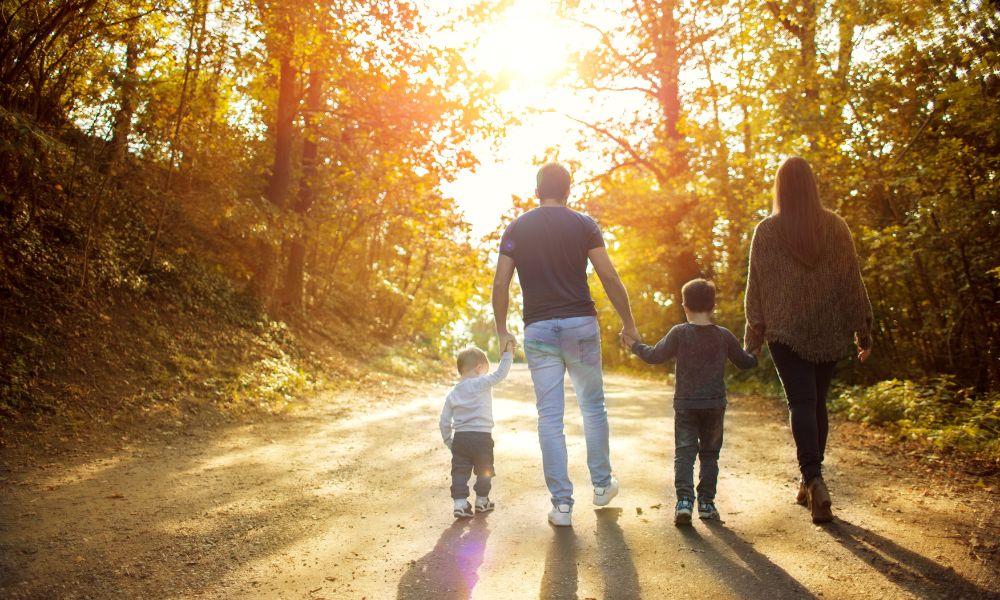
Fall offers comfortable temperatures for longer family hikes, a major drop in bug pressure, and a strong visual payoff from foliage. Layer for the morning-to-afternoon temperature swing, plan around shorter daylight, and pick a trail with a clear destination matched to your family's ability.
Key takeaways
- Cooler air lets families hike farther without summer heat stress.
- Bug pressure drops significantly after the first cool nights.
- Foliage gives young hikers a visual payoff that builds motivation.
- Shorter daylight means planning start times and turnaround with discipline.
Fall is genuinely the best season for family hiking in most of the country — cooler temperatures make longer trails comfortable for kids who overheat quickly in summer, fewer bugs mean less misery on the trail, and the seasonal payoff of changing leaves gives even reluctant young hikers a visual reward that keeps them motivated past the first mile. The short answer: pick a trail with a clear destination or view, dress in layers for temperature swings between a cool morning and a warmer afternoon, and time the outing around peak local foliage for the best experience.
Short version. Cooler air means kids and adults alike can hike farther without the exhaustion and dehydration risk of summer heat. Bug pressure drops significantly once the first cool nights arrive, which matters enormously for enjoyment with younger children. Fall's shorter days mean planning your start time and turnaround point more carefully than a long summer evening would require.
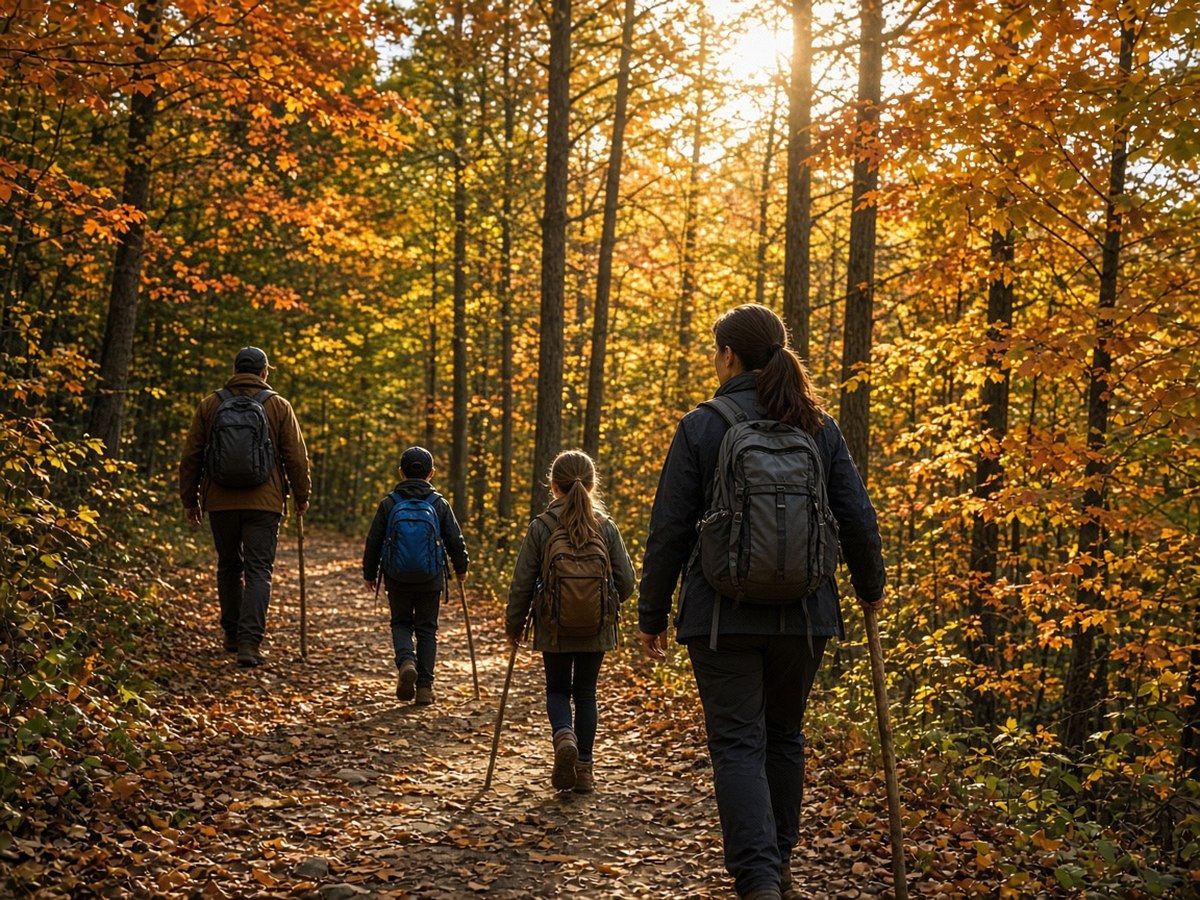
Weather that actually works in your favor
Summer hiking with young kids often means racing the heat — starting before dawn to beat the worst temperatures, carrying more water than pack space comfortably allows, and cutting trips short when a child overheats or gets cranky in the sun. Fall flips this dynamic. Comfortable daytime temperatures in the 50s and 60s across much of the country let families hike longer distances at a more relaxed pace without the constant heat-management stress that defines a lot of summer trail time with young children.
The trade-off is shorter daylight hours, which means planning your start time and turnaround point with more discipline than a forgiving summer evening allows. Check sunset time before you go, and build in a real buffer so you are not racing dusk on the way back to the trailhead, especially on a trail you are not intimately familiar with.
Fewer bugs means more enjoyment, especially for young kids
Mosquitoes, ticks, and other biting insects that make summer hiking genuinely miserable in many regions drop off significantly with the first sustained cool nights of fall. This matters disproportionately for family hikes with young children, who tend to notice and complain about bug bites far more than adults and whose smaller, more exposed skin is an easier target. A fall hike free of constant bug swatting and DEET application is simply a more pleasant experience for everyone involved, and it removes one of the most common sources of trail-trip meltdowns with younger kids.
Tick activity varies more by specific region and can persist later into fall than many people expect, so a tick check after any hike through grassy or brushy terrain remains good practice even once the worst of summer bug season has passed. Do not let reduced overall bug pressure translate into complacency about tick checks specifically.
The visual payoff that motivates reluctant hikers
Fall foliage gives even a fairly ordinary trail a genuine "wow" moment that keeps young hikers engaged and motivated in a way a summer green canopy simply does not provide. Time your hike around your region's typical peak color window — usually a two-to-three-week period that varies by elevation and latitude — and check current foliage reports where available, since peak color timing shifts year to year based on temperature and precipitation patterns.
Turning the hike into a small scavenger hunt for different leaf colors, shapes, or specific tree species adds an engaging activity layer for younger kids beyond simply walking, and it is a low-effort way to make a longer trail feel shorter and more interesting to a child who might otherwise start asking "are we there yet" within the first half mile.
Dressing for a day that starts cold and warms up
Fall mornings can be genuinely cold even when the afternoon warms up comfortably, which makes layering more important than in either deep summer or deep winter, when the temperature swing across a single day is usually smaller. Start with a moisture-wicking base layer, add a warm mid-layer that can come off and go in a pack as the day warms, and always carry a wind or rain shell, since fall weather is notoriously changeable compared to a stable summer forecast.
Dress kids in the same layering logic, and pack an extra layer beyond what you think is necessary for younger children specifically, since kids regulate temperature less efficiently than adults and can get cold faster once they stop moving for a rest break or a snack.
Fall trails often see fewer crowds than peak summer weekends
Many popular trail systems see a noticeable dip in weekday and even weekend traffic once summer vacation ends and the school year begins, which means a fall family hike often comes with a quieter, more peaceful trail experience than the same trail would offer during peak summer tourist season. This is a real, underappreciated benefit for families who prefer a less crowded outdoor experience, and it can make popular, otherwise-packed destinations genuinely enjoyable in a way summer visits to the same trail are not.
Fall-specific safety considerations
Hunting seasons open in many states during fall, and hiking on public land that allows hunting requires real awareness — wear blaze orange if hiking during an active hunting season in your area, stay on designated trails, and check whether your specific destination allows hunting before assuming a hike is automatically hunter-free. This is an easy detail to overlook for families used to hiking primarily in spring and summer, when hunting season is not a factor in most regions.
Shorter days also mean carrying a headlamp or flashlight even for a hike you expect to finish well before dark, since an unexpected delay — a tired child, an injury, or simply misjudging pace — can push your return past sunset faster in fall than it would in the long daylight of summer.
Choosing the right trail for your family's actual ability
A trail with a clear, achievable destination — a viewpoint, a waterfall, a lake — gives young hikers a concrete goal that makes the effort feel worthwhile, rather than an open-ended loop with no obvious payoff. Match the total distance and elevation gain honestly to your family's actual hiking experience and your youngest child's realistic endurance, rather than the distance you as an adult could comfortably cover alone, since an overambitious first fall hike can sour a child on hiking entirely rather than building the enthusiasm you are hoping for.
Food and hydration habits that keep kids happy on the trail
Cooler fall temperatures reduce the sweat-driven hydration urgency of a summer hike, but kids still need regular water breaks and calorie-dense snacks to maintain energy and mood across a multi-hour outing. Pack more snacks than you think you need, spaced at regular intervals rather than saving them all for the halfway point, since a hungry, tired child mid-trail is far harder to re-motivate than one who has been kept steadily fueled throughout the hike.
A thermos of warm cider or hot chocolate at a scenic turnaround point turns a simple rest stop into a genuine highlight of the trip for younger hikers, and it costs almost nothing in extra pack weight compared to the enthusiasm boost it tends to generate. Small, deliberate touches like this are often what turn a merely tolerated hike into one kids actually ask to repeat.
Turning the hike into more than just walking
Beyond a foliage scavenger hunt, fall hikes offer natural opportunities for nature journaling, simple leaf and pinecone collection, or basic tree and bird identification using a pocket guide or a phone app. These low-effort activities give young children a sense of purpose and discovery beyond simply covering distance, and they build a foundation of genuine curiosity about the outdoors that tends to translate into a child who wants to keep hiking as they get older, rather than one who associates hiking purely with parental obligation.
Photography is another simple, engaging fall hiking activity — handing an older child a basic camera or a phone to document interesting finds along the trail gives them ownership over part of the experience and often results in surprisingly attentive, curious behavior compared to a hike where they are simply following along passively behind adults.
Building a fall hiking habit, not just a single outing
A single great fall hike is a nice memory, but a family that turns fall hiking into a recurring weekend habit across the season builds real fitness, comfort with the outdoors, and shared family tradition that compounds year over year. Consider picking a handful of trails at increasing difficulty across the fall season, so each outing builds naturally on the confidence and stamina developed during the previous one, rather than a single isolated trip that does not connect to any larger pattern.
| Factor | Fall advantage | What to plan for |
|---|---|---|
| Temperature | Comfortable for longer distances | Layer for a cold morning, warm afternoon swing |
| Bugs | Significantly reduced after first cool nights | Tick checks still matter into fall |
| Foliage | Strong visual motivation for kids | Time around your region's peak color window |
| Daylight | N/A — shorter days | Plan start time and turnaround with real discipline |
Our take: fall's combination of comfortable temperatures, fewer bugs, and genuine visual payoff makes it the easiest season to build lasting hiking enthusiasm in kids. Layer for the temperature swing, plan around shorter daylight, and pick a trail with a real destination that matches your family's actual ability.
A simple gear list that covers most fall family hikes
Most fall family hikes do not require specialized gear beyond what most families already own: sturdy shoes with decent tread, a light backpack for snacks and layers, a basic first-aid kit, and a paper map or downloaded offline map for trails outside reliable cell coverage. Resist the urge to over-equip for what is usually a modest, well-marked trail — excess gear adds pack weight and complexity without a corresponding safety benefit for most established, popular fall hiking destinations.
A small emergency kit — a whistle, a compact rain layer, a headlamp, and a basic first-aid pouch — is worth carrying even on a short, well-traveled trail, since fall's shorter days and more variable weather make an unplanned delay a slightly higher-consequence event than the same delay would be on a long summer evening with hours of daylight still remaining. A little extra preparation costs almost nothing and buys real peace of mind on every outing. Treat it as a permanent fixture in the pack rather than something to remember fresh each trip, and it stops being a hassle entirely. That small shift in mindset is what keeps good habits alive long after the novelty of a new gear list wears off.
Frequently asked questions
Why is fall a good season for family hiking?
Cooler temperatures let kids hike farther without overheating, bug pressure drops significantly, and colorful foliage gives young hikers a visual reward that keeps them motivated.
How should I dress kids for a fall hike?
Use layers, since fall mornings are often cold while afternoons warm up. Pack an extra layer beyond what seems necessary, since kids regulate temperature less efficiently than adults.
Do I need to worry about ticks in the fall?
Yes. Tick activity can persist later into fall than expected in many regions. Do a tick check after any hike through grassy or brushy terrain.
How do I time a hike for peak fall foliage?
Check current regional foliage reports, since peak color timing shifts year to year based on temperature and precipitation. Peak windows are usually two to three weeks.
Is hunting season a concern for fall family hikes?
Yes, on public land that allows hunting. Wear blaze orange during active hunting seasons, stay on designated trails, and check whether your destination allows hunting.
How do I choose the right fall trail for young kids?
Pick a trail with a clear destination like a viewpoint or waterfall, and match distance and elevation gain honestly to your youngest child's realistic endurance.