
Late-Season Public-Land Ducks: Hunting Pressured Birds When It's Hard-Frozen
Written by John Wren|
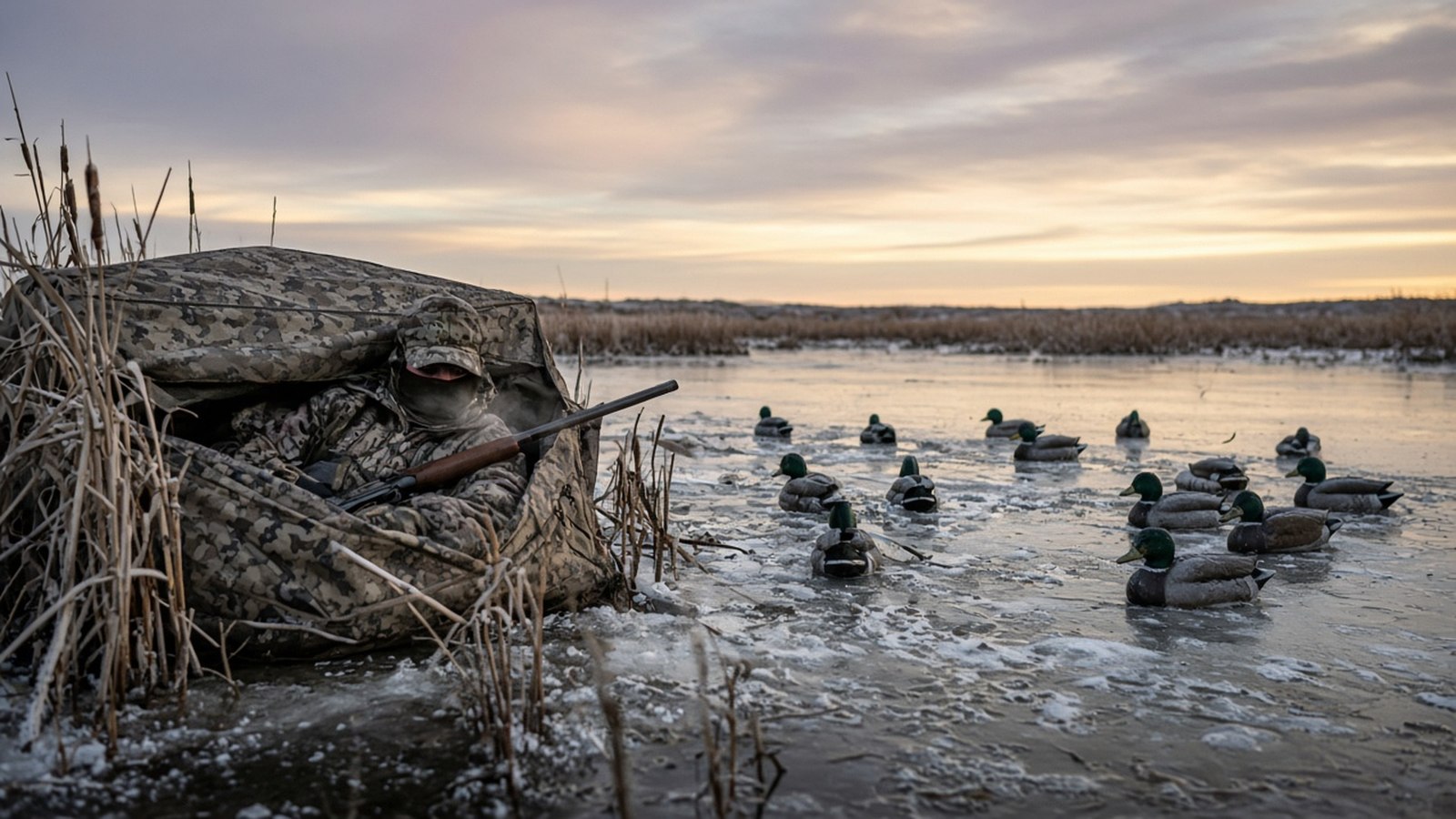
Scout the last open water the afternoon after a hard freeze, run a small realistic decoy spread with a little movement, call less than you did in October, and dress for standing still in near-freezing water. Give other hunters real distance on shared public marshes.
Key takeaways
- Scout the afternoon before a hunt, not the morning of.
- Concentrate on the last open water after a freeze.
- Fewer, more realistic decoys beat a huge static spread.
- Dress for standing still in cold water, not for walking.
Late-season public-land ducks are not the same birds you saw in October. They have been shot at, shot near, and buzzed by every skiff and layout blind on the refuge boundary. The short answer: hunt the last open water on a hard-freeze week, run a small spread with more movement and less noise, and be in the blind before the birds finish their first look at first light — not after. Pressure and cold, not more decoys, are what move late birds.
Short version. Scout the afternoon before, not the morning of. Cut your decoy count and add one jerk rig instead of six more magnum floaters. Call less and quieter than you did in September. Layer for standing still in wet cold, not for walking. Pair this with public-land scouting habits and a wader that will not leak on day nine. Check live prices.
This is a field note, not a gear catalog. The birds left in a public marsh in January are the ones that survived a hundred hunters finding the wrong things convincing. Late season rewards the hunter who moves the least and reads the water the most.
Why late-season public birds are different birds
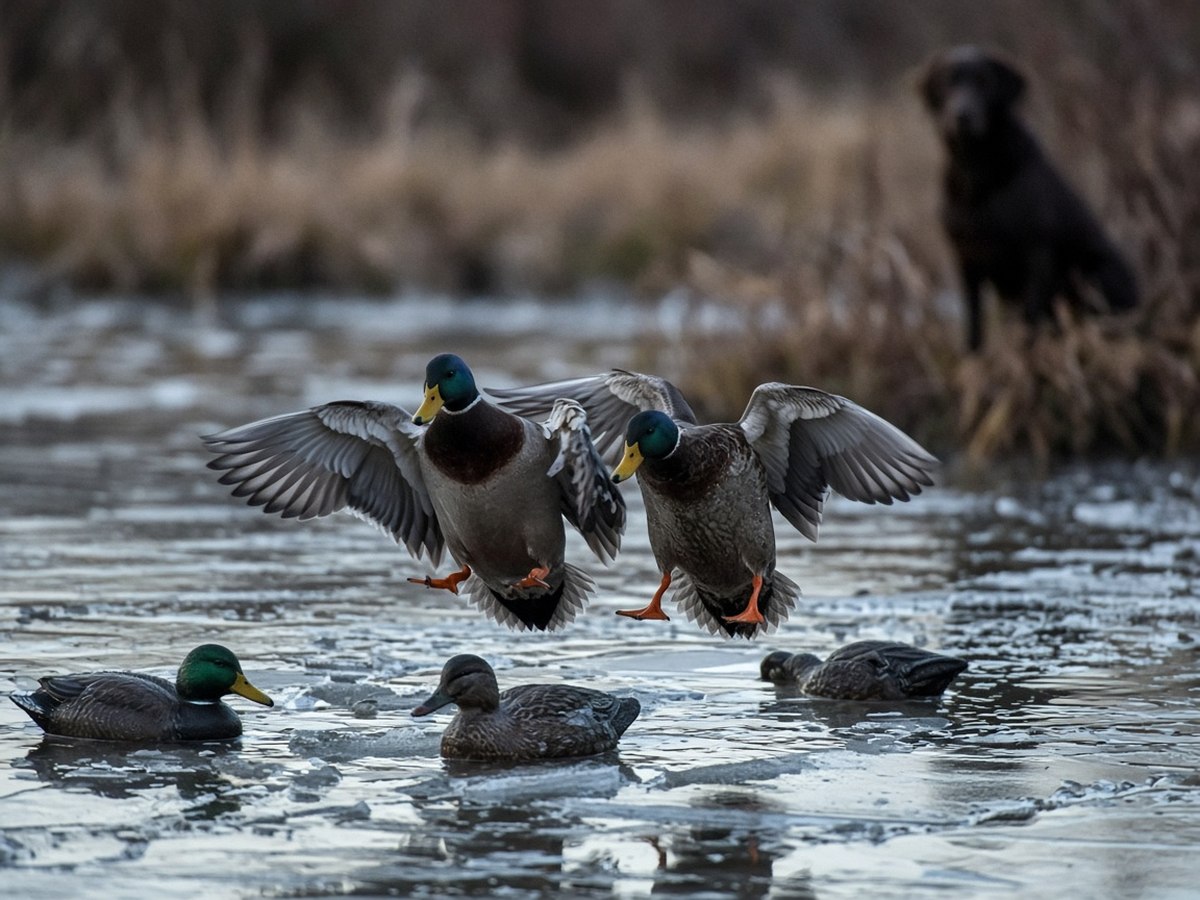
By December, the ducks working a heavily pressured public marsh have survived weeks of decoy spreads, calling, and blinds that all look roughly the same. They circle wider, they flare at movement that would not have bothered them in October, and they have learned what a boat ramp sounds like at 5:30 a.m. Treat every bird you see as one that has already been shot at near this exact spot. That single assumption changes decoy count, calling volume, and how far you are willing to walk to find water nobody else found.
Late-season flights also skew toward mallards and a handful of hardy divers once the dabblers that tolerate marginal cold have pushed further south. Fewer species means fewer decoy profiles to fake convincingly, but it also means the birds left are the toughest, most call-shy individuals in the population. A duck that has made it to week twelve of the season did not get there by falling for a loud hail call on a still, cold morning.
Scouting the afternoon before, not the morning of
The single biggest mistake hunters make on late-season public land is scouting on the drive in. By the time you are parking in the dark, the birds already roosted somewhere last night and you are guessing. Drive the access roads and glass the open water the afternoon before a hunt — the last hour of daylight tells you where birds are actually loafing and feeding, not where a forum post said they were three weeks ago.
Public-land ducks reroost fast after pressure. A spot that was hot Saturday can be dead by Tuesday because six other trucks found it too. Public-land hunting rewards flexibility more than any single "honey hole." Keep two or three backup spots ready, and be willing to abandon a set if birds are working somewhere else in plain sight thirty minutes into legal light.
Ice, water, and finding the last open water
A hard freeze concentrates ducks on whatever water is still open — a spring-fed slough, a moving creek channel, a wind-scoured point on a big lake. That concentration is the single biggest advantage late season offers over the wide-open options of October. Find the last open water within a day's drive after a cold snap and you have likely found where every duck within ten miles is trying to land.
Chop a hole if regulations and safety allow, but do not overestimate ice thickness on a public marsh you do not know intimately — check current ice safety guidance for your state and never assume a frozen edge holds weight. A safer, often more productive play is hunting the moving water below a dam or the current seam of a river mouth, since ducks will find open current before they find open still water on the coldest mornings.
Fewer decoys, more movement, less calling
Drop your decoy count. A dozen well-placed, realistic decoys with a jerk rig or a spinning-wing unit used sparingly will out-produce four dozen static floaters on birds that have seen every big spread on the refuge. Late-season ducks respond to subtlety: a little current-driven movement in the water, a confidence decoy or two of a species other than mallard, and gaps in the spread that look like a real, slightly disorganized raft of birds rather than a catalog photo.

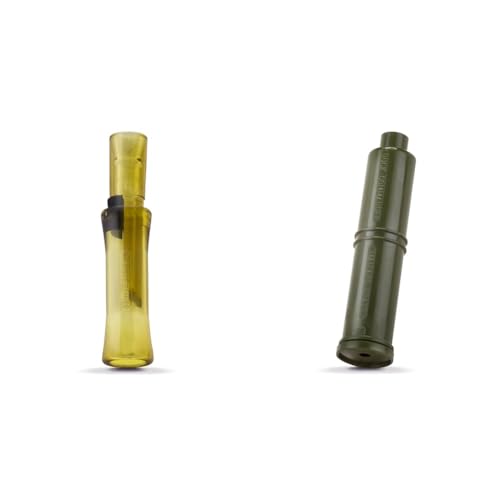
Calling should follow the same logic. A soft feed chuckle and the occasional single quack will draw curious late-season mallards in closer than an aggressive hail call sequence that worked in the first week of the season. If birds flare on your call, stop calling entirely and let the decoys and movement do the work. A realistic decoy spread matters more in January than a call you can barely hear over the wind, but a call you know how to use quietly still closes the deal on cautious singles and pairs.
Dressing for standing still in wet cold
Late-season duck hunting is a standing-still sport in near-freezing water, which is a completely different thermal problem than walking a warm October field. Layer for stillness: a base layer that manages sweat from the walk in, a heavy mid-layer, and a wader system rated for real cold, not a lightweight three-season pair that will have your feet numb by 8 a.m.
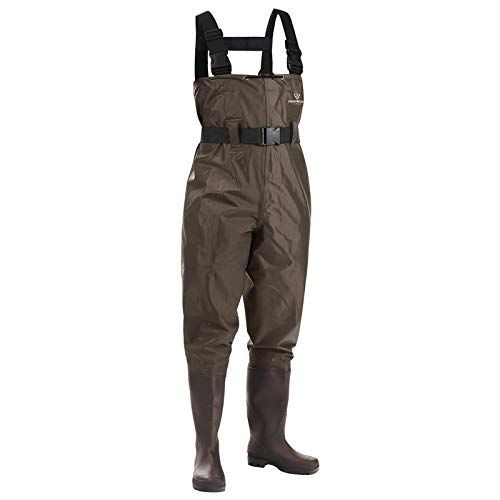
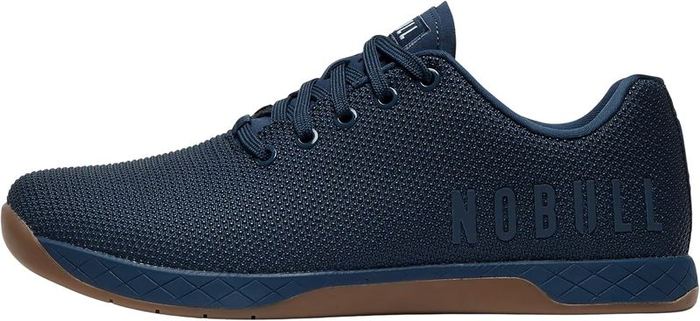
A bootfoot insulated wader beats a stockingfoot-and-wading-boot combo for standing in cold water for hours, because there is no seam at the ankle where cold water finds its way in. Our wader breakdown covers insulation weight against realistic temperature ranges — do not buy for the coldest day you might ever hunt if most of your season is 35 to 45 degrees, because you will overheat walking in and sweat through the stand.
Blind discipline: the last variable you control
A blind that looked fine in October, with cattails and marsh grass still standing, can look like a black box against snow or ice-rimmed brown vegetation in January. Rebrush for the season you are actually hunting. White or light-colored materials woven into a natural blind help against a frost or light snow background far more than the same brush pattern that worked when everything was still green or golden.
Movement discipline matters more with wary late-season birds. Faces down, guns still, and no head-swiveling to track a distant flock — pick your moment to look up as birds commit, not while they are still working the outer edge of the spread. A single hunter craning their neck at two hundred yards has turned more late-season flocks than a bad call ever will.
Public-land etiquette that keeps the spot alive
Late season on public land is a shared resource with a shrinking number of birds and a fixed number of good spots. Give other hunters a real buffer — the "shotgun sound travel" rule of thumb (a quarter mile minimum on open water, more on tight sloughs) keeps everyone's hunt intact and keeps the birds from being bumped constantly between blinds. Do not set up between another party and the direction birds are clearly working from; that is how disputes start and how a shared marsh gets hunted out by Thanksgiving.
Pack out spent shells, broken decoy line, and anything else you brought in. A public marsh that looks trashed loses hunting access faster than any single bad season of weather. The hunters who keep late-season public land productive for years are the ones who treat every trip like they are trying to keep the privilege, not just cash in on it.
Steel shot, choke, and cold-weather patterns
Late-season birds are often working a little higher and a little more cautiously than early-season ducks, which means shot selection matters more than it did in October. Step up to a heavier steel load — BB or 2 shot for late-season mallards over decoys, especially at the longer, more deliberate shots that call-shy birds tend to offer. A modified choke is still the right general-purpose answer for most decoying situations, but pattern your gun with the actual load you plan to hunt before opening morning, not after a miss you cannot explain.
Cold affects more than your hands. Steel shot loses velocity a little faster in cold air, and a gun that has been sitting in a cold truck bed can pattern differently than the same gun patterned on a warm range day in September. If you are serious about late-season success, pattern on a genuinely cold morning at least once, at the actual range you expect to shoot birds — most late-season misses are decoying birds taken too far, not birds that were genuinely out of range.
When the dabblers thin out: diving ducks and big water
As puddle ducks push further south through December and January, diving ducks — bluebills, ringnecks, goldeneyes, and buffleheads on many public waters — often become the more realistic target on big lakes and reservoirs. Diver hunting rewards a different approach: bigger water, long decoy lines set perpendicular to the wind, and a blind or boat positioned to intercept birds working the open water rather than a marsh edge. A stable hunting kayak can get you to diver water a bigger boat cannot reach, though big open water calls for real caution about wind and waves that a sheltered marsh does not.
Divers decoy differently than puddle ducks — they often come in low and fast on a direct line rather than circling and working a spread cautiously, so shot opportunities can be shorter and require faster gun mounts. Practice on clays that simulate a low, fast crossing target if diver hunting is new to your late-season rotation, because the shooting is genuinely different from the deliberate, circling shots puddle ducks typically offer over a marsh spread.
A late-season checklist that fits in a truck
| Item | Why it matters late season | Watch-out |
|---|---|---|
| Insulated bootfoot waders | Standing still in near-freezing water for hours | Do not overbuy insulation for a mild-winter region |
| Small, realistic decoy spread with a jerk rig | Pressured birds trust movement over volume | A dozen realistic decoys beats four dozen static ones |
| A call you can barely use | Soft, sparing calling on call-shy late birds | Loud hail sequences flare pressured flocks |
| Rebrushed blind for winter cover | Green-season brush stands out against frost and snow | Rebrush before the season, not the morning of |
Our take: scout the afternoon before, find the last open water after a freeze, cut the decoy count, quiet the calling, and dress for standing still rather than for walking. That combination puts you on birds that a hundred other hunters have already tried and failed to move. Check live prices.
Ice and cold-water safety on a public hunt
Every late-season hunt near ice carries real risk, and it deserves a straight answer instead of bravado. Never hunt alone near questionable ice, carry a set of ice picks or awls on a cord around your neck if you are working near frozen edges, and tell someone your exact spot and return time before you leave the truck. A duck is never worth a cold-water immersion incident, and public marshes see rescue calls every season from hunters who trusted ice they had not actually tested.
If you break through, the standard advice holds: turn back toward the direction you came from where the ice already held your weight, kick to get horizontal, and use ice picks to claw yourself back onto solid ice rather than trying to stand. Practicing this mentally before the season, not during an emergency, is the difference between a bad afternoon and a tragedy that shows up in the local paper.
Frequently asked questions
What is the best time to hunt public-land ducks late in the season?
The two or three days right after a hard freeze concentrates birds on the last open water. Scout the afternoon before and be set up before legal light, not scrambling into a spot at shooting time.
Should I use fewer decoys late in the season?
Usually yes. A small, realistic spread with a little movement from a jerk rig outperforms a huge static spread on birds that have already seen every big rig on the marsh.
How do I find open water after a freeze?
Look for spring-fed sloughs, moving creek channels, and current seams below dams. Ducks concentrate on whatever stays open, and that water is often small and easy to miss from a road.
What waders do I need for late-season duck hunting?
An insulated bootfoot wader built for standing still in near-freezing water. Match the insulation weight to your actual regional cold, not the coldest day you can imagine.
How much should I call late in the season?
Less than you did in October. Soft feed chuckles and single quacks work better than loud hail sequences on call-shy pressured birds. Stop calling if birds flare.
Is it safe to hunt near ice on public marshes?
Only with real ice-safety precautions: never alone, carry ice picks, test ice you are not certain of, and tell someone your plan. Do not assume a frozen edge holds your weight.