
How to Wash Dishes at a Campsite
Written by Outdoors Magazine|
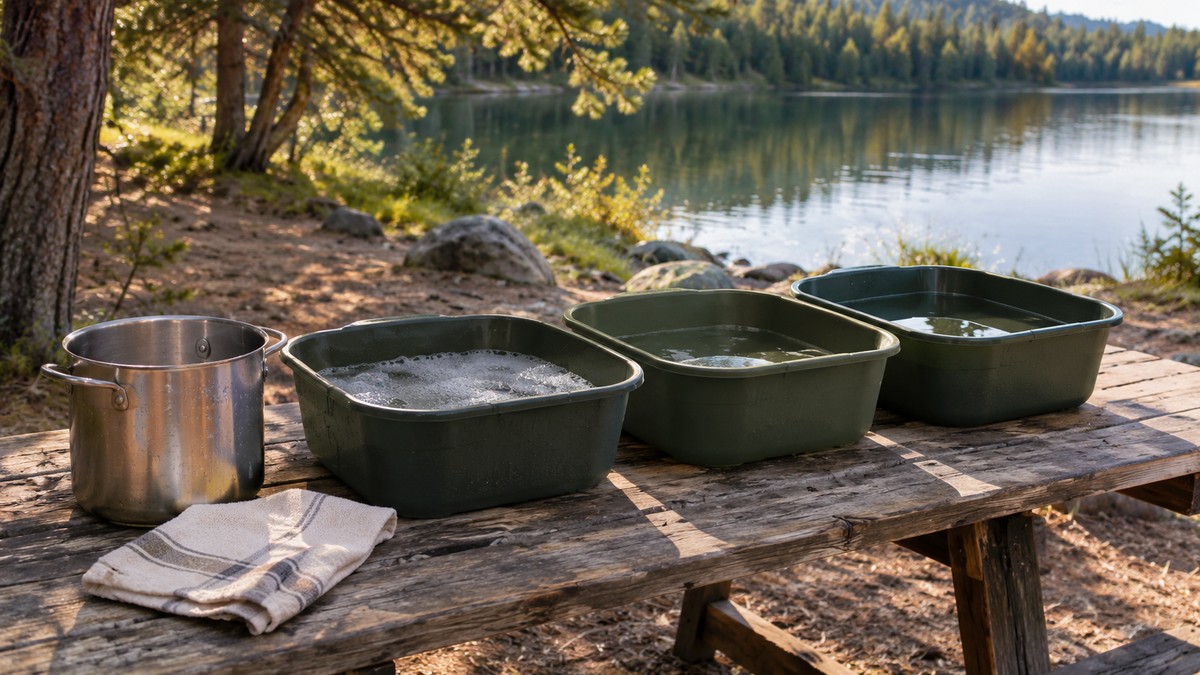
Set up a campground dishwashing station with separate wash and rinse basins, a strainer, and the site's approved disposal point. If there is no designated sink or drain, check the land manager's rules before washing or discarding water. Pack out all caught food scraps and let clean dishes dry on a separate surface.
Key takeaways
- Identify the approved dishwater destination before filling a basin.
- Keep the wash, rinse and dry areas separate.
- Strain food scraps and pack them out.
- Biodegradable soap does not make disposal in or beside a stream acceptable.
Set up a campground dishwashing station with separate wash and rinse basins, a strainer, and the site's approved disposal point. If there is no designated sink or drain, check the land manager's rules before washing or discarding water. Pack out all caught food scraps and let clean dishes dry on a separate surface.
The hardest part of washing dishes outside is not getting the pan clean. It is deciding where the food bits and used water go afterward, when the campground is dark and nobody wants a second trip to the utility building. Start by identifying the disposal point in daylight. The rest of the setup can be as basic as a pair of tubs, a mesh strainer and a dry corner of the picnic table.
The National Park Service's camp cooking guide describes washing, rinsing and sanitizing as separate jobs. A family spread across two picnic tables will not run the same setup as a camper with one pot and one spoon. The jobs remain the same even if the gear gets smaller. The key is keeping the clean water truly separate from the dirty water, and keeping the disposal step within the campground's rules.
Where should you set up a camp dishwashing station?
Use a stable table or approved utility area where you can keep clean dishes away from the dirty ones. Pick the wastewater destination before you fill a basin. At a developed campground, check for a dish sink or designated drain. At a dispersed site, read the local instructions instead of assuming the same rules apply.
Give the station a one-way layout. Put a place to scrape on the left, wash and rinse in the middle, and a clean towel or rack on the right. Reverse it if you naturally work the other way. What matters is that the dirty pan never has to pass back over a stack of clean plates. A shallow tray under the wash basin also keeps incidental drips from soaking the table.
If a campsite has a single spigot used by everyone, treat it as a refill point unless the posted rules explicitly say it is also for dishes. Carry clean water in a separate container and let the next camper reach the tap without navigating your pile of plates. The utility sink may be somewhere else, even in a campground with sinks inside the restrooms. At Sequoia and Kings Canyon, for example, posted campground regulations direct dishwater to utility sinks attached to restrooms. The specifics belong to that park. Your own campground may provide a gray-water station, a dedicated sink, or no facility at all.
Set up where everything sits flat. A level folding table or picnic bench is better than a damp slope, especially with a soft basin that can fold in on itself. Keep a clean-water bottle on a different corner of the table from cups being washed. Never rest the spout down in a tub or let the rim of a dirty cup touch it. A small, distinct handwashing setup keeps a plate and a hand from competing for the same basin.
What gear actually helps you wash camp dishes?
A practical kit is a wash basin, a rinse basin, a brush or scraper, a small strainer, a towel or drying rack, and a sealable bag for food scraps. Carry soap the campground permits, plus a separate basin if the group's sanitation procedure calls for one. Use gear that suits the size of your cookware.
Start with the biggest plate or pot you actually bring, not with a capacity number printed in isolation. A deep, narrow bucket can hold enough water and still be miserable with a wide pan laid flat. The wash tub does not need to swallow the entire pot, but it should give you room to rotate it without splashing dirty water into the rinse station. Rigid nesting bins make sense when you have a car and can let them dry at home. A soft basin earns its keep when packed space matters.
If you're looking at a collapsible sink, read the manufacturer's limits for that exact model. Sea to Summit's Kitchen Sink specifications offer a useful example: the maker lists 5-, 10- and 20-liter versions, says the sink needs to be at least four-fifths full to stand on its own, and limits water temperature to 140°F (60°C). It also says not to use bleach in that sink. Those are specs for that particular product, not limits for every soft bin. A tub with a large nominal capacity may still be the wrong choice if you want to use only a shallow amount of water.
The smallest helpful item is a strainer whose mesh catches the scraps from your actual menu. Test it at home with rice or other small solids if those are on the trip menu. Make sure it fits over the container you will use, so you do not need someone else to hold it while you pour. Tuck in an extra trash bag for a leak or a load of muddy gear. A clean dish towel and a dirty wiping cloth should look or feel different enough that no one swaps them in the dark.
What is the most practical order for washing and rinsing?
Scrape dishes into a trash bag, wash them in the soapy basin, then rinse them in a separate basin with clean water. Use a separate sanitizing step if your campground, group procedure, or equipment instructions call for it. Put finished dishes on a clean rack or surface instead of returning them to the dirty stack.
Before anyone fills the tubs, get solids into the garbage. Scrape into a bag or a dedicated refuse container, not toward the ground. Give greasy cookware a pass with a scraper or an appropriate disposable wipe and pack out the wipe. The less oil and food in the wash water, the longer the wash basin stays usable and the fewer solids the strainer has to catch. A pan with a residue line can wait while the group works through cups and relatively clean items.
Rinse after washing rather than trying to rinse everything in the spigot stream. If the rinse tub becomes murky or greasy, stop and replace it through the approved disposal method. The clean basin is not a place to hold dirty utensils until you get to them. For a group, appoint one person to scrape and one to finish the clean side; round up straggler mugs before draining the tanks. That division makes the last plate less likely to get rinsed with the first plate's dirty water.
Some camps use a three-basin system for a group, and the Park Service includes sanitizing in its general camping gear list. If a sanitation procedure is in use, follow the relevant instructions for the approved sanitizer and vessel. Do not guess a concentration, mix chemicals, or use a product in a container the maker says it will damage. The wash and rinse tasks still need to be done first.
Where can you put dishwater after camp meals?
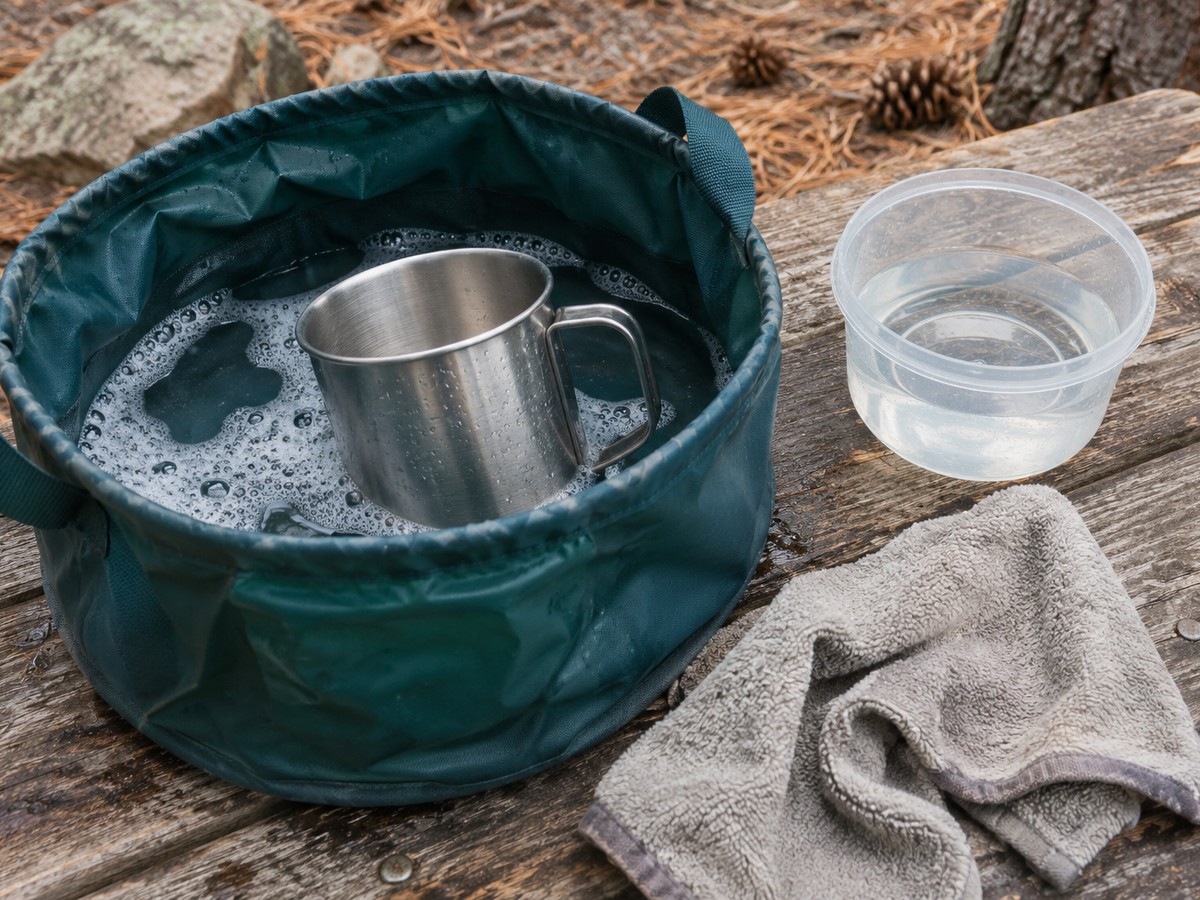
Use the campground's designated utility sink or wastewater facility whenever one is required or provided for dishes. Otherwise follow that land manager's exact rules for gray water. The National Park Service's general Leave No Trace guidance describes straining dishwater and using a location 200 feet from streams or lakes where that method is allowed.
The difference between a general principle and the rule at your campsite matters. National Park Service Leave No Trace guidance describes carrying water 200 feet from streams or lakes, using a small amount of biodegradable soap when needed, and scattering strained dishwater. That is not permission to scatter it at every site. Some places require a utility sink, prohibit particular disposal practices, or call for extra distance and precautions because wildlife or fragile ground is an issue. Check posted rules or the park's instructions for the place you are sleeping.
Strain the water into the appropriate carrying container before transport if you need to move it. Tip slowly so the strainer does not slip. Empty the caught material into a sealable trash bag. Food bits do not belong in a fire ring, stream or drain that is not meant for kitchen solids. Rinse the strainer into the same dirty-water system, not over the tap apron. If you will not be able to dispose of gray water before leaving, keep the waste container separate from drinking water and secure it for travel to an approved facility.
Don't assume a campground pit toilet, bathhouse sink or roadside storm drain is an all-purpose dump. If the rules are unclear, ask the site host or ranger before improvising. On a trip with sparse facilities, it helps to make the first meal something that uses a single pot. A smaller cleanup is simpler to contain than a full pan of water with no confirmed destination.
Is biodegradable soap safe to use beside a stream?
No. Biodegradable soap does not make washing in or beside a stream acceptable. Carry water to a place allowed by the local rules, use only the amount of soap needed, and contain the resulting dishwater. Follow local directions for sinks, strainers and disposal so soap and food scraps stay out of waterways.
A bottle marked biodegradable can be useful outdoors because of what it is, not because it overrides where it is allowed. Keep the bottle capped when not in use, and bring a separate cloth to wipe the outside if it leaks. An extra squeeze of soap does not make a pan easier to rinse when water is scarce. Scraping well at the start does more to simplify cleanup than pouring extra soap into a greasy basin.
The same separation applies to a lake campsite with a dock. Carry water away in a clean container only when the water is appropriate for the task and the local rules allow it. Use a known potable supply for clean rinsing and food-contact needs; do not treat a clear stream or a campground spigot without a drinking-water designation as automatically potable. The safer planning habit is to locate the drinking-water source before you place the cleanser or dirty dishes on the table.
Treat residue from soap and food as part of the same wastewater job. Even if the plates look clean after only water, particles and oils can still be present. In practical terms, the strainer is for solids and the disposal location is for the liquid. Neither step replaces the other. If the approved setup is inconvenient, adjust the menu and dish count rather than making the shortcut the routine.
How do you make cleanup easy with limited water?
Start with fewer utensils, scrape cookware thoroughly, and wash with only enough water to do the job. Keep a separate supply for rinsing, handwashing and drinking. Plan afterward: strain scraps, use the allowed wastewater destination, and store clean gear only once it can dry without picking up grime or attracting wildlife.
Plan a low-water dinner from the cleanup backward. A single pot, serving spoon and person's own bowl are straightforward. A string of dipping bowls and a greasy grill plate are less so, especially if each item has to be washed and packed dry before leaving next morning. Choose the menu that matches the camp facilities, not the equipment you have room to carry. A camp that goes to sleep earlier has even more reason to start cleanup before everyone scatters.
Pack by the jobs that actually use water. Drinking, cooking, washing hands, cleaning dishes and rinsing can all draw on the same jug, but they should not draw without a plan. Reserve potable water first. When supply is limited, don't spend all of the drinking reserve on dishes; reduce their number, contain the soiled items and finish at an approved facility if necessary. If you're operating a larger camp with group sanitation instructions, follow those rather than trying to stretch a suspect rinse basin through another round.
At the end of the night, dry the clean side first and leave the wash container open only if it is secure and allowed by the site's food-storage rules. Any damp leftovers, scrubbers or towels with food odor belong in approved storage rather than outside a tent. A small ventilated pouch can organize dry cleanup tools later. Close everything for travel only when the gear is safe to store and dry enough not to mildew. Look under the table for crumbs before walking away. That is simpler than dealing with a mess, a missing strainer and a wet sink the next morning.
For the rest of the trip, make camp coffee without electricity, campground etiquette, reducing your camp's impact, overnight camping checklist and practical camp equipment can help you plan what to bring.
Frequently asked questions
Where should you set up a camp dishwashing station?
Use a stable table or approved utility area where you can keep clean dishes away from the dirty ones. Pick the wastewater destination before you fill a basin. At a developed campground, check for a dish sink or designated drain. At a dispersed site, read the local instructions instead of assuming the same rules apply.
What gear actually helps you wash camp dishes?
A practical kit is a wash basin, a rinse basin, a brush or scraper, a small strainer, a towel or drying rack, and a sealable bag for food scraps. Carry soap the campground permits, plus a separate basin if the group's sanitation procedure calls for one. Use gear that suits the size of your cookware.
What is the most practical order for washing and rinsing?
Scrape dishes into a trash bag, wash them in the soapy basin, then rinse them in a separate basin with clean water. Use a separate sanitizing step if your campground, group procedure, or equipment instructions call for it. Put finished dishes on a clean rack or surface instead of returning them to the dirty stack.
Where can you put dishwater after camp meals?
Use the campground's designated utility sink or wastewater facility whenever one is required or provided for dishes. Otherwise follow that land manager's exact rules for gray water. The National Park Service's general Leave No Trace guidance describes straining dishwater and using a location 200 feet from streams or lakes where that method is allowed.
Is biodegradable soap safe to use beside a stream?
No. Biodegradable soap does not make washing in or beside a stream acceptable. Carry water to a place allowed by the local rules, use only the amount of soap needed, and contain the resulting dishwater. Follow local directions for sinks, strainers and disposal so soap and food scraps stay out of waterways.
How do you make cleanup easy with limited water?
Start with fewer utensils, scrape cookware thoroughly, and wash with only enough water to do the job. Keep a separate supply for rinsing, handwashing and drinking. Plan afterward: strain scraps, use the allowed wastewater destination, and store clean gear only once it can dry without picking up grime or attracting wildlife.