
How to Make Camp Coffee Without Electricity
Written by Outdoors Magazine|
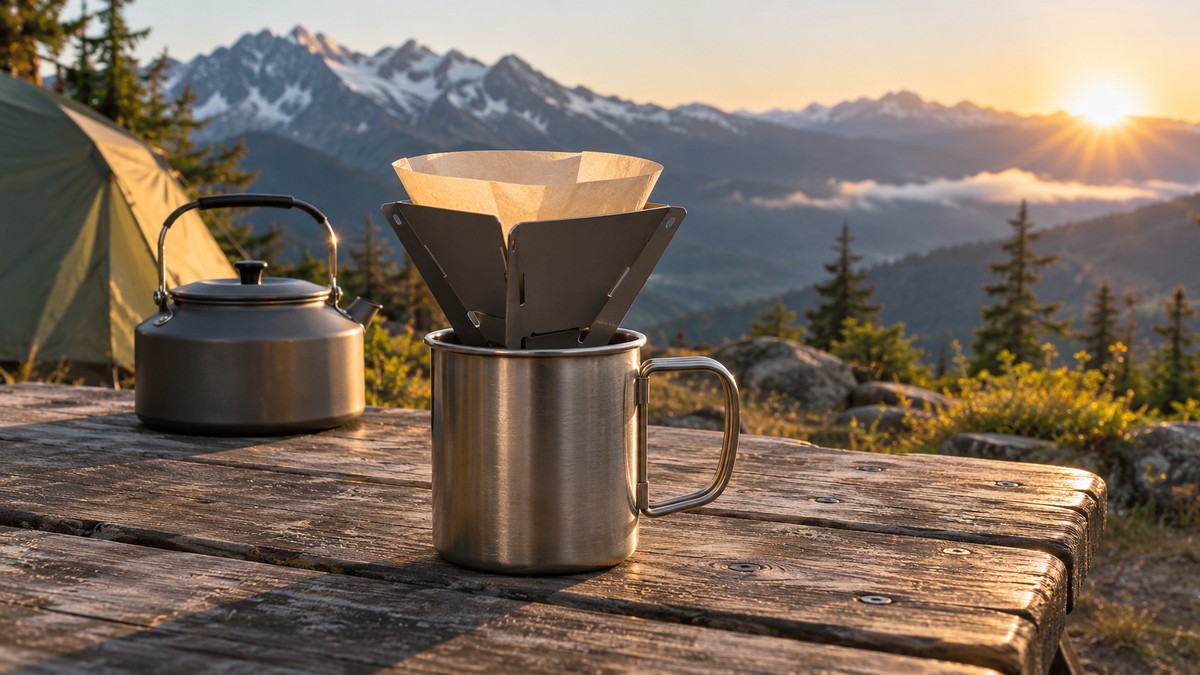
Use instant coffee for the simplest setup, a stable pour-over cone for one fresh cup at a time, or a French press for several cups from one brew. Start with potable water, a wide stable mug or carafe, and a way to pack out grounds. Bring premade coffee when heating water is not allowed.
Key takeaways
- Instant coffee needs the least gear and cleanup.
- A pour-over suits one cup at a time; a French press suits a shared batch.
- If restrictions prevent heating water, use a safe premade or cold-mix option.
- Pack out grounds, filters and wrappers.
Use instant coffee for the simplest setup, a stable pour-over cone for one fresh cup at a time, or a French press for several cups from one brew. Start with potable water, a wide stable mug or carafe, and a way to pack out grounds. Bring premade coffee when heating water is not allowed.
The right campsite coffee kit starts with how many people want coffee and whether the site lets you heat water. Instant covers most early starts. A pour-over makes sense when one person has time to brew steadily, and a French press is useful when several campers are ready for the same batch. None requires a powered brewer or a new collection of gadgets.
Decide before leaving which part of the ritual actually matters to you. A familiar cup before an early hike may be more valuable than a carefully timed brew. A quiet morning at a picnic table leaves room to fuss over it. In both cases, potable water, a stable work surface and a trash plan matter more than a travel case with a dozen pieces.
Which camp coffee method fits the way you travel?
Choose instant if you travel light, start early or want almost nothing to wash. Choose a pour-over if you normally brew one cup at a time and can control the pour. Choose a French press if you want to make one batch for several people and have room to collect wet grounds.
Picture the moment you'll be making it. A backpacking breakfast in a drizzle does not need a brewer that wants both hands and an uncrowded worktop for several minutes. On a longer car-camping trip, a brewing method you enjoy at home can be worth a little extra equipment. How much time you want to spend washing it is part of the same decision, not an afterthought.
Count servings using the size of the mug you actually carry. A brewer's stated capacity is not a guarantee that it fills your group's cups the way you like, especially once grounds, headspace and the manufacturer's fill limit enter the picture. Try a full cycle at home to see what reaches the mug. If you bring a press, see where the damp grounds will go after two batches.
The cheapest way to simplify the kit is to remove something you already own rather than add another travel tool. Leave the grinder if you are happy to portion grounds at home. Leave the press if there is only one cup to fill. For a group with different tastes, it can be easier to set out hot potable water and let people mix their own than to manage several batches of the same brewer.
How do you make instant coffee taste consistent at camp?
Measure the water against the instructions on the instant coffee packet, use the water temperature the packet recommends, and stir in the mug you plan to drink from. Note the fill level you like. If it turns out too strong, add water a little at a time rather than starting a second cup.
A favorite mug provides an easy reference. If you know the fill line from home, you can repeat it at the campsite without packing a measuring jug. Add the coffee and stir before deciding whether it needs more water. An unfamiliar mug or an extra-large insulated tumbler makes it easy to dilute one packet without noticing. Use a regular mug when you are first finding your preferred strength.
Instant is useful as a reserve even if you normally prefer fresh grounds. One packet can cover a morning when the wind is irritating, the brewing kit is buried under the tent or the only table is full. It is also a backup if you discover you packed the cone without the filters. A small bag for wrappers and a wiping cloth are easier to locate if they live in the same kitchen pouch.
When heating water isn't part of the plan, look for an instant product specifically meant to mix with cold water, or bring a premade drink. Follow the packet or bottle instructions, not an assumption that a hot-coffee product will dissolve the same way in cold water. A drink in a sealed package also reduces the gear you have to wash on a one-night trip.
How do you set up a pour-over on a picnic table?
Put a stable mug on a level surface, fit a filter made for the cone and check that the brewer sits securely on the rim. Add coffee and pour in controlled passes according to the dripper's instructions. Allow the cone to drain, then move the cooled filter and grounds into your trash container.
Check the mug and cone before you add hot water. A cone that looks as if it will fit can rock as soon as it is bumped, especially on a mug with a narrow rim or a folding handle. Set the pieces together empty. If the brewer does not sit squarely, switch mugs rather than using a hand to steady a half-full cone. Clear space around the mug so nobody has to slide breakfast gear past it mid-pour.
Bring filters for the exact brewer, not a packet that merely looks close. For example, GSI Outdoors lists its Reusable Java Filter #4 as compatible with its Collapsible Java Drip and other number-four makers. Its separate Ultralight Java Drip uses its own nylon filter with three support legs. Those designs have different packing and cleaning needs. The manufacturer instructions for your device should settle questions about filter setup and care.
A paper filter and a reusable mesh make different kinds of cleanup. With paper, the cooled filter and grounds can go together into the trash you pack out. With reusable mesh, you have to tip out and collect the grounds, then rinse the mesh where the site permits. Take a spare filter if you use paper. If you use reusable mesh, bring a container to carry it damp until you can wash and dry it.
When is a French press useful for a group?
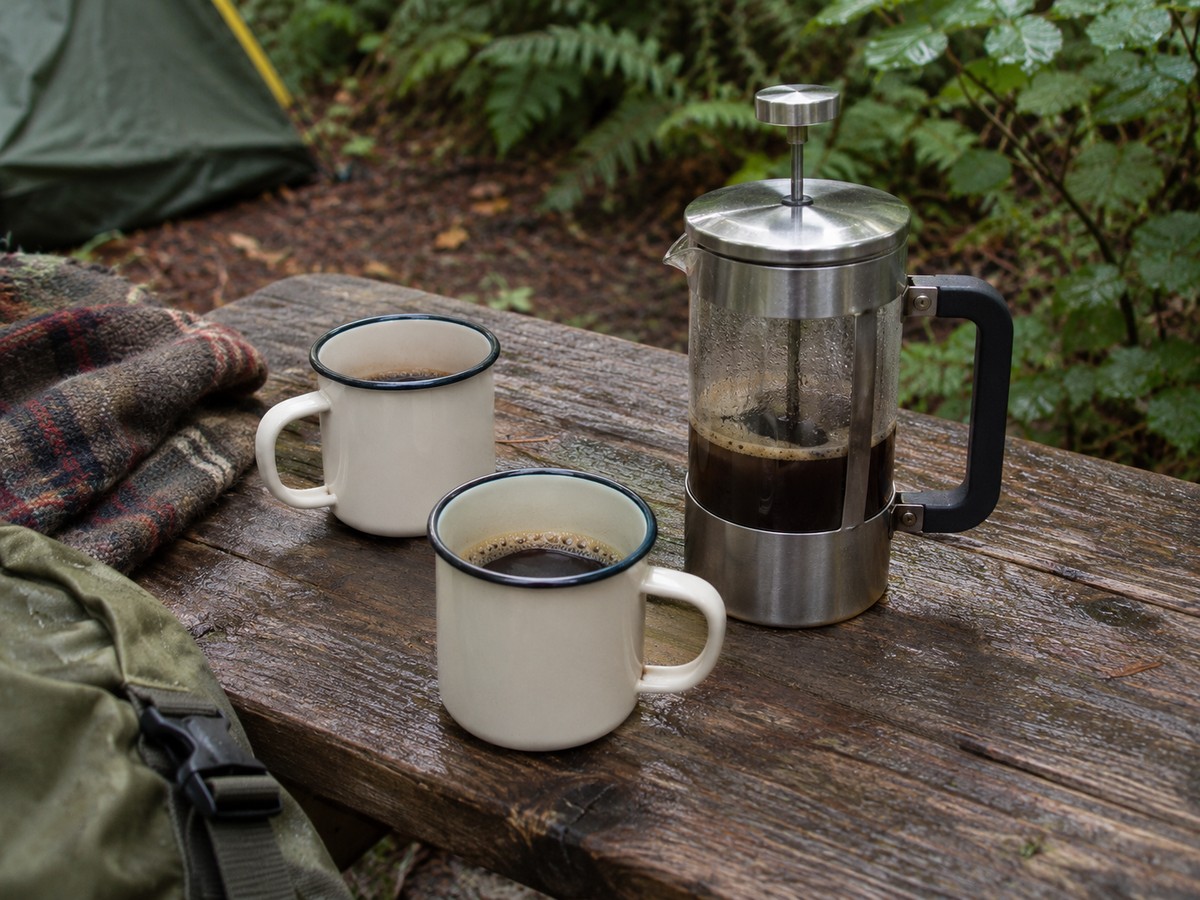
A French press is useful when several people want coffee at roughly the same time and the carafe is large enough for the cups you carry. Use the grind, fill level and plunging technique its maker specifies. Set aside a container for the wet grounds before starting, because they stay behind when you pour.
Decide who is drinking before grinding or measuring the coffee. If the early riser makes a full batch while the rest of camp is asleep, the advantages of group brewing mostly disappear. On a shared trip, one pot and a row of cups work best when people agree on when breakfast starts. On staggered starts, a pour-over or individual instant portions often mean less unused coffee.
A press also needs a steadier work area than an empty mug. Put it down on a dry, level surface, keep the handle accessible, and do not brace the carafe against precariously stacked gear. Grind choice and maximum fill differ between products. GSI Outdoors' 30 fl. oz. JavaPress specifications and cautions, for example, identify that size as a 30-fluid-ounce carafe, require coarse grounds and say not to use the unit on a stovetop or in a microwave. Its manufacturer also warns against forcing a resisting plunger.
Once the brewing is done, give the grounds and brewer time to cool. The press doesn't work like a paper cone with a lift-out filter, so account for the step of scraping the wet grounds into trash. It helps to keep the trash container close to the washing area, not close to the clean spout or the rows of mugs. If there is not enough time to wash before departure, store the cooled, emptied brewer upright until you reach an approved place to clean it.
What if the campground has a fire ban or no place to brew?
Check the exact campground rules before planning to heat water. If your equipment is not allowed, or there is no safe place to set it up, bring coffee already made, an unopened ready-to-drink option, or an instant coffee intended to dissolve in cold potable water. Follow the storage directions for the drink you bring.
A fire restriction is not a single set of nationwide instructions. Requirements can depend on the site, the date and the equipment. Read the rules the actual camp operator posts for your dates, and ask the host or ranger when it's unclear. Don't plan to work around a ban or move a stove into a tent or vehicle. Bringing a drink you don't need to heat makes that decision before the weather or regulations make it for you.
Think about the departure as much as the breakfast itself. A sealed premade drink suits an early departure where stopping to brew would leave dishes damp in the car all day. A reusable bottle works if the drink is appropriate for the storage conditions and you have a way to clean the bottle afterward. Check any packaged drink's directions for chilling and use after opening. Keep sugar, milk and spilled coffee out of open storage by the tent.
Bring water that is actually safe to drink. A clear lake, an unmarked campground faucet and a kitchen jug someone used to carry gray water are not substitutes for a known potable source. Check ahead for whether taps are operating in the season you visit. Approaching the coffee setup as part of a camp water plan makes a smooth morning much more likely than depending on a tap you haven't located.
How do you clean up coffee grounds without leaving a mess?
Catch spent grounds in a sealable trash container once they have cooled, and pack them out along with used filters or instant packets. Rinse brewing gear only in a place approved by the campground. Store coffee, sweeteners, residue and trash in accordance with the site's wildlife rules, even if you are walking away briefly.
Treat coffee grounds as food waste, not as a harmless decoration beneath a tree. Bring a way to collect them before the first cup, especially for a press, where grounds stay in the bottom and tend to travel when the brewer gets tipped. A trash bag that closes or a dedicated washable container is useful if the nearest bin is a walk from the campsite. Keep the container apart from the clean coffee spoon and water bottle.
The National Park Service's campground guidance notes that some campgrounds require lockers or other means of keeping food away from wildlife. North Cascades National Park's food-storage guidance specifically warns against trying to burn coffee grounds or pouring out cooking liquid or dishwater onto the ground or into a fire pit. The packing habit is simple: carry the grounds and filter out, then handle rinse water the way the specific campsite requires.
For the next morning, pack dry gear together in the order you use it. Put the mug near the top, the filter with the cone, and the dose where nothing heavy can crush it. Keep the cleanup cloth outside that clean pouch until it's washed and dry. The best camp coffee kit is the one you can take apart and put away without forgetting a filter, leaving grounds behind, or making everybody wait to break camp.
For the rest of the trip, set up a camp dishwashing station, campground etiquette, low-impact camping, overnight camping essentials and camp equipment checklist can help you plan what to bring.
Frequently asked questions
Which camp coffee method fits the way you travel?
Choose instant if you travel light, start early or want almost nothing to wash. Choose a pour-over if you normally brew one cup at a time and can control the pour. Choose a French press if you want to make one batch for several people and have room to collect wet grounds.
How do you make instant coffee taste consistent at camp?
Measure the water against the instructions on the instant coffee packet, use the water temperature the packet recommends, and stir in the mug you plan to drink from. Note the fill level you like. If it turns out too strong, add water a little at a time rather than starting a second cup.
How do you set up a pour-over on a picnic table?
Put a stable mug on a level surface, fit a filter made for the cone and check that the brewer sits securely on the rim. Add coffee and pour in controlled passes according to the dripper's instructions. Allow the cone to drain, then move the cooled filter and grounds into your trash container.
When is a French press useful for a group?
A French press is useful when several people want coffee at roughly the same time and the carafe is large enough for the cups you carry. Use the grind, fill level and plunging technique its maker specifies. Set aside a container for the wet grounds before starting, because they stay behind when you pour.
What if the campground has a fire ban or no place to brew?
Check the exact campground rules before planning to heat water. If your equipment is not allowed, or there is no safe place to set it up, bring coffee already made, an unopened ready-to-drink option, or an instant coffee intended to dissolve in cold potable water. Follow the storage directions for the drink you bring.
How do you clean up coffee grounds without leaving a mess?
Catch spent grounds in a sealable trash container once they have cooled, and pack them out along with used filters or instant packets. Rinse brewing gear only in a place approved by the campground. Store coffee, sweeteners, residue and trash in accordance with the site's wildlife rules, even if you are walking away briefly.