
Gravel bike vs hardtail mountain bike
Written by John Wren|
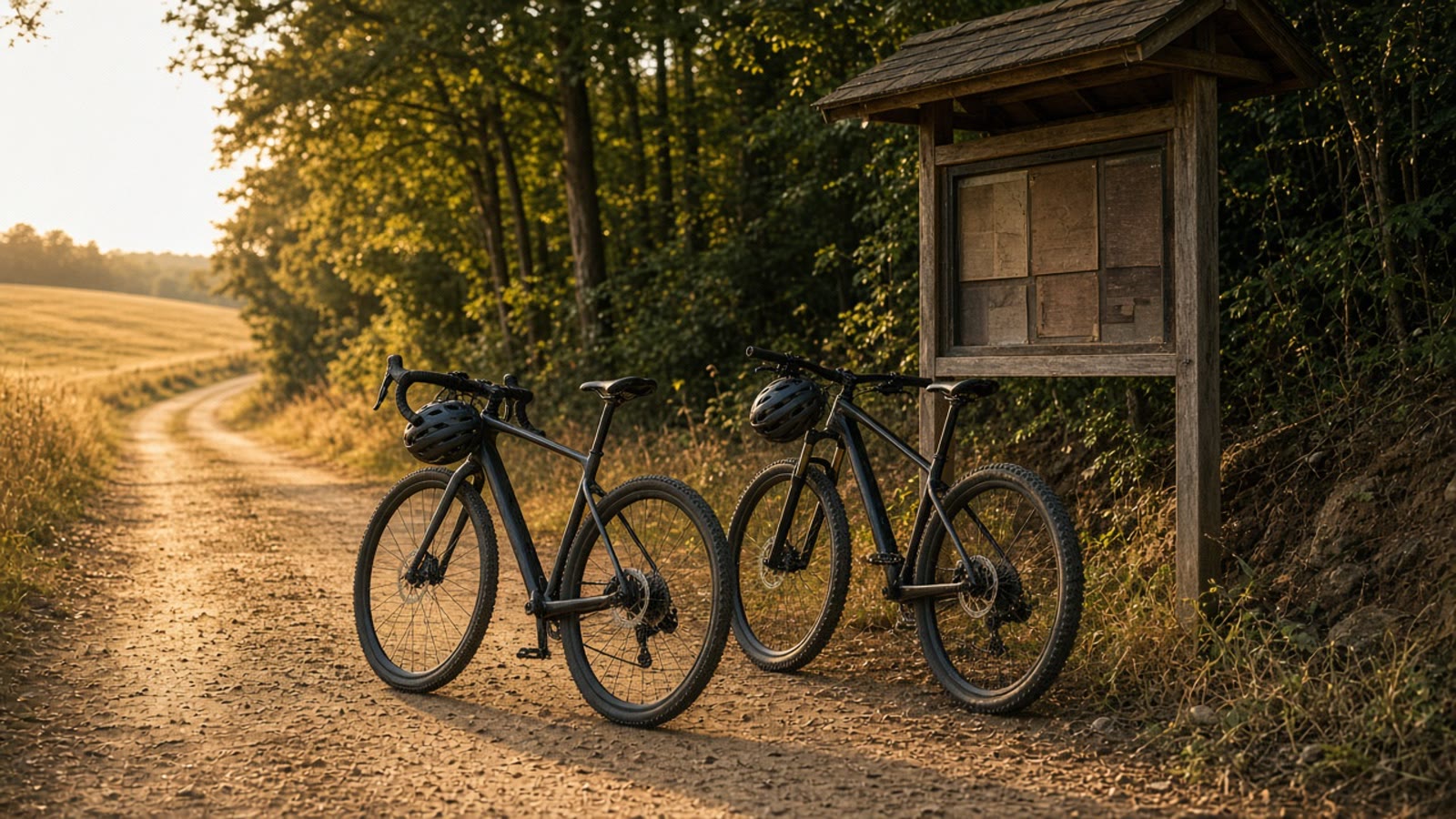
A gravel bike is for dirt that is still a road. A hardtail is for trails that are still trails. If you only buy one, match it to the ride you actually do every week, not the ride you saved on a map.
Key takeaways
- Forest roads and miles: gravel.
- Singletrack and chunk: hardtail.
- Tires and pressure do more than logos.
- Fit the bike before you buy bags.
A gravel bike vs a hardtail mountain bike is a tire-and-drop-bar argument. If your dirt is a forest road, a rail trail, and a county chipseal loop, buy the gravel bike. If your dirt is chunk, roots, a real descent, and a trail that would laugh at a 40-millimeter tire, buy the hardtail. Most people who say “I want one bike for everything” should buy the gravel bike and then rent a mountain bike on the one weekend the trail actually needs it.
Short version. Gravel is a drop-bar bike with clearance for wider tires, meant to go down roads that are still roads. A hardtail is a flat-bar mountain bike with a fork that moves, meant to go down trails that are still trails. Packing a gravel bike is the overnight version of the first bike. Beginner mountain bikes is the trail version of the second. Check live prices on bags and a lock. A dedicated gravel frameset still comes from a bike shop — Specialized, Trek, Canyon, and the rest — so you can talk tire clearance and size before you pay.
Who should buy gravel, and who should buy a hardtail?
Buy a gravel bike if your week is mixed pavement and dirt roads, you like drop bars, you want to ride 40 miles, and the “trail” is a two-track you could still drive a Subaru down in low range. Buy a hardtail if your week is a real trail system, you want a fork that eats square edges, you will ride features that punch a gravel tire, and 12 miles of chunk is the point. Buy a hardtail also if you are new to dirt and the local club rides singletrack, not gravel grinders. Fall gravel is the quiet-road season. Mountain bike trails are the other map.
Buying a bike is still fit first. A gravel size and a mountain size are not the same number. Sit on both. Adventure riding is a skill, not a geometry. If you cannot comfortably cover the brake on a drop bar, the gravel bike will feel like a joke on a descent that a hardtail would shrug off.
| Ride | Gravel bike | Hardtail MTB | Our call |
|---|---|---|---|
| Forest road, rail trail, mixed pavement | That is the job | Overkill, slow on pavement | Gravel |
| Chunky singletrack, rock gardens | Survival mode | That is the job | Hardtail |
| 40-mile mixed day | Drop bars, gears, speed | You will hate the pavement miles | Gravel |
| First dirt bike, local MTB club | Only if the club is actually gravel | Flat bar, fork, trail tires | Hardtail |
| Bikepacking two-track | Bags and miles | Bags and slower miles | Gravel unless the route is a trail |
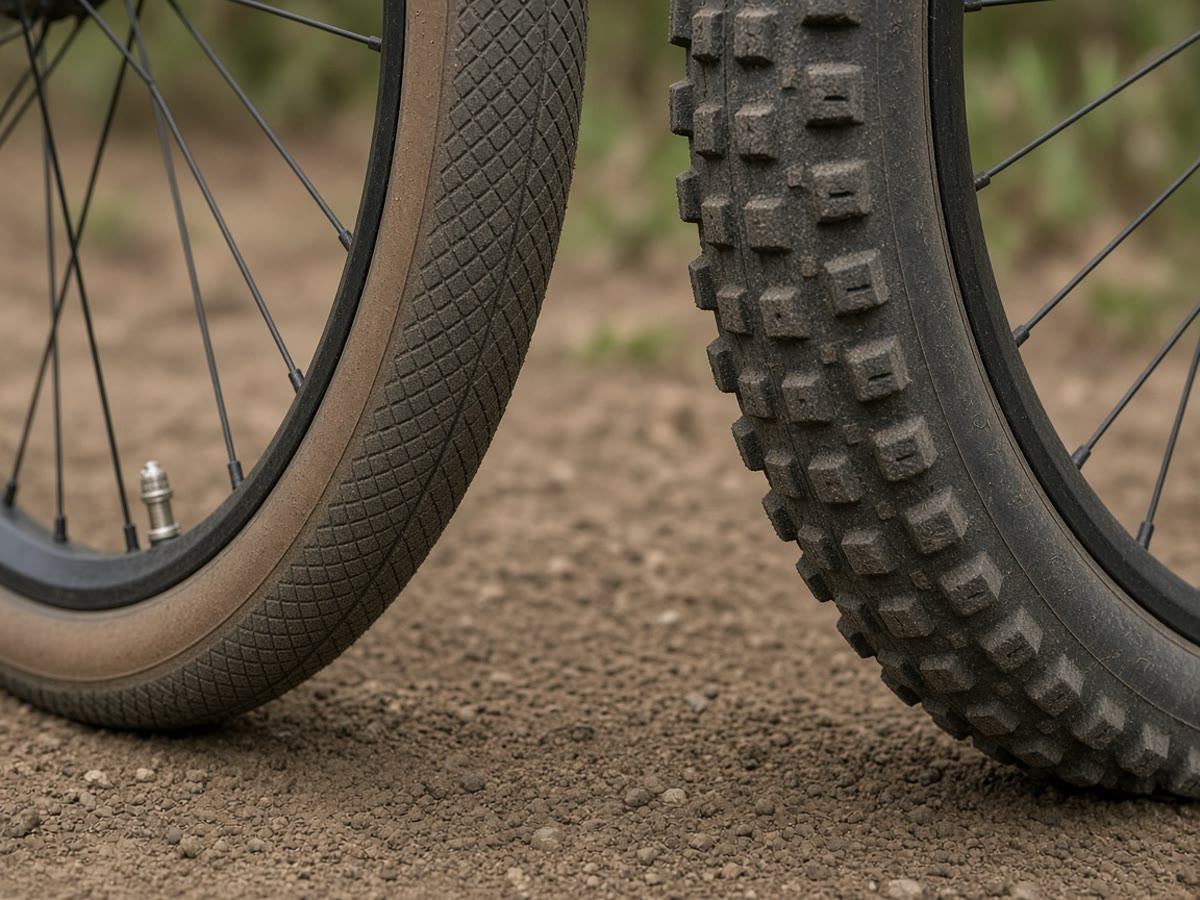
Tire width and pressure do more than the badge. A 45 mm gravel tire is not a 2.3-inch mountain tire.
What a gravel bike is actually for
Drop bars, a longer wheelbase than a road bike, clearance for 35- to 50-millimeter tires, and often mounts for bags and fenders. You sit in a position that still wants miles. You ride dirt that is still a road: Forest Service gravel, farm two-track, a canal path, a rail trail with a little chunk. When the road turns into a trail with rocks that move, you get off or you get lucky. Lucky is not a geometry.
A hardtail is not a gravel bike. A complete gravel bike still comes from a shop that will talk about tire clearance, 1x versus 2x, and whether the frame takes a front derailleur. Canyon, Trek Checkpoint-class, Specialized Diverge-class, a used All-City or Surly if you like steel — sit on it. Mail-order is fine if you already know the size. Day-one gravel is not the week to guess a 56 when you needed a 54. The two-day dirt pack is what you do after the bike already fits.
Gearing matters. A gravel 1x with a 40-tooth ring and a 11-44 cassette still needs a hill you can stand. A 2x covers pavement and dirt without a panic. If your loop is a 15-percent forest road, ask the shop about a granny-capable 1x. If your loop is rolling chipseal, a tighter cassette makes more sense than a 50-tooth mountain cog you will never use.
What a hardtail mountain bike is actually for
A rigid triangle, a fork that moves, flat bars, and tires that are still mountain tires. You sit more upright. You see a rock and you roll it instead of steering around every one like a gravel rider. A hardtail is not a full-suspension trail bike. It will punish a square-edge hit that a 140-millimeter fork would eat. It will also teach you a line. Most beginners should learn on a hardtail before they buy a travel number they cannot use.
The Diamondback Overdrive is the live hardtail we name: a front fork, flat bars, mountain tires — not a dual-suspension mall bike and not a drop-bar gravel. Check live prices. The beginner MTB page is the longer fit.
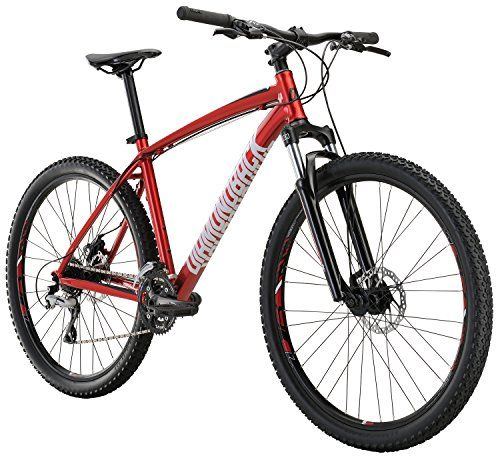
Set the sag on the fork. Set the tire pressure so you do not rim-strike and do not bounce. A hardtail with 40 psi because that is what the road bike had is a hardtail that will feel like a jackhammer. Mountain tires want fewer psi than you think. A shop can start you. Maintenance is chain, brakes, and a fork that still has oil. A dry fork is a rigid fork with extra weight.
Tires decide this fight more than the frame badge
A 40-millimeter file tread on gravel will hum on pavement and still float on packed dirt. A 2.2- or 2.3-inch knobby on a hardtail will float on loose trail and drone on six miles of pavement. You can put a slicker tire on a hardtail and make it a commuting tractor. You cannot put a 2.3-inch knobby on most gravel frames. Clearance is a number. Measure it. A frame that says “47 mm” does not mean “2.1 inches with mud.”
Tubeless is worth it on both once you are all-in. Day one can be tubes. Carry a plug kit when you go tubeless. Carry a tube anyway. Mountain biker gifts include the boring tools that actually get used. A CO2 cartridge is not a personality.
If the gravel bike is the miles bike, bags are the camping kit
A frame bag that fills the front triangle carries food and a layer without a backpack. A seat pack carries a quilt or a jacket. That is how a gravel bike becomes a two-day dirt bike without a giant hydration pack bouncing on a drop-bar sprint. Mountain bikes can take bags too. The geometry just leaves less triangle, and the ride is more violent on a seat pack.
The Ortlieb Frame-Pack is the live waterproof frame bag we name for a gravel triangle that actually has room: a zip that does not dump your food in a creek crossing. Check live prices. The Ortlieb Seat-Pack is the live saddle bag for a jacket and a repair kit. Check live prices. Two-day dirt packing is the longer list. Do not hang a grocery dry bag from a drop bar and call it bikepacking.
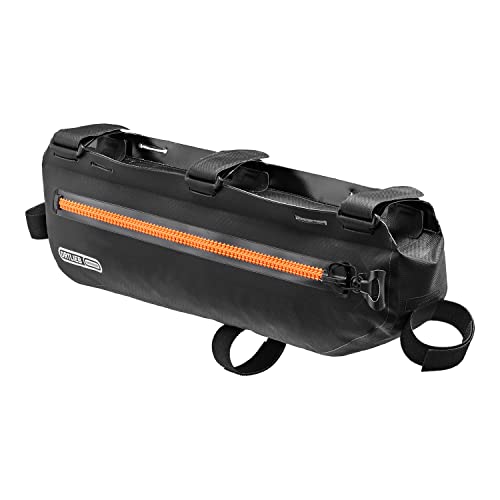
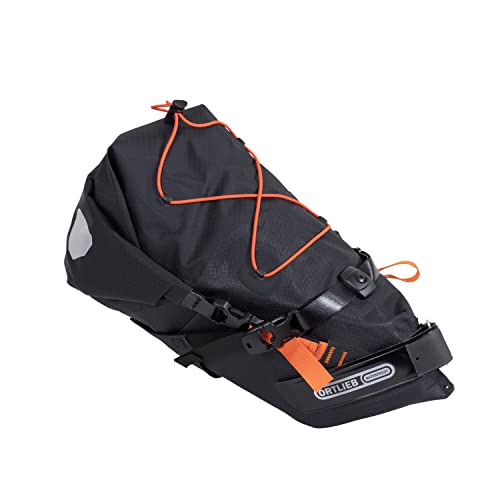
Weight in a seat pack changes how the bike climbs. Start light. The first overnight is a quilt, a layer, food, and a way to filter water — not a kitchen. A filter still belongs in the bag if the route is creeks. A hardtail bikepack on real trail wants a different bag plan and a slower average speed. Be honest about the route before you copy a gravel photo.
Either bike still needs a lock when you buy a sandwich
A gravel loop that ends at a coffee shop is a theft loop. A trailhead with a rack is a theft loop. The Kryptonite Evolution Mini-7 is the live U-lock we name: compact enough for a bag, serious enough for a 20-minute sandwich, not a cable that a tourist with a tool laughs at. Check live prices. The lock page is the longer hardware talk. Lock the frame to something that is in the ground. A rear wheel-only lock is a frame you donate.
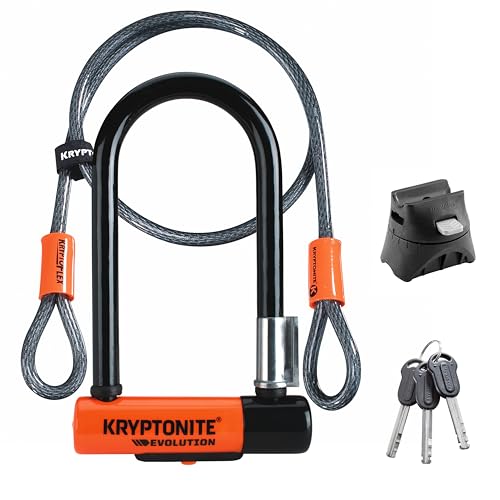
Do not leave a gravel bike unlocked outside a brewery because the group is “just grabbing one.” The group is a witness, not a lock. A September morning is a better time to ride than a Friday night rack anyway.
Drop bars versus flat bars is a skill, not a vibe
Drop bars give you more hand positions on a long ride and more aero on pavement. They also put your weight forward on a descent. A panicked gravel rider in the drops on a rutted two-track is a face. Learn to cover the hoods, sit up, and brake before the corner. Flat bars on a hardtail put the brake levers where your hands already are. That is why first trail bikes are flat. You can convert later. You should not convert on day one because a video said gravel is cooler. If a shop ride lets you try both on the same dirt road, take it. Ten minutes will tell you more than a geometry chart.
Brakes on both should be discs in 2026. Mechanical discs work. Hydraulics feel better. Rim brakes on a gravel bike still exist on used bikes; they are a wet-rim conversation. Keep pads in the bike. A scream on a descent is a pad, not a personality.
So which bike should you buy?
Buy a gravel bike from a shop if your dirt is still a road and you want miles. Buy a hardtail if your dirt is a trail and you want a fork. Our default for a mixed suburban rider who will do more chipseal than chunk is gravel. Our default for a rider whose friends already ride a trail system is the hardtail — Diamondback Overdrive-class if you are shopping this aisle, or a shop hardtail if you can be fitted. Check live prices on the bags and the lock. The gravel frameset stays a dealer conversation.
If the weekend is already a dirt-road overnight, pack the gravel bike and ride the quiet roads. If the weekend is a trail, start on a hardtail and skip the drop-bar experiment until the chunk is boring. A quiet forest road in October is gravel weather. A rooty fall-line in the same county is still a mountain-bike trail. Ride the one you actually parked at.
Also in the magazine
Keep going with gravel overnight packing, beginner mountain bikes, bike locks, and quiet fall gravel. Check live prices.
Frequently asked questions
Gravel bike or hardtail if I can only own one?
Gravel if your dirt is forest road and mixed pavement. A hardtail if your local rides are real singletrack. Most ‘one bike’ buyers overestimate how much chunk they actually ride.
Can I ride singletrack on a gravel bike?
Smooth two-track, yes. Rock gardens and steep chunk, no — not as a plan. Walk or buy the hardtail.
Where do I buy a gravel bike?
A bike shop that will talk tire clearance and size — Specialized, Trek, Canyon, and peers. Sit on the frame before you guess a number.
What hardtail mountain bike is a live starter?
Diamondback Overdrive, a front-fork hardtail. Check live prices. Skip dual-suspension mall bikes labeled as hardtails.
Do I need bags on day one?
No. Ride the bike. Add an Ortlieb frame bag and seat-pack when the overnight is real. A lock belongs sooner if you stop in town.
Are drop bars required for gravel?
They define the category, but a flat-bar gravel or an adventure hybrid exists. If you cannot cover the hoods comfortably, start hardtail or get fitted before you force drops.