
Foam vs. Inflatable Sit Pads for Hiking
Written by Outdoors Magazine|
Choose a closed-cell foam sit pad for quick stops on rough or damp ground. Choose an inflatable or self-inflating seat when your breaks are longer, you prefer an adjustable cushion, and you have a clean surface to set it on. Check how each fits in your pack, not just what it weighs.
Key takeaways
- Use foam for repeated short stops and rougher surfaces.
- Compare an inflatable seat when cushioning and the ability to stow it in a small space matter.
- Check fit in a loaded pack; a sit pad is not an overnight sleeping pad.
Choose a closed-cell foam sit pad for quick stops on rough or damp ground. Choose an inflatable or self-inflating seat when your breaks are longer, you prefer an adjustable cushion, and you have a clean surface to set it on. Check how each fits in your pack, not just what it weighs.
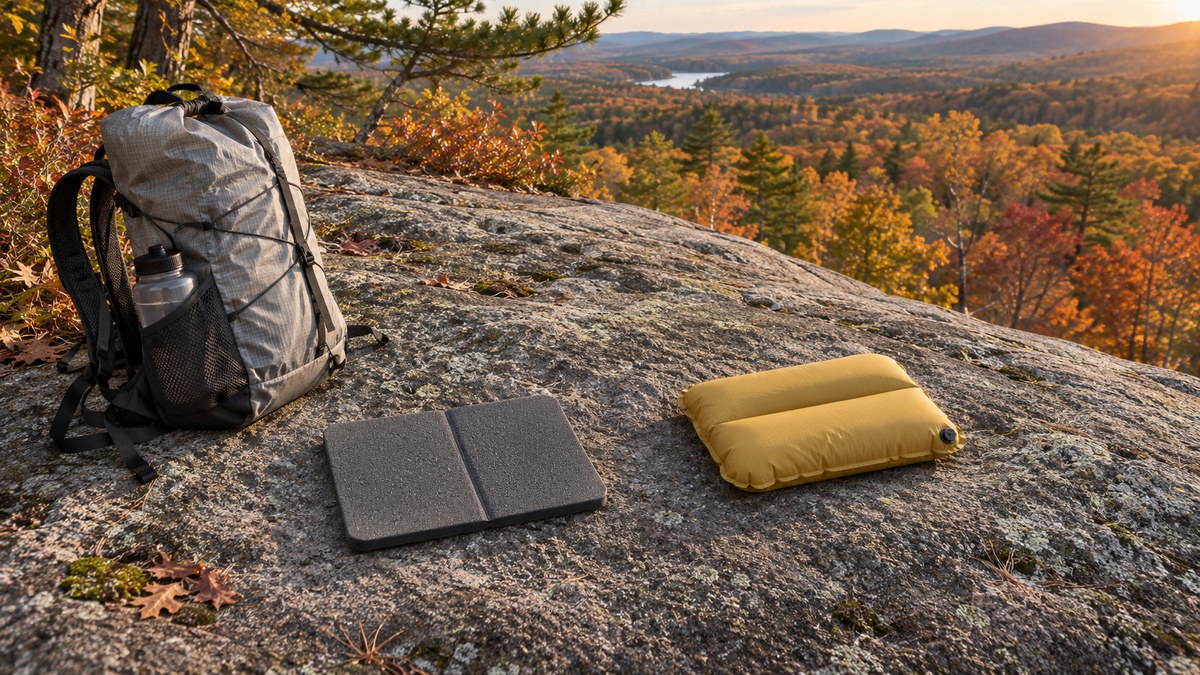
Generated editorial photograph. Illustrative image: An unbranded folding foam seat and a separate air cushion.
A sit pad is a small place to sit at ground level, not a chair or a substitute for a sleeping pad. Its best use is making a five-minute stop easier: somewhere dry enough to sit, a little separation from a cold rock, and less pressure from the edges of an uneven log. The choice starts with how often you stop and what you usually find when you do.
What makes foam a better choice for frequent trail breaks?
Foam is the simpler choice when you stop often and want to sit immediately. Unfold it, find a stable spot and put it down. Closed-cell foam has no valve or sealed air chamber to maintain. The trade-off is that even a folded foam seat keeps its shape and takes up space in a pack.
This matters on hikes where lunch is not the only time you sit. If you stop to adjust socks, check a map or eat a snack, a pad you can pull out without unpacking is more likely to come out at all. A simple foam seat also makes sense where the available surfaces tend to be rough. It can still tear, wear or compress, but a shallow scrape will not empty it.
For a named reference point, Therm-a-Rest’s Z Seat specifications list a molded, closed-cell polyethylene foam seat weighing 2 ounces and measuring 13 by 16 inches and 0.75 inch thick. The maker gives a folded size of 12 by 2.5 by 2.75 inches. That first folded dimension matters if you want the entire pad inside a small daypack. The folded shape also makes it possible to carry it in a secure outer pocket, if your pack has one that fits.
The manufacturer distinguishes the reflective treatment on its blue and limon versions from its other color option. Do not assume every version of a foam seat uses the same finish. More importantly, do not let a finish decide the purchase before checking the seat's shape, its reach inside the pack, and whether it feels large enough under you. This is a comparison based on design and published specifications, not a field test.
When is an air-filled sit pad worth the extra step?
Consider an air-filled seat when you usually take one longer break and want a cushion you can soften or firm up. It may pack into a shorter space when deflated, but you have to deploy it, protect it from sharp objects and pack it down again. Compare actual packed dimensions rather than assuming air always saves room.
An air-only pad and a self-inflating seat are not necessarily the same design. EXPED’s Sit Pad is an example of a self-inflating cushion, with a valve for inflation and deflation. Check the specific maker's instructions. A model that self-inflates may still need adjustment to suit the surface and your preference. Its packed size is worth comparing as a real three-dimensional object, not as a photograph.
If your first instinct is to fill it as firmly as possible, try again on a flat surface with a little less air. The right setting is one that keeps you from feeling the ground under your sitting bones without making the pad feel like it wants to roll from under you. Adding air cannot fix an unsafe slope or a log that rocks. Move to stable ground before trying to solve the problem with more cushion.
An air seat can also make sense when you carry a small pack with no secure outer pocket. But think about where you will put the deflated pad on the way home. A design that is easy to fit in a clean pouch at home can be more awkward when the seat is damp, grit has collected near the valve, and you are packing with cold hands.
What should you check in the pack before you choose?
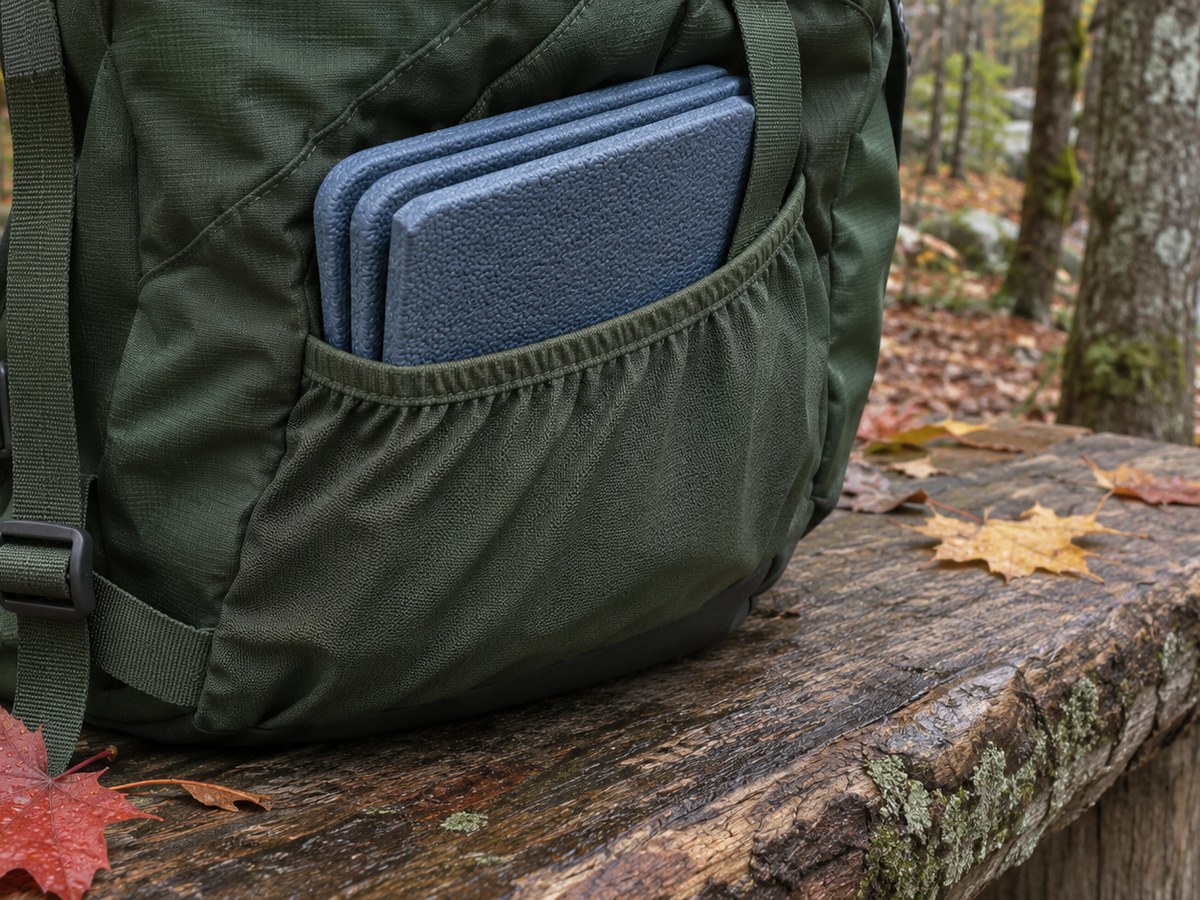
Check the pad against the exact pocket or attachment you plan to use. Foam often rides outside because its folded length can crowd a small main compartment. An inflatable can fit into some shorter pockets when packed down. Either way, make sure you can pull it out without dropping gloves, your map or other trail essentials.
At home, pack your normal load, including a full water bottle, then try getting the pad out. A foam seat that technically fits may prevent a stretch pocket from holding the water bottle you reach for most often. A deflated pad stuffed behind spare clothing may be compact but inconvenient. Put your sit pad where you can get it without balancing an open pack on a slope.
Do not count a bungee as secure until you tug the pad sideways. A stiff foam corner can move out from behind a narrow cord. If you hike through brush, look for a position that does not stick out far enough to hook branches or brush against the person behind you. If the pad cannot ride securely outside, put it inside instead of adding a loose dangling attachment. The same goes for an air cushion hanging by its carry bag.
Weight is a legitimate tiebreaker, especially if you already know your pack is full. It is not the whole comparison. A seat you can retrieve and put away with gloves on may be a better addition than a lighter one buried behind a tightly packed jacket. Separate dirty seat gear from spare dry layers; a backpack liner can help keep the dry side of your pack separate.
How do you make a small pad comfortable on real terrain?
Choose a broad, level surface before adjusting the cushion. Size and placement matter as much as softness: a pad that only covers part of your seated area will shift more easily and leave the edges of a rock or log exposed. A slightly softer pad cannot make a steep, slick or unstable spot safe.
Before you sit, look for a firm spot beside the trail without blocking the path or damaging vegetation. Brush loose grit and sharp edges away if you can do so without disturbing the site. An inflatable benefits especially from avoiding thorns, jagged rock and exposed hardware. Even for foam, removing loose debris keeps the surface from marking up your clothing or making the pad slide.
For a more meaningful size check at home, measure a chair seat you find comfortable, but use it as a reference rather than a required dimension. Then sit briefly on a folded towel on the floor to see whether a similar footprint works at ground level. A sit pad does not provide a backrest. If you need support getting down or up, a raised bench or appropriate chair may be a better option regardless of the cushion.
A pad can remove the distraction of a cold or damp surface, but it does not replace what you wear or where you stop. On a breezy ridge, keeping a warm layer ready and finding a sheltered place to pause may matter more to comfort than the seat material. See the guide to layering for changing weather for planning the layers you will want within reach.
How should you handle a wet, dirty or damaged seat?
Wipe the seat before packing it next to clean gear. Foam can usually be stowed after a quick shake or wipe. With an air-filled seat, clear grit away from the valve and follow the maker’s instructions for drying and repairs. If it loses pressure, move to a safe surface instead of repeatedly inflating it.
On a wet hike, think about where the dirt will go rather than trying to pack everything in showroom condition. Keep the ground-facing side inward when folding a foam pad, if its design allows it. If you use an air seat, do not grind grit into the fabric as you roll it. Shake or blot it first and use whatever separate space you brought for damp gear. Let either pad air out after the hike instead of leaving it wet in a closed bag.
An inflatable that slumps is not always punctured. Check that its valve is fully closed as directed before blaming the fabric. If it still leaks, use the manufacturer’s approved repair method at home and let any repair cure as instructed. A patch kit may be useful if the pad is going on a longer trip, but for an ordinary day hike, knowing where you can take the next break without it is the simpler fallback.
For foam, a superficial mark is different from a tear along a fold or a large piece of missing material. Look for damage that makes it unstable or uncomfortable to sit on. Rinse or clean it as its maker recommends. Do not try to restore either material by warming it next to a camp stove or a flame.
Which sit pad fits the way you actually hike?
For repeated snack stops and rough places to sit, begin with foam. For a longer lunch on a cleared, stable surface or a pack that cannot accommodate folded foam, consider air. If you already know you prefer a chair, or rarely stop long enough to sit, either pad may just be another thing to carry.
Try a simple decision before buying: describe the last three places you stopped on an ordinary hike. If the answer is two logs and a rocky ledge, a durable pad you can carry outside the pack is often a sensible choice. If you usually sit at a picnic table or smooth bench and want a noticeably adjustable feel, compare compact air seats and practice packing one at home. If most of your stops were standing, you may not need either yet.
For damp fall trails, choose first for how quickly you can deploy and put the seat away without getting dry clothing wet. For a crowded trail, choose where you stop before worrying about what you are sitting on. For a winter hike, plan for the temperature and wind separately rather than assuming a small seat alone will keep you warm.
Finally, size the gear to the job. A small sit pad can be handy at a rest stop, but it does not put a full layer of insulation between your body and the ground overnight. This is a ground-level comfort choice during breaks. For an overnight setup, use the separate sleeping pad R-value guide.
If two people share a hiking kit, check whether they would actually want the same seat on the same stop. One person may want something to sit on while the other opens a map or repacks a layer. Decide who carries a shared pad and where it goes so the person who needs it can reach it without unpacking both bags. Two larger pads are not automatically better if the group normally uses existing benches.
On a short hike you already know, notice the friction points rather than trying to assign a comfort score. Was the pad simple to set down, did it stay put, and could you pack it back up without getting grit inside the main compartment? Those observations are useful the next time you choose which one to bring.
Frequently asked questions
Do foam sit pads have to be inflated?
No. Closed-cell foam holds its shape without an air valve, so it can be used as soon as it is unfolded. That is useful for frequent short breaks. It also means the foam takes up some space even when folded.
Should I fill an inflatable sit pad as hard as possible?
Not necessarily. If the manufacturer allows adjustment, try enough air to avoid bottoming out without creating a cushion that feels unstable. Make the adjustment on a level surface. Air pressure cannot make sloping ground or a moving log safe.
Is a sit pad the same as a sleeping pad?
No. A sit pad covers a small area while you are seated. A sleeping pad supports a larger portion of your body and has a different overnight purpose. Do not assume one small seat supplies the coverage or insulation needed for sleep.
What matters most if I carry a small daypack?
Check the pad’s packed dimensions against a real pocket or storage location with the pack loaded. A foam seat needs a secure spot at its folded size; an inflatable takes additional time to deploy and repack even if it fits easily.