
PowerPro Spectra 30 lb vs SpiderWire Stealth 30 lb
Written by John Wren|
Choose PowerPro Spectra hi-vis yellow, 150 yards, 30-pound, when you want a line you can watch. Choose SpiderWire Stealth moss green, model SS30G-125, 125 yards, when you want the low-visibility filler spool. Both are 30-pound braid. Both want a leader.
Key takeaways
- PowerPro on this card is hi-vis yellow, 30-pound, 150 yards.
- Stealth on this card is moss green, SS30G-125, 125 yards.
- Thirty-pound braid is thin. A leader still belongs on the end.
- An 8-pound or 50-pound box in the same family is a different line.
PowerPro Spectra 30-pound hi-vis yellow or SpiderWire Stealth 30-pound moss green is a braid choice, not a reel choice. Both are 30-pound test. The PowerPro on this card is the 150-yard hi-vis yellow spool. The SpiderWire on this card is the moss-green Stealth filler, model SS30G-125, 125 yards. Buy the PowerPro when you want the longer spool and a line you can see in the air. Buy the Stealth filler when you want the low-visibility green and you already have backing on the reel. Confirm 30-pound test and the yardage on the box. An 8-pound or a 50-pound spool in the same family is a different line.
Short version. A spinning reel is where 30-pound braid usually belongs. A baitcaster wants a diameter you have already learned, and 30-pound braid is thin for a lot of casting reels. The rest of the summer kit still includes a leader, pliers, and a reel you rinsed. Check live prices. Read the pound test before you leave the aisle.
This comparison is two 30-pound braids you can still buy. It is not a 10-pound spool, not an 80-pound spool, and not a 300-yard bulk box. The boxes in this family look alike. The number that matters is printed on the front: pound test, then yards. A photo of a 10-pound box with a 30-pound title in the cart is how people spool the wrong line and wonder why the fish broke them off, or why the lure will not cast.
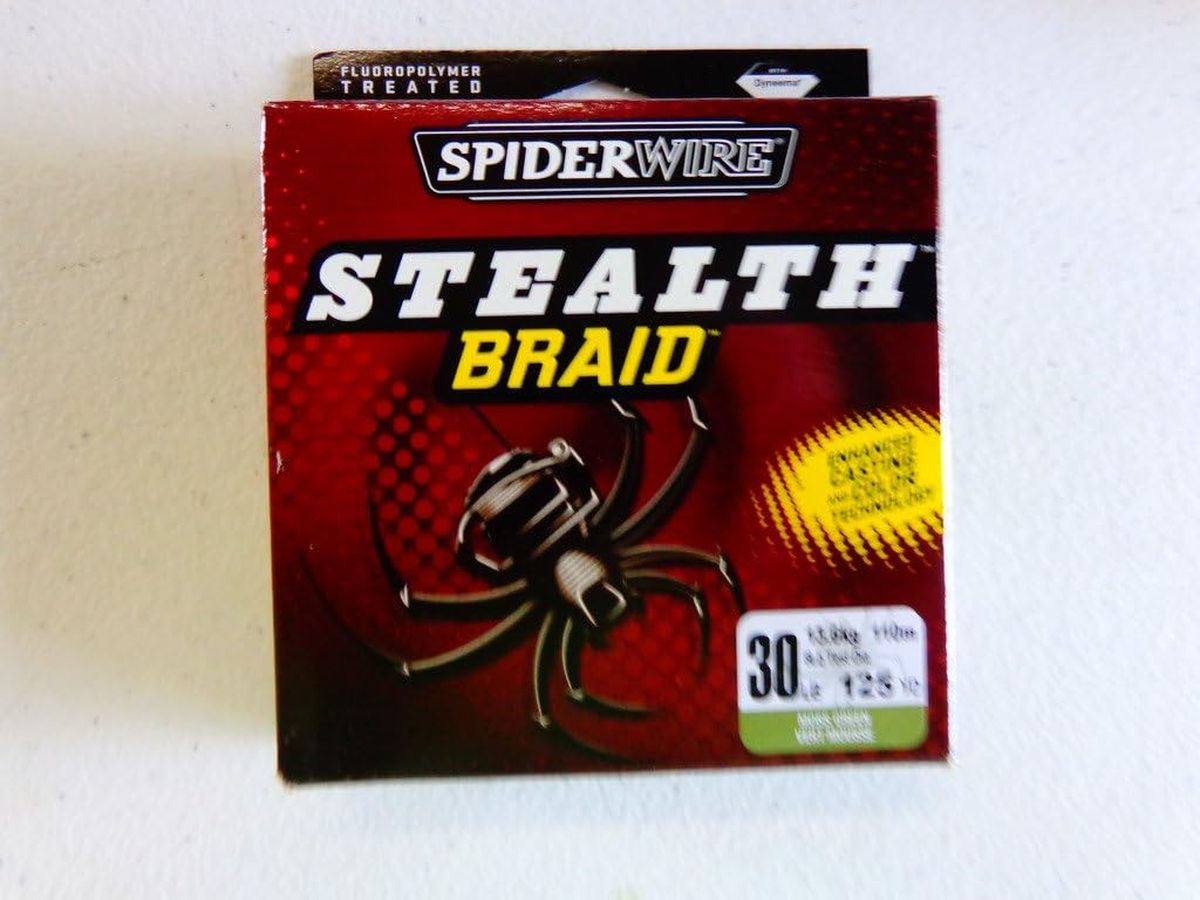
| Job | PowerPro Spectra hi-vis | SpiderWire Stealth moss green | Our call |
|---|---|---|---|
| See the line in the air and on a slack cast | Hi-vis yellow, 150 yards, 30-pound | Moss green, harder to watch | PowerPro |
| A low-visibility main line in clear water | Yellow shows | Moss green Stealth, 125 yards | Stealth, plus a leader |
| Fill a spinning reel that already has mono backing | 150 yards is generous | 125-yard filler is the point of this spool | Stealth if the backing is already on |
| A baitcaster you have not set up for thin braid | Thin for the test | Thin for the test | Learn it on a spinning reel first |
| Teeth, docks, and zebra mussels | Needs a leader | Needs a leader | Fluorocarbon leader either way |
Confirm 30-pound and the yards. PowerPro's card is 150 yards of hi-vis yellow. SpiderWire's card is the 125-yard moss-green filler, SS30G-125. A 50-pound Stealth box is a different diameter.
Who should buy the PowerPro, and who should buy the Stealth?
Buy the PowerPro Spectra hi-vis yellow if you fish from the bank, you pitch to wood, and you want to see the line leave the reel. Yellow braid is a teaching line and a watching line. You see the bow in the cast. You see the tick when a fish picks up a worm in stained water. You also see it from the fish's side of the deal in gin-clear water, which is why a short fluorocarbon leader belongs on the end even when the main line is pretty. The 150-yard spool is the one that fills a 2500-size spinning reel with room for mono backing underneath, or fills a larger spinning reel if you are honest about how much line a long cast and a run actually take.
Buy the SpiderWire Stealth moss-green filler if the reel already has backing and you want 30-pound braid that disappears better than yellow. Moss green is the low-visibility argument. It is not invisible. In two feet of clear water over sand, any braid can flash. The green still wins the day you are watching a leader, not the day you are trying to see a bow in the line at dusk. The 125-yard length is a filler length. It is not a 300-yard bulk spool. If the reel is empty and large, 125 yards may not fill it without a fat backing. That is not a defect. It is the spool you bought.
Do not buy either one as a substitute for learning the reel. A 2500 spinning reel and a baitcaster put line in the water in different ways. Braid has almost no stretch, so the hookset is sudden and the knot is the weak point if you tie it like heavy mono. People who say braid "broke for no reason" usually tied a sloppy knot, nicked it on a guide, or bought 10-pound test because the box was the same shape.
What the PowerPro Spectra 150-yard 30-pound is actually for
PowerPro builds this spool from Spectra fiber and sells the hi-vis yellow 150-yard, 30-pound version as a braided line with their Enhanced Body construction: rounder, smoother, and meant to pack on a reel without the flat ribbons older braid was famous for. The box on this card says 30-pound test and 150 yards, hi-vis yellow. That is the line. A red spool, a green spool, a 300-yard spool, or a 50-pound spool is a different buy even when the brand name matches.
Hi-vis yellow is the color you choose when the strike is a line-watch, not a rod-tip-watch. Pitching a jig to a laydown, dragging a worm, or watching a slack line in the wind, yellow earns its keep. It is also the color you regret on a flat, clear flat if you refused a leader. Use a short fluorocarbon leader for clear water, toothy fish, and anything that will saw. The braid is the working line. The leader is the part the fish is allowed to see and bite.
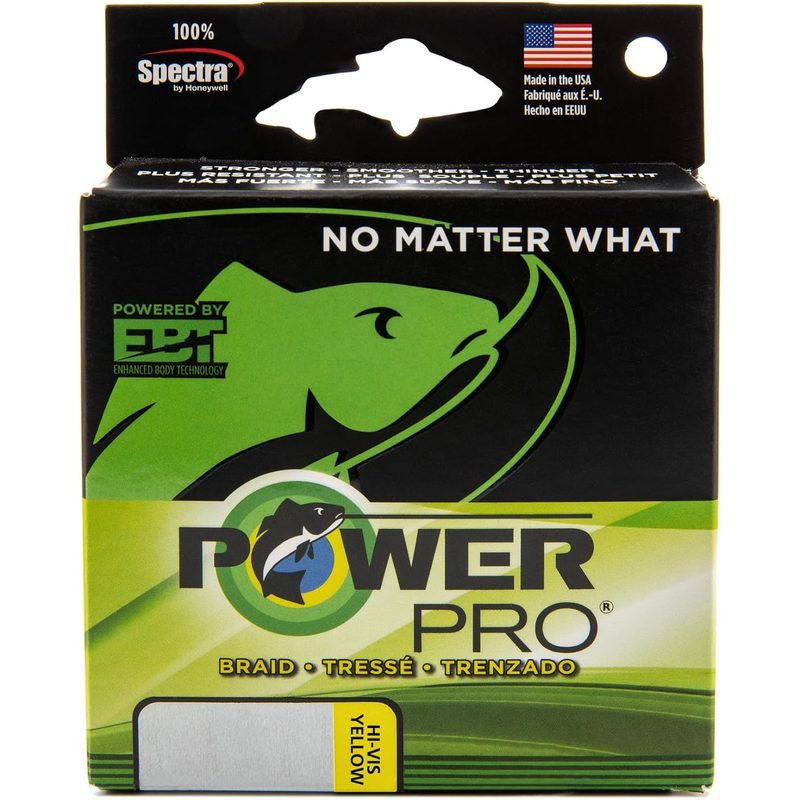
Do: match the printed 30-pound and 150-yard marks to the reel you are filling. Don't: assume a 150-yard spool fills a big conventional reel. It will not. Do: spool under tension so the braid packs tight. Loose braid digs in on the next cast and you spend the morning picking a nest. Don't: cinch a uni-knot dry. Wet it. Braid cuts itself when a knot slips.
What the SpiderWire Stealth 125-yard filler is actually for
SpiderWire Stealth on this card is the moss-green filler spool marked SS30G-125: 30-pound test, 125 yards. Stealth is the low-visibility braid in the lineup. The filler spool is the smaller package you put on top of backing, not the giant bulk spool you buy when you are filling three reels. If the listing photo shows 50-pound test, or a different yardage, close it. The model on the box is the check. SS30G-125 means this 30-pound, 125-yard moss-green filler. A box that says 50 LB is a heavier line with a thicker diameter and a different job.
Moss green is the color for stained-to-clear water when you do not want a yellow slash in the air. You give up some of the line-watching that hi-vis gives you. You gain a main line that does not advertise itself on a long cast over a flat. You still want a leader. Green braid is not a fluorocarbon leader. It is a strong, thin, low-stretch main line that can still shine when it is wet and that still needs a shock section when the cover is rock, shell, or teeth.
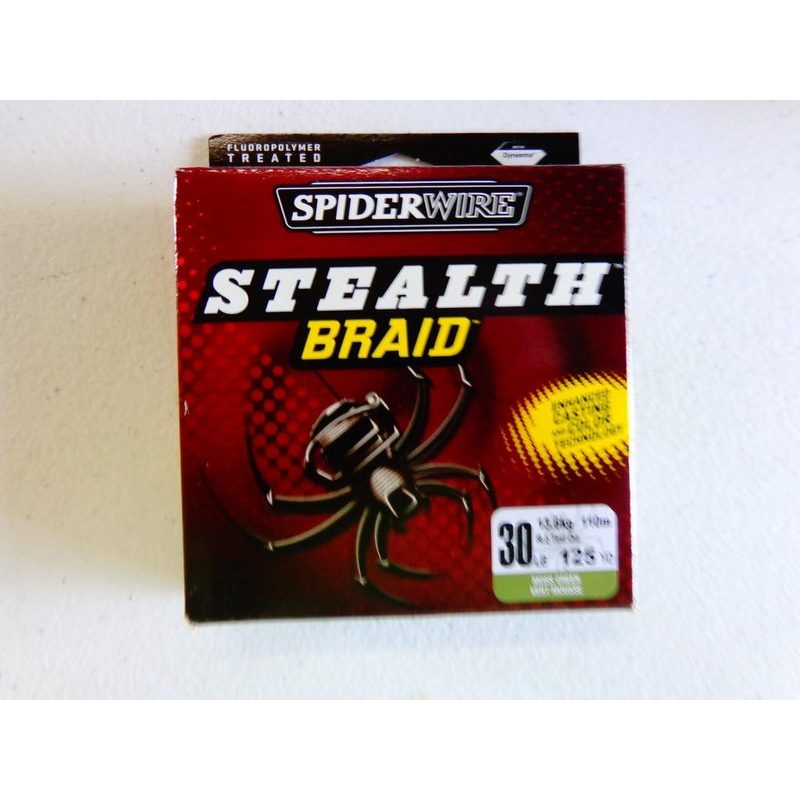
Do: put mono or an older braid under it if the 125 yards will not fill the spool. A half-empty spool casts worse and lets line dig into itself. Don't: pile 125 yards of 30-pound braid onto a tiny ice reel and call it a pike setup. The test is 30 pounds. The drag, the rod, and the leader still decide what you can stop. Do: cut off a frayed tag. Braid frays into a fuzzy point that slips through a knot you thought was finished.
How to spool either braid so it does not dig in
Start with a backing if the braid will not fill the spool by itself. A 2500 spinning reel often takes the 150-yard PowerPro with a modest mono base. A larger spinning reel, or any reel you want packed to the lip, wants more line than 125 yards of Stealth. Tie the backing on first, fill until the braid will finish near the lip, then join the braid with a double uni or a back-to-back uni. Wet the knots. Trim the tags short, but not so short that the knot can slip. Leave a millimeter you can see.
Pack the line under tension. A pencil through the spool, a glove, and a steady crank beat a loose pile you will regret on the second cast. Stop before the line reaches the lip of the spool. Overfilled braid jumps the bail and knots itself into a wind knot that looks like a bird's nest and acts like one. Underfilled braid casts short and digs into the backing when a fish runs. The lip is the target. Just under it is the safe place.
On a spinning reel, close the bail by hand after the cast. Letting the handle slam the bail over twists the line, and braid remembers twist as loops that leap off the spool. On a baitcaster, 30-pound braid is thin enough to creep between the spool and the frame if the reel was happy with heavier mono. That is a reel problem and a diameter problem. Learn the brake on the baitcaster you already own with a line you can see, which is another argument for the hi-vis PowerPro if the baitcaster is new to you.
The leader is not optional just because the braid is strong
Thirty-pound braid will cut a fish's mouth on a hard hookset less often than people fear, and it will get cut by a zebra mussel, a dock piling, or a pike's teeth more often than the box implies. Tie a fluorocarbon leader. For bass in wood, a short leader of a lighter fluorocarbon is enough to keep the braid off the rough stuff and to give the knot a little forgiveness. For pike, muskie, and anything with teeth, the leader is wire or a heavy fluoro, and the braid is only the running line. Do not ask 30-pound braid to be a bite leader. It is thin. Thin is why it casts. Thin is why teeth win.
Knots that hold: a Palomar for the hook or the swivel, a double uni for line-to-line. Cinched dry, braid slips or it cuts the standing line. Wet the knot, pull it down slowly, and seat it with a steady load, not a jerk that burns the fibers. Retie after a snag that you horsed out of wood. The line may look fine and be half cut. Braid hides damage until the next fish, which is always the one you wanted.
Hi-vis yellow with a clear leader is the practical rig for most people. You watch the yellow. The fish sees the leader, if it sees anything. Moss green with a clear leader is the rig when the yellow bothers you, or when you are making long casts in clear, shallow water and you do not want a colored slash. Neither rig fixes a dull hook or a drag set to "winch."
What actually fails on 30-pound braid
Wind knots fail it. A loop jumps the spool, you keep casting, and the knot welds itself into a bump that will not pass the guide. Cut it out. Do not pick at it with a knife against the standing line. Guide inserts fail it next. A cracked ceramic guide, or a nick in a rod tip, frays braid in an afternoon. Run a cotton swab or a scrap of pantyhose through the guides before you blame the line. If the swab snags, the guide is the problem.
Sun and time fail the color more than the strength, until they don't. Hi-vis yellow fades and still fishes. A fuzzy, stiff section near the lure is the section you should cut. Stealth's coating is there to help it cast and to keep it quiet. Once the last ten feet are fuzzy, those ten feet are done. The rest of the spool is still line. Cut back to clean braid and retie the leader.
The other failure is the wrong box. PowerPro and SpiderWire both sell this construction in a run of pound tests that share a package shape. Thirty-pound is the comparison. Eight-pound will break on the snag you used to horse. Fifty-pound and eighty-pound will not cast the lure you bought the 30-pound to throw, and they will not fit the same amount of line on the reel. Read the front of the box in the parking lot, before you cut the old line off.
What this fight is not
It is not a mono versus braid lecture, and it is not a fluorocarbon main line. Fluorocarbon as a full spool is a different product with stretch, memory, and a price. It is not a steel leader. It is not the reel. If the drag is sticky or the bail is bent, new braid will not heal it. Pliers, a hook file, and a leader spool still belong in the kit after the line is on.
It is not a 300-yard bulk spool and it is not a 10-pound trout line that happened to be photographed in the same brand colors. The PowerPro card is hi-vis yellow, 30-pound, 150 yards. The SpiderWire card is moss green Stealth, 30-pound, 125 yards, filler spool SS30G-125. If either number is different, you are holding a different product.
So which 30-pound braid should you buy?
Buy the PowerPro Spectra hi-vis yellow, 150 yards, when you want to see the line and you want the longer spool. Buy the SpiderWire Stealth moss-green filler, 125 yards, when the reel already has backing and you want the quieter color. Both are 30-pound test. Both are thin for that test. Both want a leader, a wet knot, and a spool packed under tension. Confirm the pound test and the yards on the box you actually open. Then go fish the reel you already trust, and cut the fuzzy end off before you blame the brand.
Frequently asked questions
PowerPro Spectra or SpiderWire Stealth for 30-pound braid?
PowerPro hi-vis yellow, 150 yards, if you want to see the line and you want the longer spool. SpiderWire Stealth moss green, 125-yard filler SS30G-125, if the reel already has backing and you want the quieter color.
Are both spools the same length?
No. This PowerPro card is 150 yards. This Stealth card is 125 yards. A half-empty reel casts worse, so add backing under the shorter spool.
Is 30-pound braid a leader?
No. It is a thin main line. Teeth, docks, and shell still need a fluorocarbon or wire leader on the end.
Can I put 30-pound braid on a baitcaster?
Only if that reel is already happy with thin line. A spinning reel is the usual home for 30-pound braid. Learn a new baitcaster with a line you can see.
Which knot holds braid?
A Palomar for the hook or swivel, and a double uni for line-to-line. Wet the knot. A dry cinch slips or cuts the standing line.
How do I avoid the wrong pound test?
Read the front of the box. These cards are 30-pound. An 8-pound, 10-pound, 50-pound, or 80-pound spool in the same brand is a different line.