
Osprey Duro 6 vs Salomon ADV Skin 5
Written by John Wren|
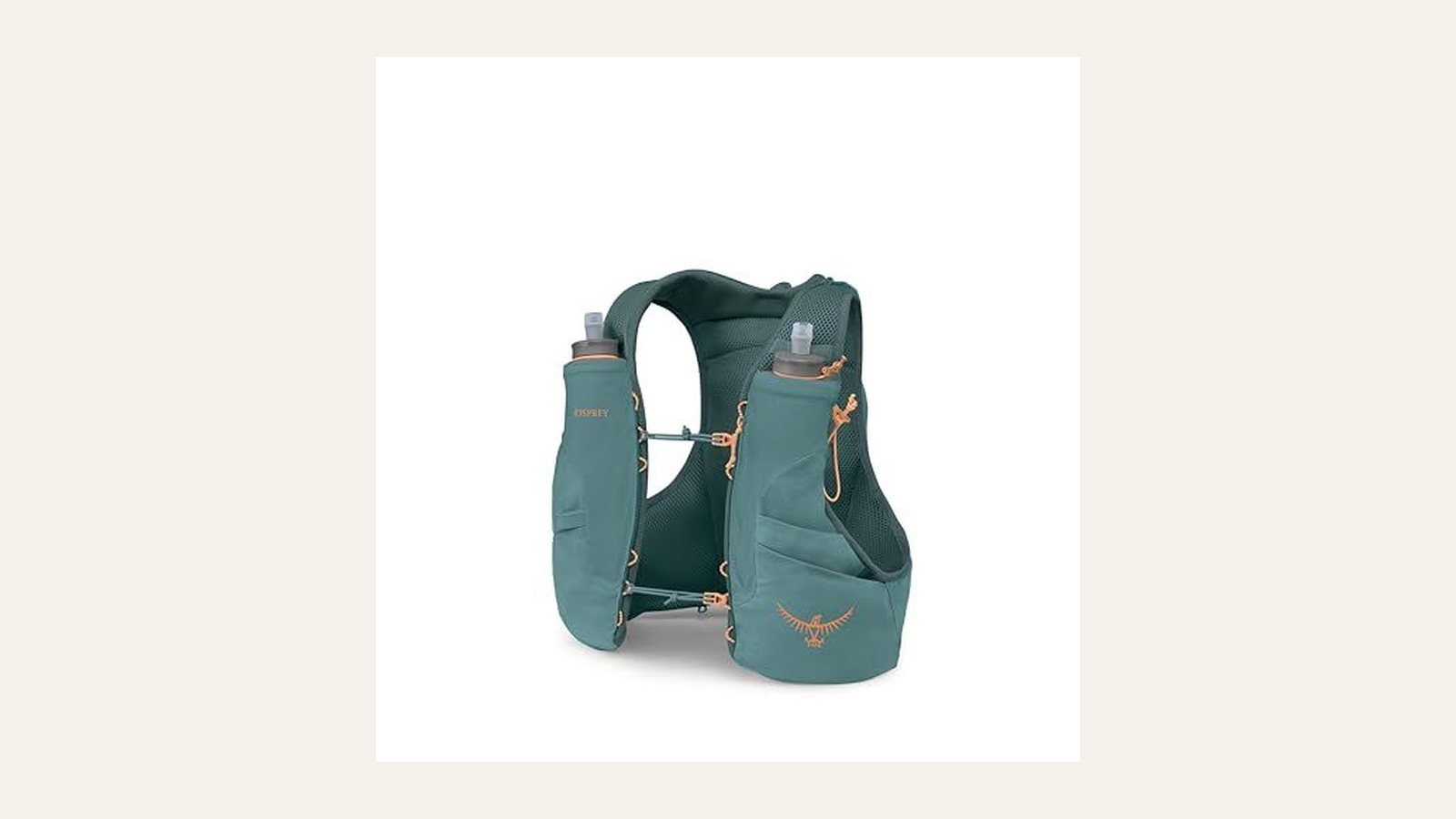
Choose the Osprey Duro 6 if you want that harness and the two 500-milliliter flasks that ship in the kit. Choose the Salomon ADV Skin 5 if you want the race-vest fit and you will order the chest size the chart names.
Key takeaways
- Duro 6 ships with two 500 ml flasks.
- ADV Skin 5 is the five-liter race vest. Confirm flasks.
- Size it to the chest chart, not a T-shirt.
- A vest is not an overnight pack.
Osprey Duro 6 vs Salomon ADV Skin 5 is a running-vest fight: a men’s Osprey vest with two 500-milliliter soft flasks and a bounce-minded harness, against Salomon’s five-liter race vest that a lot of trail runners already know by the flasks in the shoulder straps. If you want Osprey’s fit, a pole carry, and the flasks that ship in the Duro box, buy the Duro 6. If you want the ADV Skin pattern — soft flasks up front, a race-vest silhouette, a size chart that is about your chest — buy the ADV Skin 5 and order the size the chart names. Neither is a 20-liter daypack. Neither replaces the shoes.
Short version. The shoe is a different decision. The watch does not carry water. A weekday loop is where a vest either disappears or slaps you for an hour. A bike is a different sport and a different bag. Check live prices.
A running vest is a close-fitting harness with flasks or a bladder and enough pockets for a layer, a phone, and the food you will actually eat. If it bounces, you will hate it by mile four and you will quit wearing the water you needed. Fit is the product. Volume is the excuse. Five or six liters is enough for a long trail run and not enough for a backpacking overnight. If the plan includes a sleeping bag, you are in the wrong aisle.
| Job | Osprey Duro 6 | Salomon ADV Skin 5 | Our call |
|---|---|---|---|
| A long run with flasks, not a bladder | Two 500 ml flasks in the box | Confirm the listing includes flasks | Duro if you want the flasks guaranteed in that kit |
| Poles on a climb | Front pole carry | Depends on the year’s pocket layout | Duro if poles are the Tuesday |
| A race vest you already know | Osprey harness, sternum straps | The ADV Skin shape | ADV Skin if that pattern already fits you |
| Bounce | A vest that is loose will bounce | A vest that is loose will bounce | Size the chest. Snug is the feature. |
| An overnight kit | Wrong volume | Wrong volume | A real pack |
Confirm Duro 6 with flasks, men’s sizing if that is the listing, in the chest size the chart gives. Confirm ADV Skin 5, not the ADV Skin 12, and not a bladder-only vest from a different year. A size small that arrives when you needed a medium is a return.
Who should buy the Duro 6, and who should buy the ADV Skin 5?
Buy the Duro 6 if you want Osprey’s harness, two flasks you do not have to shop separately, and a place to stash poles without holding them. Buy the ADV Skin 5 if you have already run in Salomon’s race vests and you want that front-flask layout in the five-liter size. Buy neither if the run is forty minutes from your door and a handheld bottle would do. A vest for a short loop is extra straps. A vest for two hours away from water is the point.
The watch can buzz a turnaround. It cannot carry the flask you left in the car. The Speedcross is a mud shoe. The vest does not care what lug you wear, but a vest that chafes will end the run before the shoe does.
What the Duro 6 is actually for
The Duro 6 is Osprey’s men’s running vest in the six-liter class. The kit we are talking about includes two Hydraulics 500-milliliter soft flasks. Osprey’s listing for the medium, without flasks, is about 0.51 pounds, roughly 231 grams, and the two flasks add about 85 grams empty. Those are Osprey’s numbers for that size, not a promise every colorway weighs the same to the gram. The harness uses a stretch back panel, dual sternum straps, and pockets for food, a layer, and the small things you refuse to hold in your hand. Pole carry is on the front. The vest is reservoir-compatible if you insist on a bladder, which is not included in the flask kit. Sizing is chest circumference in three men’s sizes. Measure. Do not guess from a T-shirt.
The Osprey Duro 6 with flasks is the vest in this kit. Confirm flasks in the box, not the reservoir-only build. Check live prices. A women’s Dyna is the related vest with a different fit. If the listing says men’s Duro, order the men’s chart. A vest that gaps at the sternum is the wrong size or the wrong cut, and it will bounce.

Do: load the flasks full and jog the hallway. A vest that feels fine empty and slaps when the flasks are full was never fitted. Don’t: crank the sternum straps so tight you cannot breathe and call that stability. Snug means the vest moves with your ribs, not that it winches them. Do: put the phone and the food where you can reach them without taking the vest off. Don’t: bury the only calories in a back pocket you cannot open while you run.
What the ADV Skin 5 is actually for
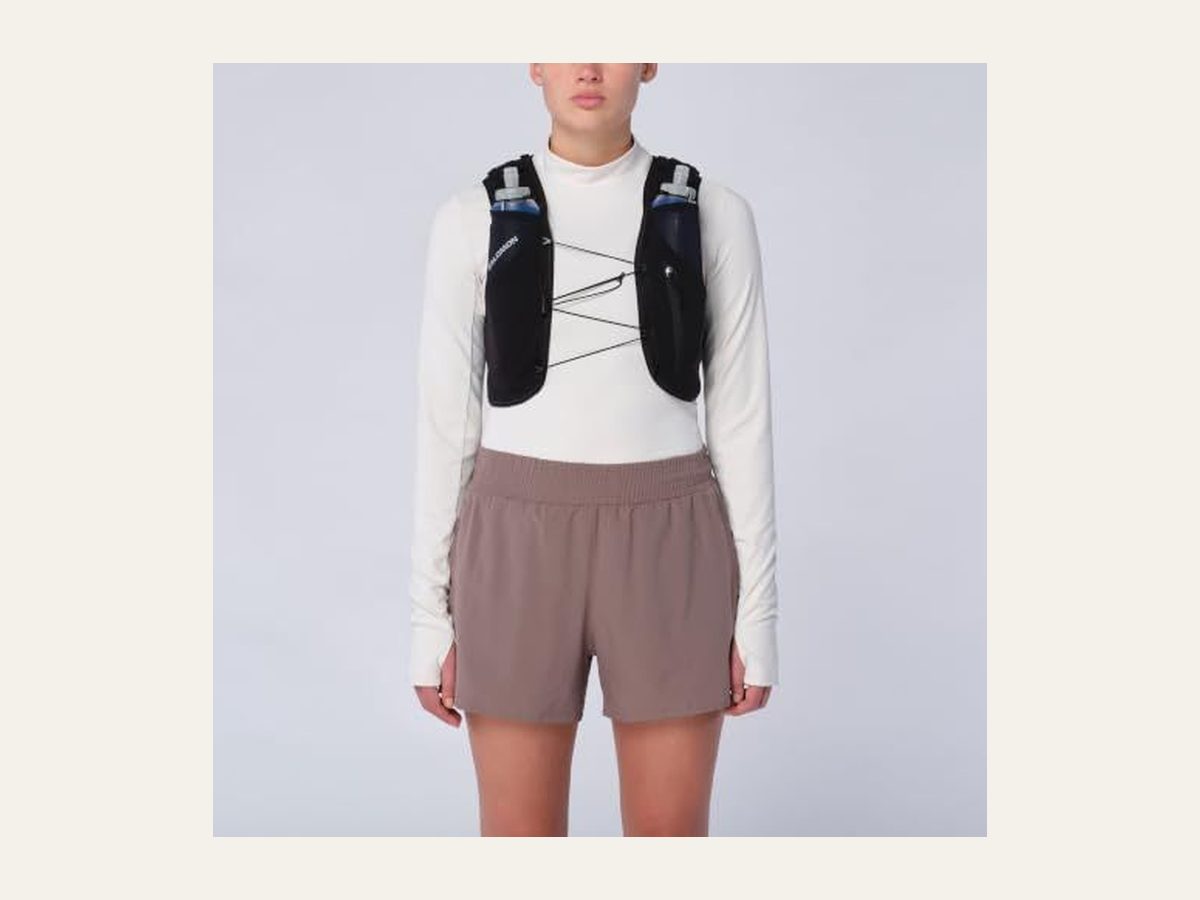
The ADV Skin 5 is Salomon’s smaller race vest, the five-liter version of a line runners already use for longer events in the 12-liter size. The five-liter is the one for shorter trail days: flasks up front if the kit includes them, a close fit, pockets you can hit without breaking stride. Salomon sizes these by chest and by the specific gender cut on the label. The listing has to match the size you measured. A unisex or a men’s medium is not a suggestion. It is the garment.
Confirm ADV Skin 5 and confirm whether flasks are in that exact box. Some listings are the vest alone. A vest without flasks is still a vest, and it is not the kit you thought you bought if the photo showed bottles. The Salomon ADV Skin 5 is the five-liter vest. Check live prices. If you already own Salomon flasks that fit the front pockets, you may not need another pair. If you do not, buy the kit that includes them or add flasks you know fit those sleeves. A flask that is too fat for the pocket is a bulge that bounces.

Do: follow the chest chart with a tape, not a memory of last year’s size. Don’t: size up for comfort the way you size a jacket. A loose race vest is a worse vest. Do: practice drinking on the run before race morning. Don’t: discover the bite valve at mile eight with cold hands and a full flask you cannot open.
Snug is the point. Bounce is the failure.
Load both flasks. Wear the shirt you run in. Tighten the shoulders and the sternum until the vest does not slide when you hop in the kitchen. Then hop. If a flask slaps your ribs, move it, tighten the pocket, or admit the size is wrong. A vest that only fits when the flasks are empty does not fit. Empty-flask store mirrors are how people buy the wrong size.
Chafing shows up where a strap saws a shoulder or a sternum buckle sits on the same spot for an hour. Move the buckle an inch. If the material itself rubs, the size or the cut is wrong. A dab of lubricant on a known hot spot is fine. A vest that requires lubricant everywhere is a vest to return. A weekday loop is the test. Race morning is not the test.
Two flasks are a liter. Know where the next liter is.
Two 500-milliliter flasks are one liter. That is enough for a cool hour and not enough for a hot two hours if you actually drink. Refill at a creek only if you also carry a way to treat it, which is a different kit. Otherwise the vest is a carry from tap to tap, fountain to fountain, aid to aid. Plan the water before you plan the playlist.
Soft flasks collapse as you drink, which is why they beat a hard bottle in a vest. Rinse them the same day. A flask left sweet with mix in a hot car becomes a science project. A bite valve that sticks shut was stored dirty. Pull the valve, rinse it, and let it dry out of the flask. Do not freeze a full flask in the vest pocket and then complain that the fabric tore. Ice expands. So does a careless stuff into a too-small pocket.
Food goes where your hand already is. Poles go in the carry, not in your fist, on the climb.
Gels and chews belong in the front stretch pockets. A wrapper you cannot open with sweaty fingers is the wrong food, not a pocket failure. Test one packet on a run before you buy a box. The Duro’s pole carry is there so a climb does not turn into a juggling act. Practice stowing the poles once at home. A first attempt on a loose talus slope is how poles get dropped and how vests get hated.
A layer belongs in the back only if you can get it without taking the vest off, or you accept that you will stop. Stopping is allowed. Pretending you will fish a jacket out of a rear zip at a trot is how jackets stay in the car. Pack the layer you will actually use. A vest stuffed with a spare you never wear is a heavier vest.
The vest does not pick the shoe or the watch.
A lugged trail shoe and a road shoe are still chosen by the ground. The vest should not change your stride. If you shorten your step because a flask hits your arm, the flask is too high, too full of air and slosh, or the vest is too big. A training watch sits on the wrist outside the strap. A strap that covers the watch is a strap to move. You still want to see the turnaround you wrote down.
Night runs want a lamp, not a phone flashlight. The vest can carry the lamp. It is not the lamp. Clip a small light where it points down the trail and does not bounce into your eyes. A bouncing beam is worse than a dim one.
Rinse the salt. Do not boil the vest.
Sweat and salt eat elastic and zippers. Rinse the vest in cool water after a salty run and let it dry in the shade, flasks out, valves open. Do not put it in a hot dryer. Do not store it wet in a gym bag for a week. The flasks come out and hang. The vest hangs. A mildew smell is a storage story, and it does not wash out of every fabric the way you hope.
Check stitching at the flask pockets after the first month. A pocket that has opened at a corner will lose a flask on a downhill. Sew it or return it while the return window is real. A vest is a wear item. It is not a lifetime tool. Elastic dies. Plan on that instead of being surprised in year three.
What this fight is not
It is not a hydration pack with a three-liter bladder for a hike. Those sit farther off your back and they are miserable to run in. It is not a bike or a frame bag. Cyclists who run on Tuesday still need a vest that fits a run, not a jersey pocket stretched over a bladder. It is not a substitute for fitness, a map, or the decision to turn around when the flasks are light and the fountain is farther than you thought.
It is not one-size. If the listing does not name a chest size, do not guess. Measure, then match the chart on that listing, because a brand’s medium is not a universal medium.
So which running vest should you buy?
Buy the Osprey Duro 6 if you want two 500-milliliter flasks in the box, pole carry, and Osprey’s harness in a men’s chest size you measured. Buy the Salomon ADV Skin 5 if you want that race-vest layout in the five-liter size and you will order the chest size the chart prints, flasks confirmed in the box or already on your shelf. Our default for a runner who has never worn a race vest is the Duro, because the flask kit is explicit. Our default for someone who already likes the ADV Skin pattern is the ADV Skin 5. Load the flasks. Hop in the hallway. Check live prices. If it bounces, it is the wrong size. Return it before the long run, not after.
Then go run the loop you already know. A new vest on a new trail in the dark is two experiments. One experiment at a time is how the water stays in the flask and the skin stays on your shoulders.
Frequently asked questions
Osprey Duro 6 or Salomon ADV Skin 5?
Duro 6 if you want Osprey’s harness and the two 500 ml flasks that ship in that box. ADV Skin 5 if you want the race-vest fit and you will order the size the chest chart names. Confirm the ADV Skin listing includes flasks.
How do I size a running vest?
Use the chest chart, not a T-shirt size. Load the flasks and jog in place. A vest that bounces is the wrong size.
Is a five-liter running vest a daypack?
No. Five or six liters covers a long run: flasks, a layer, a phone, and food. A sleeping bag means you are in the backpack aisle.
Do the Duro 6 and the ADV Skin 5 include soft flasks?
The Duro 6 kit named here includes two 500 ml flasks. Confirm the ADV Skin 5 listing includes flasks before you assume the box is complete.
Will a running watch carry my water?
No. The watch times the loop. The vest carries the flasks. The shoes are a separate decision.
Can I use a running vest for an overnight hike?
Not if the overnight needs a sleeping bag, a pad, and a stove. That is a pack. A vest is for the run.