
Lectric XP4 vs Aventon Level 4 REC
Written by John Wren|
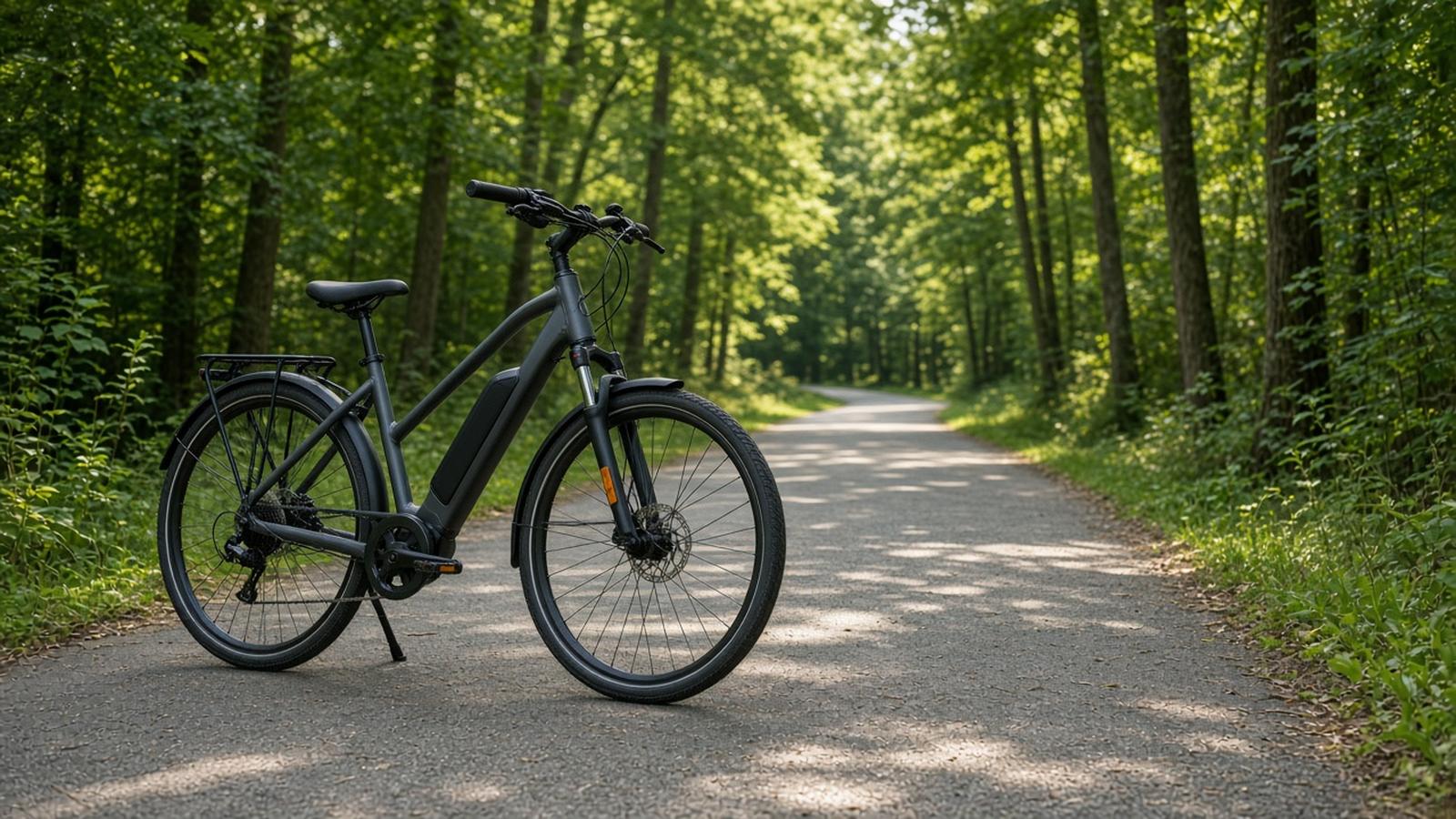
Choose the Lectric XP4 when the bike has to fold. Choose the Aventon Level 4 REC for a paved path with the rack and fenders already on the bike. Read the cards on SickEBike. A helmet and a U-lock are the add-ons.
Key takeaways
- XP4 folds. Card is $999 or $1,299.
- Level 4 REC is the $1,999 pavement bike with rack and fenders.
- Both ship Class 2. The path sign still wins.
- A Sur-Ron is an e-moto, not this comparison.
Buy the Lectric XP4 if the bike has to fold into a trunk, a garage bay, or an RV. Buy the Aventon Level 4 REC if the week is a paved path, you want the rack, the fenders, and the lights already on the bike, and you will not carry 68.5 pounds up a flight of stairs. Look at both bikes, and the rest of the named cards, on SickEBike before you spend the money. Neither machine is a singletrack bike. Neither one is a Sur-Ron.
The short version is the ride, then the class, then the pack. A 10-mile flat loop that ends in a trunk is the XP4. A paved rail-trail week, with a rack you will actually use, is the Level 4 REC. A real climb with a cassette you mean to use is a mid-drive, and that is a different bike. A throttle dirt bike with no class sticker is an e-moto. Write the sentence before you click: miles, surface, cargo, and where the bike sleeps.
Pedal bikes still exist for the same miles. A hybrid is the flat-bar answer when you do not want a motor. A gravel bike or a hardtail is the answer when the surface, not the watt sticker, is the decision. An e-bike is a bicycle with a motor, a battery, and a controller. The pedals still work. The hangtag is what a ranger reads. The path sign is what you ride.
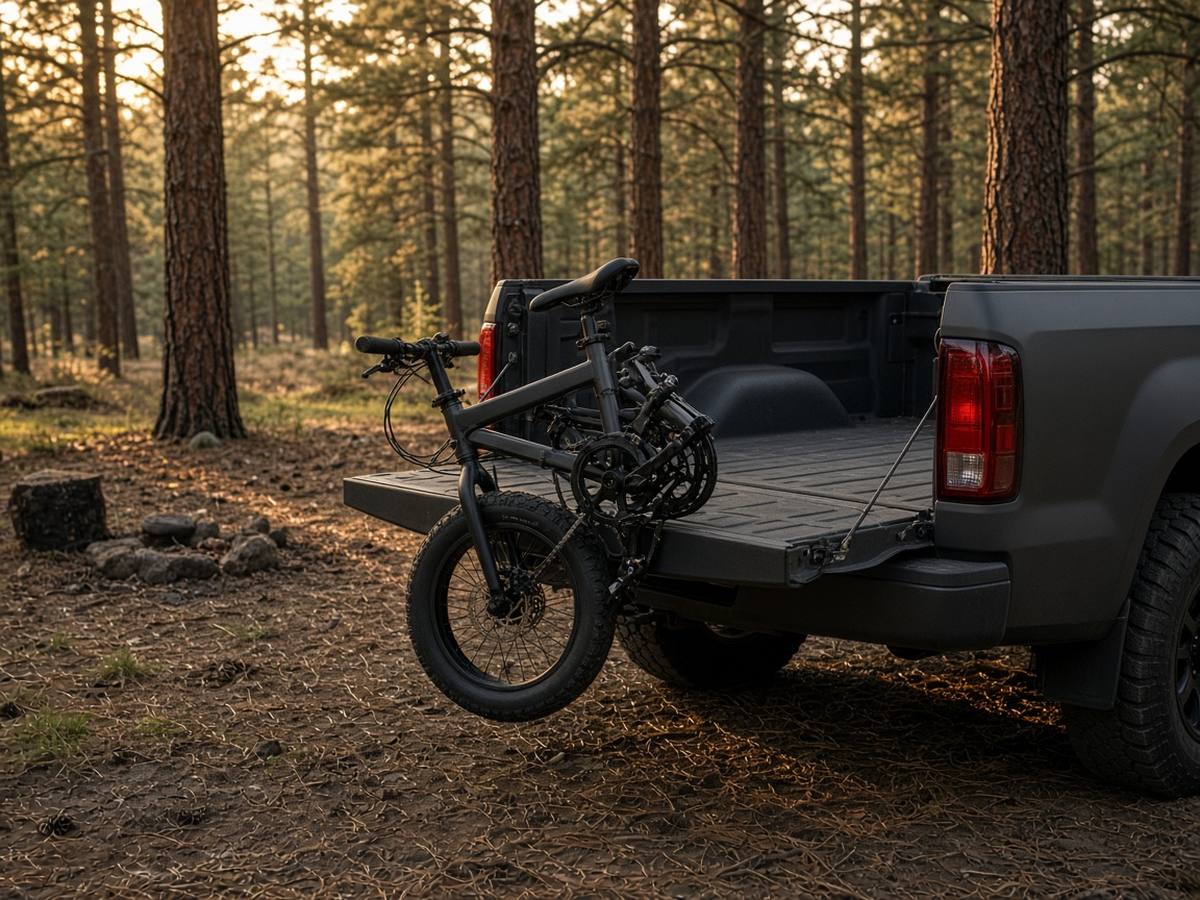
Start with the ride, not the watt sticker
One sentence, written down, saves the wrong bike. How many miles, how many days, what surface, how much stuff, and where it is stored. A 7-mile paved commute with a garage is a Class 2 hub commuter. A path posted at 15 mph is not a Class 3 unlock. Stairs are a light folder, not a 70-pound XP4 you will hate by Wednesday. Two kids and a box are a cargo bike, not a 150-pound rack rating on a hinge. Off-road throttle dirt is a Light Bee, which is not an e-bike in the three-class sense.
Recreation is where people over-buy. A weekend path, a boardwalk, a neighborhood loop wants comfort, a tire that is not a slick and not a 4-inch sand tire, and a motor that dies at the number on the sign. You do not need a huge torque number for a greenway. You need a seat you will sit on for two hours and a class the path allows. Class 3 at 28 mph on a mixed-use path is how a fun Saturday becomes a conversation with a ranger.
Trail miles are a different purchase. Real singletrack wants a mid-drive, a dropper, real travel, and a motor that uses the gears. A 750-watt fat hub is fire-road and beach. It is not a bike-park berm. Do not take a folding 20-inch commuter into a rock garden and call it a mountain bike because the tire is wide. Named mountain-bike trails still have signs. Read them before you unlock anything.
Class 1, 2, and 3, then the sign
Class 1 is pedal-assist only, to 20 mph, with no throttle. Class 2 adds a throttle, still 20 mph. Class 3 is pedal-assist toward 28 mph, 25 in New York, and the model law wants a speedometer. All three assume pedals and a motor of 750 watts or less. A Tuttio is none of these. A Sur-Ron is none of these. The sticker is not the trail. The path sign can still say 15.
Federal product law is a different sentence from the class sticker. The consumer-product definition wants operable pedals, a motor under 750 watts, and motor-only speed under 20 mph on the level. That decides whether the factory sold a bicycle-like product. It does not open a greenway. States copied a three-class idea so a low-speed electric bicycle could be treated like a bicycle. New York City then caps every e-bike at 15 mph on the street. A lot of shared paths are 15 or 20. Pedaling faster than the motor cutoff is still a bicycle. Unlocking an app is not a new law.
Both bikes on this comparison ship as Class 2. The throttle is the feature and the fight. Path managers who allow bicycles often still ban a throttle, or they post a speed under the motor’s cutoff. Throttle off can make the ride feel like Class 1. The hangtag the bike wore out of the box can still say Class 2. Read the sticker, then the sign in front of you. A 28 mph pedal-assist setting on a 15 mph riverwalk is a ticket, not a spec.
Lectric XP4 when the bike has to fold
The Lectric XP4 is a 20-inch folding hub e-bike. Lectric’s card is $999 for the 500-watt motor and a 500 watt-hour pack, claimed around 50 miles, and $1,299 for the 750-watt motor and an 840 watt-hour pack, claimed around 85 miles. That $999 figure has been the XP price since the first generation. What changed on the XP4 is the ride: a torque sensor, hydraulic discs, an 8-speed, a color display you can pull off the bar, and UL 2849 on the system plus UL 2271 on the pack. It ships as Class 2, throttle to 20. The display can run Class 1 or Class 3 where that is legal. The 750’s pedal-assist in Turbo goes to 28. The throttle still dies at 20.
Believe a named test, not the Eco line. On the 500-watt pack, Electric Bike Report measured about 30.2 miles on the highest assist and about 55.1 miles in Eco. BikeRide’s high-assist loop was in the mid-20s. Outdoor Gear Lab, with climbing and the throttle near 20 on the flats, got 19.1 miles and ranked that pack poorly on range. The 750’s larger tank is the fix people actually feel: Outdoor Gear Lab recorded 36.7 miles, and Electric Bike Report’s Turbo loops sat around 30 to 35. A first charge in hills can still clear 50 if you are not wringing it. Halve the brochure if you are heavy, in the wind, in a high assist mode, or climbing.
The motor is a rear hub. The 500-watt version is about 55 newton-metres. The 750 is about 85. Peak watts on the controller are a burst, not the number on the federal hangtag. The hub does not shift. You still have a Shimano Altus 8-speed, so use it. Hills at a walking pace on the smaller pack are the hub-without-gears problem, not a reason to buy a mystery controller. The fold is the point and the limit. Unfolded it is a step-through commuter. Folded it is about 37 by 17 by 29 inches. Weight with the pack is about 69 to 72 pounds. Electric Bike Report put the 500-watt bike at 72 pounds with the battery. That is a trunk bike. It is not a 35-pound train bike.
Payload is 330 pounds, including a 150-pound rack rating. Groceries fit that sentence. Two kids do not. The tires are 20 by 3 inches, with a short coil fork, not a trail bike’s travel. Brakes are hydraulic, 180-millimeter rotors. Water rating is IPX5: rain, not a hose and not a pressure washer. Warranty on the Lectric card is one year. Assembly is mostly done in the box. The kickstand and the fold strap are the parts people complain about, not the motor. If the commute is flat and under about 15 miles round trip, the 500-watt card is the one Ebike Escape called the sweet spot. If you have hills, a loaded rack, or a legal Class 3 road, buy the 750.
| Job | Lectric XP4 | Aventon Level 4 REC |
|---|---|---|
| Trunk, garage bay, or RV | Folds. About 70 pounds with the pack. | Does not fold. 68.5 pounds with the pack. |
| Paved path, rack and fenders | Add the rack. 20-inch wheels. | Rack, fenders, and lights are in the box. 27.5-inch wheels. |
| Card price | $999 for 500W / 500Wh. $1,299 for 750W / 840Wh. | $1,999 on the REC card read 23 September 2026. |
| Class as shipped | Class 2. Menu can run Class 1 or Class 3. | Class 2, with an app unlock toward Class 3. |
| Named range, not the ad | 500W: about 30 miles high assist, about 55 in Eco. Climbing test: 19. | Turbo about 44 miles. Eco about 97. Claimed Eco line: up to 75. |
| Singletrack | Wrong bike. | Wrong bike. The ADV is the mid-drive in this family. |
Aventon Level 4 REC when the week is pavement
The Aventon Level 4 REC is the hub commuter in Aventon’s 2026 Level 4 pair. The product card read on 23 September 2026 listed it at $1,999. It is a 750-watt rear hub, a 36-volt 20-amp-hour pack printed as 733 watt-hours, a thumb throttle, and a bike that ships as Class 2 and can be converted to Class 3 in the app. Fenders, a rear rack, and lights are in the box. Claimed range is up to 75 miles for a rider around 165 pounds, flat pavement, Eco mode. Electric Bike Report’s March 2026 camera loop did 43.8 miles in Turbo and 97 in Eco. BikeMag’s August 2026 ride, almost only in Turbo, was about 35 miles. Same tank. Assist level is the difference. Thirty-six times twenty is 720 watt-hours. The 733 is the figure Aventon prints on the bike. Do not put a 48-volt charger on it because the plug fit.
Read the watts in order. 750 is the nominal number that sits next to the U.S. product definition. Peak and “boost” numbers on the same card are bursts. They are not the continuous rating and they are not the class sticker. The motor is still a rear hub. The Altus 8-speed, a 12–32 cassette and a 48-tooth chainring, is for your legs. The hub does not downshift itself. On a flat commute that is the point: throttle at a light, less chain shock, less to index in the rain. On a long grade the heat stays in the wheel. That is why the Level 4 ADV exists.
The ADV is not this bike. Aventon’s comparison puts it at $2,799 and about 61 pounds, against the REC at $1,999 and 68.5 pounds. The extra money is a mid-drive, a larger pack around 800 watt-hours, a 10-speed with auto-shift, and a longer fork. The ADV ships as Class 1 and does not include the throttle. Do not tell a ranger the REC is “the same Level 4.” Regen on the REC hub puts a few watt-hours back. It does not replace brake pads. The brakes are Tektro two-piston hydraulics, 180-millimeter rotors, with a motor cutoff in the lever.
Tires are 27.5 by 2.2, a commuter casing, not a fat bike. The fork is 80 millimeters of coil with a lockout. Fit is two sizes: Regular for about 5 feet 3 inches to 5 feet 10 inches, Large for about 5 feet 10 inches to 6 feet 4 inches. Total weight limit is 300 pounds, rider plus bike plus whatever is on the rack. UL 2849 is on the electrical system. The bike is rated to ride in rain and not to be pressure-washed or submerged. Warranty is two years on the bike, and the frame is lifetime if you register it. Aventon lists on the order of 1,800 U.S. shops. A 68.5-pound bike with hydraulics will want one of them for a bleed.
Buy the REC if the week is pavement and you want the commute kit already bolted on, with a throttle at the light, for about two thousand dollars. The tested Eco number is a strong hub-commuter camera result. Buy the XP4 instead if the bike has to fold and the budget is the $999 or $1,299 card. Buy the ADV if the route is a real climb and you would rather spend the difference on a mid-drive than on a second battery. Do not buy the REC and then unlock Class 3 for a path posted at 15. Do not read a boost wattage as the legal motor rating.
Hills, cargo, and the bikes these are not
A hub ignores the gears. A mid-drive uses them. That is the whole hill argument. The XP4 and the Level 4 REC are honest pavement tools. They are the wrong answer when the driveway is a wall, the cargo is two children, or the trail is a berm. The Level 4 ADV is the mid-drive inside this Aventon pair. Farther up the trail shelf, a full-power e-mountain bike such as a Specialized Turbo Levo 4 is the machine the chooser guides name: a mid-drive, a large pack around 840 watt-hours, long travel, and a card that runs from about $5,800 to about $13,500. That is a shop bike. It is not a mailbox folder.
Cargo is payload and wheelbase, not a bigger sticker on the same hinge. The XP4’s 150-pound rack is groceries. A front-loader such as the Trek Fetch+ 4 is the box bike: Class 1, a Bosch system, 750 watt-hours, 20 mph, no throttle, a system limit of 551 pounds, a box around 176 liters, and two child seats that come with the bike. The U.S. card SickEBike printed listed $4,999.97. Sit on a cargo bike with the seats installed and the heavier adult on it. A brochure rider-only number is how axles break.
The Sur-Ron Light Bee X is the machine people confuse with a Class 3. The 2026 model is 10 kilowatts, a 72-volt 35-amp-hour pack, about 130 pounds, and a claimed 50 mph. It is an e-moto. It is not Class 1, 2, or 3. The aftermarket is a second bike. Do not put one on a bike path because a listing said electric bicycle. A Tuttio is the same legal bucket: not a class sticker. If the job is dirt and a throttle and you already know the land rules, that is a different desk. If the job is a greenway, come back to the XP4 or the Level 4 REC.
Campgrounds and RVs add a storage problem the trailhead does not. The constraint is the bay. A folding 20-inch bike around 70 pounds fits a garage and a truck. It does not fit a fourth-floor walk-up you will climb every day. A fat-tire non-folder is the campground tool when the road is gravel and you never carry it. Pull the pack and charge it at the pedestal. Do not charge a 70-pound bike in a shower. Class 2 at 20 covers most park roads. Class 3 at 28 is a connector along a road, not a loop inside the campground. IPX5 is rain. A pressure washer is how motors and bearings die.
Weight, fit, and where the bike sleeps
What you lift is not what you ride. The XP4 is about 69 to 72 pounds with the battery and lighter with the pack out. The Level 4 REC is 68.5 pounds with the pack and about 8.7 pounds of that is the battery. Claimed weights that skip the rack, the fenders, and the pack are a different bike than the one you will drag up a curb. If the commute includes a staircase, both of these cards are the wrong object. A light folder or a bike that lives on the ground floor is the honest fix.
Standover first. Reach second. Saddle height so the knee is not locked at the bottom of the stroke. Lectric’s one-size claim, roughly 4 feet 10 inches to 6 feet 3 inches, is a range, not a fit. A step-through hides a too-long reach until the third ride. Aventon splits Regular and Large around 5 feet 10 inches. If you are on that line, sit on both. Test the throttle with the gloves you will wear. If you cannot sit on it, do not mail-order a size because a chart said so. Owning a bike starts the day it arrives, not after a century you have not ridden.
Mail-order is a fair way to buy a $999 folder you can true a wheel on. A hydraulics bleed, a cargo bike with children, and a mid-drive you cannot service are dealer jobs. Budget a shop visit in the first month either way. Cables and spokes settle. A brake that was fine in the driveway is spongy after the first hot descent. Chain, tires, and brake pads are the ownership. A clean chain lasts longer than a tune you postpone until the cassette is already hooked.
A helmet, a lock, and the pack you take inside
The complete XP4 and the complete Level 4 REC are maker bikes. Read the cards, then buy the bicycle from the company that has to warranty it. The pieces that belong in a normal cycling cart are the ones you wear and the ones that keep the frame where you left it. A helmet you will buckle, and a U-lock you will carry. The named spec sheets, if you want to keep comparing, sit with the reviews.
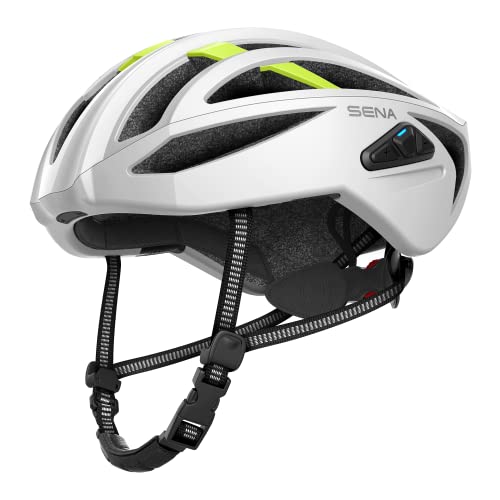
Buckle a cycling helmet every time the wheel turns, including the parking lot and the campground loop. A communicator-style road helmet is a lid with a speaker, not a costume. Fit it so it sits level, the strap snug under the jaw, the dial tight enough that a shake does not move it. Replace it after a real hit. A cracked shell is done even if you feel fine.
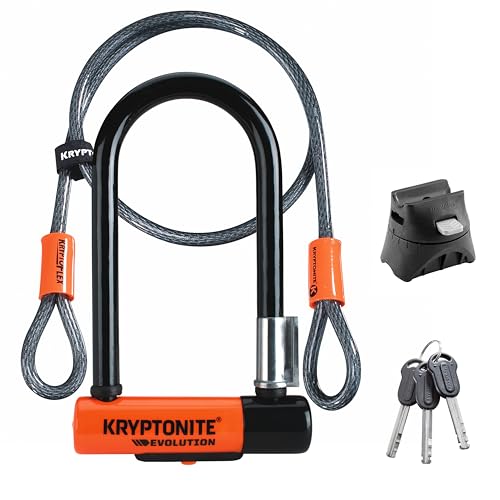
A cable stops a walk-off. It is not the lock. An e-bike is heavier and more tempting than the hybrid you used to lean at a cafe. Lock the frame and a wheel to something that does not lift. Fill the shackle. Take the battery with you. A locked frame with the pack still in it is two thefts. Aventon’s electronic hub lock and alarm are not a hardened U-lock. The lock guide is the longer version of that sentence. The everyday U that fits a rack and a bag is the Evolution Mini-7: a 13-millimeter shackle you will actually carry, plus a cable for the other wheel.
Charge with the brick that came with the bike. A matched charger is part of the UL kit. A random high-amp brick because the plug fit is how packs get hot. Store the battery inside, not in a closed car in July and not on a concrete floor in January if you can help it. If the bike will sit, a partial charge is kinder than a full pack left for a month. Do not block the only exit of an apartment with a bike that is charging. Lights after dark are a bicycle rule. The lamp on the bike is a start. It is not a reason to ride black clothing with no rear light on a county road.
The first month is brakes, tires, and the class you actually ride
Set the class to the path you are on today, not to the fastest menu the bike will allow. Throttle to 20 is Class 2. Pedal-assist to 28 is a Class 3 ride, and it is legal only where Class 3 is legal: often a road or a bike lane, often with a helmet rule and an age floor, often banned on the multi-use path you wanted. California’s rules are stricter about throttles and about speed-override gadgets. New York’s Class 3 number is 25, and the city cap is 15. Florida paths are bicycles until the city, the beach, or the sign says otherwise. The Pinellas Trail is often 20. A riverwalk can be 15. The motor cutoff is not the speed limit.
Tires at the pressure the ride needs, not the maximum printed on the sidewall because it looked official. A 20-by-3 folder wants enough air that a curb does not pinch the tube, and not so much that a boardwalk feels like a rim. Slime in the tubes from the factory is a convenience, not a promise. Carry a plug or a tube you have used once in a driveway. A 27.5-by-2.2 commuter tire is a paved-path tire. It will do packed dirt. It will not do a rock garden. Walk the feature, then decide whether you wanted a hardtail instead.
Hydraulic brakes are why these bikes stop a rider-plus-bike that is well over 250 pounds at 20 mph. They are also a shop job when they need a bleed. Do not run them down to metal and then blame the brand. Pads are a wear item, faster on a heavy bike, faster if you ride the throttle into every stop and then grab a handful. Regen on the Aventon saves some pad. It is not a panic stop. Knee pads belong on a descent you have not practiced. They do not belong as a substitute for a brake that works.
Mid-drives eat chains because the motor’s torque goes through the cassette. These two bikes are hubs, so the chain sees your legs, not the motor’s full shove. It still rusts if you commute in the wet and never wipe it. Lube it. A rusted chain becomes a cassette, then a bike you do not trust. Do not pressure-wash the motor, the bearings, or the battery connector. A low-pressure rinse and a rag are the whole wash.
Which outdoor e-bike to buy
Buy the Lectric XP4 500-watt if the commute is flat, the round trip is short, and $999 is the budget you will actually spend. Buy the XP4 750 if you have hills, a loaded rack inside the 150-pound rating, or a road where Class 3 pedal-assist is legal and you will use it. Buy the Aventon Level 4 REC if you will not fold the bike, the week is pavement, and you want rack, fenders, lights, and a throttle for the $1,999 card. Buy the Level 4 ADV, not the REC, if the hill is the point and you can spend the $2,799. Buy a cargo bike if the box or the child seats are the point. Buy a mid-drive trail bike if the singletrack is the point. Leave the Sur-Ron in its own category.
Do not buy either of these if you have to carry about 70 pounds up stairs every day. Do not buy a Class 3 unlock for a path posted at 15. Do not believe 50, 75, or 85 miles until you have read the assist mode on the test. Eco on flat ground with a light rider is how brochures get long. Turbo through stops is how packs get short. Look at the bikes on SickEBike, set the class to the sign, buckle the helmet, and lock the frame. That is the outdoor e-bike decision in 2026.
Frequently asked questions
Lectric XP4 or Aventon Level 4 REC?
Buy the XP4 if the bike has to fold into a trunk, a garage bay, or an RV. Buy the Level 4 REC if the week is a paved path and you want the rack, fenders, and lights already on the bike. Do not carry either one up stairs every day.
How much do the XP4 and the Level 4 REC cost?
Lectric’s card is $999 for the 500-watt, 500 watt-hour bike and $1,299 for the 750-watt, 840 watt-hour bike. Aventon’s Level 4 REC card listed $1,999 on 23 September 2026. The Level 4 ADV, the mid-drive, listed $2,799.
What range should I believe?
Not the Eco brochure by itself. On the XP4 500-watt pack, Electric Bike Report measured about 30.2 miles on high assist and about 55.1 in Eco. Outdoor Gear Lab got 19.1 miles with climbing. On the Level 4 REC, Electric Bike Report measured 43.8 miles in Turbo and 97 in Eco. Aventon’s own line is up to 75 miles for a rider around 165 pounds in Eco on flat pavement.
Are these Class 2 or Class 3?
Both ship as Class 2, with a throttle to 20 mph. The XP4 display can run Class 1 or Class 3, and the 750 does pedal-assist to 28 in Turbo where that is legal. The Level 4 REC can be unlocked toward Class 3 in the app. The path sign still wins.
Is a Sur-Ron Light Bee the same kind of bike?
No. The 2026 Light Bee X is an e-moto: 10 kilowatts, a claimed 50 mph, about 130 pounds. It is not Class 1, 2, or 3. A trail bike that stays a bicycle is a mid-drive you pedal.
Where do I look at the bikes, and what else should I buy?
Look at the bikes on SickEBike, then buy the complete bicycle from the maker. Add a helmet you will buckle and a U-lock through the frame and a wheel. Take the battery inside, and do not pressure-wash the motor.