
How Long Do Hand Warmers Last? Hours, Shelf Life, Safety
Written by Outdoors Magazine|
Outdoors Magazine is a participant in the Amazon Services LLC Associates Program. We may earn a commission if you buy through links on this page, at no extra cost to you. Affiliate disclosure.
Most disposable, air-activated hand warmers are rated for up to about 10 hours of heat, toe warmers about 8 hours, adhesive body warmers about 12 and the biggest warmers about 18. Those are makers' maximums. Tight boots or gloves, compression, deep cold and old or damaged packs can cut the real time short, so go by the hours on your package.
Key takeaways
- Hand warmers are rated up to about 10 hours, toe 8, body 12, large warmers 18.
- Air, compression, cold and old or torn packs decide how long one really runs.
- Unopened packs keep a few years; go by the expiration date on the bag.
- Never on bare skin or while sleeping; check labels if you have diabetes.
How long do hand warmers last? Most disposable, air-activated hand warmers are rated for up to about 10 hours of heat, toe warmers about 8, adhesive body warmers about 12 and the largest packs about 18. Those are makers' maximums. Cold, tight boots, a crushed pouch or an old, damaged pack can cut the real number well short.
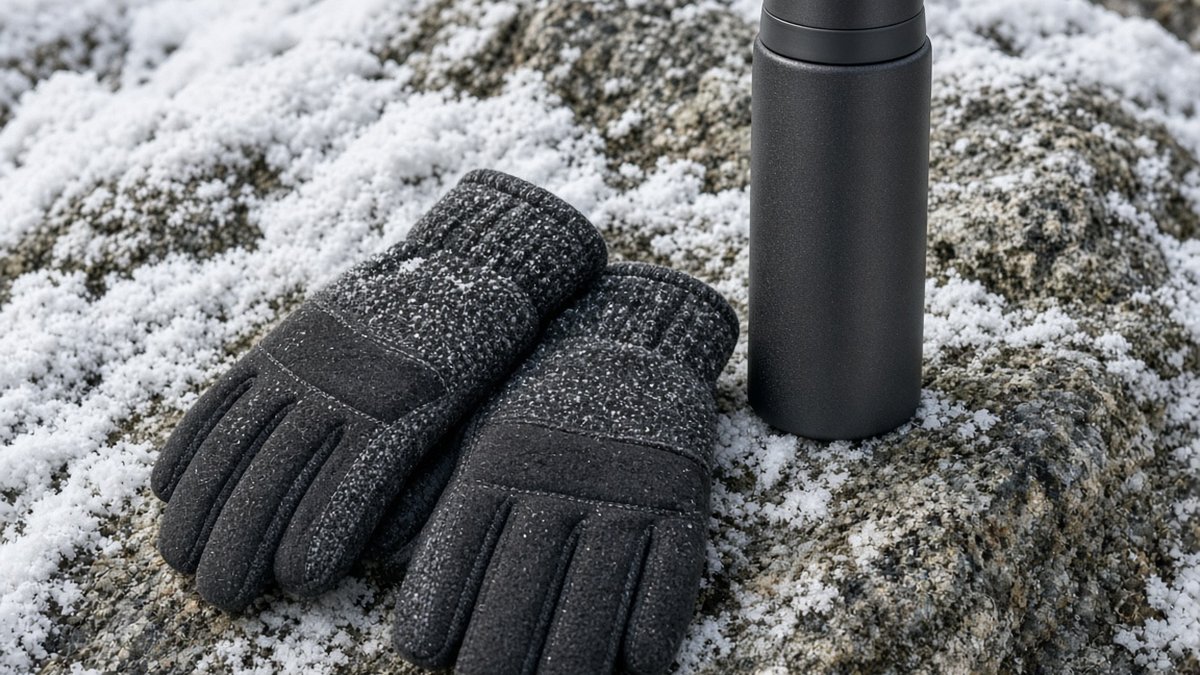
A warm pair of gloves and a hot drink still do most of the work on a cold day. AI-generated editorial image of a pair of dark knit insulated gloves and a black insulated bottle resting on a snow-dusted rock.
Air-activated warmers are about the simplest cold-weather gear there is: tear the wrapper and a small pouch makes heat on its own for most of a day. But the hours on the bag are not a promise. Each product is rated differently, and how you use, place and store a warmer all change how long it keeps working.
This guide draws on what HotHands and Grabber publish, the HotHands label warnings, and CDC guidance on frostbite and cold stress. It is general information, not medical advice. If you have diabetes, poor circulation or another condition that affects how you feel heat, read the package and talk to your doctor before using them.
How long do hand warmers last?
Standard disposable hand warmers are rated for up to about 10 hours. Toe warmers are rated for about 8 hours, adhesive body warmers for about 12, and the biggest warmers for about 18. The real figure varies by brand, product and conditions, so read the hours printed on your package.
Both big U.S. brands publish run times product by product, and the figures line up closely. HotHands lists its standard hand warmers at up to 10 hours of heat, its toe warmers at up to 8 hours, its adhesive body warmers at up to 12 hours and its Super Warmers at up to 18 hours. Grabber's spec sheets give 10 hours for its hand warmers, 8 hours for toe warmers, 12 hours for its adhesive body warmer and 18 hours for its Mega Warmer. Across its whole range HotHands says its air-activated warmers run anywhere from 1 to more than 20 hours, depending on the product.
Temperatures differ just as much, and they explain why a toe warmer is not just a small hand warmer. Here is what the makers list:
- Hand warmers: average 135°F (57°C), maximum 158°F (70°C), per Grabber's spec sheet and a HotHands retail listing; HotHands' own product page gives the same 135°F average.
- Toe warmers: average 97°F (36°C), maximum 115°F (46°C), for both HotHands and Grabber.
- Adhesive body warmers: average 127°F (53°C), maximum 145°F (63°C), for both brands.
- Grabber Mega Warmer: 140°F (60°C).
A warmer does not reach those numbers right away. HotHands' hand warmer directions say the pouch heats up in 15 to 30 minutes, and the HotHands body warmer label gives the same window. That warm-up time is part of the rated hours, so open a warmer a little before you need it rather than once your fingers are already numb.
Treat the hours on the bag as a ceiling. HotHands' body warmer label says plainly that actual duration depends on use and storage conditions. A University of Guelph science communicator interviewed by The Weather Network put typical life at roughly 8 to 10 hours, and 15 to 16 hours at best, depending on the brand.
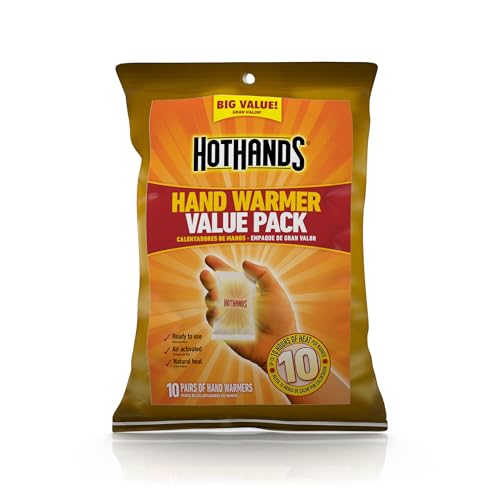
A common pick is the HotHands Hand Warmers Value Pack, 10 Pairs. HotHands describes it as disposable, air-activated warmers that give up to 10 hours of heat at an average of 135°F, made in the USA from domestic and imported materials, and says they are shelf-stable for several years from the manufacturing date. If you are weighing it against the Grabber equivalent, our HotHands vs Grabber comparison walks through the two listings line by line.
How do air-activated hand warmers work?
They rust on purpose. Fine iron powder reacts with oxygen from the air, helped along by water and salt, and that oxidation gives off heat. Activated charcoal and vermiculite are part of the mix, and the pouch fabric limits how fast air gets in, which stretches the reaction over hours.
HotHands lists the ingredients of its air-activated warmers as iron powder, water, salt, activated charcoal and vermiculite, and says the mix produces heat through a fast oxidation process once it meets air. Grabber's ingredient line for its hand, toe and body warmers reads iron, water, vermiculite, charcoal, polymer and salt. The University of Guelph's science communicator summed the process up for The Weather Network as basically rusting: oxygen gets in through tiny pores in the pouch, and the iron forms rust and gives off heat.
The iron is the fuel. Salt is usually added as a catalyst to speed the reaction. Vermiculite, a lightweight mineral, holds the water the reaction needs. Grabber explains the last piece: its pouches are designed to control how much air reaches the ingredients. That controlled airflow is what stretches the heat over hours instead of minutes.
Formulas vary: a Target listing for a HotHands 10-pair pack gives wood fiber in place of vermiculite, so check your own label. The airtight outer wrapper keeps oxygen out until you open it. According to The Weather Network's source, a warmer stops when the iron has rusted or, more likely, when the water and salt are used up.
Why do hand warmers run out early or barely get warm?
Usually because the reaction is starved of air, squeezed, or chilled. A warmer jammed in a tight glove or boot, pressed flat, used in deep cold or opened from a damaged or expired pack will run cooler and often shorter. Toe warmers are the exception: they are built for low-oxygen footwear.
Not enough air. Oxygen is the trigger, so a hand warmer buried in a tight, sealed space can stall. HotHands' directions for its hand warmers say that if the heat decreases, you should expose the warmer to air and shake it. Decathlon, which makes its own warmers, gives the same fix for foot warmers: take the warmer out of the boot and it reactivates on contact with air. Decathlon also says not to wear its foot warmers with rubber boots.
Too much compression. The HotHands body warmer label says not to use it under tight clothing or where it may be pressed or crushed, and Decathlon warns that its foot warmers should not be compressed, which is why it tells you not to put them on the instep.
Deep cold. Decathlon notes that warmers can heat less in very cold environments, recommends activating them at room temperature, around 20°C (68°F), and suggests blowing on a warmer several times to get it going at 0°C or 2,000 meters of altitude.
Shaking, or not. The directions differ by product. HotHands hand warmers tell you to shake the warmer to activate it. The HotHands adhesive body warmer label says not to knead or shake it. Follow the package for the warmer in your hand.
Toe warmers are built differently. HotHands says its toe warmers are designed for use inside footwear, where the oxygen-restricted environment lets them reach their full warming potential. They stick to the bottom of a sock and run far cooler than a hand warmer, so the two are not interchangeable.
A damaged or old pack. HotHands says not to open the outer package until you're ready to use the warmer, and not to open, puncture or tear the warmer itself. Its label also warns that expired warmers are less effective. Since air is the trigger, a wrapper with a pinhole may have been reacting slowly in storage.
How long do unopened hand warmers last?
Unopened warmers generally keep for a few years, but makers word it differently. Grabber advertises a 2 to 3 year shelf life, HotHands lists up to 4 years on some packs, and HotHands' label says expired warmers are less effective. Check the expiration date printed on the package.
Shelf life is not a single industry number. Grabber's site lists a 2 to 3 year shelf life. HotHands says its 10-pair hand warmer value pack is shelf-stable for several years from the manufacturing date, its toe warmer pocket pack page gives up to 4 years, and a seller answer on Target's HotHands listing says 2 to 3 years, with the exact expiration date printed on the packaging. The safe approach is to go by the date on the bag.
Storage matters as much as age. HotHands tells buyers to store warmers in a cool, dry place away from direct sunlight and excessive heat, and its body warmer label adds low humidity to the list of things to avoid. A glovebox that bakes in the summer sun is not ideal, which is worth remembering if you keep warmers in a winter car emergency kit. Use the oldest packs first and replace any with torn wrappers or past dates.
Can you save a hand warmer for later?
Often, yes. Sealing a running warmer in an airtight bag with the air pressed out starves it of oxygen and pauses the reaction, and opening the bag restarts it. It doesn't add heat, it just spreads the warmer's fixed supply over more time. Grabber still describes its warmers as one-time-use products.
The Appalachian Mountain Club explains the trick in simple terms. Because the iron needs a steady supply of oxygen, sealing a warmer in a zip-top bag stops the reaction once the little bit of air left in the bag is used up, and the warmer stays dormant until it is exposed to air again. The AMC suggests squeezing out as much air as you can and using thicker freezer bags, since even a small hole can let in enough oxygen to keep it going. It also points out that bagging does not create extra heat; it only lets you use the same energy over a longer stretch.
At least one maker builds this into the product. Ignik says its warmers come in a resealable pouch and that, if you come in from the cold while they are still working, you can store opened warmers in that pouch and reuse them up to 72 hours later. That 72-hour figure is Ignik's, for its own packaging; other brands do not publish one. Grabber's FAQ, for its part, says its warmers are designed for one-time use and then should go in the trash, and that they are not reusable or rechargeable.
One thing not to do: microwave or otherwise heat a disposable warmer to recharge it. The HotHands body warmer label says not to use it with other heat-producing or microwavable products.
Are hand warmers safe to put on skin or use while sleeping?
No to both, according to the labels. HotHands and Grabber warmers are meant to go over clothing or inside a glove, not on bare skin. The HotHands body warmer label says not to use one while sleeping, on children or on anyone with reduced sensation, and to ask a doctor first if you have conditions like diabetes or poor circulation.
HotHands explains its skin warning directly in its FAQ: some people, especially young children, people with diabetes and the elderly, may have reduced sensation to heat. Grabber lists a hand warmer's maximum at 158°F, and skin that cannot sense heat well gives no warning. Grabber tells buyers to read each package's instructions and warnings, because they vary by product.
The HotHands adhesive body warmer label, published on the HotHands site, is the most complete list. It says to remove and discard the warmer at once if it feels too hot, and not to use it:
- while sleeping;
- directly on the skin;
- under tight clothing or where it may be pressed or crushed;
- to relieve pain or as a medical treatment;
- with other heat-producing or microwavable products;
- on children or people who cannot feel heat well.
The same label says people with diabetes, sensitive skin, arthritis, circulatory problems, nerve damage, limited mobility or paralysis should not use the warmer unless a doctor says so, and it lists open wounds, scars, bruises, frostbite, swelling and implants as reasons to ask first, too. It also asks you to check your skin before, during and after use, calls for supervision for elderly people and children, and says to contact poison control if the contents, which include iron powder, are swallowed. Keep warmers away from small children and pets.
This matters for frostbite in particular. The CDC warns that frostbite causes numbness, and that you should not use a heating pad, heat lamp or the heat of a stove, fireplace or radiator to warm frostbitten skin, because numb areas can burn easily. A warmer is a prevention tool for cold hands, not a treatment for frozen ones. If you see white or grayish-yellow skin, skin that feels unusually firm or waxy, or numbness, the CDC's advice is to get out of the cold and seek medical care.
What about reusable and rechargeable hand warmers?
Reusable click warmers contain a supersaturated sodium acetate solution. Bending a small metal piece inside starts crystallization, which releases heat, and BBC Science Focus says the warmer reaches about 54°C (about 129°F). Boiling the pack melts the crystals and resets it. Follow your warmer's own instructions for how long to boil it.
The appeal is reuse instead of trash. The catch is the recharge: you need a pot of boiling water, which suits a cabin or base camp better than a long trip. Check the maker's stated heat time, since the chemistry and the numbers differ.
Rechargeable electric warmers use a battery and a heating element. They cut down on trash, but they are electronics, and lithium-ion batteries can fail. HotHands has recalled its own Rechargeable Hand Warmer, model H163650, because the battery may overheat and ignite. The company tells owners to stop using it, file a claim, and take it to a household hazardous waste center that accepts recalled lithium-ion batteries rather than putting it in the trash. If you own any electric warmer, check it against current recalls and follow the maker's charging instructions.
Making warmers part of a cold-weather plan
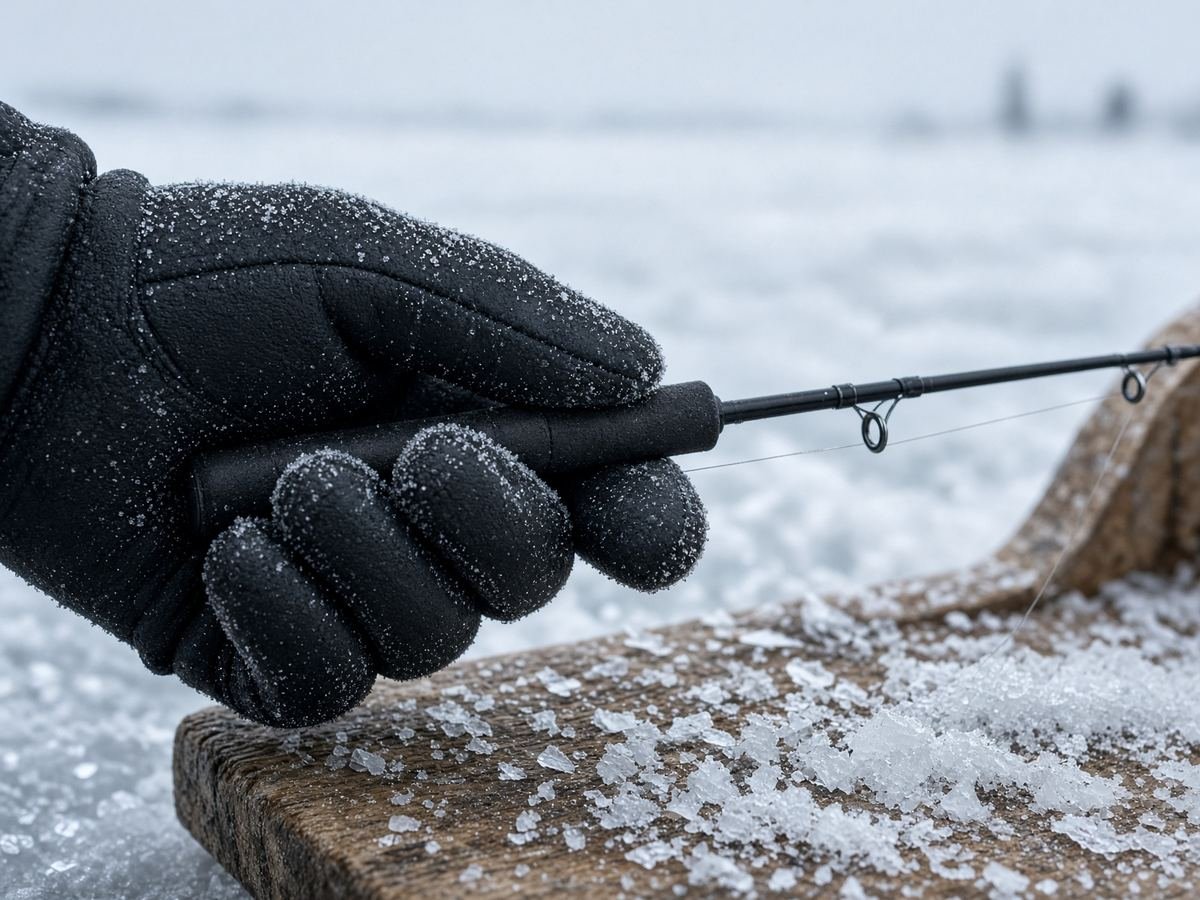
Warmers work best as a backup to good clothing, not a replacement for it. The CDC's frostbite prevention advice centers on layers: a hat, a scarf or knit mask, gloves or mittens, a water-resistant coat and boots, and several loose layers, with vulnerable areas kept covered and dry. NIOSH, the federal workplace safety agency, recommends that outdoor workers wear several layers of loose clothing, protect the ears, face, hands and feet, carry extra socks, gloves and a hat, take breaks in warm places, and keep chemical hot packs in the first-aid kit. Our guide to preventing frostbite in the mountains covers the rest of the system, and if you spend long hours on the hard water, our ice fishing gloves guide covers gloves that leave room for a pouch.
A few habits help a warmer last its full rated time. Open it a little early, somewhere sheltered. Put hand warmers in a pocket or mitten with a little room for air, and stick toe warmers to the outside of a sock in footwear that isn't skin-tight. Check your skin now and then, and remove any warmer that feels too hot. Bag a half-spent warmer when you head inside.
Disposal is simple. HotHands says to dispose of used warmers with regular garbage, and Grabber's FAQ says the same: put spent warmers in your everyday household trash. Grabber says its warmers are TSA-approved for in-flight use; HotHands says travelers should check local guidelines before flying.
Sources: HotHands: FAQ, HotHands: Hand Warmers Value Pack, 10 Pairs, HotHands: Toe Warmers Value Pack, HotHands: Body Warmers Bulk Pack, HotHands: Body Warmer label (Spanish), HotHands: Super Warmers, HotHands: Rechargeable Hand Warmer recall notice, Grabber: Hand Warmers, Grabber: Toe Warmers, Grabber: Adhesive Body Warmer, Grabber: Mega Warmer, Grabber: Contact & FAQs, Grabber: Warmer Tech, Target: HotHands 10-pair hand warmers listing, Appalachian Mountain Club: One Simple Trick Makes Hand Warmers Last a Lot Longer, CDC: Preventing Frostbite, CDC/NIOSH: Cold Stress, The Weather Network: How hand warmers work, Ignik: How do I re-use my air-activated warmers?, Decathlon: Feet warmers, Wikipedia: Hand warmer, BBC Science Focus: How do re-usable hand warmers work?; Amazon B00D7H9LIA.
Frequently asked questions
How long do hand warmers last?
Standard disposable hand warmers are rated for up to about 10 hours of heat, toe warmers for about 8, adhesive body warmers for about 12 and the largest warmers for about 18. Those are makers' maximums, and real run time depends on the product, how you use it and how it was stored.
How do air-activated hand warmers work?
Air-activated warmers contain iron powder that oxidizes, or rusts, when it meets oxygen, with water, salt, activated charcoal and vermiculite in the mix. The reaction gives off heat, and the pouch fabric limits how fast air gets in so the heat lasts for hours.
Why do hand warmers run out early or barely get warm?
Warmers run short or cool when they don't get enough air, are pressed flat under tight clothing, are used in deep cold, or come from a damaged or expired pack. HotHands says to expose a fading hand warmer to air and shake it, while toe warmers are designed to work in low-oxygen footwear.
How long do unopened hand warmers last?
Unopened warmers generally keep for a few years: Grabber advertises a 2 to 3 year shelf life and HotHands lists up to 4 years on some packs. Store them somewhere cool and dry, away from sun and heat, and go by the expiration date printed on the package.
Can you save a hand warmer for later?
Sealing a running warmer in an airtight zip-top bag with the air squeezed out starves it of oxygen and pauses the reaction, and opening the bag restarts it. This only spreads the warmer's fixed heat over more time, and Grabber still describes its warmers as one-time-use products.
Are hand warmers safe to put on skin or use while sleeping?
No. HotHands and Grabber warmers should not go directly on bare skin, and the HotHands label says not to use one while sleeping, on children or on people who can't feel heat well. Anyone with diabetes, poor circulation or similar conditions should read the label and ask a doctor before using them.