
Fortress FX-7 vs Lewmar 57902
Written by John Wren|
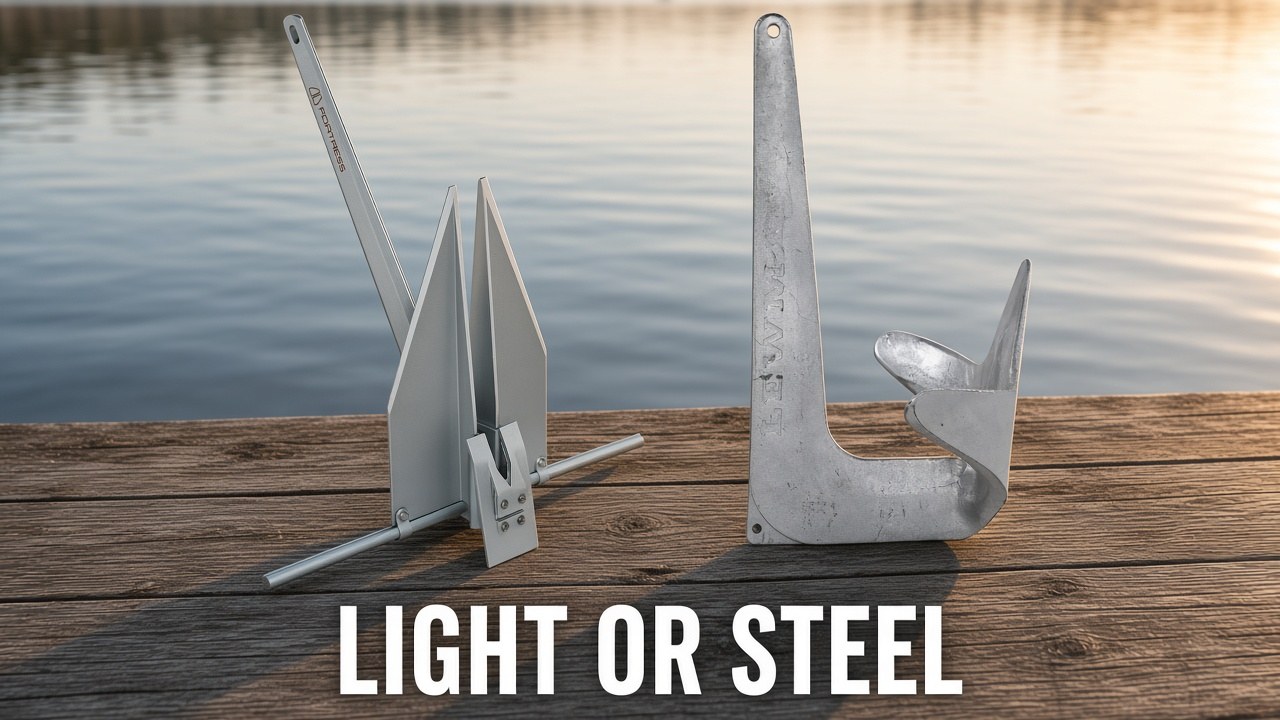
Choose Fortress FX-7, the 4-pound model, when you want the bullets that say an aluminum-magnesium alloy, a soft-bottom hold, and an anchor that comes apart. The material cell says Plastic. Look at the flukes. Choose Lewmar part 57902 when you want the 4.4-pound one-piece galvanized claw and the bow-roller bullet. Ignore the 1-by-1-by-1-inch dimension cell. Neither card prints a boat length.
Key takeaways
- FX-7 is the 4-pound Fortress. The bullets say alloy. The material cell says Plastic.
- The card prints no UPC and no boat length.
- Lewmar 57902 is the 4.4-pound galvanized claw, not a 10-kilogram test piece.
- The Lewmar dimension cell says 1 by 1 by 1 inch. The package cell does not.
Buy the Fortress FX-7, model name Fortress FX-7 4lb Anchor, part FX-7, ASIN B001TXQ0ME, when you want the light anchor whose item-weight cell says 4 pounds and whose bullets say an aluminum-magnesium alloy that comes apart for storage. Buy the Lewmar claw, part 57902, model name 4.4 lb. Galvanized Steel Claw Anchor, ASIN B000N9ZJ7M, when you want the one-piece galvanized steel claw whose item-weight cell says 4.4 pounds and whose bullets name a bow roller. Neither card prints a boat length. Neither card prints a UPC. Match the part number, then weigh the anchor you received.
Short version. A fender keeps the hull off the dock. A bilge pump moves water that is already inside. Vinyl protectant is a bottle, not a rode. A rail mount holds a rod, not the boat. The anchor is the piece that has to set in the bottom you actually have.
The Fortress card that stays on B001TXQ0ME titles the model Fortress FX-7 4lb Anchor. The part number is FX-7. The item weight says 4 pounds. The product dimensions say 25 by 5 by 3 inches. The package dimensions say 25.3 by 4.9 by 2.3 inches. The package weight says 2.16 kilograms. Four pounds is about 1.8 kilograms, so a 2.16-kilogram package is a carton with an anchor in it, not a second weight for the fluke. The material cell says Plastic. The bullets say aluminum-magnesium alloy, rustproof, and able to come apart for storage. Plastic and an aluminum-magnesium alloy are not the same sentence. The color cell says No Color. The size cell says One Size. The card says ship to the United States only. The detail block does not print a UPC. Do not borrow a barcode from a different Fortress size.
The Fortress bullets also say increased holding in soft bottoms. That is a mud-and-sand claim, not a rock claim, and it is not a number of pounds of holding power. The card does not print a holding-power multiple. Do not invent one. A disassembled anchor is only an anchor after you put the pin back. The 25-inch dimension is the long axis of the assembled piece or the carton, depending on which cell you trust. The package is 25.3 inches, which is close to the product cell and not a folded cube. If the box is a flat 25-inch mailer, the flukes are not standing up in it.
| Job | Fortress FX-7 | Lewmar 57902 | Buy |
|---|---|---|---|
| A small anchor you can lift | Item weight 4 lb. Package 2.16 kg. | Item weight 4.4 lb. Package 2.05 kg. | FX-7 if the 4-pound cell is the limit. Weigh both. |
| What it is made of | Bullets: aluminum-magnesium, rustproof. Cell: Plastic. | Bullets: heat-treated galvanized steel. Cell: Other. Color: Galvanized Steel. | Steel claw if you want the galvanized sentence. Alloy if you want the Fortress bullets. |
| How it stores | Bullets say it disassembles. | Bullets say bow-roller storage. Package cell is 12.6 by 8.9 by 8.82 inches. | FX-7 for a flat kit. 57902 if a roller is the locker. |
| The bottom | Bullet: increased holding in soft bottoms. | Bullet: a claw that sets and resets. No bottom type named. | FX-7 when the bulletin is mud. Do not invent a rock rating. |
| The reorder | Part FX-7. No UPC on the card. | Part 57902. No UPC on the card. Size cell: 4.4 lb. | Photograph the part, not a bigger cousin. |
Fortress FX-7, ASIN B001TXQ0ME. Lewmar part 57902, ASIN B000N9ZJ7M. A 10-kilogram Lewmar claw is a different anchor. A larger Fortress is a different part than FX-7.
Who should buy the FX-7, and who should buy the 57902?
Buy the FX-7 if the boat is small, the bottom is soft, and you want an anchor the bullets say you can take apart. You are accepting a material cell that says Plastic while the bullets say alloy. Open the box. If the flukes are metal, the bullets were the honest line. If they are plastic, you did not get the anchor the bullets described, and the cell was a warning. The 4-pound item weight is the number to put on a scale. The 2.16-kilogram package weight includes the carton. The One Size cell is not a boat length. The card never says which hull this 4-pound anchor is for. That silence is the point. A chart in a different listing is not this card.
Buy part 57902 if you want a one-piece galvanized steel claw at 4.4 pounds, with a bullet that names bow-roller storage and a set-and-reset claw. The dimension cell says 1 by 1 by 1 inch. That is not an anchor. Ignore it. The package cell, 12.6 by 8.9 by 8.82 inches, is a box you can believe until you measure it. The package weight of 2.05 kilograms is close to 4.4 pounds and can include the carton, so it does not prove the item-weight cell. Weigh the steel. The material cell says Other. The color cell says Galvanized Steel, which agrees with the bullets better than Other does. The style cell says Modern. That is not a spec. The included-components line says Anchor. There is no chain and no rode in that line.
Do not buy the FX-7 because a video of a heavier claw looked strong, and do not buy 57902 because a Fortress chart on another site named a boat length. This card does not print a boat length. A 13-to-16-foot sentence from a different listing is not part 57902. Do not buy either anchor as a mooring. A lunch hook and a permanent mooring are different loads.
What the Fortress FX-7 card actually says
The useful sentences are the alloy, the rustproof line, the soft-bottom holding line, and the disassembly line. The 4-pound weight and the 25-by-5-by-3 dimension are the cells that describe a thing you can hold. No Color and One Size are warehouse fields. Ship to the United States only is a shipping rule, not a performance rule. Plastic in the material cell is the contradiction you have to resolve with your eyes. Aluminum-magnesium alloy is light and it bends differently than steel. A fluke that bends back can be the design. A fluke that cracks is a return. The card does not print a bend-back angle. Do not invent one.
Taking it apart is the storage feature and the assembly risk. A pin that is not seated is an anchor that opens on the way down. Count the pieces before you leave the dock, including the stock, the flukes, and the fastener the exploded view implies. The card's included line is not a parts list in the block I am using. If a piece is missing, the 4-pound cell will also be light. A rustproof claim is about the alloy, not about the shackle you add. A steel shackle still rusts. The card does not include a shackle in a sentence I can quote as included hardware.
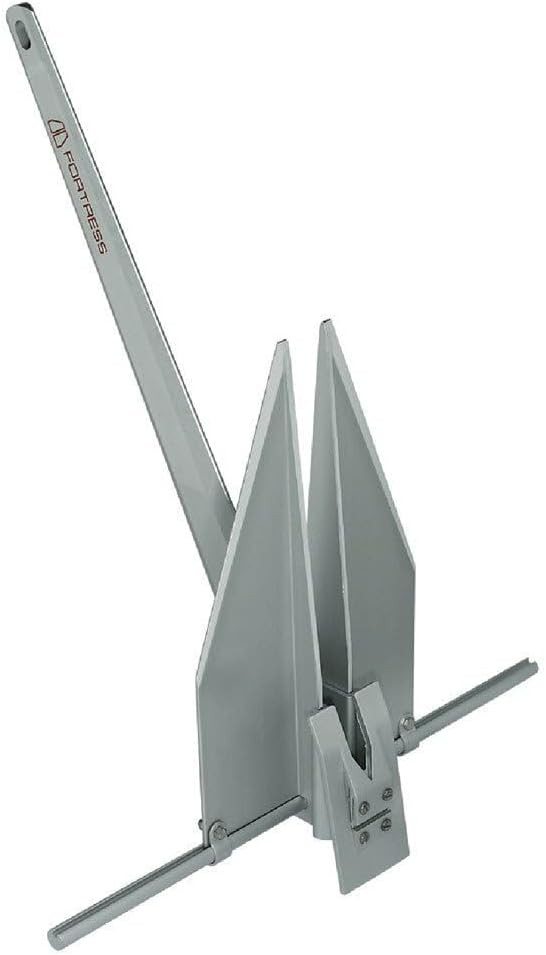
Do: match part FX-7 and the 4-pound model name. Don't: order a larger Fortress and call it this card because the brand mark looks the same. Don't: store it assembled if the reason you bought it was the flat kit, and don't store it apart if you will not have time to pin it at the ramp. Don't: read Plastic as a joke and also don't fish a plastic toy if that is what arrives. Don't: add a boat-length claim the card refused to print.
What the Lewmar 57902 card actually says
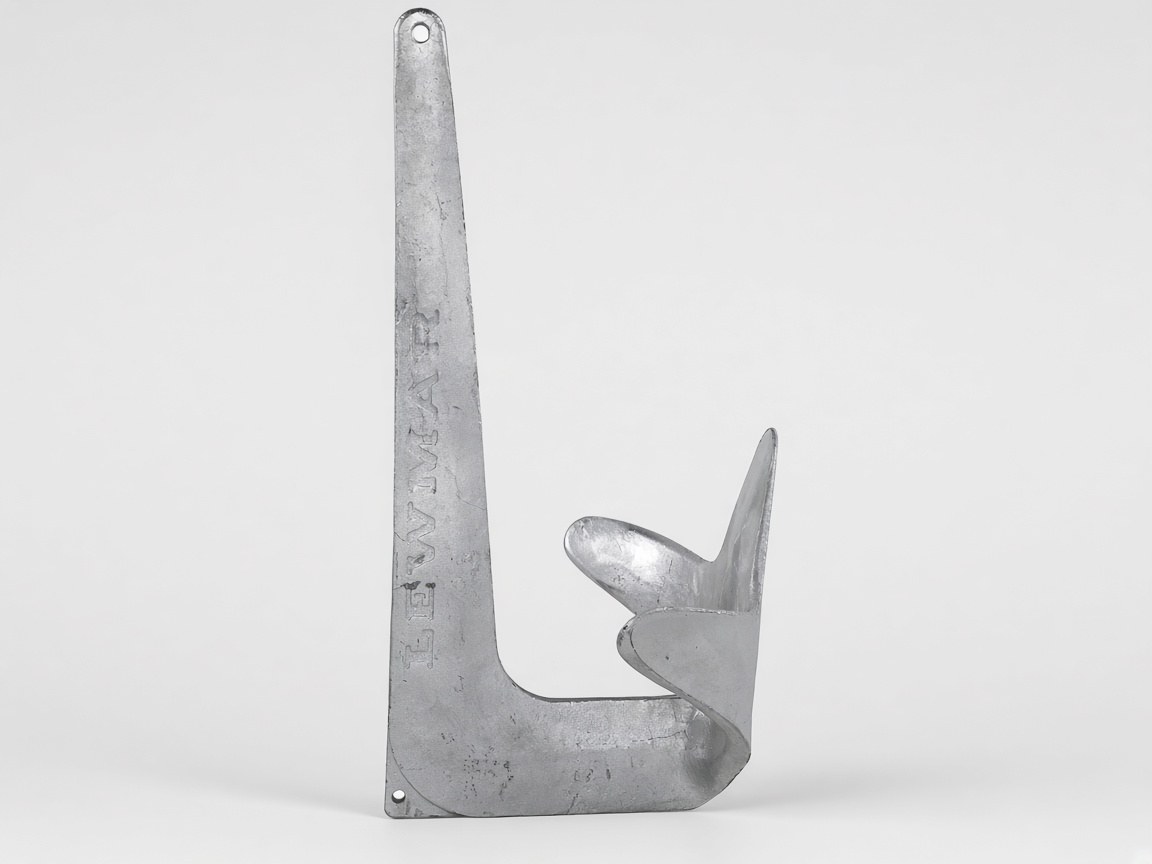
The bullets sell high-strength one-piece heat-treated steel, a galvanized finish, a bruce-style claw that sets and resets, and storage on a bow roller. They also say to choose from a range. The range is the family. Part 57902 is the 4.4-pound member the model name names. A heavier claw in that range is a different part, with a different package and a different job. The card does not say this 4.4-pound piece fits every roller. A roller sized for a 10-kilogram claw will swallow this one or fail to capture it. Look at the roller you own.
The 1-by-1-by-1 dimension cell is the failure. An anchor that ships in a 12-inch package is not a 1-inch cube. The size cell that says 4.4 lb agrees with the model name and the item weight. Use that. Galvanized steel is a coating over steel, not a metal that cannot rust. A chip in the coating is where the orange starts. The card does not print a re-galvanizing schedule. Rinse it. The style cell's Modern is noise. The material cell's Other is a blank the color cell already filled with Galvanized Steel.
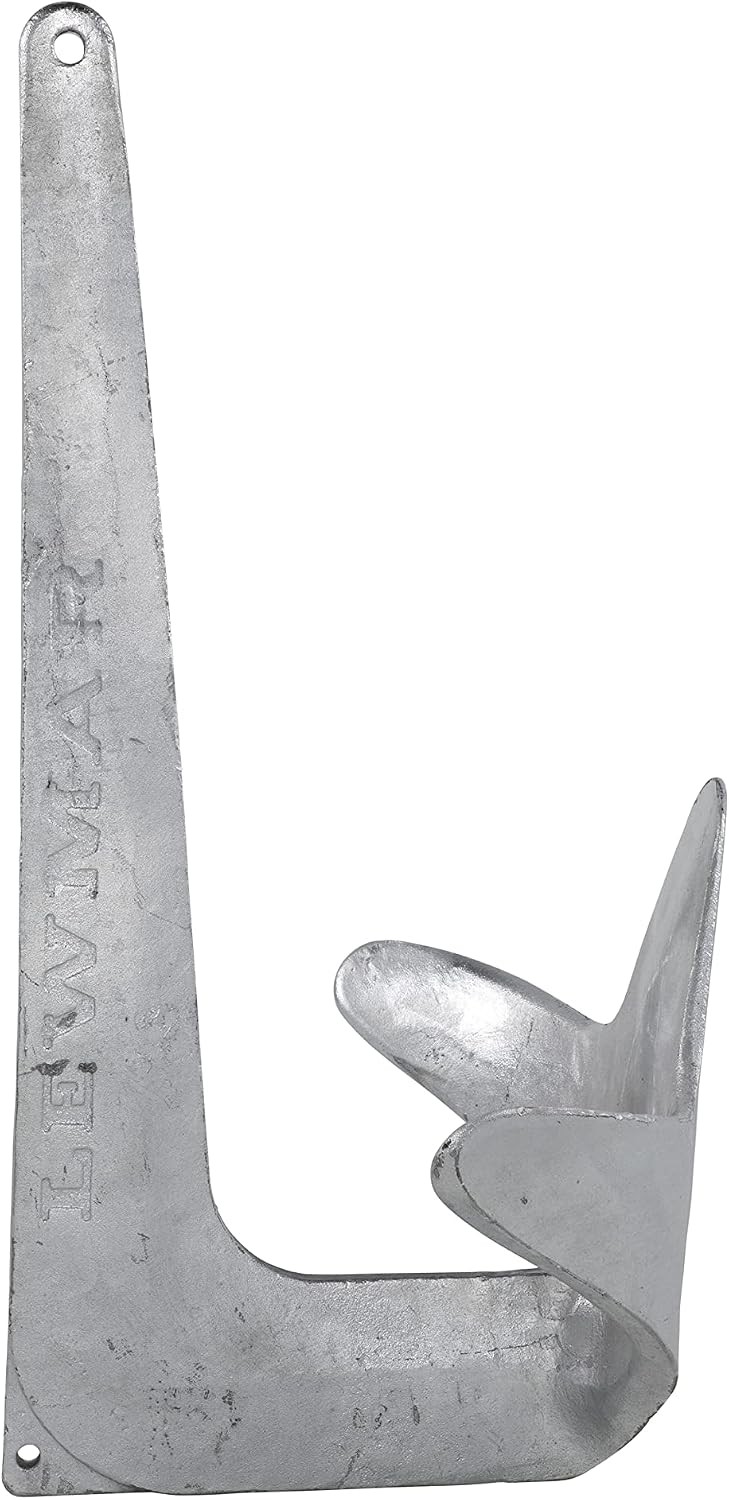
Do: match 57902 and 4.4 pounds. Don't: buy the parent listing's heavier variation and expect this package. Don't: believe the 1-inch dimension. Don't: expect chain in the box. The included line says Anchor. A claw without chain can skate. The card does not tell you how much chain to add. That is your rode, and it is not in the carton.
How to use a 4-pound hook without pretending it is a mooring
Scope is the part neither card prints. A short rode makes a light anchor stand up and drag. A long rode makes the same anchor lie down. The FX-7's soft-bottom bullet assumes a pull that is mostly horizontal. The Lewmar's set-and-reset bullet assumes the claw can roll and bite again. Neither sentence includes a scope ratio. If you need a number, get it from a seamanship book, not from these two detail blocks. Mark the rode. A mark you can see from the bow is the only way to know you paid out what you meant.
Set the hook under power or by hand with a pull that is steady, then watch a range ashore. A GPS icon that wanders is not a set. Two trees that stay stacked are a set. If the range walks, you are dragging, and a bigger cousin of the same brand is a different purchase. Do not add a second 4-pound anchor on the same rode and call it a larger model. Two small hooks are a tangle.
The FX-7 wants the pin checked every time you assemble it. The 57902 wants the roller checked so the claw cannot jump the bow on a wake. A galvanized claw that bangs the gelcoat is a finish problem the vinyl bottle will not fix. A pad on the roller is not in either box.
That clip is a Lewmar claw test of a 10-kilogram anchor. It is not part 57902, and it is not a Fortress FX-7. Ten kilograms is roughly 22 pounds. The anchor in the video is several times the 4.4-pound card. Watch it to see how a claw sets and drags. Do not copy its holding result onto either box in this comparison. I did not find a public clip that measures the FX-7 itself, so none is embedded for that model.
What actually fails on these two cards
The FX-7 reorder fails when the part is a larger Fortress and the box is heavier than 4 pounds of anchor. It fails when you needed a UPC and the card has none. It fails when you believed the material cell and expected plastic, or when you ignored the cell and a bad shipment really is plastic. It fails when you needed a boat-length chart and this listing refused to print one. It fails when you leave a pin in the toolbox.
The 57902 reorder fails when the claw is a 10-kilogram or other family member and you only read Lewmar. It fails when you treat the 1-by-1-by-1 cell as the size and then wonder why the package is a foot long. It fails when you expect the card to name your hull length. It fails when the galvanizing is chipped and you wanted stainless. This card says galvanized steel. It does not say stainless. It fails when the roller on your bow was built for a different pound class and the claw will not seat.
The shared failure is scope and rode. Neither included line contains chain. A pretty 4-pound hook on 6 feet of line is a paperweight. The other shared failure is copying a test of a different weight. The video is a heavier claw. The FX-7 is 4 pounds on its own card. They do not share a holding number.
What this comparison is not
It is not a rode, a shackle, a chain, or a windlass. It is not a mooring. It is not a fender and it is not a pump. It is not a promise that every soft bottom will hold an FX-7, and it is not a promise that every claw will reset. It is not a warranty. These cards do not print a warranty term in the bullets I am using.
It is not a reason to skip the scale. Four pounds and 4.4 pounds are close enough that a sloppy listing could swap them. The part numbers are not close. FX-7 is the alloy kit. 57902 is the 4.4-pound galvanized claw. Read the part before you read the brand.
So which anchor should you buy?
Buy the Fortress FX-7, part FX-7, when you want the 4-pound card, the soft-bottom bullet, and an anchor the bullets say you can take apart, and you will check that the metal matches the alloy sentence rather than the Plastic cell. Buy the Lewmar, part 57902, when you want the 4.4-pound one-piece galvanized claw and a bow-roller bullet, and you will ignore the 1-inch dimension cell. Neither card tells you the boat length. Bring your own rode. Do not treat a 10-kilogram claw test as a measurement of either box.
Frequently asked questions
FX-7 or Lewmar 57902 for a small boat?
FX-7 if you want the 4-pound card, the soft-bottom bullet, and an anchor the bullets say you can take apart. 57902 if you want the 4.4-pound galvanized claw and a bow-roller bullet. Neither card names your hull length.
Why does the Fortress material cell say Plastic?
The bullets say aluminum-magnesium alloy. The material cell says Plastic. Open the box. Metal means the bullets won. Plastic means you did not get the anchor the bullets described.
Is the 1-inch Lewmar cell the anchor?
No. Part 57902's item weight says 4.4 pounds and the package cell is about 12.6 by 8.9 by 8.82 inches. A 1-by-1-by-1 dimension is not that anchor.
Does either box include chain?
No. The Lewmar included line says Anchor. The Fortress card does not list a rode. You bring chain and line. A short rode will drag a light hook.
Which claw is in the video?
The embedded clip is a Lewmar claw test of a 10-kilogram anchor. That is not part 57902 and it is not an FX-7. Do not copy its holding result onto these boxes.
What do you match at reorder?
Fortress part FX-7 and the 4-pound model name. Lewmar part 57902 and 4.4 pounds. Neither detail block prints a UPC. A larger Fortress and a heavier claw are different parts.