
Best Wall Tents (2026)
Written by John Wren|
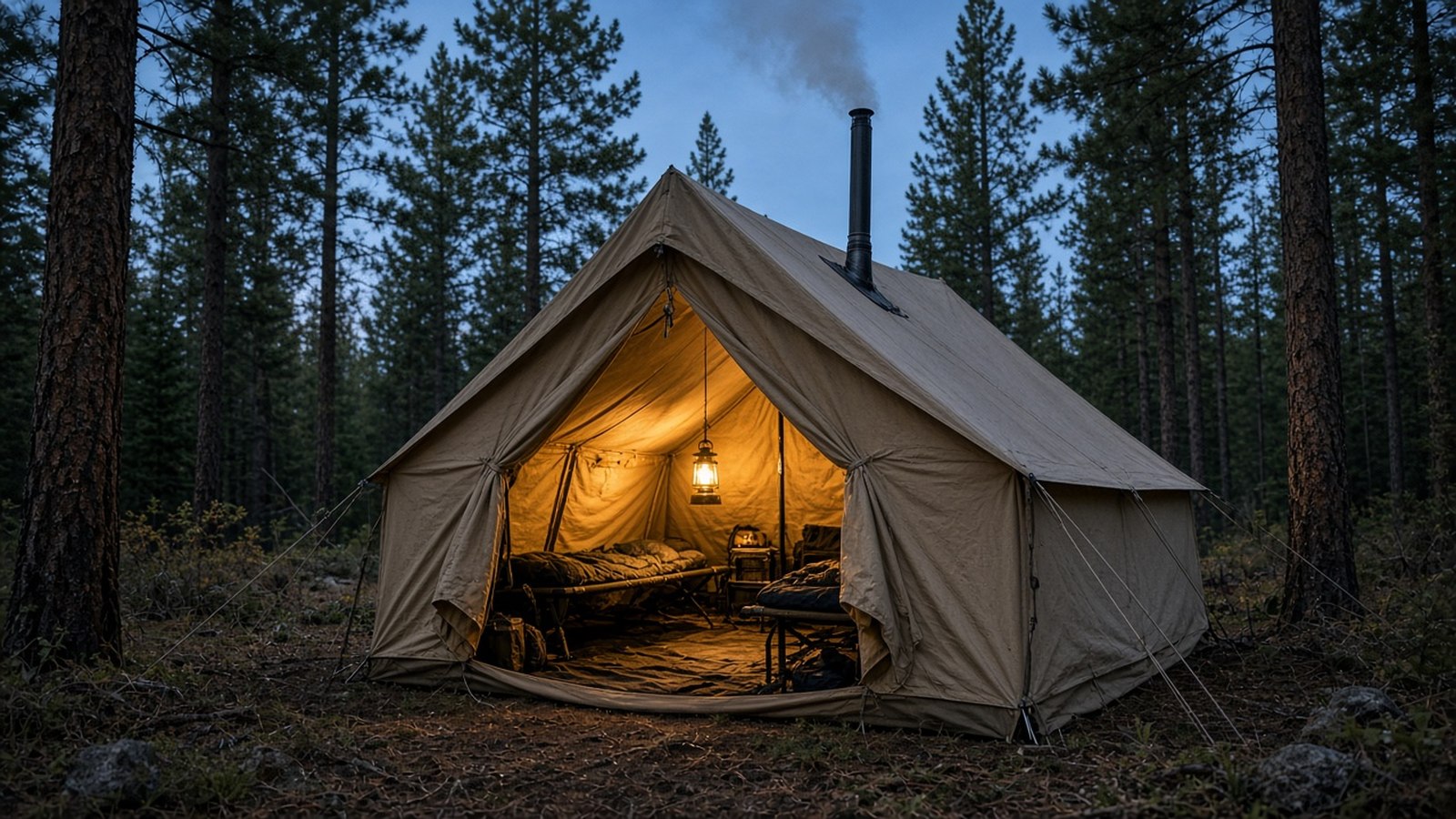
Buy a Kodiak Canvas Flex-Bow Deluxe for fast one-person setup and a proven design. Buy a WHITEDUCK Alpha canvas tent if you want true vertical walls and maximum floor space for the footprint. Confirm stove-jack sizing against your actual stove.
Key takeaways
- Kodiak Flex-Bow: fast, proven, one-person setup.
- WHITEDUCK Alpha: true vertical walls, more usable floor space.
- Confirm stove-jack diameter matches your stove before buying.
- Dry canvas completely before storage to avoid mildew.
A wall tent is canvas with straight vertical walls and a steep roof, built for a hunt camp, a base camp, or a family that wants to stand up and run a wood stove without pretending a backpacking dome tent can do that job. Cheap "wall tent" listings are often just steep-sided dome tents with a canvas-look print. In 2026 the honest on-ramp is still a Kodiak Canvas Flex-Bow if you want the classic one-person-setup spring-steel frame, or a WHITEDUCK Alpha canvas tent if you want a true straight-wall design sized for a bigger group and a wood stove.
Short version. Buy the Kodiak Canvas Flex-Bow Deluxe if you want fast, one-person setup and a proven, widely serviced design for hunt camp or family camping. Buy a WHITEDUCK Alpha canvas tent in a smaller size if you want a true vertical-wall stove-jack tent for two to four people, or the larger size if you are outfitting a base camp for a group. Pair with a ground tarp underneath and check your stove's actual footprint against the tent's stove-jack placement before you buy. Check live prices.
This page covers real canvas wall tents, not spring-bar backpacking tents dressed up in canvas-print polyester. A wall tent is heavy — 60 to 100-plus pounds packed — and it is not a one-trip purchase. Buy the size and frame style that matches how you actually camp, because canvas tents are a multi-season, multi-year investment when cared for properly.
Who actually needs a wall tent?
A wall tent earns its weight and price when you need stand-up interior space for multiple days or weeks, a stove for real heat in cold-weather hunting or winter camping, and enough floor space for cots, gear storage, and more than one or two people to move around without stepping on each other. If your trips are single-night backpacking hikes where every pound matters, a wall tent is the wrong tool entirely — this is base-camp and vehicle-accessible gear, not something you carry three miles up a trail.
Hunt camps, family car camping for a week or more, and semi-permanent outfitter or glamping setups are the classic wall-tent use cases. The steep vertical walls that give the tent its name mean far more usable floor space than a similarly-sized dome or cabin tent, where sloped walls eat into livable area near the edges.
Kodiak Canvas Flex-Bow — the fast, proven setup
Kodiak's Flex-Bow line uses spring-steel bow rods and steel tube poles rather than the fully rigid frame of a traditional wall tent, which trades a small amount of true straight-wall design for genuinely fast, one-person setup in a few minutes once staked out. The 10x14 Deluxe sleeps up to eight and includes a stove jack, multiple windows, and a gear loft, built from Hydra-Shield cotton duck canvas that is watertight without needing a separate rain fly.

This is the tent to buy if setup speed and a widely available, well-supported design matter more to you than perfectly vertical walls at every point. It handles snow load and wind well for a spring-bow design, and replacement parts and accessories are easy to find because the line has been popular for years. If you want one dependable tent for hunt camp season after season without fussing over a more complex frame, this is the safe, well-tested choice.
WHITEDUCK Alpha — true straight walls for a bigger group
The WHITEDUCK Alpha line uses a rigid aluminum frame that produces genuinely vertical walls and a 6-plus-foot ceiling height with more usable edge-to-edge floor space than a spring-bow design of the same footprint. It comes in sizes from a compact 8x10 for two to four people up through 16x20 and larger for a full base camp, with a stove jack, multiple large windows, and a free-floating PVC floor that keeps ground moisture out.


Setup takes longer than a Flex-Bow — typically two people and twenty to thirty minutes versus one person in under ten — but you get a tent that more closely matches the traditional outfitter wall-tent silhouette people picture, with maximum usable interior volume for the footprint. The smaller 8x10 works well for a couple or a small family; the 16x20 is genuinely base-camp scale, sized for cots, a stove, and gear storage for a group hunt or an extended stay.
Stove jacks, ventilation, and real cold-weather use
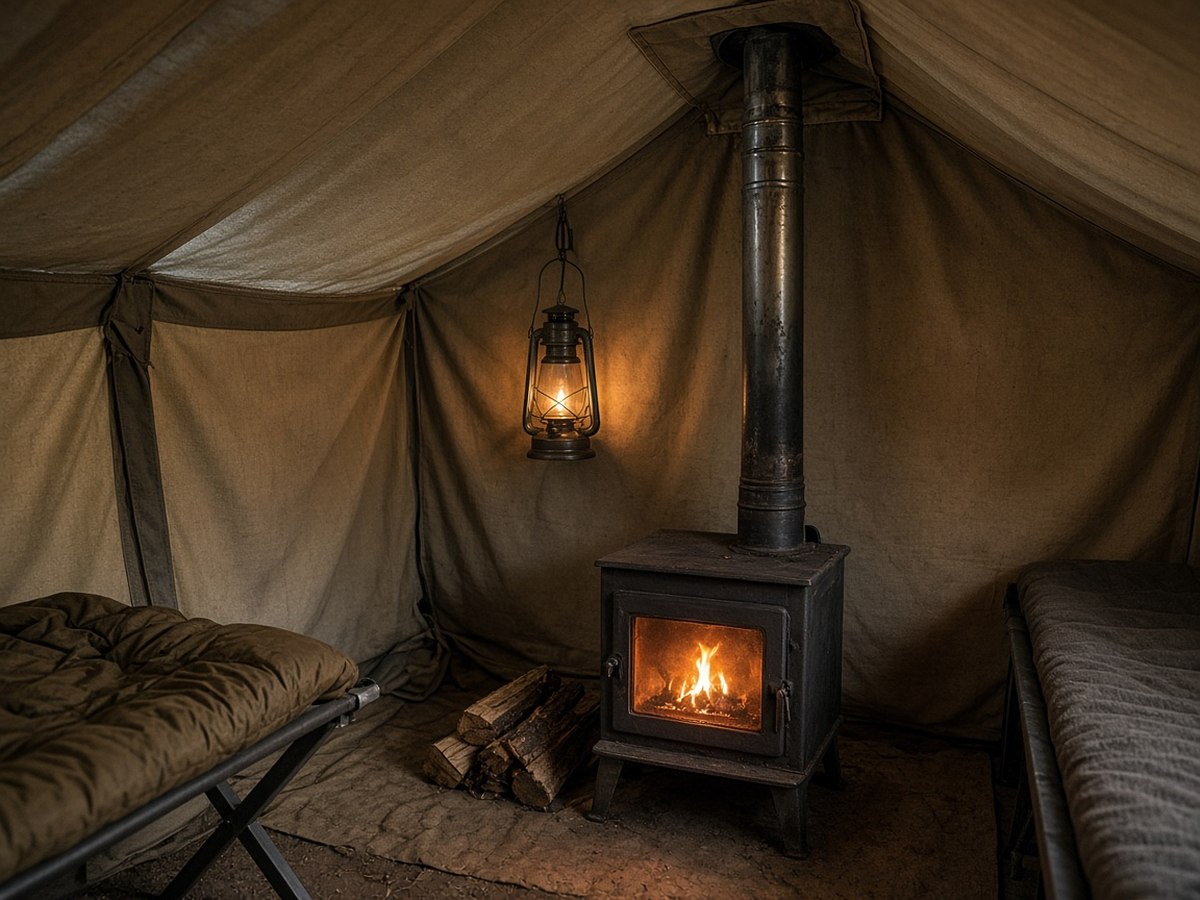
A stove jack is the feature that turns a wall tent from a big canvas box into a genuine cold-weather shelter. Confirm the stove jack's diameter and placement against the specific stove you plan to run before you buy — a jack sized for a small titanium backpacking stove pipe will not fit a heavier cast-iron camp stove's flue, and retrofitting a jack after purchase is a real project with a hot-work risk if done poorly.
Ventilation matters as much as heat. Both the Kodiak and WHITEDUCK lines include roof vents and multiple windows with no-see-um mesh, which is essential for managing condensation when you are running a stove and multiple people are breathing and cooking inside overnight. Crack a window or vent even in cold weather; a sealed-up canvas tent with a stove running and no airflow is a carbon monoxide risk that no amount of canvas quality solves.
Floor, footprint, and moisture management
Most wall tents ship with either an integrated floor or a separate groundsheet with a sod cloth that seals the wall-to-ground seam against wind-driven rain and crawling insects. Regardless of the included floor, a separate ground tarp cut slightly smaller than the tent's footprint — so rainwater runs off the tent wall and onto bare ground rather than pooling under an oversized tarp — extends the life of the tent floor and keeps moisture from wicking up from wet ground overnight.
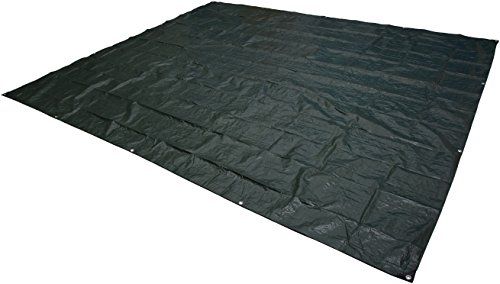
Our tarp roundup covers sizing and material choices in more depth. For a wall tent specifically, prioritize a tarp with grommets you can stake independently of the tent's own stakes, so wind does not pull the groundsheet and tent structure against each other during a storm.
Care, storage, and getting years out of canvas
Canvas tents last far longer than synthetic tents when dried completely before storage — packing a damp wall tent away for months is the single fastest way to develop mildew and rot that no amount of canvas quality will survive. Set the tent up at home after a wet trip if you cannot fully dry it in the field, even just for an afternoon, before folding it away for the season.
Re-treat the canvas with a manufacturer-approved waterproofing product every few seasons as the factory silicone or wax treatment wears thin, and inspect stitching and grommets before each season rather than discovering a failure point during a storm at camp. A well-maintained canvas wall tent from either of these manufacturers can realistically last a decade or more of regular seasonal use, which is the real argument for the higher upfront cost compared to a synthetic tent that degrades from UV exposure in a few seasons.
Accessories worth buying alongside the tent
A few accessories matter more for wall tents than they do for a typical backpacking tent, because the whole point of a wall tent is extended, comfortable stays rather than a single overnight. A cot for every occupant keeps you off cold ground and dramatically improves comfort on multi-night stays — sleeping directly on even an insulated pad inside an unheated or lightly heated wall tent is a cold night compared to a cot with a pad on top of it.
A stove-specific spark arrestor for the chimney reduces ember risk if you are camping in dry conditions near dry grass or forest litter, and a heat-resistant mat under the stove itself protects the tent floor from scorching or melting. If you are running electricity via a small generator or battery setup, plan the cable routing before setup — retrofitting a cable pass-through in canvas after the fact is avoidable with a little planning around where the tent's existing access points are.
Budget tents versus the Kodiak and WHITEDUCK tier
Cheaper canvas-look wall tents exist at a lower price point, but many use thinner, less tightly woven canvas or canvas-polyester blends that do not hold up to repeated wet-dry cycles or heavy stove use the way premium cotton duck canvas does. A budget tent that develops leaks or mildew after one or two seasons is not actually cheaper than a Kodiak or WHITEDUCK tent that lasts a decade — it just moves the cost to a faster replacement cycle.
If budget is the primary constraint, buying a smaller, well-made tent from a reputable manufacturer beats buying a larger, cheaper tent that will not survive real field use. A properly cared-for 8x10 from either line will outlast an off-brand 12x14 that starts leaking at the seams in year two.
Weight, transport, and where the tent actually lives
Wall tents are genuinely heavy — a 10x14 Kodiak packs down to roughly 80 pounds including stakes, and a comparable WHITEDUCK Alpha is similar or heavier depending on size. This is vehicle-accessible or short-carry gear, not something you backpack any meaningful distance. Plan your camp location around where you can drive or use a game cart to get the packed tent to the site, rather than assuming you will carry it any real distance on foot.
Storage between seasons also takes real space — a packed 10x14 wall tent, poles, and stakes take up a corner of a garage or shed, not a closet shelf. Factor that into your decision if storage space at home is genuinely limited, since a wall tent is a multi-year commitment both in the field and in your garage, not a piece of gear you rotate out every season or two like a cheap dome tent from a big-box store.
| Tent | Best job | Watch-out |
|---|---|---|
| Kodiak Canvas Flex-Bow Deluxe 10x14 | Fast one-person setup, proven hunt-camp design | Spring-bow walls are not perfectly vertical |
| WHITEDUCK Alpha 8x10 | True straight walls for two to four people | Slower two-person setup |
| WHITEDUCK Alpha 16x20 | Base camp scale for a group | Heavy — plan real transport and storage space |
Our pick: Kodiak Flex-Bow Deluxe if setup speed and proven support matter most. WHITEDUCK Alpha if true vertical walls and maximum floor space for the footprint matter more than setup time. Confirm stove-jack sizing against your actual stove before you buy either one. Check live prices.
Frequently asked questions
What is the best wall tent for a hunting camp?
A Kodiak Canvas Flex-Bow Deluxe for fast, proven one-person setup, or a WHITEDUCK Alpha canvas tent if you want true vertical walls and more usable floor space for a bigger group.
Do wall tents come with a wood stove?
No, the stove is sold separately. Confirm the tent's stove-jack diameter and placement matches your specific stove's flue before you buy.
How long does it take to set up a wall tent?
A Kodiak Flex-Bow can go up solo in a few minutes once staked out. A rigid-frame tent like the WHITEDUCK Alpha typically takes two people twenty to thirty minutes.
How do I store a canvas wall tent so it does not mildew?
Dry it completely before folding it away, even if that means a home setup for an afternoon after a wet trip. A damp canvas tent stored for months is the fastest way to ruin it.
What size wall tent do I need?
An 8x10 fits two to four people comfortably. A 10x14 sleeps up to eight. Size up for a base camp with cots, a stove, and real gear storage rather than just sleeping bodies.
Are canvas wall tents worth the cost compared to a synthetic tent?
Yes for repeated seasonal use. A well-maintained canvas tent can last a decade or more, while synthetic tents degrade from UV exposure much faster under the same use.