
AMK Ultralight/Watertight .5 vs .7
Written by John Wren|

Choose the Adventure Medical Kits Ultralight/Watertight .5, part 0125-0392, for 72 pieces at 3.52 ounces. Choose the .7, part 0125-0391, for 90 pieces at 5.92 ounces. Both use a DryFlex inner bag.
Key takeaways
- The .5 is part 0125-0392, 72 pieces, 3.52 ounces, about 7 by 1 by 5 inches.
- The .7 is part 0125-0391, 90 pieces, 5.92 ounces, about 8 by 2 by 7 inches.
- The title labels the .5 for two people and the .7 for three.
- Open the pouch at home. Restock what you use.
Buy the Adventure Medical Kits Ultralight/Watertight .5, part 0125-0392, when you want the smaller pouch: 72 pieces, 3.52 ounces, about 7 by 1 by 5 inches, labeled for two people. Buy the .7, part 0125-0391, when you want the larger pouch: 90 pieces, 5.92 ounces, about 8 by 2 by 7 inches, labeled for three people. Both use a DryFlex inner bag. Neither is a trauma kit, and neither replaces knowing when to stop and go get help.
Short version. A filter is water, not a bandage. A ferro rod is a spark, not a kit. A bivvy or a blanket is warmth after you have dealt with the bleed you can actually reach. Open the pouch at the table before the trip. A kit you have never unzipped is a kit you will dump in the dirt the one time you need a moleskin.
The .5 card is sunset colored, model part 0125-0392, UPC 707708003929. Amazon's title calls it the Ultralight/Watertight Medical Kit .5 for two people. The details list 72 pieces, 3.52 ounces, and 7 by 1 by 5 inches. The bullets say it is for cleaning and bandaging wounds, muscle aches, blisters, and other ordinary outdoor discomforts. Contents named there include bandages, insect-sting relief, antiseptic wipes, antibiotic ointment, moleskin, alcohol swabs, a splinter picker, and a safety pin. The inner bag is DryFlex and described as waterproof. The outer bag is water-resistant with a durable water-repellent finish. Waterproof inside is not a promise that you can soak the whole pouch and then store it wet.
The .7 card is also sunset, part 0125-0391, UPC 707708003912. The title calls it the .7 for three people. The details list 90 pieces, 5.92 ounces, and 8 by 2 by 7 inches. The bullets add supplies aimed at immobilizing fractures, wounds, and blisters, and they name tick-remover forceps along with bandages, gauze, medications, ointment, and moleskin. Same DryFlex story: a waterproof inner bag and a water-resistant outer. The .7 is not a double of the .5. It is a larger count, a larger box, and a title that claims one more person. It is still a day-hike and weekend pouch, not an ambulance.

| Job | Ultralight .5 | Ultralight .7 | Buy |
|---|---|---|---|
| A day, one or two people, a pocket | 72 pieces, 3.52 ounces, 7 by 1 by 5 inches | Heavier and thicker | .5 |
| A weekend, blisters plus more gauze | Moleskin and wipes, smaller count | 90 pieces, 5.92 ounces, 8 by 2 by 7 inches | .7 |
| People on the title | Two | Three | Read the title, then restock anyway |
| Water | DryFlex inner, water-resistant outer | Same construction | Either, dry it after |
| A serious bleed or a broken leg in the backcountry | Not this pouch | Not this pouch | Training and a kit built for that job |
Part 0125-0392 is the .5. Part 0125-0391 is the .7. A 100-piece tin from another brand is a different box.
Who should buy the .5, and who should buy the .7?
Buy the .5 if the pack is already tight and the group is you and one other person for a day. Three and a half ounces and a pouch about an inch thick will disappear into a hipbelt or a lid. Seventy-two pieces sounds like a lot until you see that most of them are small: wipes, swabs, a pin, a few bandages, moleskin. That is the right kit for hot spots, a split finger, a splinter, and a sting. It is the wrong kit if you are the person everyone in a scout troop will ask for gauze. You will be out of the useful pieces before lunch, and the count of 72 will have been mostly paper.
Buy the .7 if the trip is a weekend, the group is closer to three, or you want the extra gauze and the forceps the .7 listing names. Six ounces is still a small pouch. Eight by two by seven inches is a book, not a brick. The title's "three person" line is a sizing hint from the maker's label, not a warranty that three injured people are covered. Medications in these kits are single doses. They run out. Blister care runs out faster than people expect, because one heel can eat a sheet of moleskin. If you know you blister, buy the .7 and add another piece of moleskin you already trust.
Do not buy either kit and leave it sealed until something hurts. Open it. Look at what "antibiotic ointment" means in a foil pack the size of a stamp. Look at the moleskin and decide if you know which side sticks. Look at the date on any medication. A kit that expired in a closet is a kit of bandages plus a question. Replace the pills. Keep the gauze if it is still clean and dry.
What the .5 pouch is actually for
The .5 is the everyday outdoor pouch. Adventure Medical Kits and the Amazon title aim it at hiking. The contents list is ordinary: clean, cover, soothe a sting, pad a blister, pull a splinter, pin something. That is a good list for a rail-trail, a creek, a bike path, and the first night in a campground. It is a bad list for a hunt that is miles from the truck if the only problem you have prepared for is a splinter. Add what you personally need, in a labeled bag, and do not pretend the printed count included it.
DryFlex is the reason this series has "watertight" in the name. The inner bag is the dry layer. The outer bag is the thing that gets muddy. Roll or seal the inner the way it was designed, every time, or the word watertight is a memory. Do not store a wet bandage inside "to deal with later." Later is mold. Empty it, dry it, restock it. Three and a half ounces becomes a wet lump if you treat the pouch as a trash pocket for used wipes.
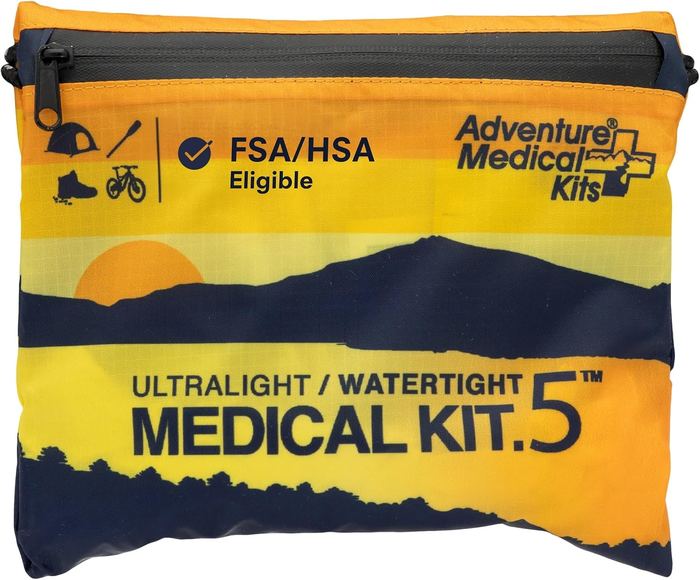
Do: put the .5 where a wet hand can find it, same pocket every hike. Don't: bury it under the food. Don't: call 72 pieces a reason to skip a fresh bandage in the car. The car kit and the pocket kit are different jobs. Don't: give the medications to someone else without reading the packet. These are ordinary over-the-counter doses. They are still the wrong dose for some people, and the kit does not know your history.
What the .7 pouch is actually for
The .7 is the step up when the .5 feels thin. Ninety pieces and the fracture-and-blister language on the listing are the argument. Forceps for a tick are named. That is a tool for pulling a tick you can see, not a medical course. If you are not sure what you are looking at, you are past the kit and into getting a person to care. Gauze and a bandage buy time and cleanliness. They do not set a bone, and the word "immobilize" on a product bullet is not training.
Five point nine two ounces and an 8-by-2-by-7-inch pouch still fit a daypack lid. They do not fit every running belt. If the sport is a short run, the .5 is the one you will carry, and a kit left in the car is the kit you do not have at mile four. If the sport is a weekend with a group, the .7 earns the extra two ounces. Restock gauze and moleskin first. Those are the pieces weekend groups actually consume. The impressive count of alcohol swabs will still be there when the useful pads are gone.

Do: write the date you packed it on a piece of tape. Don't: assume the .7 includes a tourniquet or a splint you have practiced. Read the insert. If those items are not in the bag, they are not in the bag, regardless of the word immobilize. Don't: mix the .5 and the .7 in one unlabeled stuff sack. The parts are 0125-0392 and 0125-0391. The titles both say sunset. The size is how you tell them apart in the hand: the .7 is the thicker book.
How to pack either pouch so it is still a kit
Take the insert out at the kitchen table. Match the picture to the pile. If something is missing, you know before the trip, not after a fall. Put personal items in a small zip bag inside the DryFlex: the blister care you like, any medication you are allowed to carry and already understand, and a pair of gloves if you want them. Do not loose-pack pills. They become dust.
Close the inner bag the way it seals. Then close the outer. If you cannot close it, you added too much. A kit that will not seal is no longer the watertight kit you bought. Store it where temperature stays reasonable. A dashboard cooks ointment packs and medications. A wet hatch grows smell. Hang it with the vest and the light so "leaving" means grabbing one pouch, not hunting.
After you use anything, replace it before the next outing. A single bandage used on a Saturday is the bandage you will want on Sunday. The piece count on the carton is the count when it was new. Your count is whatever is left. Write it down if you will not remember. Groups eat kits. A "three person" title does not refill itself.
What actually fails in a small kit
The seal fails when the DryFlex closure is dirty or half rolled. Rinse grit off the seal, dry it, and close it in the light so you can see it. The outer fabric fails when people use the pouch as a sit pad. It is a soft bag. It is not a frame sheet. Packets fail when they are crushed under a stove. Put the kit beside the hard things, not under them.
Medications fail by date. Look every season. Bandages fail when the paper is wet and the sterile wrap is torn. If the wrap is open, it is not sterile, and it is a rag. Forceps and the splinter picker fail when they are bent or missing and nobody noticed. That is the table inspection. Moleskin fails when people stick it on a wet, dirty heel and then blame the adhesive. Clean and dry the skin first. If you do not know whether you should be covering something, stop and get help. The kit is for the small, obvious problems it lists. It is not a decision-maker.
The other failure is buying the wrong decimal. The .5 and the .7 look alike in a thumbnail. Part 0125-0392 is 72 pieces and 3.52 ounces. Part 0125-0391 is 90 pieces and 5.92 ounces. A .3 or a .9 in the same family is another size again. Read the decimal on the bag when it arrives. A kit that is half the volume you planned is the kit you will resent at the trailhead, and a kit that is twice the volume is the one you will leave behind.
What this pair is not
It is not a wilderness medicine course. It is not a suture kit, and it is not a reason to go farther from help than you already should. It is not clean water, and it is not a night of insulation. Those are other problems with other tools. It is not a weapon, and it is not a fire starter. If the day needs a spark, that tool is separate and it still needs tinder.
It is not a substitute for telling someone where you are going. A pouch in the lid does not call anyone. If a problem is bigger than a blister, a splinter, or a small clean cover, the next step is help, not a deeper dive into a 90-piece bag. Buy the .5 when ounces and a day are the limit. Buy the .7 when the weekend and the extra gauze are the point. Open it before you need it.
So which pouch should you buy?
Buy the Ultralight/Watertight .5, part 0125-0392, for a 72-piece, 3.52-ounce pouch about 7 by 1 by 5 inches, labeled for two people. Buy the .7, part 0125-0391, for a 90-piece, 5.92-ounce pouch about 8 by 2 by 7 inches, labeled for three people. Both have a DryFlex inner bag. Confirm the decimal on the label, restock what you use, and treat the kit as the small problems it actually contains.
Frequently asked questions
Ultralight/Watertight .5 or .7?
The .5, part 0125-0392, for a day and a lighter 3.52-ounce pouch. The .7, part 0125-0391, for 90 pieces at 5.92 ounces when the trip is longer.
How many pieces are in each kit?
Amazon lists 72 pieces for the .5 and 90 pieces for the .7. The count is what shipped. Replace what you use.
Are they waterproof?
Both listings describe a waterproof DryFlex inner bag and a water-resistant outer. Seal the inner bag. A wet bandage stored inside does not stay a kit.
Is the .7 a trauma kit?
No. It is a larger ultralight pouch. The word immobilize on a bullet is not training. A problem bigger than a blister needs help.
Which one fits a small pocket?
The .5, at about 7 by 1 by 5 inches and 3.52 ounces. The .7 is about 8 by 2 by 7 inches.
How do I avoid the wrong decimal?
Read the part. 0125-0392 is the .5. 0125-0391 is the .7. Both can show up in a sunset color.